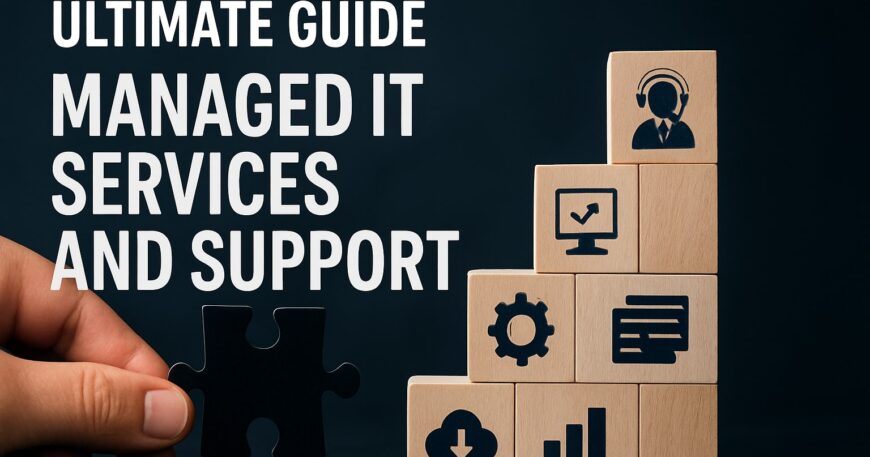
As technology rapidly evolves, the complexity of IT management has become a defining factor in business success for 2025. Organizations relying on outdated systems face increased risks, missed opportunities, and growing security threats.
This guide breaks down managed it services and support, empowering decision-makers to build future-ready operations. You will discover clear definitions, key benefits, service models, cost structures, selection criteria, and essential trends shaping the year ahead.
Are you ready to overcome common IT challenges? Unlock actionable insights to boost efficiency, strengthen security, and fuel business growth. Leverage managed IT as your competitive advantage in the digital era.
What Are Managed IT Services and Support?
As organizations adapt to rapid technological change, managed it services and support have become essential for maintaining stable, secure, and efficient operations. These services transform how businesses handle IT, moving away from reactive problem-solving to a proactive, strategic approach.

Defining Managed IT Services
Managed it services and support refer to ongoing, outsourced IT management provided by a third-party partner known as a Managed Service Provider (MSP). Unlike the traditional break-fix model, where businesses only call for help after something goes wrong, managed services focus on prevention, monitoring, and continuous improvement.
A core difference is the proactive nature of managed it services and support. MSPs monitor systems 24/7, perform routine maintenance, and provide helpdesk support to resolve issues before they disrupt operations. This approach reduces downtime and increases reliability.
Core components of managed it services and support include:
- Proactive network and device monitoring
- Regular system maintenance and updates
- Helpdesk and end-user support
- Strategic IT consulting and planning
Examples of these services are network monitoring to detect performance issues, cybersecurity defenses to prevent data breaches, cloud management for flexible storage, and automated data backup for disaster recovery.
The industry is experiencing rapid growth, with over 60% of small and midsize businesses now outsourcing at least part of their IT, according to Managed IT services market growth. MSPs are responsible for delivering these services under clear Service Level Agreements (SLAs), which define response times, uptime guarantees, and the scope of support.
SLAs typically cover:
- Response and resolution timelines
- Availability of 24/7 support
- Specific security and compliance measures
- Escalation procedures for critical incidents
This structured, proactive partnership ensures that technology aligns with business goals and supports long-term growth.
Types of Managed IT Service Models
There are several models for managed it services and support, designed to fit the unique needs of different organizations. The two primary approaches are fully managed and co-managed IT.
Fully managed IT means the MSP handles all IT functions, from daily support to strategic planning. This model is ideal for businesses without dedicated in-house IT staff or those seeking to fully outsource technology management.
Co-managed IT blends the expertise of an MSP with your internal IT team. The MSP fills skill gaps, provides specialized support, and helps manage complex projects, while internal staff handle day-to-day tasks.
Pricing structures for managed it services and support vary:
- Flat-rate: A predictable monthly fee covering all agreed services.
- Pay-as-you-go: Charges based on actual usage or incidents.
Service inclusions often feature:
- 24/7 remote and on-site support options
- Regular reporting and technology reviews
- Access to advanced cybersecurity tools
Consider this case example: A growing engineering firm struggled with frequent downtime and slow response from ad-hoc IT contractors. After switching to managed it services and support, they saw improved system uptime, faster support, and better planning for future technology needs.
In summary, managed it services and support offer flexible, scalable solutions that keep businesses competitive, secure, and well-prepared for future challenges.
Key Benefits of Managed IT Services for Businesses
As organizations prepare for 2025, managed it services and support are becoming indispensable tools for business growth and resilience. By outsourcing IT functions to experienced providers, businesses gain a suite of benefits that extend beyond simple troubleshooting. Let us explore how managed it services and support deliver value across security, cost, productivity, scalability, and innovation.

Enhanced Security and Compliance
Security threats are evolving rapidly, and managed it services and support offer proactive protection. Providers deliver real-time threat detection, incident response, and advanced cybersecurity tools. Regular risk assessments and compliance checks help businesses meet standards like HIPAA or CMMC.
- Proactive monitoring for malware, ransomware, and phishing.
- Automated security patching and vulnerability management.
- Support with regulatory audits and documentation.
With managed it services and support, businesses reduce downtime and avoid costly breaches, ensuring data is always protected.
Cost Predictability and Budget Control
Unplanned IT expenses can disrupt financial planning. Managed it services and support offer flat-rate monthly fees, making costs predictable and easier to budget. Instead of paying for each incident, businesses benefit from comprehensive coverage.
- Transparent pricing models with no surprise charges.
- Savings up to 25 percent compared to traditional break-fix IT.
- Financial planning aligned with business goals.
According to the Managed IT infrastructure services analysis, the market growth reflects increased demand for cost-effective, scalable solutions.
Increased Productivity and Operational Efficiency
Downtime and slow response times hinder productivity. Managed it services and support provide rapid issue resolution and access to skilled IT professionals. This enables teams to focus on core business objectives rather than technical distractions.
- 24/7 helpdesk and remote support for employees.
- Automated updates and maintenance reduce manual workloads.
- Latest technology adoption for streamlined operations.
By leveraging managed it services and support, businesses experience fewer interruptions and improved workflow.
Scalability and Flexibility
Growth demands flexible IT solutions. Managed it services and support scale with business needs, whether expanding to new locations or supporting remote teams. Service plans can be adjusted as requirements change.
- Seamless addition or removal of users, devices, or services.
- Support for hybrid and cloud environments.
- Customizable packages for seasonal or project-based demands.
This adaptability ensures businesses maintain agility in a fast-paced market with managed it services and support.
Strategic IT Planning and Innovation
Long-term success relies on strategic technology decisions. Managed it services and support include vCIO consulting, helping organizations align IT investments with business goals. Regular reviews and roadmap planning foster continuous improvement.
- Technology assessments to identify opportunities.
- Guidance on digital transformation and process automation.
- Future-proofing IT infrastructure for evolving needs.
With managed it services and support, companies gain a trusted advisor dedicated to driving innovation and competitive advantage.
Core Components of Managed IT Services in 2025
As technology evolves, the core components of managed it services and support are adapting to meet the complex needs of modern businesses. In 2025, organizations rely on a comprehensive suite of IT solutions to ensure reliability, security, and scalability. Let us explore the essential building blocks that define managed it services and support for the future.

Proactive Monitoring and Maintenance
Proactive monitoring is the foundation of managed it services and support in 2025. Providers use advanced tools to monitor networks, servers, and endpoints 24/7. This approach catches issues before they escalate, minimizing downtime and disruptions.
Key features include:
- Automated patch management for security updates
- Real-time alerts for unusual activity
- Scheduled maintenance to optimize performance
For example, an MSP might receive an alert about a failing hard drive and replace it before data loss occurs. This proactive model keeps systems healthy and business operations uninterrupted.
Cybersecurity and Threat Management
Modern managed it services and support prioritize multi-layered cybersecurity. Providers deploy firewalls, antivirus, and endpoint protection to guard against evolving threats. Security awareness training equips staff to recognize risks.
Incident response plans ensure rapid action if a breach occurs. Notably, 43% of cyberattacks target SMBs, making expert support essential. Many MSPs now offer managed detection and response (MDR) as a core service. For a deeper understanding of MDR’s role in threat management, see this Managed detection and response overview.
Cloud Services and Virtualization
Cloud adoption is a critical element of managed it services and support. Providers facilitate seamless migration to cloud platforms, optimize resources, and manage hybrid or multi-cloud environments.
Benefits include:
- Flexible access for remote and hybrid teams
- Scalable storage and computing power
- Enhanced collaboration tools
A business leveraging managed it services and support can rapidly adjust resources, improving agility and reducing infrastructure costs.
Data Backup and Disaster Recovery
Reliable data protection is non-negotiable. Managed it services and support ensure regular, automated backups to both on-premise and cloud locations. Disaster recovery plans are tailored for business continuity, minimizing the impact of data loss incidents.
Core components:
- Scheduled backups with verification
- Rapid restoration processes
- Testing and updating recovery procedures
For example, a company hit by ransomware can restore operations quickly thanks to robust managed it services and support.
Helpdesk and User Support
User support is a pillar of managed it services and support. Providers deliver 24/7 helpdesk services, offering both remote and on-site assistance. Ticketing systems streamline issue tracking and resolution.
Key aspects:
- Guaranteed response times per service level agreements
- User onboarding and training
- Support for hardware, software, and network issues
With managed it services and support, employees receive expert help promptly, boosting productivity and satisfaction.
IT Strategy and Consulting
Strategic guidance is essential for long-term success. Managed it services and support often include virtual CIO (vCIO) services, providing technology assessments and roadmap development.
Services include:
- Aligning IT with business objectives
- Recommending emerging technologies
- Regular reviews to adjust strategies
This consultative approach ensures that managed it services and support drive innovation and digital transformation tailored to organizational goals.
Vendor and Asset Management
Streamlined asset and vendor management is integral to managed it services and support. Providers oversee hardware and software procurement, track asset lifecycles, and manage vendor contracts.
Benefits include:
- Reduced administrative burden for internal teams
- Improved compliance with licensing and warranties
- Optimized technology investments
Comprehensive managed it services and support ensure that all assets are accounted for and vendor relationships are leveraged effectively.
How to Choose the Right Managed IT Services Provider
Selecting the right managed it services and support partner is a critical decision for any business aiming to modernize its technology strategy. The process can seem overwhelming, but breaking it down into clear steps helps ensure your organization finds a provider that meets both current and future needs.

Assessing Your Business IT Needs
Begin by evaluating your existing IT infrastructure. Create a detailed inventory of hardware, software, and network assets. Identify any recurring issues or pain points that disrupt daily operations.
Next, consider your industry’s regulatory and compliance requirements. Are there specific data protection rules you must follow? Understanding these obligations will help you find managed it services and support that can address compliance challenges.
Decide what level of support your business needs. Are you seeking a fully outsourced solution, or do you prefer a co-managed approach that augments your internal IT team? Clarifying these factors establishes a strong foundation for your search.
Evaluating Provider Capabilities
Not all providers offer the same level of expertise or breadth of services. Look for certifications from leading technology vendors such as Microsoft and Dell, as these indicate technical proficiency.
Examine the range of services available. Does the provider offer end-to-end managed it services and support, including cybersecurity, cloud, and backup? Assess whether they can customize offerings to fit your organization’s size and complexity.
Security standards are paramount. Review their incident response protocols, staff training programs, and history of managing sensitive data. A provider with robust security practices will better protect your business from evolving threats.
Understanding Pricing and Contracts
Pricing models for managed it services and support vary widely. Common structures include flat-rate, per-user, and tiered packages. Flat-rate pricing offers predictable monthly costs, while tiered models may provide flexibility for growing businesses.
When reviewing contracts, pay close attention to what is included and what may incur additional charges. Compare the costs and benefits of managed services with maintaining an in-house IT team. As global IT spending rises, driven by AI and digital transformation, making the right investment is more important than ever. For example, the Global IT spending forecast 2025 highlights the increasing need for strategic technology partnerships.
Use a table to summarize key differences:
| Model | Pricing | Support Scope |
|---|---|---|
| Flat-rate | Fixed monthly | All-inclusive |
| Per-user | Per person | Scalable |
| Tiered | By service | Customizable |
Checking References and Reputation
A reliable provider should have a proven track record. Ask for client testimonials and case studies, particularly from businesses in your industry.
Research online reviews and look for industry awards or recognitions. Strong partnerships with top vendors, such as Dell or Microsoft, can indicate a reputable provider.
By choosing managed it services and support with a solid reputation, you reduce the risk of unexpected issues and gain peace of mind.
Service Level Agreements (SLAs) and Support Guarantees
Service level agreements define the provider’s commitments to response and resolution times. Carefully review these details to ensure they align with your business’s needs.
Some contracts may include penalties if the provider does not meet agreed-upon standards. Clear escalation procedures are essential for addressing critical incidents quickly.
Prioritize managed it services and support partners who offer transparent SLAs, so you always know what to expect regarding uptime and support quality.
Onboarding and Transition Process
Transitioning to managed it services and support should be a smooth experience. Ask potential providers about their onboarding process, including steps for migrating your data and systems with minimal disruption.
A detailed plan should outline timelines, responsibilities, and checkpoints for progress. The best providers will offer guidance, staff training, and ongoing communication throughout the transition.
By following these steps, you set your business up for a successful partnership that supports growth and innovation.
Managed IT Services Costs and Pricing Models in 2025
Navigating the costs of managed it services and support can be challenging for businesses planning their IT budgets in 2025. Understanding the available pricing models, cost drivers, and budgeting strategies is essential for making informed decisions and maximizing value.
Common Pricing Structures
When it comes to managed it services and support, providers typically offer three main pricing models: per-user, per-device, and flat-rate. Each model has its advantages, depending on your organization's size and complexity.
Here is a comparison:
| Pricing Model | How It Works | Best For |
|---|---|---|
| Per-User | Charges per staff member | Growing teams, remote work |
| Per-Device | Charges per device managed | Device-heavy environments |
| Flat-Rate | Fixed monthly fee | Predictable budgeting |
The choice of model depends on factors like employee count, number of devices, and the desired service scope. Many providers also offer pricing calculators to help estimate monthly costs based on these variables.
Factors Affecting Managed IT Costs
Several elements impact the total investment in managed it services and support. Initial setup fees, ongoing maintenance, and the level of support required are primary considerations.
Additional services such as advanced cybersecurity, cloud management, compliance support, and data backup can influence the overall price. The number of users, devices, office locations, and the complexity of your IT infrastructure also play a significant role.
For example, proactive managed services often cost more upfront than break-fix solutions, but they reduce long-term risks and unplanned expenses.
ROI and Cost Savings
Investing in managed it services and support can yield measurable returns. Businesses benefit from reduced downtime, fewer emergency repairs, and predictable monthly expenses.
Industry data shows that organizations can save between 10% and 30% on annual IT operations by switching to managed services. This is due to streamlined processes, proactive monitoring, and expert support that minimizes disruptions.
Instead of dealing with surprise repair bills, companies enjoy a more stable and efficient IT environment, making it easier to plan and allocate resources.
Budgeting for Managed IT in 2025
Effective budgeting for managed it services and support starts with assessing current needs and forecasting future growth. Factor in technology upgrades, additional users, and potential new locations when planning your annual IT budget.
Follow these best practices:
- Review your service agreement for included features
- Set aside funds for technology refresh cycles
- Consider scalability for business expansion
- Allocate resources for security and compliance
By building managed IT into your yearly budget, your organization can stay ahead of technology demands and remain agile in the face of change.
Future Trends in Managed IT Services and Support
The landscape of managed it services and support is rapidly changing as businesses prepare for 2025. Staying ahead of these trends is crucial for organizations seeking resilience, security, and innovation. In this section, we explore the cutting-edge developments shaping the industry and how they impact your IT strategy.
AI and Automation in IT Management
Artificial intelligence and automation are transforming managed it services and support by driving efficiency and predictive capabilities. AI-driven tools enable predictive maintenance, identifying potential issues before they escalate. Automation streamlines repetitive tasks, such as patch management and system updates.
For example, AI-powered helpdesks now resolve common user requests instantly, freeing IT teams to focus on complex challenges. Automated threat detection tools can rapidly identify and mitigate cyber risks, reducing downtime. As AI continues to evolve, expect managed it services and support to become even more proactive, adaptive, and cost-effective for organizations of all sizes.
Evolving Cybersecurity Threats and Solutions
Cybersecurity threats are growing in both number and sophistication. Managed it services and support providers are adopting advanced solutions to counteract these dangers. Ransomware, phishing, and supply chain attacks are top concerns for 2025.
Next-generation security tools, such as zero trust frameworks, Managed Detection and Response (MDR), and Extended Detection and Response (XDR), are now essential. According to industry research, 70% of MSPs plan to increase cybersecurity investments in the coming year. With these new solutions, managed it services and support help organizations safeguard sensitive data and maintain regulatory compliance.
Cloud-First and Hybrid Work Environments
The shift to cloud-first strategies and hybrid work environments is accelerating. Managed it services and support enable businesses to deploy, manage, and secure cloud-native applications efficiently. Remote and hybrid workforces rely on robust cloud infrastructure for collaboration and productivity.
MSPs are now supporting clients with secure access, identity management, and continuous monitoring across multiple platforms. This flexibility allows companies to scale resources as needed. By leveraging managed it services and support, organizations can ensure seamless operations for teams working from anywhere.
Compliance and Data Privacy Demands
Regulatory compliance and data privacy requirements are becoming increasingly complex. Managed it services and support play a crucial role in helping businesses navigate regulations such as GDPR, HIPAA, and CMMC.
Providers offer ongoing monitoring, documentation, and audit support to ensure organizations stay compliant. Regular assessments and proactive updates keep security measures aligned with evolving standards. As new privacy laws emerge, managed it services and support will continue to be essential partners in maintaining trust and avoiding costly penalties.
Customization and Vertical Specialization
One-size-fits-all solutions are no longer sufficient. Managed it services and support are becoming more tailored to specific industries, such as healthcare, finance, and manufacturing. This vertical specialization allows providers to address unique compliance, security, and operational needs.
For example, medical clinics benefit from customized IT strategies that prioritize patient data security and regulatory requirements. By working with managed it services and support partners who understand their industry, businesses gain a competitive edge and peace of mind.
Sustainability and Green IT Initiatives
Sustainability is now a core consideration for modern IT operations. Managed it services and support providers are helping clients reduce their carbon footprint through energy-efficient data centers, responsible device lifecycle management, and cloud optimization.
MSPs also advise on eco-friendly hardware procurement and recycling programs. These initiatives not only support environmental goals but can also lead to cost savings and improved public perception. As sustainability expectations rise, green IT practices will become standard components of managed it services and support.
The Expanding Role of vCIO Services
Virtual Chief Information Officer (vCIO) services are expanding within managed it services and support offerings. A vCIO provides strategic IT leadership, helping organizations develop technology roadmaps aligned with business goals.
Regular assessments, innovation planning, and budgeting support are part of the vCIO’s role. This partnership empowers businesses to embrace digital transformation, optimize IT investments, and stay ahead of industry trends. As technology becomes more central to success, vCIO services will be a key differentiator in managed it services and support.
Managed it services and support are poised to shape the future of business technology. By understanding and embracing these trends, organizations can confidently navigate the evolving digital landscape and secure long-term growth.
Frequently Asked Questions About Managed IT Services
Understanding managed it services and support can help your business make smarter technology decisions. Below, we address some of the most common questions organizations ask when considering managed it services and support for their operations.
What’s the difference between IT support and managed IT services?
The main difference comes down to approach and coverage. Traditional IT support is often reactive, fixing problems as they arise. Managed it services and support, on the other hand, focuses on proactive monitoring, ongoing maintenance, and comprehensive management. This model helps prevent issues before they impact your business.
- Break-fix (IT support): Pay per issue, limited scope.
- Managed model: Ongoing partnership, covers monitoring, security, backups, and consulting.
How do I know if my business needs managed IT services?
There are several signs your organization could benefit from managed it services and support:
- Frequent technology issues or downtime.
- In-house IT staff feeling overwhelmed.
- Concerns about cybersecurity or compliance.
- Plans for rapid growth or major technology upgrades.
If these challenges sound familiar, managed it services and support may provide the structure and expertise you need.
What are the challenges of adopting managed IT services?
Transitioning to managed it services and support can require change management and staff adaptation. Common challenges include:
- Adjusting internal IT roles and responsibilities.
- Ensuring clear communication with your provider.
- Setting realistic expectations for new processes.
A reputable provider will guide you through these changes for a smooth experience.
How quickly can a business transition to managed IT?
Onboarding to managed it services and support typically takes a few days to several weeks, depending on business size and complexity. The process involves:
- Initial assessment of your current IT environment.
- Planning and scheduling the transition.
- Migrating systems with minimal disruption.
Early planning and collaboration with your provider help ensure a seamless migration.
Can managed IT services scale with business growth?
Scalability is a core benefit of managed it services and support. Providers make it easy to add or remove services as your needs evolve. This flexibility supports:
- Multi-location operations.
- Remote and hybrid teams.
- Technology upgrades without major disruptions.
As your business grows, managed it services and support adapt with you.
What’s included in a typical managed IT contract?
A standard managed it services and support contract usually includes:
- 24/7 monitoring and support
- Cybersecurity management
- Data backup and disaster recovery
- Regular technology assessments
Optional add-ons may cover cloud services, compliance, and vCIO consulting. Review your contract carefully to understand all included services.
As we’ve explored, staying ahead in 2025 means having an IT partner who understands your unique needs, helps you navigate new technologies, and keeps your business secure and productive—all at a predictable cost. If you’re ready to take the next step and ensure your IT infrastructure truly supports your business growth, let’s connect. You deserve peace of mind and reliable support from a team that cares about your success. Have questions or want to discuss how managed IT can work for you? Call us now and let’s start building your future-ready IT strategy together.

