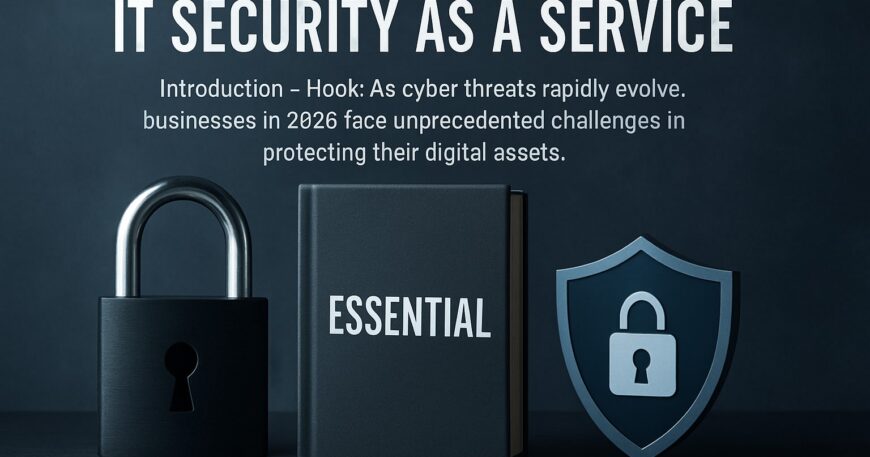
As cyber threats grow more sophisticated, organizations in 2025 face challenges that demand smarter, faster security solutions. The digital landscape is changing rapidly, and traditional defenses are no longer enough to protect valuable data and operations.
This guide explores the essentials of it security as a service, a modern approach designed to empower businesses with expert protection and flexibility. You will discover how this service model works, its main advantages, and what to consider when adopting it.
Get ready to navigate the latest trends, practical strategies, and future predictions that will help your organization stay ahead in the evolving world of cybersecurity.
Understanding IT Security as a Service (SECaaS) in 2025
As organizations confront increasingly complex cyber risks, understanding it security as a service is vital for modern business resilience. SECaaS, short for Security as a Service, has rapidly become a cornerstone for digital protection in 2025.

Definition and Evolution
It security as a service refers to the delivery of security solutions via cloud-based platforms, rather than on-premise infrastructure. This model allows organizations to access advanced security tools and expertise through the internet, typically on a subscription or pay-per-use basis.
In the past, businesses relied on physical hardware and in-house teams to manage firewalls, antivirus, and intrusion detection systems. However, the rise of cloud computing and remote work has shifted the balance. SECaaS leverages the flexibility and scalability of the Software as a Service (SaaS) model, making advanced protection accessible for organizations of all sizes.
Unlike traditional security, which often requires significant upfront investment and ongoing maintenance, it security as a service offers predictable costs and seamless updates. This transition is driven by the need for agility and the increasing sophistication of cyber threats.
The SECaaS market has seen explosive growth, with projections estimating its value at $23.8 billion by 2026, fueled by rapid cloud adoption and evolving digital landscapes, as highlighted in the Security as a Service Market worth $23.8 billion by 2026 report. Organizations like the Cloud Security Alliance (CSA) play a pivotal role in standardizing SECaaS practices, ensuring a consistent approach to security delivery across industries.
Core Categories and Services
The core of it security as a service is defined by a set of standardized categories established by the CSA. These include:
- Business Continuity and Disaster Recovery (BCDR)
- Data Loss Prevention (DLP)
- Email Security
- Encryption
- Identity and Access Management (IAM)
- Intrusion Management
- Network Security
- Penetration Testing
- Security Information and Event Management (SIEM)
- Vulnerability Scanning
- Web Security
Typical services provided under it security as a service encompass user authentication, anti-virus, anti-malware, intrusion detection, and security event management. These services are delivered through flexible models such as subscription, pay-per-use, and freemium tiers, catering to diverse organizational needs.
| Service Model | Key Features | Suitable For |
|---|---|---|
| Subscription | Predictable monthly costs | SMBs, Enterprises |
| Pay-per-use | Scalable, usage-based charges | Startups, SMBs |
| Freemium | Basic features for free | Small businesses |
Major providers like AWS and IBM Cloud offer tiered security services, allowing businesses to choose the level of protection that fits their risk profile and budget. For small and medium businesses, it security as a service levels the playing field by providing access to enterprise-grade security without the need for large in-house teams. For larger enterprises, it enables rapid scaling and uniform protection across global operations.
It security as a service continues to evolve, adapting to new threats and technology trends, ensuring organizations remain protected in an ever-changing digital environment.
Key Benefits of IT Security as a Service
As organizations confront increasingly complex cyber risks, the advantages of it security as a service have become more pronounced. This approach offers a compelling blend of cost savings, expert protection, agility, and measurable outcomes for businesses of all sizes.

Cost Efficiency and Scalability
One of the biggest draws of it security as a service is its cost efficiency. Businesses can eliminate large capital expenditures since there is no need for on-premises security hardware. Instead, they pay a predictable subscription fee, which simplifies budgeting and financial planning.
Scalability comes built-in. As your business grows or experiences seasonal fluctuations, services can be adjusted up or down with minimal hassle. This flexibility is especially valuable for startups and small businesses that may not have the resources for a dedicated security team.
- No upfront hardware investments
- Subscription-based or pay-per-use pricing
- Seamless scaling to match demand
Ultimately, it security as a service allows organizations to access enterprise-grade protection without the high costs traditionally associated with robust cybersecurity.
Enhanced Protection and Expertise
With it security as a service, organizations gain access to cutting-edge threat intelligence and security updates. Providers maintain extensive databases and update virus definitions continuously, ensuring protection is always current and not reliant on user compliance.
This model gives businesses the benefit of specialized expertise that may be out of reach for most internal teams. Providers employ security professionals with deep knowledge of the latest threats, best practices, and compliance requirements.
- Continuous threat monitoring
- Uniform security policies across endpoints
- Outsourced security administration
By leveraging it security as a service, companies can reduce the risk of breaches and streamline security management.
Improved Business Agility
Adopting it security as a service also boosts business agility. User provisioning and onboarding become faster, and web-based interfaces make it easy for administrators to manage security settings from anywhere.
This agility empowers organizations to respond quickly to changing circumstances, such as rapidly shifting to remote work or launching new digital services. The result is a more resilient, adaptive business that can focus on its core objectives rather than being bogged down by security concerns.
- Quick deployment for new users and devices
- Centralized management dashboards
- Supports rapid pivots in business strategy
With it security as a service, companies can keep pace with digital transformation and remain competitive.
Relevant Statistics and Data
Recent industry reports underscore the growing reliance on it security as a service. The global Security as a Service market is projected to reach significant milestones in the coming years, fueled by cloud adoption and the need for advanced security solutions.
According to the Security as a Service Market Size, Share, Trends & Research Growth Report, 2030, the market's expansion is driven by increased demand for scalable, cost-effective security. Studies indicate that businesses leveraging these models experience measurable reductions in breach incidents and operational costs.
| Benefit | Impact |
|---|---|
| Cost savings | Reduced capital and operational expenses |
| Breach reduction | Fewer security incidents reported |
| Market growth | Multibillion-dollar industry by 2030 |
These data points highlight why it security as a service is becoming a strategic foundation for modern organizations.
Core Components and Models of IT Security as a Service
Understanding the architecture of it security as a service is essential for any organization aiming to safeguard its digital environment in 2025. The right combination of components and delivery models can make all the difference in maintaining robust protection while supporting business growth.

Essential SECaaS Components
At the core of it security as a service are technologies and processes designed to address a wide range of digital threats. Organizations rely on continuous monitoring and real-time threat detection to stay ahead of attackers. This includes advanced systems for intrusion detection and prevention (IDS/IPS) that provide immediate alerts and automated responses.
Data Loss Prevention (DLP) and encryption tools are key for protecting sensitive information, both in transit and at rest. Identity and Access Management (IAM) ensures that only authorized users can access critical resources, minimizing the risk of internal threats.
Security Information and Event Management (SIEM) platforms aggregate and analyze security data from across the organization, enabling rapid identification of anomalies. Vulnerability scanning and penetration testing are regularly performed to identify and fix weaknesses before they can be exploited.
Email and web security solutions filter out phishing attempts and malicious content, forming the front line of defense for end users. Increasingly, organizations are turning to Managed Detection and Response (MDR) services as part of their it security as a service strategy, to leverage expert teams that monitor, detect, and respond to threats around the clock.
Delivery Models and Pricing Structures
The flexibility of it security as a service is reflected in its diverse delivery models and pricing structures. Businesses can choose from subscription-based, pay-as-you-go, or freemium models, depending on their needs and budget.
Here is a comparison of common SECaaS pricing models:
| Model | Description | Pros | Cons |
|---|---|---|---|
| Subscription | Fixed monthly/annual fee for defined services | Predictable costs, easy scale | May include unused features |
| Pay-as-you-go | Pay only for services used | Cost-effective for low usage | Can be unpredictable |
| Freemium | Basic features free, pay for advanced options | Low entry barrier | Limited features, upselling |
Integration with existing IT infrastructure is vital. SECaaS providers such as AWS and IBM Cloud offer solutions that work with cloud, hybrid, and on-premises environments. This adaptability allows organizations to deploy it security as a service in a way that best fits their technical landscape.
Managed Security Service Providers (MSSPs) and Partnerships
Managed Security Service Providers (MSSPs) play a pivotal role in delivering it security as a service. MSSPs offer organizations access to highly specialized expertise, advanced technologies, and 24/7 monitoring—resources that are often out of reach for in-house teams.
Vendor partnerships are crucial for accessing best-in-class protection. By collaborating with leading security vendors, MSSPs can provide a broader range of services and faster response to emerging threats.
It is important to distinguish between it security as a service and traditional managed security services. While both aim to protect organizational assets, it security as a service is typically cloud-based, modular, and scalable, allowing for more rapid deployment and easier integration with modern infrastructure.
Regulatory Compliance and Data Residency
Compliance is a top concern for organizations adopting it security as a service. Providers help clients meet regulatory requirements such as GDPR, HIPAA, and industry-specific standards by offering tools for data protection, logging, and reporting.
Data residency and sovereignty have become increasingly important in 2025. Many SECaaS providers operate regional data centers to ensure that data remains within specific geographic boundaries, supporting compliance and reducing legal risks.
Organizations must carefully assess how it security as a service providers handle data ownership, access rights, and secure deletion. Transparent practices and clear contractual agreements are vital to maintaining trust and compliance. Ultimately, the right SECaaS partner can help organizations navigate the evolving regulatory landscape with confidence.
Implementation Strategies: How to Adopt IT Security as a Service
Adopting it security as a service requires a methodical approach to ensure both protection and business continuity. Each step in this process lays the groundwork for a secure and seamless transition, helping organizations maximize the benefits while minimizing risks.

Step 1: Assess Security Needs and Risks
The first step when considering it security as a service is to conduct a comprehensive security risk assessment. Organizations need to identify their most critical digital assets, such as customer data, intellectual property, and operational systems.
Engage key stakeholders from IT, compliance, and business functions. Clarify regulatory requirements like GDPR or HIPAA, and determine which systems require the highest level of protection.
By understanding your risk landscape and business priorities, you can tailor it security as a service solutions to address your unique vulnerabilities and compliance obligations. This targeted approach ensures resources are allocated efficiently from the outset.
Step 2: Evaluating SECaaS Providers
Selecting the right provider is crucial to the success of your it security as a service initiative. Evaluate vendors based on their reputation, breadth of services, and ability to meet your organization's requirements.
Look for evidence of robust service level agreements (SLAs), transparency in reporting, and industry-recognized certifications. To help structure your evaluation, consult SecaaS Implementation Guidance, which details best practices and key considerations for adopting security as a service.
Assess how each provider addresses compliance, data residency, and incident response. The most reliable partners will demonstrate a proven track record and offer clear communication channels to support your ongoing needs.
Step 3: Planning Integration and Migration
Once you've chosen a provider, map your existing IT infrastructure to the it security as a service capabilities. This phase involves taking stock of current systems, applications, and workflows that will be impacted.
Develop a phased migration plan to minimize disruption. Prioritize high-risk or easily migrated systems first, ensuring compatibility with legacy hardware or software.
Regular communication with both internal teams and your SECaaS provider is essential. Document integration requirements and set clear milestones for each stage, ensuring a smooth transition to it security as a service without jeopardizing daily operations.
Step 4: Deployment and User Training
Deploying it security as a service involves onboarding users, configuring new interfaces, and updating access controls. Establish clear processes for user provisioning and deprovisioning.
Provide comprehensive training for employees and administrators on new protocols and tools. Use interactive sessions, quick-reference guides, and ongoing support to reinforce secure behaviors.
Change management is key. Address employee concerns early, highlight benefits, and set realistic expectations. A well-prepared workforce accelerates the adoption of it security as a service and reduces the risk of misconfigurations or resistance.
Step 5: Ongoing Monitoring and Optimization
Continuous monitoring is essential to the ongoing success of it security as a service. Set up real-time alerts, regular security reports, and automated incident response procedures.
Schedule periodic reviews to assess the effectiveness of current controls and identify areas for improvement. Adjust configurations and policies in response to evolving threats or business changes.
Engage with your SECaaS provider for updates, new features, or enhanced services. This proactive approach keeps your security posture resilient and ensures you extract maximum value from it security as a service.
Common Implementation Challenges and Solutions
Transitioning to it security as a service can present obstacles. Integration with legacy systems may be complex, requiring custom connectors or phased rollouts.
Securing buy-in from leadership and users is another common challenge. Address this by communicating the strategic value and cost savings of it security as a service.
Downtime and data migration risks can be managed through careful planning and robust backup strategies. Real-world examples show that with the right preparation, organizations can migrate to it security as a service with minimal disruption, unlocking greater agility and protection.
Challenges and Considerations in SECaaS Adoption
Adopting it security as a service brings significant advantages, but organizations must address specific challenges to ensure a secure and effective transition. Understanding these considerations is essential for successful implementation and ongoing protection.
Security and Privacy Risks
Centralizing security through it security as a service can increase the attack surface. A single breach could compromise multiple clients due to uniform security models. Interception points in cloud-based security transactions create additional vulnerabilities, which attackers may exploit.
Nation or state-sponsored actors often target SECaaS providers, seeking to disrupt or infiltrate services at scale. According to Wikipedia, these risks highlight the need for strong encryption, multi-factor authentication, and continuous monitoring.
Organizations must evaluate whether their sensitive data, especially in healthcare or finance, is adequately protected within the shared infrastructure of it security as a service.
Reliability and Trust
The reliability of it security as a service depends on the provider’s reputation and operational stability. Service outages can disrupt business operations and expose organizations to risk.
Dependence on third-party providers means trusting them with mission-critical security functions. Robust service level agreements (SLAs) and clear incident response plans are vital to ensure accountability and minimize downtime.
Choosing a provider with a proven track record and transparent reporting is crucial for maintaining trust in it security as a service.
Customization and Flexibility
Standardized offerings are a hallmark of it security as a service, which may limit customization for unique business needs. Some organizations require tailored controls or workflows, but SECaaS platforms might not support every specialized requirement.
Balancing the efficiency of standardized security with the flexibility to address specific risks is an ongoing challenge. Businesses should evaluate whether the available configuration options in it security as a service align with their operational and regulatory demands.
Data Ownership and Control
Data ownership is a common concern when adopting it security as a service. Clarity over who controls, accesses, and deletes data stored in the cloud is essential.
Organizations need assurance that their data will be handled securely throughout its lifecycle, from storage to deletion. Strong contractual terms and regular audits help maintain compliance and peace of mind for businesses using it security as a service.
Educating the Organization
Transitioning to it security as a service requires ongoing education for both users and IT teams. Employees must understand new protocols and recognize security risks, while IT leaders like CIOs and CTOs play a key role in driving compliance.
Regular training sessions and security awareness programs are essential. This ensures everyone understands the shared responsibility model inherent in it security as a service and remains vigilant against evolving threats.
Example Scenarios
Consider industries like healthcare and finance, where regulatory requirements and data sensitivity are high. For these organizations, adopting it security as a service demands careful evaluation of provider controls and compliance certifications.
Consumer-facing businesses also face heightened privacy expectations from customers. By selecting the right provider and implementing layered security controls, businesses can meet these demands while leveraging the scalability and expertise of it security as a service.
Future Trends and Predictions for IT Security as a Service in 2025
The landscape of it security as a service is rapidly shifting as organizations adapt to emerging threats and new technologies. As we look towards 2025, several key trends are set to redefine how businesses approach digital protection, efficiency, and compliance.
AI and Automation in SECaaS
Artificial intelligence and automation are transforming it security as a service. Providers now leverage AI-powered threat detection to identify vulnerabilities and respond to incidents in real time. Automated security operations centers (SOCs) use machine learning to analyze vast data sets, enabling faster, more accurate responses to attacks.
For example, AI-driven incident analysis reduces manual intervention, freeing up IT teams to focus on strategy. The integration of automation ensures organizations stay ahead of evolving threats, making proactive defense possible.
Integration with Zero Trust Architectures
Zero Trust models are becoming a foundation for it security as a service. This approach means no user or device is trusted by default, even inside the network. Continuous authentication and least-privilege access are now central features, ensuring only authorized users can reach sensitive assets.
SECaaS providers are embedding Zero Trust principles into their platforms. This shift helps organizations minimize attack surfaces and control access in complex hybrid and remote environments.
Expansion of Cloud-Native Security Tools
Cloud-native security tools are expanding rapidly within it security as a service platforms. These tools, such as Cloud-Native Application Protection Platforms (CNAPP), offer seamless integration with multi-cloud and hybrid environments. They provide comprehensive visibility, automated compliance checks, and application-layer protection.
As cloud adoption grows, organizations rely on these advanced tools for scalable, flexible security. The ability to adapt to dynamic workloads makes cloud-native solutions essential for future-ready protection.
Evolving Threat Landscape
The threat landscape is always changing, and it security as a service must evolve to keep pace. Sophisticated cyberattacks, including those powered by AI and automation, are on the rise. Criminal groups use the dark web to coordinate and launch attacks at scale, increasing the risks for all organizations.
SECaaS providers are investing in proactive defense strategies, leveraging real-time threat intelligence and advanced analytics. This approach enables rapid detection and response, reducing the impact of breaches.
Regulatory and Compliance Shifts
Anticipated changes in global data protection laws are influencing it security as a service. Providers must adapt quickly to new compliance frameworks, such as updates to GDPR or industry-specific regulations like HIPAA. Data residency and sovereignty are also top priorities, with many providers offering regional data centers to meet local requirements.
A table summarizing recent compliance trends:
| Regulation | Key Focus | SECaaS Adaptation |
|---|---|---|
| GDPR Updates | Data privacy | Enhanced data controls |
| HIPAA Changes | Healthcare data | Sector-specific compliance |
| CCPA Expansion | Consumer rights | Transparent data handling |
Market Growth and Vendor Landscape
The market for it security as a service is expanding rapidly, with more providers entering the space and new offerings emerging. Industry analysts predict continued growth as businesses of all sizes seek scalable, expert-led security solutions.
Major vendors are consolidating their services, while specialized niche providers emerge to address unique industry needs. For a comprehensive overview of the SECaaS industry and its growth, visit the Security as a Service Wikipedia page.
Real-World Examples and Use Cases
Organizations across industries are leveraging it security as a service for digital transformation. Healthcare providers use SECaaS to protect sensitive patient data. Manufacturers secure their supply chains and intellectual property. Small and medium businesses benefit from enterprise-grade protection without the need for large in-house teams.
These real-world examples show that it security as a service is adaptable, scalable, and essential for modern organizations seeking to mitigate risk and drive innovation.
Preparing for the Next Wave
To future-proof security strategies, organizations must embrace continuous learning and adaptation. Staying informed about trends in it security as a service, investing in training, and fostering partnerships with trusted providers are critical steps.
By prioritizing agility and proactive defense, businesses can remain resilient and secure in an ever-changing digital landscape.
As we’ve explored, staying ahead of evolving cyber threats in 2025 means having expert support and resilient security tailored for your business. If you’re ready to strengthen your IT environment, improve productivity, and gain true peace of mind, you don’t have to do it alone. At Delphi Systems Inc., we’re here to help you navigate your options, answer your questions, and deliver reliable IT Security as a Service—so you can focus on growing your business with confidence. If you’d like personalized advice or want to get started, Call us now.

