In 2025, businesses are navigating a landscape shaped by rapid digital transformation, mounting IT complexity, and ever-evolving security threats. The need for innovation is matched only by the challenges organizations face in keeping their technology secure, efficient, and scalable.
This essential guide to fully managed it services is designed to cut through the confusion. It empowers leaders to harness expert support for seamless IT operations, giving organizations the control and confidence to grow without compromise.
You will discover what fully managed it services really include, explore the latest industry trends and technologies, and uncover the benefits, core service components, and real-world impact. Ready to make informed, strategic choices for your IT future? Read on for the insights you need.
Understanding Fully Managed IT Services in 2025
Digital transformation is reshaping how organizations approach IT management. As businesses face more complex infrastructure and rising security threats, fully managed IT services have become a cornerstone for operational efficiency and resilience.

What Are Fully Managed IT Services?
Fully managed IT services refer to comprehensive, end-to-end management of a company’s IT infrastructure by external specialists. Unlike traditional IT support, which often addresses issues reactively, these services deliver proactive monitoring, ongoing maintenance, robust security, and strategic guidance.
Providers offer several delivery models, including remote, on-site, and hybrid approaches. Core components include network monitoring, helpdesk support, cybersecurity, and technology consulting. The market for fully managed IT services is booming, with global projections estimating it will surpass $350 billion by 2025. According to Managed Services Market Growth Trends, this surge is driven by the need for scalable solutions amid growing IT complexity. For example, small businesses increasingly outsource IT to focus on growth, viewing managed services as a strategic enabler rather than just a cost center.
Evolution of Managed IT Services: 2020-2025
From 2020 to 2025, fully managed IT services have evolved rapidly, catalyzed by cloud adoption, artificial intelligence, and the shift to remote work. The pandemic accelerated demand for remote support and heightened the focus on security and compliance.
Automation now plays a larger role in monitoring and incident response, enabling faster resolution and fewer disruptions. The fully managed IT services market is expected to exceed $350 billion by 2025, reflecting explosive growth. Cloud migrations and hybrid infrastructure management have become standard, requiring providers to adapt swiftly to new technologies and client expectations. Staying relevant means embracing continuous innovation and redefining service delivery.
Who Needs Fully Managed IT Services?
Fully managed IT services are vital for a variety of organizations. Small and mid-sized businesses often lack the in-house expertise needed to secure and maintain complex IT environments. Enterprises turn to managed services to optimize costs and scale operations efficiently.
Highly regulated sectors, such as healthcare and finance, rely on these services to ensure compliance and data protection. Organizations pursuing digital transformation benefit from expert support, enabling secure remote workforces and streamlined operations. For instance, a mid-sized firm can empower its remote employees while maintaining high security standards. Managed services address both growth ambitions and risk mitigation, making them indispensable across industries.
Common Myths and Misconceptions
Several myths surround fully managed IT services. Some believe these solutions are only for large enterprises, but they are accessible and valuable for organizations of all sizes. Others worry about losing control over IT decisions, when in reality, modern providers prioritize transparency and collaboration.
Concerns about cost are common, yet managed services often reduce expenses by preventing downtime and security breaches. The idea that in-house IT is always superior overlooks the depth of expertise and resources that managed providers offer. With clear communication and robust service agreements, businesses can enjoy both control and peace of mind.
Key Components of Fully Managed IT Services
Modern businesses depend on robust, effective, and secure IT environments. Fully managed IT services deliver essential components that keep organizations running smoothly, securely, and ahead of the curve. Let us break down the key elements that define a comprehensive managed IT approach.

Proactive Network Monitoring and Maintenance
A critical element of fully managed IT services is proactive network monitoring and maintenance. Providers offer 24/7/365 oversight of network health, performance, and security. This vigilance enables rapid detection and resolution of issues before they impact business operations.
Automated alerts and real-time dashboards empower IT teams to act swiftly. Regular updates and patch management are handled seamlessly, reducing vulnerabilities. For example, a managed provider might spot a failing switch or bandwidth bottleneck and resolve it before users notice.
By proactively maintaining the network, organizations experience fewer outages, less downtime, and reduced support tickets. This approach ensures that fully managed IT services keep operations reliable and efficient.
Cybersecurity and Risk Management
Cybersecurity forms the backbone of fully managed IT services. Providers deliver multi-layered protection, including firewalls, endpoint security, SIEM, and vulnerability scanning. Security awareness training is offered to educate employees and reduce human error.
Compliance management is integral, with support for standards like HIPAA and GDPR. Incident response planning and disaster recovery are also core features. Notably, 60 percent of SMBs close within six months of a major cyberattack, highlighting the need for robust defense.
For a deeper understanding of how managed security services operate and benefit small- and medium-sized businesses, review this Cybersecurity as a Service Overview. By partnering with the right provider, businesses gain peace of mind, knowing their assets are protected by experts.
Cloud Services and Migration Support
Cloud adoption is a cornerstone of fully managed IT services. Providers manage public, private, and hybrid cloud environments, ensuring seamless integration with existing systems. Cloud migration planning, execution, and optimization are handled by specialists, minimizing disruption.
Fully managed IT services include application hosting, SaaS management, and cloud-based backup solutions. Disaster recovery in the cloud offers resilience against data loss. For instance, migrating workloads to platforms like Microsoft Azure or AWS can be accomplished smoothly by experienced teams.
Cloud flexibility and scalability drive managed services adoption, enabling businesses to adapt quickly to changing needs while optimizing costs and performance.
Data Backup and Disaster Recovery
Automated, encrypted backups are a non-negotiable component of fully managed IT services. Providers ensure data is regularly backed up, with offsite redundancy for added protection. Rapid recovery strategies are designed to minimize downtime in the event of a disaster.
Testing and validating backup systems is a routine process. In the event of a ransomware attack, a managed IT partner can restore systems quickly, limiting data loss and business interruption. Business continuity planning is not just a feature, but a core philosophy.
With fully managed IT services, organizations can trust that their data and operations are resilient and recoverable, no matter the threat.
User Support and Helpdesk Services
Employee productivity hinges on fast, reliable IT support. Fully managed IT services provide 24/7 helpdesk assistance through multiple channels, including phone, email, chat, and remote support. Ticketing systems ensure issues are tracked and resolved efficiently.
Providers commit to service level agreements (SLAs) that define response and resolution times. For example, when a user experiences a technical issue, quick intervention minimizes downtime and frustration.
By delivering prompt support, fully managed IT services enhance employee satisfaction and keep business operations running without interruption.
IT Strategy and Consulting
Strategic guidance is a hallmark of fully managed IT services. Providers collaborate with clients to develop technology roadmaps aligned with business goals. Regular IT assessments and recommendations help organizations stay ahead of industry changes.
Budget planning, cost optimization, and vendor management are all part of the service. For example, a provider may advise on digital transformation initiatives or recommend technology upgrades that drive growth.
Fully managed IT services act as a true partner, offering consulting that turns IT from a cost center into a strategic asset for long-term success.
Latest Trends and Technologies in Managed IT (2025)
The landscape of fully managed it services is evolving rapidly in 2025, driven by advancements in automation, security, and cloud adoption. Businesses are turning to expert providers to stay ahead of threats, support remote workforces, and leverage innovative solutions. Let’s explore the most impactful trends shaping the future of fully managed it services.

Artificial Intelligence and Automation in IT Management
Artificial intelligence has become a cornerstone of fully managed it services by 2025. Providers deploy AI-driven monitoring tools that predict issues before they escalate, leveraging machine learning to analyze network behavior and spot anomalies. Automated ticketing systems resolve common requests instantly, while self-healing technologies can remediate incidents without human intervention.
Chatbots are now standard for user support, handling routine queries and freeing up human experts for complex challenges. With 70 percent of service requests expected to be resolved via automation, businesses benefit from faster response times and reduced operational costs.
AI not only increases efficiency but also enhances security by identifying patterns that signal emerging threats. For organizations relying on fully managed it services, AI delivers measurable improvements in uptime and user experience.
Zero Trust Security Architectures
Security threats are more sophisticated than ever, making zero trust architectures essential for fully managed it services in 2025. The zero trust model operates on the principle of never trust, always verify. Every access request is authenticated, authorized, and encrypted, regardless of where the user or device is located.
Managed IT providers implement continuous authentication, micro-segmentation, and real-time monitoring to contain breaches and prevent lateral movement within networks. These strategies are especially critical for organizations with hybrid or remote workforces.
By making zero trust a standard part of fully managed it services, providers help clients meet strict compliance requirements and reduce the risk of data breaches. This proactive approach builds confidence and resilience in today’s unpredictable threat landscape.
Cloud-Native and Hybrid Solutions
The shift to cloud-native and hybrid environments is accelerating as organizations demand agility and cost control from fully managed it services. Providers support containerization technologies like Docker and Kubernetes, enabling clients to scale applications quickly and efficiently.
Hybrid cloud orchestration allows businesses to run workloads across public clouds, private infrastructure, and on-premises systems. Multi-cloud management platforms streamline operations, providing visibility and control from a single dashboard.
For those navigating digital transformation, frameworks such as the Framework for Cloud Transformation offer valuable guidance on successful cloud migration and integration. Embracing these solutions empowers organizations to adapt to changing business needs while maximizing the benefits of fully managed it services.
Remote Workforce Enablement
Remote and hybrid work models have become the norm, prompting fully managed it services to prioritize secure, flexible access for distributed teams. Providers deploy solutions like VPNs, Desktop as a Service (DaaS), and Virtual Desktop Infrastructure (VDI) to ensure employees can connect safely from anywhere.
Comprehensive device management and endpoint security protect sensitive data on laptops, tablets, and smartphones. Integration of collaboration tools such as Microsoft Teams and SharePoint keeps teams productive and connected.
With 80 percent of businesses planning long-term remote or hybrid strategies, fully managed it services are essential for delivering seamless support and maintaining operational continuity in a distributed work environment.
Compliance and Regulatory Support
As regulations tighten, compliance is a top priority for organizations using fully managed it services. Providers automate compliance monitoring, generate detailed reports, and conduct regular security assessments to help clients meet industry-specific standards like HIPAA, PCI DSS, and GDPR.
Managed IT teams guide clients through audits, implement best practices for data protection, and offer timely responses to regulatory changes. For example, healthcare providers benefit from proactive measures that ensure patient data security and uninterrupted service.
By embedding compliance into their offerings, fully managed it services become trusted partners for businesses seeking to reduce risk and demonstrate accountability in highly regulated sectors.
Benefits of Fully Managed IT Services for Modern Businesses
In 2025, businesses face an evolving digital landscape with rising complexity, security concerns, and the need for agility. The advantages of fully managed IT services go beyond just technical support—they provide measurable value, strategic growth, and peace of mind. Let’s break down the key benefits modern organizations gain when they embrace fully managed IT services.
Cost Efficiency and Predictable Spending
Managing IT internally often leads to unpredictable expenses, especially when unexpected issues arise. Fully managed IT services offer businesses a flat-rate pricing model, making budgeting much simpler and more accurate.
With fully managed IT services, organizations can avoid costly downtime and unplanned repair bills. Instead, they benefit from proactive monitoring and regular maintenance included in a fixed monthly fee. This approach can reduce IT costs by up to 40 percent, according to industry data.
Small and mid-sized businesses especially appreciate the budget transparency and financial control that fully managed IT services provide. Predictable spending enables better resource allocation and supports long-term planning.
Enhanced Security and Reduced Risk
Cyber threats are more prevalent than ever, and the consequences of a breach can be devastating. Fully managed IT services deliver constant threat monitoring, rapid incident response, and proactive vulnerability management to help keep organizations safe.
A key component of fully managed IT services is employee training, which significantly reduces the risk of human error in security incidents. Providers implement advanced security measures such as managed email security, endpoint protection, and regular security assessments.
By leveraging fully managed IT services, businesses gain access to specialized security expertise. This ensures that security gaps are closed quickly and that compliance requirements are always met, providing a safer digital environment for everyone.
Scalability and Flexibility
As businesses grow or shift direction, their IT needs change. Fully managed IT services are designed to scale with the organization, allowing for rapid onboarding of new users, devices, and locations without major disruptions.
Organizations can quickly adjust their IT resources to match peak seasons, mergers, or new market opportunities. Fully managed IT services support seamless expansion and contraction, so companies never pay for more than they need.
This flexibility is crucial for modern businesses that must adapt quickly to market changes. With fully managed IT services, IT becomes an enabler of growth rather than a bottleneck.
Access to Latest Technology and Expertise
Keeping up with technological advancements is challenging, especially for organizations with limited internal IT resources. Fully managed IT services provide direct access to certified professionals and partnerships with leading technology vendors.
Providers ensure that businesses benefit from the latest tools, best practices, and innovations—such as AI-driven solutions—without the need for costly internal retraining. For example, the adoption of agentic AI in enterprises, as discussed in Agentic AI in Enterprises, is transforming IT operations through automation and smarter decision-making.
This continuous access to cutting-edge expertise allows organizations to stay competitive and leverage new opportunities as soon as they arise.
Focus on Core Business Activities
When IT is managed externally, internal teams can concentrate on what matters most: driving business growth and serving customers. Fully managed IT services remove the daily burden of troubleshooting and maintenance from leadership and staff.
This shift leads to improved employee satisfaction and retention, as teams can dedicate their energy to strategic projects instead of routine IT issues. For example, healthcare practices can focus on patient care, while their IT environment remains secure and efficient.
Ultimately, fully managed IT services transform IT from a distraction into a strategic asset that supports the organization’s mission and goals.
How to Choose the Right Managed IT Service Provider in 2025
Selecting the right partner for fully managed it services is a strategic decision that shapes your business’s technology landscape. With new challenges and evolving solutions in 2025, it is crucial to evaluate providers thoroughly. Here’s how to make a confident, informed choice.
Assessing Business Needs and Goals
Start by outlining your organization's current IT pain points and long-term objectives. This step ensures that fully managed it services align with your business strategy and address specific challenges.
Consider whether you need comprehensive management or a co-managed approach that works alongside your internal IT team. Industry requirements, such as compliance or 24/7 support, should factor into your assessment.
For example, a retail business may prioritize PCI compliance and after-hours support, while a healthcare provider might focus on data privacy. Customization is essential, so make sure your provider can tailor fully managed it services to your unique environment.
Evaluating Provider Capabilities and Experience
Investigate each provider’s track record and reputation. Look for certifications, such as those from Microsoft or Cisco, as well as strategic partnerships with leading technology vendors. This demonstrates their commitment to delivering high-quality fully managed it services.
Review case studies and client testimonials, especially those from businesses similar to yours. A provider with proven expertise in your industry will understand your challenges and be better equipped to deliver results.
Experience with regulatory compliance, cloud migrations, and cybersecurity are strong indicators of a capable managed IT partner. Choose a provider that shows a history of innovation and responsiveness.
Service Level Agreements (SLAs) and Support Models
Clear and detailed SLAs are the foundation of successful fully managed it services. Examine the defined response and resolution times, as well as escalation procedures for critical incidents.
Decide if you require 24/7/365 support or standard business hours. An SLA guaranteeing 99.99% uptime, for instance, can minimize risk and demonstrate commitment to reliability.
Transparent SLAs foster trust and accountability. Regularly review these agreements with your provider to ensure they meet your evolving needs and expectations.
Security, Compliance, and Data Protection Standards
Security is non-negotiable when evaluating fully managed it services. Assess each provider’s approach to cybersecurity, data handling, and privacy policies.
Look for regular audits, transparent reporting, and adherence to industry standards such as SOC 2, HIPAA, or GDPR. These measures protect your business from evolving threats and regulatory penalties.
A provider’s security posture should be a key selection criterion. Ensure they offer comprehensive protection and proactive risk management tailored to your operations.
Pricing Models and Value Assessment
Compare different pricing structures to find the best fit for your budget and operational needs. The two most common models for fully managed it services are:
| Pricing Model | Description | Best For |
|---|---|---|
| Flat-Rate | Fixed monthly fee covers all services | Predictable budgeting |
| Usage-Based | Billed according to usage | Variable or seasonal needs |
Watch for hidden fees and assess contract flexibility. Conduct a total cost of ownership analysis to weigh the value provided against the investment. Prioritize value and transparency over simply choosing the lowest price.
Delphi Systems Inc.: Local Managed IT Expertise in Lethbridge
When considering fully managed it services in Lethbridge, Delphi Systems Inc. stands out. They offer proactive network monitoring, cloud solutions, cybersecurity, and reliable IT support tailored for small businesses.
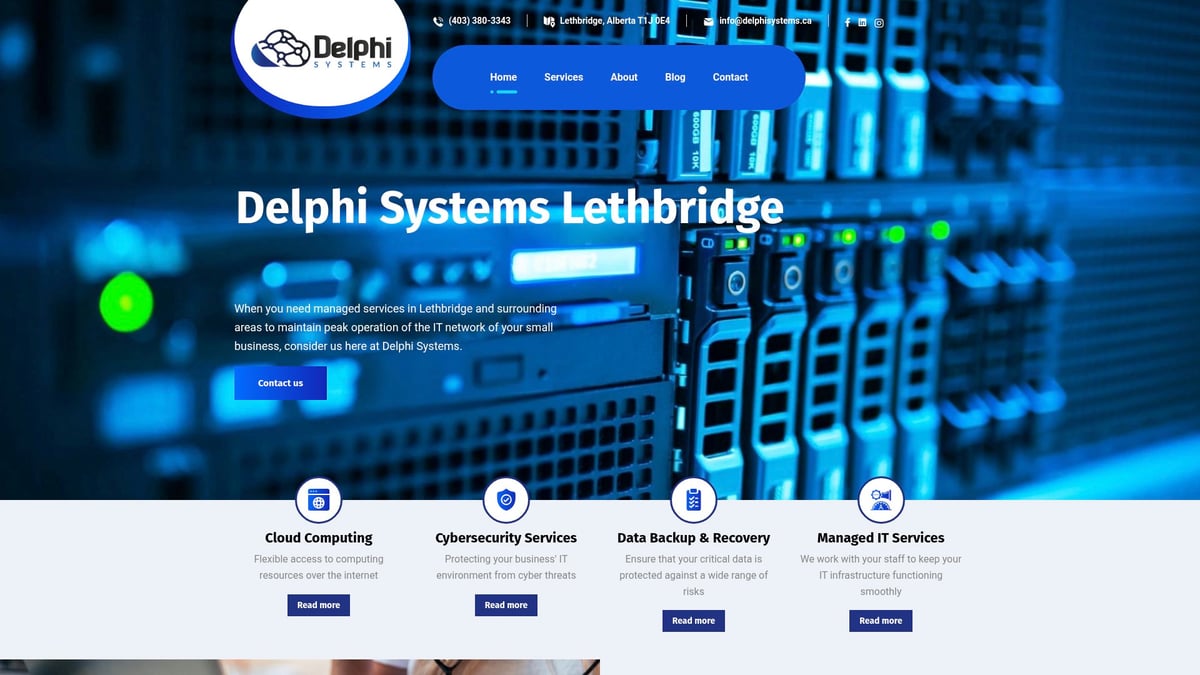
Their fixed-rate monthly pricing ensures budget control and eliminates surprises. With local expertise and partnerships with top technology vendors, Delphi Systems Inc. delivers both peace of mind and enhanced productivity.
Clients appreciate their prompt support and strategic approach. If you seek a trusted, local partner for fully managed it services, Delphi Systems Inc. is a strong choice.
Real-World Impact: Case Studies and Success Stories
Organizations across industries are turning to fully managed it services to drive real results. The following case studies show how different businesses have transformed their operations, improved security, and gained efficiencies that fuel growth.
Small Business Transformation Through Managed IT
A small business looking to scale quickly partnered with a provider of fully managed it services. The IT team handled everything from proactive network monitoring to cybersecurity, letting employees focus on core business functions.
After outsourcing IT, the business saw a 30 percent increase in productivity. System downtime dropped significantly, and workers reported fewer technical issues. This shift allowed leadership to prioritize growth and innovation.
The experience demonstrates how fully managed it services can accelerate expansion for small businesses. Reliable IT support and predictable costs make it easier for organizations to invest in new opportunities.
Mid-Size Enterprise: Cloud Migration and Security
A mid-sized company needed to upgrade its infrastructure and improve security. By choosing fully managed it services, the business successfully migrated to a hybrid cloud environment with expert support throughout the process.
The results were immediate. The company experienced a 50 percent reduction in IT incidents, better compliance with industry regulations, and greater flexibility for remote work. Security protocols became more robust, and employees gained secure access to critical systems.
This case highlights how fully managed it services enable modernization and risk reduction. Expert guidance ensures a smooth transition to advanced technologies.
Healthcare Provider: Ensuring Compliance and Continuity
A healthcare provider faced increasing compliance demands and needed to protect patient data. The organization adopted fully managed it services to address HIPAA requirements and ensure business continuity.
With continuous monitoring and regular security assessments, the provider reported a 70 percent decrease in downtime. There were no compliance violations, and patient information remained secure. The managed IT team delivered rapid support during technical incidents, minimizing disruptions to care.
Fully managed it services proved essential for maintaining security and compliance in the healthcare sector. Providers can focus on patient outcomes knowing IT risks are controlled.
Lessons Learned and Best Practices
These case studies reveal several lessons for organizations considering fully managed it services:
- Clear communication with your IT provider is critical for success.
- Regular reviews of service levels help adapt to changing needs.
- Partnership and transparency build long-term value.
- Ongoing IT strategy sessions ensure continuous improvement.
Businesses benefit most from fully managed it services when they view providers as strategic partners. Consistent collaboration and adaptation drive measurable results and lasting business growth.
As you’ve seen throughout this guide, navigating IT challenges in 2025 requires more than just keeping up with technology—you need proactive support, robust security, and a partner who truly understands your business. With Delphi Systems Inc., you can focus on what matters most while we take care of your entire IT infrastructure, from cloud solutions and cybersecurity to network monitoring and responsive support. If you’re ready to boost productivity, minimize risks, and gain peace of mind with a trusted local team by your side, let’s take the next step together. Call us now

