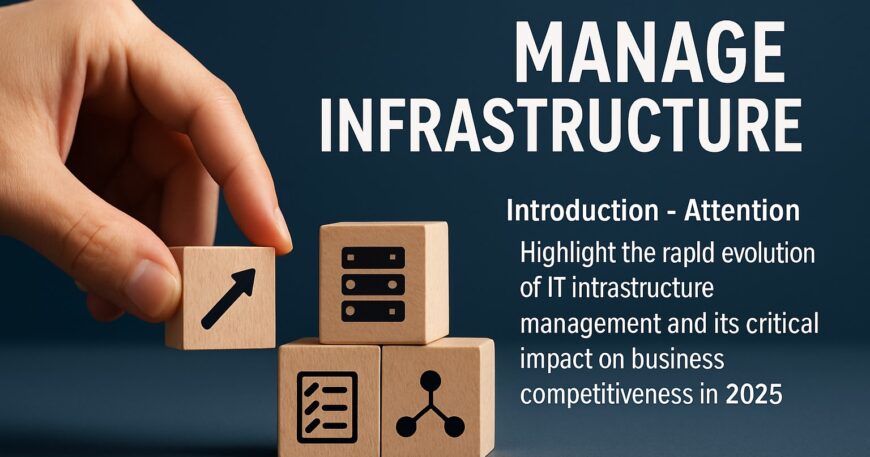
The pace of change in IT is accelerating, making it essential for organizations to manage infrastructure strategically to stay competitive in 2025.
Modern infrastructures are more complex than ever, combining hybrid, multi-cloud, edge, and on-premises environments. This complexity increases the need for careful planning and proactive management.
Outdated approaches to manage infrastructure can lead to security breaches, costly downtime, and reduced productivity.
This article serves as a comprehensive guide for business and IT leaders. You will find practical strategies, emerging trends, and proven best practices tailored for the year ahead.
Explore fundamentals, the latest trends, strategic planning, technology choices, automation, security, monitoring, and ways to future-proof your IT infrastructure.
Understanding Modern Infrastructure Management
Modern businesses face a rapidly changing landscape as they manage infrastructure across diverse environments in 2025. Today, infrastructure management means integrating physical servers, virtual machines, cloud resources, and edge devices into a unified, agile system. This integration allows organizations to efficiently manage infrastructure while adapting to emerging business needs.
A modern approach to manage infrastructure involves overseeing a complex web of resources. These include hardware, software platforms, networks, data centers, cloud services, and countless endpoints. The table below summarizes the core components of a modern infrastructure environment:
| Component | Description |
|---|---|
| Hardware | Physical servers, storage, networking gear |
| Software | Operating systems, management platforms |
| Networks | LAN, WAN, wireless, SD-WAN |
| Data Centers | On-premises and colocation facilities |
| Cloud Services | Public, private, and hybrid cloud resources |
| Endpoints | Laptops, mobile devices, IoT, edge devices |
The shift from traditional on-premises data centers to hybrid and multi-cloud environments has redefined how organizations manage infrastructure. Businesses now blend legacy systems with cloud-native technologies, creating interconnected ecosystems that span locations and platforms. This evolution supports new services and faster innovation.
Managing infrastructure effectively is crucial for digital transformation and business agility. When organizations manage infrastructure with scalability and flexibility in mind, they can quickly launch new products, support remote teams, and respond to market demands. Resilience is equally important, ensuring uptime and continuity even during disruptions.
AI and machine learning are now central to how companies manage infrastructure. Intelligent automation, predictive analytics, and self-healing systems help IT teams address issues before they escalate. According to Top IT infrastructure trends in 2025, AI integration is transforming operations by enabling faster detection and resolution of incidents.
Enterprises embracing these advancements have seen remarkable results. For instance, companies adopting cloud-native architectures and AI-driven monitoring report up to a 30% reduction in downtime and 25% faster incident resolution, as noted by Atlassian and Sumo Logic. These gains highlight the importance of continuously evolving how you manage infrastructure.
In summary, to manage infrastructure in 2025 means orchestrating a dynamic mix of resources using automation, intelligence, and a future-ready mindset. Organizations that prioritize flexibility, resilience, and innovation are best positioned to thrive in the digital era.
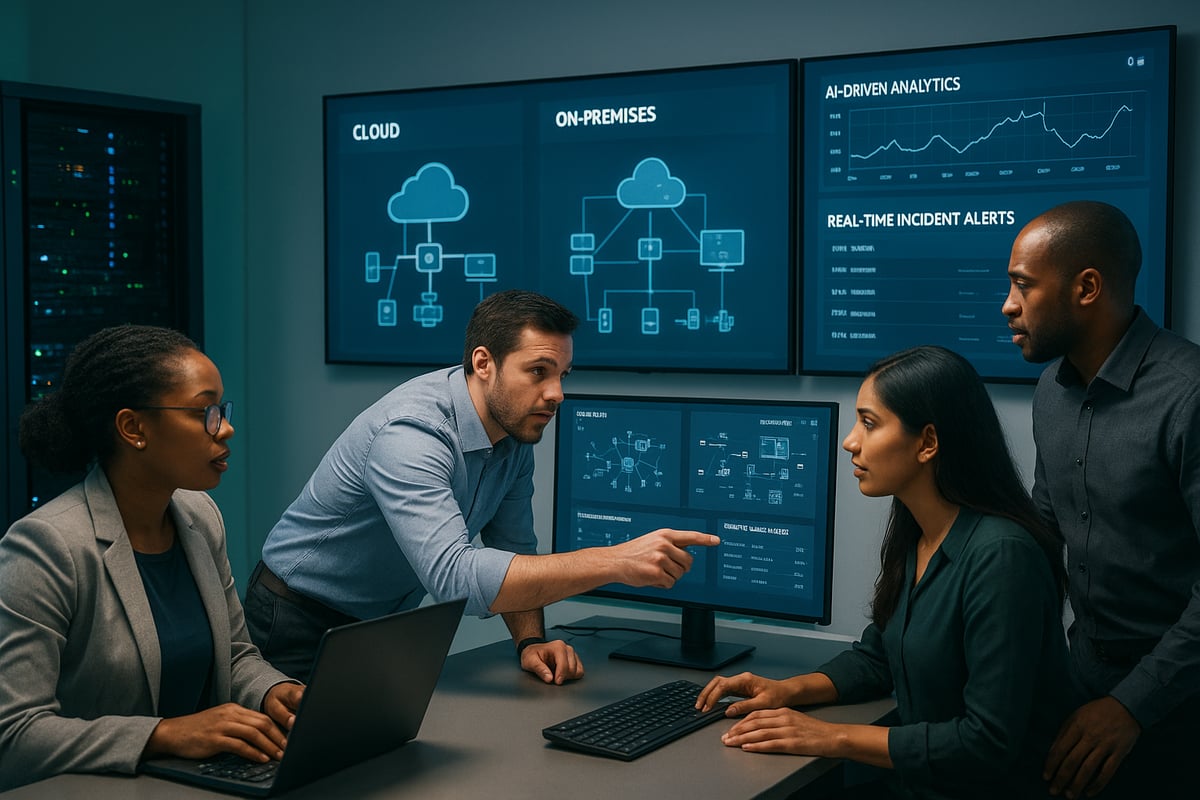
Top Trends Shaping Infrastructure Management in 2025
Staying ahead in how you manage infrastructure requires tracking the trends transforming IT landscapes. In 2025, organizations face a rapidly shifting environment with new strategies, tools, and priorities. Here are the most influential trends shaping how businesses manage infrastructure in the coming year.
Hybrid and Multi-Cloud Dominance
Hybrid and multi-cloud strategies are now the cornerstone for organizations aiming to manage infrastructure efficiently. By blending public and private clouds with on-premises resources, businesses gain flexibility, optimize costs, and ensure compliance with industry regulations. Gartner predicts that by 2025, 80% of enterprises will have adopted a hybrid cloud approach, underscoring the importance of designing infrastructure that can adapt to changing needs.
This approach helps companies manage infrastructure across diverse platforms, avoiding vendor lock-in while supporting scalability. Teams can allocate workloads based on performance requirements, security demands, and budget constraints.
Edge Computing Expansion
The rise of edge computing is revolutionizing how organizations manage infrastructure, especially for IoT and latency-sensitive applications. By processing data closer to its source, edge solutions reduce network congestion and enable faster response times.
Retailers, for instance, now process transactions locally at stores, minimizing delays and improving customer experiences. As more devices connect to the network, companies must manage infrastructure that extends beyond traditional data centers to the edge.
AI-Driven Infrastructure Management
Artificial intelligence is reshaping how IT teams manage infrastructure, introducing predictive analytics, automated remediation, and self-healing systems. AI enables infrastructure to anticipate failures, optimize resource allocation, and respond to incidents before users are impacted.
According to Predictions for AI-powered infrastructure in 2025, AI will accelerate automation across operations, allowing organizations to manage infrastructure with greater speed and accuracy. This not only reduces manual workloads but also cuts downtime and supports continuous improvement.
Infrastructure as Code and Automation
Infrastructure as Code (IaC) is becoming a best practice for those who manage infrastructure at scale. By codifying infrastructure configurations, teams ensure consistency, speed up deployments, and minimize human error.
Automation tools like Terraform and Ansible streamline repetitive tasks such as provisioning, scaling, and recovery. As organizations manage infrastructure across complex environments, IaC allows for rapid adaptation and version-controlled changes.
Security, Sustainability, and Observability
Security remains a top concern as threats grow more sophisticated. Zero Trust security models are now standard, requiring authentication and authorization for every access request, regardless of location. This approach helps manage infrastructure risks across distributed environments.
Sustainable IT is another key trend, with organizations focusing on energy-efficient hardware, green data centers, and reducing carbon footprints. Enhanced observability tools provide unified monitoring across on-premises and cloud assets, enabling real-time insights and proactive issue resolution.
Companies that manage infrastructure with automated monitoring reduce downtime by up to 40%, according to recent industry data. As technology evolves, these integrated strategies ensure infrastructure remains secure, efficient, and ready for the future.
Strategic Planning for Infrastructure Management
Strategic planning is essential for organizations aiming to manage infrastructure effectively in 2025. With IT environments growing in complexity, a clear roadmap is vital for aligning technology with business goals, ensuring resilience, and supporting digital transformation.

Aligning Business Objectives with Infrastructure Capabilities
The foundation of any plan to manage infrastructure is a clear understanding of business objectives. Leaders must define how IT supports organizational goals, such as scalability, agility, and customer experience.
A collaborative approach ensures infrastructure investments deliver measurable value. Regularly revisiting these objectives helps organizations adapt to changing market demands while keeping IT initiatives relevant.
Comprehensive Infrastructure Assessment and Gap Analysis
Before making improvements, organizations should conduct a thorough assessment of their current infrastructure. This process identifies strengths, weaknesses, and gaps that impact performance or security.
A typical assessment covers:
- Hardware inventory and lifecycle status
- Software platforms and integration points
- Network architecture and connectivity
- Cloud services and on-premises resources
- Security controls and compliance posture
| Assessment Area | Current State | Desired State | Priority |
|---|---|---|---|
| Network Bandwidth | Moderate | High | High |
| Cloud Integration | Partial | Full | Medium |
| Endpoint Security | Basic | Advanced | High |
This structured approach enables leaders to manage infrastructure proactively instead of reacting to issues as they arise.
Building a Future-Ready IT Roadmap
A future-ready IT roadmap is crucial for organizations that want to manage infrastructure efficiently as technology evolves. This roadmap should address scalability, flexibility, and resilience, ensuring the infrastructure can support growth and innovation.
Leaders must anticipate emerging trends, such as the rapid expansion of AI-driven workloads. According to AI infrastructure market growth in 2025, organizations are increasing investments in high-performance computing resources and automation to meet new demands.
Roadmaps should include:
- Phased technology upgrades
- Integration of cloud-native and edge solutions
- Plans for sustainable and energy-efficient operations
Budgeting for Infrastructure Investments
Balancing operational (OPEX) and capital (CAPEX) expenditures is a core part of infrastructure planning. Decision-makers must prioritize investments that offer the greatest business impact while carefully managing costs.
| Budgeting Area | OPEX Example | CAPEX Example |
|---|---|---|
| Cloud Services | Subscription fees | Prepaid reserved capacity |
| Hardware Upgrades | Maintenance plans | New server purchases |
| Security | Managed services | Firewall appliances |
Regular reviews ensure resources are allocated effectively to manage infrastructure for long-term success.
Stakeholder Alignment and Risk Management
Gaining buy-in from executives, IT teams, and business units is vital. Cross-functional collaboration ensures everyone understands the strategic value of infrastructure initiatives.
Risk management should be integrated into all planning activities. Key steps include:
- Identifying potential technology and security risks
- Developing mitigation strategies
- Assigning clear ownership for risk response
This approach minimizes disruptions and builds confidence among stakeholders.
Disaster Recovery and Business Continuity
Disaster recovery and business continuity planning are non-negotiable for organizations that want to manage infrastructure with confidence. Plans should cover data protection, failover procedures, and rapid recovery protocols.
For example, financial firms often implement geo-redundant data centers to comply with regulations and maximize uptime. Regular testing and updates ensure these plans remain effective as the infrastructure evolves.
The Value of Formal IT Infrastructure Strategies
Organizations with formal strategies to manage infrastructure are 40% more likely to achieve digital transformation goals, according to Atlassian. Documented plans create alignment, clarify priorities, and provide a framework for ongoing optimization.
By investing in strategic planning, organizations are better equipped to navigate the challenges of 2025 and beyond.
Choosing the Right Technologies and Tools
Selecting the right technologies and tools to manage infrastructure is crucial for business resilience and growth in 2025. The landscape is more competitive than ever, and the choices you make today will define your organization’s agility, security, and scalability tomorrow.

When evaluating cloud providers, it is essential to compare the leading options: AWS, Microsoft Azure, and Google Cloud. Each offers unique strengths, such as AWS’s extensive global reach, Azure’s integration with Microsoft services, and Google Cloud’s emphasis on AI and analytics. Industry-specific solutions may also provide regulatory compliance and tailored support that general providers might not offer.
| Provider | Strengths | Best For |
|---|---|---|
| AWS | Global reach, service breadth | Enterprises, startups |
| Azure | Microsoft integration, security | Hybrid environments, enterprises |
| Google Cloud | AI, analytics, open source | Data-driven organizations |
To successfully manage infrastructure, organizations must weigh the benefits of on-premises, cloud, and hybrid models. On-premises systems offer control and legacy integration, while cloud solutions deliver flexibility and scalability. Hybrid infrastructure blends both, allowing for workload portability and regulatory compliance.
Key criteria for technology selection include scalability, security, integration capabilities, cost efficiency, and vendor support. Open standards and interoperability are vital, ensuring your systems can evolve with business needs and integrate with future technologies. When you manage infrastructure with these priorities in mind, you reduce lock-in risk and boost long-term adaptability.
Automation platforms are now indispensable for streamlining operations. Tools like Ansible and Terraform enable rapid deployment, consistent configurations, and simplified scaling. Centralized monitoring and observability tools, such as unified dashboards with real-time alerts and analytics, help teams manage infrastructure proactively. According to Sumo Logic, organizations using unified monitoring platforms detect and resolve incidents 35% faster.
AI-driven infrastructure management is rapidly gaining traction. Predictive analytics, self-healing systems, and intelligent automation are transforming how organizations manage infrastructure. For deeper insights into how AI adoption is influencing data center strategies and operational efficiency, see AI’s impact on data center infrastructure.
A practical example is a healthcare organization leveraging a hybrid cloud approach to manage infrastructure for secure patient data management. By combining on-premises systems for sensitive workloads with cloud platforms for scalability, they achieve regulatory compliance and operational agility.
Ultimately, the ability to manage infrastructure effectively in 2025 depends on making informed choices about technologies and tools. Prioritize flexibility, automation, and unified monitoring to ensure your infrastructure remains secure, resilient, and future-ready.
Security and Compliance in Infrastructure Management
Modern organizations face a rapidly evolving threat landscape, making it critical to manage infrastructure with a security-first mindset. Cyber threats such as ransomware, supply chain attacks, and insider risks are more sophisticated than ever. As businesses adopt hybrid and multi-cloud environments, the attack surface expands, increasing vulnerability to breaches and data loss.
Implementing Zero Trust security principles is now essential when you manage infrastructure. Zero Trust assumes no user or device is trusted by default, requiring continuous verification across all layers. This approach involves strict identity management, robust endpoint protection, and granular network segmentation. By segmenting networks and enforcing least-privilege access, organizations reduce lateral movement and limit the impact of potential breaches.
A well-rounded security posture also demands real-time threat detection and rapid incident response. Modern security solutions use AI and machine learning to identify anomalous activity and automate containment actions. When you manage infrastructure, integrating automated compliance monitoring tools enables organizations to continuously track regulatory requirements and generate audit-ready reports with minimal manual effort.
| Security Control | Purpose | Example Tool |
|---|---|---|
| Identity Management | Authenticate & authorize users | Okta, Azure AD |
| Endpoint Protection | Secure devices & endpoints | CrowdStrike, SentinelOne |
| Network Segmentation | Limit lateral movement | Cisco ACI, VMware NSX |
| Threat Detection | Identify & respond to attacks | Splunk, Sumo Logic |
| Compliance Monitoring | Audit & report compliance | Qualys, Vanta |
Data encryption, regular backups, and disaster recovery protocols are cornerstones of resilient infrastructure. Encrypting data at rest and in transit protects sensitive information from unauthorized access. Scheduled backups and tested recovery plans ensure business continuity, even in the event of a cyber incident or hardware failure.
For small businesses, leveraging managed security services is a strategic way to manage infrastructure securely without overextending internal resources. Managed service providers deliver proactive monitoring, rapid response, and compliance support tailored to business needs. For example, many small companies have seen significant reductions in successful attacks after adopting managed security solutions.
According to industry data, businesses with proactive infrastructure security experience 50% fewer successful attacks compared to those with reactive approaches. The benefits are clear: when you manage infrastructure with a focus on security and compliance, you not only protect assets but also build customer trust and ensure long-term business resilience.
Monitoring, Optimization, and Future-Proofing
Continuous monitoring is essential if you want to manage infrastructure effectively in 2025. Modern IT environments are dynamic, with resources spread across on-premises, cloud, and edge locations. Without robust monitoring, it's easy to miss performance issues or evolving threats.
The Value of Proactive Monitoring
Proactive monitoring forms the backbone of efforts to manage infrastructure efficiently. It helps teams detect anomalies before they become major incidents. By setting up continuous performance and security checks, organizations can minimize downtime and stay compliant with regulations.
A recent Sumo Logic report found that companies using automated monitoring reduced downtime by up to 40%. This translates to significant cost savings and improved user satisfaction. Centralized dashboards enable IT teams to track key metrics across hybrid and multi-cloud environments.
Real-Time Analytics and Dashboards
Real-time analytics provide immediate visibility into system health, resource utilization, and potential vulnerabilities. When you manage infrastructure with advanced dashboards, you can quickly identify issues and respond before they escalate.
Dashboards consolidate data from cloud services, on-premises servers, and endpoints. This unified view makes it easier to spot trends and prioritize remediation efforts. Below is a simple example of a monitoring alert in Python:
if cpu_usage > 80:
    send_alert("CPU usage is above threshold!")
This approach ensures critical events are addressed promptly.
AI and Predictive Optimization
Artificial intelligence and machine learning are revolutionizing how organizations manage infrastructure. Predictive analytics can forecast hardware failures, network congestion, or security threats before they impact operations.
Self-healing systems automatically resolve routine issues, reducing manual intervention. Enterprises leveraging AI-driven tools are able to predict and prevent outages, protecting both revenue and reputation. As IT environments scale, AI becomes a vital partner in maintaining resilience.
Cost Management and Capacity Planning
Cost optimization is a core element when you manage infrastructure at scale. Right-sizing resources and eliminating idle assets can significantly reduce expenses. Many organizations use reserved instances and automated scaling to match capacity with demand.
Capacity planning tools help forecast growth and allocate resources efficiently. The following table summarizes key benefits of optimization:
| Strategy | Benefit |
|---|---|
| Right-sizing resources | Cost savings |
| Reserved instances | Predictable budgeting |
| Automated scaling | Improved performance |
Effective cost management ensures funds are available for innovation and emerging technology adoption.
Preparing for the Future
Future-proofing is a continuous process for those who manage infrastructure in fast-changing landscapes. Regular patch management and system updates keep environments secure. Documenting infrastructure changes and maintaining up-to-date records safeguards institutional knowledge.
Organizations should monitor regulatory shifts and emerging technologies such as quantum computing and 5G. By embracing a culture of continuous learning and adaptation, IT teams can stay ahead of risks and opportunities in 2025.
As you look ahead to managing your IT infrastructure in 2025, it’s clear that staying ahead of new trends and challenges requires the right expertise and proactive support. Whether you’re navigating hybrid cloud environments, strengthening cybersecurity, or planning for future growth, having a reliable partner can make all the difference. If you want to ensure your business runs smoothly and securely—so you can focus on what matters most—let’s talk about your specific needs. You don’t have to tackle these complexities alone. Call us now to start building a stronger, more resilient IT foundation for your business.

