



Every 39 seconds, a cyber attack targets an organization, and the cost of breaches has soared to record highs in recent years. In 2026, networking and cyber security have become inseparable pillars for both businesses and individuals, shaping how we connect, collaborate, and protect our digital assets.
This guide is designed to help you navigate the evolving landscape with confidence. You will discover essential networking concepts, the latest cyber security fundamentals, emerging threats and technologies, industry certifications, and practical strategies for building a secure future.
Are you ready to safeguard your data and networks? Dive into this comprehensive resource and take charge of your online security journey.
Understanding Computer Networking Fundamentals
Computer networks are the backbone of today’s digital world, enabling seamless communication and collaboration across continents. As organizations and individuals navigate an increasingly connected landscape, understanding networking and cyber security fundamentals is essential for building resilient IT environments. Let’s break down the core elements that shape networking and cyber security in 2026.

The Role of Networking in Modern IT
Computer networking is the process of connecting devices to exchange data and resources. Its role is critical in supporting communication, data transfer, and remote collaboration for both individuals and organizations. Over the last decade, networking and cyber security have evolved from traditional LAN and WAN setups to sophisticated cloud and hybrid networks.
Networking forms the foundation of IT infrastructure. With the rise of remote work, networks have expanded rapidly to accommodate distributed teams. In fact, over 60% of global businesses now rely on hybrid networks as of 2025. This shift also reflects the growing investment in secure infrastructure, with the cybersecurity market projected to reach $267.51 billion by 2025. Understanding networking and cyber security ensures organizations are prepared for the challenges of a modern digital workplace.
Key Network Components and Architectures
A robust network relies on several core components, including routers, switches, firewalls, servers, and various endpoints like laptops and mobile devices. Each device plays a distinct role in directing, filtering, and securing data across the network.
Organizations deploy different types of networks, such as LAN (Local Area Network), WAN (Wide Area Network), WLAN (Wireless LAN), SDN (Software-Defined Networking), and cloud-based architectures. For example, a typical hybrid topology might combine on-premises servers with cloud resources to maximize flexibility and uptime. Redundancy and scalability are essential in networking and cyber security, ensuring that services remain available even during failures or spikes in demand.
Network Protocols and Communication Standards
Effective data exchange relies on well-established protocols. TCP/IP is the fundamental suite powering most internet communication, while UDP supports faster, connectionless transfers. HTTP and HTTPS manage web traffic, with HTTPS adding encryption for secure browsing. FTP enables file transfers, and emerging protocols like QUIC offer improved speed and security.
Protocols play a vital role in networking and cyber security, safeguarding data as it moves between devices. As organizations grow, many are transitioning from IPv4 to IPv6 to support more devices and enhance scalability. This shift reflects the ongoing need for robust, secure, and future-ready networking standards.
Network Management and Monitoring
Maintaining optimal network performance requires a proactive approach. Organizations use tools such as SNMP for device monitoring, NetFlow for traffic analysis, and increasingly, AI-powered platforms for real-time anomaly detection. These tools help IT teams ensure uptime, quickly identify issues, and prevent breaches before they escalate.
Proactive monitoring is a cornerstone of networking and cyber security. For example, 72% of breaches are detected using network monitoring tools, which highlights the importance of continuous oversight. Effective management practices minimize downtime and reduce the risk of costly incidents.
The Convergence of Networking and Security
Today, network security is not a separate concern—it is embedded within every aspect of network design and operation. The shift toward security by design means that protections are built into the architecture from the outset, rather than added later.
A prime example is Zero Trust Network Access (ZTNA), which restricts access based on strict verification regardless of user location. This approach demonstrates how networking and cyber security are converging, with network and security teams now collaborating closely to protect digital assets. By integrating security at every layer, organizations can address emerging threats more effectively.
Core Principles of Cyber Security in 2026
Cyber security in 2026 is defined by rapid change, increased complexity, and higher stakes. As organizations and individuals deepen their reliance on interconnected systems, mastering the core principles of networking and cyber security has never been more urgent. Let’s explore the foundational elements that drive effective protection in this evolving landscape.
The Evolving Cyber Threat Landscape
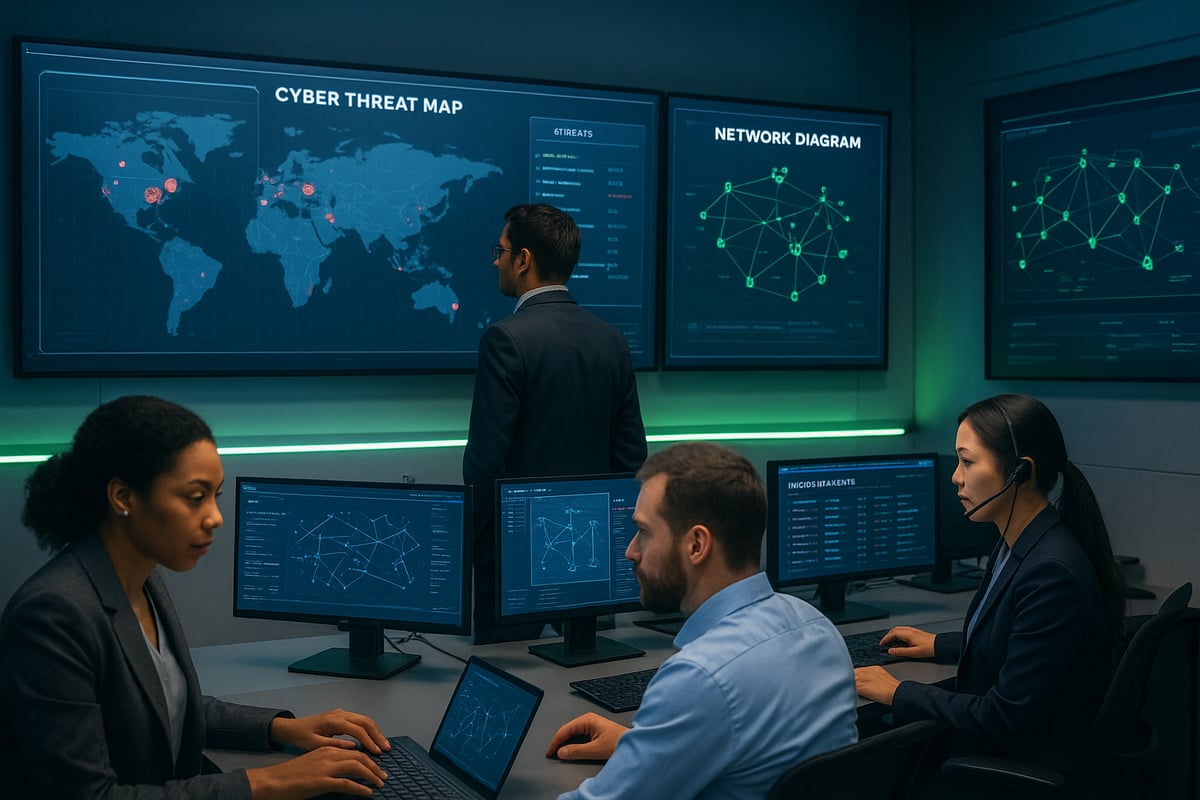
The cyber threat landscape is more dynamic than ever, with attackers constantly shifting tactics. Major threats like ransomware, phishing, distributed denial of service (DDoS), and insider attacks continue to dominate headlines. New attack vectors have emerged, targeting IoT devices, 5G networks, and cloud platforms.
Ransomware attacks alone surged by 30 percent from 2024 to 2025. The financial impact is staggering, with cybercrime costs expected to rise to nearly $24 trillion by 2027. High-profile breaches have shown how one compromise can ripple across industries. Staying ahead requires a proactive approach to networking and cyber security.
Essential Cyber Security Frameworks and Standards
Frameworks and standards are the backbone of a robust networking and cyber security program. NIST, ISO/IEC 27001, and CIS Controls offer structured approaches to identifying and mitigating risks. Regulatory requirements such as GDPR and CCPA set the bar for data privacy and protection.
Compliance is not optional—businesses face hefty fines for violations, especially in sensitive sectors like healthcare. Adopting recognized frameworks ensures organizations align their security posture with global best practices. For anyone invested in networking and cyber security, understanding these standards is foundational.
Defense-in-Depth and Layered Security
Defense-in-depth is a strategic approach that uses multiple security layers to protect assets. These layers include perimeter defenses, internal network controls, endpoint security, application safeguards, data protection, and user access management.
Combining technologies such as firewalls, intrusion detection/prevention systems (IDS/IPS), and endpoint protection creates a robust shield. Layered security is essential as threats become more sophisticated. Organizations that prioritize defense-in-depth within their networking and cyber security strategies are better equipped to handle advanced attacks.
Identity and Access Management (IAM)
Identity and Access Management (IAM) is a cornerstone of networking and cyber security. Effective IAM includes authentication, authorization, single sign-on (SSO), and multi-factor authentication (MFA). Role-based access control and the principle of least privilege limit exposure if credentials are compromised.
Enterprises have widely adopted MFA, recognizing that 80 percent of breaches involve stolen or weak credentials. By enforcing strict IAM policies, organizations reduce risk and ensure only authorized users access critical systems within their networking and cyber security framework.
Security Operations and Incident Response
Security Operations Centers (SOC) are the nerve centers of modern networking and cyber security efforts. SOC teams monitor, detect, and respond to incidents using advanced tools and automation. The incident response cycle includes detection, containment, eradication, recovery, and lessons learned.
Automated threat detection using artificial intelligence and machine learning accelerates response times. Studies show that rapid incident response can cut the impact of a breach by half. For effective networking and cyber security, a strong SOC and clear response plan are essential.
The Human Element: Security Awareness and Training
Technology alone cannot secure an organization. The human element is often the weakest link in networking and cyber security. Ongoing employee training is critical to reduce the risk of social engineering and insider threats.
Common user errors, such as clicking on phishing links, remain a leading cause of breaches. Phishing simulation programs and regular awareness sessions help build a culture of vigilance. With 90 percent of breaches involving human error, investing in people is as vital as investing in technology for networking and cyber security.
Emerging Networking and Cyber Security Technologies for 2026
The landscape of networking and cyber security is rapidly evolving as organizations confront sophisticated threats and adopt innovative solutions. In 2026, several emerging technologies are reshaping how businesses and individuals protect digital assets, data, and infrastructure. Understanding these developments is crucial for anyone aiming to stay ahead in the field of networking and cyber security.

Artificial Intelligence and Machine Learning in Security
AI and machine learning are transforming how networking and cyber security teams detect and respond to threats. These technologies enable real-time anomaly detection, predictive analytics, and automated incident response. For instance, AI-driven Security Operations Centers (SOCs) are reducing response times and improving accuracy.
Adoption of AI/ML tools has surged in recent years, with AI/ML tool usage skyrocketed by 594.82%. In 2025, 40% of large enterprises already use AI for security, highlighting its impact across the industry. As cyber threats grow more complex, integrating AI into networking and cyber security strategies is no longer optional.
Zero Trust Architecture and SASE
Zero Trust Architecture (ZTA) is redefining security by following the principle of “never trust, always verify.” In networking and cyber security, this means continuous authentication, strict access controls, and micro-segmentation. Secure Access Service Edge (SASE) unifies networking and security functions into a single cloud-delivered service.
Organizations are rapidly adopting Zero Trust Network Access (ZTNA) to secure remote workforces and distributed environments. By implementing SASE, companies gain holistic visibility and control, ensuring that only authorized users and devices access sensitive resources. This approach is becoming a gold standard for networking and cyber security professionals.
Quantum Computing and Post-Quantum Cryptography
Quantum computing poses a significant challenge for current encryption methods. As quantum technology advances, traditional cryptographic algorithms like RSA and ECC risk becoming obsolete. The field of networking and cyber security is responding with post-quantum cryptography, which aims to develop algorithms resistant to quantum attacks.
NIST is leading efforts to standardize quantum-resistant cryptographic algorithms. Organizations must monitor these developments and begin planning migration strategies. Staying informed about quantum computing trends is vital for future-proofing networking and cyber security systems.
IoT and Edge Security
The proliferation of Internet of Things (IoT) devices and edge computing introduces new vulnerabilities. In networking and cyber security, securing these endpoints is essential. Attackers often target IoT devices due to weak authentication and outdated firmware.
Effective strategies include strong device authentication, regular updates, and network segmentation to isolate IoT devices. By 2026, the number of IoT devices is expected to reach 30 billion, making robust IoT and edge security a top priority for networking and cyber security teams.
Cloud Security and Hybrid Environments
As businesses embrace multi-cloud and hybrid environments, unique security challenges arise. The shared responsibility model means both providers and customers play roles in securing data and applications. Networking and cyber security practices must adapt to address these risks.
Cloud-native security tools, such as Cloud Access Security Brokers (CASBs), help monitor and control access across environments. With 80% of organizations using multi-cloud strategies, integrating cloud security into overall networking and cyber security frameworks is essential for resilience.
Automation and Orchestration in Security Operations
Automation is streamlining security operations by handling repetitive tasks and accelerating response times. Security Orchestration, Automation, and Response (SOAR) platforms allow networking and cyber security teams to automate threat detection, investigation, and remediation workflows.
Benefits include improved efficiency, reduced human error, and faster incident resolution. Automation is especially valuable as the volume of threats continues to grow, enabling organizations to maintain strong defenses without overburdening their teams.
Building a Secure Network: Best Practices and Strategies
Creating a resilient network requires a comprehensive approach that blends technology, process, and people. As networking and cyber security become more interconnected, organizations must adopt layered strategies to defend against evolving threats. With the global cybersecurity workforce estimated at 4.7 million professionals, it is crucial to ensure every component of your infrastructure is protected.

Network Design for Security
A secure network begins with thoughtful architecture. Segmentation divides your network into smaller, controlled sections, reducing the impact of any breach. Implementing VLANs and DMZs isolates sensitive assets and services, making unauthorized access more difficult.
Redundancy ensures continuous operations even if one component fails. Applying least privilege means users and devices only access resources necessary for their roles. Integrating security from the initial design phase is a hallmark of effective networking and cyber security planning.
- Use segmented VLANs for internal departments.
- Place public-facing servers in a DMZ.
- Design for failover and redundancy.
Endpoint and Device Security
Endpoints are frequent targets for attackers. Protecting laptops, mobile devices, and IoT equipment is vital for robust networking and cyber security. Deploy Endpoint Detection and Response (EDR) solutions to monitor and respond to threats in real time.
Establish Bring Your Own Device (BYOD) policies and leverage Mobile Device Management (MDM) to enforce controls. Regularly update device firmware and applications to close security gaps.
- Enforce device encryption and strong authentication.
- Monitor endpoints for unusual activity.
- Control access for personal and unmanaged devices.
Data Protection and Encryption
Securing data is fundamental to networking and cyber security. Encrypt sensitive data at rest, in transit, and in use. Use industry standards such as AES for storage and TLS 1.3 for secure communications.
Full-disk encryption on company laptops prevents data loss if a device is stolen. Regularly review encryption protocols to ensure they meet modern standards and compliance requirements.
| Data State | Recommended Protection |
|---|---|
| At Rest | AES, full-disk encryption |
| In Transit | TLS 1.3, VPNs |
| In Use | Application-layer encryption |
Patch Management and Vulnerability Assessment
Unpatched software is a common entry point for attackers. Effective patch management and vulnerability assessment are foundational to networking and cyber security. Schedule regular software updates and automate patch deployment wherever possible.
Use vulnerability scanning tools to detect weaknesses before they are exploited. Rapid response to zero-day vulnerabilities is essential for minimizing risk.
- Automate patch cycles.
- Perform regular vulnerability scans.
- Track remediation progress.
Continuous Monitoring and Threat Intelligence
Real-time monitoring is crucial for identifying and responding to threats quickly. Integrate threat intelligence feeds into Security Information and Event Management (SIEM) systems for comprehensive visibility.
Proactive monitoring helps organizations detect anomalies before they escalate into incidents. Networking and cyber security teams should collaborate to analyze alerts and refine detection rules.
- Use SIEM for centralized log analysis.
- Subscribe to external threat intelligence services.
- Investigate and respond to suspicious activity promptly.
Business Continuity and Disaster Recovery Planning
Preparation is key to minimizing the impact of cyber incidents. Develop business continuity and disaster recovery plans that address networking and cyber security risks. Regularly back up critical data and conduct recovery drills to ensure readiness.
Test incident response procedures to identify gaps and improve over time. Businesses with tested recovery plans are proven to recover four times faster after an attack.
- Schedule frequent data backups.
- Simulate ransomware recovery scenarios.
- Update plans as threats evolve.
Networking and Cyber Security Education, Certifications, and Careers
The demand for skilled professionals in networking and cyber security continues to rise. Education, certifications, and ongoing development are crucial for anyone looking to excel in this field. Whether you are just starting or aiming to advance, understanding your options is the first step.
Academic Pathways and Degree Programs
Academic programs in networking and cyber security are available at various levels, including associate, bachelor’s, and master’s degrees. These programs blend theoretical instruction with practical experience, often through labs and real-world projects.
Community colleges play a key role by offering Cisco Networking Academy courses and similar hands-on programs. This approach helps students build foundational skills before moving into the workforce or pursuing higher education.
| Degree Type | Typical Duration | Focus |
|---|---|---|
| Associate | 2 years | Fundamentals, hands-on labs |
| Bachelor’s | 4 years | Theory, advanced networking and cyber security, projects |
| Master’s | 1-2 years | Specialization, research, leadership |
Choosing the right program provides a strong base for a successful career in networking and cyber security.
Industry Certifications: Value and Options
Certifications are essential in networking and cyber security, serving as proof of expertise and dedication. Employers often look for industry-recognized credentials to validate practical skills and knowledge.
Some of the most valuable certifications include:
- CompTIA Network+
- CompTIA Security+
- Cisco CCNA
- CISSP
- CEH
- Microsoft Certified
- AWS Certified
For those starting out, Security+ is widely accepted as a baseline for entry-level cyber security positions. Earning certifications shows employers you are serious about a career in networking and cyber security.
Skills and Competencies for 2026
Technical and soft skills are both highly valued in networking and cyber security. Employers seek professionals who can adapt to rapidly changing technology and threat landscapes.
Essential technical skills:
- Networking protocols and architectures
- Security operations and cloud security
- Scripting and automation
- AI basics
Key soft skills:
- Critical thinking
- Teamwork
- Communication
With the shift to cloud environments, professionals skilled in both cloud and networking and cyber security are in especially high demand.
Career Outlook and Salary Trends
The career outlook for networking and cyber security professionals remains strong. Organizations across industries need experts to protect their infrastructure and data.
In-demand roles include:
- Network administrator
- SOC analyst
- Security specialist
According to recent data, the average salary for network security roles exceeds $80,000 in many regions. As cyber threats grow, the need for qualified networking and cyber security talent will keep increasing.
Lifelong Learning and Professional Development
Continuous education is vital in networking and cyber security. The field evolves quickly, so professionals must stay updated with the latest technologies and threats.
Resources for ongoing learning include:
- Online courses and webinars
- Industry conferences
- Professional communities
- Capture The Flag (CTF) competitions
Regular participation in these activities ensures your networking and cyber security knowledge remains current and relevant.
Actionable Steps for Businesses and Individuals to Enhance Security in 2026
Staying ahead in networking and cyber security requires practical, ongoing actions. Both organizations and individuals must commit to proactive measures to build resilience against evolving threats. The following steps provide a roadmap for strong protection in 2026.
Conducting a Security Risk Assessment
Begin with a comprehensive security risk assessment to identify vulnerabilities in your networking and cyber security posture. Use structured frameworks like the NIST Cybersecurity Framework to guide your review.
Key steps include:
- Cataloging hardware, software, and data assets.
- Evaluating potential threats and likelihoods.
- Prioritizing risks based on impact.
Specialized tools can automate much of this process, making it easier to track changes over time. Regular assessments ensure your defenses evolve alongside new threats.
Developing and Enforcing Security Policies
Clear, enforceable policies form the backbone of effective networking and cyber security strategies. Develop IT and security policies that cover acceptable use, password management, and remote access.
Regularly review and update these policies to reflect changes in technology and regulations. Engage employees in policy creation to boost compliance.
Enforcing policies with automated tools and audits helps maintain a consistent security posture. Well-communicated policies empower everyone to act responsibly.
Implementing Multi-Layered Security Controls
A multi-layered approach is essential for robust networking and cyber security. Deploy firewalls, intrusion detection and prevention systems, and endpoint protection across your environment.
Combine network segmentation with multi-factor authentication to limit the spread of attacks. Strong configurations and regular updates further reduce risk.
Layered controls make it much harder for attackers to move laterally within your network. Each barrier adds additional protection for your data and systems.
Employee Training and Security Culture
Human error remains a leading cause of breaches, so regular training is vital. Establish ongoing security awareness programs to educate staff about phishing, social engineering, and safe practices.
Encourage prompt reporting of suspicious activities and reward vigilance. Simulated phishing campaigns help reinforce lessons and measure progress.
A strong security culture ensures everyone understands their role in networking and cyber security. Empowered employees are your first line of defense.
Regular Testing and Continuous Improvement
Continuous improvement is key to staying secure. Conduct regular penetration testing, vulnerability scans, and red/blue team exercises to uncover weaknesses.
Analyze results and implement remediation plans promptly. Annual security audits help ensure compliance and reveal areas for enhancement.
A cycle of testing and improvement keeps your networking and cyber security posture strong against new and emerging threats.
Keeping Up with Emerging Threats and Solutions
The threat landscape changes quickly, so staying informed is crucial. Monitor threat intelligence feeds, subscribe to CERT alerts, and join industry forums.
Participate in professional groups to share experiences and learn from peers. Regularly reviewing vendor advisories helps you address new vulnerabilities fast.
By making continuous learning a priority, you ensure your networking and cyber security strategies remain effective and relevant.
As we’ve explored throughout this guide, staying ahead in networking and cyber security is essential for protecting your business in today’s fast-changing landscape. Whether you’re looking to strengthen your network, safeguard sensitive data, or ensure business continuity, having a trusted IT partner makes all the difference. At Delphi Systems Inc., we take the stress out of managing your technology so you can focus on what matters most—growing your business. If you’re ready to take the next step toward a more secure and productive future, Call us now to discuss how we can help.

