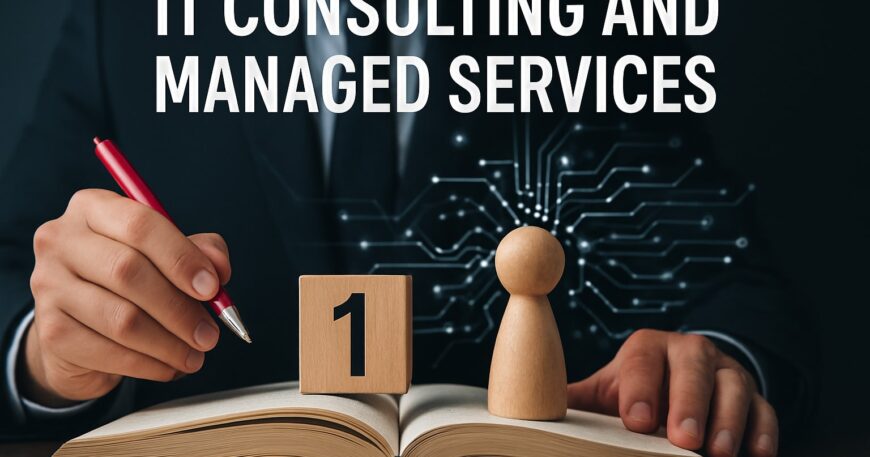
Modern businesses in 2026 face an environment where IT is more complex and critical than ever before. With rapid digital transformation, organizations depend on technology, cloud solutions, and cybersecurity to remain competitive and secure. However, rising costs, evolving security threats, and ongoing skill shortages make managing IT internally an increasing challenge. This guide explores it consulting and managed services, explaining their importance, how they can drive business success, and how to choose the right solution. You will find clear definitions, key benefits, current trends, service offerings, selection criteria, and a future outlook.
Understanding IT Consulting and Managed Services
Navigating the world of it consulting and managed services is essential for organizations seeking to thrive in a technology-driven landscape. As digital transformation accelerates, understanding these services becomes a cornerstone for informed business decisions.
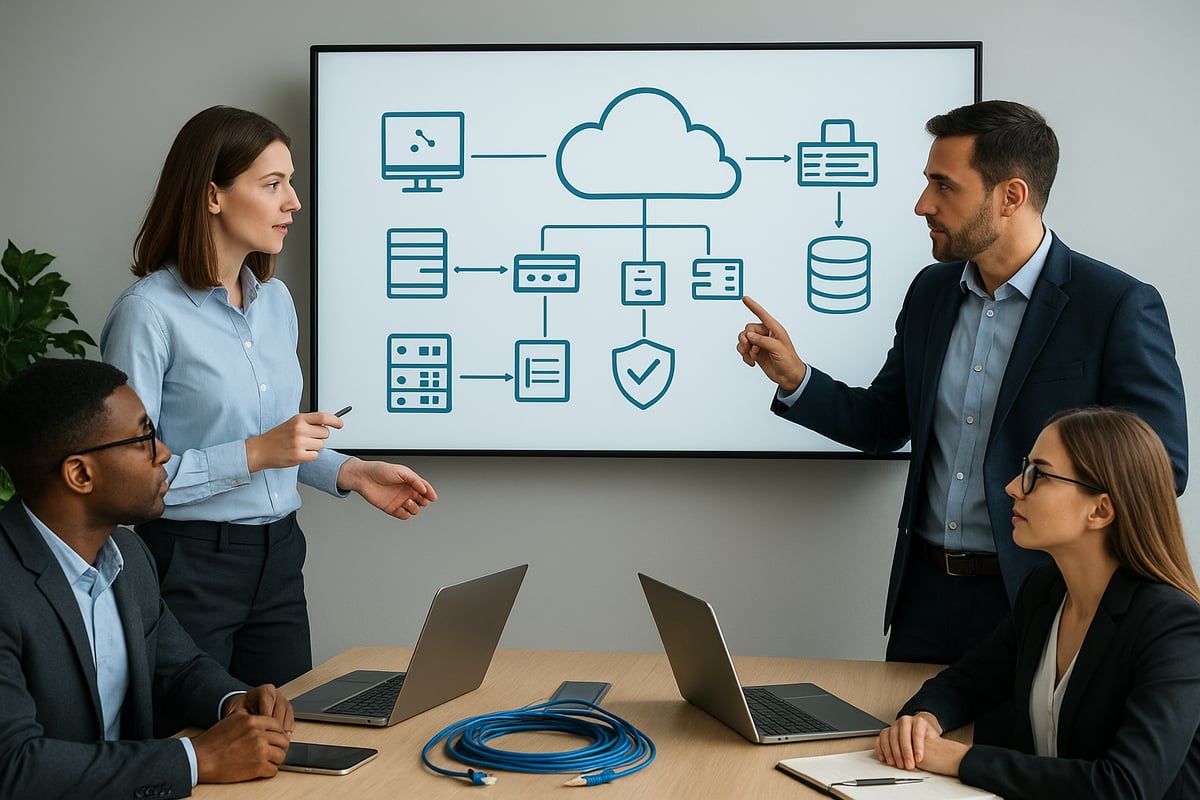
Defining IT Consulting and Managed Services
IT consulting and managed services represent two pillars of modern IT support. IT consulting focuses on strategic guidance, offering expert advice to align technology with business goals. Consultants typically engage in short-term, project-based work such as digital transformation planning, technology assessments, and roadmap creation.
In contrast, managed services provide ongoing, proactive support for daily IT operations. Managed service providers (MSPs) handle tasks like system monitoring, maintenance, helpdesk support, and cybersecurity management. For example, an IT consultant may design a cloud migration strategy, while an MSP ensures the new cloud environment is secure and running smoothly.
Key roles in it consulting and managed services include:
- Strategic IT planning and assessments
- Technology roadmap development
- Proactive system monitoring and maintenance
- End-user support and troubleshooting
By leveraging both IT consulting and managed services, businesses can address both immediate challenges and long-term objectives.
Key Differences and Overlaps
The primary distinction between it consulting and managed services lies in their engagement models. Consulting is typically project-based, with a defined scope and timeline. Managed services, on the other hand, operate on recurring contracts, delivering continuous support.
Below is a comparison table:
| Aspect | IT Consulting | Managed Services |
|---|---|---|
| Engagement Model | Project-based | Ongoing/Recurring |
| Focus | Strategy/Planning | Operations/Support |
| Typical Duration | Short-term | Long-term |
| Billing | Per project/hourly | Subscription/flat rate |
Despite their differences, it consulting and managed services often overlap. Many organizations use consultants for digital transformation and then transition to managed services for ongoing support. According to industry analysts, the tech consulting market is expected to surpass $400 billion in 2026, highlighting the growing reliance on both models.
By combining these approaches, businesses can maximize efficiency, minimize risk, and stay competitive in a fast-evolving marketplace.
Why Businesses Need These Services in 2026
The demand for it consulting and managed services continues to rise as IT environments become more complex. Hybrid cloud deployments, remote workforces, and IoT integration create significant management challenges. At the same time, cybersecurity threats and regulatory requirements are escalating, making expert oversight critical.
Skill shortages in IT further complicate the landscape, with many organizations struggling to attract and retain qualified professionals. Outsourcing to it consulting and managed services providers offers access to specialized expertise and helps control costs. For example, small businesses often find it impossible to maintain compliance without external support. Data from CompTIA shows that 60 percent of SMBs now outsource at least one IT function, underscoring the importance of these services.
Choosing the right partner ensures your business remains secure, agile, and prepared for future growth.
Core Benefits of IT Consulting and Managed Services
Modern businesses face a rapidly shifting technology landscape, making it crucial to understand the core benefits of it consulting and managed services. Leveraging these services not only streamlines operations but also helps organizations stay competitive, secure, and agile in 2026.

Operational Efficiency and Cost Savings
One of the most significant advantages of it consulting and managed services is the improvement in operational efficiency and the reduction of IT costs. By relying on proactive monitoring and regular maintenance, businesses minimize downtime and avoid costly disruptions.
For example, organizations that transition to managed services often experience up to a 30% reduction in IT expenses. Instead of unpredictable break-fix charges, flat-rate pricing models provide cost certainty, making budgeting much easier for decision-makers.
A recent study found that companies using managed service providers report 50% fewer outages, directly impacting productivity and profitability. This growth in demand is reflected in the global managed services market projected to reach $1.27 trillion by 2035, highlighting how more businesses recognize these benefits as essential for long-term success.
Enhanced Security and Compliance
The security landscape in 2026 is more complex than ever, with new threats emerging daily. It consulting and managed services deliver advanced cybersecurity, including endpoint protection, firewalls, and continuous threat detection, to keep sensitive data safe.
Managed service providers also help organizations navigate strict regulatory environments. Whether it is GDPR, HIPAA, or PCI DSS, compliance is easier with external experts managing policies and procedures. A healthcare clinic, for instance, can avoid costly fines and reputational damage by using managed compliance services.
With the right partner, businesses gain peace of mind knowing that their security and compliance needs are proactively addressed through it consulting and managed services.
Access to Expertise and Latest Technology
Technology evolves rapidly, and internal teams often struggle to keep pace. It consulting and managed services offer instant access to certified professionals with expertise across cloud, automation, AI, and more.
This access means businesses can implement best-in-class solutions and benefit from strategic vendor relationships. For example, a company may need guidance on deploying a new cloud platform or integrating automation into workflows. Instead of hiring and training new staff, organizations can tap into the managed service provider’s talent pool.
According to Gartner, 70% of organizations cite access to expertise as a primary benefit of it consulting and managed services, ensuring companies stay ahead in a competitive market.
Scalability and Business Continuity
Growth and change are inevitable, so scalability is crucial. It consulting and managed services offer flexible solutions that adapt as business needs evolve. Whether expanding to new locations or handling seasonal spikes, these services can scale support and infrastructure on demand.
Business continuity is another core benefit. Automated backups, disaster recovery plans, and rapid response strategies ensure that companies remain operational even during unexpected events. For instance, a retailer with managed IT support can efficiently handle increased demands during holidays without service interruptions.
By prioritizing scalability and continuity, it consulting and managed services empower organizations to focus on growth, knowing their technology foundation is secure and resilient.
Types of IT Consulting and Managed Services in 2026
Navigating the landscape of it consulting and managed services in 2026 means understanding the diverse offerings available to organizations. Each service type addresses specific business needs, from strategic planning to hands-on technical support. The following sections break down the most vital categories shaping the industry today.

IT Strategy and Digital Transformation Consulting
IT strategy and digital transformation consulting remain foundational components of it consulting and managed services. These services help organizations map out their technology future, align IT with business goals, and drive innovation. Consultants analyze current systems, develop roadmaps, and recommend new solutions tailored to client needs.
Typical engagements include:
- Technology assessments
- Digital transformation planning
- Innovation workshops
For example, a manufacturing firm may adopt IoT and automation through expert consulting, leading to greater efficiency. These consulting services ensure companies are not only keeping pace with change but also setting themselves up for long-term success in a competitive market.
Managed Security Services
Managed security services are a crucial pillar within it consulting and managed services. Providers deliver around-the-clock monitoring, advanced threat detection, and rapid incident response. With escalating cyber threats, businesses increasingly rely on managed security to safeguard sensitive data and maintain regulatory compliance.
Services often include:
- Endpoint protection and firewalls
- Threat intelligence and vulnerability assessments
- Incident response and remediation
The importance of cybersecurity is underscored by global cybersecurity spending projected to hit $213 billion in 2025, reflecting the critical need for robust managed security solutions. Organizations benefit from both peace of mind and stronger risk management.
Cloud Services and Infrastructure Management
Cloud services and infrastructure management are essential offerings in it consulting and managed services. Providers assist with cloud migration, ongoing optimization, and support for hybrid or multi-cloud environments. These services enable businesses to enhance flexibility, enable remote work, and scale resources as needed.
Key components include:
- Cloud migration planning and execution
- Ongoing cloud cost optimization
- Hybrid cloud management
For instance, a small business can migrate to the cloud for secure remote work, leveraging expert guidance for a seamless transition. This approach ensures efficient use of resources and improved operational agility.
Network and Endpoint Management
Network and endpoint management services remain a staple of it consulting and managed services. Providers proactively monitor networks, manage device security, and ensure reliable connectivity. This reduces downtime and protects against internal and external threats.
Typical services involve:
- Proactive network monitoring
- Patch management and updates
- Device and endpoint security
An engineering firm, for example, may see fewer outages and enhanced productivity through comprehensive managed network services. These offerings are vital for supporting both in-office and remote workforces.
Data Backup, Disaster Recovery, and Business Continuity
Data backup, disaster recovery, and business continuity are central to it consulting and managed services. Providers implement automated backup solutions, rapid recovery protocols, and risk assessments to protect business-critical data.
Key features include:
- Scheduled, automated backups
- Disaster recovery planning and testing
- Business continuity strategies
Given that 93% of companies without disaster recovery go out of business after major data loss, these services are indispensable. Businesses can maintain operations during unexpected events and minimize downtime.
IT Support and Helpdesk Services
IT support and helpdesk services are the frontline of it consulting and managed services. Providers deliver responsive end-user support, troubleshooting, and ticket management to resolve technical issues quickly.
Core functions:
- 24/7 helpdesk availability
- Remote and onsite support
- Service desk management
A law office, for instance, can boost productivity by relying on a managed helpdesk, ensuring staff receive timely assistance. These services help organizations maintain smooth operations and high employee satisfaction.
[Delphi Systems Inc.: Local Managed IT Services Expertise in Lethbridge] (https://delphisystems.ca)
In an era where global IT spending is set to exceed $6 trillion in 2026, small businesses in Lethbridge need a trusted partner for reliable it consulting and managed services. Delphi Systems Inc. stands out as the local leader, helping organizations navigate today’s complex technology landscape with confidence.
![[Delphi Systems Inc.: Local Managed IT Services Expertise in Lethbridge] (https://delphisystems.ca)](https://xqvnmkjynbkcujcrtubi.supabase.co/storage/v1/object/public/article-images/f68052aa-0ba9-4b12-bb48-727824e92c4b/article-f68052aa-0ba9-4b12-bb4-a-high-quality-realistic-photo-of-a-professional-i-3-5z6ay6.jpg)
Delphi Systems Inc. delivers a comprehensive suite of it consulting and managed services tailored for small businesses. Their offerings include managed IT support, cloud computing solutions, advanced cybersecurity, data backup and recovery, and proactive network monitoring. With flat-rate, predictable pricing, clients gain control over their IT budgets without unexpected costs.
What sets Delphi Systems Inc. apart is their commitment to proactive maintenance, robust cybersecurity, and seamless business continuity. Strategic partnerships with top-tier vendors such as Dell, Meraki, Bitdefender, Microsoft, ConnectWise, and ThreatLocker provide clients with access to best-in-class technology and solutions.
Local businesses consistently praise Delphi Systems Inc. for their responsiveness, reliability, and the peace of mind their it consulting and managed services bring. Business owners seeking to outsource IT for increased productivity and security can trust Delphi Systems Inc. to deliver expert support and strategic guidance.
If your organization is ready to optimize operations with expert it consulting and managed services in Lethbridge, contact Delphi Systems Inc. today to discuss your technology needs and discover a path to worry-free IT.
How to Choose the Right IT Consulting and Managed Services Provider
Selecting the right partner for it consulting and managed services is a strategic decision that can shape your business’s future. With so many providers and service models available in 2026, it’s essential to approach the process methodically. Use this step-by-step guide to evaluate your needs, compare options, and ensure your provider aligns with your goals.
Step 1: Assess Your Business Needs and IT Challenges
Begin by identifying your organization’s core pain points. Are you struggling with frequent downtime, cybersecurity threats, compliance pressures, or limited scalability? Assess which IT functions are managed in-house and where gaps exist.
List your business objectives and map them to technology requirements. For example, a financial firm may need advanced compliance support, while a retailer may prioritize uptime during peak seasons. This clarity ensures your it consulting and managed services provider can address your unique challenges.
Step 2: Define Service Requirements and Budget
Next, outline the specific services you require. These might include:
- Cloud migration and management
- Cybersecurity and threat monitoring
- End-user support and helpdesk
- Data backup and disaster recovery
Determine your budget and preferred pricing model, such as flat-rate or per-user fees. According to Spiceworks, 40% of SMBs select it consulting and managed services based on cost predictability. Establishing your requirements upfront streamlines the selection process.
Step 3: Evaluate Provider Credentials and Experience
Check for industry certifications such as Microsoft, Cisco, or CompTIA. Review the provider’s client portfolio and request testimonials, especially from businesses in your vertical.
A provider with experience in healthcare or finance can offer targeted expertise. Use the table below to compare key credentials:
| Provider | Certifications | Industry Focus | Years Experience |
|---|---|---|---|
| MSP A | Microsoft, Cisco | Healthcare | 10 |
| MSP B | CompTIA, AWS | Retail | 8 |
The right it consulting and managed services partner will have proven experience and a strong reputation.
Step 4: Compare Service Level Agreements (SLAs) and Support Models
Service Level Agreements define expectations for response times, uptime, and issue resolution. Review SLAs carefully to ensure they align with your business needs.
Ask about:
- Guaranteed response times
- Uptime commitments
- Escalation procedures
- Support hours (24/7 or business hours)
Choosing it consulting and managed services with robust SLAs ensures you receive reliable support and accountability.
Step 5: Assess Security, Compliance, and Data Protection Practices
Security is non-negotiable. Inquire about your provider’s cybersecurity frameworks, data backup policies, and disaster recovery processes. Confirm their ability to support regulatory requirements relevant to your industry.
For example, businesses handling sensitive data need providers familiar with GDPR, HIPAA, or PCI DSS. The right it consulting and managed services provider will prioritize your data protection and compliance needs.
Step 6: Consider Scalability and Future-Proofing
Your IT needs will evolve as your business grows. Assess the provider’s ability to scale services, support new technologies, and adapt to future challenges.
Ask about:
- Support for AI, automation, and IoT
- Flexible service packages
- Experience with rapid scaling during business growth
A forward-thinking it consulting and managed services partner will help future-proof your operations.
Step 7: Conduct Interviews and Request Proposals
Shortlist your top providers and invite them for detailed discussions. Request formal proposals that outline scope, pricing, and value.
Compare proposals side by side, focusing on transparency and alignment with your business goals. For instance, a retail chain might review proposals from three MSPs to assess which offers the best fit.
Careful evaluation at this stage helps ensure a successful long-term partnership.
The Future of IT Consulting and Managed Services: Trends to Watch in 2026
As technology evolves, the landscape of it consulting and managed services is rapidly transforming. Businesses must prepare for the future by understanding the major trends that will shape how they leverage these services in 2026.
AI and Automation in IT Management
Artificial intelligence is revolutionizing it consulting and managed services. Providers are now deploying AI-driven monitoring tools and self-healing systems to detect and resolve issues before they impact business operations.
For example, managed service providers (MSPs) use advanced automation to predict hardware failures and remediate problems automatically. This proactive approach reduces downtime and frees up IT teams to focus on strategic initiatives. Automated support tools also streamline helpdesk functions, delivering faster responses to end users.
AI’s growing role in it consulting and managed services means organizations can expect even greater efficiency and reliability in 2026.
Cybersecurity Evolution and Zero Trust Models
With cyber threats on the rise, security remains a top concern for businesses relying on it consulting and managed services. The industry is shifting toward zero trust security frameworks, where every user, device, and application is continuously verified.
MSPs are investing heavily in advanced threat intelligence, endpoint detection, and real-time monitoring. According to Channel Futures, 80% of managed service providers plan to boost cybersecurity investments by 2026. This trend helps clients safeguard sensitive data and navigate complex regulatory environments.
By adopting zero trust strategies, it consulting and managed services providers ensure robust protection against evolving threats.
Rise of Industry-Specific Solutions
Another significant trend is the rise of industry-specific it consulting and managed services. Providers are developing tailored solutions for sectors like healthcare, finance, and manufacturing, addressing unique compliance and workflow needs.
For instance, clinics benefit from managed services that automate HIPAA compliance and streamline patient data management. Financial firms leverage customized security protocols to meet strict regulatory demands. This targeted approach enhances value and supports sector-specific digital transformation.
Industry-focused it consulting and managed services enable organizations to stay competitive and compliant in their respective markets.
Edge Computing and IoT Management
The expansion of edge computing and the Internet of Things (IoT) is reshaping it consulting and managed services. Businesses now deploy more connected devices, from sensors in agriculture to smart machinery in manufacturing.
MSPs are extending their offerings to manage edge devices, monitor IoT networks, and ensure seamless data integration. For example, an agriculture company can use managed services to oversee field sensors and automate crop monitoring. Reliable management of these distributed assets is critical for operational efficiency.
Edge-focused it consulting and managed services will be essential as IoT adoption accelerates.
Sustainability and Green IT Initiatives
Sustainability is becoming a core consideration within it consulting and managed services. Organizations increasingly demand energy-efficient solutions and responsible e-waste management.
MSPs are responding with green IT strategies, such as optimizing data center energy use and supporting hardware recycling. According to IDC, 65% of companies prioritize sustainability in their IT decisions. These initiatives not only reduce environmental impact but also align with corporate social responsibility goals.
Green it consulting and managed services help businesses achieve both operational and environmental objectives.
Evolving MSP Business Models
The business model for it consulting and managed services is evolving. Providers are focusing more on strategic partnerships, co-managed IT arrangements, and virtual CIO services.
SMBs are leveraging virtual CIOs for long-term technology planning and innovation. This shift enhances collaboration between internal teams and external experts, ensuring businesses stay future-ready.
New models in it consulting and managed services offer greater flexibility and value as organizations grow and adapt.
As you navigate the challenges of IT complexity and rapid change in 2026, having a trusted partner makes all the difference. We’ve explored how managed IT services and consulting can boost your business’s productivity, security, and long-term growth—especially with the right expertise by your side. If you’re ready to take the next step or just want to discuss how these solutions could fit your unique needs in Lethbridge, let’s connect. You deserve reliable IT that empowers your business every day.
Call us now
and discover how Delphi Systems Inc. can help you thrive.

