
The digital landscape of 2026 presents unprecedented challenges for small businesses managing their technology infrastructure. Cyber threats have evolved dramatically, with attackers targeting organizations of all sizes with sophisticated tactics that can cripple operations within hours. For businesses in Lethbridge and across Canada, implementing comprehensive business IT security measures is no longer optional-it's a fundamental requirement for survival and growth. The intersection of operational efficiency and protective measures creates a complex environment where every decision impacts both productivity and risk exposure.
Understanding the Business IT Security Landscape
Modern business IT security encompasses far more than installing antivirus software and setting strong passwords. It represents a holistic approach to protecting digital assets, customer information, and operational continuity against an ever-expanding threat landscape. Small businesses face unique challenges because they often lack dedicated security teams while simultaneously managing the same types of threats that target enterprise organizations.
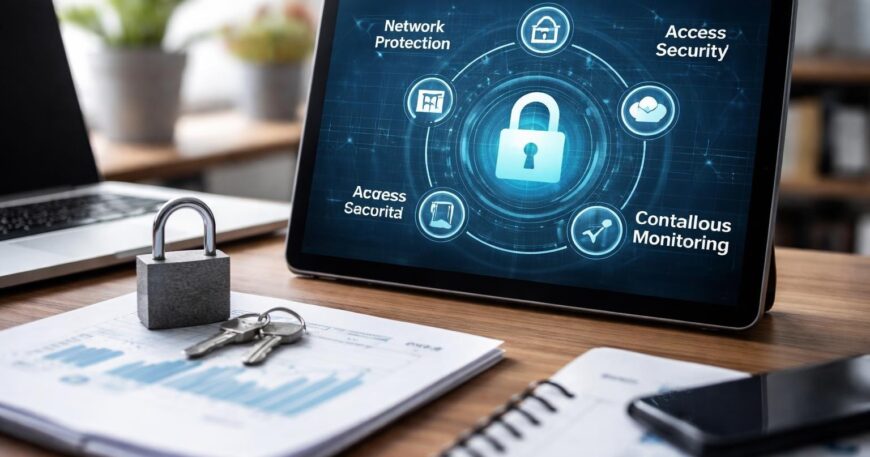
The fundamental pillars of effective business IT security include network protection, data security, access management, and incident response planning. Each component plays a critical role in creating a defense-in-depth strategy that prevents breaches and minimizes damage when incidents occur.
Why Small Businesses Are Primary Targets
Cybercriminals increasingly target small and medium-sized businesses because they often present easier entry points than larger corporations. Many small businesses operate under the false assumption that their size makes them unattractive targets, but statistics paint a different picture.
Key reasons attackers focus on smaller organizations:
- Limited security resources and expertise
- Outdated systems and unpatched software
- Insufficient employee training on security awareness
- Valuable customer data and financial information
- Connections to larger supply chain partners
- Lower likelihood of sophisticated monitoring systems
The financial impact of a security breach can be devastating for small businesses, with costs including data recovery, legal fees, regulatory penalties, lost productivity, and damaged reputation. Many businesses never fully recover from significant security incidents.
Essential Components of Business IT Security
Building effective business IT security requires understanding and implementing multiple protective layers. Each layer addresses specific vulnerabilities while contributing to overall organizational resilience.
Network Security Fundamentals
Network security forms the foundation of business IT security by controlling what enters and leaves your digital infrastructure. Firewalls serve as the first line of defense, filtering traffic based on predetermined security rules and blocking unauthorized access attempts.
Modern network security extends beyond traditional perimeter defenses. With remote work becoming standard practice, businesses must secure endpoints regardless of location. This includes implementing virtual private networks (VPNs) for encrypted communications, network segmentation to limit lateral movement during breaches, and intrusion detection systems that identify suspicious activity in real-time.
| Network Security Component | Primary Function | Business Impact |
|---|---|---|
| Next-Gen Firewalls | Traffic filtering and threat prevention | Blocks 85-95% of common attacks |
| VPN Infrastructure | Secure remote access | Protects data in transit |
| Network Segmentation | Isolate critical systems | Limits breach scope |
| Intrusion Detection | Identify threats | Enables rapid response |
Regular network monitoring ensures that security measures function correctly and provides early warning of potential compromises. Continuous scanning identifies vulnerabilities before attackers exploit them, supporting the 10 cybersecurity best practices recommended for modern organizations.
Access Control and Identity Management
Controlling who can access what resources represents one of the most critical aspects of business IT security. Implementing the principle of least privilege ensures employees have only the permissions necessary for their specific roles, reducing the potential damage from compromised accounts or insider threats.
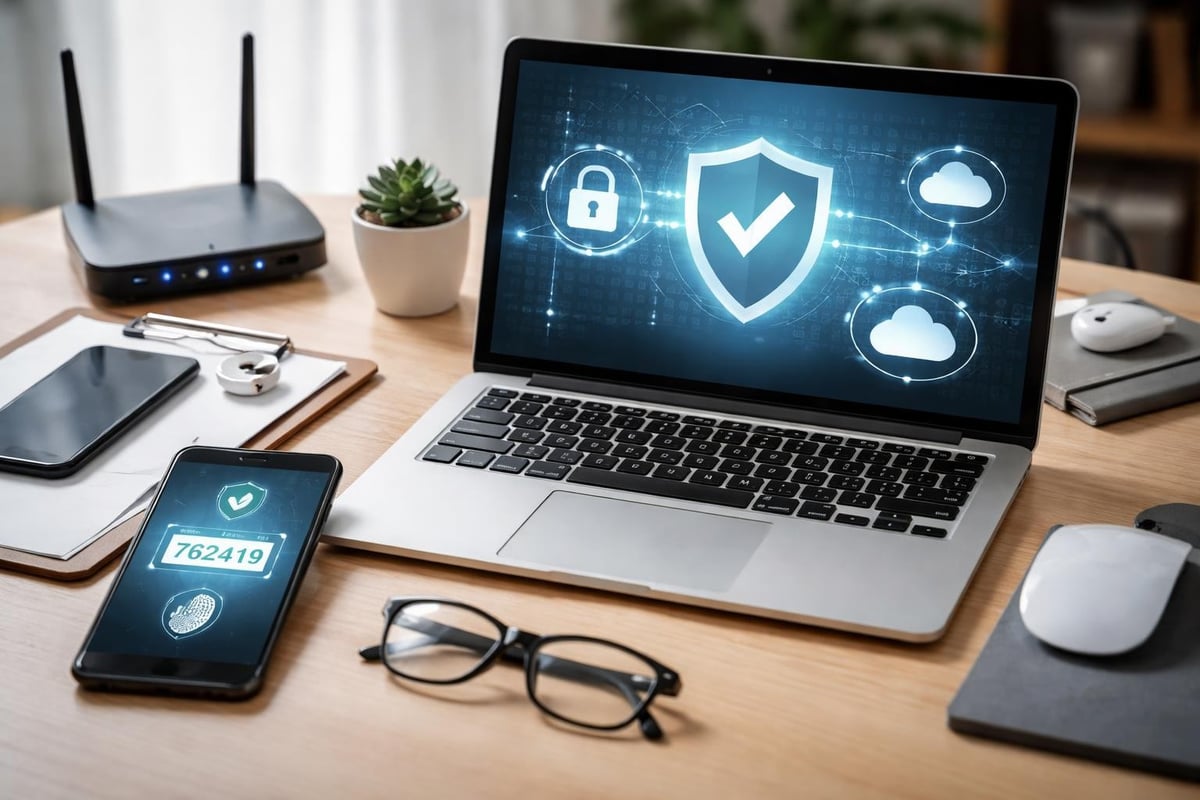
Multi-factor authentication (MFA) has become essential for protecting sensitive systems and data. By requiring multiple verification methods, MFA dramatically reduces the risk of unauthorized access even when passwords are compromised.
Key access control strategies include:
- Role-based access control (RBAC) systems
- Regular access reviews and permission audits
- Immediate revocation of access for departing employees
- Privileged access management for administrative accounts
- Single sign-on (SSO) solutions for streamlined authentication
Password policies must balance security with usability. While outdated security practices like mandatory monthly password changes have fallen out of favor, organizations should still enforce password complexity requirements and utilize password managers to support strong, unique credentials.
Data Protection Strategies
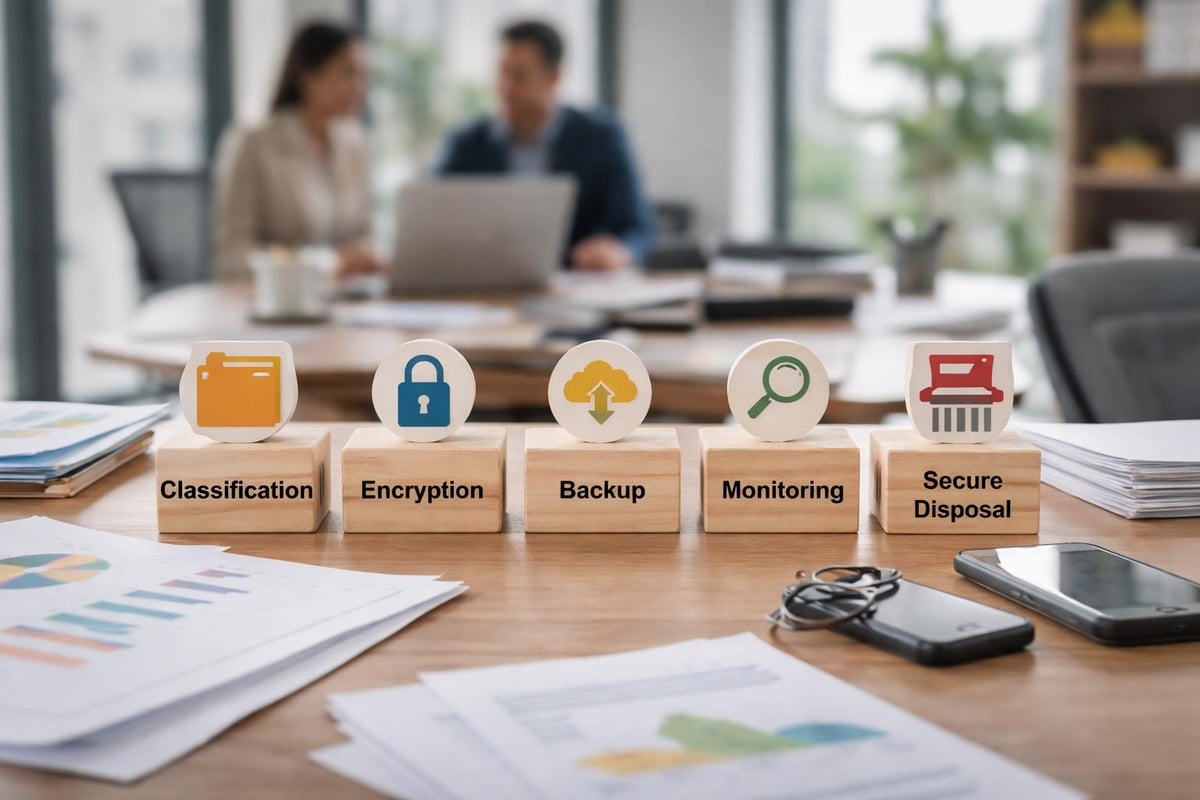
Data represents the lifeblood of modern businesses, making its protection paramount within any business IT security framework. Encryption serves as the cornerstone of data protection, rendering information unreadable to unauthorized parties both at rest and in transit.
Backup and Recovery Systems
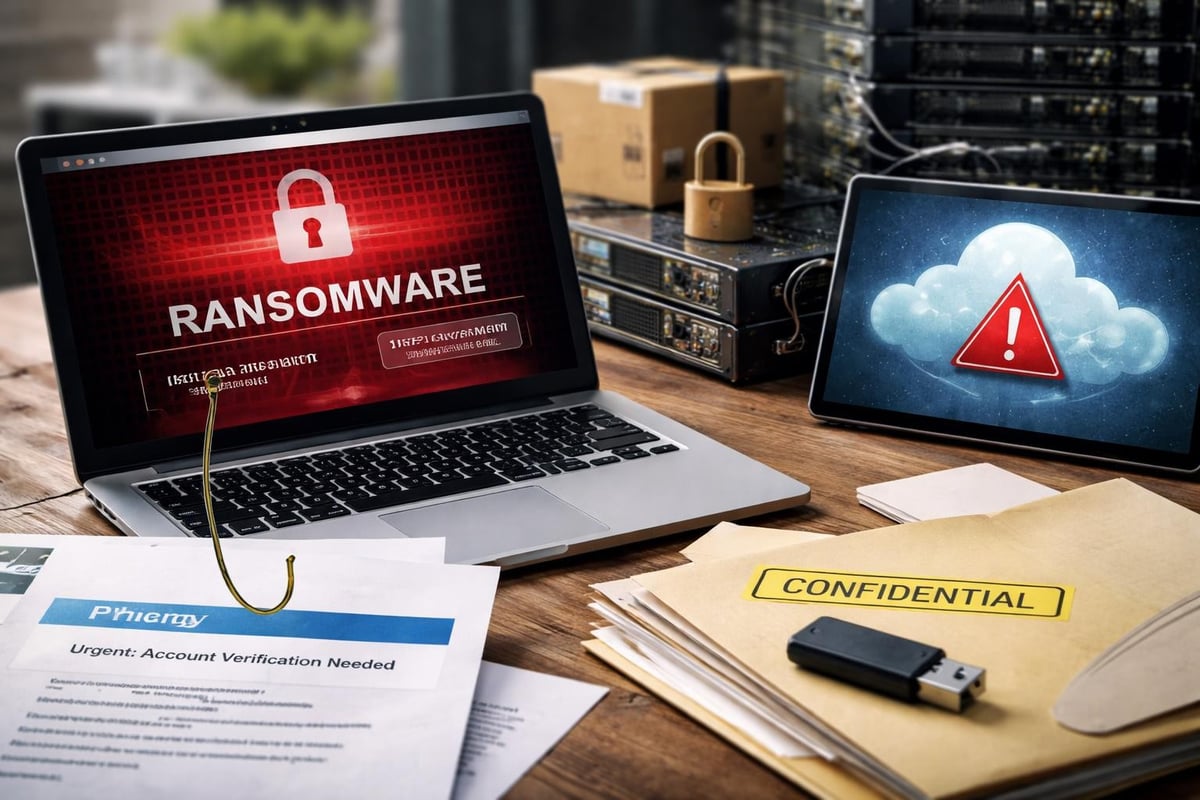
Comprehensive backup strategies ensure business continuity even after catastrophic events like ransomware attacks or hardware failures. The 3-2-1 backup rule remains the gold standard: maintain three copies of data on two different media types with one copy stored off-site.
Regular testing of backup restoration procedures verifies that recovery systems function correctly when needed. Many organizations discover backup failures only during emergencies, when it's too late to implement corrections.
Cloud-based backup solutions offer advantages including automated scheduling, geographic redundancy, and scalability without significant capital investment. However, cloud security requires careful configuration and ongoing management to prevent data exposure through misconfigured settings.
Data Classification and Handling
Not all data requires the same level of protection. Implementing a data classification system helps organizations allocate security resources efficiently by identifying which information needs the highest protection levels.
| Classification Level | Examples | Security Requirements |
|---|---|---|
| Public | Marketing materials, press releases | Basic integrity controls |
| Internal | Employee directories, policies | Access restrictions |
| Confidential | Customer data, financial records | Encryption, strict access controls |
| Restricted | Trade secrets, compliance data | Maximum security measures |
Proper data handling procedures ensure information receives appropriate protection throughout its lifecycle, from creation through disposal. Secure deletion protocols prevent data recovery from discarded equipment, while data retention policies balance operational needs with regulatory requirements.
Threat Detection and Response
Proactive threat detection identifies security incidents before they escalate into major breaches. Security information and event management (SIEM) systems aggregate logs from multiple sources, applying analytics to identify patterns indicating potential compromises.
Building an Incident Response Plan
Every organization needs a documented incident response plan that outlines specific steps for addressing security events. This plan should identify response team members, establish communication protocols, and define escalation procedures for different threat levels.
Critical incident response phases:
- Preparation – Establish tools, procedures, and team roles
- Detection and Analysis – Identify and assess security events
- Containment – Limit breach scope and prevent spread
- Eradication – Remove threat actors and malware
- Recovery – Restore systems and verify security
- Lessons Learned – Document incident and improve defenses
Regular tabletop exercises test incident response procedures without the pressure of actual emergencies, identifying gaps in plans and improving team coordination. These exercises should simulate realistic scenarios relevant to the organization's specific threat landscape.
The importance of aligning IT and security teams cannot be overstated, as fragmented communication during incidents leads to delayed responses and increased damage.
Employee Training and Security Culture
Technology alone cannot secure organizations-human behavior plays an equally critical role in business IT security. Employees represent both the greatest vulnerability and the strongest defense against cyber threats, depending on their awareness and training.
Security Awareness Programs
Effective security awareness training goes beyond annual compliance videos. Ongoing education keeps security top-of-mind through regular communications, simulated phishing exercises, and practical guidance on identifying threats.
Training should address common attack vectors including phishing emails, social engineering tactics, suspicious links, and unsafe browsing practices. Employees need to understand not just what to avoid, but why these practices matter and how to report suspicious activity.
Essential training topics include:
- Recognizing phishing and spear-phishing attempts
- Safe password creation and management
- Identifying social engineering tactics
- Secure handling of sensitive information
- Reporting procedures for security concerns
- Mobile device security for BYOD environments
Creating a positive security culture encourages employees to ask questions and report concerns without fear of punishment. When security becomes everyone's responsibility rather than solely an IT department concern, organizations build resilient defenses against evolving threats.
Emerging Challenges in Business IT Security
The rapid adoption of artificial intelligence and machine learning technologies creates new security considerations. The AI exposure gap represents a significant concern as organizations implement AI solutions faster than they develop appropriate security controls.
Cloud Security Considerations
Cloud computing offers tremendous benefits for small businesses, but introduces unique security challenges. Shared responsibility models mean organizations remain accountable for securing their data and applications even when infrastructure is managed by cloud providers.
Misconfigured cloud storage represents one of the most common causes of data breaches. Default settings often prioritize accessibility over security, requiring careful configuration to prevent public exposure of sensitive information. Regular security audits of cloud environments identify misconfigurations before attackers discover them.
Mobile and Remote Work Security
The permanent shift toward remote and hybrid work models expands the attack surface organizations must defend. Home networks lack enterprise-grade security, while coffee shop WiFi and other public networks expose data to interception.
Securing remote work requires comprehensive endpoint protection, secure access solutions, and clear policies governing acceptable use of personal devices. Mobile device management (MDM) solutions provide centralized control over devices accessing corporate resources, enabling remote wipe capabilities for lost or stolen equipment.
Compliance and Regulatory Requirements
Various regulations govern how businesses must protect certain types of information. Organizations handling credit card data must comply with Payment Card Industry Data Security Standard (PCI DSS) requirements, while those managing personal information face privacy regulations including PIPEDA in Canada.
Understanding applicable compliance requirements helps organizations avoid penalties while implementing security measures that protect customer trust. Regular compliance audits verify adherence to required standards and identify areas needing improvement.
Many security best practices align closely with compliance requirements, meaning organizations can often satisfy multiple objectives through a single security initiative. Documentation plays a crucial role in demonstrating compliance during audits.
Selecting Managed Security Solutions
Many small businesses lack the resources to maintain full-time security expertise, making managed security services an attractive option. Professional IT service providers offer access to security specialists, advanced tools, and 24/7 monitoring that would be cost-prohibitive to build in-house.
Evaluating IT Security Providers
When selecting a managed IT services partner, businesses should assess several critical factors beyond price. The provider's experience with similar organizations, their specific security certifications, and their approach to proactive versus reactive security all influence the value they deliver.
Questions to ask potential providers:
- What security monitoring and reporting do you provide?
- How quickly do you respond to security incidents?
- What certifications do your security team members hold?
- How do you stay current with emerging threats?
- What backup and disaster recovery solutions do you offer?
- Can you provide client references in similar industries?
Transparent pricing models with fixed-rate fees help businesses budget accurately for IT security without facing surprise costs. Service level agreements (SLAs) should clearly define response times, uptime guarantees, and performance metrics.
Organizations should look for signs they need upgraded cybersecurity including increasing minor incidents, rapid growth without scaling security, or reliance on outdated protection methods.
Implementing Continuous Improvement
Business IT security is never truly complete-it requires ongoing refinement as threats evolve and organizations change. Regular security assessments identify new vulnerabilities introduced by system changes, new applications, or updated attack techniques.
Vulnerability scanning should occur continuously rather than quarterly or annually. Automated scanning tools identify missing patches, misconfigurations, and known vulnerabilities that attackers could exploit. Penetration testing goes further by actively attempting to breach defenses, providing realistic assessment of security effectiveness.
Metrics and Security Posture Measurement
Measuring security effectiveness helps organizations understand whether their investments deliver appropriate protection. Key performance indicators (KPIs) should track both proactive measures and incident responses.
| Security Metric | What It Measures | Target Range |
|---|---|---|
| Mean Time to Detect (MTTD) | How quickly threats are identified | Under 24 hours |
| Mean Time to Respond (MTTR) | Speed of incident containment | Under 4 hours |
| Patch Compliance Rate | Percentage of systems current | Above 95% |
| Phishing Test Click Rate | Employee susceptibility | Below 10% |
| Security Training Completion | Staff awareness participation | 100% annually |
Regular reporting to leadership ensures security remains a business priority rather than solely a technical concern. Executive dashboards should translate technical metrics into business impact terms, demonstrating how security investments protect revenue, reputation, and operations.
Additional resources on IT security best practices provide further guidance for businesses looking to strengthen their security posture through proven methodologies.
Technology Vendor Management
Third-party vendors with access to systems or data introduce additional security considerations. Supply chain attacks increasingly target organizations through trusted vendor relationships, making vendor security assessment a critical component of business IT security.
Vendor management programs should evaluate third-party security practices before granting access, require contractual security obligations, and conduct periodic reassessments. Organizations must understand what data vendors access, how they protect it, and what happens if they experience breaches.
For software vendors, understanding their development security practices helps assess the risk of vulnerabilities in their products. Questions about secure coding practices, penetration testing, and vulnerability disclosure policies reveal their commitment to security.
Budget Allocation for Security Investments
Determining appropriate security spending levels challenges many small businesses. Industry benchmarks suggest allocating 6-15% of the total IT budget to security, though specific needs vary based on industry, regulatory requirements, and risk tolerance.
Prioritizing security investments requires understanding which controls provide the greatest risk reduction. Multi-factor authentication, endpoint protection, and regular backups typically offer high value relative to their cost, while some advanced solutions may exceed small business needs.
High-value security investments for small businesses:
- Managed detection and response services
- Cloud-based backup and disaster recovery
- Email security and anti-phishing protection
- Endpoint detection and response (EDR) tools
- Security awareness training platforms
- Vulnerability scanning and patch management
Return on investment for security spending can be difficult to quantify since successful prevention means nothing happens. However, calculating potential breach costs-including downtime, data recovery, legal fees, and reputation damage-demonstrates the value of preventive measures.
Organizations should explore insights from Delphi Systems Inc.’s blog for additional perspectives on managing IT security within business budgets.
Protecting your business IT security requires a comprehensive approach combining technology, processes, and people working together toward common security goals. Small businesses in Lethbridge and surrounding areas face the same sophisticated threats as larger organizations but often lack dedicated resources to address them effectively. Delphi Systems Inc. provides managed IT services designed specifically for small businesses, delivering enterprise-grade security through cloud computing, cybersecurity solutions, network monitoring, and comprehensive IT support at predictable fixed-rate pricing. By partnering with experienced professionals, your organization can focus on core business activities while maintaining robust protection for critical systems and data.

