Small businesses in Lethbridge and across North America face an escalating challenge: the constant evolution of cyber security threats that target their networks, data, and operations. As digital transformation accelerates and remote work becomes standard practice, the attack surface expands, creating vulnerabilities that malicious actors eagerly exploit. Understanding these threats and implementing robust defenses has never been more critical for organizations that depend on reliable IT infrastructure to serve their customers and maintain competitive advantages in their markets.
The Expanding Landscape of Modern Cyber Security Threats
The threat environment in 2026 looks dramatically different from just five years ago. Ransomware attacks have evolved from opportunistic campaigns to sophisticated, targeted operations that research their victims thoroughly before launching attacks. Cybercriminals now employ advanced reconnaissance techniques, studying business operations, revenue cycles, and backup procedures to maximize pressure on victims.
The Cybersecurity and Infrastructure Security Agency (CISA) provides up-to-date information tracking current threat trends affecting businesses of all sizes. Their advisories reveal how attackers increasingly focus on small and medium-sized enterprises, recognizing that these organizations often lack the security resources of larger corporations while still maintaining valuable data and operational systems.
Ransomware and Extortion Tactics
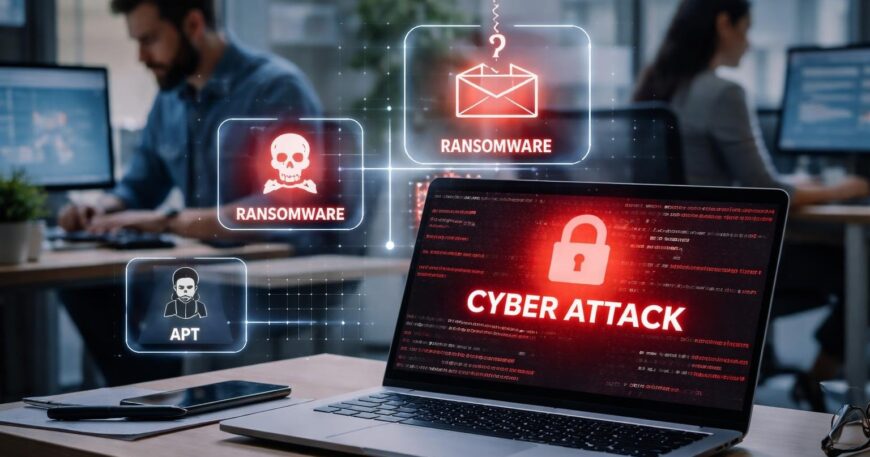
Modern ransomware operations function as full-scale businesses, complete with customer service departments and negotiation specialists. Attackers no longer simply encrypt files and demand payment. They now exfiltrate sensitive data before encryption, threatening to release confidential information publicly if ransom demands go unmet. This dual-extortion approach creates immense pressure on businesses that might otherwise restore from backups.
Key characteristics of 2026 ransomware threats include:
- Initial access through compromised credentials or phishing emails
- Lateral movement across networks to identify critical systems
- Data exfiltration to external servers before encryption
- Deletion or encryption of backup systems to eliminate recovery options
- Escalating payment demands with tight deadlines
The financial impact extends beyond ransom payments. Businesses face operational downtime, customer notification costs, regulatory fines, legal expenses, and lasting reputational damage that affects customer trust and retention.
Social Engineering and Human-Centered Attacks
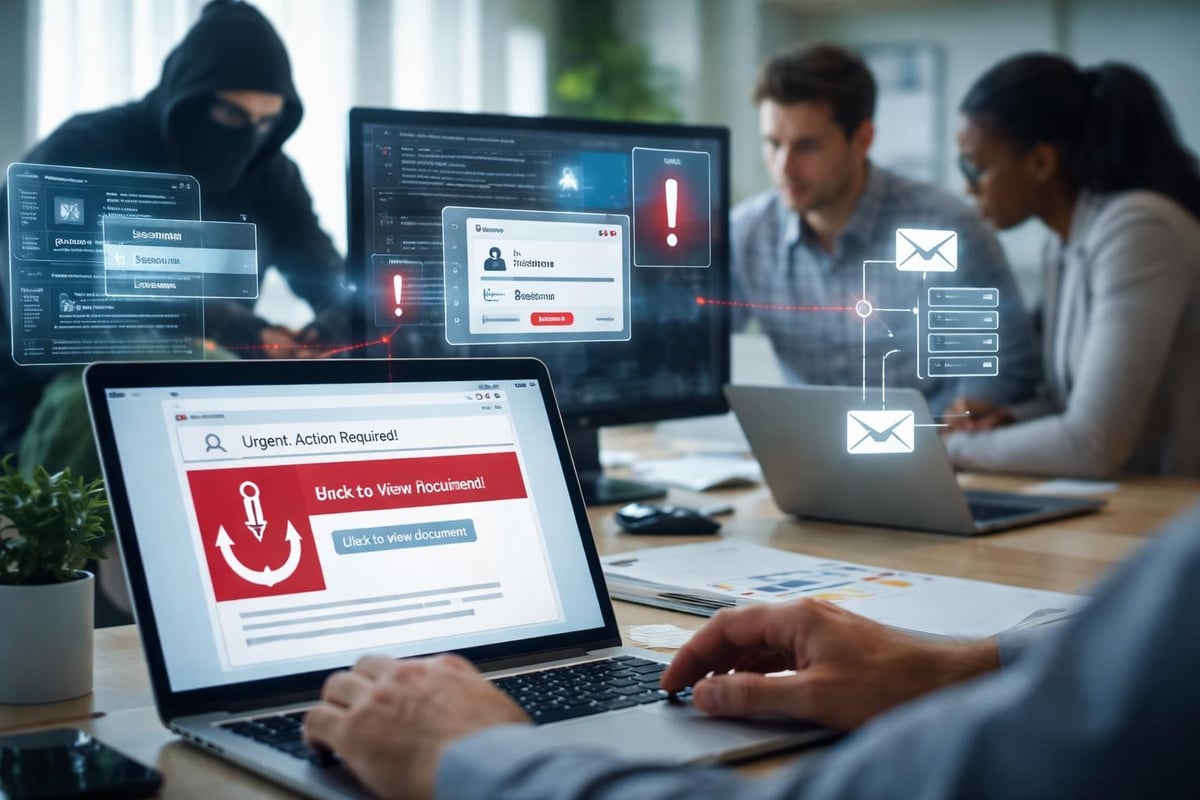
Technology alone cannot prevent cyber security threats when attackers successfully manipulate human behavior. Social engineering exploits psychological vulnerabilities, convincing employees to bypass security controls, share credentials, or install malicious software. Human behavior through social engineering tactics like phishing remains one of the most effective attack vectors in the cybercriminal toolkit.
Business Email Compromise Schemes
Business Email Compromise (BEC) attacks represent particularly dangerous cyber security threats for small businesses. Attackers impersonate executives, vendors, or partners to authorize fraudulent wire transfers or request sensitive information. These attacks require minimal technical sophistication but deliver substantial returns for criminals.
A typical BEC scenario unfolds like this:
- Attackers research company structure through LinkedIn and public sources
- They compromise or spoof executive email accounts
- Timing the attack to coincide with known payment cycles or busy periods
- Sending urgent payment requests to finance departments
- Pressuring employees with tight deadlines and authority-based demands
| Attack Type | Primary Target | Success Rate | Average Loss |
|---|---|---|---|
| BEC/Invoice Fraud | Finance Teams | 15-20% | $48,000 |
| Credential Phishing | All Employees | 10-15% | Varies |
| CEO Fraud | Executive Assistants | 8-12% | $75,000 |
| Vendor Impersonation | Accounts Payable | 12-18% | $35,000 |
Training programs that regularly test employees with simulated phishing campaigns significantly reduce successful attack rates. However, training alone cannot eliminate risk, requiring layered technical controls to verify transaction legitimacy.
Advanced Persistent Threats and Supply Chain Attacks
Advanced Persistent Threats (APTs) represent the most sophisticated category of cyber security threats. These long-term, targeted campaigns establish persistent network access to steal intellectual property, conduct espionage, or prepare infrastructure for future attacks. While traditionally associated with nation-state actors, APT techniques increasingly appear in financially motivated operations.
Supply chain attacks compromise trusted software or service providers to gain access to multiple downstream targets simultaneously. The managed services sector faces particular scrutiny from attackers who recognize that compromising a single IT provider could yield access to dozens of client networks.
Protecting Against Sophisticated Intrusions
Defense against advanced threats requires continuous monitoring, threat intelligence integration, and rapid incident response capabilities. Small businesses often lack internal resources to maintain 24/7 security operations centers, making managed security services increasingly valuable.
Critical defensive measures include:
- Network segmentation to limit lateral movement
- Multi-factor authentication across all administrative access
- Regular vulnerability assessments and patch management
- Endpoint detection and response (EDR) solutions
- Security information and event management (SIEM) platforms
- Regular security awareness training for all staff members
Organizations should leverage various sources of threat intelligence to understand emerging attack patterns and adjust defenses accordingly. Threat intelligence helps security teams prioritize vulnerabilities based on active exploitation rather than theoretical risk scores.
Cloud Security Challenges and Misconfigurations
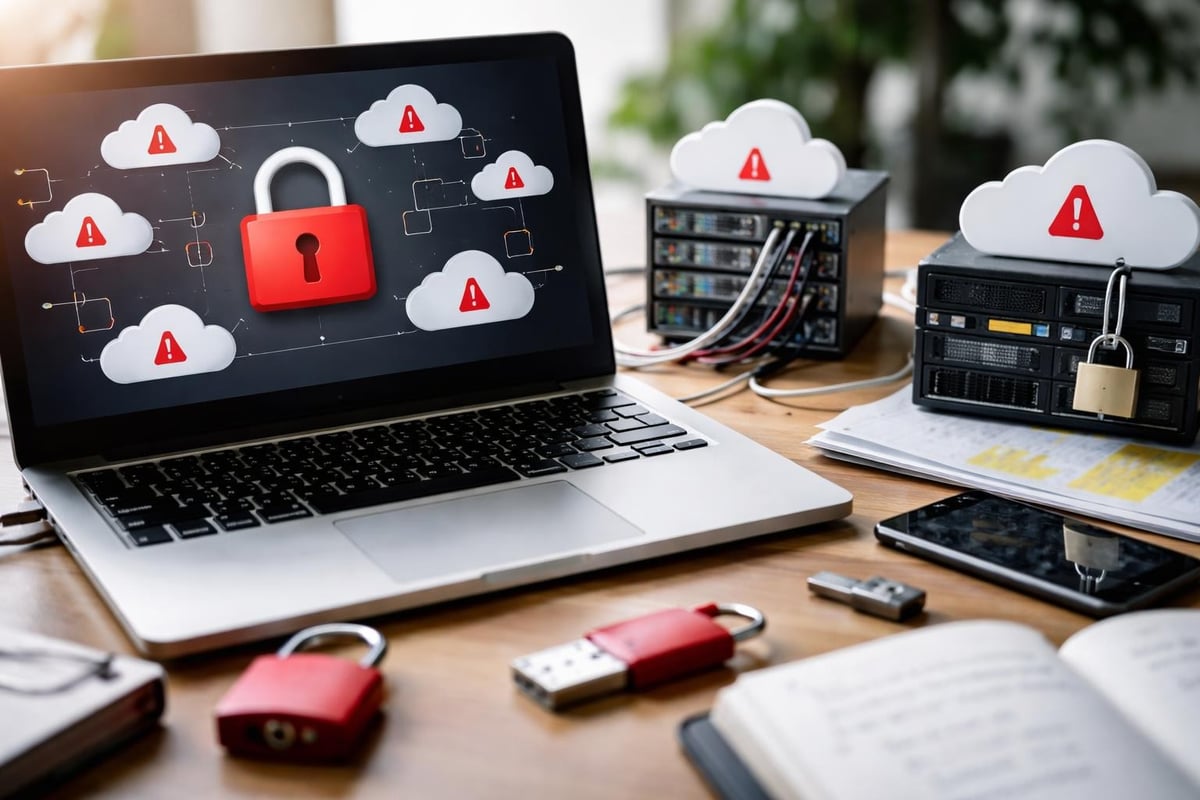
Cloud adoption accelerates business agility but introduces new cyber security threats through misconfigured services, inadequate access controls, and shared responsibility confusion. Many organizations migrating to cloud platforms mistakenly assume their cloud provider handles all security aspects, creating dangerous gaps in protection.
The shared responsibility model clearly delineates provider and customer obligations, yet misunderstanding remains widespread. Cloud providers secure the underlying infrastructure, but customers must properly configure services, manage access credentials, and protect data within their environments.
Common Cloud Vulnerabilities
Publicly exposed storage buckets containing sensitive customer data regularly make headlines when discovered by security researchers or exploited by attackers. These exposures typically result from default configurations, inadequate permission reviews, or insufficient security training for development teams deploying cloud resources.
Prevalent cloud security issues:
- Overly permissive identity and access management (IAM) policies
- Unencrypted data at rest or in transit
- Missing logging and monitoring configurations
- Shadow IT deployments bypassing security review
- Inadequate backup and disaster recovery testing
Regular cloud security assessments identify misconfigurations before attackers exploit them. Automated tools scan cloud environments continuously, alerting teams to policy violations, exposed resources, or suspicious access patterns.
Insider Threats and Privileged Access Risks
Not all cyber security threats originate externally. Insider threats from current or former employees, contractors, or business partners present unique challenges. These individuals possess legitimate access credentials, knowledge of security controls, and familiarity with valuable data locations, making their actions difficult to distinguish from normal business activities.
Insider threats manifest in several forms: malicious insiders intentionally stealing data or sabotaging systems, negligent employees accidentally exposing information, and compromised insiders whose credentials attackers control. Each scenario requires different detection and prevention strategies.
Monitoring and Access Control Strategies
Implementing the principle of least privilege limits each user's access to only the resources necessary for their specific role. Regular access reviews ensure permissions remain appropriate as job responsibilities change, removing unnecessary privileges that expand attack surfaces.
User and entity behavior analytics (UEBA) establish baseline activity patterns for each account, flagging anomalous behavior like unusual login times, access to unfamiliar systems, or bulk data downloads. These systems help security teams identify compromised accounts or malicious insiders before significant damage occurs.
| Control Type | Implementation | Effectiveness Against Threats |
|---|---|---|
| Least Privilege Access | Role-based access control | High for negligence, Medium for malicious |
| Multi-Factor Authentication | Required for all systems | High for compromised credentials |
| Data Loss Prevention | Monitor and block exfiltration | Medium to High based on configuration |
| Activity Logging | Comprehensive audit trails | High for investigation, Medium for prevention |
The Delphi Systems Inc. blog offers additional insights into implementing effective access controls within small business environments where role flexibility sometimes conflicts with security requirements.
Emerging Threats: AI-Powered Attacks and Deepfakes
Artificial intelligence transforms both defensive and offensive cybersecurity capabilities. Attackers leverage AI to automate reconnaissance, craft convincing phishing messages, identify vulnerabilities, and evade detection systems. Machine learning algorithms analyze defensive patterns to identify evasion techniques that maximize attack success rates.
Deepfake technology enables attackers to impersonate executives with convincing audio or video messages, adding new dimensions to social engineering attacks. Voice cloning from publicly available recordings creates authentic-sounding phone calls requesting urgent actions from employees.
Defending Against AI-Enhanced Threats
Organizations must adopt AI-powered defensive tools to match the sophistication of AI-enhanced attacks. Machine learning algorithms detect subtle attack indicators that rule-based systems miss, identifying zero-day exploits and novel attack techniques through behavioral analysis.
Security awareness training must evolve to address AI-generated phishing content that lacks the grammatical errors and obvious tells that previously helped employees identify fraudulent messages. Verification procedures requiring out-of-band confirmation for sensitive requests provide critical safeguards against sophisticated impersonation.
Data Breach Prevention and Incident Response
Despite robust preventive measures, organizations must prepare for potential security incidents. Various cybersecurity threats and strategies to mitigate associated risks require comprehensive incident response planning that enables rapid containment, investigation, and recovery when breaches occur.
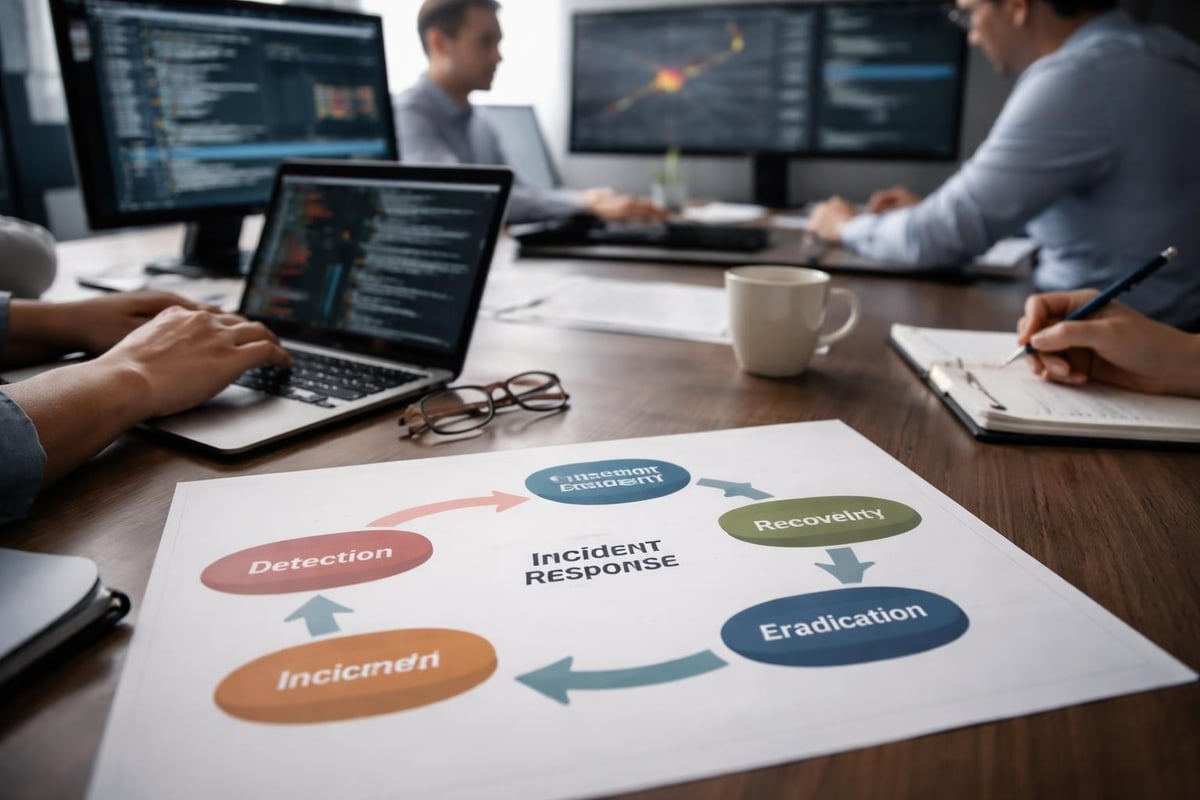
Incident response plans document specific procedures for different attack scenarios, assign clear responsibilities to team members, and establish communication protocols for internal stakeholders, customers, regulators, and law enforcement. Regular tabletop exercises test plan effectiveness and familiarize teams with their roles during high-stress incidents.
Building Resilient Recovery Capabilities
Backup systems represent the last line of defense against destructive cyber security threats like ransomware. However, backups themselves become attack targets as criminals recognize their importance to business continuity. Organizations must implement immutable backups stored offline or in separate environments that attackers cannot access from compromised networks.
Effective backup strategies include:
- Following the 3-2-1 rule: three copies, two media types, one offsite
- Regular restoration testing to verify backup integrity
- Immutable or air-gapped backup storage preventing deletion
- Rapid recovery time objectives for critical business systems
- Documentation of recovery procedures accessible during outages
Recovery planning extends beyond technical restoration to include business continuity considerations. How will customer service continue during system outages? What manual processes can temporarily substitute for automated systems? Which business functions require priority restoration?
Regulatory Compliance and Cyber Insurance Considerations
Growing regulatory requirements around data protection create both compliance obligations and security incentives for small businesses. Privacy laws like the Personal Information Protection and Electronic Documents Act (PIPEDA) in Canada establish baseline security requirements and breach notification obligations that businesses must meet.
Cyber insurance policies provide financial protection against attack costs but increasingly require specific security controls before issuing coverage. Insurers conduct security assessments, reviewing policies, technical controls, training programs, and incident response capabilities. Organizations failing to meet minimum security standards face coverage denial or significantly higher premiums.
Meeting Security Baselines
Insurance requirements often align with industry best practices, creating positive incentives for security investment. Common policy requirements include multi-factor authentication, endpoint protection, regular backups, employee security training, and documented incident response procedures.
| Security Control | Insurance Impact | Business Benefit |
|---|---|---|
| MFA Implementation | 15-25% premium reduction | Prevents credential attacks |
| Regular Security Training | 10-15% premium reduction | Reduces social engineering success |
| EDR/Antivirus | Coverage requirement | Detects and blocks malware |
| Incident Response Plan | Coverage requirement | Reduces breach impact |
| Regular Backups | Coverage requirement | Enables ransomware recovery |
Organizations should view compliance and insurance requirements not as burdens but as frameworks guiding security investment toward proven protective measures. These external standards help small businesses prioritize limited security budgets toward controls delivering maximum risk reduction.
Network Security Fundamentals for Business Protection
Fundamental network security practices remain essential despite evolving cyber security threats. Firewalls, properly configured and regularly updated, provide the first barrier against network intrusions. Modern next-generation firewalls incorporate intrusion prevention, application awareness, and threat intelligence integration beyond simple packet filtering.
Network segmentation divides infrastructure into separate security zones, limiting attacker movement even after initial compromise. Guest WiFi networks isolate visitor devices from business systems. Separate VLANs protect sensitive systems like payment processing or customer databases. Critical infrastructure like servers and backup systems reside in hardened network segments with restrictive access policies.
Regular vulnerability scanning identifies security weaknesses requiring patches or configuration changes. Automated patch management ensures critical updates deploy promptly, closing known vulnerabilities before exploitation. However, patch testing remains important to prevent updates from disrupting business operations or creating compatibility issues.
Monitoring and Threat Detection
Continuous network monitoring detects suspicious activities indicating potential compromise. Intrusion detection systems analyze network traffic for attack signatures and anomalous patterns. Log aggregation and analysis platforms correlate events across multiple systems, revealing multi-stage attacks that individual systems might miss.
Security operations require dedicated attention that many small businesses struggle to maintain internally. Managed security service providers offer 24/7 monitoring, threat detection, and incident response capabilities that would otherwise require significant staffing and technology investments. This model allows organizations to access enterprise-grade security expertise at predictable monthly costs rather than building complete internal capabilities.
Understanding and defending against cyber security threats requires ongoing vigilance, investment, and expertise that challenges resource-constrained small businesses. The threat landscape continues evolving as attackers develop new techniques and target new vulnerabilities across increasingly complex IT environments. Organizations in Lethbridge and surrounding areas can strengthen their security posture through partnerships with experienced providers who maintain current threat knowledge and defensive capabilities. Delphi Systems Inc. offers comprehensive managed IT services including cybersecurity solutions, network monitoring, and data backup designed specifically for small businesses seeking to protect their operations without diverting focus from core business activities.

