

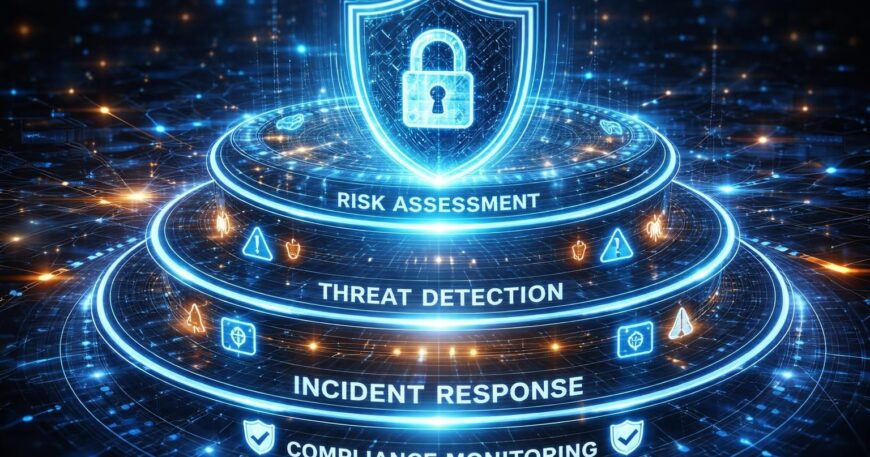
Modern businesses face an evolving landscape of digital threats that can disrupt operations, compromise sensitive data, and damage reputation. For small businesses in particular, the challenge lies not just in implementing security tools, but in developing a comprehensive approach to cyber security management that addresses vulnerabilities systematically while maintaining operational efficiency. Effective cyber security management requires strategic planning, continuous monitoring, and a commitment to adapting security measures as threats evolve. This comprehensive approach helps organizations protect their digital assets, maintain customer trust, and ensure business continuity in an increasingly connected world.
Understanding the Core Components of Cyber Security Management
Cyber security management encompasses the policies, procedures, and technologies organizations deploy to protect their information systems from unauthorized access, disruption, or theft. This multifaceted discipline requires coordination across technical infrastructure, human resources, and business processes.
Strategic Planning and Risk Assessment
The foundation of effective cyber security management begins with understanding your organization's unique risk profile. Small businesses must identify their most valuable digital assets, assess potential threats, and determine the impact of various security incidents on operations.
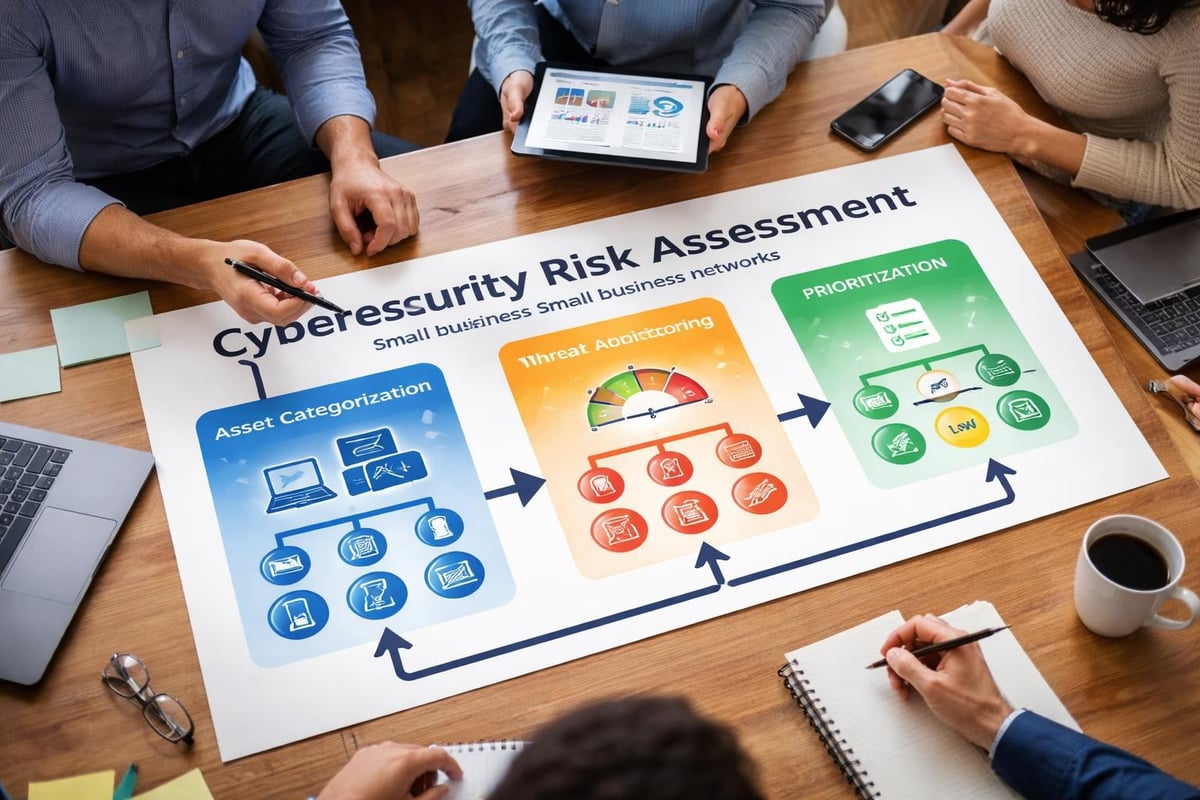
A structured risk assessment process involves:
- Asset inventory: Cataloging all hardware, software, and data repositories
- Threat identification: Recognizing potential attack vectors specific to your industry
- Vulnerability analysis: Identifying weaknesses in current security posture
- Impact evaluation: Determining the business consequences of different breach scenarios
- Risk prioritization: Ranking threats based on likelihood and potential damage
This systematic approach enables businesses to allocate security resources effectively rather than implementing random protective measures. Organizations should conduct risk assessments quarterly to account for new technologies, changing business processes, and emerging threat patterns.
Framework Adoption for Structured Protection
Implementing recognized security frameworks provides a roadmap for comprehensive protection. The NIST Cybersecurity Framework offers a flexible, cost-effective approach that many small businesses find accessible. This framework organizes security activities into five core functions: Identify, Protect, Detect, Respond, and Recover.
Another valuable resource is ISO/IEC 27002, which provides detailed information security controls that organizations can adapt to their specific needs. These frameworks aren't merely compliance checklists but living documents that guide ongoing security improvement.
| Framework | Primary Focus | Best For | Implementation Complexity |
|---|---|---|---|
| NIST CSF | Risk management | All business sizes | Moderate |
| ISO/IEC 27002 | Security controls | Established businesses | High |
| CIS Controls | Tactical defenses | Resource-constrained teams | Low to Moderate |
| COBIT | IT governance | Larger organizations | High |
Building a Robust Defense Strategy
Cyber security management extends beyond installing antivirus software and firewalls. It requires layered defenses that address multiple attack surfaces simultaneously.
Network Security and Access Controls
Network segmentation forms the backbone of modern cyber security management. By dividing networks into isolated zones, businesses contain potential breaches and limit lateral movement by attackers. Critical systems should reside on separate network segments with strict access controls.
Essential network security measures include:
- Firewall configuration with default-deny policies
- Virtual Private Networks (VPNs) for remote access
- Network access control (NAC) systems
- Regular security patch deployment
- Intrusion detection and prevention systems
Access management follows the principle of least privilege, ensuring users and applications receive only the permissions necessary for their specific functions. Multi-factor authentication (MFA) adds a critical security layer, requiring users to verify their identity through multiple independent factors before accessing sensitive resources.
Endpoint Protection and Data Security
Every device connecting to your network represents a potential entry point for threats. Comprehensive endpoint protection encompasses workstations, mobile devices, servers, and IoT equipment. Modern endpoint detection and response (EDR) solutions provide real-time monitoring and automated threat neutralization.
Data protection strategies must address information throughout its lifecycle. Encryption safeguards data both at rest and in transit, rendering it unreadable to unauthorized parties even if intercepted. Regular backup procedures ensure business continuity following ransomware attacks or system failures.
The CIS Critical Security Controls emphasize inventory and control of hardware and software assets as foundational security practices. Understanding what devices and applications exist on your network is prerequisite to protecting them effectively.
Employee Training and Security Culture
Human error remains a leading cause of security incidents. Effective cyber security management recognizes that technology alone cannot protect organizations when employees inadvertently create vulnerabilities.
Security Awareness Programs
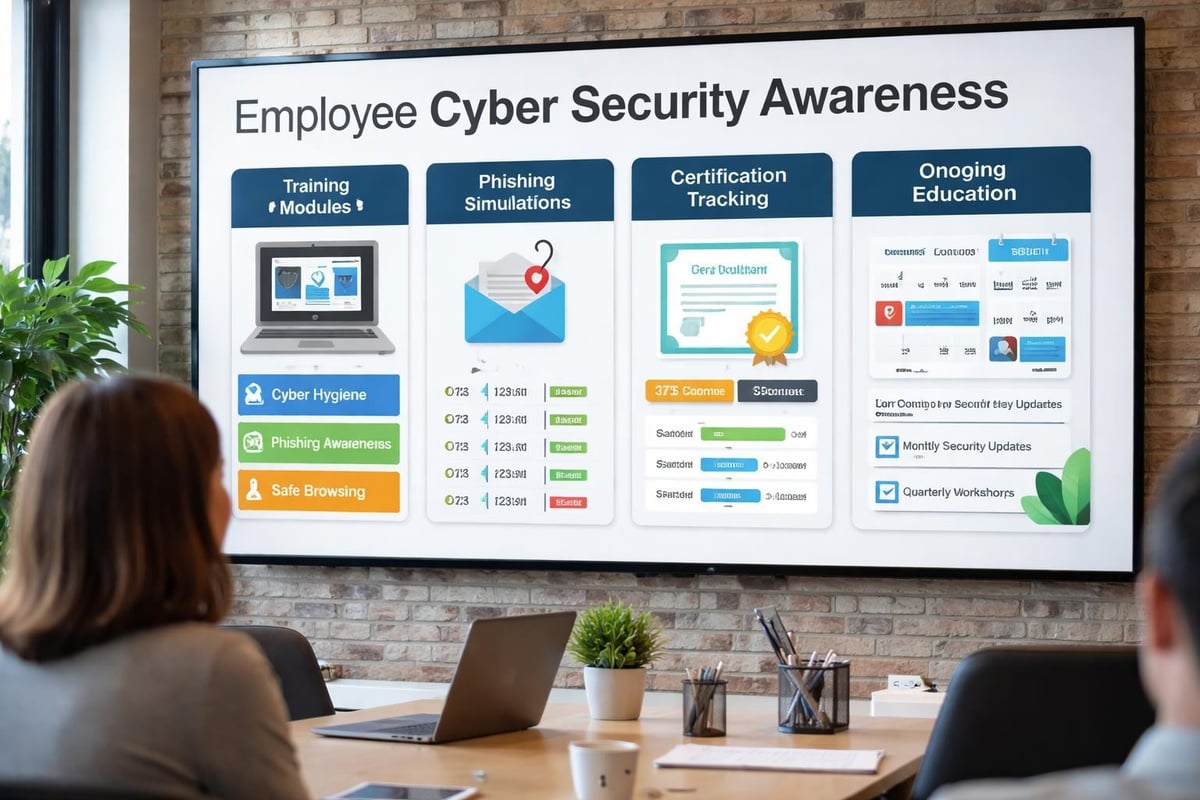
Comprehensive security awareness training educates staff about common threats and appropriate responses. Topics should include:
- Phishing recognition: Identifying suspicious emails and links
- Password hygiene: Creating strong, unique passwords and using password managers
- Social engineering tactics: Recognizing manipulation attempts
- Physical security: Protecting devices and preventing unauthorized facility access
- Incident reporting: Knowing how and when to escalate security concerns
Training effectiveness depends on frequency and engagement. Monthly micro-learning sessions often prove more effective than annual marathon training events. Simulated phishing campaigns help reinforce lessons by providing practical experience in a controlled environment.
Creating Accountability and Clear Policies
Written security policies establish expectations and provide guidance for acceptable technology use. These policies should address:
- Acceptable use of company resources
- Remote work security requirements
- Data handling and classification procedures
- Incident response protocols
- Bring-your-own-device (BYOD) guidelines
Policies remain ineffective without enforcement mechanisms and regular review. Annual policy updates ensure alignment with evolving business needs and threat landscapes. Clear consequences for policy violations, applied consistently across all organizational levels, reinforce the importance of security compliance.
Monitoring, Detection, and Incident Response
Proactive cyber security management requires continuous vigilance. Organizations cannot prevent every attack, but they can minimize damage through rapid detection and coordinated response.
Security Information and Event Management
Security Information and Event Management (SIEM) systems aggregate log data from across the IT environment, providing centralized visibility into security events. These platforms use correlation rules and machine learning to identify suspicious patterns that might indicate active threats.
Key monitoring capabilities include:
- Real-time log analysis from network devices, servers, and applications
- Automated alerts for suspicious activities
- Compliance reporting and audit trail maintenance
- Threat intelligence integration
- User behavior analytics
For small businesses, managed detection and response (MDR) services provide enterprise-grade monitoring capabilities without requiring extensive in-house security expertise. These services combine technology platforms with human analysts who investigate alerts and recommend appropriate actions.
Incident Response Planning
Every organization needs a documented incident response plan outlining procedures for detecting, containing, and recovering from security breaches. This plan should designate an incident response team with clearly defined roles and responsibilities.
| Phase | Key Activities | Success Metrics |
|---|---|---|
| Preparation | Develop playbooks, train team | Plan completeness, team readiness |
| Detection | Identify and validate incidents | Time to detection, false positive rate |
| Containment | Isolate affected systems | Time to containment, spread limitation |
| Eradication | Remove threat from environment | Completeness of removal |
| Recovery | Restore normal operations | Recovery time, data loss |
| Lessons Learned | Document and improve processes | Action item completion |
Regular tabletop exercises test incident response procedures, revealing gaps before actual emergencies occur. Following the guidance in 10 cybersecurity best practices for businesses helps organizations establish robust defensive measures that complement incident response capabilities.
Vendor Management and Third-Party Risk
Small businesses increasingly rely on external vendors for cloud services, software applications, and specialized IT functions. Each vendor relationship introduces potential security risks that require careful management.
Vendor Security Assessment
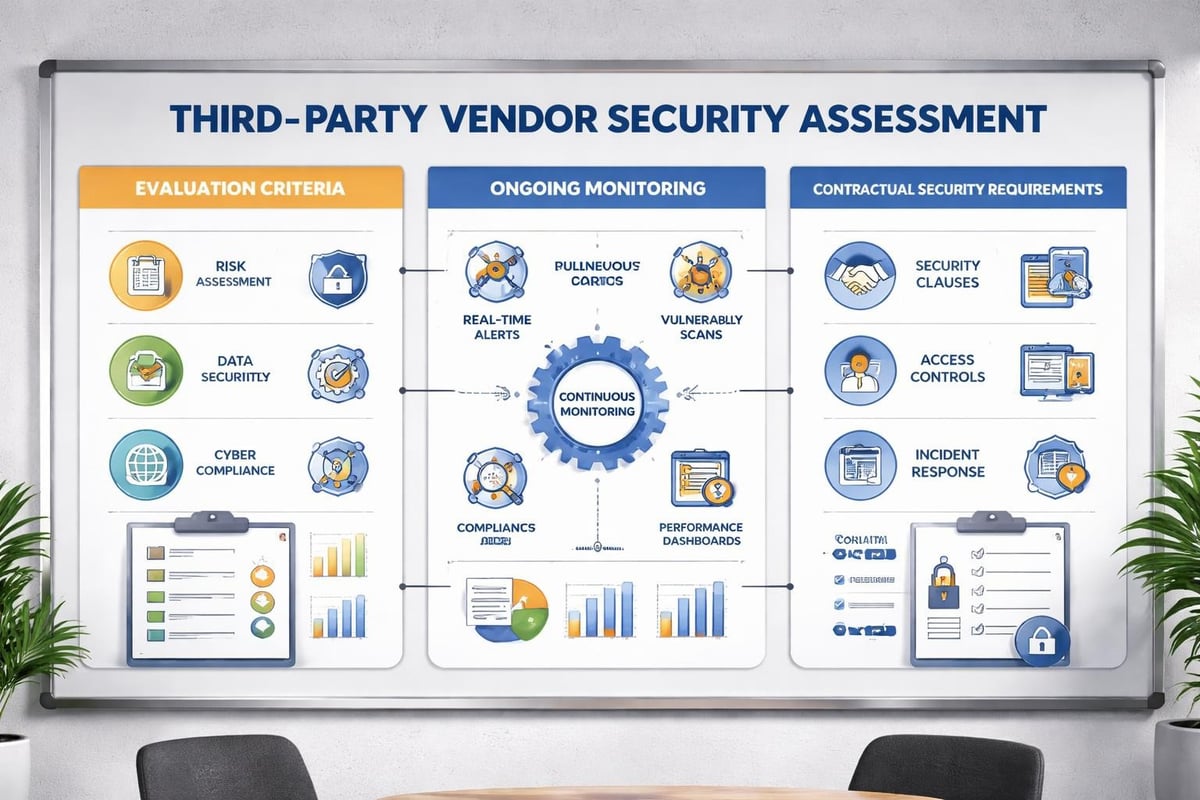
Before engaging new vendors, organizations should evaluate their security posture through questionnaires, certifications review, and sometimes on-site assessments. Key evaluation criteria include:
- Security certifications (SOC 2, ISO 27001, etc.)
- Data handling and privacy practices
- Incident response capabilities and notification procedures
- Business continuity and disaster recovery plans
- Insurance coverage for security incidents
Contractual agreements should explicitly define security requirements, compliance obligations, and liability provisions. Service Level Agreements (SLAs) must address security incident response times and remediation expectations.
Ongoing Vendor Monitoring
Cyber security management doesn't end when contracts are signed. Continuous monitoring of vendor security practices helps identify emerging risks. Annual security reviews ensure vendors maintain appropriate protections as threats evolve.
Supply chain attacks have increased dramatically, making vendor security a critical concern. The concepts outlined in building cyber resilience through design emphasize proactive security measures that extend throughout business relationships.
Regulatory Compliance and Industry Standards
Cyber security management intersects significantly with regulatory compliance. Many industries face specific requirements governing data protection, privacy, and security controls.
Understanding Applicable Regulations
Small businesses must identify which regulations apply to their operations. Common frameworks include:
- PIPEDA: Canadian privacy legislation governing personal information handling
- GDPR: European privacy regulation affecting businesses serving EU customers
- PCI DSS: Payment card industry standards for organizations processing credit cards
- HIPAA: Healthcare privacy requirements (if applicable)
- SOX: Financial reporting controls for publicly traded companies
Compliance requirements often mandate specific technical controls, regular security assessments, and incident notification procedures. Non-compliance can result in significant fines, legal liability, and reputation damage.
Documentation and Audit Readiness
Effective cyber security management maintains comprehensive documentation demonstrating compliance efforts. This includes security policies, risk assessments, penetration test results, employee training records, and incident response logs.
Regular internal audits identify compliance gaps before external auditors arrive. Many organizations conduct quarterly self-assessments using compliance checklists aligned with applicable regulations. This proactive approach reduces the stress and cost associated with formal compliance audits.
Continuous Improvement and Security Maturity
Cyber security management is not a one-time project but an ongoing journey toward increasing organizational resilience. Security maturity models help businesses assess their current capabilities and chart improvement paths.
Measuring Security Effectiveness
Organizations should establish key performance indicators (KPIs) and key risk indicators (KRIs) to track security program effectiveness. Useful metrics include:
- Mean time to detect (MTTD) threats
- Mean time to respond (MTTR) to incidents
- Percentage of systems with current patches
- Employee training completion rates
- Number of security incidents by category
- Percentage of critical assets properly protected
These measurements provide objective data for evaluating security investments and demonstrating program value to leadership. Following cyber risk management best practices ensures organizations implement thorough controls and assessment procedures.
Adapting to Emerging Threats
The threat landscape evolves constantly, with attackers developing new techniques and exploiting newly discovered vulnerabilities. Effective cyber security management includes mechanisms for staying informed about emerging threats and adapting defenses accordingly.
Threat intelligence feeds provide real-time information about active attack campaigns, new malware variants, and vulnerability disclosures. Security teams should participate in industry-specific information sharing groups where peers exchange threat data and defensive strategies.
Regular security assessments, including vulnerability scans and penetration tests, identify weaknesses before attackers exploit them. Annual assessments establish baseline security posture, while quarterly scans detect new vulnerabilities introduced through system changes or newly discovered flaws.
Resource Optimization for Small Business Security
Small businesses face unique challenges implementing comprehensive cyber security management with limited budgets and personnel. Strategic resource allocation maximizes protection while controlling costs.
Prioritizing Security Investments
Not all security measures provide equal value. Small businesses should focus first on controls addressing the most likely and impactful threats. The recommended investment priority typically follows this pattern:
- Foundation: Basic network security, endpoint protection, backup systems
- Enhancement: MFA, security monitoring, employee training programs
- Advanced: Threat intelligence, advanced detection capabilities, security orchestration
Many small businesses benefit from managed security services rather than building in-house capabilities. Managed service providers offer access to enterprise-grade tools and expertise at predictable monthly costs. The guidance in 6 cyber security best practices to protect your organization emphasizes practical, achievable security measures appropriate for resource-constrained organizations.
Leveraging Automation and Cloud Services
Security automation reduces the personnel burden while improving response consistency. Automated patch management ensures systems receive security updates promptly without manual intervention. Security orchestration platforms can automatically isolate compromised devices, block malicious traffic, and initiate backup procedures.
Cloud-based security services eliminate infrastructure investment requirements while providing scalability. Cloud-delivered email security, web filtering, and backup solutions offer enterprise capabilities with minimal local infrastructure. These services typically include automatic updates, ensuring protection against the latest threats without ongoing administrative effort.
Integration with Business Operations
Successful cyber security management aligns with business objectives rather than obstructing them. Security measures should enable business activities while managing risk to acceptable levels.
Balancing Security and Productivity
Overly restrictive security controls frustrate users and reduce productivity, often leading to workarounds that create new vulnerabilities. Effective cyber security management finds the appropriate balance between protection and usability.
Risk-based approaches apply stronger controls to sensitive activities while allowing greater flexibility for routine tasks. For example, accessing financial systems might require MFA and restricted network access, while general internet browsing operates under standard protections.
User feedback mechanisms help security teams identify friction points and develop more user-friendly alternatives. Regular communication between security and business units ensures security requirements account for operational realities.
Supporting Remote and Hybrid Work
The shift toward remote and hybrid work models has expanded attack surfaces and complicated cyber security management. Organizations must protect resources regardless of user location or device.
Essential remote work security measures:
- Zero-trust network architecture assuming no implicit trust
- Endpoint encryption for all mobile devices
- VPN requirements for accessing internal resources
- Cloud-based security services accessible from any location
- Regular security assessments of home office environments
These capabilities require careful implementation to avoid creating user friction that reduces productivity. Working with experienced providers like Delphi Systems Inc. helps businesses implement security measures that protect remote workers without hindering their effectiveness.
Future-Proofing Your Security Posture
Technology continues evolving rapidly, introducing both new capabilities and new vulnerabilities. Forward-thinking cyber security management anticipates future challenges and builds adaptable security architectures.
Preparing for Emerging Technologies
Artificial intelligence, Internet of Things devices, and edge computing introduce new security considerations. Organizations should evaluate the security implications of new technologies before deployment, incorporating security requirements into procurement decisions.
Cloud migration strategies must address data sovereignty, shared responsibility models, and integration with existing security tools. Multi-cloud environments add complexity, requiring centralized visibility and consistent policy enforcement across platforms.
Building Organizational Resilience
Beyond preventing attacks, cyber security management emphasizes resilience-the ability to withstand and recover from security incidents. Resilient organizations maintain business continuity despite experiencing breaches or disruptions.
Resilience requires redundancy in critical systems, tested backup and recovery procedures, and incident response capabilities that minimize downtime. Regular business continuity exercises validate recovery procedures and identify improvement opportunities.
The cyber security management landscape will continue evolving throughout 2026 and beyond. Organizations that embrace continuous improvement, stay informed about emerging threats, and maintain flexible security architectures will be best positioned to protect their digital assets and maintain stakeholder trust.
Effective cyber security management requires comprehensive planning, consistent execution, and ongoing adaptation to emerging threats. Small businesses in Lethbridge and surrounding areas can protect their operations through strategic security investments, employee training, and proactive monitoring. For organizations seeking professional guidance in implementing robust cyber security management programs, Delphi Systems Inc. provides comprehensive managed IT services including cybersecurity, network monitoring, and data backup solutions with fixed-rate pricing that allows you to focus on your core business while maintaining secure, efficiently managed IT infrastructure.

