

Understanding managed services IT pricing can feel overwhelming for small business owners who need reliable technology support without breaking the budget. With multiple pricing models available and varying service levels across providers, making an informed decision requires clarity about what you're paying for and how different structures impact your bottom line. The right pricing model should align with your business needs, scale with your growth, and provide transparent value that goes beyond simple cost-per-seat calculations. This comprehensive guide breaks down everything you need to know about managed IT services pricing in 2026, helping you evaluate options and choose a structure that supports your business objectives while maintaining predictable IT expenses.
Common Managed Services IT Pricing Models
The managed IT services industry has evolved to offer several distinct pricing structures, each designed to address different business needs and operational styles. Understanding these models helps you determine which approach best fits your organization's size, complexity, and growth trajectory.
Per-User Pricing Structure
Per-user pricing remains one of the most straightforward approaches to managed services IT pricing. In this model, you pay a fixed monthly fee for each employee who needs IT support and services. Typical costs range from $100 to $300 per user monthly, depending on service comprehensiveness.
This structure works particularly well for businesses with relatively uniform technology needs across their workforce. Key advantages include:
- Predictable budgeting based on headcount
- Simple scaling as you hire or reduce staff
- Easy understanding of cost per employee
- Comprehensive coverage for each user's devices and needs
However, per-user pricing may not account for businesses with varying technology requirements across departments or those with significant infrastructure beyond end-user devices.
Per-Device Pricing Model
The per-device model charges based on the number of endpoints your provider manages. This includes workstations, laptops, servers, mobile devices, and network equipment. Per-device pricing structures typically range from $50 to $150 per device monthly.
This approach offers granular control over what you're paying for:
| Device Type | Typical Monthly Cost | Services Included |
|---|---|---|
| Workstation/Laptop | $75-$125 | Monitoring, patching, support |
| Server | $150-$300 | Management, updates, security |
| Mobile Device | $25-$50 | Basic monitoring, security |
| Network Equipment | $100-$200 | Configuration, monitoring |
Per-device pricing makes sense for organizations with diverse technology environments or those wanting precise control over managed assets.

Tiered Service Plans
Many providers structure their managed services IT pricing into bronze, silver, gold, and platinum tiers. Each tier includes progressively more services and faster response times. This model allows businesses to select a service level matching their risk tolerance and operational requirements.
A typical tiered structure might look like:
Bronze Tier ($80-$120 per user)
- Basic monitoring and support
- Business hours assistance
- Monthly reporting
- Standard response times
Silver Tier ($120-$180 per user)
- Everything in Bronze
- 24/7 monitoring
- Proactive maintenance
- Priority response
Gold Tier ($180-$250 per user)
- Everything in Silver
- Advanced cybersecurity
- Strategic IT planning
- Dedicated account manager
Platinum Tier ($250-$350 per user)
- Comprehensive coverage
- Same-day response guarantees
- Custom solutions
- Executive-level consulting
This structure provides flexibility while maintaining transparent pricing boundaries.
All-Inclusive or Fixed-Rate Pricing
All-inclusive pricing bundles all IT services into a single monthly fee regardless of user count or device numbers. This model works best for established businesses with stable technology environments who value budget predictability above all else.
The fixed-rate fee structure eliminates surprise costs and provides comprehensive coverage. Small businesses in Lethbridge and surrounding areas particularly benefit from this approach, as it allows accurate forecasting of technology expenses while ensuring complete IT infrastructure management.
Key Factors Influencing Managed Services IT Pricing
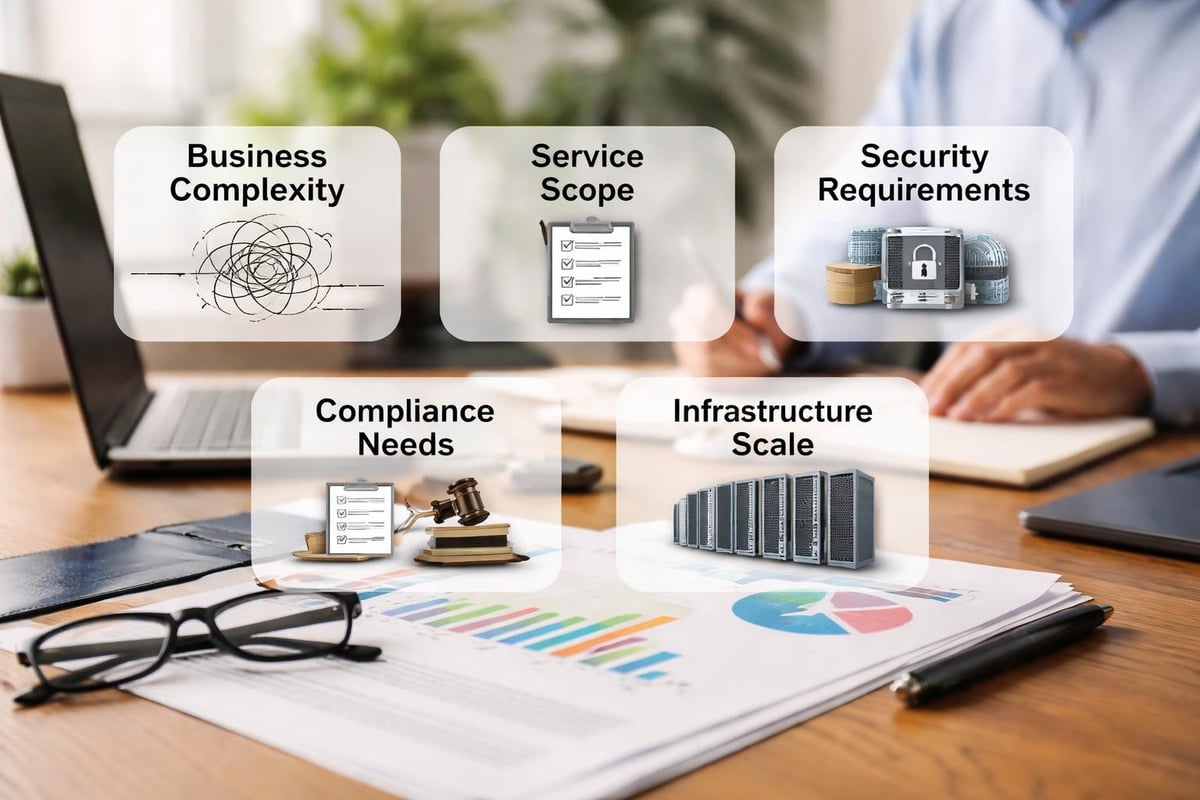
Beyond the basic pricing model, several factors significantly impact your final monthly costs. Understanding these variables helps you evaluate quotes from different providers and ensures you're comparing apples to apples.
Business Size and Complexity
Company size directly affects managed services IT pricing through economies of scale and complexity factors. A five-person office has fundamentally different needs than a fifty-person operation with multiple locations.
Complexity multipliers include:
- Number of physical locations
- Industry-specific compliance requirements
- Legacy system integration needs
- Custom application support
- Data sensitivity and security requirements
Businesses requiring specialized compliance support for regulations like HIPAA or financial industry standards typically pay 20-40% premiums over standard service packages.
Service Scope and Coverage Hours
The breadth of services included and when they're available dramatically impacts pricing. Basic monitoring differs substantially from comprehensive management that includes strategic planning, cybersecurity, and cloud infrastructure optimization.
Coverage options include:
- Business Hours Only (8 AM to 6 PM, weekdays)
- Extended Hours (7 AM to 10 PM, weekdays)
- 24/7/365 Support (around-the-clock availability)
- Hybrid Models (24/7 monitoring with business-hours support)
According to industry benchmarks for managed IT services, 24/7 coverage typically adds 25-50% to base pricing compared to business-hours-only support.
Geographic Location and Market Conditions
Regional market dynamics influence managed services IT pricing significantly. Providers in major metropolitan areas often charge premiums reflecting higher operational costs, while rural and smaller market providers may offer more competitive rates.
For businesses in Lethbridge and Southern Alberta, local providers understand regional business challenges and offer pricing structures reflecting the local market while maintaining high service standards.
Technology Infrastructure Condition
Your current IT environment's state affects both initial setup costs and ongoing management fees. Well-maintained, modern infrastructure costs less to manage than outdated, poorly documented systems requiring extensive remediation.
Initial assessment factors include:
- Age and condition of hardware
- Software licensing compliance
- Network architecture documentation
- Security posture and vulnerabilities
- Backup and disaster recovery readiness
Providers may charge one-time onboarding fees ranging from $1,000 to $10,000 for businesses requiring significant infrastructure improvements before managed services begin.
Evaluating Total Cost of Ownership
Smart businesses look beyond monthly managed services IT pricing to understand true total cost of ownership (TCO). This comprehensive view reveals the actual value proposition compared to alternative IT support approaches.
Managed Services vs. In-House IT Staff
Comparing managed services to hiring full-time IT staff requires factoring all employment costs. A single IT professional earning $65,000 annually actually costs businesses $85,000-$95,000 when including benefits, payroll taxes, training, and equipment.
| Cost Category | In-House IT | Managed Services |
|---|---|---|
| Base Salary/Service | $65,000 | $36,000-$60,000 |
| Benefits & Taxes | $20,000 | $0 |
| Training & Development | $3,000 | $0 |
| Tools & Software | $5,000 | Included |
| Coverage Gaps | Vacation/Sick | 24/7 Team |
| Total Annual Cost | $93,000 | $36,000-$60,000 |
The strategic value of managed IT services extends beyond direct cost comparison to include expertise breadth, coverage continuity, and scalability impossible with single-person IT departments.
Break-Fix vs. Proactive Management
Traditional break-fix IT support charges hourly rates (typically $125-$200) only when problems arise. While this seems economical during quiet periods, emergency situations and downtime costs quickly eclipse predictable managed services IT pricing.
Consider these break-fix hidden costs:
- Emergency support premiums (often 1.5x to 2x standard rates)
- Productivity losses during downtime
- Delayed issue resolution without proactive monitoring
- Reactive rather than strategic technology decisions
- No accountability for prevention
Businesses switching from break-fix to managed services typically see 30-50% reduction in total IT spending within the first year through reduced downtime and proactive issue prevention.
Hidden Costs and Value-Adds
Comprehensive managed services IT pricing should transparently include value-adds that separate providers charge extra for. When evaluating proposals, identify what's included versus what costs extra.
Standard inclusions should cover:
- Regular security patching and updates
- Antivirus and anti-malware protection
- Basic cybersecurity monitoring
- Help desk support
- Network monitoring
- Regular reporting and reviews
Common add-ons billed separately:
- Advanced cybersecurity tools (EDR, SIEM)
- Cloud infrastructure management
- Compliance reporting and auditing
- Strategic IT consulting
- Custom application support
- Project work and infrastructure upgrades
Understanding these distinctions prevents budget surprises and enables accurate provider comparison. Resources like comprehensive pricing guides help businesses identify industry-standard inclusions versus premium services.
Selecting the Right Pricing Model for Your Business
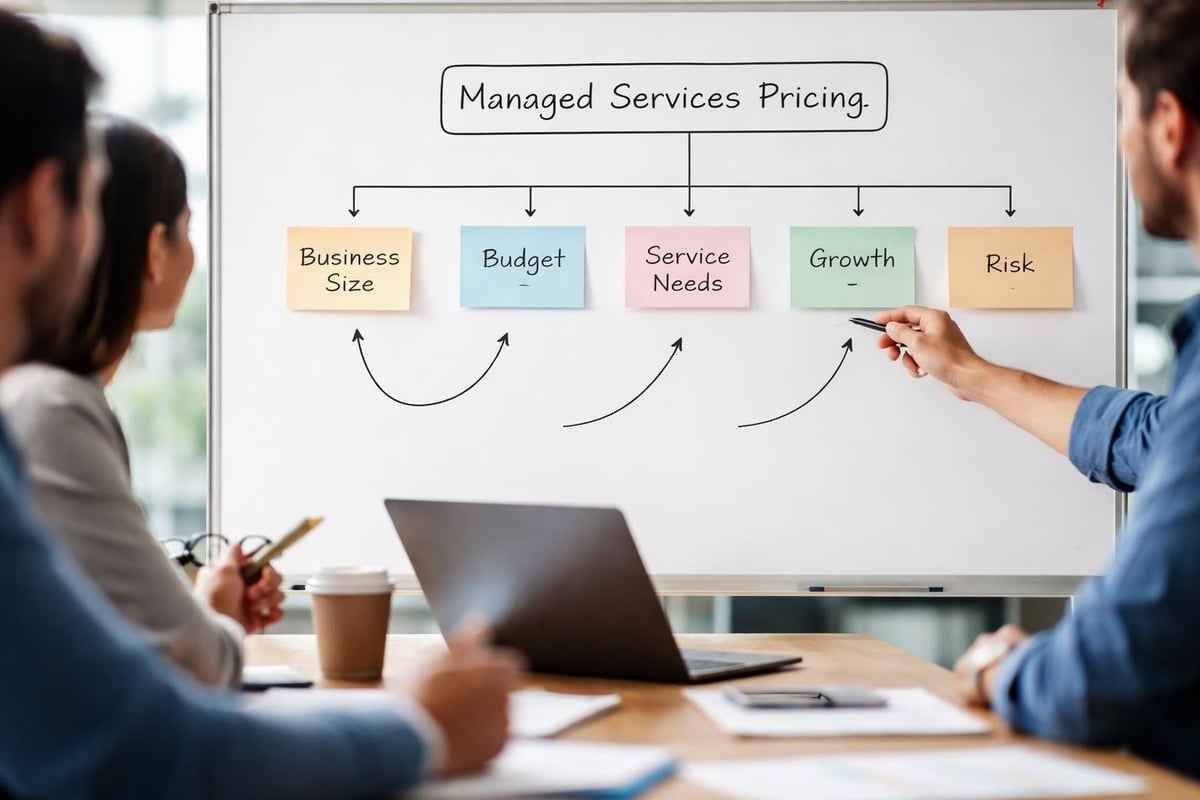
Choosing the optimal managed services IT pricing structure requires honest assessment of your business needs, growth plans, and risk tolerance. No single model suits every organization, and the right choice balances cost predictability with service comprehensiveness.
Matching Models to Business Stages
Startup and early-stage companies often benefit from flexible per-user pricing that scales naturally with hiring. This approach minimizes upfront commitments while providing essential IT infrastructure as the team grows.
Startup Phase (1-10 employees)
- Per-user pricing offers flexibility
- Basic tier services sufficient
- Focus on essential security and support
- Budget: $800-$2,000 monthly
Growth Phase (10-50 employees)
- Consider tiered or per-device models
- Enhanced security becomes critical
- Strategic IT planning adds value
- Budget: $2,000-$8,000 monthly
Established Phase (50+ employees)
- All-inclusive or custom pricing works well
- Comprehensive services including compliance
- Dedicated support and strategic partnership
- Budget: $8,000-$25,000+ monthly
Questions to Ask Potential Providers
Evaluating managed services IT pricing requires asking detailed questions that reveal true service scope and provider capabilities. Critical questions include:
- What specific services are included in your base pricing?
- How do you handle after-hours emergencies?
- What's your average response and resolution time?
- Are security tools and software licenses included or extra?
- How often do you conduct strategic reviews?
- What's your onboarding process and timeline?
- How do you handle scope changes and service additions?
- What guarantees or SLAs do you offer?
- Can you provide client references in similar industries?
- How transparent is your billing and reporting?
Providers confident in their value proposition answer these questions directly with specific examples and documentation.
Red Flags in Pricing Proposals
Certain pricing characteristics signal potential problems or hidden costs. Watch for these warning signs when evaluating proposals:
- Extremely low pricing that seems too good to be true usually indicates limited service scope or poor-quality support
- Vague service descriptions without specific deliverables create accountability gaps
- Lack of SLA commitments means no guarantees on response times or issue resolution
- Complex billing structures with numerous potential add-on charges lead to budget unpredictability
- Minimal contract flexibility locks you into arrangements that may not serve evolving needs
- No clear escalation process for urgent issues or service problems
Quality providers offer transparent managed services IT pricing with clear service definitions, realistic expectations, and straightforward contracts.
Industry-Specific Pricing Considerations
Different industries face unique technology challenges that influence managed services IT pricing. Understanding your sector's specific requirements helps you evaluate whether proposals adequately address your needs.
Healthcare and Compliance-Heavy Industries
Medical practices, dental offices, and other healthcare providers require HIPAA-compliant IT management, adding 20-40% to standard pricing. This premium covers:
- Encrypted communication systems
- Regular compliance auditing
- Enhanced data backup and recovery
- Specialized security monitoring
- Staff training and documentation
- Business associate agreements
Financial services face similar compliance burdens with additional costs for SOX, PCI-DSS, or other regulatory frameworks.
Professional Services and Legal Firms
Law firms, accounting practices, and consulting businesses typically need robust document management, client confidentiality protections, and high uptime guarantees. These requirements often push them toward upper-tier service packages with enhanced security.
Key considerations include:
- Document management system integration
- Client portal security
- Conflict checking system support
- Time and billing software maintenance
- Remote work infrastructure
- Multi-factor authentication enforcement
Manufacturing and Distribution
Companies with operational technology (OT) alongside traditional IT face unique pricing structures. Managing industrial control systems, warehouse management software, and integrated business systems requires specialized expertise.
Manufacturing-specific needs affecting pricing:
- ERP system support and integration
- Supply chain software management
- Legacy system maintenance
- Industrial network security
- Minimal downtime requirements
- Shift coverage for 24/7 operations
Local businesses exploring managed IT services in Lethbridge should seek providers familiar with regional industry concentrations and specific sector requirements common to Southern Alberta businesses.
Optimizing Your Managed Services Investment
Once you've selected a provider and pricing model, maximizing value from your managed services IT pricing investment requires active partnership and strategic utilization of available services.
Leveraging Included Services Fully
Many businesses underutilize services included in their managed IT packages, leaving value on the table. Common underused services include:
- Strategic planning sessions for technology roadmap development
- Security assessments identifying vulnerabilities before exploitation
- User training programs improving security awareness and productivity
- Regular business reviews aligning IT with business objectives
- Documentation services creating knowledge bases and procedures
Schedule quarterly reviews with your provider ensuring you're accessing all included services and identifying opportunities for improvement.
Planning for Growth and Changes
Technology needs evolve alongside business growth. Proactive planning with your managed services provider prevents costly reactive changes and ensures infrastructure scales appropriately.
Growth planning conversations should address:
- Anticipated hiring timelines and workspace expansions
- New software or application requirements
- Cloud migration opportunities
- Cybersecurity enhancement needs
- Disaster recovery and business continuity updates
- Budget allocation for technology investments
Building these discussions into regular business reviews ensures managed services IT pricing remains aligned with business value rather than becoming a static expense.
Measuring ROI and Service Quality
Quantifying return on investment validates your managed services IT pricing decisions and identifies improvement opportunities. Key metrics to track include:
| Metric | Measurement Method | Target |
|---|---|---|
| System Uptime | Monthly availability percentage | 99.5%+ |
| Average Response Time | Ticket system analytics | Under 30 minutes |
| Issue Resolution Time | Mean time to resolution (MTTR) | Under 4 hours |
| User Satisfaction | Quarterly surveys | 4.5+ out of 5 |
| Security Incidents | Monthly incident reports | Declining trend |
| Cost Per User | Total cost divided by users | Industry benchmark |
Regular metric reviews with your provider create accountability and drive continuous improvement in service delivery.
Future Trends in Managed Services IT Pricing
The managed IT services industry continues evolving, with several emerging trends reshaping how providers structure pricing and deliver value. Understanding these developments helps businesses make future-proof decisions.
Consumption-Based and Hybrid Models
Traditional fixed-pricing models are increasingly supplemented with consumption-based elements for cloud services, storage, and specialized security tools. This hybrid approach provides base service predictability while allowing flexible scaling for specific resources.
Expect to see more providers offering:
- Base managed services with usage-based cloud charges
- Tiered security packages with add-on threat intelligence
- Core support plus project-based consulting
- Flexible user licensing with seasonal adjustments
These models better align costs with actual business needs and resource consumption.
AI and Automation Impact on Pricing
Artificial intelligence and automation tools are transforming IT management efficiency. As providers leverage these technologies, they can offer more comprehensive services at competitive prices while improving response times and issue prevention.
AI-driven capabilities affecting managed services IT pricing include:
- Predictive maintenance identifying issues before failures
- Automated ticket routing and resolution
- Intelligent security threat detection
- Self-healing systems reducing manual intervention
- Chatbot-based tier-1 support
These efficiencies may stabilize or even reduce pricing over time while expanding service scope.
Security and Compliance Pricing Evolution
Growing cybersecurity threats and expanding compliance requirements continue elevating security's importance in managed services packages. Expect security to transition from add-on service to core inclusion across all pricing tiers.
Emerging security inclusions in base pricing:
- Endpoint detection and response (EDR)
- Security awareness training
- Dark web monitoring
- Multi-factor authentication management
- Regular vulnerability scanning
- Incident response planning
Providers not including these capabilities in base packages may struggle to compete as security expectations rise across all business sizes.
Understanding managed services IT pricing empowers small businesses to make informed technology investment decisions that align costs with value while ensuring comprehensive IT support. By evaluating different pricing models, considering total cost of ownership, and selecting providers offering transparent, comprehensive packages, businesses position themselves for technology success without budget surprises. Delphi Systems Inc. brings this philosophy to life with fixed-rate pricing structures designed specifically for small businesses in Lethbridge and surrounding areas, combining predictable costs with comprehensive IT management that keeps your technology running smoothly while you focus on growing your business.

