

Small businesses face an unprecedented challenge in 2026: cybersecurity threats are growing more sophisticated while internal resources remain limited. Managed security solutions have emerged as a critical answer to this dilemma, providing enterprise-grade protection without the need for extensive in-house security teams. For businesses in Lethbridge and surrounding areas, understanding how these services work and what they deliver can mean the difference between secure operations and costly data breaches.
Understanding the Core Components of Managed Security Solutions
Managed security solutions represent a comprehensive approach to protecting digital assets through outsourced expertise and continuous monitoring. Rather than attempting to build and maintain an internal security operations center, businesses partner with specialized providers who deliver threat detection, incident response, and compliance management as ongoing services.
The foundation of these solutions rests on several critical components that work together seamlessly. Security information and event management (SIEM) systems collect and analyze data from across your network infrastructure. Threat intelligence feeds provide real-time information about emerging vulnerabilities and attack patterns. Endpoint detection and response (EDR) tools monitor individual devices for suspicious activity.
How 24/7 Monitoring Protects Your Business
Security threats don't observe business hours, which makes continuous monitoring essential for modern organizations. Managed security solutions provide round-the-clock surveillance of network traffic, user behavior, and system logs. Security analysts review alerts, investigate anomalies, and respond to incidents regardless of when they occur.
This constant vigilance offers several distinct advantages:
- Rapid threat detection that identifies potential breaches within minutes rather than days
- Immediate incident response to contain threats before they spread across your network
- Reduced dwell time for attackers who gain initial access to your systems
- Compliance with regulations that mandate continuous security monitoring

The comprehensive approach to managed security services integrates multiple technologies and human expertise to create defense in depth. Small businesses gain access to the same caliber of protection that enterprise organizations maintain, but through a scalable service model that fits their budget constraints.
Key Services Included in Comprehensive Security Programs
Managed security solutions encompass far more than basic antivirus software or firewall management. Modern offerings include a broad spectrum of services designed to address the full lifecycle of cybersecurity threats.
Vulnerability Management and Patch Administration
Regular vulnerability scanning identifies weaknesses in your infrastructure before attackers can exploit them. Security teams prioritize findings based on severity and business impact, then coordinate remediation efforts. Patch management ensures that operating systems, applications, and firmware receive critical security updates promptly.
| Service Component | What It Does | Business Benefit |
|---|---|---|
| Vulnerability Scanning | Identifies security weaknesses | Proactive risk reduction |
| Patch Management | Applies security updates | Closes known exploit paths |
| Configuration Review | Audits security settings | Prevents misconfigurations |
| Penetration Testing | Simulates real attacks | Validates defense effectiveness |
Threat Detection and Incident Response
Advanced threat detection combines automated tools with human analysis to identify both known and unknown attacks. Machine learning algorithms establish baselines for normal network behavior, flagging deviations that might indicate compromise. When incidents occur, response teams follow established playbooks to contain damage, eradicate threats, and restore operations.
The incident response process typically follows these critical steps:
- Identification of security events through monitoring and alert systems
- Containment to prevent the threat from spreading to additional systems
- Eradication to remove malicious code and close access pathways
- Recovery to restore affected systems to normal operation
- Post-incident review to improve defenses and prevent recurrence
For small businesses without dedicated security staff, this expertise proves invaluable during crisis situations. According to research on cybersecurity as a service, selecting the right managed security provider requires careful evaluation of their capabilities, response times, and industry experience.
Evaluating Managed Security Solutions for Small Business Needs
Not all managed security solutions deliver the same value proposition. Small businesses must assess potential providers based on specific criteria that align with their operational requirements and risk profile.
Service Level Agreements and Response Times
The contract terms that govern your security partnership directly impact protection effectiveness. Response time guarantees specify how quickly the provider will acknowledge and begin investigating security alerts. Resolution timeframes establish expectations for containing and remediating incidents.
Critical SLA components include:
- Maximum time to acknowledge critical alerts (typically 15-30 minutes)
- Expected resolution timeframes based on incident severity
- Guaranteed uptime for monitoring and detection systems
- Communication protocols during active security incidents
- Escalation procedures when initial response proves insufficient
Technology Stack and Integration Capabilities
Your managed security solutions must integrate seamlessly with existing IT infrastructure. Providers should support the specific technologies your business relies on, whether that includes cloud platforms, legacy applications, or specialized industry software.
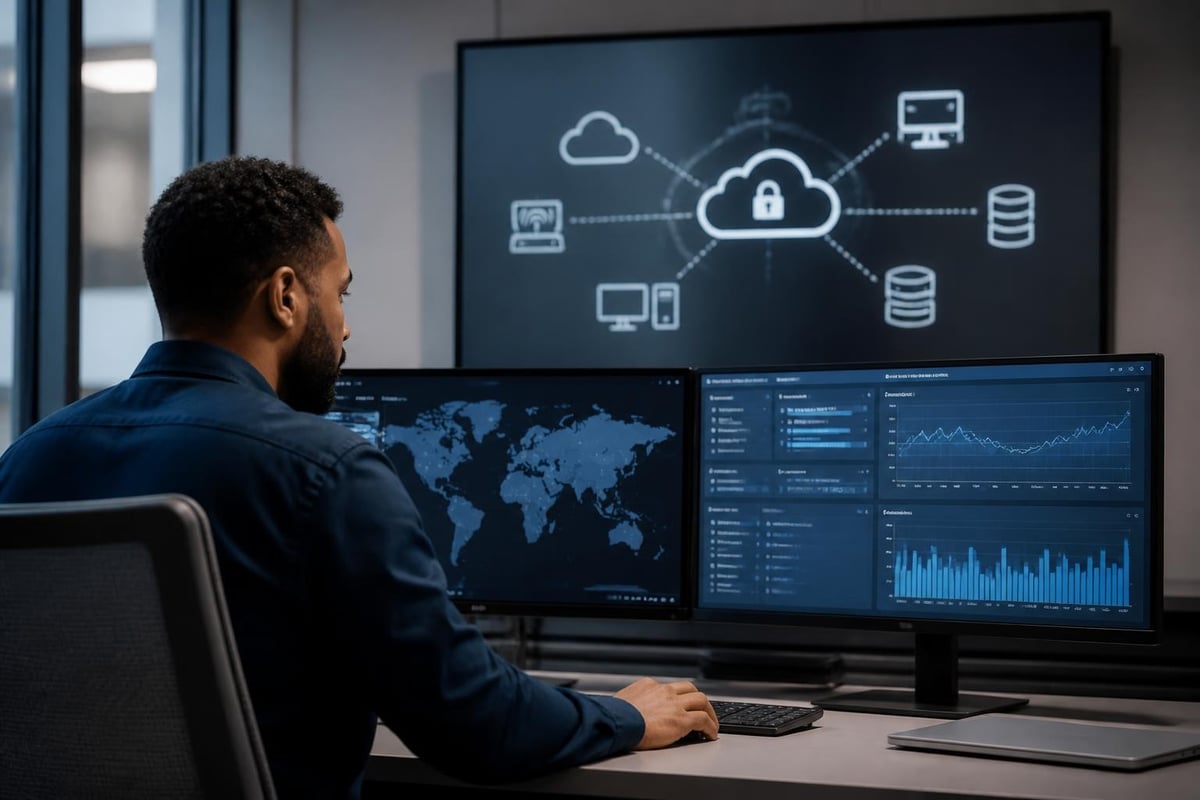
Compatibility extends beyond technical integration to include operational workflows. The security tools should enhance rather than disrupt employee productivity. The security reference library provides vendor-neutral guidance on implementing security best practices across diverse technology environments.
Cost Considerations and ROI for Managed Security Solutions
Financial planning for managed security solutions requires understanding both direct costs and potential savings from avoided incidents. Small businesses typically find that outsourced security delivers better value than attempting to build equivalent capabilities internally.
Comparing Internal vs. Managed Security Costs
Building an in-house security operation center involves significant capital and operational expenses. You need specialized staff, technology infrastructure, ongoing training, and round-the-clock coverage. For most small businesses, these costs prove prohibitive.
| Cost Factor | Internal Security Team | Managed Security Solutions |
|---|---|---|
| Personnel | $200K+ annually for 2-3 specialists | Included in service fee |
| Technology | $50K+ initial investment | Provider-managed infrastructure |
| Training | $10K+ per person yearly | Provider maintains expertise |
| 24/7 Coverage | Requires additional staff | Standard service inclusion |
| Scalability | Hire/train as needs grow | Adjust service tier as needed |
The fixed-rate fee structure that many providers offer creates budget predictability. You know exactly what security will cost each month without surprise expenses when incidents occur or technologies need upgrading.
Measuring Return on Investment
Quantifying security ROI involves calculating the cost of potential breaches versus the investment in prevention. The average data breach cost for small businesses exceeded $180,000 in 2026, including recovery expenses, lost productivity, regulatory fines, and customer notification requirements.
Managed security solutions deliver measurable returns through:
- Reduced breach probability through proactive threat detection and response
- Lower cyber insurance premiums when comprehensive security controls are documented
- Avoided regulatory penalties by maintaining compliance with industry standards
- Minimized downtime from security incidents that disrupt operations
- Protected business reputation by preventing customer data exposure
Many recognized providers, such as those featured in the Top 250 Managed Security Services Providers list, demonstrate proven track records of protecting client organizations from sophisticated threats.
Compliance and Regulatory Requirements
Businesses across industries face increasing pressure to demonstrate adequate cybersecurity controls. Managed security solutions help organizations meet these obligations without maintaining specialized compliance expertise internally.
Industry-Specific Security Standards
Different sectors impose specific security requirements that affect how you must protect sensitive information. Healthcare organizations must comply with HIPAA privacy rules. Financial services firms follow banking regulations and PCI DSS for payment card data. Even general businesses must address privacy laws that govern customer information handling.
Security providers familiar with your industry bring valuable compliance knowledge:
- Understanding which regulations apply to your specific business operations
- Implementing technical controls that satisfy regulatory requirements
- Generating documentation and reports for compliance audits
- Adapting security measures as regulations evolve over time
- Advising on data retention, encryption, and access control policies
Audit Support and Documentation
When regulators or auditors request evidence of your security program, comprehensive documentation proves essential. Managed security solutions typically include reporting capabilities that track security events, response actions, and control effectiveness over time.
The cloud security services landscape continues evolving with new regulatory frameworks that affect how businesses must protect data stored in cloud environments. Working with knowledgeable security partners ensures your organization stays ahead of these changing requirements.

Selecting the Right Managed Security Provider
Choosing a managed security partner represents a critical business decision that will affect your risk exposure for years to come. Small businesses should evaluate potential providers using a structured approach that goes beyond comparing price quotes.
Essential Questions to Ask Potential Providers
Before committing to a managed security relationship, gather detailed information about how the provider operates and what you can realistically expect from the partnership. Ask about their security operations center location and whether analysts work in-house or through subcontractors. Understand their client portfolio to confirm experience with businesses similar to yours.
Additional evaluation criteria include:
- Average client retention rates (high retention indicates satisfaction)
- Certifications held by security analysts and the organization
- Technologies and platforms they specialize in supporting
- Customization options for security policies and response procedures
- Transparent pricing with clear explanations of what's included
- References from current clients in comparable industries
Trial Periods and Onboarding Processes
The transition to managed security solutions requires careful planning to avoid security gaps during implementation. Quality providers offer structured onboarding that includes network discovery, baseline establishment, and gradual assumption of monitoring responsibilities.
Expect the onboarding process to include:
- Initial security assessment to identify current vulnerabilities and gaps
- Technology deployment of monitoring agents and security tools
- Baseline creation to establish normal network behavior patterns
- Policy configuration aligned with your business requirements and risk tolerance
- Team training so your staff understands how to work with security analysts
- Testing and validation to confirm all systems communicate properly
Some providers offer trial periods that let you evaluate their services before committing to long-term contracts. This approach reduces risk when transitioning from internal security management or switching from another provider.
Integration with Broader IT Management Strategies
Managed security solutions deliver maximum value when coordinated with overall IT operations rather than functioning as isolated services. Security and IT management share common goals of maintaining system availability, protecting data integrity, and enabling business productivity.
Coordinating Security with IT Support Functions
Effective security requires close collaboration between security analysts and IT support teams. When security tools detect potential threats, IT staff must understand how to respond appropriately. When IT teams deploy new technologies or make infrastructure changes, security configurations need corresponding updates.
The relationship between security and IT management includes:
- Shared visibility into network assets, user accounts, and system configurations
- Coordinated incident response when security events affect system availability
- Integrated change management to maintain security during infrastructure updates
- Unified reporting that connects security metrics with IT performance indicators
- Complementary backup strategies that support both disaster recovery and security incident recovery
Businesses working with Delphi Systems Inc. benefit from integrated approaches where security management complements broader IT services including network monitoring, cloud computing, and data backup systems.
Aligning Security Investment with Business Goals
Security spending should support rather than hinder business objectives. Managed security solutions offer the flexibility to scale protection as your organization grows, adding capabilities when new risks emerge without requiring complete infrastructure overhauls.
Strategic alignment means:
- Protecting the systems and data most critical to revenue generation
- Enabling secure adoption of productivity-enhancing technologies
- Providing security confidence that supports business development initiatives
- Maintaining compliance that opens doors to new markets or customer segments
- Demonstrating due diligence that builds trust with partners and clients
Resources like hosted and managed services insights help businesses understand emerging trends and evaluate how new security capabilities might support their specific operational needs.
Future-Proofing Your Security Posture
The threat landscape continues evolving as attackers develop new techniques and exploit emerging technologies. Managed security solutions provide adaptability that helps businesses stay protected despite constant change.
Emerging Threats and Adaptive Defenses
Artificial intelligence now powers both attack tools and defensive systems. Ransomware groups target smaller organizations with automated campaigns that require minimal human effort. Supply chain attacks compromise trusted vendors to gain access to their customers' networks. Zero-day vulnerabilities in widely used software create windows of exposure before patches become available.
Quality managed security providers invest continuously in:
- Threat intelligence gathering from global sources and information sharing communities
- Tool enhancement to detect new attack patterns and techniques
- Analyst training on emerging threats and response methodologies
- Technology upgrades that incorporate latest defensive capabilities
- Research partnerships with security vendors and academic institutions
This ongoing investment ensures that your defenses evolve alongside the threats they're designed to counter. Small businesses gain protection improvements without additional investment beyond their regular service fees.
Planning for Long-Term Security Requirements
Your security needs will change as your business grows and technology adoption accelerates. Managed security solutions should accommodate this evolution through flexible service tiers and expandable capabilities.
Consider how your security requirements might shift:
- Expansion to additional office locations requiring broader network monitoring
- Cloud migration projects that introduce new infrastructure to protect
- Compliance obligations from entering regulated industries or markets
- Remote workforce growth demanding secure access solutions
- Customer requirements for demonstrating security practices through certifications
The Advanced Security Authority provider network offers research resources for evaluating security vendors and understanding service provider capabilities across different specializations and geographic regions.
Managed security solutions provide small businesses with enterprise-grade protection through specialized expertise, advanced technology, and continuous monitoring that would prove cost-prohibitive to build internally. By partnering with experienced security providers, organizations in Lethbridge and surrounding areas can focus on core business activities while maintaining confident defense against evolving cyber threats. Delphi Systems Inc. delivers comprehensive managed IT services including cybersecurity, network monitoring, and data protection with transparent fixed-rate pricing that helps small businesses maintain secure, efficiently managed IT infrastructure without unpredictable costs or security gaps.

