


Cyber threats are escalating rapidly, and the digital landscape in 2026 is more complex than ever. Every organization faces new risks each day, making robust protection essential.
This guide is designed to help you navigate the world of managed cyber security services. We aim to provide clear, actionable steps so your business can protect its assets, meet compliance requirements, and foster growth.
You will discover industry trends, types of managed cyber security services, how these services work, what to consider when selecting a provider, onboarding tips, ROI insights, and future predictions. Ready to secure your future? Let’s get started.
The Evolving Cyber Threat Landscape in 2026
Digital threats are growing more advanced every year, and by 2026, organizations face a landscape that is both unpredictable and unforgiving. Managed cyber security services are becoming essential as attackers leverage automation and artificial intelligence to breach defenses faster than ever. Businesses of all sizes and industries must understand the risks ahead to build resilience and protect critical assets.

Key Cyber Threats Facing Businesses
In 2026, the threat landscape is dominated by ransomware, phishing, zero-day exploits, insider threats, AI-driven attacks, and supply chain vulnerabilities. Attackers are using automation and machine learning to increase the frequency and sophistication of breaches. Recent years have seen ransomware attacks rise by over 50 percent, impacting sectors like healthcare, finance, and SMBs with devastating downtime and costs. High-profile incidents, such as the 2025 global healthcare breach, highlight the urgent need for managed cyber security services. For a deeper dive into these emerging risks, see Cybersecurity Trends 2026 Explained: AI Threats, Compliance, and Operational Resilience.
Regulatory and Compliance Changes
Regulatory frameworks are rapidly evolving as governments respond to escalating cyber threats. By 2026, updates to GDPR, CCPA, and new industry-specific rules will place greater emphasis on data privacy and incident reporting. Non-compliance penalties have increased significantly, with some fines doubling since 2023. Managed cyber security services are critical for proactive compliance, helping organizations keep pace with shifting requirements. For example, fines for data breaches in the financial sector have reached record highs, making compliance management a top business priority.
The Cost of Cyber Attacks
The financial impact of cyber attacks is climbing sharply. In 2023, the average cost per breach was $4.45 million, and projections suggest this figure will only grow by 2026. Beyond direct losses, organizations face downtime, reputational harm, and lost customers. Case studies from leading firms show that a single ransomware event can disrupt operations for weeks. Insurance trends reveal more exclusions and higher premiums, reinforcing why many organizations are turning to managed cyber security services for cost-effective risk mitigation.
Why Traditional Security Approaches Are Failing
Legacy tools like antivirus and firewalls are no longer sufficient in a world of distributed workforces, widespread cloud adoption, and exploding IoT device usage. Attackers are exploiting gaps that static defenses cannot plug. Without continuous monitoring and rapid incident response, businesses remain vulnerable. Managed cyber security services offer the proactive, adaptive protection required to meet modern threats, supporting organizations as they transition to more complex digital environments and ensuring security remains a business enabler.
What Are Managed Cyber Security Services?
Understanding managed cyber security services is essential for businesses facing the rapidly changing threat landscape in 2026. These services offer a proactive, comprehensive approach to protecting digital assets by leveraging external expertise. Organizations turn to managed cyber security services for continuous monitoring, rapid response, and scalable protection that adapts to new risks.

Definition and Core Components
Managed cyber security services refer to the outsourcing of security monitoring, management, and incident response to specialized providers. Unlike standard IT support, these services are delivered by Managed Security Service Providers (MSSPs) who focus solely on safeguarding digital environments.
Core components include 24/7 threat monitoring, real-time detection, incident response, and vulnerability management. MSSPs employ advanced tools and expert analysts to identify threats before they escalate. This proactive model ensures organizations remain protected even as cyber threats evolve.
Managed cyber security services differ from traditional IT providers by offering dedicated security operations, deeper threat intelligence, and robust compliance support. For businesses preparing for future challenges, these services provide the expertise and technology required to maintain a resilient security posture.
Types of Managed Cyber Security Services
There is a broad spectrum of managed cyber security services tailored to different organizational needs. Common service categories include:
| Service Type | Description |
|---|---|
| MDR | Managed Detection & Response for quick threat action |
| EDR | Endpoint Detection & Response for device-level protection |
| NDR | Network Detection & Response for network traffic analysis |
| SASE | Secure Access Service Edge for cloud and remote work |
| UTM | Unified Threat Management with integrated controls |
| vCISO | Virtual Chief Information Security Officer for strategic guidance |
| GRC | Governance, Risk, and Compliance management |
| Dark Web Monitoring | Scans for leaked credentials and threats on the dark web |
| Phishing Prevention | Blocks malicious emails and trains users |
| Penetration Testing | Simulates attacks to uncover vulnerabilities |
Many managed cyber security services providers offer bundled solutions that combine several of these features. As threats become more sophisticated, the need for adaptive, multi-layered services grows. For more on how these types of services are evolving, see Cybersecurity Trends in 2026: From AI Defense to Digital Trust.
How Managed Services Differ from In-House Security
Opting for managed cyber security services brings distinct advantages over relying solely on in-house teams. Building and maintaining an internal security operation can be costly, requiring investment in skilled personnel, advanced tools, and ongoing training.
Managed security providers deliver scalability, allowing organizations to expand protection as they grow or face new regulations. Access to specialized skills and global threat intelligence means businesses stay ahead of emerging risks without the burden of hiring or training additional staff.
For small and medium businesses, managed cyber security services offer enterprise-grade protection that would otherwise be out of reach. Enterprises benefit from supplementing their teams with external expertise, ensuring a comprehensive defense.
Key Benefits for Businesses
The decision to invest in managed cyber security services delivers several business-critical benefits. Proactive threat prevention reduces the risk of costly breaches, while rapid response minimizes downtime and data loss.
Providers support compliance needs by maintaining audit-ready documentation and helping organizations navigate complex regulations. Predictable pricing models allow for accurate budgeting and reduced overhead.
Most importantly, managed cyber security services free up internal resources, enabling teams to focus on core business goals. By leveraging expert support, companies can build a resilient security foundation for sustainable growth.
How Managed Cyber Security Services Work: Process & Technology
Understanding how managed cyber security services function is essential for organizations aiming to strengthen their defenses. These services combine proven processes and advanced technology to deliver end-to-end protection, continuous monitoring, and rapid incident response. Let us explore how these solutions are structured and implemented.
Service Delivery Models
Managed cyber security services are offered through various delivery models tailored to organizational needs. The two main approaches are fully managed services, where the provider assumes end-to-end responsibility, and co-managed services, where internal IT teams collaborate closely with the provider.
Deployment options include on-premises solutions, cloud-based platforms, and hybrid configurations. Providers assess the organization's size, industry, and regulatory environment to customize the service mix. This flexibility ensures managed cyber security services align with both technical requirements and business goals.
The Onboarding and Implementation Process
A successful onboarding process is critical when adopting managed cyber security services. It starts with a discovery phase, where providers assess existing security controls and identify gaps. Next, a thorough assessment and data collection phase helps map out the IT environment and prioritize risks.
Providers often assign dedicated onboarding teams and project managers to ensure a smooth transition. For example, Ntiva’s four-stage onboarding process guides organizations from initial review through deployment, minimizing disruption and maximizing value from managed cyber security services.
Core Technologies and Tools Used
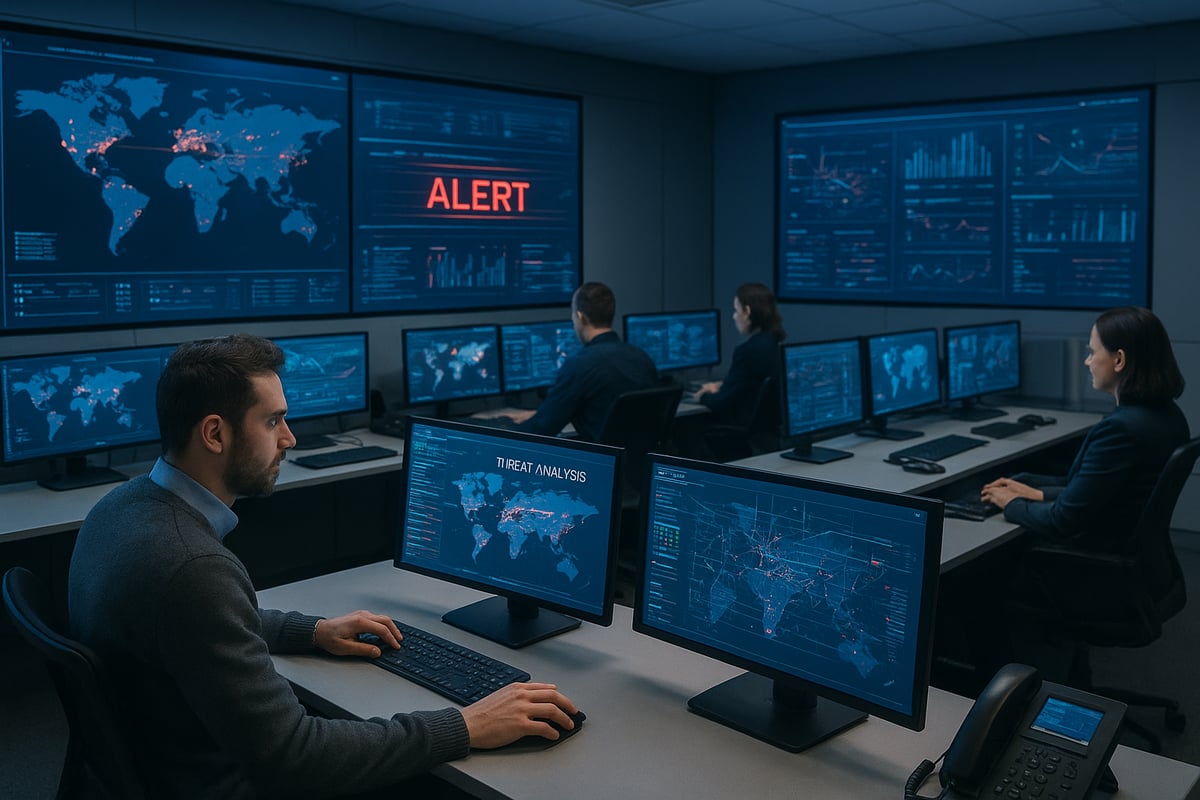
The effectiveness of managed cyber security services relies on a robust technology stack. Key components include SIEM platforms that aggregate and analyze security data, and Security Operations Centers (SOC) staffed by skilled analysts.
Modern solutions leverage AI and machine learning for advanced threat detection, automating the identification of suspicious behavior across endpoints, networks, and cloud environments. Integration with existing IT systems is seamless, providing holistic protection. For a deeper dive into how AI is shaping these defenses, see this AI-Driven Cybersecurity Threats: A Survey of Emerging Risks and Defensive Strategies resource.
Continuous Monitoring and Incident Response
Continuous monitoring is a cornerstone of managed cyber security services, providing 24/7 visibility into potential threats. Automated tools rapidly detect anomalies, while human analysts validate alerts and coordinate incident response.
Incident response workflows are well defined, with clear escalation paths and real-time remediation capabilities. Rapid containment of threats reduces business impact, ensuring managed cyber security services deliver resilience and peace of mind.
Reporting, Compliance, and Communication
Transparency and communication are vital components of managed cyber security services. Providers deliver regular security reports and maintain dashboards that track key metrics.
Compliance documentation is prepared to support audits and regulatory requirements. Alert protocols and incident notifications are established for prompt stakeholder communication. In regulated industries, managed cyber security services have proven invaluable by streamlining compliance and reducing audit complexities.
Selecting the Right Managed Cyber Security Provider in 2026
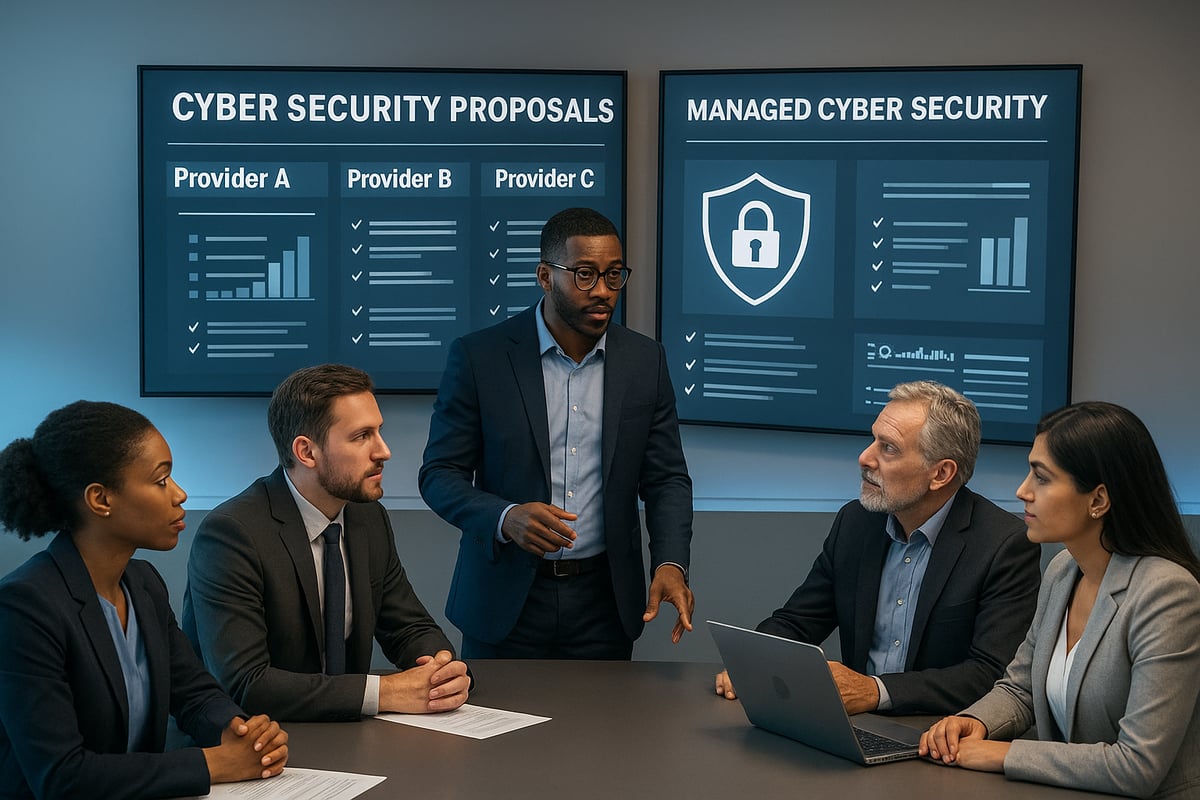
Choosing the right partner for managed cyber security services is critical for protecting your business in a rapidly changing threat landscape. With new risks emerging and regulations tightening, a thoughtful approach to provider selection will help ensure business resilience and regulatory compliance.
Assessing Your Security Needs and Risks
Before engaging any managed cyber security services, start with a comprehensive cyber risk assessment. Identify your most critical assets, such as customer data, intellectual property, and operational systems. Map out vulnerabilities, including outdated software, unsecured endpoints, or gaps in staff training.
Align your security strategy with business objectives. For example, if you are expanding cloud operations or integrating IoT devices, your risk profile will change. This proactive assessment will set a strong foundation for finding a provider that matches your unique needs.
Remember, the nature of cyber threats is evolving fast. Reviewing resources like Top Cybersecurity Trends for 2026 will help you anticipate the specific risks your organization faces and guide your managed cyber security services selection.
Key Evaluation Criteria for Providers
When evaluating managed cyber security services providers, focus on the following areas:
- Experience and certifications: Look for SOC 2, ISO 27001, and other relevant credentials.
- Industry expertise: Providers with clients in your sector understand your unique risks.
- Service range: Ensure they offer a comprehensive suite, such as MDR, EDR, and compliance support.
- SLAs and response times: Clear, measurable commitments are essential.
Request client references and case studies to verify the provider’s track record. A strong provider will demonstrate how their managed cyber security services have driven measurable improvements in similar organizations. Prioritize vendors who stay updated on industry changes and emerging threats.
Questions to Ask Potential Providers
To ensure a seamless partnership, ask potential managed cyber security services providers the right questions:
- How do you manage onboarding and transition for new clients?
- What technologies and platforms form the backbone of your security stack?
- How is incident response structured, and what is the average response time?
- What is your process for compliance management and reporting?
These queries will help clarify the provider’s approach, transparency, and ability to integrate with your existing IT environment. The answers should reveal how their managed cyber security services align with your operational and regulatory requirements.
Understanding Pricing Models and Contracts
Managed cyber security services pricing can vary widely. Common models include:
| Model | Description | Pros | Cons |
|---|---|---|---|
| Fixed-rate | Set monthly/annual fee for defined services | Predictable costs | May include unused services |
| Usage-based | Pay per device, user, or alert volume | Scales with needs | Costs can fluctuate |
Review what is included in each contract. Check for hidden fees, such as onboarding charges or out-of-scope incident responses. Ensure contracts offer flexibility, allowing you to scale services as your business evolves. Comparing pricing models will help you select managed cyber security services that fit your budget and operational needs.
Red Flags and Common Pitfalls
Watch for warning signs when selecting managed cyber security services:
- Lack of transparency: Unclear SLAs or vague answers to questions.
- Overpromising: Guarantees that sound unrealistic or unsupported.
- Poor communication: Infrequent updates or hard-to-reach support.
- Integration issues: Difficulty connecting with your existing IT team or systems.
Avoiding these pitfalls will help you build a successful, long-term relationship with your managed cyber security services provider. Choose a partner who prioritizes transparency, accountability, and seamless collaboration.
Step-by-Step Guide to Onboarding Managed Cyber Security Services
Onboarding managed cyber security services is a structured process that ensures your organization gets the full benefit of expert protection. A clear, methodical approach helps align security goals, streamline implementation, and reduce disruption. Below, we break down the essential steps for a successful onboarding experience.
Step 1: Pre-Engagement Assessment and Goal Setting
The onboarding journey for managed cyber security services begins with a thorough internal review. Organizations assess their current security posture, identifying strengths, weaknesses, and immediate risks.
During this phase, it is critical to define clear objectives for your managed cyber security services engagement. Determine what success looks like, whether it is reducing incident response times or meeting compliance requirements.
Aligning stakeholders from IT, legal, and executive teams ensures everyone understands the goals. Allocate resources and assign roles early to avoid delays later in the process.
Step 2: Provider Selection and Contract Finalization
Selecting the right provider for managed cyber security services is a pivotal step. Shortlist vendors based on experience, certifications, and service offerings that match your needs.
Conduct thorough due diligence by reviewing client references and requesting proof of capabilities. During contract negotiations, pay close attention to service level agreements, response times, and escalation procedures.
Set up defined communication channels to facilitate a smooth transition. Establishing these foundations ensures your organization and the provider are aligned from day one.
Step 3: Discovery and Environment Mapping
Once the agreement is in place, the managed cyber security services provider will perform a detailed discovery of your digital environment. This includes inventorying assets, networks, and applications to map out the security landscape.
Automated assessment tools are often used to identify vulnerabilities and prioritize risks. Providing accurate data helps the provider tailor their approach to your specific requirements.
This step ensures a comprehensive understanding of your environment, laying the groundwork for effective protection and continuous monitoring.
Step 4: Implementation and User Training
The final onboarding phase for managed cyber security services involves deploying security tools and controls across your organization. Providers lead the technical rollout, integrating solutions with existing systems for minimal disruption.
User onboarding and security awareness training are essential components. Employees learn to recognize threats, follow best practices, and respond appropriately during incidents.
Initial incident response drills prepare your team for real-world scenarios, ensuring everyone is confident and ready to support the new security framework.
Measuring ROI and Business Impact of Managed Cyber Security Services
For organizations investing in managed cyber security services, understanding the tangible business value is critical. Measuring ROI involves more than reviewing invoices. It requires assessing reduced risk, improved operational resilience, and long-term cost benefits. By evaluating the direct and indirect impact, businesses can make informed decisions that drive growth and security.
Quantifying Risk Reduction and Incident Response Improvements
One of the clearest benefits of managed cyber security services is the measurable reduction in cyber risk. Companies often see a notable drop in security incidents and faster response times after implementation.
Key risk reduction metrics include:
- Number of incidents detected and contained per month
- Average time to detect and respond (MTTD/MTTR)
- Decrease in successful phishing or ransomware attacks
For example, organizations shifting to managed cyber security services can reduce incident response times from days to hours, limiting damage and recovery costs. Case studies show businesses experiencing up to a 50% decrease in successful attacks post-adoption.
Cost Savings and Resource Optimization
Managed cyber security services offer significant cost advantages compared to maintaining equivalent in-house capabilities. This is achieved through predictable pricing models, shared expertise, and reduced need for internal hires.
Typical areas of cost savings:
- Lower staffing and training expenses
- Avoided costs from breaches, downtime, or data loss
- Streamlined budgeting with fixed monthly fees
A 2023 industry report found that managed cyber security services can help organizations save up to 30% on security operations annually. These savings free up resources for strategic projects and innovation, contributing to overall efficiency.
Compliance and Audit Outcomes
Staying compliant with evolving regulations is a growing challenge. Managed cyber security services provide ongoing support for audit readiness and documentation, minimizing the risk of regulatory penalties.
Compliance benefits include:
- Improved audit pass rates and fewer violations
- Comprehensive reporting and documentation support
- Guidance on sector-specific requirements
A recent healthcare provider, for instance, credited managed cyber security services with passing its annual HIPAA audit on the first attempt. This level of support helps businesses avoid costly fines and reputational harm.
Business Continuity and Reputation Protection
Business continuity is a core outcome of investing in managed cyber security services. With rapid incident response and ongoing monitoring, companies can recover faster and maintain customer trust even during major cyber events.
Key impacts on continuity and reputation:
- Reduced downtime after attacks or outages
- Higher customer retention rates
- Enhanced brand reputation through proactive security
During the 2024 surge in ransomware incidents, many organizations with managed cyber security services in place reported minimal disruption and swift recovery. For further insights, this case study from IBM highlights real-world results.
Future Trends in Managed Cyber Security Services for 2026 and Beyond
The landscape of managed cyber security services is rapidly shifting as new technologies and challenges emerge. For organizations aiming to stay protected and compliant in 2026 and beyond, understanding these trends is essential.
AI and Automation in Managed Security
AI and automation are revolutionizing managed cyber security services by enhancing the speed and accuracy of threat detection. In 2026, advanced machine learning models will sift through vast data streams to identify suspicious activity, reducing manual workloads for security analysts.
Key benefits include:
- Automated incident response for faster containment
- Predictive analytics to anticipate emerging threats
- Continuous tuning of security controls using AI insights
Next-generation security operations centers (SOCs) will rely on a blend of human expertise and intelligent automation. This synergy allows managed cyber security services to deliver proactive protection while minimizing response times.
The Expanding Role of Cloud Security
Cloud adoption continues to reshape managed cyber security services. With more businesses operating in multi-cloud and hybrid environments, providers are expanding offerings to secure data, applications, and access across diverse platforms.
Trends include:
- Growth of cloud-native security tools for real-time monitoring
- Secure Access Service Edge (SASE) models for unified control
- Enhanced identity and access management for remote users
Managed cyber security services are evolving to address complex cloud threats. Providers now offer tailored solutions for securing cloud workloads and maintaining compliance, as discussed further in Gartner’s cloud security research.
Industry-Specific Managed Security Solutions
Customization is becoming a defining feature of managed cyber security services. Different sectors, such as healthcare, finance, and manufacturing, face unique regulatory and operational challenges. Providers are responding with industry-specific solutions designed to meet compliance mandates and address specialized risks.
Examples include:
- HIPAA-focused security for healthcare organizations
- PCI DSS compliance bundles for financial services
- Industrial cybersecurity for manufacturing environments
These tailored managed cyber security services ensure organizations receive targeted protection, reducing the risk of sector-specific breaches and fines.
The Human Factor: Training and Awareness
Despite technological advances, people remain a critical line of defense in managed cyber security services. Regular employee training programs, managed phishing simulations, and awareness campaigns are vital for building a strong security culture in 2026.
Effective strategies involve:
- Ongoing, role-based security training
- Simulated phishing attacks to measure readiness
- Clear communication channels for incident reporting
By integrating people-focused initiatives, managed cyber security services help organizations reduce human error and build lasting resilience against evolving threats.
As you look ahead to 2026, it's clear that preparing your business for the latest cyber threats and compliance requirements is more important than ever. Managed cyber security services can help you stay ahead—protecting your data, supporting productivity, and giving you peace of mind so you can focus on growth. If you want expert guidance in choosing and implementing the right solutions for your unique needs, we’re here to help every step of the way. Let’s talk about how you can make your IT network resilient and secure for the future.
Call us now
