
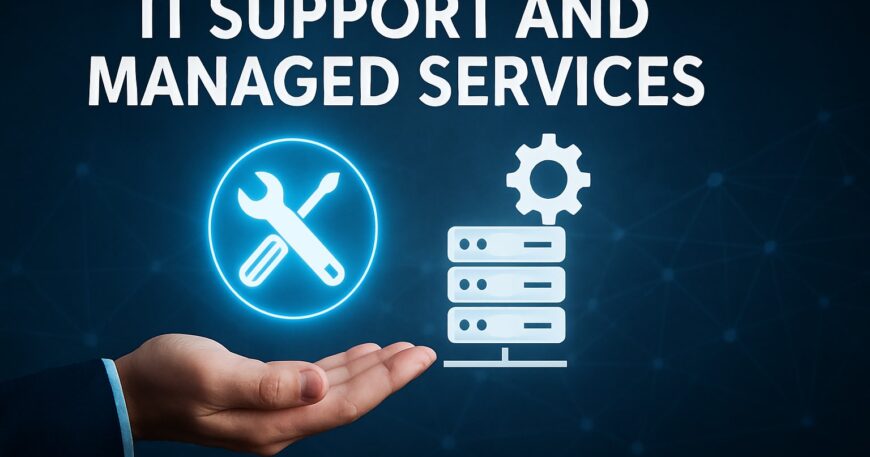
In 2025, technology choices can determine a business’s success or failure. The landscape is shifting rapidly, and leaders must make informed decisions to keep pace.
Choosing between it support and managed services is more important than ever for organizations aiming to thrive and adapt. The stakes are high, with the right approach directly impacting efficiency, security, and growth.
This article will break down both options, compare their scope, costs, and business value, and help you navigate 2025’s unique IT challenges. By the end, you’ll have a clear, step-by-step framework to select the best fit for your evolving needs.
Understanding IT Support: The Traditional Model
Traditional IT support remains a foundational option for many organizations, especially as they navigate the landscape of it support and managed services. This model emphasizes a reactive approach, where technical help is provided when issues arise. Understanding how this model works, its benefits, and its limitations is crucial for businesses weighing their options.

What Is IT Support?
IT support refers to the break-fix model, where specialists address technical issues as they occur. Services typically include hardware repairs, software troubleshooting, network fixes, and helpdesk support. Delivery is on-demand, often billed hourly or per incident.
For example, if a business experiences printer malfunctions or email outages, they call in IT support to resolve the issue. This approach is especially common among small businesses with tight budgets and straightforward technology needs. In the context of it support and managed services, this model is recognized for its flexibility and accessibility.
Strengths and Weaknesses of IT Support
IT support offers several advantages, such as flexibility, pay-as-you-go pricing, and no long-term contracts. However, it also has notable drawbacks, including a reactive stance, potential downtime, and unpredictable expenses. Consider the following comparison:
| Strengths | Weaknesses |
|---|---|
| Flexible, on-demand | Reactive, not proactive |
| No contracts | Risk of downtime |
| Pay-per-use | Unpredictable costs |
For instance, when a server crashes unexpectedly, emergency support can become costly. According to Uprite, 40% of SMBs identify downtime as a major risk with break-fix models. When evaluating it support and managed services, this risk factor is a significant consideration.
When IT Support Is a Good Fit
The traditional IT support model works best for small teams, limited budgets, or simple IT environments. Industries like retail, small offices, and startups often choose this approach. For example, a five-person consulting firm with minimal technology reliance may find ad-hoc support sufficient.
This model suits organizations with occasional support needs, where investing in a full-service provider may not be justified. However, it support and managed services differ in scalability. As technology complexity grows, the limitations of break-fix become more apparent.
Cost and Resource Considerations
IT support is typically billed hourly or per incident, which can make budgeting a challenge. Major outages or virus removal can lead to unexpected expenses. For example, each virus removal incident may be billed separately, causing costs to add up quickly.
Industry data shows that the average IT support incident costs between $150 and $300. For growing businesses, these unpredictable expenses can strain budgets. When comparing it support and managed services, the break-fix model's cost unpredictability is a key concern.
What Are Managed IT Services? The Modern Approach
Managed IT services represent a proactive, comprehensive approach to technology management. Unlike traditional break-fix models, managed services are delivered through ongoing partnerships, often via a fixed monthly fee. Providers handle everything from network monitoring and cybersecurity to cloud management and regular maintenance. This model is designed to prevent issues before they disrupt business operations. In 2025, as organizations face increasing IT complexity, the demand for managed services is surging. For a deeper look at how the landscape is evolving, see the State of Managed Services 2025.
Defining Managed IT Services
Managed IT services offer businesses a strategic partnership that goes beyond break-fix repairs. Providers deliver continuous monitoring, system maintenance, robust cybersecurity, and cloud management under a single contract. Companies benefit from 24/7 oversight and rapid response to any issue, minimizing downtime and maximizing productivity. With it support and managed services, the focus shifts from reacting to problems to actively preventing them. This approach is particularly valuable in today's dynamic technology landscape, where unplanned outages can be costly and damaging.
Benefits of Managed IT Services
Choosing it support and managed services brings several advantages for growing organizations. Proactive monitoring and maintenance drastically reduce the risk of unexpected outages. Predictable, flat-rate billing allows for easier budgeting and eliminates surprise costs. Strategic IT planning, often provided by a virtual Chief Information Officer (vCIO), ensures technology investments align with business goals. Automated updates and regular security patches keep systems secure. According to industry data, businesses leveraging managed services experience up to 85% less downtime compared to those using break-fix support.
Typical Managed Services Offerings
Most managed IT service providers deliver a wide range of solutions tailored to business needs. Common offerings include:
- Network and infrastructure monitoring
- Advanced cybersecurity and threat detection
- Cloud migration, management, and optimization
- 24/7 helpdesk support
- Automated data backup and disaster recovery
- Strategic IT consulting (
vCIOservices)
By integrating it support and managed services, companies receive customizable packages that address evolving requirements. Regular security audits and compliance monitoring are standard, making this model suitable for organizations with strict regulatory demands.
When Managed Services Are the Right Choice
It support and managed services are ideal for businesses with complex or mission-critical IT environments. Industries such as healthcare, finance, and manufacturing rely on managed services to ensure regulatory compliance, data security, and high uptime. For example, a medical clinic needing HIPAA compliance and round-the-clock system availability finds managed services indispensable. As organizations scale, managed services offer the flexibility to add users, locations, or new technologies without disruption. This scalability supports digital transformation and future growth.
Delphi Systems Inc.: Local Managed IT Expertise
Delphi Systems Inc. specializes in managed IT services tailored to small businesses in Lethbridge and the surrounding region. Their offerings include proactive network monitoring, comprehensive cybersecurity, cloud solutions, and fixed-rate support. Local healthcare and engineering firms trust Delphi for secure, compliant IT environments that enable uninterrupted operations. Clients benefit from all-inclusive pricing, personalized service, and a deep understanding of regional business needs. With Delphi as a partner, small businesses can focus on their core mission while maintaining a secure, efficient IT infrastructure.
IT Support vs. Managed Services: Key Differences
Choosing between it support and managed services is a pivotal decision for any business in 2025. Each model offers distinct advantages and limitations. Understanding their key differences helps organizations align IT investments with business priorities, ensuring technology supports both daily operations and long-term goals.

Service Scope and Delivery
The core distinction between it support and managed services lies in how services are delivered and the breadth of coverage. Traditional IT support operates on a break-fix model, stepping in when something goes wrong. This means a business waits for issues to arise before calling for help. Managed services, in contrast, provide continuous, proactive oversight. Providers monitor systems, apply updates, and resolve issues before they impact operations.
For example, if a server shows early signs of failure, a managed services provider will often fix the problem before downtime occurs. IT support typically addresses the incident only after disruption has happened. According to Key MSP Statistics and Trends 2025, businesses are increasingly demanding round-the-clock monitoring and preventative care, a hallmark of managed services.
This difference results in greater reliability and fewer interruptions for businesses relying on managed services.
Cost Structures and Predictability
When comparing it support and managed services, cost predictability is a major factor. IT support usually charges per hour or per incident, which can lead to fluctuating monthly expenses. A sudden server failure or security breach can result in unexpected, high costs.
Managed services offer a fixed monthly fee, covering a wide range of IT needs. This predictable pricing model makes budgeting easier, as businesses know what to expect each month. For growing companies, this financial stability is crucial, allowing leaders to plan with confidence.
The clear cost structure of managed services reduces the risk of surprise expenses and enables more strategic resource allocation.
Strategic Alignment and Business Value
It support and managed services also differ in how they align with a company’s broader strategy. IT support is focused on solving technical issues as they come up, without necessarily considering the business’s long-term objectives.
Managed services take a more holistic view. Providers often act as virtual CIOs, advising on technology upgrades, digital transformation, and aligning IT with business growth. This strategic partnership helps businesses innovate and stay competitive.
In today’s fast-paced environment, managed services support not just daily operations but also future-proof planning and scalability.
Security and Compliance Coverage
Security is a top concern for businesses evaluating it support and managed services. Traditional IT support addresses security issues reactively, fixing problems as they appear. This approach may leave gaps in protection, particularly for regulated industries.
Managed services, on the other hand, include ongoing security monitoring, regular vulnerability assessments, and compliance management. Providers help clients meet regulatory requirements, such as GDPR or HIPAA, and reduce the risk of breaches.
This proactive stance is vital in 2025, as cyber threats grow in sophistication and frequency. Managed services ensure systems remain secure and compliant year-round.
Scalability and Flexibility
The ability to scale is another critical difference between it support and managed services. IT support works well for small, static environments but struggles when businesses grow or add locations.
Managed services are designed for scalability. Providers can quickly add or remove users, expand services, or integrate new technologies as a business evolves. This flexibility makes managed services ideal for organizations expecting rapid change or expansion.
As technology and business needs shift, managed services ensure IT infrastructure keeps pace without disruption.
Response Times and Service Level Agreements
Finally, response times and accountability set it support and managed services apart. IT support often lacks guaranteed response times, meaning businesses may wait hours or days for assistance, depending on provider availability.
Managed services typically offer service level agreements (SLAs), defining response and resolution times. Many providers guarantee 24/7 support and high uptime, giving clients peace of mind.
SLAs ensure accountability and reliability, providing businesses with confidence that IT issues will be addressed promptly and effectively.
Comparison Table: IT Support vs. Managed Services
| Aspect | IT Support | Managed Services |
|---|---|---|
| Delivery | Reactive, on-demand | Proactive, continuous |
| Cost | Variable, per incident | Fixed, predictable monthly fee |
| Strategic Value | Technical fixes only | Strategic IT partnership |
| Security | Issue-based, limited | Ongoing, comprehensive |
| Scalability | Limited | Highly scalable |
| Response Times | Unpredictable | Defined by SLA |
Understanding these differences empowers businesses to make informed decisions about it support and managed services, ensuring their IT investments deliver maximum value and resilience.
2025 IT Challenges: How Each Model Measures Up
In 2025, the landscape of business technology is shifting rapidly. Organizations face a new set of IT challenges that demand robust solutions. When comparing it support and managed services, it is essential to understand how each model performs under pressure. The following sections break down the most pressing issues and how each approach stacks up.

Evolving Cybersecurity Threats
Cyber threats like ransomware, phishing, and zero-day exploits are more sophisticated in 2025. With it support and managed services, the difference is clear. Traditional IT support reacts to incidents after breaches occur, which can result in significant data loss or downtime. Managed services, on the other hand, continuously monitor for threats, deploy advanced endpoint protection, and train employees to recognize risks.
- Ransomware response
- Phishing prevention
- Real-time monitoring
Considering that 43% of cyberattacks now target small and mid-sized businesses, proactive defense has become crucial. In this climate, managed services are often better equipped to prevent breaches before they disrupt operations.
Cloud Adoption and Remote Work
The shift to cloud-based solutions and hybrid workforces is accelerating. It support and managed services address these changes in distinct ways. IT support may handle isolated cloud issues but often lacks deep expertise in migration or ongoing management. Managed services provide comprehensive cloud migration, secure remote access, and ongoing optimization.
- Cloud migration planning
- Secure remote collaboration
- Ongoing cloud management
With 70% of businesses increasing cloud investments, having a partner who can manage complex cloud environments is essential for both productivity and security.
Compliance and Regulatory Demands
Regulatory requirements are tightening in 2025, with new privacy laws and industry-specific mandates. When it comes to it support and managed services, compliance is a major differentiator. IT support generally reacts to compliance gaps only after issues arise, sometimes resulting in fines or audits. Managed services deliver ongoing compliance monitoring, documentation, and audit readiness.
| Requirement | IT Support | Managed Services |
|---|---|---|
| HIPAA/PIPEDA/GDPR | Reactive | Proactive/Audited |
| Documentation | Limited | Comprehensive |
| Audit Support | Case-by-case | Ongoing |
For highly regulated industries, the managed services model ensures continuous alignment with legal obligations, reducing both risk and stress.
Business Continuity and Disaster Recovery
Business continuity is vital in 2025 as disruptions from cyberattacks or natural disasters can devastate operations. With it support and managed services, the difference lies in preparedness. IT support typically restores systems after a failure, sometimes without a tested recovery plan. Managed services perform regular backups, test disaster recovery systems, and ensure rapid restoration.
- Automated, routine backups
- Disaster recovery testing
- Fast failover solutions
Statistics reveal that 93% of companies without a disaster recovery plan do not survive major data loss. Managed services safeguard uptime and data integrity, keeping businesses resilient in the face of unexpected events.
IT Talent Shortages and Skills Gaps
Recruiting and retaining skilled IT professionals is becoming more difficult. Businesses relying on it support and managed services must consider resource availability. IT support teams may be stretched thin, leading to slower response times and limited expertise. Managed services offer access to a broad team of specialists in security, cloud, and compliance, available around the clock.
- 24/7 technical support
- Access to top-tier talent
- Reduced HR burden
With 54% of SMBs citing IT skills shortages as a top concern, managed services help bridge the gap by delivering expertise on demand.
Supporting Growth and Digital Strategy
In a market where technology drives expansion, choosing between it support and managed services can define a company's future. IT support may struggle to keep pace with rapid growth or digital transformation projects. Managed services provide strategic planning, scalable solutions, and expert guidance for mergers, new technologies, or multi-location expansion.
According to the Managed Services Market Growth Report, the demand for scalable tech solutions will continue to surge through 2033 as organizations seek partners who align IT with business goals.
For businesses looking to future-proof operations, managed services deliver the agility and foresight needed to thrive in an evolving digital environment.
Decision Framework: Choosing the Right Fit for Your Business
Selecting between it support and managed services is a strategic decision that shapes your business’s resilience and growth. By following a structured framework, you can match your IT approach to your current operations and future ambitions.
Assessing Your Business Needs
Start by evaluating your IT environment’s complexity and the demands it places on daily operations. Identify whether your business relies on basic hardware and software, or if it requires advanced systems, strict compliance, or round-the-clock uptime.
List your current pain points, such as frequent downtime, security worries, or slow support response. Are you planning to expand, or do you expect your regulatory requirements to change? Answering these questions will clarify if it support and managed services can meet your evolving demands.
A clear assessment helps you avoid mismatched solutions and ensures your IT investment aligns with your business goals.
Budgeting and Cost Analysis
Comparing the total cost of ownership for it support and managed services is essential. Consider not just the visible costs, but also hidden expenses like downtime, emergency support, and lost productivity.
- Break-fix models may seem less expensive at first, but surprise incidents can quickly inflate your budget.
- Managed services offer predictable monthly fees, which simplifies financial planning.
- Use online calculators to estimate total costs over a year.
According to the Managed Services Market Forecast, businesses are increasingly choosing managed services for budget predictability as the market grows. Understanding these dynamics will help you make informed choices about it support and managed services.
Evaluating Provider Capabilities
When considering it support and managed services, look closely at each provider’s credentials, experience, and service offerings. Does the provider have industry certifications, such as CompTIA or Microsoft partnership? Can they demonstrate a track record of supporting businesses like yours?
Evaluate whether they offer robust security, compliance expertise, and proactive support. Managed service providers typically bring a broader skill set, while traditional IT support may be limited to troubleshooting. Choose a partner whose strengths align with your needs and who can scale as your business grows.
Industry and Regulatory Considerations
If you operate in a regulated industry, your choice between it support and managed services becomes even more critical. Healthcare, finance, and legal sectors often require ongoing compliance with standards like HIPAA, PIPEDA, or GDPR.
Managed services providers are equipped to handle regular security audits, documentation, and compliance reporting. In contrast, ad-hoc IT support may not have the resources or knowledge to keep up with evolving regulations. Your industry’s compliance landscape should be a key factor in your decision-making process.
Planning for Scalability and Future Needs
Think beyond your current operations. Will your business grow, add new locations, or adopt new technology in the next few years? It support and managed services differ in their ability to scale.
- Managed services are designed to add or remove users, locations, and services as needed.
- Traditional IT support may struggle to keep pace with rapid changes.
- Plan for digital transformation, cloud adoption, and increased cybersecurity needs.
By prioritizing scalability, you future-proof your IT investments and ensure your technology can adapt to market shifts.
Real-World Scenarios: Which Model Wins?
To make the decision tangible, consider these scenarios:
| Scenario | Best Fit | Why |
|---|---|---|
| Startup with simple IT | IT Support | Occasional needs, budget-friendly, minimal complexity |
| Healthcare office, 24/7 uptime | Managed Services | Compliance, security, proactive support |
| Expanding manufacturer, multiple sites | Managed Services | Scalability, strategic planning, uptime |
Most growing businesses find that it support and managed services transition is inevitable as operations become more complex. In fact, 85% of SMBs migrate to managed services within three years of scaling. Use your business stage and goals to guide your final choice.
Frequently Asked Questions: IT Support vs. Managed Services
Choosing between it support and managed services often brings up important questions. Below, we address some of the most common concerns to help your business make an informed decision.
Common Questions About IT Support
- What’s included in typical IT support? Services often cover troubleshooting, device setup, and fixing software or hardware issues.
- How fast can I expect a response? Response times can vary widely, depending on provider workload and agreement terms.
- Are there any hidden fees or contracts? Most IT support is billed per incident or hour, but always ask for a clear breakdown to avoid surprises.
- How does incident-based billing work? You pay only when issues arise, which can make costs unpredictable.
When evaluating it support and managed services, transparency in pricing and service scope is crucial. Understanding the limitations and flexibility of traditional IT support will help you decide if this model matches your business needs.
Common Questions About Managed Services
- What’s covered in a managed services agreement? Managed services typically include 24/7 monitoring, regular maintenance, cybersecurity, backups, and ongoing technical support.
- How are security and compliance handled? Providers usually offer proactive security monitoring and assist with industry compliance requirements.
- Can services be customized to my business? Most managed service providers tailor their offerings to your unique processes and goals.
- What are SLAs and vCIO roles? Service Level Agreements guarantee response times and support standards, while a virtual CIO helps with IT strategy.
With it support and managed services, managed service agreements provide a predictable, comprehensive solution. This approach is especially valuable for businesses seeking tailored support and strategic technology guidance.
As we’ve explored, finding the right IT approach for 2025 means weighing not just cost, but your business’s long-term needs—whether you’re seeking the flexibility of traditional IT support or the consistency and peace of mind managed services bring. At Delphi Systems Inc., we understand the pressures small businesses face to stay productive and secure as technology evolves. If you’re ready to talk through your options or want expert guidance tailored to your unique situation, let’s connect and map out the best way forward for your business. Call us now

