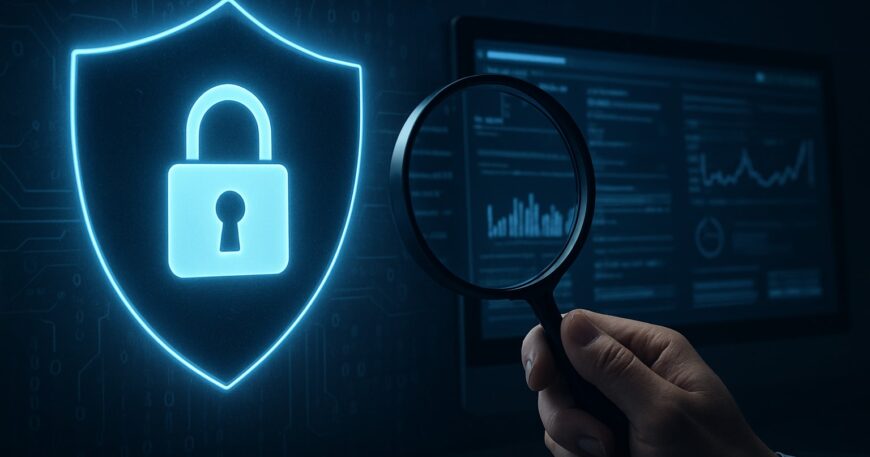
In 2025, cyber threats are evolving faster than ever, making it security monitoring a non-negotiable priority for every business. The frequency and cost of attacks are climbing, with global damages expected to surpass $10.5 trillion annually.
Threats now range from sophisticated ransomware to subtle insider risks, demanding proactive vigilance. Comprehensive it security monitoring helps organizations prevent breaches, maintain compliance, and safeguard their reputations.
This guide delivers practical steps, the latest technologies, and expert strategies to help you master it security monitoring and keep your business protected in the year ahead.
Understanding IT Security Monitoring: Concepts & Importance
In today's digital landscape, businesses face relentless cyber threats that demand constant vigilance. IT security monitoring stands as the backbone of modern defense strategies, offering organizations the tools and processes to detect, analyze, and respond to suspicious activities across their networks and systems.
What is IT Security Monitoring?
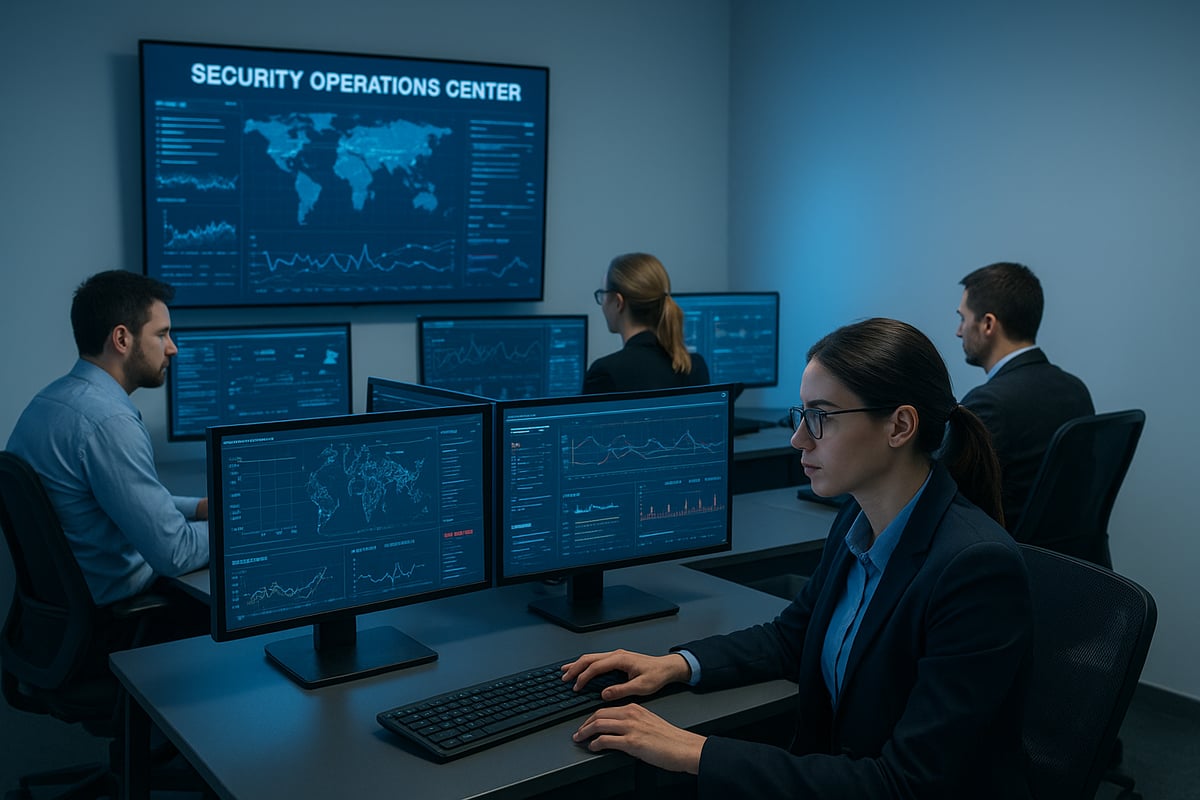
IT security monitoring refers to the continuous supervision of digital assets, network traffic, and user activities to identify potential threats or anomalous behavior. Core components include log collection, real-time analytics, alerting systems, and integration with other security tools.
Unlike detection or response, monitoring focuses on providing visibility and context before incidents escalate. Common platforms include Security Information and Event Management (SIEM) solutions, intrusion detection systems, and endpoint monitoring tools. Real-time monitoring is essential for maintaining business continuity, as it helps organizations spot and address issues before they cause significant disruption.
Why IT Security Monitoring is Critical in 2025
The need for robust IT security monitoring has never been greater. In 2024, ransomware attacks surged by 30 percent worldwide, and organizations now operate in increasingly complex environments with expanded remote work and cloud adoption. Regulatory frameworks like GDPR and CCPA require strict oversight of data and systems.
The financial stakes are staggering, with cybercrime damages projected to reach $10.5 trillion by 2025. High-profile breaches often result from insufficient monitoring, leading to costly downtime, data loss, and reputational damage. Proactive monitoring is essential to meet compliance standards and protect business assets in this evolving threat landscape.
Common Threats and Risks Addressed by Monitoring
IT security monitoring helps organizations defend against a broad range of cyber threats, such as:
- Malware and ransomware attacks that can encrypt data or disrupt operations
- Phishing campaigns designed to steal credentials or deliver malicious payloads
- Zero-day exploits targeting unpatched vulnerabilities
- Insider threats, including privilege misuse and data theft
- Unpatched systems and configuration errors
- Supply chain attacks exploiting third-party software or vendors
- Data exfiltration and unauthorized access attempts
By identifying these risks early, monitoring enables faster containment and remediation, reducing the overall impact on the organization.
Key Benefits for Businesses
Implementing comprehensive IT security monitoring delivers significant advantages:
- Early detection of threats and rapid incident response
- Reduced downtime and minimized financial losses
- Improved compliance with regulatory requirements and easier audit preparation
- Enhanced trust among clients, partners, and stakeholders
- Scalable protection for businesses as they grow or expand across locations
These benefits empower organizations to operate confidently, knowing their critical assets are under constant surveillance and protection.
Core Components of Modern IT Security Monitoring
Modern businesses face a complex and evolving threat landscape, making it security monitoring a non-negotiable pillar of defense. Understanding the core components is essential for building a resilient security posture and responding quickly to risks.
Log Management and Analysis
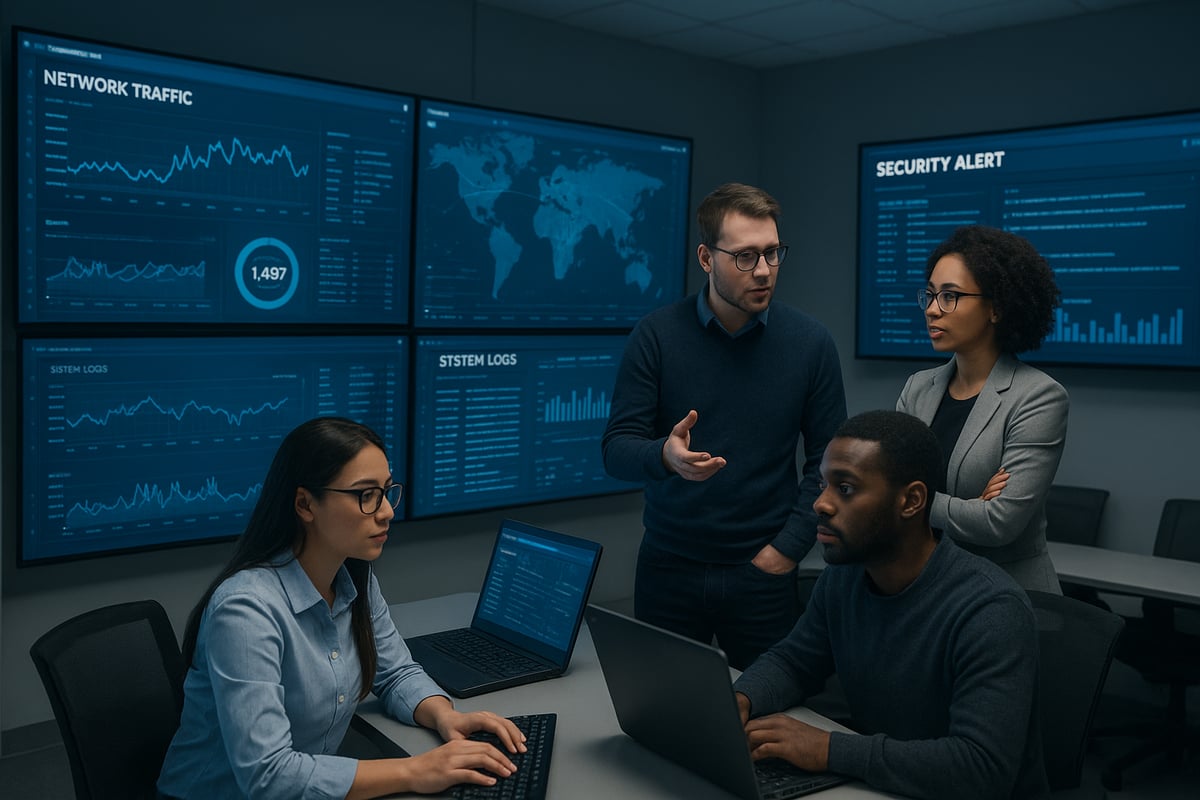
At the heart of it security monitoring is comprehensive log management. Organizations collect logs from endpoints, servers, applications, and network devices to gain visibility into system activities.
Security Information and Event Management (SIEM) platforms aggregate and analyze these logs, correlating events to detect suspicious patterns. Automated log analysis can flag anomalies such as multiple failed login attempts or access from unusual locations.
For example, a credential stuffing attack may be identified when log correlation reveals hundreds of login attempts from a single IP. This component is vital for forensic investigations, helping teams reconstruct incidents and ensure compliance.
Effective log management enables rapid threat detection and supports the entire it security monitoring process.
Network Traffic Monitoring
Network traffic monitoring provides deep insight into data flows across your environment. Using techniques like deep packet inspection and flow analysis, security teams can identify anomalies and lateral movement by attackers.
Integration with intrusion detection and prevention systems (IDS/IPS) allows organizations to spot suspicious traffic patterns, such as unexpected outbound data transfers. For instance, detecting large volumes of outbound traffic at odd hours could signal data exfiltration attempts.
This component is especially important for safeguarding remote and hybrid networks, where visibility may be fragmented. By continuously monitoring network activity, businesses strengthen their it security monitoring strategy and reduce the window of exposure to threats.
Endpoint and Device Monitoring
Endpoints, including desktops, laptops, mobile devices, and IoT assets, are common targets for attackers. Endpoint Detection and Response (EDR) solutions play a crucial role in it security monitoring by tracking device activity and identifying threats in real time.
EDR tools can detect malware infections, unauthorized applications, and policy violations. For example, if ransomware is detected on a remote laptop, the EDR can immediately block the payload and isolate the device from the network.
This proactive approach is vital in bring-your-own-device (BYOD) and remote work environments, where traditional perimeter defenses are less effective. Monitoring endpoints ensures every device is accounted for within the broader it security monitoring framework.
User Behavior Analytics (UBA)
User Behavior Analytics (UBA) leverages advanced analytics and machine learning to profile normal user actions and identify deviations that may indicate threats. This aspect of it security monitoring is designed to address risks from insiders and compromised accounts.
UBA systems monitor activities like file downloads, login times, and access patterns. If an employee suddenly begins downloading sensitive files after hours, the system raises an alert for investigation.
Machine learning enables UBA to establish behavioral baselines, reducing false positives and focusing attention on genuine anomalies. Integrating UBA with identity and access management (IAM) systems further enhances its effectiveness, making it a critical layer in it security monitoring.
Threat Intelligence Integration
Integrating threat intelligence is a game-changer in it security monitoring. By leveraging external threat feeds and intelligence platforms, organizations stay updated on emerging threats and indicators of compromise (IOCs).
Threat intelligence feeds enrich alerts with contextual data, enabling automated blocking of connections to known malicious IPs. For example, when a new phishing campaign is detected globally, your monitoring tools can proactively respond.
The rapid adoption of AI and machine learning tools in cybersecurity, which has increased by 594.82%, further enhances threat detection accuracy and speed. This integration empowers businesses to prioritize risks and deploy proactive defenses, establishing a forward-looking it security monitoring program.
Steps to Implement Effective IT Security Monitoring in 2025
Effective it security monitoring in 2025 requires a structured, proactive approach. Following clear steps ensures organizations stay ahead of evolving threats, maintain compliance, and protect their assets. Below is a practical roadmap for implementing robust monitoring, designed for today's dynamic business environments.
Step 1: Assess Current Security Posture
The foundation of it security monitoring begins with a comprehensive risk assessment. Inventory all digital assets, data repositories, and existing security controls. Identify critical systems, shadow IT devices, and any monitoring blind spots.
Engage key stakeholders from IT, compliance, and business units to define monitoring objectives. This assessment often exposes high-risk areas and overlooked vulnerabilities. For example, many breaches in the healthcare sector highlight the steep costs of missing threats, with the healthcare industry reporting an average breach cost of $9.8 million. Early identification of risks ensures resources are focused where they matter most.
Step 2: Define Monitoring Policies and Objectives
Once you understand your environment, set clear policies for it security monitoring. Establish what needs to be monitored, such as financial data systems, customer records, or proprietary research.
Define alert thresholds and escalation procedures based on business requirements and regulatory obligations. Assign roles and responsibilities to ensure accountability. Document these policies, making them accessible and actionable for your team.
A well-crafted policy prioritizes your most valuable assets, ensuring monitoring efforts align with business goals and compliance mandates. Regularly review and adjust these objectives as your organization evolves.
Step 3: Select and Deploy Monitoring Tools
Choosing the right tools is crucial for effective it security monitoring. Evaluate solutions like SIEM, EDR, UBA, and network monitoring platforms. Consider criteria such as scalability, integration capabilities, automation features, and total cost of ownership.
| Tool Type | Primary Use | Key Feature |
|---|---|---|
| SIEM | Log analysis, alerting | Centralizes events |
| EDR | Endpoint protection | Real-time detection |
| UBA | User monitoring | Behavior analytics |
| Network | Traffic analysis | Packet inspection |
Decide between cloud, on-premises, or hybrid platforms based on your infrastructure. Ensure compatibility with existing systems and prioritize vendors offering regular updates and strong support. Pilot new tools in a controlled environment before a full rollout. For example, select a SIEM that integrates seamlessly with cloud services and existing applications. Effective deployment ensures your monitoring stack adapts as threats and business needs change.
Step 4: Integrate Threat Intelligence and Automation
Integrating threat intelligence feeds enhances it security monitoring by providing real-time context on emerging threats. Connect your monitoring tools to reputable intelligence sources for up-to-date indicators of compromise.
Automate detection, alerting, and initial response actions where possible. For instance, configure systems to automatically quarantine devices showing signs of infection. Automation reduces manual workloads, speeds up response, and minimizes human error.
Coordinate automated processes with your incident response playbooks to ensure cohesive action when threats are detected. Regularly test and update integrations as threat landscapes shift.
Step 5: Establish Incident Response Procedures
Incident response is a critical extension of it security monitoring. Define clear steps for investigating and containing threats, including communication protocols and escalation paths.
Conduct regular incident response drills and tabletop exercises to ensure your team is prepared for real-world attacks. For example, simulate a phishing-induced breach to test your procedures and response time.
Document each incident thoroughly and conduct post-incident reviews to identify lessons learned. Continuous improvement in incident handling builds resilience and sharpens your monitoring capabilities.
Step 6: Continuous Improvement and Compliance
Ongoing optimization is essential for sustaining effective it security monitoring. Continuously tune and refine alert thresholds to reduce false positives and ensure meaningful detection. Schedule regular audits and compliance checks for regulations like GDPR or HIPAA.
Update monitoring policies as new threats emerge and technologies advance. Invest in staff training to keep your team informed about the latest risks and tools. Use analytics to spot long-term trends and refine detection rules.
| Continuous Improvement Task | Frequency | Responsible Party |
|---|---|---|
| Alert Tuning | Monthly | Security Analyst |
| Compliance Audit | Quarterly | Compliance Lead |
| Policy Review | Biannual | IT Manager |
| Staff Training | Ongoing | HR & IT |
Executive support and cross-department collaboration are vital. Regular reviews and open communication help your it security monitoring program adapt to business changes, regulatory updates, and evolving threats.
Latest Trends & Technologies in IT Security Monitoring for 2025
Staying ahead of cyber threats in 2025 means embracing the latest trends and technologies in it security monitoring. Businesses must adapt quickly, leveraging innovation to detect and respond to risks more effectively than ever.
AI and Machine Learning in Threat Detection
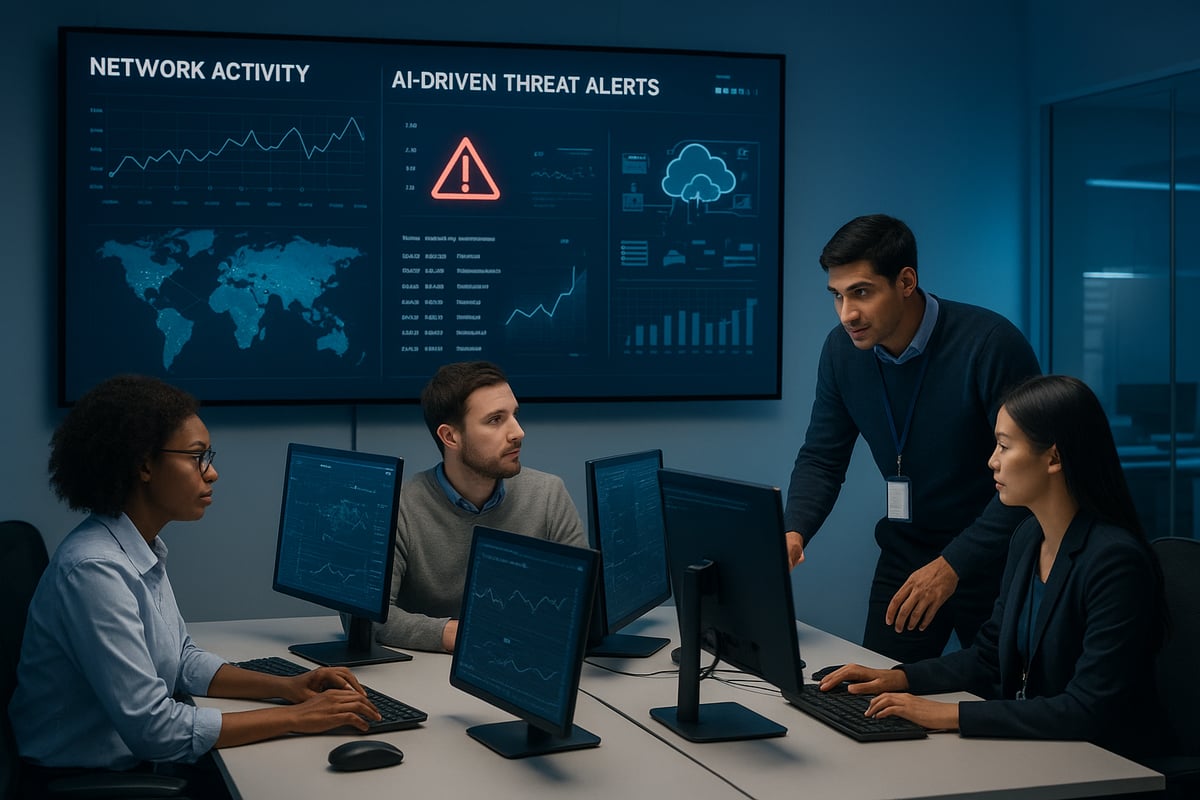
Artificial intelligence and machine learning are transforming it security monitoring by automating threat detection and analysis. These technologies rapidly process vast amounts of data, identifying patterns and anomalies that would be impossible for humans to catch in real time.
AI-driven systems help organizations reduce false positives, prioritize alerts, and uncover novel attack vectors. Predictive analytics can even forecast potential threats before they surface. For example, an AI-enabled SIEM might flag unusual login behaviors, providing early warning of a breach.
As AI capabilities expand, so does the demand for skilled cybersecurity professionals. The global cybersecurity workforce estimated at 4.7 million professionals highlights the need for expertise to manage these tools and interpret their findings.
Cloud Security Monitoring
With more businesses moving to the cloud, it security monitoring must now cover multi-cloud and hybrid environments. Cloud-native tools like AWS GuardDuty and Azure Sentinel provide visibility into cloud workloads, detecting unauthorized access, misconfigurations, and shadow IT.
Continuous monitoring ensures that sensitive data remains protected, even as employees access resources remotely. Real-time alerts help teams respond quickly to suspicious activity, such as attempts to bypass authentication protocols.
As organizations grow more reliant on SaaS platforms and cloud infrastructure, integrating these solutions into their monitoring strategy is essential for comprehensive protection.
Zero Trust and Microsegmentation Monitoring
Zero Trust is becoming a core principle in it security monitoring. This approach assumes no user or device is trusted by default, requiring continuous verification for every access request. Microsegmentation further enhances security by dividing networks into smaller, isolated sections.
Monitoring east-west traffic within these segments helps detect lateral movement by attackers. For instance, if an unauthorized user tries to move between data center zones, the system can block the activity and alert security teams.
According to Gartner, 60% of organizations will embrace Zero Trust by 2025, making it a foundational element for modern enterprise security.
Automated Response and SOAR Platforms
Automation has become a game-changer in it security monitoring. Security Orchestration, Automation, and Response (SOAR) platforms streamline incident handling by executing predefined playbooks for common threats.
For example, when a compromised endpoint is detected, a SOAR system can isolate the device, notify stakeholders, and trigger forensic analysis automatically. This reduces manual intervention, speeds up response times, and minimizes the impact of security incidents.
Integrating SOAR with SIEM and EDR platforms ensures that detection and response are tightly coordinated, enhancing overall security posture.
Compliance-Driven Monitoring Enhancements
Regulatory requirements continue to shape it security monitoring strategies. Organizations must adapt their monitoring to comply with evolving standards such as GDPR, HIPAA, and PCI DSS.
Automated compliance dashboards and real-time auditing tools simplify reporting and help businesses stay ahead of regulatory changes. For example, a PCI DSS dashboard can instantly highlight areas of non-compliance, allowing quick remediation.
As scrutiny from regulators and customers increases, businesses are investing in monitoring enhancements that support both security and compliance objectives.
Best Practices for Managing and Optimizing IT Security Monitoring
Staying ahead of modern threats requires more than just deploying tools. Effective IT security monitoring is built on a foundation of best practices, collaboration, and continuous improvement. By following proven approaches, businesses can maximize protection, minimize risk, and support ongoing growth.
Building a Security-First Culture
Creating a security-first culture is essential for effective it security monitoring. Employees should receive regular training on recognizing social engineering, phishing, and suspicious activities. Leadership must actively support security initiatives, setting the tone for organizational priorities.
- Conduct company-wide awareness campaigns.
- Simulate phishing attacks to test readiness.
- Encourage open communication about risks.
A collaborative environment empowers staff to report incidents quickly, reducing response time and potential damage. When everyone understands their role in it security monitoring, the business becomes more resilient.
Fine-Tuning Alerts and Reducing Noise
To maximize the value of it security monitoring, organizations must fine-tune alerts and reduce unnecessary noise. Setting actionable thresholds and reviewing detection rules regularly helps eliminate false positives and alert fatigue.
- Prioritize high-impact alerts.
- Use machine learning for smarter filtering.
- Review detection logic quarterly.
| Alert Volume | Before Tuning | After Tuning |
|---|---|---|
| Daily Alerts | 500 | 300 |
By focusing on quality over quantity, teams can respond faster and more effectively to real threats, making it security monitoring a strategic asset.
Integrating Monitoring with Broader IT Operations
Effective it security monitoring should not operate in isolation. Integrating monitoring tools with broader IT operations fosters unified visibility and streamlined workflows. Collaboration between IT, security, and compliance teams ensures faster incident resolution.
- Centralize data in unified dashboards.
- Integrate SIEM with IT service management solutions.
- Automate ticketing and escalation processes.
This holistic approach supports business continuity and helps organizations adapt quickly to changing threats. Integrated it security monitoring enables seamless communication and informed decision-making.
Partnering with Managed IT Security Providers
Working with managed IT security providers can elevate your it security monitoring capabilities. Outsourcing to experts ensures 24/7 coverage, rapid response, and access to the latest technologies without straining internal resources.
- Choose providers with industry certifications.
- Look for transparent, fixed-rate pricing.
- Verify expertise in compliance-driven monitoring.
For example, Delphi Systems Inc.: Managed IT Security Monitoring for Small Businesses offers tailored solutions, local support, and robust partnerships with leading vendors. This lets businesses focus on growth while trusted professionals manage their it security monitoring needs.
As you’ve seen throughout this guide, staying ahead of evolving cyber threats in 2025 means being proactive with your IT security monitoring. By prioritizing early detection, rapid response, and ongoing optimization, you can safeguard your business’s data and reputation—even as risks change. If you want to focus on growing your business while trusted professionals handle your security, we’re here to help. Delphi Systems Inc. offers local expertise, 24 7 monitoring, and fixed rate pricing designed for small businesses like yours. Ready to strengthen your IT security with peace of mind? Call us now.

