
The landscape of business technology protection has evolved dramatically over recent years, making it essential for organizations to understand the relationship between IT security cyber security principles. Small businesses in particular face mounting pressure to protect their digital assets while maintaining operational efficiency. The convergence of information technology infrastructure management and cybersecurity defense strategies creates a comprehensive approach that addresses both preventive measures and active threat response. As cyber threats become more sophisticated and frequent, businesses must adopt integrated security frameworks that protect networks, data, and systems from emerging risks while ensuring business continuity.
Understanding the IT Security Cyber Security Framework
Information technology security and cybersecurity represent two interconnected disciplines that work together to protect business operations. While IT security focuses on safeguarding the entire technology infrastructure including hardware, software, networks, and data centers, cybersecurity specifically addresses threats that emerge through digital channels and internet-connected systems.
The distinction matters because comprehensive protection requires attention to both physical and digital security layers. IT security encompasses access controls, server room protections, equipment management, and network architecture design. Cybersecurity builds upon this foundation by adding threat intelligence, intrusion detection systems, malware protection, and incident response protocols.
Key Components of Integrated Protection
Modern it security cyber security strategies rely on several foundational elements that work in concert:
- Network security monitoring that tracks traffic patterns and identifies anomalies
- Endpoint protection covering all devices connected to business systems
- Data encryption for information at rest and in transit
- Identity and access management controlling who can access specific resources
- Backup and disaster recovery ensuring business continuity after incidents
- Security awareness training equipping employees to recognize threats
These components create defense-in-depth architecture where multiple security layers provide redundant protection. If one defense mechanism fails, others continue protecting critical assets.
Emerging Threats in the 2026 Landscape
The threat environment continues evolving at an unprecedented pace, driven by technological advancement and increasingly sophisticated attack methodologies. Understanding current ransomware trends helps businesses prepare appropriate defenses against the most prevalent attack vectors.
Ransomware has shifted from large-scale encryption campaigns to more targeted data theft and extortion schemes. Smaller, aggressive threat groups now dominate the landscape, often specializing in specific industries or business sizes. These groups invest significant resources in reconnaissance, identifying high-value targets and customizing their attacks for maximum impact.
AI-Powered Attack Vectors
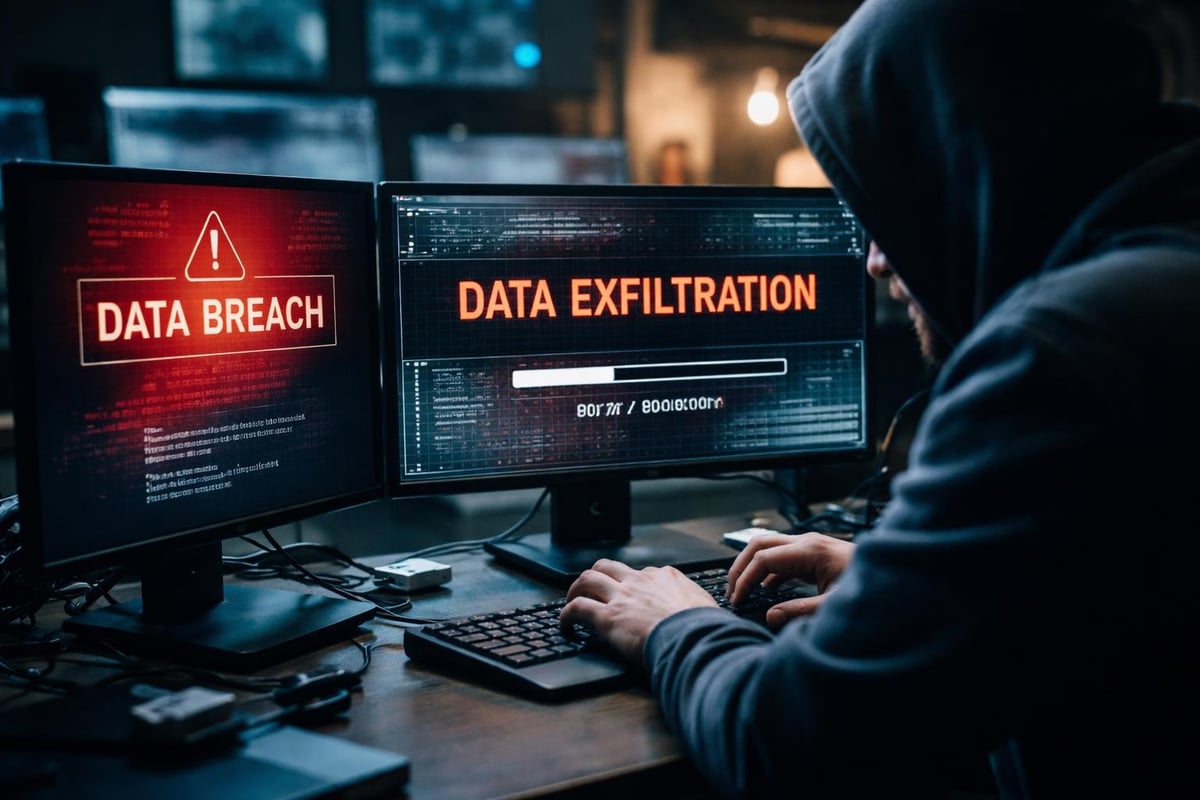
Artificial intelligence has become a double-edged sword in the it security cyber security domain. While security professionals leverage AI for threat detection and response automation, adversaries use the same technology to create more convincing phishing campaigns, automate vulnerability scanning, and develop polymorphic malware that evades traditional detection methods.
The challenges AI poses to cybersecurity extend beyond direct attacks. Shadow AI, where employees use unauthorized AI tools to process business data, creates unmanaged security risks. Organizations must establish clear policies governing AI adoption while implementing technical controls to prevent data leakage through unvetted platforms.
Best Practices for Small Business Protection
Small businesses face unique challenges when implementing it security cyber security measures. Limited budgets and personnel require strategic prioritization of security investments that deliver maximum risk reduction.
The Five Critical Controls
The Cybersecurity and Infrastructure Security Agency provides practical guidance on essential security practices that form the foundation of effective protection:
- Implement comprehensive logging across all systems to detect suspicious activity
- Maintain regular data backups stored offline and tested quarterly
- Deploy encryption for sensitive data and all network communications
- Establish incident reporting procedures with clear escalation paths
- Use secure domains and verified communication channels
These fundamental controls address the most common attack paths that threat actors exploit against small and medium-sized businesses.
| Security Control | Primary Benefit | Implementation Priority |
|---|---|---|
| Multi-factor authentication | Prevents 99% of account compromises | Critical – Immediate |
| Regular patching | Closes known vulnerabilities | Critical – Ongoing |
| Network segmentation | Limits lateral movement | High – Within 90 days |
| Security awareness training | Reduces human error | High – Quarterly |
| Endpoint detection and response | Identifies advanced threats | Medium – Within 6 months |
Managing Third-Party Risk
The security of IT service providers deserves particular attention, as these partners often have privileged access to critical systems and sensitive data. Businesses should assess security practices of their IT service providers to ensure third-party relationships don't introduce unacceptable vulnerabilities.
Vendor management for it security cyber security includes reviewing security certifications, understanding data handling procedures, and establishing contractual obligations for breach notification. Regular security assessments and audits verify that service providers maintain appropriate controls commensurate with the access they've been granted.
Investment Trends and Strategic Planning
Global cybersecurity spending continues its upward trajectory, reflecting the increasing value organizations place on digital protection. Understanding what’s driving cybersecurity investment helps businesses benchmark their own security budgets and identify areas requiring enhanced funding.

Budget Allocation Strategies
Smart security spending balances immediate threat mitigation with long-term resilience building. Rather than reacting to individual incidents, effective it security cyber security programs invest strategically across multiple categories:
Prevention technologies consume approximately 40-50% of security budgets, covering firewalls, endpoint protection, email security, and access controls. These foundational tools block the majority of common attacks before they can impact operations.
Detection and response capabilities represent another 25-35% of spending, including security information and event management (SIEM) systems, threat intelligence services, and incident response retainers. These investments reduce the time between breach occurrence and detection, minimizing potential damage.
Training and awareness programs typically account for 10-15% of budgets but deliver outsized returns by reducing successful phishing attacks and social engineering attempts. Employees represent both the weakest link and strongest defense depending on their security awareness level.
Frameworks and Compliance Standards
Organizations benefit from adopting established security frameworks that provide structured approaches to it security cyber security program development. These frameworks offer tested methodologies for identifying risks, implementing controls, and measuring security posture improvements.
NIST Cybersecurity Framework
The National Institute of Standards and Technology Cybersecurity Framework remains one of the most widely adopted standards globally. Its five core functions provide a common language for discussing security across organizations:
- Identify assets, vulnerabilities, and risks
- Protect through appropriate safeguards
- Detect security events as they occur
- Respond to confirmed incidents
- Recover normal operations after disruptions
This framework scales effectively from small businesses to enterprise organizations, allowing customization based on specific risk profiles and operational requirements.
Industry-Specific Considerations
Different sectors face unique threat landscapes requiring tailored security approaches. Healthcare organizations must protect patient privacy while maintaining treatment system availability. Financial services firms face sophisticated fraud attempts and regulatory compliance requirements. Manufacturing companies increasingly defend against intellectual property theft and operational technology attacks.
Understanding the threat actor landscape specific to your industry enables more effective security strategy development. Mature threat intelligence programs identify which adversaries target similar organizations, their typical attack methods, and indicators of compromise that warrant investigation.
| Framework | Best For | Key Strength | Complexity Level |
|---|---|---|---|
| NIST CSF | All organizations | Flexibility and scalability | Medium |
| ISO 27001 | Compliance-focused businesses | International recognition | High |
| CIS Controls | Small to medium businesses | Prioritized implementation | Low to Medium |
| CMMC | Defense contractors | Supply chain security | High |
Building Resilience Through Managed Services
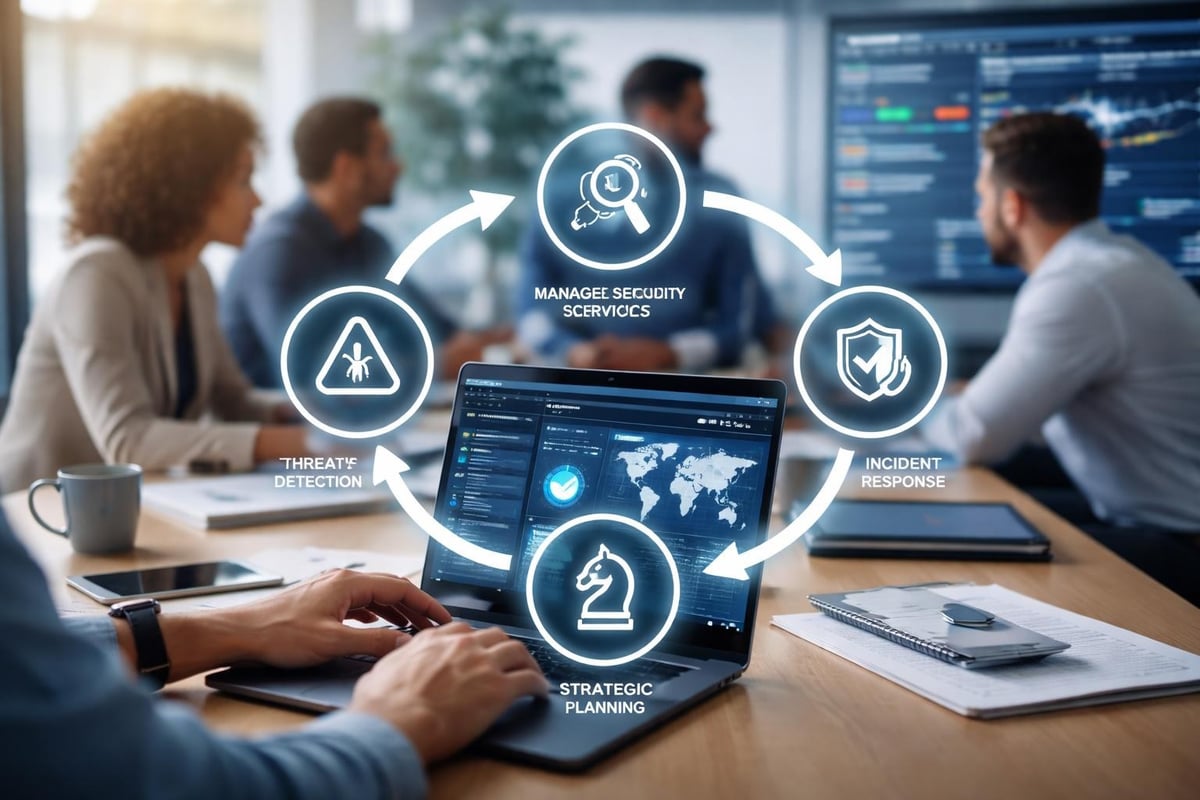
Many small businesses lack the internal expertise and resources to maintain comprehensive it security cyber security programs. Managed service providers fill this gap by delivering enterprise-grade security capabilities at predictable monthly costs.
Professional IT management includes continuous network monitoring, proactive threat hunting, vulnerability assessments, and rapid incident response. These services ensure businesses benefit from current security technologies and expert oversight without building internal security operations centers.
The Value of Proactive Monitoring
Traditional reactive security approaches wait for alerts before investigating potential threats. Modern managed services employ proactive monitoring that actively searches for indicators of compromise, unusual behavior patterns, and emerging vulnerabilities before attackers can exploit them.
This shift from reactive to proactive security dramatically reduces breach impact. The average time to detect and contain breaches measured in months for organizations relying solely on reactive controls. Proactive monitoring compresses this timeline to days or hours, limiting attacker access and reducing data exposure.
Regular security assessments complement continuous monitoring by identifying configuration weaknesses, outdated systems, and policy gaps that might not trigger automated alerts. Quarterly or semi-annual assessments provide point-in-time snapshots of security posture, tracking improvement over time and highlighting areas requiring additional investment.
Future-Proofing Security Strategies
The it security cyber security landscape will continue evolving as new technologies emerge and threat actors adapt their methods. Businesses must balance current protection needs with preparation for emerging risks that will shape the coming years.
Preparing for Quantum Computing
Quantum computing represents both opportunity and threat for cybersecurity. While still emerging, quantum systems will eventually break current encryption standards, requiring migration to quantum-resistant cryptographic algorithms. Organizations should inventory systems using encryption and plan for eventual algorithm updates as quantum-safe standards mature.
The top cybersecurity risks for 2026 include several quantum-related concerns alongside more immediate threats like AI-powered attacks and deepfake-enabled social engineering.
Addressing Supply Chain Security
Modern businesses rely on complex supply chains involving multiple technology vendors, service providers, and software dependencies. Each link represents a potential security weak point that adversaries might exploit to reach their ultimate targets.
Supply chain attacks have increased in frequency and sophistication, with threat actors compromising software update mechanisms, third-party libraries, and vendor access credentials. Comprehensive it security cyber security programs must extend security requirements throughout the supply chain, vetting vendors and monitoring for signs of compromise in trusted tools and platforms.
Practical Implementation Roadmap
Organizations beginning their security journey benefit from structured implementation approaches that build capabilities incrementally while addressing the most critical risks first.
Phase One: Foundation Building (Months 1-3)
Initial efforts should focus on establishing baseline security hygiene and eliminating obvious vulnerabilities:
- Deploy multi-factor authentication across all business systems
- Implement automated patch management for operating systems and applications
- Configure comprehensive backup systems with offline storage
- Conduct initial security awareness training for all employees
- Document current IT assets and network architecture
These foundational steps address the attack vectors responsible for the majority of successful breaches against small businesses.
Phase Two: Enhanced Detection (Months 4-6)
With basic protections established, organizations should improve their ability to identify threats:
- Implement centralized log collection and analysis
- Deploy endpoint detection and response tools
- Establish security monitoring procedures and alert response protocols
- Conduct vulnerability scanning and remediation
- Develop incident response plans with defined roles and procedures
Enhanced detection capabilities reduce the time between compromise and discovery, limiting attacker access and data exposure.
Phase Three: Continuous Improvement (Ongoing)
Security programs require ongoing refinement based on threat evolution, technology changes, and business growth:
Quarterly activities include security awareness training updates, access right reviews, backup restoration testing, and vendor security assessments.
Annual activities encompass comprehensive security assessments, disaster recovery plan testing, insurance policy reviews, and strategic security planning aligned with business objectives.
Leveraging Expert Resources
IT leaders don't need to navigate security challenges alone. Numerous cybersecurity resources from trusted organizations provide frameworks, tools, and guidance for building effective protection programs.
Professional associations, government agencies, and standards bodies publish regular updates on emerging threats, security best practices, and technology recommendations. Staying connected to these information sources helps businesses maintain current defenses against evolving attack methods.
Peer networking through industry groups and local business associations enables knowledge sharing about regional threats, effective security vendors, and lessons learned from security incidents. Small businesses often face similar challenges and benefit from collaborative problem-solving approaches.
Protecting business operations in 2026 requires comprehensive approaches that integrate IT security cyber security principles throughout the organization. By implementing layered defenses, maintaining vigilant monitoring, and staying informed about emerging threats, small businesses can significantly reduce their risk exposure while maintaining operational efficiency. Delphi Systems Inc. delivers managed IT services designed specifically for Lethbridge-area small businesses, providing the cybersecurity expertise, continuous monitoring, and proactive protection needed to keep your networks secure and your business focused on growth.

