

Small businesses face mounting pressure to maintain secure, efficient IT infrastructure while keeping costs predictable and manageable. Cloud managed IT services have emerged as a strategic solution, enabling organizations to leverage enterprise-grade technology without the overhead of building and maintaining in-house expertise. By partnering with specialized providers, businesses can focus on core operations while ensuring their technology foundation remains robust, secure, and scalable. This comprehensive approach to IT management has become essential for companies seeking competitive advantages in an increasingly digital marketplace.
Understanding Cloud Managed IT Services
Cloud managed IT services represent a comprehensive approach to outsourcing the administration, monitoring, and maintenance of cloud-based infrastructure and applications. Unlike traditional break-fix models where businesses pay for reactive support, managed services provide proactive monitoring and management under a predictable fee structure.
These services encompass a broad spectrum of capabilities. Network monitoring ensures continuous uptime by identifying and resolving issues before they impact operations. Security management protects against evolving cyber threats through regular updates, patch management, and threat detection. Data backup and recovery safeguards business-critical information against loss or ransomware attacks.

The Evolution of IT Service Delivery
The transition from on-premises infrastructure to cloud-based solutions has fundamentally changed how businesses approach IT management. Traditional models required significant capital investment in hardware, software licenses, and dedicated staff. Cloud managed IT services shift this burden to specialized providers who maintain expertise across multiple platforms and technologies.
According to industry research, organizations increasingly recognize that internal IT teams cannot efficiently manage the complexity of modern cloud environments alone. The managed cloud services market continues expanding as businesses seek partners who can deliver specialized knowledge and 24/7 support.
Key Components of Effective Cloud Management
A robust cloud managed IT services framework includes several essential elements working together seamlessly. Each component plays a specific role in maintaining operational excellence and security.
Infrastructure Monitoring and Maintenance
Continuous monitoring forms the foundation of proactive IT management. Modern cloud environments generate massive amounts of data about system performance, user activity, and potential security threats. Managed service providers deploy sophisticated tools to analyze this information in real-time.
Key monitoring capabilities include:
- Performance tracking across servers, applications, and network connections
- Automated alerting when metrics exceed predefined thresholds
- Capacity planning to anticipate resource needs before shortages occur
- Patch management ensuring all systems receive critical security updates
- Resource optimization to eliminate waste and control costs
Security and Compliance Management
Cybersecurity threats continue evolving in sophistication and frequency. Small businesses often lack the resources to maintain dedicated security teams, making them attractive targets for attackers. Cloud managed IT services address this vulnerability through comprehensive security programs.
| Security Layer | Function | Business Benefit |
|---|---|---|
| Firewall Management | Controls network traffic and blocks threats | Prevents unauthorized access |
| Endpoint Protection | Secures individual devices | Protects against malware and ransomware |
| Access Control | Manages user permissions | Limits data exposure |
| Security Auditing | Reviews policies and practices | Ensures compliance with regulations |
| Incident Response | Addresses security breaches | Minimizes damage and downtime |
Professional providers implement layered defense strategies that protect data at multiple levels. This approach significantly reduces risk compared to relying on single-point solutions.
Data Backup and Disaster Recovery
Business continuity depends on the ability to recover quickly from data loss events. Whether caused by hardware failure, cyberattacks, or natural disasters, data loss can cripple operations. Cloud managed IT services include comprehensive backup strategies that protect critical information.
Modern backup solutions offer several advantages over traditional approaches. Automated scheduling ensures backups occur consistently without manual intervention. Encryption protects data both in transit and at rest. Geographic redundancy stores copies in multiple locations to guard against regional disasters.
Strategic Benefits for Small Businesses
Implementing cloud managed IT services delivers measurable advantages that directly impact business performance and profitability. These benefits extend beyond simple cost savings to encompass operational efficiency, risk reduction, and strategic flexibility.
Predictable Cost Structure
The fixed-rate fee model transforms IT spending from a variable expense into a predictable monthly cost. This shift enables better financial planning and budgeting. Businesses know exactly what they'll spend each month, eliminating surprise expenses from emergency repairs or unexpected equipment failures.
Consider the typical costs associated with maintaining IT infrastructure internally:
- Staff salaries for IT professionals with diverse skill sets
- Training expenses to keep knowledge current
- Hardware purchases and regular replacements
- Software licensing and subscription fees
- Emergency support when issues arise outside business hours
Cloud managed IT services consolidate these expenses into a single, manageable fee.

Enhanced Focus on Core Business
When IT infrastructure operates reliably in the background, leadership and staff can concentrate on activities that drive revenue and growth. This focus represents one of the most significant yet often overlooked benefits of outsourced IT management.
Small business owners wear multiple hats by necessity. Removing IT troubleshooting from their responsibilities frees time for strategic planning, customer engagement, and business development. Similarly, employees spend less time dealing with technology problems and more time on productive work.
Access to Enterprise-Grade Expertise
Technology evolves rapidly, making it challenging for small businesses to maintain current knowledge across all relevant domains. Cloud managed services providers employ teams of specialists who focus on specific technologies and platforms.
This expertise proves particularly valuable when addressing complex challenges:
- Cloud migration planning and execution
- Hybrid environment integration
- Compliance requirements for industry regulations
- Advanced security threat mitigation
- Performance optimization across distributed systems
Selecting the Right Service Provider
Choosing a cloud managed IT services partner represents a critical business decision that impacts operations for years. Several factors should guide this selection process to ensure alignment between provider capabilities and organizational needs.
Evaluating Service Offerings
Not all providers offer identical services or maintain the same quality standards. When selecting cloud managed services, organizations should assess both breadth and depth of offerings.
Service breadth refers to the range of capabilities available. Comprehensive providers handle everything from basic help desk support to advanced cybersecurity and compliance management. This one-stop approach simplifies vendor management and ensures seamless integration across services.
Service depth indicates expertise level within specific domains. A provider might offer cybersecurity services, but the quality of threat detection, response time, and remediation capabilities varies significantly between vendors.
Understanding Support Models
Support responsiveness directly impacts business operations. Different providers structure their support differently, affecting how quickly issues get resolved.
| Support Tier | Response Time | Availability | Best For |
|---|---|---|---|
| Basic | Next business day | Business hours only | Non-critical systems |
| Standard | Within 4 hours | Extended hours | General operations |
| Premium | Within 1 hour | 24/7/365 | Mission-critical applications |
| Enterprise | Immediate | 24/7 with dedicated team | Complex environments |
Small businesses should honestly assess their operational requirements and choose support levels that match their actual needs rather than paying for unnecessary premium services.
Local Versus Remote Management
Geographic proximity can matter when selecting a managed services provider. While cloud technologies enable remote management from anywhere, having a provider with local presence offers advantages for certain situations.
Local providers understand regional business challenges and maintain relationships with area vendors. They can provide on-site support when hardware issues require physical intervention. For businesses in markets like Lethbridge and surrounding areas, working with a provider who knows the local business community creates additional value through relevant context and personalized service.
Implementation and Transition Planning
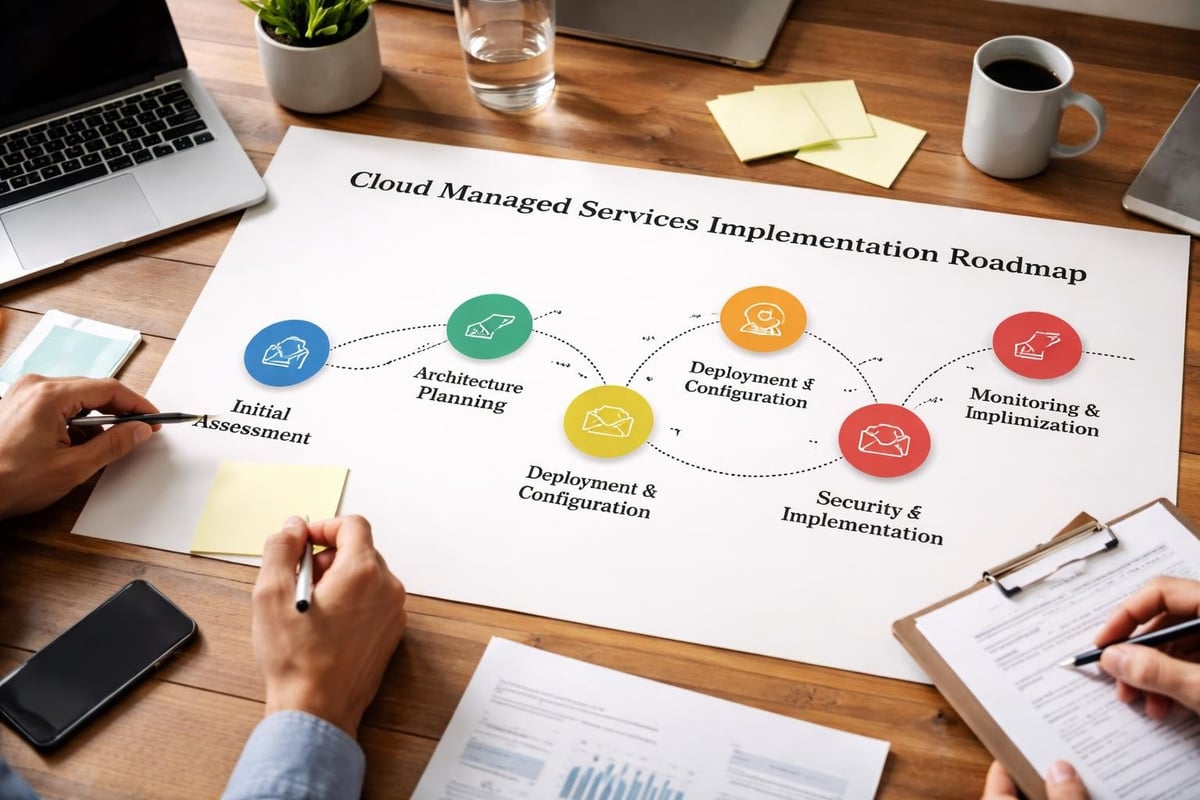
Successfully adopting cloud managed IT services requires careful planning and execution. Organizations that approach implementation methodically experience smoother transitions and faster realization of benefits.
Assessment and Planning Phase
The transition begins with comprehensive assessment of current IT infrastructure, applications, and processes. This evaluation identifies:
- Existing assets and their current condition
- Pain points causing operational friction
- Security vulnerabilities requiring immediate attention
- Compliance gaps needing remediation
- Optimization opportunities for cost reduction
Providers use this information to design customized service packages aligned with specific business needs. Generic, one-size-fits-all approaches rarely deliver optimal results.
Migration Strategy Development
Moving from existing IT management models to cloud managed IT services involves multiple technical and organizational changes. A well-structured migration strategy minimizes disruption while ensuring nothing falls through the cracks.
Phased rollout typically works better than attempting complete transitions overnight. Organizations might start with basic monitoring and support, then gradually add security services, backup solutions, and advanced capabilities. This approach allows staff to adapt to new processes incrementally.
Communication planning ensures everyone understands what's changing, why it matters, and how it affects their daily work. Regular updates during the transition period maintain transparency and reduce anxiety about new systems.
Training and Adoption
Even with outsourced management, internal staff need to understand how to interact with new systems and processes. Effective providers include training as part of their onboarding programs.
Training should cover:
- Help desk procedures for reporting issues
- Security protocols employees must follow
- Backup verification to ensure critical data protection
- Access management for requesting permissions changes
- Escalation processes for urgent situations
Measuring Success and ROI
Cloud managed IT services should deliver tangible business value. Organizations need frameworks for measuring performance and return on investment to ensure their provider partnership meets expectations.
Key Performance Indicators
Specific metrics track service quality and business impact. Well-designed service level agreements define these KPIs clearly and establish accountability.
Uptime percentage measures system availability, with most modern environments targeting 99.9% or higher. Mean time to resolution tracks how quickly issues get fixed once detected. Security incident rate monitors the frequency and severity of security events.
Beyond technical metrics, business-focused KPIs matter equally:
- Employee productivity improvements from reduced IT disruptions
- Cost per user for IT services compared to previous models
- Project completion rates for strategic IT initiatives
- Compliance audit results and remediation time
Continuous Improvement Processes
The best provider relationships evolve over time as business needs change and technology advances. Regular reviews ensure services remain aligned with organizational goals.
Quarterly business reviews provide opportunities to assess performance against SLAs, discuss upcoming projects, and adjust service levels as needed. These sessions should examine both successes and challenges honestly, fostering continuous improvement.
Annual strategic planning integrates IT capabilities with broader business objectives. As companies grow, enter new markets, or launch new products, their IT requirements change. Cloud managed IT services should adapt accordingly, scaling resources and capabilities to match evolving needs.
Future Trends in Cloud Management
The landscape of cloud managed IT services continues evolving rapidly. Understanding emerging trends helps businesses make informed decisions about their technology strategies and provider partnerships.
Artificial Intelligence and Automation
AI-powered tools increasingly augment human expertise in managing cloud environments. Machine learning algorithms detect anomalies faster than manual analysis, predicting issues before they cause outages. Automation handles routine tasks like patch deployment and resource provisioning, freeing technical staff for strategic work.
Cloud asset management grows more sophisticated as organizations deploy resources across multiple platforms. Advanced tools track utilization, optimize spending, and ensure compliance with licensing agreements automatically.
Multi-Cloud and Hybrid Strategies
Few organizations rely exclusively on single cloud platforms anymore. Most adopt multi-cloud or hybrid approaches combining public cloud services, private cloud resources, and on-premises infrastructure. Managing these complex environments requires specialized expertise that cloud managed IT services providers deliver.
Integration challenges multiply as systems span multiple platforms. Ensuring security consistency, maintaining visibility across environments, and optimizing costs all become more difficult. Providers who excel at hybrid cloud managed services bring tremendous value to organizations navigating this complexity.
Enhanced Security Focus
Cybersecurity threats show no signs of diminishing. Ransomware attacks target businesses of all sizes, with small companies often viewed as easier targets due to limited security resources. Cloud managed IT services increasingly emphasize security as a core differentiator.
Zero-trust architecture, where no user or system is automatically trusted, becomes standard practice. Identity and access management grows more sophisticated, using behavioral analytics to detect compromised credentials. Security operations centers monitor environments around the clock, responding to threats in real-time.
Critical Considerations for Implementation Success
Organizations considering cloud managed IT services should understand several important factors that influence outcomes. These considerations help set realistic expectations and guide decision-making.
Cultural and Organizational Change
Outsourcing IT management represents more than a technical change. It affects organizational culture, particularly in companies where internal IT staff previously handled everything. Managing this transition thoughtfully prevents resistance and ensures smooth adoption.
Clear communication about why the organization is making this change helps staff understand the strategic rationale. Emphasizing how managed services enable rather than replace internal capabilities frames the transition positively. When internal IT professionals can focus on strategic initiatives instead of routine maintenance, everyone benefits.
Data Governance and Control
Moving to cloud managed IT services raises legitimate questions about data access, control, and governance. Organizations need assurance that their sensitive information remains protected and that they maintain ultimate ownership.
Reputable providers maintain strict data handling policies with clear contractual protections. Understanding where data resides geographically, who can access it, and under what circumstances ensures compliance with relevant regulations. Transparency in these areas distinguishes professional providers from less mature vendors.
Vendor Lock-In Concerns
Some businesses worry about becoming too dependent on a single provider, making it difficult to change vendors if needed. While this represents a valid concern, several strategies mitigate lock-in risks.
Choosing providers who use standard technologies and open platforms preserves flexibility. Ensuring good documentation of configurations and processes makes transitions easier if they become necessary. Understanding contractual terms around data portability and transition assistance provides additional protection.
However, the goal should be selecting the right partner for long-term collaboration rather than planning for divorce before the relationship begins. Strong provider partnerships deliver compounding value over time as the provider develops deep understanding of organizational needs.
Cloud managed IT services transform how small businesses approach technology infrastructure, delivering enterprise capabilities with predictable costs and expert support. By outsourcing routine maintenance, security management, and technical troubleshooting to specialized providers, organizations free resources to focus on growth and core business objectives. For businesses in Lethbridge and surrounding areas seeking reliable IT management without the overhead of maintaining internal expertise, Delphi Systems Inc. offers comprehensive managed IT services with fixed-rate pricing, ensuring your technology foundation remains secure, efficient, and aligned with your business goals.

