

Small businesses increasingly rely on cloud services to store data, run applications, and support remote workforces. This digital transformation brings unprecedented flexibility and cost savings, but it also introduces significant security challenges. Organizations must understand that securing cloud environments requires a different approach than traditional on-premises infrastructure. The shared responsibility model between cloud providers and customers creates new obligations for businesses to protect their assets, making robust cloud computing security solutions essential for maintaining operational integrity and regulatory compliance.
Understanding the Shared Responsibility Model
Cloud security operates on a fundamental principle that divides protection duties between the cloud service provider and the customer. Infrastructure security, including physical data centers, network hardware, and virtualization layers, falls under the provider's domain. Organizations using cloud services remain responsible for securing their data, applications, user access, and configurations.
This division varies significantly across different service models. With Infrastructure as a Service (IaaS), customers manage security from the operating system upward, including applications, data, runtime environments, and middleware. Platform as a Service (PaaS) reduces customer responsibilities by having providers secure the operating system and middleware, while Software as a Service (SaaS) limits customer duties primarily to user access management and data classification.
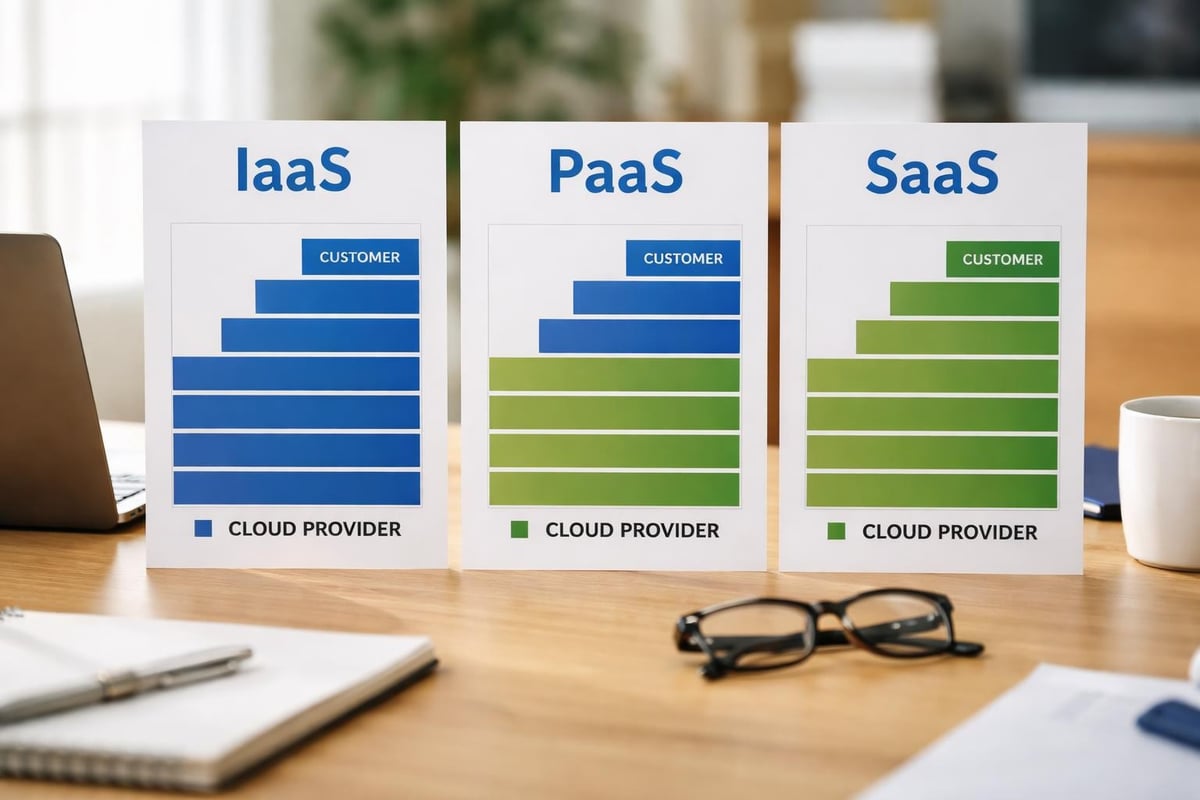
The Cloud Security Alliance provides comprehensive security guidance that helps organizations understand these responsibilities and implement appropriate controls. Small businesses must recognize that relying solely on provider security measures leaves critical gaps in their defense posture. Effective cloud computing security solutions address both provider and customer responsibilities through coordinated strategies.
Key Security Challenges in Cloud Environments
Organizations face unique threats when moving to cloud platforms. Data breaches remain the most significant concern, with unauthorized access potentially exposing sensitive customer information, financial records, and proprietary business data. Misconfigured storage buckets and improperly set permissions continue to cause high-profile incidents affecting businesses of all sizes.
Account hijacking represents another critical vulnerability. Attackers who gain access to administrative credentials can manipulate data, redirect transactions, and compromise entire cloud environments. Insider threats from employees or contractors with excessive permissions pose additional risks that traditional perimeter security cannot address.
Compliance requirements add complexity to cloud security planning. Organizations must ensure their cloud computing security solutions align with industry regulations such as HIPAA, PCI DSS, or GDPR, depending on their sector and customer base. The General Services Administration emphasizes the importance of understanding these obligations before migrating workloads to cloud platforms.
Essential Components of Cloud Computing Security Solutions
Building a comprehensive security framework requires multiple layers of protection working in concert. Organizations cannot rely on single solutions or technologies to address the diverse threat landscape facing cloud environments.
Identity and Access Management
Identity and Access Management (IAM) forms the cornerstone of cloud security. This component controls who can access resources and what actions they can perform. Effective IAM implementations use the principle of least privilege, granting users only the permissions necessary for their specific roles.
Key IAM capabilities include:
- Multi-factor authentication requiring two or more verification methods
- Single sign-on enabling secure access across multiple applications
- Role-based access control assigning permissions based on job functions
- Privileged access management protecting administrative accounts
- Regular access reviews identifying and removing unnecessary permissions
Organizations should implement strong password policies, rotate credentials regularly, and monitor for suspicious authentication patterns. Cloud computing security solutions increasingly incorporate behavioral analytics that detect anomalous login attempts or unusual access patterns indicating compromised accounts.
Data Protection and Encryption
Protecting information throughout its lifecycle requires comprehensive encryption strategies. Data at rest in cloud storage should be encrypted using strong algorithms such as AES-256. Data in transit between users and cloud services, or between cloud components, must use transport layer security protocols to prevent interception.
Encryption key management presents unique challenges in cloud environments. Organizations must decide whether to use provider-managed keys, customer-managed keys stored in cloud key management services, or hybrid approaches maintaining keys in on-premises hardware security modules. Each option offers different balances of convenience, control, and compliance capabilities.
| Encryption Approach | Control Level | Complexity | Compliance Suitability |
|---|---|---|---|
| Provider-Managed Keys | Low | Low | Basic requirements |
| Customer-Managed Cloud Keys | Medium | Medium | Most regulations |
| On-Premises Key Management | High | High | Strict sovereignty rules |
Data loss prevention (DLP) tools complement encryption by monitoring information flows and preventing unauthorized transfers. These solutions identify sensitive data based on content patterns, context, and classification labels, then enforce policies blocking risky actions.

Network Security and Segmentation
Cloud networks require security controls adapted to virtualized, software-defined infrastructure. Virtual private clouds (VPCs) create isolated network environments where organizations can define IP address ranges, subnets, and routing tables. Network segmentation within VPCs separates workloads based on security requirements, limiting lateral movement if attackers compromise one segment.
Security groups and network access control lists function as virtual firewalls controlling traffic at the instance and subnet levels. Organizations should configure these to deny all traffic by default, then explicitly allow only necessary communications. Web application firewalls (WAF) protect internet-facing applications by filtering malicious requests, preventing common attacks like SQL injection and cross-site scripting.
Virtual private network connections or dedicated network links secure communications between on-premises data centers and cloud environments. These encrypted tunnels enable hybrid cloud architectures while maintaining security across both environments. Cloud computing security solutions for small businesses often leverage these hybrid approaches during gradual migration strategies.
Advanced Security Frameworks and Best Practices
Moving beyond basic controls, organizations should adopt comprehensive frameworks that address security holistically across people, processes, and technology dimensions.
Zero Trust Architecture
Traditional security models assumed everything inside a network perimeter was trustworthy. Zero Trust eliminates this assumption, requiring verification for every access request regardless of origin. The Certificate of Competence in Zero Trust (CCZT) represents industry recognition of this approach's importance for cloud security.
Zero Trust principles for cloud computing security solutions include:
- Verify explicitly using all available data points for authentication and authorization decisions
- Apply least privilege access limiting user rights to the minimum necessary
- Assume breach designing systems expecting attackers may already be inside
- Segment access preventing lateral movement between resources
- Continuously validate reassessing trust with every access attempt
Implementing Zero Trust requires integrating IAM, network security, endpoint protection, and continuous monitoring. Organizations transition gradually, typically starting with critical applications and high-value data before expanding to entire environments.
Security Monitoring and Incident Response
Detecting threats quickly minimizes potential damage from security incidents. Security Information and Event Management (SIEM) systems aggregate logs from cloud services, applications, and security tools, then correlate events to identify suspicious patterns. Cloud-native security tools provided by major platforms offer visibility into resource configurations, user activities, and potential vulnerabilities.
Effective monitoring programs define clear baselines for normal activity, then alert security teams when deviations occur. Machine learning algorithms improve detection accuracy by identifying subtle anomalies human analysts might miss. Organizations should configure alerts to balance sensitivity and specificity, reducing false positives that cause alert fatigue while catching genuine threats.
| Monitoring Component | Purpose | Key Metrics |
|---|---|---|
| Configuration Monitoring | Detect security misconfigurations | Policy violations, unauthorized changes |
| User Activity Monitoring | Identify suspicious access patterns | Failed logins, unusual access times, privilege escalation |
| Network Traffic Analysis | Spot malicious communications | Anomalous data transfers, known malicious IPs |
| Vulnerability Scanning | Find exploitable weaknesses | Unpatched systems, insecure configurations |
Incident response plans tailored for cloud environments enable rapid containment and recovery. These plans should document procedures for isolating compromised resources, preserving evidence, notifying stakeholders, and restoring normal operations. Regular tabletop exercises test response capabilities and identify improvement opportunities.
Compliance and Governance
Regulatory requirements significantly influence cloud computing security solutions for organizations in healthcare, finance, and other regulated industries. Compliance frameworks establish minimum security controls, audit requirements, and reporting obligations that organizations must satisfy.
Governance policies define how cloud resources can be provisioned, configured, and used within the organization. These policies enforce security standards, cost controls, and operational requirements through automated guardrails. Policy-as-code tools enable organizations to codify governance rules and automatically enforce them across cloud environments.
Third-party attestations and certifications help organizations verify provider security capabilities. SOC 2 reports, ISO 27001 certifications, and industry-specific compliance documents demonstrate that providers implement appropriate controls. However, these attestations cover only provider responsibilities, not customer obligations under the shared responsibility model.
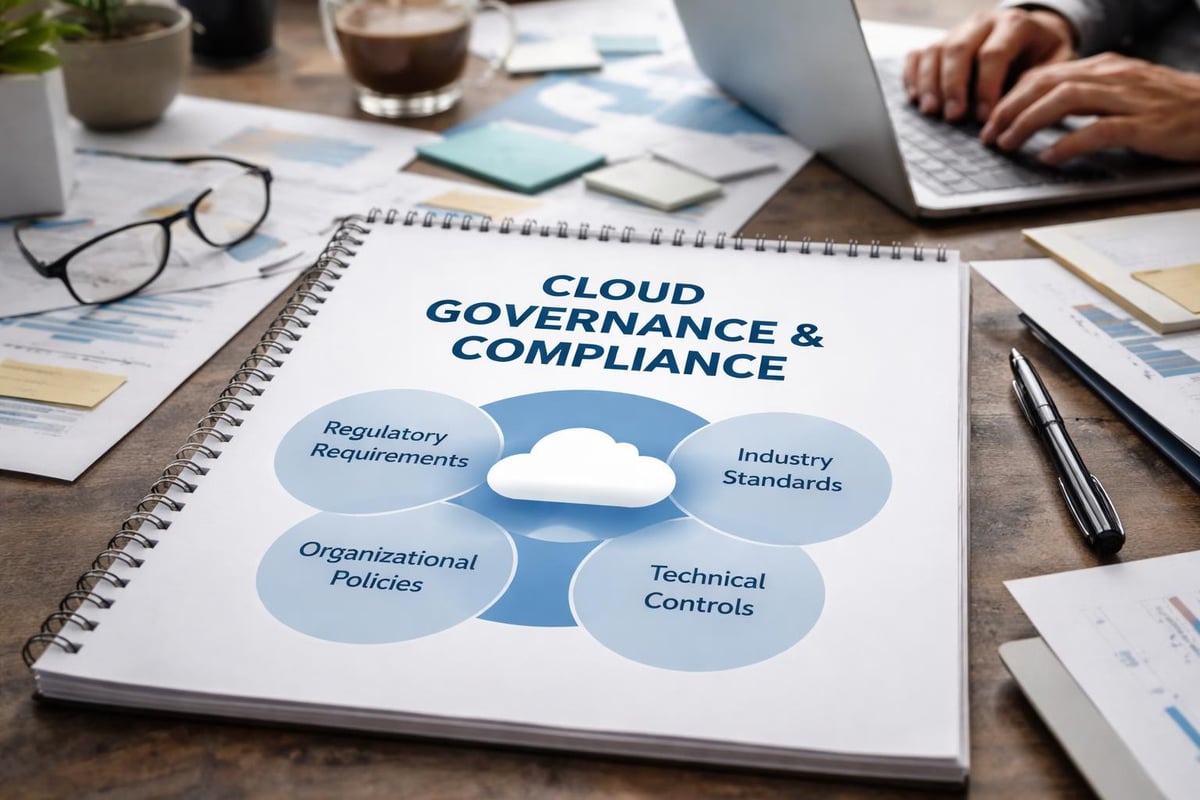
Data residency requirements create additional complexity for global organizations. Some regulations mandate that certain data types remain within specific geographic boundaries. Cloud providers offer region selection capabilities, but organizations must configure services correctly to maintain compliance. Cloud security requirements from regulatory bodies provide detailed guidance for organizations navigating these obligations.
Implementing Cloud Security for Small Businesses
Small businesses face unique challenges implementing cloud computing security solutions due to limited budgets, smaller IT teams, and competing priorities. However, cloud platforms offer security capabilities previously available only to large enterprises with extensive resources.
Prioritizing Security Investments
Resource constraints require strategic prioritization focusing on highest-impact security measures. Organizations should begin by identifying their most critical assets, including customer data, financial information, and systems essential for business operations. Assessing data sensitivity and workload appropriateness helps determine which protections each asset requires.
A phased implementation approach allows organizations to build security capabilities gradually. Initial phases should address fundamental controls:
- Enable multi-factor authentication for all user accounts
- Encrypt sensitive data at rest and in transit
- Configure network security groups following least-privilege principles
- Implement automated backup and recovery procedures
- Establish basic security monitoring and alerting
Later phases add advanced capabilities like threat intelligence integration, automated incident response, and comprehensive compliance reporting. This staged approach spreads costs over time while delivering immediate security improvements.
Leveraging Managed Security Services
Small businesses often lack in-house expertise to implement and maintain comprehensive cloud computing security solutions. Managed IT services providers offer specialized security capabilities without requiring full-time security staff. These partnerships provide access to experienced professionals, advanced security tools, and 24/7 monitoring at predictable monthly costs.
Working with Delphi Systems Inc. enables Lethbridge area businesses to implement enterprise-grade security appropriate for their cloud environments. Managed service providers handle routine security tasks, freeing internal teams to focus on business-critical projects while ensuring continuous protection against evolving threats.
Security Automation and Orchestration
Automation reduces the operational burden of maintaining cloud security while improving consistency and response times. Infrastructure as code tools enable organizations to define security configurations in version-controlled templates, ensuring new resources automatically include appropriate protections. Auto-remediation capabilities detect security violations and automatically correct them without human intervention.
Security orchestration platforms coordinate multiple security tools, enabling automated workflows that respond to incidents faster than manual processes allow. For example, detecting a compromised account might automatically trigger workflows that revoke access, isolate affected resources, alert security teams, and initiate forensic data collection.
Emerging Trends in Cloud Security
The cloud security landscape continues evolving as new technologies and threat vectors emerge. Organizations planning long-term cloud strategies should understand these trends shaping future cloud computing security solutions.
Cloud-Native Application Protection
Containerization and microservices architectures introduce new security considerations. Traditional perimeter security proves ineffective for applications composed of hundreds of ephemeral containers communicating across complex service meshes. Container security solutions scan images for vulnerabilities, enforce runtime policies, and monitor inter-container communications.
Service mesh technologies provide built-in security capabilities including mutual TLS authentication between services, fine-grained authorization policies, and encrypted communications. Organizations adopting cloud-native development practices must integrate security throughout the application lifecycle, from initial design through deployment and ongoing operations.
Artificial Intelligence in Threat Detection
Machine learning algorithms increasingly power security analytics, identifying threats too subtle or complex for rule-based systems to detect. Behavioral analytics establish baselines for normal user and entity behavior, then flag deviations indicating potential compromise. Anomaly detection systems identify unusual patterns in network traffic, system logs, and application behavior.
These AI-powered capabilities reduce the time between initial compromise and detection, limiting attacker dwell time and potential damage. However, organizations must carefully tune these systems to their specific environments, as generic models may generate excessive false positives or miss environment-specific threats.
Secure Access Service Edge (SASE)
SASE architectures converge network and security functions into unified cloud-delivered services. This approach provides consistent security policies whether users connect from offices, homes, or mobile devices, addressing challenges created by distributed workforces. Cloud-delivered security services scale elastically with demand, providing enterprise-grade protection without requiring extensive on-premises infrastructure.
Organizations implementing SASE benefit from simplified management, reduced complexity, and improved user experiences compared to traditional hub-and-spoke network architectures. Cloud computing security solutions increasingly incorporate SASE principles, recognizing that network and security transformation must proceed together.
Building a Security-First Cloud Strategy
Successful cloud adoption requires embedding security considerations into every decision from initial planning through ongoing operations. Organizations that treat security as an afterthought face increased risks, remediation costs, and potential business disruption from security incidents.
Security by Design Principles
Building security into cloud architectures from the beginning proves more effective and economical than retrofitting protections later. Threat modeling during design phases identifies potential attack vectors and informs architectural decisions that eliminate or mitigate risks. Security requirements should receive equal weight with functional requirements when evaluating cloud services and designing applications.
Defense in depth strategies implement multiple overlapping security controls, ensuring that if one control fails, others continue providing protection. This approach acknowledges that no single security measure proves foolproof, requiring layered defenses across network, application, data, and identity domains.
Continuous Improvement Through Testing
Regular security assessments validate that cloud computing security solutions remain effective as environments evolve. Penetration testing simulates real-world attacks, identifying exploitable vulnerabilities before malicious actors discover them. Configuration audits verify that security settings align with organizational policies and industry best practices.
Vulnerability management programs systematically identify, prioritize, and remediate security weaknesses across cloud environments. Automated scanning tools continuously assess resources for known vulnerabilities, while risk-based prioritization ensures critical issues receive immediate attention. Organizations should establish clear remediation timelines based on vulnerability severity and potential business impact.
Employee Training and Awareness
Technical controls alone cannot ensure cloud security without informed users who understand their security responsibilities. Security awareness training educates employees about common threats like phishing attacks, social engineering, and credential theft. Role-specific training provides detailed guidance for personnel with security responsibilities, ensuring they understand how to configure and operate security tools effectively.
Creating a security-conscious culture encourages employees to report suspicious activities and follow security policies without requiring constant oversight. Regular communications highlighting recent threats, security incidents, and best practices reinforce training and keep security top-of-mind. Organizations should measure security awareness through simulated phishing exercises and other testing methods, using results to target additional training where needed.
Implementing robust cloud computing security solutions requires strategic planning, appropriate technologies, and ongoing commitment to security excellence. Small businesses must balance security investments with operational needs and budget constraints while maintaining effective protection for critical assets. Delphi Systems Inc. helps Lethbridge area businesses navigate these challenges through comprehensive managed IT services that include cloud security, monitoring, and support, enabling organizations to leverage cloud benefits while maintaining security and focusing on core business activities.

