
Small businesses face mounting pressure to maintain sophisticated IT infrastructure while focusing on their core operations. Technology demands continue to escalate, cybersecurity threats multiply daily, and internal IT resources remain stretched thin. This is where managed services IT delivers transformative value. By partnering with specialized providers, companies gain access to enterprise-level technology expertise, proactive monitoring, and comprehensive support without the overhead of building extensive in-house teams. This approach has revolutionized how organizations across North America handle their technology needs, particularly in regional markets where access to specialized talent can be limited.
Understanding the Managed Services IT Model
The concept of managed services represents a fundamental shift from traditional break-fix IT support to proactive, comprehensive technology management. Rather than calling for help when systems fail, businesses establish ongoing partnerships where providers actively monitor, maintain, and optimize their technology infrastructure.
This model operates on a subscription or fixed-fee basis, creating predictable monthly expenses instead of unpredictable repair costs. Providers assume responsibility for specific IT functions, delivering defined service levels through remote monitoring, regular maintenance, and strategic planning. The relationship transforms IT from a cost center responding to emergencies into a strategic asset driving business growth.
Key Components of Modern Managed IT Solutions
Network Infrastructure Management forms the foundation of managed services IT. Providers continuously monitor network performance, identifying bottlenecks and potential failures before they impact operations. This includes managing routers, switches, firewalls, and wireless access points to ensure optimal connectivity.
Security Operations have become increasingly critical as cyber threats evolve. Managed security encompasses multiple layers:
- Real-time threat detection and response
- Firewall configuration and management
- Antivirus and anti-malware protection
- Security patch deployment
- Vulnerability assessments and remediation
Cloud Services Management helps businesses leverage the flexibility and scalability of cloud platforms while maintaining control over costs and security. Providers handle migration planning, ongoing optimization, and integration with existing systems.
Business Benefits Beyond Technical Support
Managed services IT delivers advantages that extend far beyond keeping computers running. The strategic value becomes apparent when examining operational impact across multiple dimensions.
Financial Predictability and Control
| Cost Factor | Traditional IT | Managed Services IT |
|---|---|---|
| Monthly Expense | Highly variable | Fixed, predictable |
| Emergency Repairs | $200-$500/incident | Included in fee |
| Hardware Replacement | Unplanned capital expense | Planned, budgeted |
| Staff Overhead | Full salaries + benefits | Service fee only |
| Downtime Costs | Unpredictable, often severe | Minimized through prevention |
Fixed-rate pricing structures eliminate budget surprises. Businesses know their exact IT costs months in advance, enabling accurate financial planning. This predictability proves especially valuable for small to medium enterprises operating on tight margins where unexpected expenses can disrupt operations.
The return on investment extends beyond direct cost savings. When employees spend less time dealing with technology problems, productivity increases. Systems running at peak efficiency process transactions faster, serve customers better, and support growth without requiring proportional infrastructure investment.
Access to Specialized Expertise
Few small businesses can justify hiring specialists in cybersecurity, cloud architecture, network engineering, and database administration. Managed services IT provides access to entire teams with diverse certifications and experience across industries.
This expertise proves crucial when implementing new technologies or responding to sophisticated threats. Providers stay current with emerging trends, security vulnerabilities, and best practices, bringing that knowledge to every client relationship. The collective experience of managing hundreds of networks creates insights no single in-house administrator could match.
Proactive Problem Prevention
The shift from reactive to proactive IT management represents one of the most significant advantages. Rather than waiting for systems to fail, providers monitor performance metrics continuously, identifying developing issues through:
- Automated alerts for unusual activity patterns
- Regular system health assessments
- Predictive analytics based on historical data
- Scheduled maintenance during off-peak hours
This approach dramatically reduces unexpected downtime. Problems get addressed during maintenance windows instead of disrupting business operations. Understanding authoritative DNS servers and other critical infrastructure components helps providers maintain reliable internet connectivity essential for modern business.
Essential Services Within Managed IT Portfolios
Comprehensive managed services IT encompasses a broad range of specialized functions. While specific offerings vary by provider, core services address fundamental business technology needs.
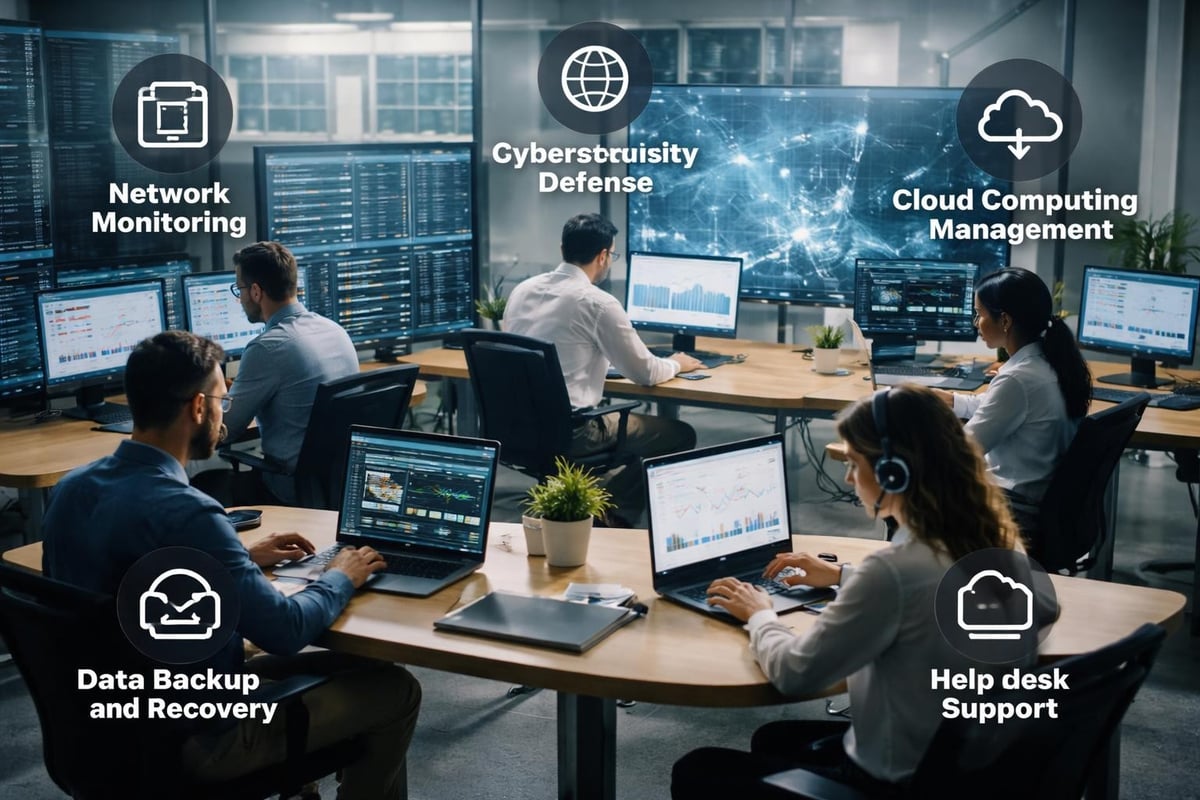
Network Monitoring and Management
Continuous surveillance of network infrastructure detects performance degradation, security threats, and configuration issues. Advanced monitoring platforms track thousands of metrics simultaneously, alerting technicians to problems often before users notice any impact.
Network optimization involves bandwidth management, traffic analysis, and strategic upgrades. Providers analyze usage patterns to recommend improvements, ensuring networks scale efficiently as businesses grow. This includes managing both on-premises equipment and cloud-based networking services.
Cybersecurity Protection
Modern threat landscapes demand multi-layered security approaches. Managed cybersecurity services provide:
- Endpoint protection across all devices
- Email security filtering spam and malicious attachments
- Web filtering blocking dangerous sites
- Intrusion detection and prevention monitoring for unauthorized access
- Security awareness training educating employees
Logging as a service provides centralized visibility into security events across the infrastructure. By aggregating and analyzing log data, providers identify suspicious patterns indicating potential breaches or policy violations.

Data Backup and Disaster Recovery
Automated backup systems ensure critical business data remains protected against hardware failure, ransomware attacks, accidental deletion, and natural disasters. Managed services IT providers implement sophisticated backup strategies including:
- Multiple backup copies in geographically diverse locations
- Regular restoration testing to verify data integrity
- Rapid recovery procedures minimizing downtime
- Retention policies meeting regulatory requirements
Disaster recovery planning extends beyond simple backups. Providers develop comprehensive strategies enabling businesses to resume operations quickly after major disruptions. This includes documenting recovery procedures, establishing backup communication channels, and maintaining redundant systems for critical applications.
Cloud Computing Services
Cloud migration and management have become central to managed services IT offerings. Providers help businesses leverage platforms like Microsoft Azure, Amazon Web Services, and Google Cloud while avoiding common pitfalls.
Strategic planning ensures cloud investments align with business objectives. Not every workload belongs in the cloud, and managed service providers help identify which applications benefit most from cloud deployment versus on-premises hosting.
Cost optimization prevents cloud spending from spiraling beyond budgets. Providers monitor resource utilization, right-size virtual machines, implement automated scaling, and eliminate unused services. These optimizations often reduce cloud costs by 30-40% while improving performance.
Help Desk and Technical Support
Responsive support when employees encounter technology issues keeps businesses productive. Managed services IT includes help desk functions providing:
- Multi-channel support (phone, email, chat, ticketing portal)
- Extended or 24/7 availability
- Remote troubleshooting and resolution
- On-site support for complex issues
- User account management
- Software installation and updates
Ticket management systems track all requests, ensuring nothing falls through the cracks. Priority-based queuing addresses critical issues first while maintaining visibility into overall support metrics.
Selecting the Right Managed Services IT Provider
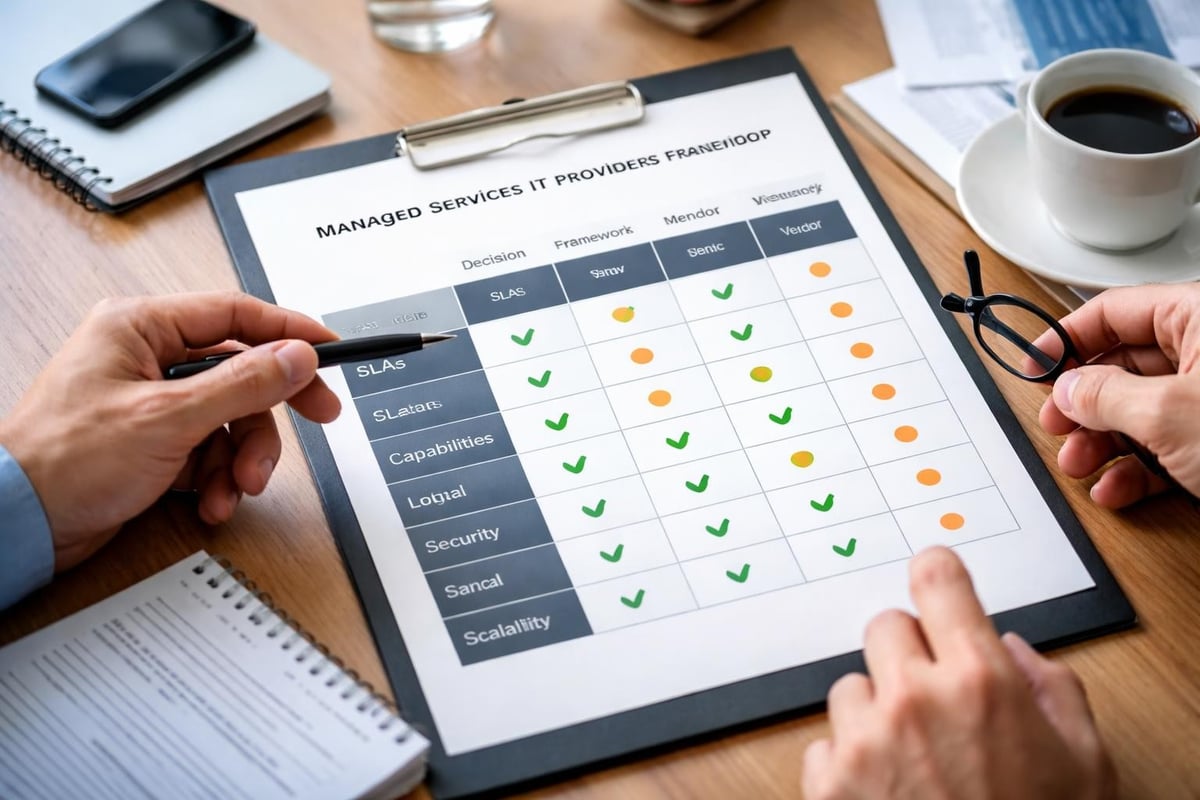
Choosing a managed services IT partner represents a significant business decision with long-term implications. The selection process should evaluate multiple factors beyond simple pricing comparisons.
Service Level Agreements and Guarantees
Clear SLA definitions establish expectations for response times, resolution targets, and system uptime. Review these documents carefully, understanding what guarantees the provider offers and what remedies exist when they fail to meet commitments.
| SLA Component | Questions to Ask |
|---|---|
| Response Time | How quickly will someone acknowledge my request? |
| Resolution Time | What's the target for actually fixing issues? |
| Uptime Guarantee | What percentage availability is promised? |
| Escalation Process | How do critical issues get prioritized? |
| Credits/Penalties | What happens if SLAs aren't met? |
Technical Capabilities and Specializations
Assess whether the provider's expertise matches your industry and technology environment. Some providers specialize in healthcare compliance, others in manufacturing operations, and still others in professional services firms.
Certifications and partnerships indicate technical competency and access to vendor resources. Look for credentials like Microsoft Certified Partner, Cisco certifications, CompTIA Security+, and industry-specific qualifications.
The provider's approach to security deserves particular scrutiny. Inquire about their identity verification solutions and how they ensure only authorized users access your systems. Understanding their security protocols protects your business from both external threats and insider risks.
Local Presence and Accessibility
While much managed services IT work happens remotely, local presence matters. Providers serving specific regions understand local business environments, can dispatch technicians quickly when on-site support becomes necessary, and build relationships facilitating better service.
For businesses in smaller markets, regional providers often deliver more personalized attention than national firms. They understand local challenges, maintain relationships with area vendors, and have reputations directly tied to community satisfaction.
Scalability and Growth Support
Your managed services IT partner should support business expansion rather than constraining it. Evaluate how easily you can add users, locations, or services as needs evolve. Providers should offer clear pricing for scaling and proactively suggest improvements supporting growth objectives.
Strategic planning services help align technology with business goals. The best providers function as trusted advisors, bringing ideas and insights beyond simply maintaining existing systems. They should understand your industry, anticipate challenges, and recommend solutions positioning you for competitive advantage.
Implementation and Transition Process
Moving from traditional IT management to managed services IT requires careful planning and execution. Understanding the transition process helps set realistic expectations and ensures smooth conversion.
Initial Assessment and Inventory
Providers begin with comprehensive discovery, documenting your current environment:
- Hardware inventory cataloging all devices
- Software licensing verifying compliance
- Network mapping understanding topology
- Security posture identifying vulnerabilities
- Backup verification testing recovery capabilities
This assessment reveals gaps, risks, and opportunities. Many businesses discover outdated systems, licensing inefficiencies, or security weaknesses during this phase.
Planning and Agreement
Based on discovery findings, providers develop service plans addressing your specific needs. This includes defining which services you'll receive, establishing SLAs, determining pricing, and setting implementation timelines.
Transition planning outlines how existing responsibilities transfer to the managed services IT provider. This includes documentation handoffs, credential transfers, and communication protocols ensuring nothing gets overlooked during the switch.
Onboarding and Monitoring Setup
The technical transition involves installing monitoring agents, configuring management platforms, establishing remote access, and integrating with your existing systems. Providers typically phase this implementation to minimize disruption:
- Week 1-2: Monitoring deployment and baseline establishment
- Week 3-4: Security tools and backup configuration
- Week 5-6: Help desk transition and documentation
- Week 7-8: Optimization and final adjustments
Throughout onboarding, providers train your staff on new support procedures, communication channels, and any changed workflows. Portal guidelines help establish effective user access systems for requesting support and accessing resources.
Ongoing Optimization
Managed services IT doesn't end with initial setup. Providers continuously refine services based on performance data, changing needs, and emerging technologies. Regular business reviews assess whether current arrangements still align with your objectives and identify opportunities for improvement.
Industry-Specific Considerations
Different sectors face unique technology challenges requiring specialized managed services IT approaches.
Professional Services Firms
Law offices, accounting firms, and consulting practices demand exceptional data security and reliable client communication systems. Managed providers serving these industries understand confidentiality requirements, implement appropriate access controls, and ensure compliance with professional regulations.
Document management and collaboration tools receive particular attention. These firms rely heavily on secure file sharing, version control, and client portals requiring careful configuration and monitoring.
Healthcare and Medical Practices
HIPAA compliance dominates healthcare IT requirements. Managed services IT providers serving medical practices must demonstrate expertise in protecting patient health information through encryption, access auditing, and secure communication systems.
Electronic health records integration, telemedicine platforms, and medical device networking create additional complexity. Types of identification systems become critical for ensuring only authorized personnel access sensitive patient data while maintaining efficient clinical workflows.
Manufacturing and Distribution
Production environments require high uptime for inventory systems, order processing, and supply chain management. Managed services IT for manufacturers emphasizes redundancy, rapid disaster recovery, and integration with specialized production software.
Industrial control systems and IoT devices create unique security challenges. Providers must balance connectivity requirements with protection against threats targeting operational technology.
Financial Services
Banks, credit unions, and investment firms operate under strict regulatory oversight requiring documented security controls, disaster recovery capabilities, and audit trails. Managed providers must understand compliance frameworks and implement appropriate safeguards.
Transaction processing reliability directly impacts revenue, making uptime guarantees and redundant systems essential. Managed information services help financial institutions transform data into actionable intelligence while maintaining security and compliance.
Measuring Managed Services IT Success
Effective partnerships deliver measurable improvements across multiple performance indicators. Tracking these metrics demonstrates value and identifies areas for continued enhancement.
Technical Performance Metrics
| Metric | Typical Target | Business Impact |
|---|---|---|
| Network Uptime | 99.9% or higher | Minimal disruption |
| Average Response Time | Under 15 minutes | Quick acknowledgment |
| First-Call Resolution | Above 70% | Efficient problem solving |
| Mean Time to Resolution | Under 4 hours | Limited productivity loss |
| Security Incidents | Decreasing trend | Improving protection |
These quantitative measures provide objective assessment of service quality. Regular reporting ensures transparency and accountability.
Business Impact Indicators
Beyond technical metrics, managed services IT should deliver tangible business benefits:
- Reduced downtime translating to fewer lost revenue hours
- Increased employee productivity from fewer technology frustrations
- Lower total IT costs compared to previous approaches
- Faster project implementation leveraging provider expertise
- Improved security posture reducing breach risks
Quarterly business reviews examine these outcomes, connecting IT performance to broader organizational objectives. The best providers demonstrate clear ROI through documented improvements in efficiency, cost control, and risk reduction.
User Satisfaction
Employee experience with IT support significantly impacts overall satisfaction with managed services IT. Regular surveys assess:
- Responsiveness to support requests
- Technical competence of support staff
- Communication clarity and professionalism
- Problem resolution effectiveness
- Proactive communication about changes
High user satisfaction indicates the provider understands your business culture and delivers service matching employee expectations. Low scores highlight areas requiring attention before frustration undermines the partnership.
Future Trends Shaping Managed Services IT
The managed services IT landscape continues evolving rapidly as technology advances and business needs change. Understanding emerging trends helps businesses make forward-looking partnership decisions.
Artificial Intelligence and Automation
Machine learning algorithms increasingly handle routine monitoring, threat detection, and basic troubleshooting. AI-powered tools analyze vast datasets identifying patterns human administrators might miss. This automation allows managed service providers to deliver more proactive support while controlling costs.
Predictive maintenance uses historical performance data to forecast hardware failures before they occur. This enables scheduled replacements during maintenance windows rather than emergency interventions during business hours.
Zero Trust Security Models
Traditional perimeter-based security proves inadequate in cloud-first, mobile-enabled environments. Managed services IT providers increasingly implement zero trust architectures that verify every access request regardless of source location.
This approach assumes no user or device is inherently trustworthy, requiring continuous authentication and authorization. Implementation involves identity verification, device health checks, and least-privilege access controls.
Edge Computing Integration
As businesses deploy more IoT devices and require faster data processing, edge computing moves computation closer to data sources. Managed providers help organizations implement edge architectures while maintaining centralized visibility and control.
This distributed model requires sophisticated management tools and creates new security challenges that experienced providers address through layered defenses and continuous monitoring.
Hybrid and Multi-Cloud Management
Few organizations commit entirely to single cloud platforms. Managed services IT increasingly involves orchestrating workloads across multiple cloud providers plus on-premises infrastructure. This complexity demands expertise in diverse platforms and integration technologies.
Providers offering strong multi-cloud capabilities help businesses avoid vendor lock-in while optimizing workload placement based on performance, cost, and compliance requirements.
Managed services IT has transformed from a cost-saving measure into a strategic enabler helping businesses compete effectively in technology-driven markets. By partnering with experienced providers, organizations gain access to enterprise-level expertise, proactive monitoring, and comprehensive support that would be prohibitively expensive to build internally. For small businesses in Lethbridge and surrounding areas seeking to maximize their technology investments while focusing on core operations, Delphi Systems Inc. delivers the comprehensive managed IT services, cybersecurity protection, cloud computing expertise, and responsive support needed to maintain secure, efficient networks through predictable fixed-rate pricing.

