Imagine a future where it network management means no unexpected downtime and security threats are stopped before they start. Networks will power business growth and digital transformation, but their complexity is increasing with the rise of cloud, remote work, and evolving threats.
In this expert guide, you will find actionable strategies, proven technologies, and best practices to simplify management, boost performance, and enhance security. Ready to discover the expert insights and tools that will set your network apart in 2026? Let’s get started.
The Evolving Landscape of IT Network Management in 2026
In 2026, IT network management will look dramatically different from just a few years ago. The pace of digital transformation and the complexity of modern infrastructures require new strategies and technologies. Organizations must adapt quickly to keep their networks secure, resilient, and efficient.
Key Trends Shaping Network Management
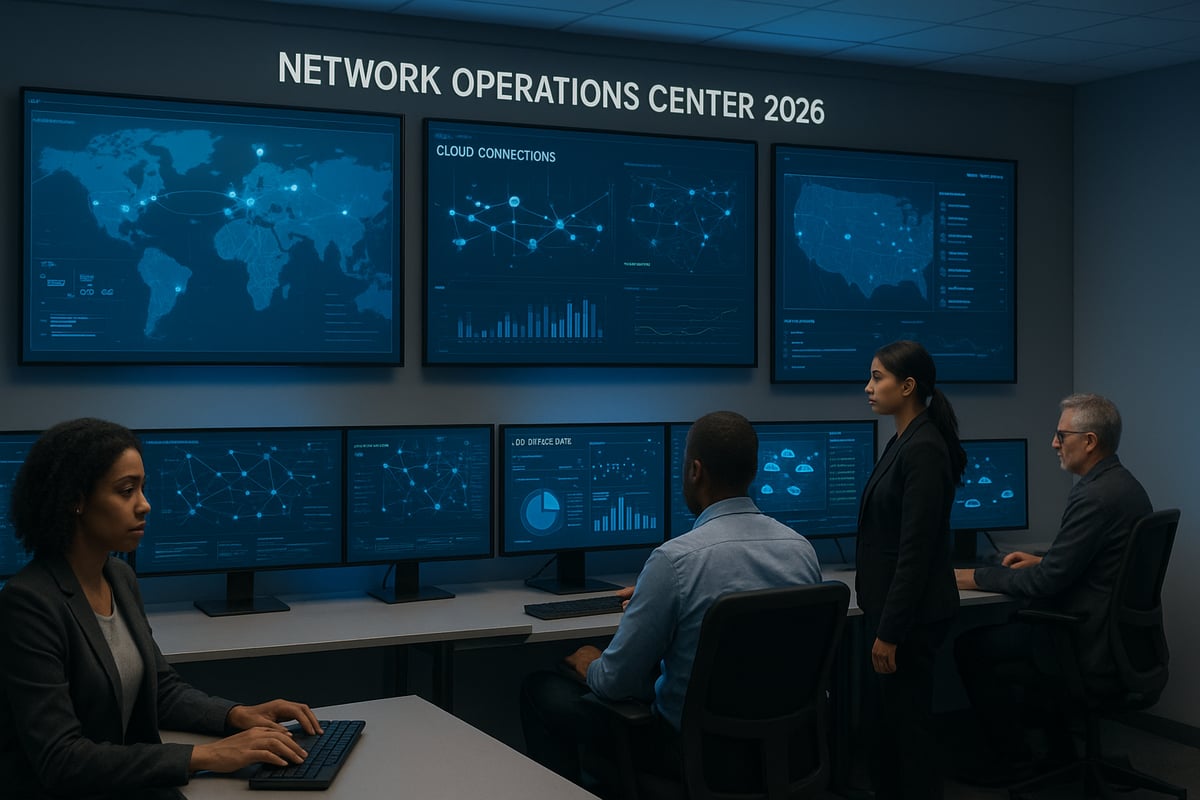
Several transformative trends are redefining IT network management. The shift to hybrid and multi-cloud environments is at the forefront. Companies now operate across public, private, and edge clouds, which increases network diversity and complexity. Managing seamless, secure connectivity for a remote and distributed workforce adds further challenges.
The rapid expansion of IoT devices and edge computing means there are more endpoints and data streams than ever before. This surge demands robust visibility and control. Regulatory and compliance requirements are also intensifying, pressuring organizations to enhance network monitoring, logging, and reporting.
AI, machine learning, and automation are becoming core to IT network management. They allow teams to move from reactive troubleshooting to proactive optimization. By automating routine tasks and leveraging predictive analytics, businesses can minimize downtime and improve user experience. For example, enterprises now manage thousands of devices and connections across multiple locations and clouds, making manual approaches obsolete.
According to a recent Gartner report, 30 percent of enterprises are expected to automate over half of their network activities by 2026. This statistic highlights the growing reliance on intelligent tools in IT network management.
Future-Proofing Network Infrastructure
To thrive in this new era, organizations must prioritize scalability and flexibility in their IT network management strategies. Adopting software-defined networking (SDN) and network function virtualization (NFV) enables rapid adaptation to evolving business needs. These technologies decouple network control from hardware, allowing for dynamic configuration and resource allocation.
Open standards and interoperability play a vital role in vendor-agnostic management. By avoiding proprietary lock-in, businesses can integrate best-of-breed solutions as their requirements change. This approach ensures long-term agility and resilience.
Recent industry data shows that over 70 percent of enterprises plan to invest in AI-driven IT network management by 2026. This investment is driven by the need for automated monitoring, intelligent threat detection, and self-healing capabilities. As organizations scale up, maintaining visibility and control across complex environments becomes crucial.
Future-ready IT network management also involves robust documentation, clear policies, and a culture of continuous improvement. By embracing modern architectures and intelligent platforms, organizations can reduce operational overhead and focus on driving innovation.
Core Components and Protocols of Modern Network Management
Modern it network management relies on a blend of robust frameworks, specialized protocols, and automated tools to ensure reliability, visibility, and security. As networks expand in size and complexity, mastering these core components becomes essential for organizations aiming to achieve high performance and compliance.

Essential Network Management Functions (FCAPS Model)
The foundation of it network management is built on the FCAPS model, which addresses five critical areas:
- Fault Management: Automated systems detect, log, and remediate network issues in real time. This reduces mean time to repair and limits service disruptions.
- Configuration Management: Tools maintain version control, perform automated backups, and enable rapid restoration. This minimizes configuration drift and ensures device consistency.
- Accounting Management: Usage tracking enables cost allocation and supports compliance, especially for telecom and managed service providers.
- Performance Management: Real-time monitoring of latency, bandwidth, and throughput helps meet service level agreements and optimize the user experience.
- Security Management: Enforcing access controls, threat monitoring, and maintaining data integrity are central. Solutions like IT security solutions streamline security policy enforcement and continuous monitoring.
By integrating these functions, organizations can proactively address problems, optimize resources, and maintain a secure network environment. The FCAPS approach remains vital as networks evolve.
Key Protocols and Tools
A variety of protocols and tools form the backbone of it network management, providing visibility and control across diverse environments.
| Protocol/Tool | Primary Use | Benefit |
|---|---|---|
| SNMP | Device monitoring | Standardized data collection |
| SSH | Secure device access | Encrypted management sessions |
| ICMP | Connectivity checks | Simple network diagnostics |
| WMI | Windows system data | OS-specific monitoring |
| NetFlow/sFlow | Traffic analytics | Granular flow visibility |
Network Management Systems (NMS) centralize alerts, dashboards, and troubleshooting, offering a single pane of glass for all network activity. Integration with cloud APIs and orchestration tools enables automated provisioning and real-time inventory updates.
For example, using SNMP alongside NetFlow allows teams to monitor both device health and traffic patterns, supporting holistic it network management. These tools empower IT teams to monitor, analyze, and optimize networks at scale.
Device Discovery, Inventory, and Mapping
Automated device discovery is a cornerstone of effective it network management. By scanning the network, systems create an up-to-date inventory of all connected assets. This "source of truth" is essential for compliance audits and incident response.
Network mapping tools visualize topology, displaying how devices interconnect and depend on each other. Accurate maps help identify single points of failure and improve troubleshooting speed. Continuous inventory updates ensure organizations always have a current view of their infrastructure.
Maintaining detailed records and visual maps not only supports day-to-day operations but also streamlines compliance and risk management. As networks grow, automated discovery and mapping become indispensable for robust it network management.
Automation, AI, and the Rise of Autonomous Networks
The landscape of it network management is entering a new era, shaped by automation and artificial intelligence. As networks become more complex, organizations are seeking smarter ways to boost performance, enhance security, and reduce manual work. Embracing automation and AI is not just a trend but an essential evolution for future-ready networks.

The Role of Automation in Network Management
Automation is revolutionizing it network management by handling routine, repetitive tasks that once consumed valuable IT time. Configuration changes, patching, and device provisioning can now be automated through policy-driven systems. This shift reduces the risk of manual errors and ensures consistent application of network policies.
Key benefits of automation in it network management include:
- Faster incident response and reduced downtime
- Consistent enforcement of compliance standards
- Streamlined onboarding of new devices and services
Policy-based automation allows teams to define network standards that are enforced automatically, freeing IT staff to focus on innovation. As a result, businesses experience increased agility and operational efficiency. Automation is no longer just a convenience; it is a necessity for managing the growing scale and complexity of modern networks.
AI and Machine Learning in Network Operations
Artificial intelligence is taking it network management to a new level. AI and machine learning enable predictive analytics, allowing networks to detect and address issues before they impact users. These technologies can identify traffic anomalies, forecast capacity needs, and even trigger self-healing actions.
AI-driven anomaly detection enhances security by catching unusual patterns that could signal threats or performance problems. Self-healing networks use automated remediation to resolve issues without human intervention, further minimizing downtime and improving reliability.
According to Gartner, by 2026, AI-driven automation will prevent 60 percent of network outages. For more on this trend, see AI-Driven Network Management Gains Enterprise Trust, which explores how enterprises are building trust in these advanced solutions.
Network as a Service (NaaS) and Consumption Models
The rise of Network as a Service is transforming how organizations approach it network management. NaaS delivers network infrastructure and operations through a subscription model, shifting costs from capital expenditures to predictable operational expenses.
Enterprises benefit from:
- Rapid scalability to meet evolving needs
- Simplified management through outsourced complexity
- Faster deployment of branch offices and remote sites
With NaaS, businesses can focus on their core objectives while service providers handle network monitoring, updates, and optimization. This model is particularly valuable for organizations with limited IT resources or those expanding into new markets. As a result, it network management becomes more flexible, cost-effective, and aligned with digital transformation goals.
Challenges and Considerations
Despite the advantages, automation and AI in it network management introduce new challenges. Striking the right balance between automated actions and human oversight is critical to prevent over-reliance on technology.
Key considerations include:
- Maintaining transparency and auditability of automated processes
- Ensuring that staff are trained to manage and troubleshoot AI-driven systems
- Regularly reviewing automated policies to adapt to changing business needs
Upskilling IT teams is essential to maximize the benefits of automation and AI. Organizations must foster a culture of continuous learning and collaboration to stay ahead in the rapidly evolving world of it network management.
Building a Future-Ready Network Management Strategy: Step-by-Step
Preparing your organization for the next generation of it network management demands a structured, forward-thinking approach. The following step-by-step strategy empowers IT leaders to address today’s challenges while building resilience for tomorrow. Each step is designed to help you assess, transform, and future-proof your network environment.

Step 1: Assess Current Network Infrastructure and Gaps
Begin by conducting a comprehensive audit of your existing network environment. Inventory every device, link, and configuration across your organization. Pay special attention to legacy equipment, unsupported software, and undocumented connections.
- Map all physical and virtual devices.
- Document configuration settings and firmware versions.
- Identify recurring pain points like downtime, bottlenecks, or security vulnerabilities.
Benchmark your current it network management performance against business goals. This baseline will guide all future improvements.
Step 2: Define Network Management Objectives for 2026
Establish clear, measurable objectives for your it network management strategy. Align these with broader business priorities such as digital transformation, growth, and regulatory compliance.
- Set targets for uptime, latency, and bandwidth.
- Define security posture and compliance requirements.
- Plan for scalability to accommodate future needs.
Involve stakeholders from IT, security, and business units to ensure objectives reflect organizational priorities. Well-defined goals keep your team focused and accountable.
Step 3: Select the Right Tools and Platforms
Evaluate modern tools and platforms that support hybrid, multi-cloud, and on-premises environments. Look for solutions with robust automation, integration, and scalability features.
| Criteria | Why It Matters | Example Solution |
|---|---|---|
| Scalability | Handles future growth | Cloud-native NMS |
| Automation Capabilities | Reduces manual work | AI-driven orchestration |
| Interoperability | Avoids vendor lock-in | Open API support |
| Cloud Integration | Enables hybrid/multi-cloud | Cloud services for businesses |
Choose platforms that allow seamless management across all environments. The right toolset is foundational for it network management that adapts to changing demands.
Step 4: Implement Automation and AI-Driven Operations
Identify routine, repetitive tasks within your it network management workflow that can be automated. Common examples include patch management, device provisioning, and alerting.
Deploy AI-powered monitoring to detect anomalies, predict failures, and optimize resource allocation. Policy-based automation enforces standards and compliance without constant human intervention.
Automating key functions reduces manual errors, boosts efficiency, and frees up IT staff for higher-value projects.
Step 5: Strengthen Security and Compliance
Integrate security management into every layer of it network management. Implement Zero Trust principles, segment your network, and enable continuous monitoring.
- Enforce access controls and multi-factor authentication.
- Monitor for threats with real-time analytics.
- Regularly update policies to reflect evolving regulations.
Test your incident response and disaster recovery plans frequently. Proactive security measures reduce risk and ensure ongoing compliance.
Step 6: Monitor, Analyze, and Optimize Continuously
Establish real-time analytics and monitoring tools to provide actionable insights on network health, usage, and security. Use AI-powered dashboards for performance tuning and capacity planning.
Set up automated reporting to track key metrics and compliance status. Create feedback loops to drive continuous improvement and adapt to new challenges.
Effective it network management relies on data-driven decision-making and a commitment to ongoing optimization.
Step 7: Upskill IT Teams and Foster a Culture of Innovation
Invest in continuous training for your IT staff, focusing on automation, AI, and cloud networking. Encourage cross-team collaboration between IT, security, and business stakeholders.
- Provide access to certifications and learning resources.
- Hold workshops on emerging technologies.
- Recognize and reward innovative ideas.
A skilled, adaptable team is the backbone of successful it network management. Fostering a culture of learning and innovation ensures your organization stays ahead in a rapidly evolving field.
Overcoming Top Challenges in IT Network Management
Modern IT network management faces a rapidly shifting landscape filled with new complexities. As organizations adapt to digital transformation, they must address a range of challenges from scaling infrastructure to ensuring airtight security. Each hurdle requires a strategic approach to keep networks resilient, secure, and future-proof.
Addressing Complexity and Scale
As organizations adopt hybrid cloud, IoT, and remote work, IT network management must handle increased device diversity and sprawling environments. Manual processes quickly become unsustainable as networks scale to thousands of endpoints across multiple locations.
Unified management platforms streamline oversight, offering centralized visibility and control. Automated discovery tools map assets and dependencies, reducing manual effort. By investing in scalable solutions, businesses ensure that it network management remains effective as infrastructure evolves.
Ensuring Security in a Hyper-Connected World
With remote work and IoT devices multiplying, the attack surface for threats expands. IT network management must prioritize security by adopting Zero Trust principles and continuous monitoring.
Segmenting networks and enforcing strict access controls help limit exposure. Real-time threat detection and automated response minimize risks. Security must be woven into every layer of it network management to safeguard sensitive data and maintain trust.
Minimizing Downtime and Enhancing Resilience
Unplanned outages can disrupt operations and damage reputation. Proactive monitoring and predictive analytics are now essential features of it network management. Organizations leveraging these tools achieve up to 40 percent less downtime compared to reactive approaches.
According to AI and NetOps Trends and Predictions for 2026, AI-driven automation is transforming how teams prevent outages and optimize uptime. By detecting anomalies early and enabling rapid failover, businesses maintain high availability and meet service expectations.
Balancing Cost, Performance, and Compliance
Optimizing resources without sacrificing performance is a constant challenge in it network management. Analytics-driven insights help organizations allocate bandwidth, avoid overprovisioning, and control costs.
| Challenge | Solution | Benefit |
|---|---|---|
| Resource Allocation | Real-time analytics | Cost savings |
| Compliance | Automated reporting | Reduced risk |
| Performance Tuning | Continuous monitoring | Improved user experience |
Ensuring compliance with evolving regulations demands up-to-date documentation and automated audits, further supporting efficient it network management.
Navigating Vendor Lock-In and Interoperability
Vendor lock-in can limit flexibility and innovation. Modern it network management strategies emphasize open standards and API-driven integrations to ensure interoperability across multi-vendor environments.
Adopting solutions that support diverse technologies prevents proprietary silos. This approach empowers organizations to adapt quickly, integrate new tools, and future-proof their networks while maintaining robust it network management practices.
The Role of Managed IT Services in Network Management
Managed IT services have become essential for organizations seeking streamlined it network management without the burden of maintaining large in-house teams. As networks become more complex and security threats more sophisticated, many businesses turn to Managed Service Providers (MSPs) for expertise and peace of mind.
MSPs deliver a comprehensive suite of services that simplify it network management. These providers handle day-to-day monitoring, troubleshooting, and maintenance, freeing internal teams to focus on core business goals. With proactive support and 24/7 oversight, MSPs detect and resolve issues before they disrupt operations.
A key advantage of partnering with an MSP is access to specialized skills that may be difficult or expensive to develop internally. MSPs offer expertise in cloud integration, cybersecurity, compliance, and advanced it network management tools. This allows businesses to adopt best practices and emerging technologies with confidence.
For a deeper look at the range of services available, the Managed IT services overview page details real-world solutions that empower organizations to operate securely and efficiently.
MSPs offer:
- Proactive network monitoring and rapid incident response
- Automated patch management and regular system updates
- Security assessments and continuous threat detection
- Cloud migration support and hybrid environment management
- Compliance guidance for industry standards
Small businesses, in particular, benefit from predictable costs and on-demand expertise, making it network management more accessible and reliable.
Delphi Systems Inc.: Local Experts in Managed IT Network Management
Delphi Systems Inc. stands out as a trusted partner for small businesses seeking expert it network management in Lethbridge and surrounding areas. The company specializes in delivering managed IT services tailored to the unique needs of local organizations.
Clients benefit from Delphi Systems Inc.’s end-to-end solutions, which include:
- Comprehensive network monitoring and proactive maintenance
- Advanced cybersecurity protection and threat mitigation
- Cloud computing solutions and data backup services
- Fixed-rate, all-inclusive pricing for budget predictability
- Rapid response IT support and minimal downtime
Delphi Systems Inc. partners with industry leaders such as Dell, Meraki, Bitdefender, and Microsoft, ensuring clients receive cutting-edge technology and reliable performance.
The company’s local expertise means clients receive personalized attention and solutions that align with their business goals. Client testimonials consistently highlight Delphi Systems Inc.’s reliability, responsiveness, and deep understanding of it network management challenges.
For small businesses, choosing a local MSP like Delphi Systems Inc. means gaining a strategic IT partner dedicated to secure, efficient, and resilient network infrastructure.
As we've explored, managing IT networks in 2026 is all about staying ahead—embracing automation, prioritizing security, and building resilience so your business can thrive without worrying about downtime or threats. If you want the confidence that comes from having experts handle your network, letting you focus on your core business, Delphi Systems Inc. is here to help. With our proactive approach, fixed-rate pricing, and personal commitment to your success, we make sure your IT infrastructure is always in peak condition. Ready to take the next step toward a future ready network?
Call us now

