
Modern businesses rely on technology to manage daily operations, communicate with customers, and store critical data. Information system services form the backbone of this digital infrastructure, providing the tools and support necessary to maintain competitive advantage in 2026. For small businesses in particular, these services transform how teams collaborate, protect sensitive information, and scale operations without overwhelming internal resources. Understanding the full scope of information system services helps business owners make informed decisions about their technology investments and operational efficiency.
Understanding Information System Services in Modern Business
Information system services encompass the comprehensive management, maintenance, and optimization of technology infrastructure that enables business operations. These services extend beyond basic IT support to include strategic planning, implementation, and ongoing monitoring of networks, applications, databases, and communication systems.
The foundation of effective information system services begins with proper infrastructure planning. Organizations must assess their current technology landscape, identify gaps, and develop roadmaps that align IT capabilities with business objectives. This strategic approach ensures that acquiring information systems and services supports growth rather than constraining it.

Core Components of Information System Services
Network Infrastructure Management
Network infrastructure forms the circulatory system of modern business technology. Professional information system services ensure routers, switches, servers, and wireless access points function optimally. This includes configuring network topology, managing bandwidth allocation, and maintaining connectivity standards that support business applications.
Application and Database Management
Business applications and databases require specialized expertise to maintain performance and reliability. Information system services professionals handle software updates, license management, integration between different platforms, and database optimization. They ensure that systems of record remain accurate and accessible to authorized users while maintaining data integrity across the organization.
Security and Compliance Oversight
Cybersecurity threats evolve constantly, making security a critical component of information system services. Professionals implement firewalls, intrusion detection systems, encryption protocols, and access controls. They also ensure security services in telecommunications protect data during transmission and storage, meeting regulatory requirements specific to each industry.
Key Service Categories
| Service Category | Primary Functions | Business Impact |
|---|---|---|
| Network Monitoring | Real-time performance tracking, anomaly detection | Reduces downtime, prevents disruptions |
| Cloud Management | Resource provisioning, scalability, cost optimization | Enables flexible growth, predictable expenses |
| Data Backup | Automated backups, disaster recovery planning | Protects business continuity |
| Help Desk Support | User assistance, troubleshooting, training | Maintains productivity, reduces frustration |
Strategic Benefits for Small Business Operations
Small businesses face unique challenges when managing technology infrastructure. Limited budgets, smaller IT teams, and rapid growth demands require strategic approaches to information system services that maximize value while minimizing complexity.
Cost Predictability and Budget Management
Traditional IT spending involves unpredictable expenses for emergency repairs, unexpected equipment failures, and reactive problem-solving. Comprehensive information system services transition these costs from variable to fixed, enabling accurate budget forecasting. Fixed-rate fee structures allow businesses to plan technology expenses alongside other operational costs, eliminating financial surprises.
Focus on Core Business Activities
When internal teams manage information system services themselves, they divert attention from revenue-generating activities. Sales professionals troubleshooting printer issues or managers configuring network settings represent opportunity costs that accumulate quickly. Professional information system services free these valuable resources to concentrate on customer relationships, product development, and strategic initiatives.
Productivity Enhancements Through Proactive Management
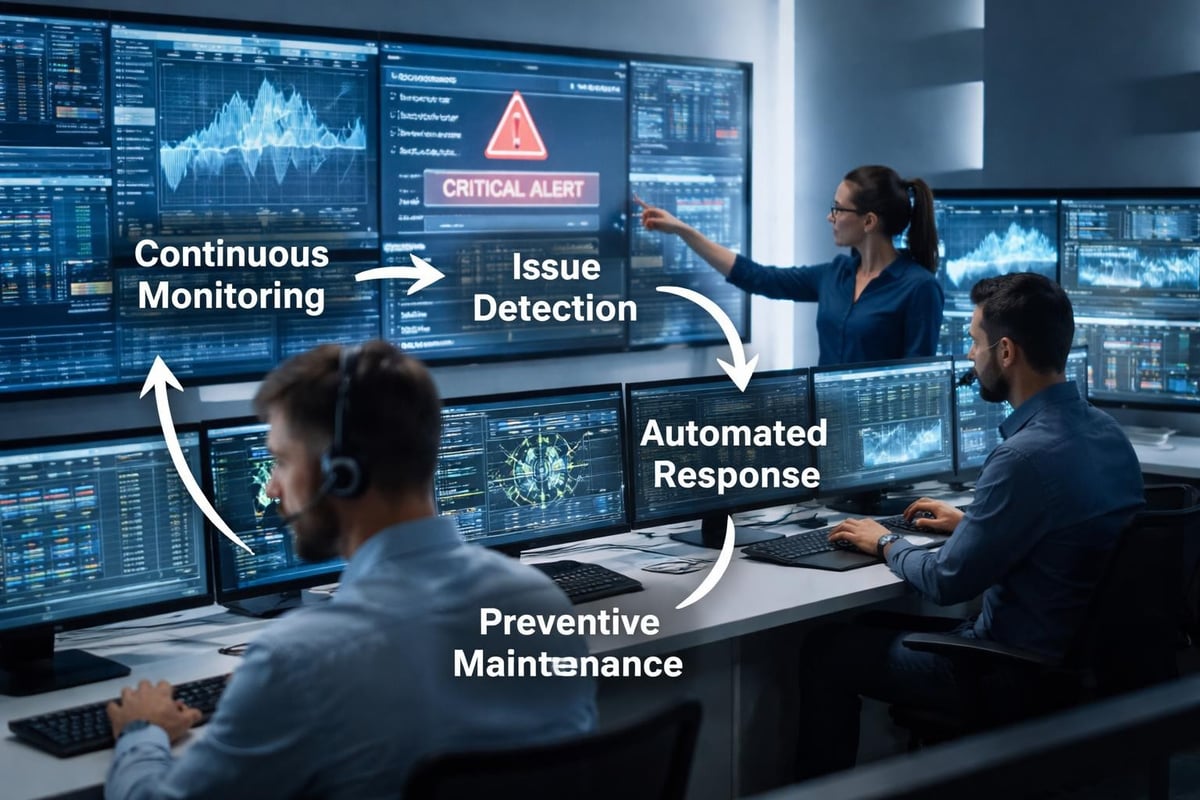
Reactive IT support waits for problems to occur before responding. Proactive information system services identify and resolve issues before they impact operations. This approach includes:
- Regular system health assessments
- Predictive maintenance based on performance metrics
- Automated patch management for security updates
- Capacity planning to prevent resource constraints
- Performance optimization for critical applications
Businesses implementing proactive information system services report significant improvements in employee productivity. System downtime decreases, application performance improves, and users experience fewer interruptions during critical work periods.
Essential Information System Services for 2026
The technology landscape continues evolving, and information system services must adapt to emerging trends, threats, and opportunities. Several service categories have become essential for small businesses competing effectively in 2026.
Cloud Computing Integration and Management
Cloud services have transitioned from optional to essential for most small businesses. Information system services professionals manage cloud migrations, hybrid infrastructure, and multi-cloud strategies. They configure Software as a Service (SaaS) applications, manage cloud storage solutions, and optimize cloud spending to prevent unnecessary expenses.
Proper name server configuration ensures reliable access to cloud resources, while information system services teams handle DNS management, load balancing, and failover configurations that maintain availability even during outages.
Cybersecurity and Threat Protection
Cybersecurity threats have intensified dramatically, with small businesses increasingly targeted by ransomware, phishing campaigns, and data breaches. Comprehensive information system services include multiple security layers:
- Endpoint Protection: Antivirus, anti-malware, and endpoint detection and response (EDR) tools
- Network Security: Firewalls, intrusion prevention systems, and secure VPN access
- Email Security: Spam filtering, phishing detection, and email encryption
- Security Awareness Training: User education programs that reduce human error
- Incident Response Planning: Documented procedures for addressing security events
These protective measures work together to create defense-in-depth strategies that significantly reduce breach risks.
Data Backup and Disaster Recovery
Data loss events occur through hardware failures, human errors, malicious attacks, or natural disasters. Information system services implement comprehensive backup strategies that protect critical business data through automated, redundant backup systems. Recovery time objectives (RTO) and recovery point objectives (RPO) define acceptable downtime and data loss parameters, ensuring backup solutions meet actual business requirements.
Modern backup strategies combine multiple approaches:
| Backup Type | Frequency | Storage Location | Recovery Speed |
|---|---|---|---|
| Local Backup | Hourly/Daily | On-premise storage | Very Fast |
| Cloud Backup | Daily | Offsite data center | Moderate |
| Snapshot Backup | Real-time | SAN/NAS systems | Very Fast |
| Archive Storage | Monthly | Cold storage | Slower |
Selecting and Implementing Information System Services
Choosing appropriate information system services requires careful evaluation of business needs, provider capabilities, and service delivery models. Small businesses must balance comprehensive coverage with budget constraints while ensuring providers understand their specific industry requirements.
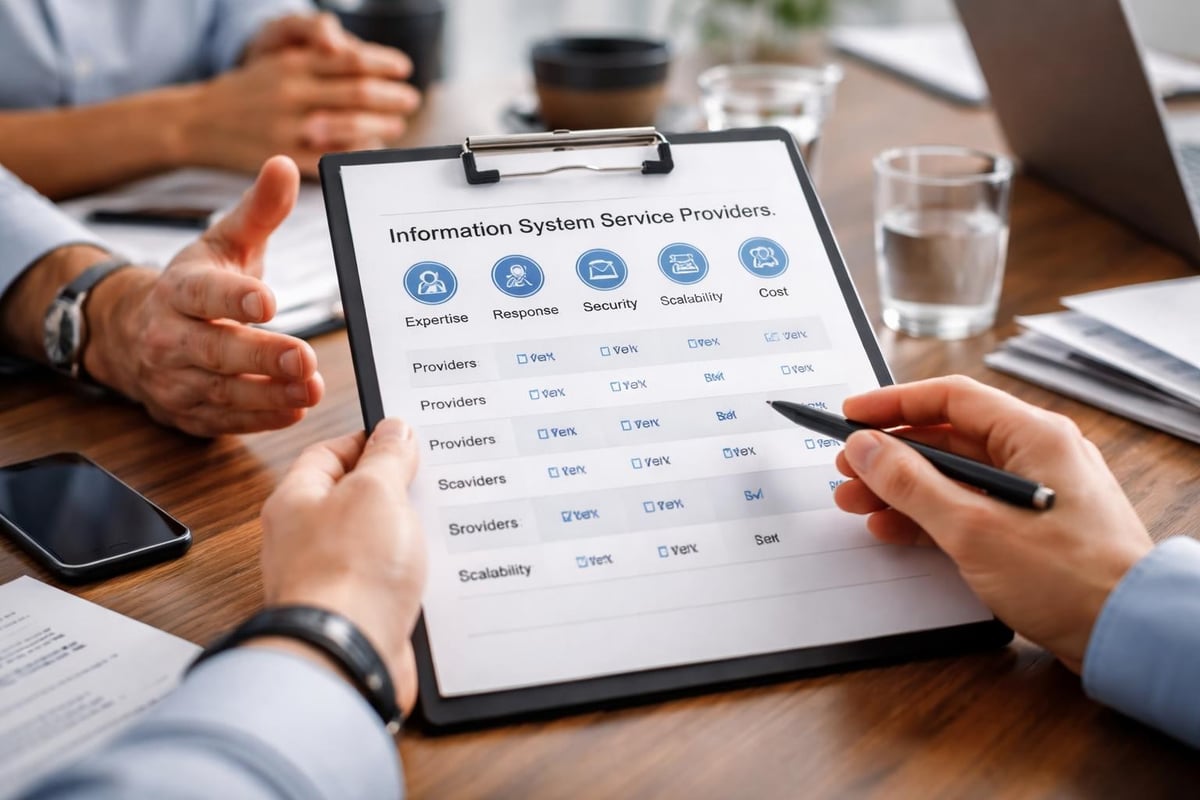
Evaluation Criteria for Service Providers
Technical Expertise and Certifications
Effective information system services require current knowledge of technologies, platforms, and best practices. Providers should demonstrate certifications from major technology vendors, ongoing training programs, and experience with systems relevant to your business operations. Understanding authoritative sources for information management helps evaluate provider knowledge depth.
Response Times and Service Level Agreements
Service level agreements (SLAs) define expectations for response times, resolution timeframes, and availability guarantees. Information system services should include clearly documented SLAs that specify:
- Initial response time for critical issues
- Target resolution times for different priority levels
- Uptime guarantees for monitored systems
- Communication protocols during outages
- Escalation procedures for unresolved problems
Scalability and Growth Support
As businesses expand, information system services must scale accordingly. Providers should offer flexible service tiers, additional capacity options, and growth planning consultations that align technology infrastructure with business expansion.
Implementation Best Practices
Transitioning to professional information system services requires planning and coordination to minimize disruption. Successful implementations follow structured approaches:
- Current State Assessment: Document existing infrastructure, applications, and pain points
- Requirements Definition: Identify must-have services, nice-to-have features, and budget parameters
- Provider Selection: Evaluate multiple providers against defined criteria
- Transition Planning: Develop phased implementation schedules with clear milestones
- Knowledge Transfer: Ensure internal staff understand new processes and support channels
- Ongoing Optimization: Regular reviews of service delivery and performance metrics
Businesses should maintain documentation throughout implementation, creating reference materials for future staff and ensuring continuity during personnel changes.
Measuring Information System Services Value
Quantifying the return on investment for information system services helps justify expenses and identify optimization opportunities. Small businesses should track both quantitative metrics and qualitative improvements resulting from professional IT management.
Quantifiable Performance Metrics
System Uptime and Availability
Network and application availability directly impact productivity. Information system services typically improve uptime from industry averages of 95-97% to 99.5% or higher, representing hundreds of hours of additional productive time annually for small teams.
Incident Response and Resolution
Tracking mean time to resolution (MTTR) demonstrates how quickly information system services address problems. Professional providers typically resolve issues 60-70% faster than internal teams managing IT alongside other responsibilities.
Security Incident Reduction
Effective information system services dramatically reduce successful security breaches, malware infections, and data loss events. Businesses should monitor security incidents monthly, expecting significant reductions after implementing comprehensive protection measures.
Qualitative Business Improvements
Beyond measurable metrics, information system services deliver qualitative benefits that enhance overall business operations:
- Employee Satisfaction: Reduced technology frustration improves morale and retention
- Customer Experience: Reliable systems enable consistent service delivery
- Competitive Positioning: Modern technology capabilities attract clients who value professionalism
- Risk Mitigation: Reduced exposure to data breaches and regulatory penalties
- Strategic Agility: Faster deployment of new capabilities supports business innovation
For businesses seeking additional insights on maximizing IT infrastructure value, the Delphi Systems Inc. blog offers practical guidance tailored to small business environments.
Information System Services and Business Continuity
Business continuity planning integrates closely with information system services, ensuring organizations maintain operations during disruptions. Comprehensive continuity strategies address technology dependencies, recovery procedures, and communication protocols that activate during crisis situations.
Disaster Recovery Planning
Disaster recovery focuses specifically on restoring information system services after catastrophic events. Effective plans document:
- Critical system inventories and dependencies
- Backup locations and access procedures
- Recovery sequence priorities
- Alternate work arrangements for staff
- Vendor contact information and support agreements
- Testing schedules to validate recovery capabilities
Information system services providers conduct regular disaster recovery tests, simulating various failure scenarios to identify weaknesses before actual emergencies occur. These tests reveal gaps in documentation, expose outdated contact information, and provide training opportunities for staff who would execute recovery procedures.
Remote Work and Distributed Operations
Remote work arrangements have become permanent fixtures for many small businesses, requiring information system services that support distributed teams effectively. This includes:
- Secure remote access through VPN or zero-trust architectures
- Cloud-based collaboration tools accessible from any location
- Endpoint management for devices outside traditional office networks
- Communication platforms supporting video, voice, and messaging
- Monitoring tools that track system performance regardless of user location
Organizations exploring various information sources and services discover that remote operations demand different approaches to security, support, and infrastructure management than traditional office-based work.
Future Trends in Information System Services
The information system services landscape continues evolving as new technologies emerge and business requirements shift. Small businesses should understand upcoming trends to make informed long-term technology decisions.
Artificial Intelligence and Automation
AI-powered tools increasingly augment information system services through:
- Predictive analytics that anticipate system failures before they occur
- Automated threat detection and response for cybersecurity
- Intelligent ticketing systems that route support requests efficiently
- Chatbots providing first-level support for common issues
- Capacity planning algorithms that optimize resource allocation
These capabilities don't replace human expertise but extend information system services capabilities, enabling faster responses and more proactive management.
Edge Computing and IoT Integration
Internet of Things devices and edge computing architectures create new opportunities and challenges for information system services. Businesses deploying smart sensors, connected equipment, or distributed processing nodes require specialized expertise in:
- Network segmentation for IoT device isolation
- Edge device management and updates
- Data aggregation from distributed sources
- Latency-sensitive application support
- Security protocols for resource-constrained devices
Information system services must adapt to support these distributed architectures while maintaining security and performance standards.
Zero Trust Security Models
Traditional perimeter-based security assumes internal network traffic is trustworthy, a model increasingly inadequate for modern threats and remote work. Zero trust architectures verify every access request regardless of source, requiring information system services that implement:
- Multi-factor authentication for all system access
- Granular access controls based on user roles and context
- Continuous verification of device health and compliance
- Microsegmentation limiting lateral movement within networks
- Comprehensive logging and monitoring of all access attempts
These approaches significantly improve security postures but require expertise to implement without creating productivity barriers.
Integrating Information System Services With Business Strategy
Maximum value from information system services emerges when technology decisions align with broader business objectives. Small business owners should view IT infrastructure as strategic enablers rather than operational necessities, involving technology planning in business development discussions.
Technology Roadmap Development
Strategic information system services include developing multi-year technology roadmaps that anticipate business growth, market changes, and competitive pressures. These roadmaps identify:
- Timing for infrastructure upgrades supporting expansion
- Application investments enabling new service offerings
- Security enhancements meeting evolving compliance requirements
- Training needs preparing staff for technology changes
- Budget projections for planned improvements
Regular roadmap reviews ensure technology investments remain aligned with actual business trajectory, adjusting plans as conditions change.
Vendor and Platform Selection
Information system services guide decisions about software platforms, hardware vendors, and service providers that affect business operations for years. Professional advisors help evaluate options against criteria including:
| Evaluation Factor | Considerations | Long-term Impact |
|---|---|---|
| Total Cost of Ownership | Licensing, maintenance, training, integration | Budget sustainability |
| Scalability | User limits, storage capacity, performance | Growth accommodation |
| Integration Capability | APIs, data formats, compatibility | Operational efficiency |
| Vendor Stability | Market position, financial health, roadmap | Investment protection |
| Support Quality | Response times, knowledge base, community | Ongoing effectiveness |
These decisions create technology foundations that either support or constrain business development for extended periods, making expert guidance particularly valuable.
Effective information system services transform technology from a cost center into a strategic advantage, enabling small businesses to compete with larger organizations through reliable, secure, and efficient IT infrastructure. By partnering with experienced providers who understand the unique challenges facing growing companies, businesses in Lethbridge and surrounding areas can focus on core competencies while maintaining robust technology capabilities. Delphi Systems Inc. delivers comprehensive managed IT services with fixed-rate pricing, helping small businesses achieve operational excellence through proactive network management, cybersecurity protection, and responsive support tailored to their specific needs.

