

Small businesses face unprecedented challenges in protecting their digital assets. With cyber threats evolving rapidly and regulations tightening across industries, understanding how to secure sensitive information has become essential for survival. Data breaches cost organizations an average of $4.45 million in 2026, making prevention not just a technical requirement but a business imperative. For companies in Lethbridge and surrounding areas, implementing robust security measures means protecting customer trust, maintaining operational continuity, and ensuring compliance with privacy regulations.
Understanding the Data Security Landscape
The modern threat environment extends far beyond traditional perimeter defenses. Cloud computing, remote work, and interconnected systems have expanded the attack surface significantly. Small businesses often believe they're not targets, yet 43% of cyberattacks specifically target smaller organizations that typically have fewer security resources.
Data security encompasses all measures, policies, and procedures designed to protect digital information from unauthorized access, corruption, or theft throughout its lifecycle. This includes everything from customer records and financial data to proprietary business information and employee credentials.
The Real Cost of Security Failures
When businesses experience data breaches, the financial impact extends beyond immediate remediation costs:
- Regulatory fines from privacy law violations
- Legal expenses associated with customer lawsuits
- Reputation damage that drives customers to competitors
- Operational downtime during recovery and investigation
- Lost revenue from disrupted business processes
Recovery time averages 287 days from initial breach to full containment. During this period, businesses struggle with decreased productivity, customer attrition, and intensive resource allocation to address the incident.
Essential Components of Data Protection
Building effective protection requires a multi-layered approach. No single technology or practice provides complete security. Instead, organizations must implement overlapping controls that create defense in depth.
Encryption as Your First Line of Defense
Encryption transforms readable data into coded format that remains secure even if intercepted or accessed by unauthorized parties. Implementing strong encryption practices protects information both at rest and in transit.
Data at rest includes information stored on servers, databases, laptops, mobile devices, and backup media. Full-disk encryption ensures that even if physical hardware is stolen, the data remains inaccessible without proper authentication credentials.
Data in transit moves between locations through networks and the internet. Secure protocols like TLS 1.3 and VPNs protect information during transmission, preventing interception by malicious actors monitoring network traffic.

| Encryption Type | Use Case | Protection Level | Implementation Complexity |
|---|---|---|---|
| AES-256 | Database encryption | Very High | Moderate |
| TLS 1.3 | Network transmission | High | Low |
| End-to-end | Messaging systems | Very High | Moderate |
| Full-disk | Device protection | High | Low |
Access Control and Authentication
Limiting who can access specific data represents one of the most effective security measures. The principle of least privilege ensures users receive only the minimum access necessary to perform their job functions.
Multi-factor authentication (MFA) adds critical layers beyond passwords. Even if credentials are compromised through phishing or data breaches, MFA prevents unauthorized access by requiring additional verification factors like biometrics, hardware tokens, or time-based codes.
Role-based access control (RBAC) structures permissions around job responsibilities rather than individuals. When employees change roles or leave the organization, administrators can quickly adjust or revoke access without manually reviewing every system and file.
Implementing Proactive Security Measures
Reactive security approaches fail in today's environment. Organizations must anticipate threats and establish preventive controls before incidents occur.
Continuous Monitoring and Threat Detection
Network monitoring systems analyze traffic patterns, user behaviors, and system activities to identify anomalies indicating potential security incidents. Modern solutions use machine learning to establish baselines and detect deviations that humans might miss.
Security Information and Event Management (SIEM) platforms aggregate logs from across the IT infrastructure, correlating events to identify sophisticated attack patterns. This visibility enables rapid response before minor security events escalate into major breaches.
Regular vulnerability scanning identifies weaknesses in systems, applications, and configurations. Following proven data breach prevention tactics helps organizations address vulnerabilities before attackers exploit them.
Data Backup and Recovery Strategies
Backups serve dual purposes: protecting against both malicious attacks and accidental loss. Ransomware attacks specifically target backup systems, making proper isolation essential for recovery capabilities.
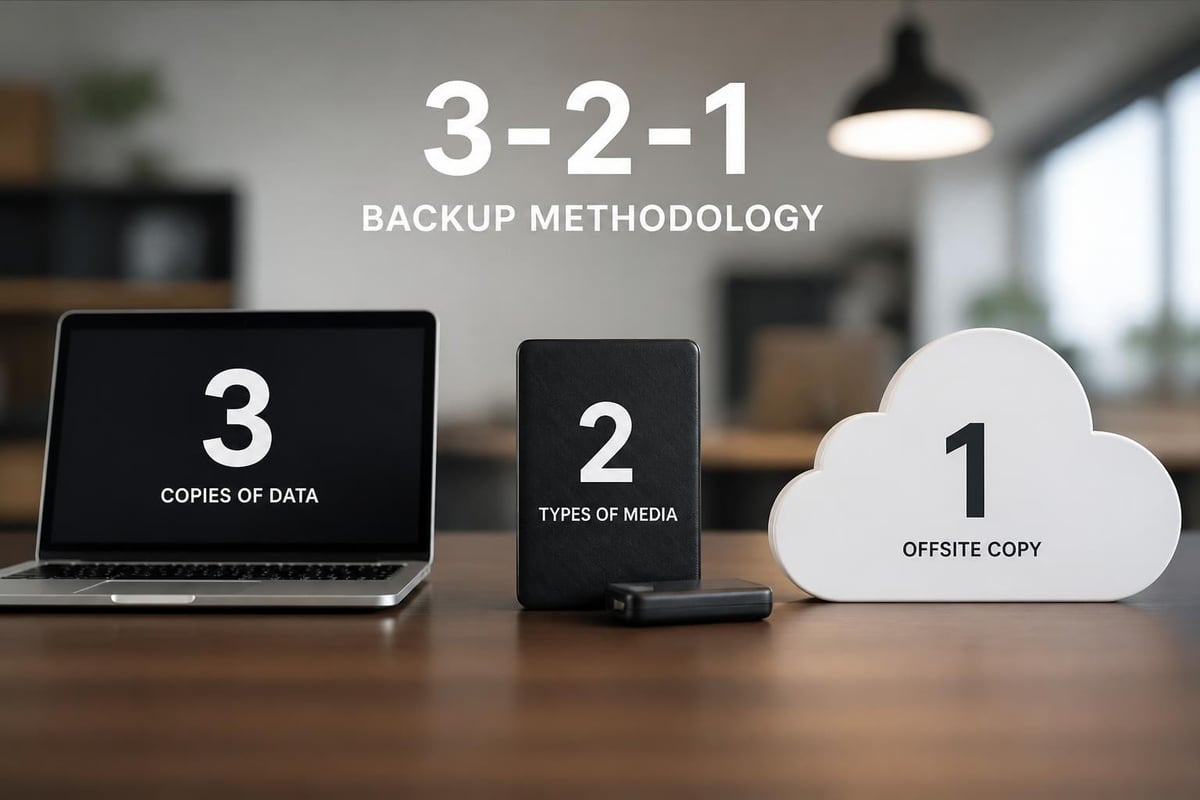
The 3-2-1 backup rule provides reliable protection:
- Maintain three copies of critical data
- Store backups on two different media types
- Keep one copy offsite or in cloud storage
Immutable backups cannot be modified or deleted once created, protecting against ransomware that attempts to encrypt or destroy recovery options. Regular testing ensures backups actually work when needed, not just in theory.
Building a Security-Aware Culture
Technology alone cannot protect organizations. Human factors account for 82% of security breaches in 2026, making employee education critical for comprehensive protection.
Security Awareness Training
Regular training programs teach employees to recognize and respond appropriately to security threats. Topics should include:
- Phishing identification and reporting procedures
- Password hygiene and credential management
- Social engineering tactics used by attackers
- Physical security for devices and documents
- Incident reporting processes and timelines
Training must be ongoing rather than annual checkbox exercises. Monthly micro-learning sessions, simulated phishing tests, and real-world examples keep security awareness top-of-mind throughout the organization.
Establishing Clear Security Policies
Written policies document expectations, procedures, and consequences related to data handling. Comprehensive data security best practices should address acceptable use, password requirements, device management, and incident response protocols.
Policies remain effective only when enforced consistently. Regular audits verify compliance, while clear consequences for violations demonstrate organizational commitment to security standards.
Cloud Security Considerations
Cloud computing offers tremendous benefits for small businesses, including scalability, cost efficiency, and accessibility. However, shared responsibility models mean organizations cannot fully delegate security to cloud providers.
Understanding Shared Responsibility
Cloud providers secure the infrastructure, while customers remain responsible for protecting their data, managing access controls, and configuring services properly. Misconfigurations represent leading causes of cloud data breaches, often resulting from default settings that prioritize convenience over security.
Identity and access management (IAM) in cloud environments requires careful attention. Service accounts, API keys, and administrative privileges demand the same rigorous controls as on-premises systems. Regular reviews identify and remove unused permissions that expand the attack surface unnecessarily.
Securing Cloud Workloads
Container security, serverless function protection, and cloud-native application safeguards require specialized approaches beyond traditional security tools. Cloud Security Posture Management (CSPM) solutions continuously assess configurations against security benchmarks and compliance requirements.
Data classification drives appropriate protection levels in cloud environments. Not all information requires maximum security controls, but organizations must identify and prioritize their most sensitive data for enhanced protection measures.
| Cloud Security Control | Purpose | Business Impact |
|---|---|---|
| IAM policies | Limit access to resources | Prevents unauthorized data access |
| Encryption keys | Protect sensitive information | Maintains data confidentiality |
| Network segmentation | Isolate workloads | Limits breach impact |
| Logging and monitoring | Detect security events | Enables rapid incident response |
| Configuration management | Prevent misconfigurations | Reduces vulnerability exposure |
Regulatory Compliance and Data Governance
Privacy regulations continue expanding globally, with stricter enforcement and higher penalties for violations. Canadian businesses must comply with PIPEDA (Personal Information Protection and Electronic Documents Act), while organizations serving international customers face additional requirements like GDPR.
Understanding comprehensive data security and governance helps organizations meet regulatory obligations while protecting customer information. Compliance frameworks provide structured approaches to implementing necessary controls and documenting security measures.
Data Inventory and Classification
Organizations cannot protect data they don't know they have. Comprehensive data inventories catalog information across all systems, identifying:
- Location of sensitive data
- Type of information stored
- Access requirements and authorized users
- Retention periods and disposal procedures
- Regulatory requirements applicable to each dataset
Classification schemes assign protection levels based on sensitivity. Public information requires minimal controls, while personally identifiable information (PII), financial records, and health data demand enhanced security measures.

Vendor Risk Management
Third-party vendors and service providers often access business data, extending security boundaries beyond direct control. Vendor risk assessments evaluate security practices, compliance certifications, and incident response capabilities before granting access to sensitive information.
Service level agreements (SLAs) should specify security requirements, including encryption standards, access controls, audit rights, and breach notification timelines. Regular reviews ensure vendors maintain agreed-upon security standards throughout the relationship.
Mobile Device Security
Mobile devices create unique challenges for data security. Smartphones and tablets access corporate systems from various locations, connect to unsecured networks, and face higher theft risks than desktop computers.
Mobile Device Management Solutions
MDM platforms enforce security policies on smartphones and tablets accessing business data. Key capabilities include:
- Remote wipe functionality for lost or stolen devices
- Application management controlling approved software
- Encryption enforcement protecting stored data
- Network access control limiting connection options
- Compliance monitoring verifying security configurations
Bring Your Own Device (BYOD) policies require careful balance between security requirements and employee privacy. Containerization technologies separate business and personal data on the same device, allowing security controls without intruding on personal information.
Secure Remote Access
VPN technology creates encrypted tunnels protecting data transmission between remote devices and corporate networks. Zero Trust Network Access (ZTNA) provides more granular control, verifying every access request regardless of source location.
Multi-factor authentication becomes even more critical for remote access scenarios where traditional network perimeter controls don't apply. Conditional access policies can require additional verification when unusual patterns emerge, such as login attempts from new locations or devices.
Incident Response Planning
Despite best efforts, security incidents will occur. Prepared organizations minimize damage through rapid, coordinated responses following documented procedures.
Developing Response Procedures
Incident response plans outline specific steps for different scenario types. Effective plans address:
- Detection and analysis of potential security events
- Containment strategies limiting breach impact
- Eradication procedures removing threats from systems
- Recovery processes restoring normal operations
- Post-incident review identifying improvement opportunities
Response teams should include representatives from IT, management, legal, communications, and human resources. Clear role definitions prevent confusion during high-stress incident situations.
Communication Protocols
Breach notification requirements vary by jurisdiction and data type. Plans must address internal communication processes, customer notifications, regulatory reporting, and media relations. Templates prepared in advance enable faster, more accurate communications when incidents occur.
Delphi Systems Inc. works with businesses throughout Lethbridge to develop customized incident response plans that address specific operational requirements and regulatory obligations.
Emerging Security Challenges
The threat landscape continues evolving as attackers develop new techniques and technologies create fresh vulnerabilities. Staying ahead requires ongoing education and adaptive security strategies.
Artificial Intelligence and Security
AI-powered attacks use machine learning to automate reconnaissance, craft convincing phishing messages, and identify vulnerable systems at scale. Defensive AI helps organizations detect sophisticated threats, but also requires careful implementation to avoid introducing new risks through model manipulation or data poisoning.
Internet of Things Vulnerabilities
Connected devices proliferate across business environments, from smart thermostats to industrial sensors. Many IoT devices lack basic security features, creating entry points for network intrusion. Network segmentation isolates IoT devices from critical systems, limiting potential breach impact.
Supply Chain Attacks
Attackers increasingly target software supply chains, compromising updates and trusted applications to gain access to multiple organizations simultaneously. Vendor security assessments, code signing verification, and software composition analysis help identify compromised components before deployment.
Measuring Security Effectiveness
Security metrics provide visibility into program effectiveness and areas requiring improvement. Key performance indicators should align with business objectives rather than purely technical measures.
Mean Time to Detect (MTTD) measures how quickly organizations identify security incidents. Faster detection enables earlier response, limiting breach scope and impact.
Mean Time to Respond (MTTR) tracks incident response efficiency. Reducing response time decreases attacker dwell time and minimizes data exposure.
Vulnerability remediation rates indicate how effectively organizations address identified weaknesses. Tracking patching timelines and configuration fixes demonstrates commitment to proactive security.
Regular security assessments, including penetration testing and vulnerability scans, validate control effectiveness. Third-party audits provide objective evaluation of security postures and compliance with industry standards.
Protecting business data requires comprehensive strategies combining technology, processes, and people-focused initiatives. Small businesses in Lethbridge don't need enterprise-scale budgets to implement effective security measures when they take systematic approaches addressing their specific risks. Delphi Systems Inc. helps organizations throughout the region develop and maintain robust data security programs through managed IT services that include cybersecurity, network monitoring, and backup solutions. Our fixed-rate fee structure makes enterprise-grade security accessible for small businesses, allowing you to focus on growth while we ensure your IT infrastructure remains secure and compliant.

