


Small businesses face an unprecedented wave of cyber threats in 2026, yet most lack the resources to build comprehensive in-house security teams. Ransomware attacks, phishing campaigns, and data breaches continue to target organizations of all sizes, with attackers specifically focusing on companies they perceive as having weaker defenses. This reality has driven thousands of businesses to adopt cyber security managed services, a model that provides enterprise-grade protection without the overhead of hiring full-time security specialists. For companies in Lethbridge and across Canada, understanding how these services work and what benefits they deliver has become essential to maintaining business continuity and protecting valuable data assets.
What Cyber Security Managed Services Include
Cyber security managed services encompass a comprehensive suite of security functions delivered by external providers who specialize in protecting business networks and data. Unlike traditional IT support that responds to issues after they occur, these services operate proactively to identify and neutralize threats before they can cause damage.
Core Protection Mechanisms
The foundation of any effective security program includes several critical layers working together to defend against different attack vectors.
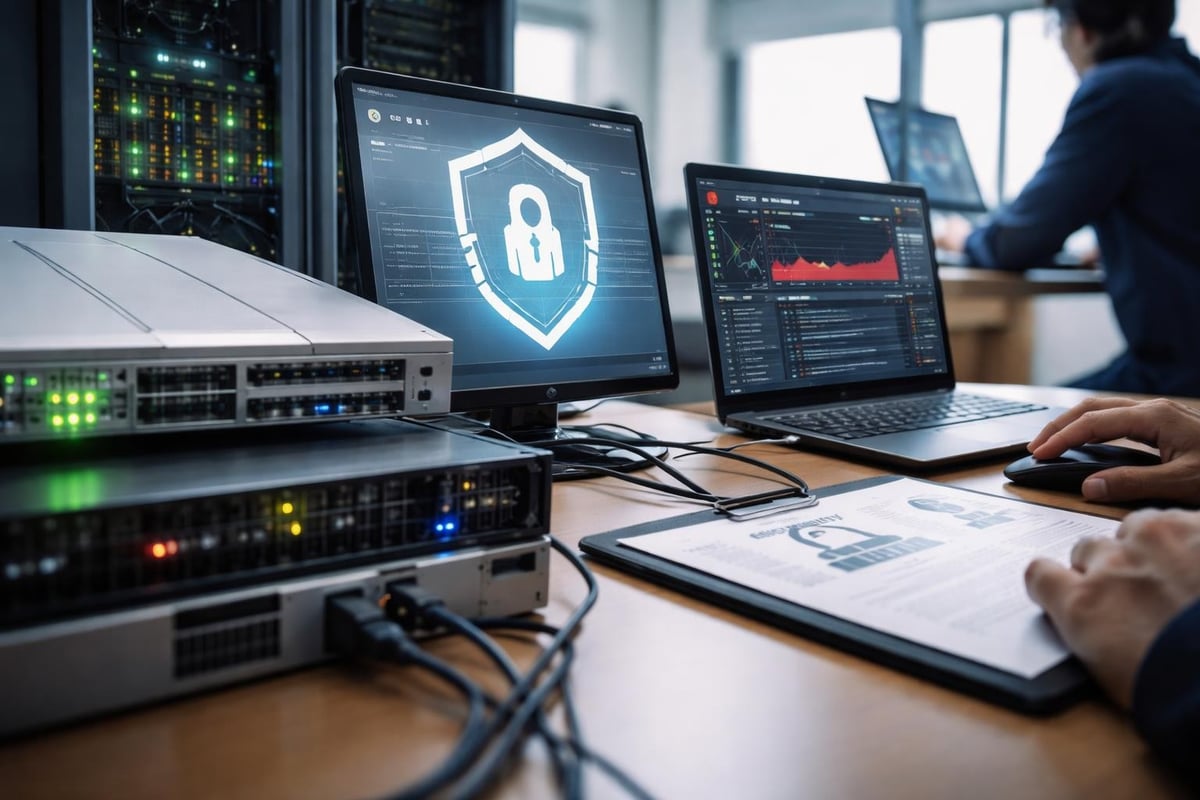
Continuous network monitoring forms the backbone of cyber security managed services, with security operations centers tracking traffic patterns 24/7/365 to detect anomalies that might indicate intrusion attempts. This around-the-clock vigilance catches threats during nights, weekends, and holidays when internal staff might not be available.
Threat detection and response capabilities leverage advanced analytics and threat intelligence feeds to identify suspicious behavior quickly. When a potential breach is detected, response teams can isolate affected systems, contain the threat, and begin remediation procedures within minutes rather than hours or days.
- Endpoint protection across all devices
- Email security and anti-phishing measures
- Firewall management and configuration
- Intrusion detection and prevention systems
- Security information and event management (SIEM)
- Vulnerability assessments and penetration testing
Compliance and Policy Management
Many businesses must comply with industry regulations regarding data protection, privacy, and security standards. Cyber security managed services help organizations meet these requirements through policy development, implementation oversight, and regular compliance audits.
Service providers maintain expertise in various regulatory frameworks including PIPEDA, GDPR for companies with European customers, and industry-specific standards like PCI DSS for businesses processing credit card transactions. They translate complex regulatory language into practical security controls and documentation that satisfies auditors and demonstrates due diligence.
Why Small Businesses Choose Managed Security
The decision to outsource security functions stems from several practical and financial considerations that make cyber security managed services attractive to growing companies.
Cost Efficiency and Predictable Budgeting
Building an internal security team requires substantial investment beyond just salaries. Organizations need to purchase specialized tools, maintain certifications, provide ongoing training, and retain staff in a highly competitive talent market where security professionals command premium compensation.
| Approach | Annual Cost Range | Staff Required | Tool Costs | Training Budget |
|---|---|---|---|---|
| In-House Team | $180,000-$350,000 | 2-3 FTEs | $25,000-$60,000 | $8,000-$15,000 |
| Managed Services | $36,000-$96,000 | 0 FTEs | Included | Included |
| Hybrid Model | $90,000-$200,000 | 1 FTE | $12,000-$30,000 | $4,000-$8,000 |
Fixed-rate fee structures transform unpredictable security costs into consistent monthly expenses that simplify budgeting and improve cash flow management. This pricing model typically includes all necessary tools, monitoring, and labor without surprise charges when security incidents occur.
Access to Specialized Expertise
The cybersecurity field evolves rapidly, with new attack techniques emerging weekly and defensive technologies advancing just as quickly. Understanding the role of Managed Security Service Providers (MSSPs) helps businesses appreciate the depth of knowledge these teams bring to client engagements.
Security specialists at managed service providers work across dozens or hundreds of client environments, giving them exposure to diverse threat scenarios that internal teams rarely encounter. This breadth of experience enables faster problem recognition and more effective response strategies when incidents occur.
The Canadian Centre for Cyber Security provides important cybersecurity considerations for consumers of managed services that businesses should review when selecting providers. These guidelines emphasize the importance of understanding provider security practices, data handling procedures, and incident response capabilities before signing contracts.
Key Selection Criteria for Security Providers
Choosing the right partner for cyber security managed services requires careful evaluation of capabilities, experience, and cultural fit with your organization's needs and values.
Technical Capabilities and Service Scope
Not all security providers offer identical services or maintain the same level of technical sophistication. Businesses should assess whether prospective partners can deliver the specific protections their environment requires.
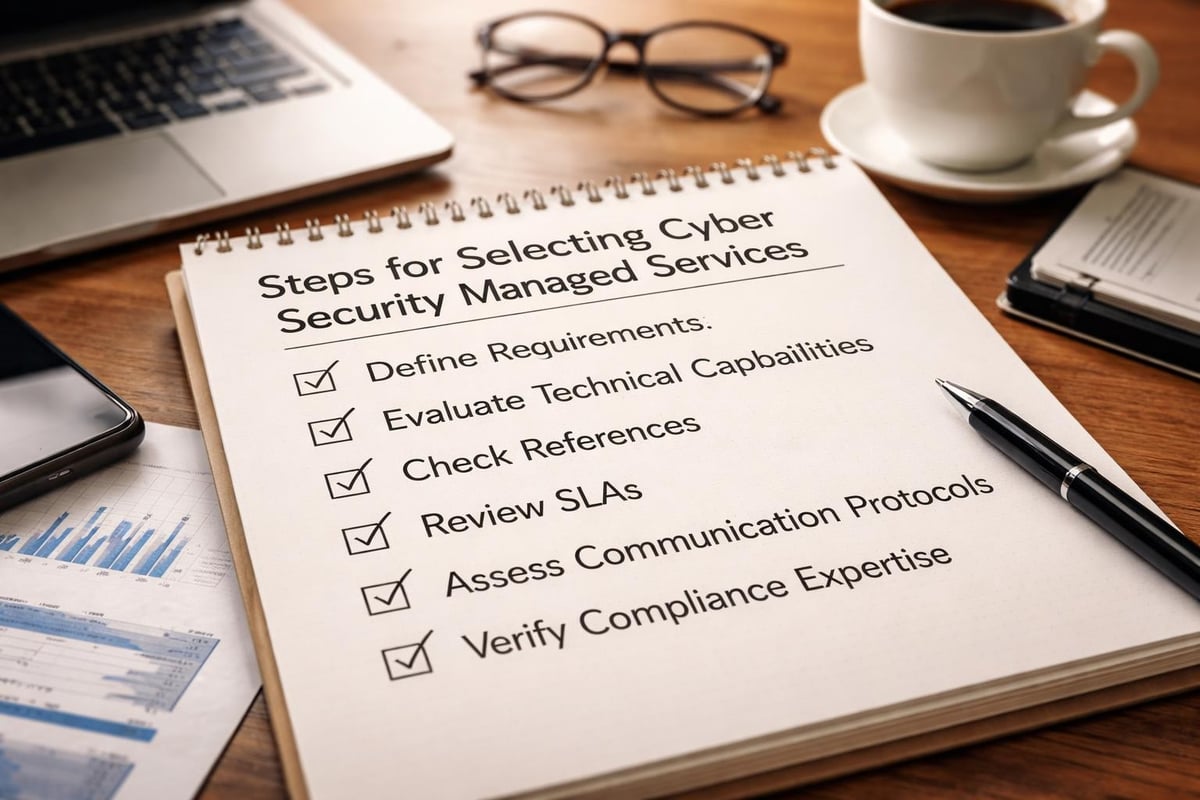
Evaluate the provider's technology stack to ensure they use current, proven security tools rather than outdated or inadequate solutions. Ask about their threat intelligence sources, how frequently they update detection rules, and what automation they employ to reduce response times.
Response time commitments matter significantly during active security incidents. Review service level agreements carefully to understand guaranteed response windows for different severity levels and what penalties apply if providers fail to meet these commitments.
- Request references from similar-sized businesses in your industry
- Ask about staff certifications and average experience levels
- Inquire about their own security practices and audit results
- Understand escalation procedures and communication protocols
- Verify backup and redundancy in their monitoring infrastructure
Industry Experience and Local Presence
Providers serving businesses in specific regions understand local compliance requirements, common regional threats, and can offer on-site support when remote assistance proves insufficient. For companies operating in Lethbridge and Southern Alberta, working with a provider that maintains local presence offers advantages during complex incidents requiring physical access to infrastructure.
The increasing pressure on MSPs to deliver comprehensive cybersecurity services reflects growing demand across all business sectors, but particularly among small and medium enterprises that previously attempted to manage security internally.
Implementation and Integration Process
Transitioning security operations to an external provider requires careful planning and execution to avoid creating gaps in protection during the migration period.
Initial Assessment and Onboarding
Reputable providers begin engagements with comprehensive security assessments that identify existing vulnerabilities, evaluate current controls, and establish baseline security postures. This discovery phase typically takes two to four weeks depending on network complexity and the number of systems requiring evaluation.
Network documentation becomes essential during onboarding, as providers need accurate topology maps, device inventories, and access credentials to deploy monitoring tools and configure security controls effectively. Organizations with poor documentation should expect longer implementation timelines while providers catalog and verify network components.
User education during the transition helps employees understand new security procedures, reporting requirements, and how to access support when security questions arise. Effective providers offer training sessions and clear documentation rather than simply implementing technical controls and expecting staff to adapt independently.
Ongoing Management and Communication
After initial deployment, cyber security managed services settle into regular operational rhythms with scheduled reviews, continuous monitoring, and periodic improvements based on evolving threat landscapes.
| Communication Type | Frequency | Purpose | Participants |
|---|---|---|---|
| Security Alerts | As needed | Immediate threat notification | IT contacts, executives |
| Weekly Reports | Weekly | Activity summary, minor incidents | IT manager |
| Monthly Reviews | Monthly | Trend analysis, recommendations | IT leadership |
| Quarterly Strategy | Quarterly | Security posture, planning | Executive team, provider leadership |
Regular reporting provides visibility into security activities, threat trends affecting your industry, and recommendations for improving defensive postures. These reports should balance technical detail with business-focused summaries that help executives understand security investments and risk levels.
Addressing Common Concerns and Misconceptions
Business leaders evaluating cyber security managed services often express similar concerns about control, data privacy, and service quality that deserve thoughtful consideration.
Data Privacy and Confidentiality
Allowing external parties to monitor network traffic and access systems raises legitimate questions about data handling and confidentiality. Professional providers implement strict policies governing data access, retention, and use to protect client information.
Encryption in transit and at rest ensures that monitoring data transmitted to security operations centers remains protected from interception. Providers should clearly explain what data they collect, where it's stored, how long they retain it, and who can access it under what circumstances.
Background checks and security clearances for staff members working on client accounts provide additional assurance that personnel handling sensitive information meet appropriate trustworthiness standards. Ask providers about their hiring practices, employee monitoring, and access control policies.
The Canadian Centre for Cyber Security has issued guidance on malicious cyber activity targeting IT managed service providers, highlighting the importance of verifying that providers themselves maintain robust security practices.
Maintaining Control and Visibility
Some business owners worry that outsourcing security means surrendering control over critical decisions affecting their operations. Well-structured service relationships actually enhance visibility through professional reporting and clear escalation procedures.
Collaborative decision-making characterizes the best provider-client relationships, with major changes requiring approval rather than being implemented unilaterally. Security professionals make recommendations based on threat intelligence and best practices, but business leaders retain final authority over significant modifications to systems or policies.
Transparency in operations should be standard, with clients able to review logs, examine detection rules, and understand the reasoning behind security decisions. Providers who resist sharing this information or claim proprietary secrecy around basic security practices deserve skepticism.

Integration with Broader IT Strategy
Cyber security managed services deliver maximum value when integrated thoughtfully with overall IT operations rather than functioning as isolated security islands.
Coordination with Existing IT Support
Businesses already working with IT support providers need clear delineation of responsibilities between security specialists and general IT technicians to avoid confusion during incidents or maintenance activities.
Complementary rather than competitive relationships work best, with security providers focusing on threat detection, vulnerability management, and security tool administration while IT support handles user issues, application management, and infrastructure maintenance. Regular coordination meetings between teams prevent gaps and duplication of effort.
Unified communication channels streamline incident response by ensuring everyone knows how to escalate security concerns and who owns different aspects of remediation. Documentation specifying handoff points and decision authority prevents delays during time-sensitive situations.
Supporting Business Growth and Change
As companies expand into new markets, adopt additional technologies, or modify business models, security requirements evolve accordingly. Flexible cyber security managed services adapt to these changes through scalable architectures and consultative approaches.
Cloud migration support has become increasingly important as businesses move applications and data from on-premises infrastructure to cloud platforms. Security providers should offer expertise in cloud security configurations, identity and access management, and compliance requirements specific to different cloud environments.
Mergers and acquisitions create unique security challenges as organizations integrate disparate IT environments with potentially different security postures. Experienced providers can assess acquisition targets, identify security risks, and develop integration roadmaps that maintain protection throughout transition periods.
Measuring Security Service Effectiveness
Quantifying the value delivered by cyber security managed services helps justify continued investment and identify areas requiring adjustment or enhancement.
Key Performance Indicators
Effective measurement combines technical metrics that demonstrate operational performance with business-focused indicators showing risk reduction and compliance achievement.
- Mean time to detect (MTTD) threats and anomalies
- Mean time to respond (MTTR) to confirmed incidents
- Number of vulnerabilities identified and remediated
- Percentage of critical patches deployed within target windows
- Phishing simulation click rates and improvement trends
- Compliance audit findings and resolution rates
Benchmark these metrics against industry averages and your own historical performance to track improvement over time. Significant deviations from expected ranges warrant investigation to understand root causes and implement corrective actions.
Return on Investment Calculations
While preventing attacks delivers obvious value, calculating specific returns from cyber security managed services requires considering both costs avoided and efficiencies gained.
Breach cost avoidance represents the most significant potential ROI component, as successful attacks typically cost small businesses between $100,000 and $500,000 when accounting for remediation, downtime, legal fees, and reputation damage. Even preventing a single moderate incident justifies years of security service fees.
Productivity improvements result from reducing security-related disruptions, eliminating time staff spend on security tasks, and enabling focus on core business activities rather than security concerns. These gains, while harder to quantify precisely, contribute substantially to overall business performance.
| Benefit Category | Annual Value Range | Measurement Method |
|---|---|---|
| Breach Prevention | $100,000-$500,000 | Industry average costs × probability |
| Staff Productivity | $15,000-$45,000 | Hours saved × loaded labor rates |
| Compliance Efficiency | $8,000-$25,000 | Reduced audit costs + penalty avoidance |
| Insurance Savings | $2,000-$10,000 | Premium reductions from improved security |
Future Trends Shaping Managed Security
The cyber security managed services industry continues evolving rapidly, with several emerging trends likely to reshape service delivery and capabilities over the next few years.
Artificial Intelligence and Automation
Machine learning algorithms increasingly augment human analysts by processing massive volumes of security data to identify subtle patterns indicating sophisticated attacks. These systems reduce false positives, accelerate threat detection, and enable security teams to focus expertise on complex investigations rather than routine triage.
Automated response capabilities handle certain categories of threats without human intervention, executing predefined playbooks when specific conditions are detected. This automation proves especially valuable for high-volume, low-complexity threats like basic malware infections or unauthorized access attempts that follow predictable patterns.
Predictive security analytics leverage historical attack data and threat intelligence to anticipate likely attack vectors targeting specific industries or business profiles. Providers using these capabilities can strengthen defenses proactively rather than reactively responding after attacks commence.
Zero Trust Architecture Adoption
Traditional perimeter-based security models that trust everything inside the network boundary have proven inadequate against modern threats. Zero trust approaches verify every access request regardless of origin, assuming breach and requiring continuous validation.
Identity-centric security becomes foundational in zero trust models, with strong authentication, least-privilege access controls, and comprehensive logging of all user activities. Cyber security managed services increasingly incorporate identity governance and administration capabilities to support these requirements.
Microsegmentation divides networks into small zones with strictly controlled traffic flows between segments, limiting lateral movement by attackers who successfully breach initial defenses. Implementing and managing these granular controls requires expertise that managed service providers can deliver more efficiently than most internal teams.
Businesses seeking to strengthen their security posture while maintaining focus on core operations should carefully evaluate how cyber security managed services align with their specific needs, risk profiles, and growth trajectories. The right partnership delivers not just technical controls but strategic guidance that helps organizations navigate an increasingly complex threat landscape while optimizing security investments for maximum protection and business value.
Protecting your business from cyber threats while managing costs requires expertise, vigilance, and the right technology foundation working together seamlessly. Delphi Systems Inc. delivers comprehensive cyber security managed services tailored to small businesses in Lethbridge and surrounding areas, combining proactive monitoring, rapid response capabilities, and fixed-rate pricing that makes enterprise-grade protection accessible and predictable. Our team maintains your IT infrastructure at peak security and operational performance, allowing you to focus on growing your business with confidence that your digital assets remain protected against evolving threats.

