
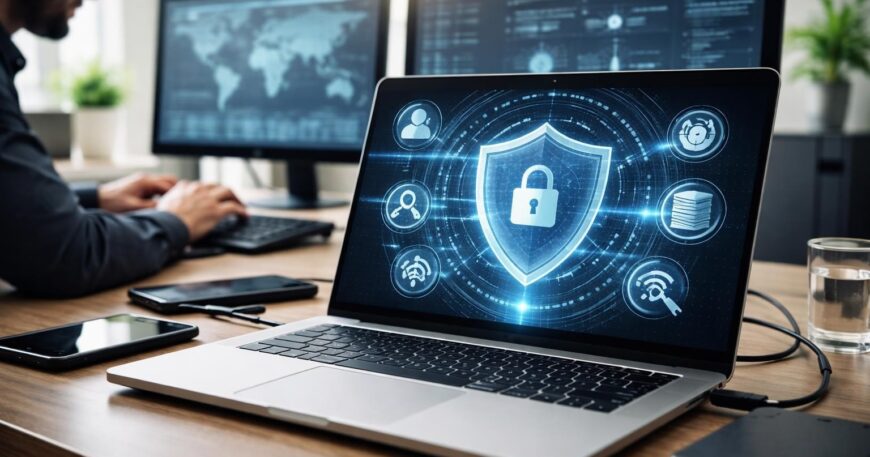
Business computer security represents one of the most critical investments a company can make in 2026. With cyber threats growing in sophistication and frequency, small businesses must prioritize protecting their digital assets, customer data, and operational continuity. The financial and reputational damage from a single security breach can be devastating, making proactive defense strategies essential for survival in today's connected marketplace.
Understanding Modern Security Threats
The threat landscape has evolved dramatically over the past few years. Cybercriminals now employ advanced techniques that specifically target small and medium-sized businesses, often viewing them as easier targets than large enterprises with extensive security teams.
Ransomware attacks continue to pose significant risks, with attackers encrypting critical business data and demanding payment for its release. These incidents can halt operations entirely, leading to lost revenue, customer trust erosion, and potential regulatory penalties. The average cost of recovery extends far beyond the ransom itself, encompassing system restoration, data recovery efforts, and business interruption losses.
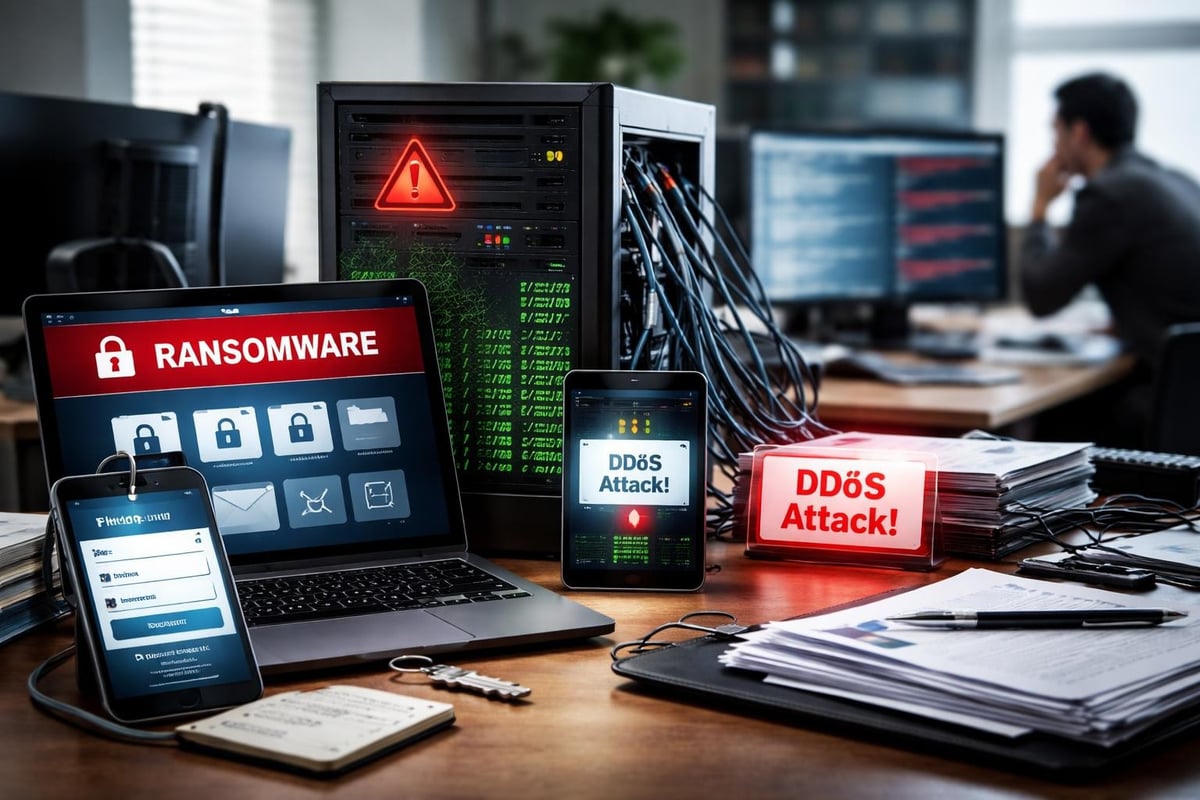
Phishing schemes have become increasingly sophisticated, with attackers crafting emails that closely mimic legitimate business communications. According to recent research on malicious URLs and phishing scams, these threats remain a constant challenge requiring vigilant detection and prevention efforts.
Emerging AI-Powered Threats
Artificial intelligence has become a double-edged sword in cybersecurity. While it offers powerful defensive capabilities, cybercriminals are leveraging AI to create more convincing phishing attempts, automate vulnerability scanning, and develop malware that adapts to security measures. Studies show that most companies admit their current security cannot stop AI cybercrime, highlighting the urgent need for upgraded defenses.
Business computer security strategies must now account for these AI-enhanced threats through equally sophisticated defensive measures.
Essential Security Infrastructure Components
Building a robust security posture requires multiple layers of protection working in concert. No single solution can address all vulnerabilities, making a comprehensive approach necessary.
| Security Layer | Primary Function | Key Benefit |
|---|---|---|
| Firewall Protection | Network traffic filtering | Blocks unauthorized access attempts |
| Antivirus/Antimalware | Threat detection and removal | Prevents malicious software execution |
| Email Security | Spam and phishing filtering | Reduces social engineering risks |
| Data Encryption | Information protection | Secures data in transit and at rest |
| Access Controls | User permission management | Limits unauthorized data exposure |
Network monitoring serves as the nervous system of business computer security, providing real-time visibility into traffic patterns, user activities, and potential anomalies. Continuous monitoring enables rapid threat detection and response before minor incidents escalate into major breaches.
Small businesses in Lethbridge and surrounding areas often benefit from managed approaches that deliver enterprise-grade monitoring without requiring in-house expertise.
Multi-Factor Authentication Implementation
Passwords alone no longer provide adequate protection. Multi-factor authentication (MFA) adds critical security layers by requiring users to verify their identity through multiple methods before accessing systems or data.
- Something you know: Password or PIN
- Something you have: Mobile device or security token
- Something you are: Biometric verification like fingerprint or facial recognition
Implementing MFA across all critical systems and applications dramatically reduces the likelihood of unauthorized access, even when passwords are compromised through phishing or data breaches.
Data Protection and Backup Strategies
Business computer security extends beyond preventing intrusions to ensuring data survivability under all circumstances. Comprehensive backup and recovery planning protects against both malicious attacks and accidental data loss from hardware failures, natural disasters, or human error.
The 3-2-1 backup rule provides a reliable framework:
- Maintain three copies of important data (one primary, two backups)
- Store backups on two different media types (such as local storage and cloud)
- Keep one backup copy offsite for disaster recovery
Regular backup testing proves equally important as the backup process itself. Many organizations discover their backups are incomplete or corrupted only when attempting recovery during an actual emergency.
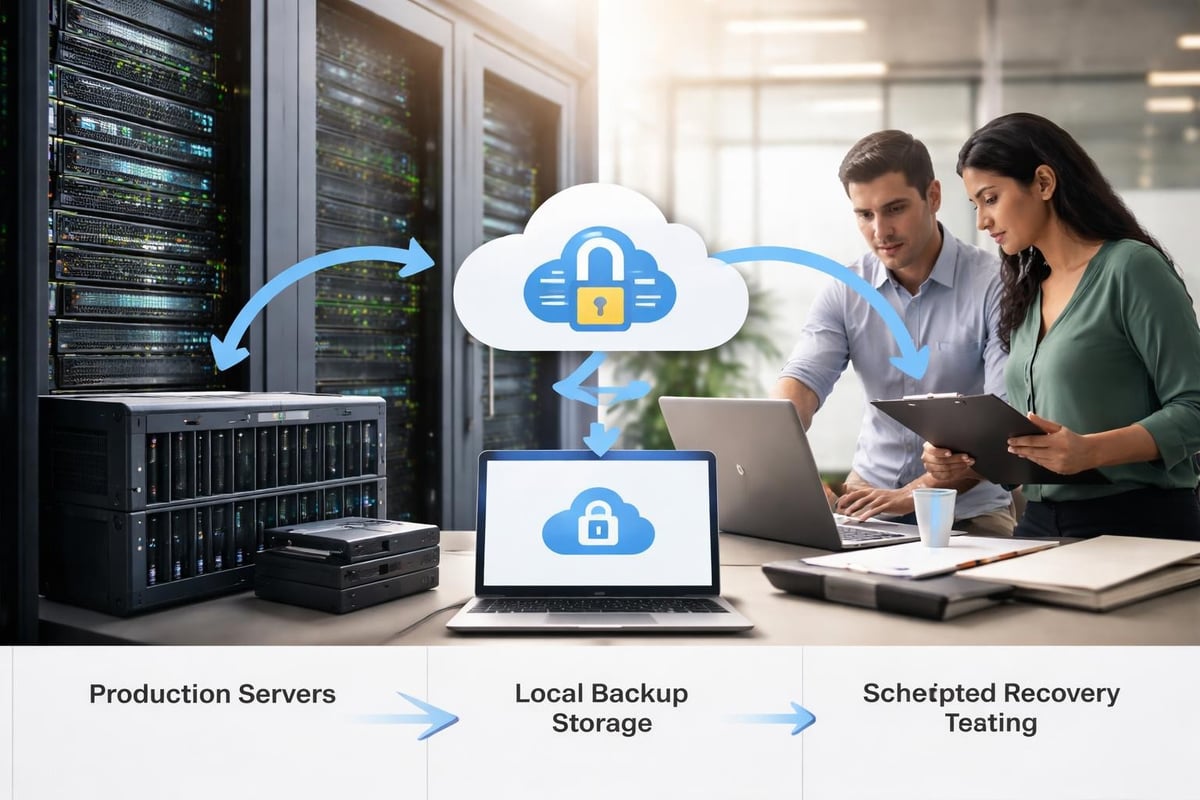
Cloud-based backup solutions offer several advantages for small businesses, including automated scheduling, scalable storage capacity, and geographic redundancy. However, proper encryption and access controls remain essential to protect sensitive information stored in cloud environments.
Recovery Time Objectives
Understanding recovery requirements helps businesses allocate appropriate resources to backup and recovery systems. Two key metrics guide planning:
Recovery Time Objective (RTO) defines the maximum acceptable downtime after an incident. For many businesses, even a few hours of system unavailability can result in significant revenue loss and customer dissatisfaction.
Recovery Point Objective (RPO) establishes the maximum acceptable data loss, measured in time. An RPO of four hours means the business can tolerate losing up to four hours of data in a worst-case scenario.
Employee Training and Security Culture
Technology alone cannot ensure business computer security. The Federal Trade Commission emphasizes in their cybersecurity guidance that human factors play a crucial role in organizational security posture. Employees often represent the weakest link in security chains, making comprehensive training programs essential.
Effective security awareness training covers:
- Recognizing phishing emails and suspicious communications
- Creating and managing strong, unique passwords
- Identifying social engineering tactics
- Reporting security incidents promptly
- Following proper data handling procedures
- Understanding acceptable use policies
Regular training reinforcement through simulated phishing exercises, security newsletters, and ongoing education helps maintain awareness and vigilance across the organization.
Managing Shadow IT Risks
Shadow IT threatens businesses from within when employees use unauthorized applications, services, or devices to perform work tasks. While often adopted with good intentions to improve productivity, shadow IT creates significant security gaps and compliance risks.
Addressing shadow IT requires balancing security needs with employee productivity desires. Organizations should establish clear policies regarding approved tools while maintaining open communication channels for employees to request new applications when legitimate business needs arise.
Security Best Practices Implementation
Implementing cybersecurity best practices requires consistent effort and ongoing attention. Business computer security cannot be treated as a one-time project but rather an evolving program that adapts to changing threats and business requirements.
Patch Management and Updates
Software vulnerabilities provide common entry points for attackers. Vendors regularly release patches addressing security flaws, but these updates only provide protection when actually applied to systems.
| Update Category | Recommended Frequency | Priority Level |
|---|---|---|
| Critical Security Patches | Within 24-48 hours | Urgent |
| Operating System Updates | Weekly or monthly | High |
| Application Updates | Monthly | Medium |
| Firmware Updates | Quarterly | Medium |
Organizations should establish automated update processes wherever possible while maintaining testing procedures for critical systems that cannot tolerate unexpected disruptions.
Network Segmentation
Dividing networks into separate segments limits the potential damage from security breaches. If attackers compromise one segment, proper segmentation prevents lateral movement across the entire network infrastructure.
Consider separating:
- Guest wireless networks from internal systems
- Administrative systems from general user workstations
- Point-of-sale systems from back-office networks
- IoT devices from business-critical servers
This compartmentalization approach aligns with zero-trust security principles, where no user or device receives automatic trust regardless of network location.
Security Monitoring and Incident Response
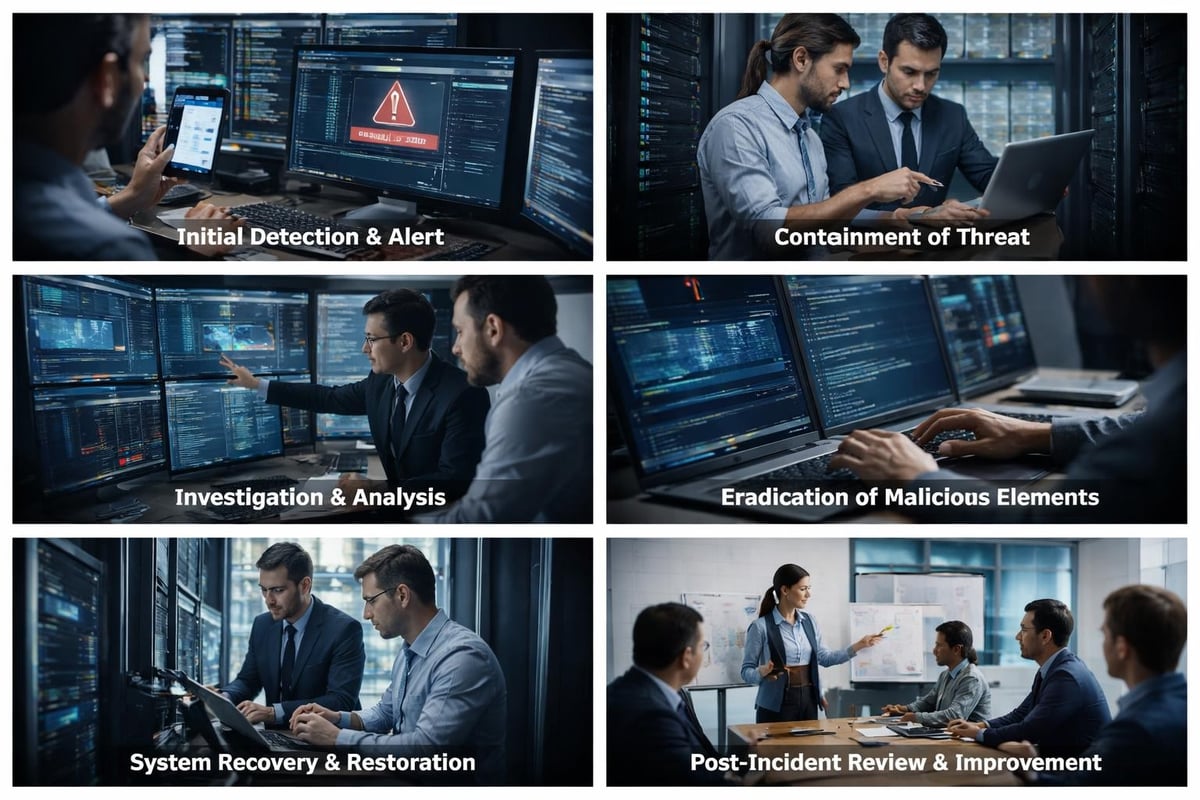
Detecting security incidents quickly minimizes potential damage. Business computer security monitoring systems analyze network traffic, system logs, and user behaviors to identify suspicious activities that may indicate compromise.
Security Information and Event Management (SIEM) platforms aggregate data from multiple sources, correlating events to detect complex attack patterns that individual systems might miss. While enterprise SIEM solutions can be expensive and complex, managed service approaches make these capabilities accessible to smaller organizations.
Developing Response Plans
Preparation enables effective action during security incidents. Response plans should outline:
- Incident classification criteria defining severity levels
- Communication protocols specifying who needs notification and when
- Containment procedures to prevent incident spread
- Investigation steps for determining scope and impact
- Recovery processes returning systems to normal operation
- Documentation requirements supporting post-incident analysis
Regular tabletop exercises help teams practice response procedures, identifying gaps and improving coordination before actual incidents occur.
Compliance and Regulatory Considerations
Many industries face specific regulatory requirements governing data protection and security practices. Business computer security programs must address these compliance obligations to avoid penalties and maintain customer trust.
Payment Card Industry Data Security Standard (PCI DSS) applies to any organization processing credit card transactions, establishing minimum security requirements for protecting cardholder data.
Health Insurance Portability and Accountability Act (HIPAA) mandates specific safeguards for healthcare providers and related entities handling protected health information.
Even businesses without specific regulatory requirements benefit from adopting recognized security frameworks like those outlined by Purdue University’s common best practices, which provide structured approaches to securing IT environments.
Vendor and Third-Party Risk Management
Modern businesses rely on numerous vendors, suppliers, and service providers who may access company systems or handle sensitive data. Each third-party relationship introduces potential security risks requiring careful evaluation and management.
Due diligence processes should assess:
- Vendor security policies and practices
- Data handling and protection measures
- Compliance certifications and audit results
- Incident response capabilities
- Insurance coverage for security events
Contractual agreements should clearly define security requirements, data ownership, breach notification obligations, and liability provisions. Regular vendor security assessments help ensure ongoing compliance with these standards.
Budget Allocation and Resource Planning
Business computer security requires appropriate financial investment balanced against organizational risk tolerance and asset value. Small businesses often struggle with limited budgets, making strategic prioritization essential.
Cost-effective security approaches include:
- Managed security services providing enterprise capabilities without full-time staff overhead
- Cloud-based solutions offering subscription pricing and scalability
- Security automation reducing manual effort and human error
- Employee training maximizing existing resource effectiveness
- Risk-based prioritization focusing investments on highest-impact areas
The true cost of security should be weighed against the potential expenses of data breaches, including recovery costs, regulatory fines, legal fees, customer notification expenses, and reputation damage.
Fixed-Rate Service Models
Predictable monthly costs help businesses budget effectively for business computer security needs. Fixed-rate managed service arrangements provide comprehensive coverage without unexpected expenses from incident response or emergency support.
This pricing model aligns provider incentives with client security outcomes, encouraging proactive protection rather than reactive firefighting.
Future-Proofing Security Strategies
The cybersecurity landscape continues evolving rapidly, requiring businesses to anticipate and prepare for emerging threats. Generative AI is becoming a major security worry, creating new challenges around data protection, content authenticity, and automated attacks.
Adaptable security architectures accommodate new technologies and threat vectors without requiring complete rebuilds. Choosing vendor-neutral solutions, maintaining flexibility in service providers, and avoiding excessive customization all support long-term adaptability.
Business computer security programs should include regular reviews assessing:
- Emerging threat trends relevant to the industry
- New security technologies offering improved protection
- Changing compliance requirements
- Evolving business needs and risk profiles
- Performance metrics and security effectiveness
Continuous improvement ensures security measures remain effective against current threats while preparing for future challenges.
Protecting your business from cyber threats requires comprehensive strategies combining technology, processes, and people in coordinated defense. Small businesses throughout Lethbridge and surrounding areas can achieve enterprise-grade business computer security through strategic partnerships that deliver expertise, monitoring, and support without the overhead of building internal teams. Delphi Systems Inc. helps organizations maintain secure, efficiently managed IT infrastructure with fixed-rate services covering everything from network monitoring to data backup and recovery, allowing you to focus on core business activities with confidence that your technology foundation remains protected.

