
Choosing the right managed IT services provider can make or break your business's technology infrastructure. As small businesses face increasingly complex cybersecurity threats, rising operational costs, and the challenge of maintaining competitive technological capabilities, the importance of partnering with a reliable MSP has never been greater. The top managed IT services companies distinguish themselves through their comprehensive service offerings, proactive approach to network monitoring, and ability to scale solutions as client needs evolve. Understanding what separates industry leaders from average providers helps business owners make informed decisions about their IT partnerships.
What Defines Leading Managed Service Providers
The landscape of managed IT services has transformed dramatically over recent years. Top performers demonstrate consistent patterns that set them apart from competitors who simply react to technical issues.
Data-driven decision making forms the foundation of successful MSPs. Leading providers use analytics and metrics to optimize service delivery, predict potential failures before they occur, and demonstrate clear ROI to their clients. This analytical approach extends beyond basic network monitoring to encompass comprehensive business intelligence.
Customer experience ranks equally high on the priority list. The best providers maintain transparent communication channels, offer predictable fixed-rate pricing structures, and ensure clients understand exactly what services they receive. This transparency builds trust and long-term partnerships rather than transactional relationships.
Core Service Categories
Top managed IT services companies typically organize their offerings into distinct categories that address comprehensive business technology needs:
- Network Infrastructure Management: Continuous monitoring, maintenance, and optimization of servers, routers, switches, and wireless systems
- Cybersecurity Services: Multi-layered protection including firewalls, intrusion detection, endpoint security, and security awareness training
- Cloud Solutions: Migration planning, cloud infrastructure management, hybrid cloud environments, and cloud-based application support
- Data Protection: Automated backup systems, disaster recovery planning, business continuity strategies, and recovery testing
- Help Desk Support: Tiered technical support with defined response times, remote assistance, and on-site visits when necessary
The integration of these services creates a holistic approach to IT management. Rather than forcing businesses to coordinate between multiple vendors, leading MSPs deliver comprehensive solutions under one umbrella.
Technology Innovation and AI Integration
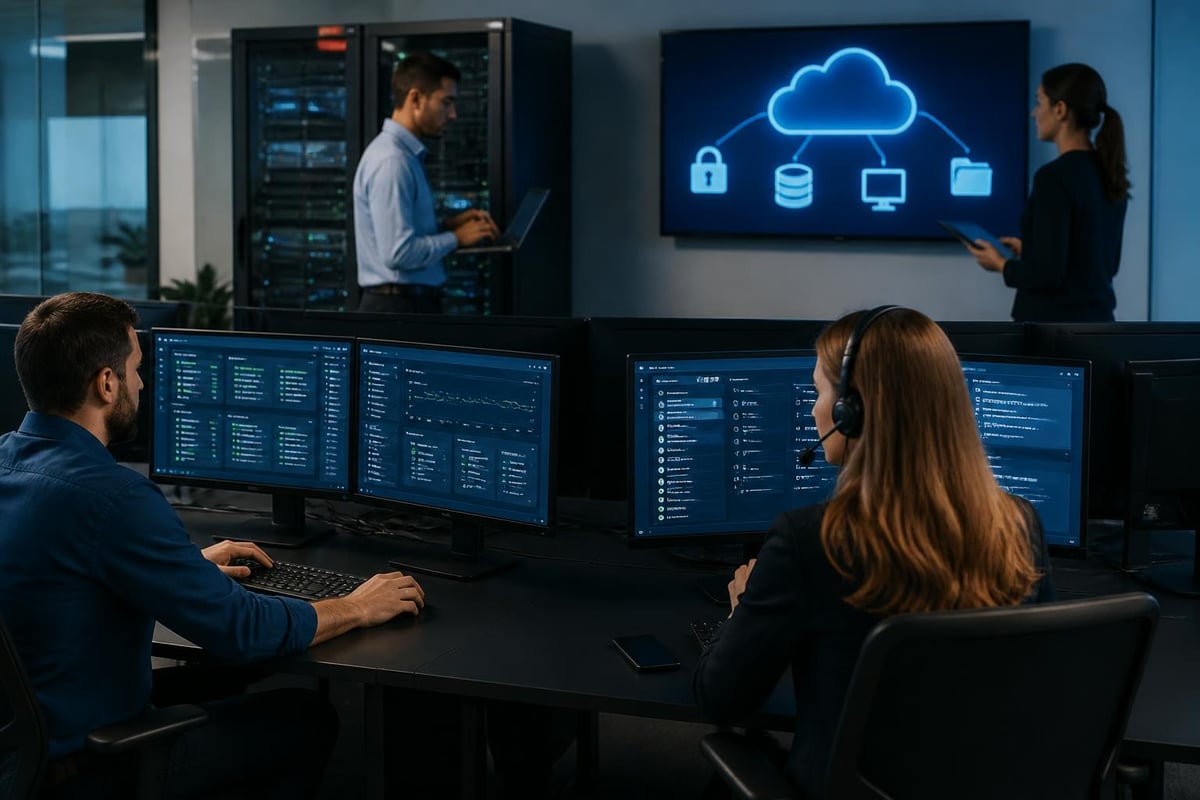
Artificial intelligence has emerged as a defining factor separating forward-thinking MSPs from those stuck in traditional service models. AI is becoming a top growth driver for IT service providers, fundamentally changing how they detect threats, automate routine tasks, and deliver value to clients.
The most progressive companies leverage AI for predictive maintenance. Machine learning algorithms analyze network performance patterns to identify potential hardware failures weeks before they occur. This proactive approach minimizes downtime and allows businesses to schedule maintenance during off-peak hours.
Security operations have been revolutionized through AI-powered threat detection. Traditional signature-based antivirus solutions struggle against novel attack vectors, but AI systems identify suspicious behavior patterns that indicate potential breaches. This capability proves particularly valuable as cybercriminals develop increasingly sophisticated methods.
Shifting Service Models
The industry is experiencing a fundamental shift in how services are packaged and delivered. Traditional large-scale IT deals are giving way to specialized service engagements that address specific business challenges with precision.
Outcome-based partnerships represent the next evolution in managed services. Rather than simply charging for hours worked or devices managed, leading providers tie their compensation to measurable business results. This alignment ensures MSPs remain invested in their clients' success.
| Traditional Model | Outcome-Based Model |
|---|---|
| Charge per device or user | Charge based on performance metrics |
| Reactive problem solving | Proactive optimization |
| Technical focus | Business results focus |
| Fixed service catalog | Customized solutions |
| Break-fix mentality | Continuous improvement |
This transition requires MSPs to develop deeper understanding of their clients' business operations, industry challenges, and strategic objectives. The top managed IT services companies excel at bridging the gap between technical capabilities and business outcomes.
Evaluating Provider Credentials and Expertise
Selecting from the top managed IT services companies requires careful evaluation of credentials, experience, and cultural fit. Not every provider suits every business, regardless of their technical capabilities.
Certification programs validate technical expertise and commitment to professional standards. Look for providers whose technicians hold current certifications from major technology vendors like Microsoft, Cisco, and CompTIA. These credentials demonstrate ongoing investment in skill development.
Industry-specific experience matters significantly. An MSP with deep expertise in healthcare understands HIPAA compliance requirements, while one focused on financial services navigates regulatory frameworks specific to that sector. Small businesses benefit from providers who understand the unique challenges of operating with limited IT budgets.
Key Selection Criteria
When narrowing down potential partners, consider these critical factors:
-
Response Time Guarantees: Understand their service level agreements for different priority levels. Critical system failures require faster response than routine maintenance requests.
-
Security Certifications: Verify they maintain current security certifications and follow industry-standard frameworks like NIST or ISO 27001.
-
Scalability Options: Ensure the provider can grow with your business, adding users, locations, or services without requiring a complete platform change.
-
Local Presence: While remote support handles many issues effectively, having technicians available for on-site visits when hardware problems arise provides peace of mind.
-
Technology Stack: Confirm they support your existing systems while also bringing expertise in emerging technologies you might adopt.
The geographic consideration remains important for small businesses. While cloud technologies enable remote management, having a provider with local presence in your region ensures faster on-site response when physical access becomes necessary.

Service Delivery Models and Pricing Structures
Understanding how top managed IT services companies structure their service delivery and pricing helps businesses budget appropriately and avoid unexpected costs.
Fully managed services represent the most comprehensive option. The provider assumes complete responsibility for your IT infrastructure, handling everything from strategic planning to daily maintenance. This model works well for businesses lacking internal IT staff or those wanting to eliminate technology management from their core responsibilities.
Co-managed services blend internal IT resources with external expertise. Your in-house team handles day-to-day operations while the MSP provides specialized skills, after-hours support, or project-based assistance. This hybrid approach suits growing businesses with some technical capability who need additional resources for specific areas.
Project-based engagements address specific initiatives like cloud migrations, network upgrades, or cybersecurity assessments. While not true managed services, many top providers offer these alongside their recurring service contracts.
Pricing Transparency
Fixed-rate pricing has become the standard among reputable providers. This model offers several advantages over traditional break-fix billing:
- Predictable monthly expenses that simplify budgeting
- Alignment of provider incentives toward preventing problems
- Elimination of unpleasant surprise invoices after major incidents
- Encouragement to contact support without worrying about hourly charges
However, the structure of fixed-rate agreements varies. Some providers charge per user, others per device, and some base pricing on the number of servers or complexity of your environment. Request detailed breakdowns showing exactly what's included and what incurs additional charges.
Emerging Trends Shaping the Industry
The managed services landscape continues evolving rapidly as new technologies and business models emerge. Staying informed about these trends helps businesses understand what to expect from top-tier providers.
Managed Intelligence Providers represent an evolution beyond traditional MSPs. These next-generation providers help small and mid-sized businesses leverage AI capabilities previously accessible only to large enterprises. They implement intelligent automation, predictive analytics, and AI-powered decision support systems.
Cloud-first strategies have become the default approach. Rather than maintaining expensive on-premises infrastructure, businesses increasingly rely on cloud platforms for core services. Top managed IT services companies design solutions that optimize cloud spending while maintaining security and performance standards.
Cybersecurity Evolution
The sophistication of cyber threats continues escalating. Ransomware attacks target small businesses with increasing frequency, recognizing they often lack robust security defenses. Leading MSPs respond by implementing zero-trust security frameworks, conducting regular vulnerability assessments, and providing security awareness training for all employees.
Multi-factor authentication, endpoint detection and response, and security information and event management systems have shifted from optional to essential. The best providers include these technologies in their standard service packages rather than treating them as premium add-ons.
| Security Component | Purpose | Implementation Level |
|---|---|---|
| Next-gen Firewalls | Network perimeter protection | Standard |
| Endpoint Protection | Device-level threat detection | Standard |
| Email Security | Phishing and malware filtering | Standard |
| SIEM | Centralized security monitoring | Advanced |
| Penetration Testing | Proactive vulnerability discovery | Premium |
Business continuity planning has gained prominence as organizations recognize their dependence on technology systems. The top managed IT services companies help clients develop comprehensive disaster recovery strategies that extend beyond simple data backup to encompass entire business processes.

Industry Benchmarks and Performance Metrics
Understanding how to measure MSP performance helps businesses hold their providers accountable and ensure they receive appropriate value for their investment.
System uptime serves as a fundamental metric. Top providers typically guarantee 99.9% uptime or better, meaning less than nine hours of downtime annually. This calculation excludes scheduled maintenance performed during agreed-upon windows.
Response and resolution times measure how quickly the provider acknowledges issues and implements fixes. Priority one incidents (complete system outages) should receive response within 15-30 minutes, while lower priority tickets might allow several hours.
Monthly reporting demonstrates the value delivered. Request reports showing:
- Number and type of tickets resolved
- Security threats detected and blocked
- System performance metrics
- Backup success rates
- User satisfaction scores
These metrics create accountability and highlight areas requiring attention. The best providers review these reports with clients quarterly, discussing trends and recommending improvements.
Vendor Relationship Management
Your MSP manages relationships with numerous technology vendors on your behalf. This consolidated approach simplifies procurement, ensures compatibility between systems, and often secures better pricing through volume agreements.
However, verify the provider maintains vendor-neutral recommendations. Some MSPs push specific products because of favorable commission structures rather than genuine fit for client needs. Top managed IT services companies prioritize client outcomes over vendor incentives.
Compliance and Regulatory Considerations
Industries ranging from healthcare to finance face stringent regulatory requirements governing data handling, privacy, and security. Leading MSPs bring expertise navigating these complex frameworks.
GDPR compliance affects any business handling data from European customers. Proper data encryption, access controls, and breach notification procedures require careful implementation. Experienced providers understand these requirements and implement appropriate technical safeguards.
Industry-specific regulations demand specialized knowledge. Healthcare providers must maintain HIPAA compliance, financial institutions navigate SOX requirements, and retail businesses handling credit cards comply with PCI DSS standards. The best MSPs maintain current certifications demonstrating their competency in relevant frameworks.
Documentation requirements often surprise businesses new to managed services. Comprehensive documentation of systems, procedures, and security controls isn't just good practice, it's frequently mandatory for regulatory compliance. Top providers maintain detailed records and make them accessible during audits.
Strategic Technology Planning
The relationship with top managed IT services companies extends beyond daily technical support to strategic technology planning that aligns IT investments with business objectives.
Technology roadmapping helps businesses anticipate future needs and budget accordingly. Rather than reacting to crises or making hasty purchase decisions, strategic planning allows thoughtful evaluation of options and phased implementation.
Leading providers conduct regular technology assessments reviewing your current infrastructure, identifying gaps, and recommending improvements. These assessments consider not just technical capabilities but also business growth plans, industry trends, and budget constraints.
Return on Investment Analysis
Demonstrating clear ROI from IT investments helps justify technology spending to stakeholders. The best MSPs help quantify both hard and soft benefits:
- Reduced downtime translates directly to prevented revenue loss
- Improved security avoids costly breach remediation and reputational damage
- Increased productivity allows employees to focus on revenue-generating activities
- Scalability prevents the need for expensive emergency upgrades
- Compliance adherence avoids regulatory fines and legal complications
Small businesses particularly benefit from fixed-rate managed services because they convert unpredictable IT expenses into consistent operational costs. This predictability improves financial planning and eliminates the risk of catastrophic surprise bills from major system failures.
Making Your Selection Decision
After researching options and meeting with potential providers, the final selection requires weighing multiple factors against your specific business requirements.
Request detailed proposals from your top three candidates. Compare not just pricing but the breadth of services included, response time commitments, and contract terms. Pay particular attention to termination clauses and data return procedures should you eventually change providers.
Check references thoroughly. Speak with current clients in similar industries and company sizes. Ask about their experience during crisis situations, not just routine operations. How did the provider perform when major problems occurred?
Trial periods or pilot programs reduce risk when engaging a new MSP. Some providers offer introductory periods at reduced rates, allowing you to evaluate their service quality before committing to long-term contracts.
Cultural fit matters more than many businesses initially realize. You'll work closely with this provider's team, so ensure their communication style, responsiveness, and business values align with yours. Technical competency means little if you can't effectively collaborate.
Selecting from the top managed IT services companies requires careful evaluation of technical capabilities, service offerings, and business alignment. The right partnership transforms IT from a cost center into a strategic advantage that enables growth and protects your business from evolving threats. If you're ready to experience proactive IT management with transparent pricing and comprehensive support tailored to small business needs, Delphi Systems Inc. brings proven expertise to businesses throughout Lethbridge and surrounding areas, helping you maintain peak operational efficiency while focusing on what you do best.

