Small businesses face an unprecedented challenge in 2026: maintaining sophisticated IT infrastructure while focusing on core business objectives. The complexity of modern technology demands constant attention, specialized expertise, and proactive management. Superior managed IT services have emerged as the solution, offering comprehensive support that transforms IT from a cost center into a strategic asset. For businesses in Lethbridge and surrounding areas, partnering with the right managed service provider means accessing enterprise-level capabilities without the overhead of building an internal IT department.
Understanding the Foundation of Superior Managed IT Services
Superior managed IT services extend far beyond traditional break-fix support models. They represent a comprehensive approach to technology management that prioritizes prevention, optimization, and strategic alignment with business goals.
The fundamental difference lies in the proactive nature of service delivery. Rather than waiting for systems to fail, superior providers continuously monitor infrastructure, identify potential issues before they impact operations, and implement solutions during off-peak hours. This approach minimizes downtime and ensures business continuity.
Key Components That Define Excellence
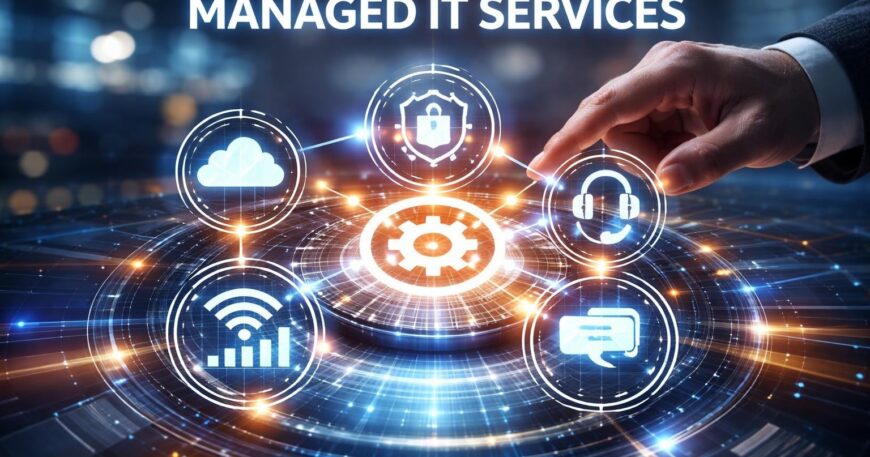
A truly superior managed IT service framework incorporates multiple interconnected elements:
- Continuous network monitoring and maintenance that tracks system health 24/7
- Robust cybersecurity protocols including threat detection and response
- Comprehensive data backup and disaster recovery planning
- Cloud infrastructure management tailored to business needs
- Strategic IT consulting aligned with growth objectives
- Help desk support with rapid response times
These components work together to create a seamless technology environment. Each element reinforces the others, building resilience and efficiency across the entire IT ecosystem.

The Business Impact of Superior Service Delivery
Organizations that invest in superior managed IT services experience measurable improvements across multiple operational areas. The transformation extends beyond technical metrics to fundamental business performance.
Productivity and Efficiency Gains
When IT systems function reliably, employees spend less time troubleshooting technical problems and more time on revenue-generating activities. Studies tracking key performance indicators in managed IT services demonstrate that businesses experience 30-40% reductions in IT-related downtime after partnering with quality providers.
Fixed-rate fee structures eliminate budget uncertainty. Instead of unpredictable repair costs, businesses pay consistent monthly fees that cover all agreed-upon services. This financial predictability enables better strategic planning and resource allocation.
| Metric | Before Managed Services | After Implementation |
|---|---|---|
| Average Monthly Downtime | 12-18 hours | 2-4 hours |
| IT Budget Predictability | Variable (±40%) | Fixed (±5%) |
| Security Incident Response | 4-6 hours | 15-30 minutes |
| Employee IT Satisfaction | 62% | 87% |
Security and Compliance Advantages
Cybersecurity threats evolve constantly, requiring vigilance and expertise that most small businesses cannot maintain internally. Superior managed IT services incorporate multiple security layers that protect against emerging threats.
Providers implementing ISO/IEC 27001 information security standards bring structured approaches to risk management. These frameworks ensure comprehensive protection across all technology assets.
Compliance requirements vary by industry, but the consequences of non-compliance remain universally severe. Managed IT services help businesses meet industry compliance standards through systematic auditing, documentation, and control implementation.
Selecting a Provider That Delivers Superior Results
The managed IT services market contains significant variation in quality, capabilities, and service approaches. Making the right selection requires careful evaluation of multiple factors.
Essential Evaluation Criteria
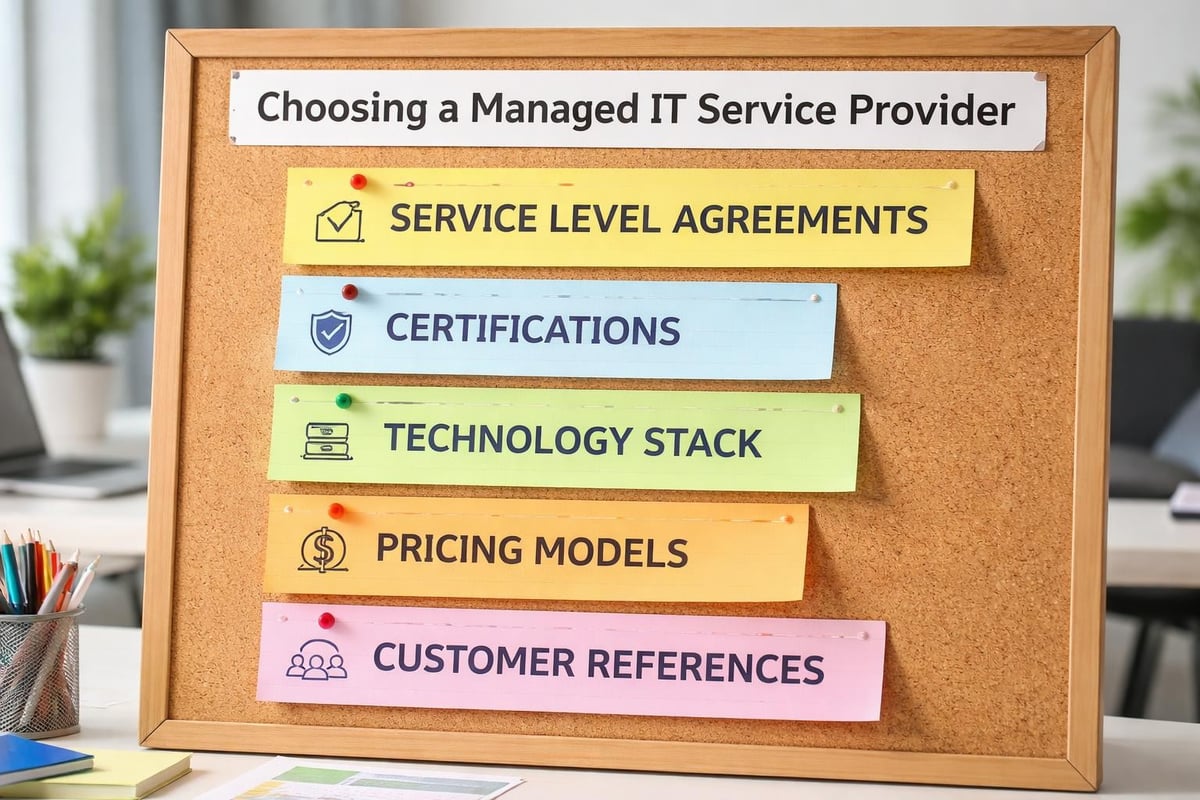
Service Level Agreements (SLAs) define the relationship foundation. Superior providers offer clear commitments regarding response times, resolution timeframes, and availability guarantees. Review these documents carefully, focusing on:
- Guaranteed response times for different priority levels
- Uptime commitments and remediation procedures
- Escalation processes for unresolved issues
- Performance measurement and reporting frequency
- Contract flexibility and exit provisions
Certifications and industry standards signal provider competence and commitment to quality. Look for adherence to ISO/IEC 20000 standards for IT service management, which demonstrate systematic approaches to service delivery. When choosing a managed service provider, verifying these credentials provides confidence in their capabilities.
Technology Stack and Methodology
Superior managed IT services leverage advanced tools and platforms that enable efficient service delivery. Inquire about the specific technologies providers use for:
- Network monitoring and performance analysis
- Security threat detection and response
- Backup automation and verification
- Remote support and system management
- Documentation and knowledge management
The methodology matters as much as the tools. Providers following structured frameworks and industry standards deliver more consistent, reliable results than those using ad hoc approaches.
Core Service Areas That Drive Value
Superior managed IT services encompass multiple specialized domains, each contributing to overall technology effectiveness.
Network Infrastructure and Monitoring
Modern business networks support critical applications, communications, and data access. Continuous monitoring detects performance degradation, unusual traffic patterns, and potential security threats before they escalate.
Proactive maintenance includes firmware updates, security patching, and configuration optimization. These activities occur during scheduled maintenance windows, minimizing disruption to daily operations.
Network documentation provides essential reference material for troubleshooting and planning. Comprehensive providers maintain detailed records of:
- Network topology and device configurations
- IP address schemes and VLAN structures
- Hardware inventory and warranty status
- Change management history
Cloud Computing Integration
Cloud services offer scalability, flexibility, and cost efficiency that traditional on-premises infrastructure cannot match. However, successful cloud adoption requires careful planning and ongoing management.
Superior managed IT services guide businesses through:
- Workload assessment to determine optimal cloud migration candidates
- Provider selection based on performance, cost, and compliance requirements
- Migration execution with minimal business disruption
- Ongoing optimization to control costs and maximize performance
- Security configuration ensuring appropriate access controls
| Cloud Service Model | Best Use Cases | Management Complexity | Cost Structure |
|---|---|---|---|
| Infrastructure as a Service | Custom applications, development environments | High | Variable usage-based |
| Platform as a Service | Application deployment, database hosting | Medium | Moderate usage-based |
| Software as a Service | Email, collaboration, CRM | Low | Per-user subscription |
Cybersecurity and Threat Management
The cybersecurity landscape grows more challenging each year. Ransomware, phishing attacks, and data breaches threaten businesses of all sizes. Superior managed IT services implement layered security approaches that address multiple threat vectors simultaneously.
Essential security components include:
- Next-generation firewalls with intrusion prevention
- Email filtering and anti-phishing protection
- Endpoint detection and response systems
- Multi-factor authentication enforcement
- Security awareness training for employees
- Regular vulnerability assessments
Incident response planning ensures rapid, coordinated action when security events occur. Pre-established procedures minimize damage and accelerate recovery.
Data Backup and Disaster Recovery
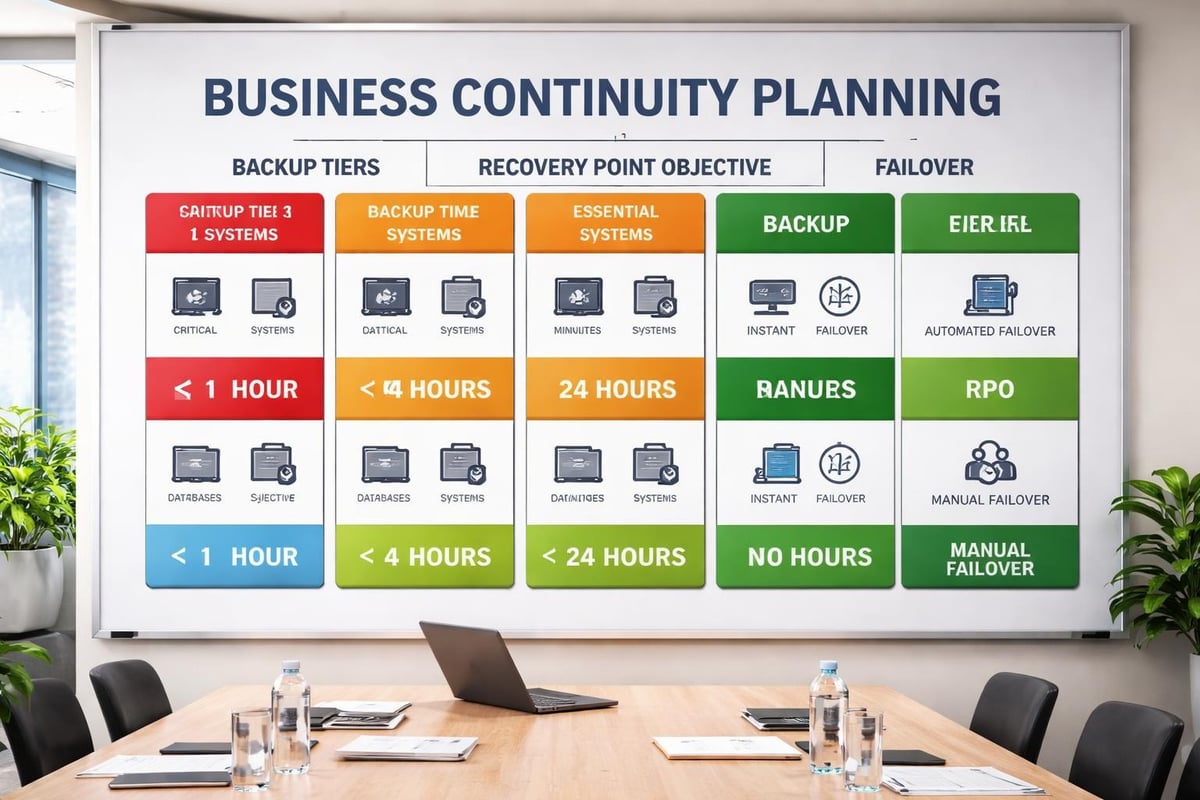
Data represents one of the most valuable business assets. Loss through hardware failure, human error, or malicious activity can prove catastrophic. Superior managed IT services implement comprehensive backup strategies following the 3-2-1 rule: three copies of data, on two different media types, with one copy stored offsite.
Modern backup approaches incorporate:
- Automated daily backups with verification
- Incremental and differential backup options
- Cloud-based offsite storage
- Regular recovery testing
- Ransomware-resistant backup repositories
Disaster recovery planning extends beyond data backup to encompass complete business continuity. Documented procedures outline response steps for various scenarios, from minor outages to complete facility loss.
Strategic IT Planning and Consulting
Superior managed IT services transcend day-to-day support to provide strategic guidance aligned with business objectives. This consultative approach ensures technology investments support growth rather than simply maintaining status quo.
Technology Roadmap Development
Effective IT planning looks three to five years ahead, anticipating business needs and technology evolution. Strategic planning sessions address:
- Infrastructure capacity requirements based on growth projections
- Application modernization and replacement scheduling
- Security enhancement priorities
- Budget allocation across competing initiatives
- Vendor relationship management
Quarterly business reviews keep leadership informed about IT performance, upcoming projects, and budget utilization. These sessions create alignment between technology initiatives and business priorities.
Vendor Management and Procurement
Technology procurement involves navigating complex licensing, evaluating competing solutions, and negotiating favorable terms. Superior managed IT services leverage industry relationships and technical expertise to secure optimal outcomes.
Benefits of provider-managed procurement include:
- Access to volume pricing and special agreements
- Independent evaluation free from vendor influence
- Technical validation of product claims
- Implementation support and training coordination
- Ongoing vendor performance management
Cost Structure and ROI Considerations
Understanding the financial aspects of superior managed IT services helps businesses make informed decisions and measure value delivery.
Pricing Models and Transparency
Fixed monthly pricing provides budget predictability and aligns provider incentives with client success. When systems run smoothly, both parties benefit. This contrasts with hourly billing models that can incentivize inefficiency.
Transparent pricing includes:
- Clear scope definitions for included services
- Itemized costs for additional services or projects
- Volume discounts for multiple locations or users
- Contract terms and renewal conditions
Hidden costs to watch for include charges for routine maintenance, after-hours support, or basic consulting that should be included in standard service packages.
Measuring Return on Investment
Quantifying the value of superior managed IT services requires examining both direct cost savings and indirect benefits. Direct savings come from reduced downtime, eliminated emergency repair costs, and optimized software licensing.
| Cost Category | Without Managed Services | With Managed Services | Annual Savings |
|---|---|---|---|
| Downtime Impact | $45,000 | $8,000 | $37,000 |
| Emergency Repairs | $18,000 | $0 | $18,000 |
| Software Licensing | $32,000 | $24,000 | $8,000 |
| Security Incidents | $22,000 | $3,000 | $19,000 |
| Total | $117,000 | $35,000 | $82,000 |
Indirect benefits include improved employee productivity, enhanced customer experience through reliable systems, and reduced management distraction from technology issues.
Implementation and Onboarding Best Practices
Transitioning to superior managed IT services requires careful planning and execution. Successful implementations follow structured approaches that minimize disruption while establishing solid foundations.
Discovery and Assessment Phase
Comprehensive onboarding begins with thorough documentation of existing infrastructure, applications, and processes. This discovery phase typically includes:
- Network documentation and diagramming
- Hardware and software inventory
- Security posture assessment
- Backup and recovery capability evaluation
- User access and permissions review
Gap analysis identifies areas requiring immediate attention versus longer-term improvements. Prioritization ensures critical vulnerabilities receive prompt remediation.
Transition Planning and Execution
Detailed transition plans outline specific activities, timelines, and responsibilities. Key elements include:
- Stakeholder communication schedule
- System access provisioning for the provider team
- Monitoring tool deployment and configuration
- Documentation standardization and knowledge transfer
- Staff training on new procedures and support processes
Phased approaches reduce risk by validating processes before full implementation. Starting with non-critical systems allows refinement before tackling essential infrastructure.
Emerging Trends Shaping Managed IT Services
The managed services landscape continues evolving as technology advances and business needs change. Understanding these trends helps businesses select providers prepared for future challenges.
Artificial Intelligence and Automation
AI-powered tools enhance service delivery through predictive analytics, automated remediation, and intelligent ticket routing. These technologies enable faster response times and proactive issue prevention.
Automation opportunities include:
- Patch management and software updates
- Security threat detection and response
- Performance optimization and tuning
- Backup verification and reporting
- User provisioning and deprovisioning
Superior managed IT services incorporate these technologies while maintaining the human expertise necessary for complex problem-solving and strategic guidance.
Zero Trust Security Models
Traditional perimeter-based security proves inadequate against modern threats. Zero trust architecture assumes no user or device should be trusted by default, requiring continuous verification.
Implementation involves identity verification, least-privilege access, micro-segmentation, and continuous monitoring. Providers experienced with zero trust principles deliver stronger security postures.
Hybrid and Multi-Cloud Management
Few businesses operate entirely on-premises or fully in the cloud. Most employ hybrid approaches combining both environments. Superior managed IT services provide unified management across these diverse infrastructures, ensuring consistent security, performance, and governance regardless of workload location.
Superior managed IT services transform technology from a necessary expense into a strategic business enabler through proactive monitoring, comprehensive security, and expert guidance. For small businesses in Lethbridge seeking reliable IT partners, Delphi Systems Inc. delivers the expertise, tools, and commitment necessary to maintain peak IT performance while supporting growth objectives. With fixed-rate pricing and comprehensive service coverage, Delphi Systems allows businesses to focus on what they do best while ensuring their technology infrastructure remains secure, efficient, and aligned with their goals.

