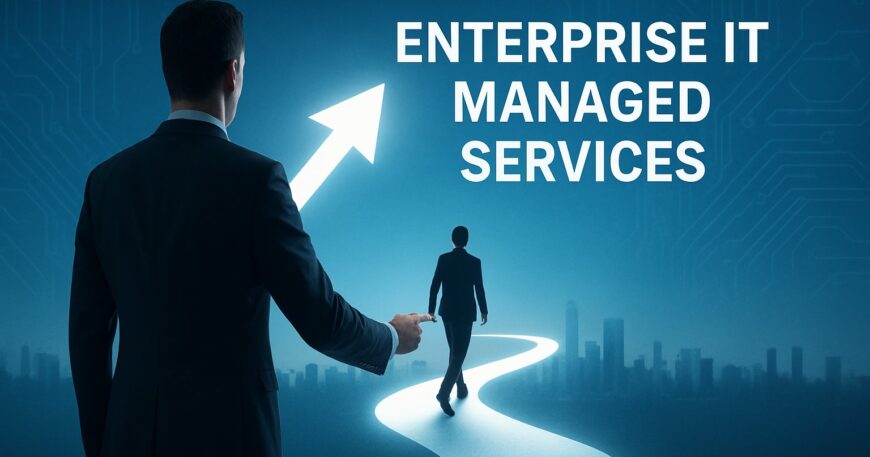
The accelerating pace of digital transformation is reshaping how organizations approach enterprise it managed services. Rising complexity and growing security risks make proactive IT management essential for future-ready enterprises.
Managed services are rapidly gaining traction, with adoption rates climbing as businesses seek to boost productivity, enhance security, and achieve cost savings. Industry data shows that these services are pivotal for operational excellence and resilience.
This guide will walk you through the evolution of managed services, core offerings, strategic benefits, provider selection, implementation steps, and future trends. Leverage these insights to ensure your enterprise is prepared for IT success in 2026.
The Evolution of Enterprise IT Managed Services
As technology rapidly advances, enterprise it managed services have become a cornerstone for organizations striving to keep pace. The journey from traditional IT support to modern managed services is reshaping how companies manage infrastructure, secure data, and drive growth. Understanding this evolution is essential for any business preparing for 2026 and beyond.

Shifting IT Landscapes and the Rise of Managed Services
Over the past decade, the IT landscape has transformed dramatically. Enterprises once relied on in-house teams to manage systems, troubleshoot issues, and ensure business continuity. However, the surge in cloud adoption, escalating cybersecurity threats, and the shift toward remote and hybrid workforces have introduced complexities that internal teams often struggle to address.
Key drivers for adopting enterprise it managed services include:
- The need for scalable cloud infrastructure and seamless integration
- Growing concerns about data breaches and regulatory compliance
- Demand for 24/7 support as business hours become increasingly global
For example, competitor insights reveal that enterprises leveraging managed services have reduced IT issues by up to 55 percent. This shift has also repositioned IT from a mere support function to a strategic enabler, empowering organizations to innovate and adapt quickly. Significant milestones since 2020 include the integration of automation, artificial intelligence, and advanced compliance tools, each fueling the next stage in managed service maturity.
Key Differences: Managed Services vs. Traditional IT Support
The distinction between managed services and traditional IT support is fundamental for decision-makers. Traditional support often reacts to problems as they arise, while enterprise it managed services focus on proactive monitoring, maintenance, and continuous improvement.
| Feature | Traditional IT Support | Enterprise IT Managed Services |
|---|---|---|
| Approach | Reactive (break-fix) | Proactive & preventive |
| Pricing | Variable, unpredictable | Flat-rate, predictable |
| Availability | Business hours | 24/7 coverage |
| SLAs | Basic, limited | Enhanced, guaranteed |
| Flexibility | Fixed scope | Co-managed & fully managed |
Many enterprises now opt for co-managed or fully managed solutions to gain flexibility and scalability. For instance, a publishing company adopted managed services and saw a marked improvement in operational efficiency, reduced downtime, and better allocation of internal resources. This proactive approach helps organizations address issues before they disrupt business, while also controlling costs and boosting employee satisfaction.
The 2026 Managed Services Market Outlook
Looking ahead, the demand for enterprise it managed services is set to accelerate. Market research indicates exponential growth, with the managed services sector projected to soar from $430 billion in 2026 to $704 billion by 2031. This surge is driven by the proliferation of hybrid-cloud environments, heightened security requirements, and the relentless pace of digital transformation. For further insights, see this Managed services market expected to reach $704 billion by 2031 analysis.
Service portfolios are evolving rapidly, encompassing advanced cybersecurity, cloud management, and compliance solutions. Strategic partnerships with industry leaders like Microsoft, Dell, and Bitdefender are becoming essential, enabling providers to deliver cutting-edge capabilities that align with enterprise goals. As organizations prepare for 2026, the right managed services partner will be key to unlocking sustained success.
Core Components of Enterprise IT Managed Services
Understanding the core components of enterprise it managed services is essential for organizations looking to optimize IT operations and drive digital transformation. These services are designed to deliver proactive management, resilience, and strategic value across the technology stack. For a deeper overview of these elements and how they empower businesses, see What is a managed IT service?.

Managed IT Infrastructure
Managed IT infrastructure is the backbone of enterprise it managed services. Providers deliver 24/7 network monitoring, server management, and endpoint support, ensuring systems remain stable and secure. Real-time alerts help teams address issues before they impact operations.
Routine patching, updates, and hardware lifecycle management are handled proactively. This approach reduces downtime and extends asset life. For example, financial firms have reported fewer outages and improved compliance with real-time network monitoring.
Key benefits include:
- Predictable system performance
- Reduced risk of hardware failure
- Rapid incident response
By outsourcing infrastructure management, enterprises maintain a robust and efficient IT environment.
Cloud Services and Digital Transformation
Cloud services are a cornerstone of enterprise it managed services, enabling organizations to migrate, manage, and optimize cloud resources efficiently. Providers assist with Azure, Office365, and hybrid or multi-cloud environments, tailoring solutions for scalability and agility.
A recent report shows that by 2026, over 70 percent of enterprises will have adopted a cloud-first approach. Managed services teams oversee provisioning, performance, and cost optimization, allowing internal IT to focus on innovation.
Core offerings include:
- Cloud migration planning and execution
- Ongoing management and optimization
- Secure integration with on-premises systems
These capabilities help organizations realize the full potential of digital transformation.
Managed Cybersecurity Solutions
Security is a critical pillar of enterprise it managed services. Providers offer continuous threat monitoring, incident response, and vulnerability management to defend against evolving cyber risks.
Services also include security awareness training and the implementation of frameworks to maintain regulatory compliance. For instance, law firms use managed cybersecurity solutions to meet strict data privacy requirements and avoid costly breaches.
Key features:
- 24/7 security operations center (SOC) support
- Automated threat detection and response
- Compliance assessments and reporting
With managed security, enterprises can proactively address threats and maintain a strong compliance posture.
Data Backup, Recovery, and Business Continuity
Robust backup and recovery processes are essential components of enterprise it managed services. Providers automate data backups, develop disaster recovery plans, and ensure rapid restoration in the event of disruption.
This minimizes the risk of data loss and ensures business continuity. For example, childcare centers have maintained critical operations during severe storms by leveraging managed IT for seamless failover and recovery.
Benefits include:
- Automated, scheduled backups
- Fast data restoration after incidents
- Business continuity during outages
A solid backup and recovery strategy is vital for operational resilience.
IT Strategy, Consulting, and vCIO Services
Strategic planning is integral to enterprise it managed services. Providers offer IT roadmaps, technology alignment, and virtual CIO (vCIO) services, guiding organizations through complex decisions and long-term growth.
Nonprofits, for example, benefit from customized IT strategies that maximize value and efficiency. Consulting services help align IT investments with business objectives, ensuring technology supports critical goals.
Key advantages:
- Executive-level technology guidance
- IT budgeting and forecasting
- Strategic project planning
These services transform IT from a support function into a strategic enabler.
IT Support and Helpdesk Services
Reliable support is the cornerstone of enterprise it managed services. Providers deliver 24/7 remote and onsite assistance, ensuring users receive rapid resolution for technical issues.
Helpdesk teams use ticketing systems to track and manage requests, improving transparency and accountability. Enterprises report higher employee productivity and satisfaction with responsive support services.
Support features:
- Around-the-clock availability
- Issue tracking and escalation
- User satisfaction monitoring
Comprehensive support keeps business operations running smoothly and efficiently.
Strategic Benefits of Enterprise IT Managed Services
As enterprises accelerate their digital transformation, the strategic benefits of enterprise it managed services become increasingly clear. These solutions are no longer just about fixing problems; they are about enabling organizations to thrive in a complex, ever-changing IT environment. By leveraging managed services, companies unlock new levels of efficiency, security, and growth potential.

Operational Efficiency and Productivity Gains
Enterprise it managed services are designed to streamline workflows and eliminate IT bottlenecks, allowing your teams to focus on core business goals. By automating routine tasks such as patch management, monitoring, and updates, organizations free up valuable resources and reduce manual errors.
A key advantage is the shift from reactive support to proactive management. Providers identify and resolve issues before they impact business operations. For example, food and beverage companies have reported faster issue resolution and improved uptime after adopting managed services. For a deeper dive into these advantages, see the Top 6 benefits of managed IT services.
Enhanced Security and Compliance Posture
Security risks and regulatory demands are rising, making enterprise it managed services essential for risk mitigation. Managed service providers offer continuous monitoring, rapid incident response, and regular vulnerability assessments to keep threats at bay.
Compliance is also a significant driver. With dedicated experts guiding policy enforcement and conducting security audits, organizations can confidently navigate complex frameworks like GDPR or HIPAA. In fact, 60 percent of enterprises now cite compliance as a main reason for investing in managed services, ensuring data integrity and reputation protection.
Cost Optimization and Predictable IT Spend
One of the most compelling reasons to adopt enterprise it managed services is cost predictability. Flat-rate pricing models replace unpredictable expenses with a single, manageable monthly fee. This approach makes budgeting straightforward and eliminates surprises from unplanned outages or emergency repairs.
Additionally, managed services help reduce costly downtime and minimize the risk of data breaches. Small and midsize businesses in finance and healthcare especially benefit from fixed-fee agreements that provide enterprise-grade support without the overhead of a full in-house IT team.
Access to Expertise and Advanced Technologies
Enterprise it managed services grant organizations access to a pool of certified specialists and the latest technologies. Providers bring deep experience with platforms like Microsoft, Dell, and Bitdefender, ensuring your systems are always up to date.
This expertise enables early adoption of innovations such as AI-driven automation, cloud-native tools, and advanced analytics. Digital agencies, for example, have scaled rapidly by leveraging managed cloud and security services, staying ahead of competitors and market demands.
Business Continuity and Disaster Resilience
Ensuring seamless operations during disruptions is another vital benefit of enterprise it managed services. Providers implement robust backup, disaster recovery, and business continuity plans tailored to each client’s needs.
These services safeguard critical data and enable rapid recovery from cyber incidents or natural disasters. For instance, childcare centers have maintained operational uptime during major storms thanks to managed IT, highlighting the resilience that these solutions deliver.
How to Select the Right Managed Services Provider for 2026
Selecting the right partner for enterprise it managed services can make or break your digital transformation plans. With global IT spending projected to hit record highs in the coming years, businesses face more options and greater complexity than ever before. As organizations increase investment in AI, cloud, and security, the need for a strategic approach to managed services selection has never been more critical. The following steps will guide you through a thorough evaluation process to ensure your enterprise is positioned for long-term IT success.

Assessing Your Enterprise IT Needs
Begin by conducting a thorough assessment of your current IT environment. Inventory all hardware, software, and network assets, and identify pain points such as recurring downtime, security gaps, or limited scalability. Consider your strategic goals for 2026, including cloud adoption, compliance requirements, and digital innovation.
Engage stakeholders from every department to ensure all needs are captured. For example, engineering firms may require specialized network management, while legal teams may prioritize data privacy. This evaluation lays the foundation for choosing enterprise it managed services that align with your growth objectives.
Evaluating Provider Capabilities and Service Offerings
Once you have a clear understanding of your needs, evaluate potential providers based on the breadth and depth of their service portfolios. Look for expertise in infrastructure, cloud, cybersecurity, and consulting. Confirm that providers have relevant certifications and proven experience in your industry.
Seek tailored, scalable solutions that can evolve with your business. Leading enterprise it managed services providers offer both co-managed and fully managed options, allowing you to retain control where needed while leveraging external expertise for efficiency and innovation.
Comparing Pricing Models and SLAs
Compare pricing structures across vendors to ensure predictable costs and value for your investment. Flat-rate models provide budgeting certainty, while usage-based pricing may suit organizations with fluctuating demands. Scrutinize Service Level Agreements (SLAs) for uptime guarantees, response times, and escalation procedures.
| Pricing Model | Pros | Cons |
|---|---|---|
| Flat-rate | Predictable costs | May pay for unused capacity |
| Usage-based | Flexibility, pay-as-you-go | Budgeting complexity |
Transparent, well-defined SLAs are essential for reliable enterprise it managed services and help prevent service disruptions or unexpected expenses.
Reviewing Client Success Stories and References
A provider’s track record is a powerful indicator of future performance. Request case studies and testimonials from organizations similar to yours. For instance, publishing companies and finance firms often share how managed services have improved operational efficiency or compliance outcomes.
According to industry data, 80% of enterprises cite provider history as a top selection factor. Prioritize enterprise it managed services partners with documented results, strong client references, and a reputation for consistent delivery.
Ensuring Vendor Partnerships and Future-Readiness
Consider the provider’s relationships with leading technology vendors such as Microsoft, Dell, or Bitdefender. These partnerships ensure access to the latest tools, updates, and support, which are vital for digital transformation.
As Global IT spending projected to hit $4.25 trillion by 2025, choosing a future-ready enterprise it managed services provider will support your organization’s ability to innovate and adapt. Nonprofits, for example, often leverage vendor-backed solutions to maximize efficiency and compliance.
Implementation Roadmap: Deploying Managed IT Services for Success
Successfully deploying enterprise IT managed services requires a structured approach. Each stage in the process builds a foundation for long-term efficiency, security, and growth. The following roadmap outlines best practices for a seamless transition and ongoing value.
Step 1: Define Business Objectives and IT Requirements
Begin by aligning your business goals with your IT strategy. Identify growth plans, compliance needs, and any digital transformation objectives. Involve key stakeholders from all departments to gather a comprehensive view of requirements.
Create an inventory of your current IT infrastructure, applications, and workflows. Pinpoint pain points such as security gaps, legacy systems, or inefficiencies. For example, law firms often prioritize compliance and data protection, making these areas central to their enterprise IT managed services plan.
Use this information to clarify priorities and set measurable objectives. A clear understanding of your needs ensures that enterprise IT managed services deliver targeted value and support business outcomes.
Step 2: Select and Onboard Your Managed Service Provider
The provider selection phase is crucial for enterprise IT managed services success. Start by issuing detailed RFPs and conducting interviews to assess expertise, certifications, and cultural fit. Evaluate each provider’s service portfolio, focusing on cloud, security, and consulting capabilities.
Negotiate contracts with transparency, ensuring all service levels and escalation procedures are clearly defined. During onboarding, establish communication protocols and set expectations for collaboration. According to industry research, 65% of enterprises highlight onboarding experience as a critical factor in long-term satisfaction.
Document every step of the onboarding process. A structured approach minimizes confusion and helps enterprise IT managed services integrate smoothly with your existing operations.
Step 3: Transition and Integrate IT Operations
Transitioning to enterprise IT managed services requires careful planning and execution. Begin by cataloging all IT assets, including hardware, software, and data sources. Develop a phased migration plan to avoid disrupting business operations.
Migrate assets and applications in stages, running parallel support systems as needed. For instance, childcare centers have successfully maintained uptime during provider transitions by employing phased rollouts and clear communication.
Assign responsibilities to both internal teams and the managed services provider. Regular status updates and open feedback channels reduce risks and ensure a seamless integration of enterprise IT managed services into daily workflows.
Step 4: Establish Performance Metrics and Reporting
Measuring the impact of enterprise IT managed services starts with defining clear performance metrics. Select key performance indicators (KPIs) such as uptime, ticket resolution times, and frequency of security incidents.
Set up transparent reporting cycles, with regular review meetings to discuss progress and challenges. Use dashboards and analytics tools to visualize trends, identify bottlenecks, and support data-driven decision making.
Actionable insights from these reports help you and your provider fine-tune services. The right metrics enable continuous improvement and ensure enterprise IT managed services are aligned with your evolving business needs.
Step 5: Continuous Optimization and Innovation
Enterprise IT managed services should adapt as your organization grows. Schedule regular system updates, security enhancements, and process reviews to address new challenges and opportunities.
Leverage your provider’s expertise for strategic IT planning, adopting emerging technologies like cloud-native tools or automation. For example, digital agencies often use managed services to accelerate innovation and maintain a competitive edge.
Encourage a culture of innovation by rewarding process improvements and sharing success stories. Continuous optimization ensures your enterprise IT managed services remain effective and future-ready.
Step 6: Foster Collaboration and User Adoption
User adoption is vital for maximizing the value of enterprise IT managed services. Provide comprehensive training for end users, focusing on new tools, security protocols, and best practices.
Establish regular feedback loops through surveys and support channels. Address concerns promptly and adapt services based on user input. Enterprises with strong user adoption report up to 30% higher ROI from managed services.
Fostering collaboration between IT teams, stakeholders, and the managed services provider creates a culture of shared success. This collaborative approach ensures enterprise IT managed services drive productivity and satisfaction across your organization.
Future Trends in Enterprise IT Managed Services for 2026 and Beyond
The landscape of enterprise IT managed services is rapidly evolving, introducing transformative trends that will define how organizations operate, secure, and innovate by 2026. Staying ahead of these changes is essential for enterprises seeking long-term value, resilience, and competitive advantage.
AI, Automation, and Intelligent IT Operations
Artificial intelligence and automation are revolutionizing enterprise IT managed services. AI-driven monitoring detects anomalies in real time, enabling self-healing systems that automatically resolve issues before they impact users. Predictive analytics further empower IT teams to allocate resources efficiently and anticipate future needs.
Key advancements include:
- Automated ticketing and incident resolution
- Machine learning for capacity planning
- AI-powered security threat detection
By 2026, 50% of managed service providers are expected to offer AI-enabled solutions, reshaping how enterprises manage complex IT environments. As a result, organizations leveraging enterprise IT managed services will see faster incident response and reduced operational costs.
Evolving Cybersecurity Threats and Zero Trust Models
Cybersecurity threats are becoming more sophisticated, targeting enterprise networks with advanced tactics. Enterprise IT managed services are responding by adopting zero trust architectures and layered security approaches.
Key features include:
- Continuous verification of users and devices
- Micro-segmentation to contain breaches
- Automated threat detection and response
Finance and healthcare sectors are prioritizing managed security to address regulatory and reputational risks. With enterprise IT managed services, organizations gain proactive risk mitigation and the agility to adapt to emerging threats.
Next-Gen Cloud and Hybrid Solutions
Cloud adoption is accelerating, with 80% of enterprises expected to operate in hybrid environments by 2026. Enterprise IT managed services play a pivotal role in enabling seamless migration, management, and optimization of multi-cloud and edge computing strategies.
Trends driving this shift:
- Expansion of serverless and edge architectures
- Unified management of public, private, and hybrid clouds
- Enhanced scalability for global operations
A recent Gartner report highlights the growing investment in cloud services, underscoring the importance of skilled managed service providers. Enterprises that embrace cloud-focused enterprise IT managed services will unlock new levels of agility and efficiency.
Compliance, Data Privacy, and Regulatory Demands
Global compliance requirements are increasing in complexity, impacting organizations across industries. Enterprise IT managed services are evolving to offer automated compliance audits, policy enforcement, and data privacy solutions.
Key regulatory frameworks:
- GDPR for data protection in Europe
- HIPAA for healthcare privacy
- PCI DSS for payment security
Managed services providers act as compliance partners, helping enterprises navigate audits and avoid costly penalties. With enterprise IT managed services, organizations can demonstrate due diligence and maintain customer trust.
Customization, Verticalization, and Industry-Specific Solutions
The demand for tailored solutions is driving the verticalization of enterprise IT managed services. Providers now offer packages designed for sectors like healthcare, finance, legal, and education, addressing unique regulatory and operational needs.
Benefits of industry-specific services:
- Customized compliance frameworks
- Optimized workflows for sector requirements
- Expertise in niche technologies
Engineering and environmental services firms are adopting specialized IT solutions to meet stringent industry standards. This trend ensures that enterprise IT managed services deliver measurable value for every vertical.
The Expanding Role of the MSP as Strategic Partner
Managed service providers are evolving beyond support roles to become strategic partners, guiding digital transformation and innovation. Enterprises increasingly expect MSPs to deliver business advisory services, technology roadmaps, and co-managed IT models.
Strategic partnership benefits:
- Collaborative IT planning and execution
- Early adoption of emerging technologies
- Flexible engagement models
Data shows that 70% of enterprises anticipate their MSP will drive digital transformation initiatives by 2026. By partnering with forward-thinking providers, organizations maximize the value of enterprise IT managed services for sustained growth.
As you look ahead to 2026, it’s clear that a well-managed IT environment isn’t just a nice-to-have—it’s essential for productivity, security, and long-term growth. We’ve walked through the key trends, benefits, and steps to building a resilient IT foundation, so you can focus on what matters most: growing your business. If you want personalized guidance or have questions about the right path for your IT needs, let’s talk about how we can help you stay ahead of the curve.
Call us now

