
In 2026, businesses face an increasingly complex digital environment where the demand for round-the-clock IT support is higher than ever. As organizations adapt, outsourced it helpdesk solutions are emerging as a strategic answer to these evolving needs.
This comprehensive guide delivers essential insights for decision-makers considering outsourced it helpdesk options. You will discover the latest industry trends, the core benefits and challenges, and proven strategies for selecting the right provider.
Through real-world examples and expert recommendations, learn how outsourcing can drive efficiency and cost savings. Use these insights to make informed, future-ready IT decisions.
Understanding Outsourced IT Helpdesk Services
The outsourced it helpdesk has become pivotal for organizations navigating complex IT environments in 2026. As businesses face mounting demands for rapid response and user satisfaction, understanding the nuances of these services is crucial for making informed decisions.

What is an Outsourced IT Helpdesk?
An outsourced it helpdesk refers to a third-party provider taking responsibility for managing an organization's IT support functions. This includes ticketing, remote troubleshooting, escalation, and user assistance. Services often span multiple channels: phone, email, chat, and self-service portals.
Unlike in-house teams, outsourced it helpdesk providers offer managed solutions tailored to business needs. Examples include Managed Service Providers (MSPs) or specialized helpdesk firms. According to recent statistics, both SMBs and enterprises are increasingly adopting these services for flexibility and cost savings.
A quick comparison:
| Feature | In-House Helpdesk | Outsourced IT Helpdesk |
|---|---|---|
| Staffing | Internal employees | External specialists |
| Coverage | Limited hours | 24/7, global |
| Scalability | Fixed | Flexible |
Key Drivers for Outsourcing IT Helpdesk in 2026
Several factors are fueling the growth of outsourced it helpdesk solutions in 2026. The complexity of IT environments, driven by cloud adoption and hybrid work, makes in-house management challenging. Organizations demand 24/7 support and seamless coverage across regions.
Cost pressures are another major driver. Outsourced it helpdesk providers help optimize budgets by reducing hiring, training, and overtime expenses. Access to specialized expertise and advanced technology is also critical. For example, small MSPs on Reddit discuss leveraging outsourcing to scale efficiently and meet client needs without overextending resources.
Ultimately, these drivers enable businesses to remain agile while focusing on their core operations.
Service Models and Engagement Options
The outsourced it helpdesk landscape offers a variety of service models to suit different needs. Businesses can choose fully outsourced arrangements or opt for hybrid/co-managed models that blend internal and external resources.
Geographical options include onshore, nearshore, and offshore providers, each with unique pros and cons regarding cost, communication, and cultural fit. Pricing models range from fixed-fee to usage-based structures, with clear service level agreements (SLAs) outlining response and resolution times.
Real-world examples include flexible support tiers and fixed price models. For a deeper dive into these trends and the future of IT helpdesk outsourcing, explore IT Help Desk Outsourcing Trends 2026.
Common Myths and Misconceptions
Despite its benefits, the outsourced it helpdesk industry faces persistent myths. Some worry about quality, but performance data demonstrates consistent, high user satisfaction. Security and data control are common concerns, yet reputable providers enforce strict protocols and compliance measures.
Another misconception is that outsourcing creates integration challenges with internal teams. In reality, strong documentation and process alignment ensure seamless collaboration. Reddit discussions often highlight fears of losing control and diminishing client care, but proper onboarding and communication can address these issues effectively.
Benefits of Outsourcing IT Helpdesk in 2026
Outsourcing your IT helpdesk in 2026 delivers a range of strategic advantages that go well beyond simple cost reduction. Businesses are leveraging these solutions to streamline operations, enhance user satisfaction, and ensure they stay ahead in a rapidly changing technology landscape.

Cost Efficiency and Predictable Budgeting
One of the most compelling benefits of an outsourced it helpdesk is cost control. Companies reduce operational expenses by eliminating the need for in-house IT staff recruitment, training, and overtime. Outsourced providers typically offer fixed-rate plans, making budgeting straightforward and preventing unexpected costs. This predictability is vital for organizations seeking to optimize IT spending without sacrificing quality.
Transparent billing models also help avoid hidden fees or surprise charges. Many businesses, especially MSPs, have transitioned to partners offering clear pricing structures. According to this Cost-Benefit Analysis of Outsourcing Help Desk, organizations often realize significant savings, with industry reports citing average cost reductions of 20–40 percent.
Access to Expertise and Advanced Technology
An outsourced it helpdesk gives you immediate access to a pool of certified professionals with up-to-date technical skills. Providers invest in ongoing training, ensuring their teams are equipped to handle the latest software, cloud platforms, and cybersecurity threats. This level of expertise is difficult for most organizations to maintain internally.
Advanced tools, automation, and AI-powered support systems are now standard in many outsourced it helpdesk offerings. This technology enables faster issue resolution and proactive problem detection. Businesses benefit from expert support in specialized areas like cloud migration, compliance, and emerging tech, all without the need for additional hires.
Scalability and Flexibility
The outsourced it helpdesk model is designed for scalability, allowing businesses to quickly adjust their support capacity based on demand. Whether you need to ramp up during seasonal spikes or scale down during quieter periods, outsourced partners provide the flexibility to match your needs.
This adaptability is essential for organizations with remote, hybrid, or global workforces. The outsourced it helpdesk can support users across multiple locations and time zones, ensuring consistent service quality. MSPs, in particular, leverage this flexibility to manage rapid growth or changing client requirements seamlessly.
Enhanced Service Quality and User Satisfaction
Partnering with an outsourced it helpdesk often results in improved response and resolution times. Providers offer 24/7/365 availability, ensuring users receive timely assistance no matter when issues arise. This round-the-clock coverage leads to higher user satisfaction and better overall IT performance.
Consistency is another key advantage. With standardized processes and service level agreements, businesses can expect the same high-quality support across all locations. Customer satisfaction scores and five-star reviews frequently trend upward when organizations adopt outsourced it helpdesk solutions, reflecting the positive impact on end-user experiences.
Challenges and Risks of Outsourced Helpdesk
Navigating the challenges and risks of an outsourced it helpdesk is critical for success in 2026. While these solutions offer efficiency and scalability, they can introduce hurdles that require proactive management. Let's explore the most common risks and how organizations can address them effectively.

Communication and Cultural Barriers
One of the most cited challenges in an outsourced it helpdesk is bridging communication gaps. Differences in time zones can delay responses, especially when teams are offshore or distributed globally.
Language barriers may affect the clarity of support tickets and customer satisfaction. Aligning customer interaction styles and expectations can be difficult if cultural norms differ. For example, some MSPs report smoother experiences with onshore providers due to shared time zones and language.
Effective onboarding and regular training can help mitigate these issues. Clear communication protocols, detailed documentation, and choosing providers with multilingual teams are essential. Addressing these barriers early ensures a more seamless partnership.
Security, Compliance, and Data Privacy
Security remains a top concern for any outsourced it helpdesk arrangement. Ensuring compliance with industry regulations, such as GDPR or HIPAA, is vital to protect sensitive data.
Vendors must use secure access protocols, role-based permissions, and continuous monitoring to prevent unauthorized data exposure. Many organizations require that helpdesk agents only access data relevant to their role, reducing risk.
Proactive steps include regular security audits, strict incident response plans, and close collaboration with the provider's compliance team. These efforts build trust and minimize the potential for costly breaches.
Integration with Internal Systems and Tools
Integrating an outsourced it helpdesk with existing internal systems can be complex. Compatibility with documentation platforms, ticketing systems, and RMM tools is often a challenge, especially with unique platforms like SyncroMSP or Hudu.
Onboarding pain points are frequently discussed in IT communities, where mismatched processes and tool incompatibility cause frustration. Seamless process integration is crucial to avoid disruption and maintain productivity.
Organizations should prioritize providers who demonstrate flexibility with client tools and offer robust APIs. Thoroughly mapping current workflows and involving both internal and vendor teams in the transition can ease integration challenges. For a broader perspective, review Global IT Outsourcing Statistics and Trends 2026 to understand how integration issues impact the global market.
Quality Control and Performance Management
Maintaining high service quality is a constant focus for any outsourced it helpdesk. Inconsistent service or slow response times can erode client trust and user satisfaction.
Key performance indicators (KPIs) like first-call resolution rate, average response time, and customer satisfaction (CSAT) must be closely monitored. Transparent reporting and regular performance reviews are essential for identifying issues and driving improvements.
Some MSPs seek providers with real-time dashboards and clear escalation paths to ensure accountability. Establishing feedback loops and holding quarterly business reviews help sustain service excellence and foster a collaborative environment.
How to Select the Right Outsourced IT Helpdesk Provider
Selecting the right outsourced it helpdesk provider is a strategic decision that impacts your business’s performance and user satisfaction. The process involves careful assessment of your requirements, thorough evaluation of potential partners, and a clear understanding of how each provider fits your goals.
Defining Your Business Needs and Objectives
Start by evaluating your current support environment. Identify existing gaps in your IT support, such as slow ticket resolution or lack of 24/7 coverage. Consider your organization’s growth plans and any upcoming technology changes.
List your critical systems and note any compliance requirements, such as data privacy laws or industry standards. Clarify user expectations for support—do you need multilingual service, instant chat, or on-site assistance? For small businesses, needs may focus on cost and flexibility, while enterprises might prioritize scale and compliance.
Set clear, measurable goals for your outsourced it helpdesk partnership. These objectives will guide your provider selection and help ensure the solution aligns with your business strategy.
Evaluating Provider Capabilities and Reputation
Assess each provider’s technical expertise and certifications. Look for industry-standard qualifications, such as ISO27001 for information security or ISO9001 for quality management. Providers with a history of serving businesses similar to yours can offer valuable insights and tailored support models.
Request client references and review case studies to understand real-world outcomes. Testimonials from similar organizations can reveal strengths in responsiveness, adaptability, and communication. Some providers use a “POD” model, assigning dedicated teams to ensure personalized service and deeper client understanding.
A reputable outsourced it helpdesk partner should be transparent about their experience, processes, and success stories.
Comparing Service Models, Pricing, and SLAs
When comparing outsourced it helpdesk options, analyze both the service models and the associated costs. Providers may offer fully managed, co-managed, or hybrid models. Each comes with unique benefits and limitations.
| Model | Pricing Structure | Pros | Cons |
|---|---|---|---|
| Fully Managed | Fixed-fee/Usage | Simplicity, all-inclusive support | Less internal control |
| Co-Managed | Tiered/Custom | Flexibility, shared responsibilities | Potential overlap |
Check service level agreements (SLAs) for guaranteed response and resolution times. Transparent billing practices are essential—review the scope of support to avoid out-of-scope charges. Delays in onboarding or unclear escalations can disrupt operations, so ensure expectations are defined up front.
Assessing Technology and Integration Compatibility
Evaluate how well the outsourced it helpdesk provider supports your existing IT tools. Compatibility with your documentation platforms, ticketing systems, and remote management tools is crucial for seamless integration.
Ask about automation, AI features, and self-service options. Providers leveraging automation can enhance efficiency and user experience. For deeper insights into how these technologies are shaping the industry, consider reviewing AI and Automation in IT Helpdesk Outsourcing.
Also, check for flexible APIs and willingness to adapt to your unique workflows. A provider that aligns with your tech stack reduces friction and speeds up onboarding.
Onboarding, Transition, and Change Management
A successful outsourced it helpdesk partnership starts with a well-planned onboarding process. Request a detailed transition roadmap covering documentation transfer, staff training, and communication plans.
Look for providers that assign dedicated onboarding teams to guide your organization through each step. Effective change management minimizes disruption and keeps your business running smoothly. Address potential delays or compatibility issues early, as highlighted in many industry forums and case studies.
Clear expectations and proactive planning ensure your outsourced it helpdesk delivers value from day one.
Best Practices for Managing Outsourced IT Helpdesk Relationships
Building a successful partnership with your outsourced it helpdesk provider requires more than just signing a contract. By following proven best practices, businesses can ensure smooth operations, high-quality support, and continuous improvement in service delivery.
Establishing Clear Communication Channels
Effective communication is the cornerstone of any outsourced it helpdesk relationship. Establishing dedicated points of contact helps prevent miscommunication and ensures requests are handled promptly.
- Assign primary and backup contacts for both client and provider.
- Set a schedule for regular status meetings, such as weekly or monthly check-ins.
- Use collaboration tools like shared dashboards, Slack, or Teams for real-time updates.
These channels foster transparency and allow both parties to address concerns quickly. For example, some providers use "POD" models, assigning a consistent support team to each client for continuity. Clear escalation paths also ensure critical issues receive immediate attention.
Defining and Monitoring Key Performance Indicators (KPIs)
Tracking service quality is vital for any outsourced it helpdesk engagement. Establishing measurable KPIs keeps everyone accountable and supports continuous improvement.
Key KPIs to monitor include:
- Average response and resolution times
- Ticket backlog levels
- Customer satisfaction (CSAT) and Net Promoter Score (NPS)
- First-call resolution rates
Set benchmark targets at the outset and review them regularly with your provider. Providers who offer real-time reporting dashboards make it easier to keep track of progress and compliance. Regular KPI reviews help identify trends, address gaps, and celebrate successes.
Ensuring Security and Compliance
Security and compliance are non-negotiable in an outsourced it helpdesk setup. Regular audits and clear protocols keep sensitive data protected and support regulatory requirements.
Best practices include:
- Enforcing role-based access controls for helpdesk agents
- Encrypting all communications and stored data
- Conducting periodic security audits and compliance reviews
- Establishing incident response and breach notification plans
Restricting access to confidential information ensures only authorized personnel can view or modify sensitive data. Providers should align with your organization's security policies and relevant regulations, such as GDPR or HIPAA, to mitigate risks.
Fostering Collaboration and Knowledge Sharing
Collaboration between your team and the outsourced it helpdesk provider drives efficiency and builds trust. Joint training sessions help bridge knowledge gaps and ensure everyone is on the same page.
- Regularly update shared documentation and knowledge bases
- Encourage feedback from end users and internal IT staff
- Organize workshops or Q&A sessions on new systems and processes
A shared knowledge base streamlines issue resolution and reduces repeat tickets. Providers with flexible KB systems can tailor documentation to your specific workflows, supporting faster onboarding and smoother operations.
The Future of Outsourced IT Helpdesk: Trends and Innovations for 2026
The future of outsourced IT helpdesk is rapidly transforming, driven by emerging technologies, evolving business requirements, and a global workforce. Organizations are reimagining how they deliver IT support, seeking greater efficiency, enhanced security, and more personalized experiences. Let us explore the top innovations that will define outsourced IT helpdesk services in 2026.
AI, Automation, and Self-Service
Artificial intelligence and automation are revolutionizing the outsourced IT helpdesk landscape. AI-driven ticket triage can prioritize and route issues faster than ever, while chatbots and virtual agents resolve common problems instantly. Self-service portals and knowledge bases empower users to solve routine issues independently.
For example, TeamViewer AI now generates session summaries and troubleshooting steps automatically, reducing manual work for helpdesk agents. These innovations improve resolution times and user satisfaction, making the outsourced IT helpdesk more efficient and accessible for organizations of all sizes.
Cybersecurity-First Helpdesk Models
Security is becoming a top priority for every outsourced IT helpdesk. In 2026, helpdesk providers are integrating advanced security monitoring directly into support workflows. Proactive threat detection tools and incident response protocols are now standard offerings.
Zero-trust architectures and endpoint protection strategies ensure that only authorized users access sensitive systems. Some providers combine outsourced IT helpdesk and cybersecurity services, delivering holistic protection and peace of mind for clients handling regulated data or facing sophisticated threats.
Hyper-Personalization and Industry-Specific Solutions
One major trend in outsourced IT helpdesk is the move toward hyper-personalization. Providers are customizing their services for specific industries such as healthcare, finance, and engineering. This includes offering tailored SLAs, compliance packages, and using client-specific tools and workflows.
MSPs increasingly demand helpdesk providers that adapt to the nuances of their documentation and processes. By offering industry-specific solutions, the outsourced IT helpdesk becomes a strategic partner that truly understands the unique needs of each client.
Globalization and 24/7 Support Evolution
The globalization of support is expanding the reach and capabilities of the outsourced IT helpdesk. Providers are adopting multilingual, follow-the-sun models and establishing regional hubs for better coverage. Enhanced remote support technologies, including AR, VR, and IoT device management, are now part of standard offerings.
Recent data shows significant growth in the global outsourced IT helpdesk market, driven by the need for always-on support. This evolution ensures businesses receive consistent, high-quality assistance no matter where their teams are located.
Managed IT Services for Small Businesses in Lethbridge: Delphi Systems Inc.
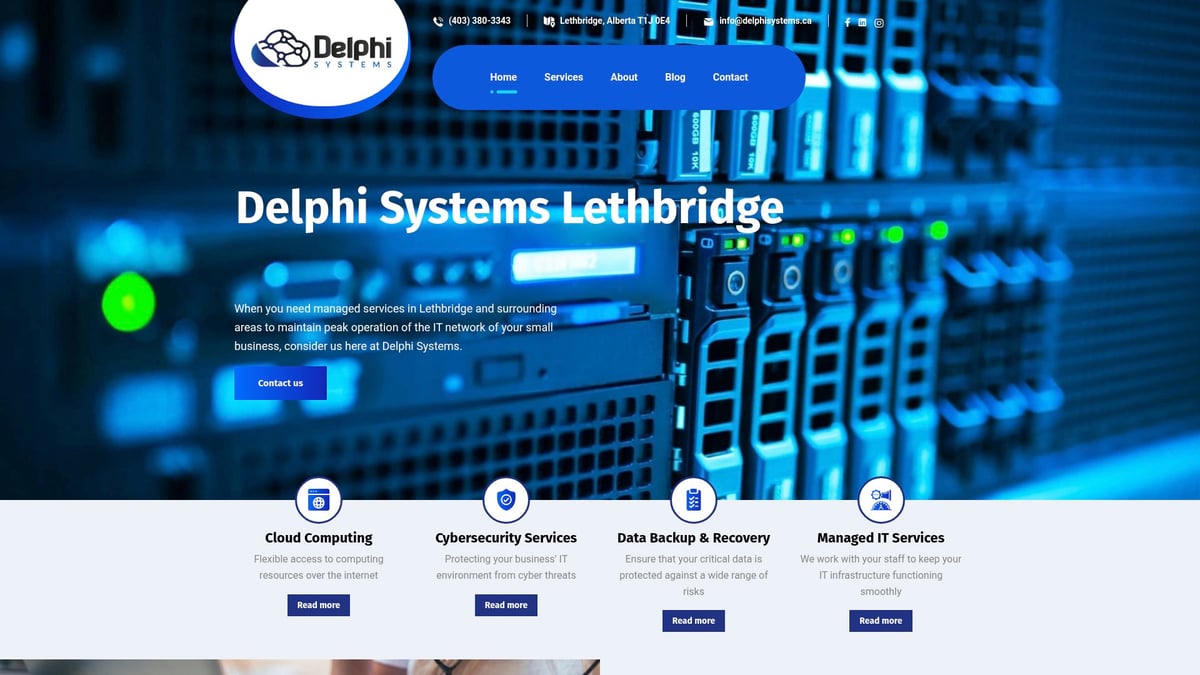
Delphi Systems Inc. delivers reliable outsourced IT helpdesk solutions tailored for small businesses in Lethbridge and nearby areas. Their team ensures your technology remains secure, efficient, and always supported.
Key services include:
- Proactive system monitoring and maintenance
- Fixed-rate IT support for predictable costs
- Cloud solutions and secure data backup
- Robust cybersecurity protection
With all-inclusive support, Delphi Systems Inc. allows you to focus on growing your business while safeguarding your IT infrastructure. Their local expertise, transparent pricing, and vendor partnerships set them apart as the ideal choice for businesses seeking a dependable outsourced IT helpdesk partner.
As you’ve seen throughout this guide, navigating the evolving IT landscape in 2026 means making smart choices about how you manage your technology. By outsourcing your IT helpdesk, you gain access to expertise, advanced tools, and around-the-clock support—giving you peace of mind and more time to focus on what matters most: growing your business. If you’re ready to discover how a local partner can help you strengthen your IT infrastructure and support your team’s productivity, I invite you to reach out and start a conversation with us.
Call us now

