


The stakes for protecting digital assets have never been higher. As we approach 2026, organizations face unprecedented challenges from a surge in sophisticated cyber threats and the rapid evolution of IT infrastructure.
High-profile breaches continue to make headlines, reminding IT professionals, business leaders, and students that robust network security and management are essential for business continuity and resilience.
This guide delivers a comprehensive overview of the principles, technologies, and best practices needed to safeguard and optimize modern networks. Explore the latest threats, core security concepts, management strategies, compliance requirements, and future trends. Gain actionable insights to stay one step ahead in a constantly shifting landscape.
The Evolving Landscape of Network Security in 2026
The landscape of network security and management is undergoing rapid transformation as we approach 2026. Organizations face an ever-changing threat environment, new compliance demands, and a constantly expanding digital footprint. Staying ahead requires understanding the threats, regulations, and complex environments that shape today's security priorities.

Rising Cyber Threats and Attack Vectors
Cyber threats are becoming more sophisticated and damaging each year. Ransomware attacks now target not just large corporations but also small businesses, healthcare providers, and public infrastructure. Phishing campaigns are leveraging social engineering tactics and deepfake technology, making it harder for users to detect malicious emails.
AI-driven attacks are a notable trend, with threat actors deploying machine learning to automate attacks, evade detection, and exploit vulnerabilities faster than ever. IoT devices, often lacking robust security controls, present attractive entry points for attackers. In fact, the global cost of cybercrime is projected to surpass $10.5 trillion annually by 2025, underlining the critical importance of network security and management.
Recent high-profile incidents, such as supply chain breaches and attacks on managed service providers, have disrupted business continuity and caused significant financial loss. Nation-state actors and organized crime groups are increasing their efforts, employing advanced techniques and leveraging zero-day vulnerabilities. To stay informed about these evolving threats, review the latest Cybersecurity Trends for 2026.
Regulatory and Compliance Changes
The regulatory landscape for network security and management continues to evolve, with new and updated laws affecting organizations worldwide. Regulations such as GDPR, CCPA, and sector-specific mandates require businesses to implement stronger data protection measures, conduct regular audits, and respond swiftly to incidents.
Compliance is not just about avoiding fines. It also protects an organization's reputation and builds trust with customers and partners. The rise of data sovereignty laws means that companies must address cross-border data transfer and storage challenges, ensuring that sensitive information remains within specified jurisdictions.
Industry-specific mandates, such as those for healthcare and finance, add additional layers of complexity. Adapting to these changes requires ongoing investment in network security and management, including policy updates, employee training, and technical controls. Organizations that stay proactive can better navigate compliance risks and reduce the likelihood of costly breaches.
The Expanding Attack Surface: Cloud, IoT, and Remote Work
Digital transformation has expanded the attack surface for network security and management. Cloud adoption is accelerating, offering scalability and flexibility, but also introducing shared responsibility models and new risks. Misconfigured cloud services and unsecured APIs are frequent targets for attackers.
The proliferation of IoT devices in offices, factories, and remote locations creates more potential entry points. Many of these devices lack basic security features, making them susceptible to exploitation. Meanwhile, remote and hybrid work models have increased the number of endpoints accessing corporate networks from diverse locations.
To address these challenges, organizations must implement adaptive security policies and continuous monitoring. Real-time visibility, automated threat detection, and robust access controls are essential for minimizing risk. As environments become more complex, effective network security and management require a holistic approach that evolves with the threat landscape.
Core Principles of Modern Network Security
Mastering the core principles of network security and management is non-negotiable in 2026. These foundational strategies help organizations stay resilient amid evolving cyber threats and complex IT environments.

Defense-in-Depth Strategy
A defense-in-depth approach is central to robust network security and management. This multi-layered strategy integrates protections at the perimeter, internal network, endpoints, and application layers. Each layer serves as a barrier, reducing the risk of a single point of failure.
Segmentation and redundancy are vital. By dividing networks into smaller segments, organizations can contain breaches and prevent attackers from moving laterally. For instance, a financial institution thwarted a ransomware attack when its segmented network isolated the infected systems, ensuring business continuity.
Key elements of defense-in-depth include:
- Firewalls and intrusion prevention systems
- Network segmentation with VLANs or microsegmentation
- Endpoint protection and application controls
Implementing these layers ensures that network security and management remain strong, even when one barrier is breached.
Zero Trust Architecture
Zero Trust Architecture has become a pillar of network security and management. The principle is simple: never trust, always verify. Every user and device must be authenticated and authorized, regardless of their location.
Implementing Zero Trust involves:
- Rigorous identity verification for all users and devices
- Enforcing least privilege access
- Continuous monitoring for suspicious activity
The evolution of Zero Trust is now intertwined with artificial intelligence, leading to adaptive, AI-driven frameworks. For a deeper exploration of these advancements, see Zero Trust Architecture 2.0.
Adopting Zero Trust reduces the potential for lateral movement during an attack and minimizes insider threats, which are increasingly prevalent in today’s digital landscape.
Encryption and Data Protection
Effective network security and management require rigorous data protection measures. End-to-end encryption is the standard for safeguarding data both in transit and at rest. Strong encryption protocols prevent unauthorized access, even if attackers breach other defenses.
Key management is equally important. Poorly managed encryption keys can become a vulnerability, so organizations must follow best practices for storage and rotation.
A recent case study highlights this principle: A healthcare provider avoided a catastrophic data breach when their encrypted patient records remained unreadable after a cyberattack, protecting sensitive information and reputation.
Best practices for encryption and data protection:
- Implement industry-standard encryption algorithms
- Regularly audit and rotate encryption keys
- Monitor for unauthorized access attempts
Security Awareness and Human Factors
Human error remains a leading cause of security incidents in network security and management. Over 80% of breaches involve social engineering or mistakes by staff. Building a culture of security awareness is therefore essential.
Employee training programs should cover:
- Recognizing phishing and social engineering tactics
- Proper password hygiene and multi-factor authentication
- Reporting suspicious activity promptly
Organizations benefit from ongoing training, simulated phishing tests, and clear communication channels for reporting threats. Empowering employees creates a human firewall, strengthening the overall security posture.
Incident Response and Business Continuity Planning
No network security and management strategy is complete without a robust incident response plan. Rapid detection and containment of threats can mean the difference between a minor disruption and a major crisis.
Key steps include:
- Developing and documenting incident response procedures
- Regularly testing and updating the plan
- Establishing communication protocols for stakeholders
A strong business continuity plan ensures that critical operations can continue during and after an incident. For example, a manufacturing company minimized downtime during a malware outbreak by activating predefined response protocols and restoring systems from secure backups.
Network Management Strategies for 2026
In 2026, network security and management require a proactive, strategic approach. The evolving threat landscape, rapid technology changes, and increasing operational complexity make it essential to adopt modern strategies. Organizations that prioritize robust network security and management will be better equipped to protect assets, ensure business continuity, and drive innovation.
Proactive Network Monitoring and Automation
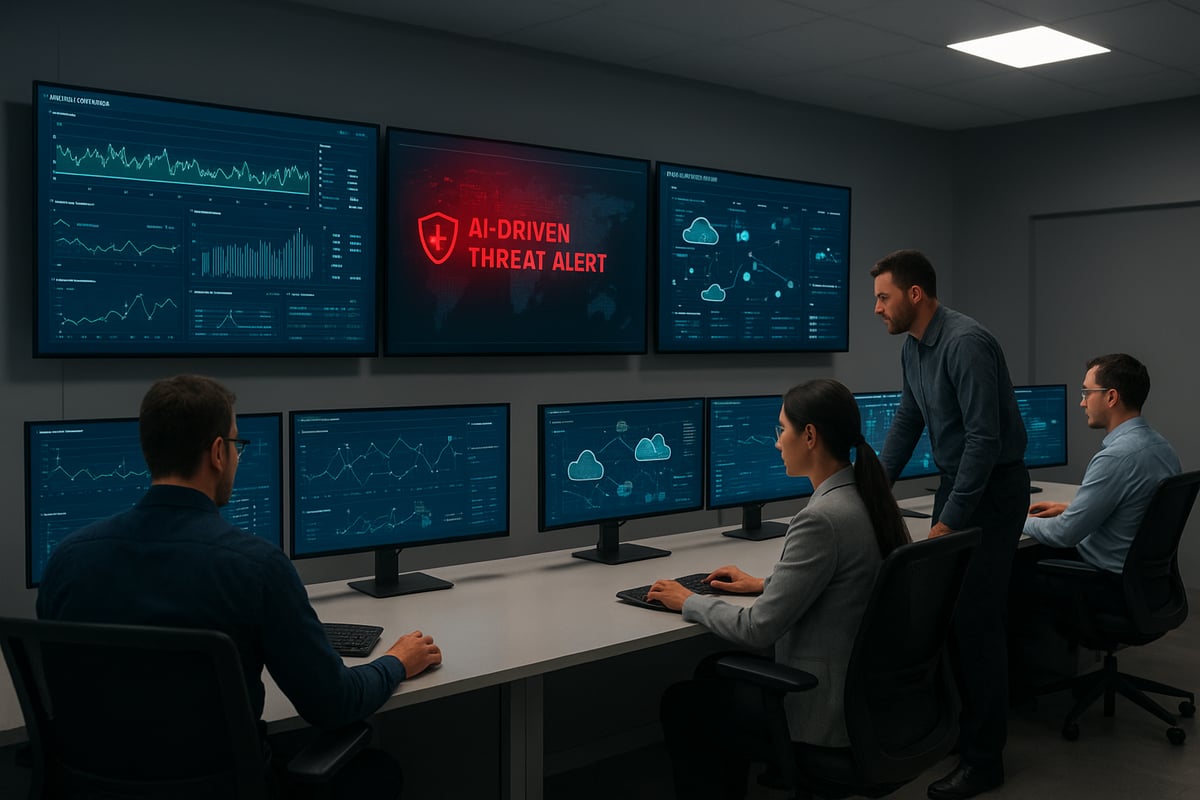
Continuous monitoring has become the backbone of effective network security and management. Real-time analytics and automated threat detection allow teams to spot anomalies before they escalate. Leveraging AI and machine learning, organizations can identify patterns, predict threats, and automate responses for faster mitigation.
Modern monitoring tools reduce manual workload and improve accuracy. For example, AI-driven platforms can adapt to new threat vectors, helping teams stay ahead of attackers. To explore how artificial intelligence is transforming these operations, see AI in Network Operations.
Automated workflows not only enhance efficiency but also ensure consistent enforcement of security policies. By integrating automation with monitoring, organizations strengthen their overall network security and management posture.
Network Segmentation and Access Control
Proper segmentation is vital for network security and management. Dividing networks into logical or physical segments isolates sensitive assets and limits lateral movement during a breach. Segmentation helps contain incidents and reduces the risk of widespread compromise.
Role-based access control (RBAC) and network access control (NAC) systems ensure only authorized users access specific resources. By setting granular permissions, organizations minimize the attack surface and enhance compliance.
Segmented networks also aid in faster incident response. When a breach occurs, the impact can be confined to a single segment, protecting the broader environment. This layered approach is a best practice for modern network security and management.
Patch Management and Vulnerability Assessment
Timely patching is a cornerstone of network security and management. Outdated software and firmware are common entry points for cyber attackers. Regular vulnerability assessments help organizations identify and prioritize risks before they are exploited.
Automated patch deployment tools simplify the process, ensuring updates are applied promptly across all network devices. Vulnerability scanning should be continuous, with clear reporting and remediation steps.
A structured patch management process not only reduces risk but also supports compliance with regulatory standards. Proactive vulnerability assessment is essential for maintaining a resilient network security and management framework.
Performance Optimization and Scalability
Balancing performance with security is crucial for network security and management. High-speed networks must remain reliable while defending against evolving threats. Performance optimization tools, such as bandwidth management and traffic shaping, help ensure critical applications run smoothly.
Scalability is equally important as organizations grow and adopt new technologies. Future-proofing the network means investing in solutions that support increased traffic, cloud integration, and emerging tools.
Regularly reviewing network performance metrics allows IT teams to identify bottlenecks and optimize resources. This proactive stance strengthens both network security and management.
Managed IT Services and Outsourcing
Many organizations turn to managed service providers (MSPs) to enhance network security and management. MSPs offer expertise, advanced tools, and proactive support that smaller IT teams may lack. Outsourcing can be cost-effective, providing predictable expenses and scalable protection.
When selecting an MSP, consider the following:
| Criteria | Importance |
|---|---|
| Security Expertise | Critical |
| Service Level Agreements | High |
| Technology Partnerships | High |
| Local Support | Valuable |
Partnering with the right MSP allows businesses to focus on core operations while experts manage network security and management. This collaboration leads to stronger defenses, faster issue resolution, and peace of mind.
Essential Technologies Shaping Network Security and Management
The pace of innovation in network security and management is accelerating rapidly. As organizations adapt to more complex digital environments, leveraging the right technologies is crucial. This section explores the core tools and platforms shaping secure, resilient, and adaptable networks.

Next-Generation Firewalls and Intrusion Detection/Prevention
Modern next-generation firewalls (NGFWs) are the first line of defense in network security and management. These devices go beyond traditional packet filtering, incorporating deep packet inspection and real-time threat intelligence.
NGFWs can identify and control applications, block advanced threats, and provide granular visibility into network traffic. Intrusion Detection and Prevention Systems (IDS/IPS) complement NGFWs by monitoring for suspicious activity and automatically blocking malicious actions.
For example, an NGFW can stop multi-vector attacks by combining signature-based detection with behavioral analysis. Together, these technologies help organizations maintain robust network security and management while minimizing false positives.
| Feature | Traditional Firewall | Next-Gen Firewall |
|---|---|---|
| Packet Filtering | Yes | Yes |
| Deep Packet Inspection | No | Yes |
| Threat Intelligence | No | Yes |
Endpoint Detection and Response (EDR)
Endpoint Detection and Response has become vital for network security and management, especially with the growth of remote and hybrid workforces. EDR solutions continuously monitor endpoints, such as laptops and mobile devices, for malicious behavior.
By integrating with Security Information and Event Management (SIEM) and Security Orchestration, Automation, and Response (SOAR) platforms, EDR provides real-time alerts and automated responses. This reduces the time attackers have to move laterally within a network.
Benefits of EDR include rapid detection, containment, and investigation of threats. As cybercriminals target users’ devices, EDR tools are essential for holistic network security and management strategies.
Secure Access Service Edge (SASE) and SD-WAN
Secure Access Service Edge (SASE) is transforming network security and management by converging networking and security functions into a single cloud-delivered service. SASE combines capabilities like secure web gateways, cloud access security brokers, and Zero Trust Network Access.
Software-Defined Wide Area Network (SD-WAN) enables agile, secure branch connectivity and optimized traffic routing. SASE and SD-WAN together support distributed workforces and multi-cloud environments.
Research into Energy-Efficient 6G Networks highlights how future-ready architectures can enhance sustainability, an important factor for next-generation network security and management. Both SASE and SD-WAN are paving the way for adaptive, scalable, and environmentally conscious network management.
Identity and Access Management (IAM)
Identity and Access Management is foundational for effective network security and management. IAM platforms centralize user authentication, enforce multi-factor authentication (MFA), and enable single sign-on (SSO) across applications.
With privileged access management, organizations can control who accesses critical systems and data. IAM reduces the risk of credential theft and unauthorized access, helping prevent both external intrusions and insider threats.
Clear policies, regular reviews, and automation are essential for maintaining strong IAM practices. This ensures only the right people can access sensitive areas, supporting secure network security and management.
Artificial Intelligence and Machine Learning in Security
Artificial Intelligence and Machine Learning are revolutionizing network security and management. AI-powered tools analyze vast amounts of network data, detecting anomalies and automating responses to threats.
Machine learning models can identify patterns of malicious activity that traditional tools might miss. Automated response systems help reduce the time it takes to contain incidents, improving overall resilience.
Adoption of AI in network security and management is projected to grow by over 23% annually, emphasizing its role in future defenses. While AI brings powerful new capabilities, organizations must also address challenges like model bias and data privacy.
Compliance, Risk Management, and Governance
As organizations adapt to a rapidly changing threat landscape, compliance, risk management, and governance are fundamental pillars of effective network security and management. Understanding these areas is crucial for building resilient systems and ensuring business continuity.
Navigating Regulatory Requirements
Network security and management strategies must account for an evolving regulatory landscape. Key regulations affecting organizations include:
- GDPR (General Data Protection Regulation)
- CCPA (California Consumer Privacy Act)
- HIPAA, PCI DSS, and sector-specific mandates
Building a compliance roadmap involves mapping out relevant laws, conducting regular audits, and documenting controls. Proactive compliance management not only helps avoid penalties but also builds trust with clients and partners. For example, a financial services firm that implemented routine compliance checks was able to avoid costly fines during a surprise audit.
Staying informed on regulatory updates is essential for effective network security and management.
Risk Assessment and Mitigation
A robust risk assessment process is central to network security and management. Organizations use frameworks such as NIST and ISO 27001 to identify, evaluate, and prioritize risks. There are two main types of risk assessments:
| Assessment Type | Description | Use Case |
|---|---|---|
| Quantitative | Assigns numerical values to risks | Budgeting, insurance decisions |
| Qualitative | Uses categories and judgments | Policy development, quick scans |
Mitigation strategies may include technical controls, user training, and regular monitoring. Tracking progress over time ensures that risk levels remain acceptable and aligned with business objectives.
Governance and Policy Development
Developing clear, enforceable policies is a cornerstone of network security and management. Effective governance involves:
- Defining roles and responsibilities
- Establishing acceptable use policies
- Creating incident response protocols
Leadership and organizational culture play a vital role in enforcing these policies. Regular policy reviews keep controls relevant and effective as new threats emerge. Organizations with strong governance frameworks see fewer security incidents and respond more efficiently when challenges arise.
Third-Party and Supply Chain Risk
Vendors and service providers can introduce new vulnerabilities to your network security and management posture. Managing these risks requires careful evaluation through:
- Security questionnaires and assessments
- Contractual requirements for data handling
- Ongoing monitoring of third-party activities
Recent supply chain incidents have highlighted the importance of due diligence. By regularly reviewing third-party relationships and requiring strong security standards, organizations can reduce their exposure to external threats and maintain a resilient network environment.
Future Trends and Innovations in Network Security and Management
As 2026 approaches, the landscape of network security and management continues to evolve at a rapid pace. Forward-thinking IT professionals must stay alert to new technologies, shifting threats, and the expanding demands of digital infrastructure.
Quantum Computing and Cryptography
Quantum computing is poised to disrupt traditional encryption methods, presenting both opportunities and risks for network security and management. As quantum machines become more powerful, they could break widely used cryptographic algorithms. In response, organizations are beginning to adopt quantum-resistant cryptographic standards. Industry leaders are assessing readiness and updating protocols to safeguard sensitive data as quantum threats emerge.
The Role of Automation and Orchestration
Automation and orchestration are transforming network security and management. Automated incident response tools can detect and mitigate threats in real time, reducing human error. Orchestration platforms unify multiple security solutions, streamlining operations and ensuring consistent policy enforcement. These advancements enable organizations to respond faster to incidents and improve overall efficiency.
Edge Computing and 5G Networks
The rise of edge computing and 5G networks creates new challenges for network security and management. With data processed closer to endpoints, attack surfaces expand, and securing distributed environments becomes more complex. Industrial IoT deployments, for example, require tailored edge security solutions to protect sensitive operations. Continuous monitoring and adaptive policies are essential to mitigate these risks.
Evolving Workforce and Skills Demands
The demand for skilled professionals in network security and management is growing rapidly. A projected cybersecurity workforce gap of 3.5 million by 2025 underscores the need for ongoing education and certification. Organizations are prioritizing upskilling, offering training in cloud security, AI, and risk assessment. Investing in talent development is critical to address evolving threats and maintain robust defenses.
Predictions for the Next Decade
Looking ahead, network security and management will continue to converge, driven by new threats and emerging technologies. Anticipate the rise of more sophisticated attacks, broader use of AI, and tighter integration between security and network operations. Adaptability and proactive strategies will be vital for future-proofing digital infrastructures amid constant change.
As we look ahead to 2026, staying proactive about your network security and management isn’t just a best practice—it’s essential for protecting your business’s future. You’ve seen how threats are evolving and why a strong, managed IT strategy makes all the difference for small businesses in our community. If you’re ready to focus on what you do best while experts ensure your IT infrastructure is secure and efficient, let’s talk about how we can help. For personalized guidance and peace of mind, Call us now.

