
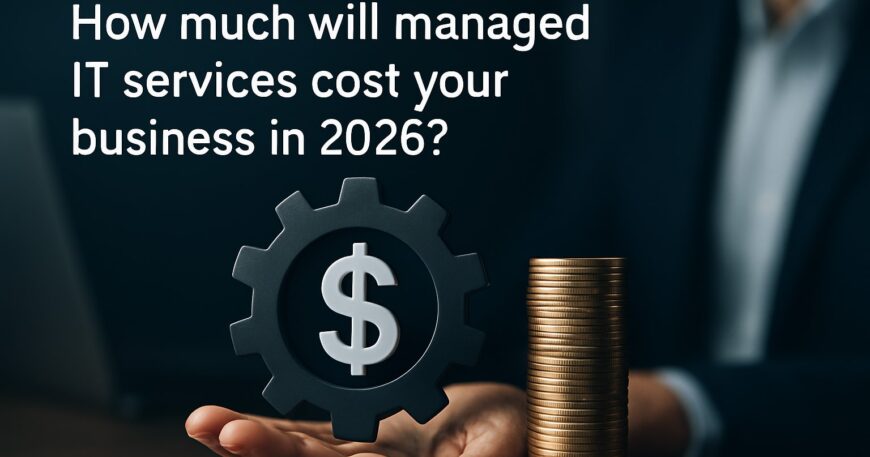
How much will managed IT services cost your business in 2026? As companies become more dependent on technology, understanding what you will pay for IT support is more important than ever.
Many organizations struggle to navigate the complexities and uncertainties surrounding managed IT services cost. The stakes are high, with IT now central to business operations and security.
Knowing the managed IT services cost trends for 2026 is essential for budgeting, minimizing risk, and ensuring your operations run smoothly. Without this insight, you could face unexpected expenses or service gaps.
In this guide, we break down what managed IT services mean, explain pricing models, outline key cost factors, and share future trends, sample pricing, ROI tips, and practical budgeting steps.
Our goal is to clarify managed IT services cost for 2026, so you can make informed decisions and plan with confidence.
What Are Managed IT Services?
Understanding managed IT services is foundational when considering managed IT services cost for your business in 2026. As organizations increasingly rely on technology, the term "managed IT services" has become central to modern business strategy. But what does it really mean and why does it matter for your bottom line?

Defining Managed IT Services
Managed IT services refer to outsourcing your company's IT operations to a specialized third-party provider. These experts proactively manage, monitor, and support your technology infrastructure. Services typically include network monitoring, cybersecurity protection, data backup, cloud management, and helpdesk support.
There are two primary models: all-inclusive and co-managed. In an all-inclusive setup, the provider handles every aspect of IT, ideal for small businesses lacking internal resources. For larger organizations, co-managed services supplement the in-house IT team, focusing on specific areas like cybersecurity or cloud support.
For example, a small retail business might outsource its entire IT environment, relying on the provider for everything from troubleshooting to cloud migration. In contrast, a large corporation may keep a dedicated IT department but partner with a managed service provider to enhance its security posture.
According to recent industry research, more than 700 businesses and over 1,100 municipalities now leverage managed IT services, reflecting broad adoption across sectors. The managed IT services cost varies based on the scope and complexity of services chosen, making it important to understand that solutions are never one-size-fits-all.
As technology grows more complex, managed IT services have become mission critical. Businesses face increasing cyber threats, rapid software updates, and evolving compliance demands, all of which impact managed IT services cost. With IT spending forecasted to grow globally, understanding these services is essential for effective planning. For context, Analysys Mason reports that SMB spending on managed IT services is set to rise, highlighting the growing role these solutions play in business operations.
Why Businesses Choose Managed IT Services
One of the main reasons businesses turn to managed IT services is cost savings. Hiring, training, and retaining in-house IT staff can be expensive and difficult, especially as the managed IT services cost continues to rise with demand for expertise. Outsourcing provides immediate access to a deep pool of specialists and the latest technologies, all at a predictable monthly rate.
Scalability and flexibility are also major draws. Managed IT services can quickly adapt as your business grows, whether you add new locations or transition to remote work models. This flexibility ensures you only pay for the services you need, keeping managed IT services cost aligned with your actual requirements.
Proactive maintenance is another key benefit. Providers monitor your systems around the clock, identifying and resolving issues before they disrupt business operations. For instance, law firms and healthcare providers often depend on managed IT services for strict compliance and data security, helping them avoid costly breaches and regulatory penalties.
By outsourcing IT, organizations can focus on their core business goals rather than technical headaches. Managed IT services cost is not just an expense—it is an investment in productivity, security, and peace of mind. With the right provider, businesses gain a strategic partner dedicated to supporting growth and innovation.
Managed IT Services Pricing Models in 2026
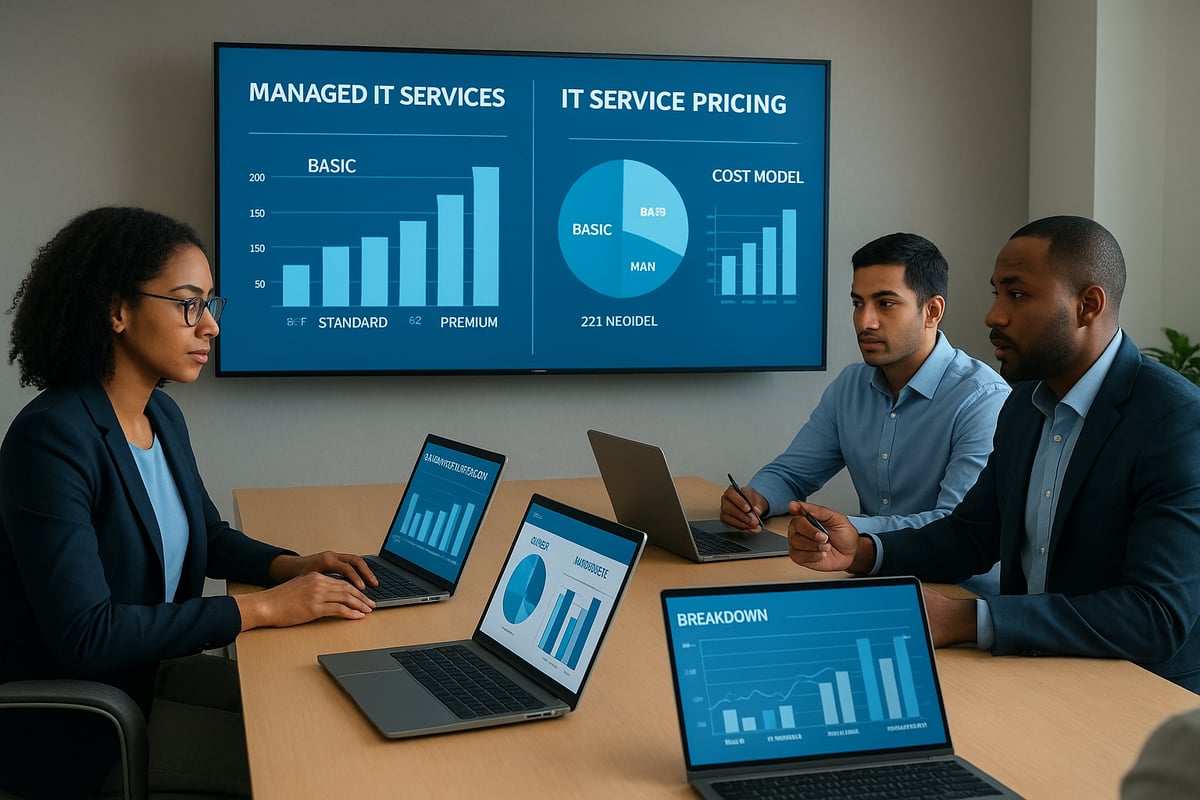
Understanding the managed it services cost landscape in 2026 starts with knowing the available pricing models. As businesses plan IT budgets, choosing the right model can make a significant difference in predictability, scalability, and total cost of ownership. Let’s break down the most common pricing models you’ll encounter.
Per-Device Pricing Model
The per-device pricing model charges clients based on the number of devices under management. This includes desktops, laptops, servers, and sometimes network equipment or printers.
- Pros: Simple billing, easy to scale for small businesses, and transparent managed it services cost calculations.
- Cons: Costs can rise rapidly as device count increases, making this model less suitable for growing or device-heavy organizations.
For example, a small business with 30 devices might expect a managed it services cost of $100 to $150 per device monthly. This model is ideal for companies with a stable or low device count, offering clarity for budgeting.
Per-User Pricing Model
In the per-user pricing model, providers charge based on the number of unique users, regardless of how many devices each user has. This model bundles support for all devices a user may operate.
- Pros: Predictable managed it services cost, simple for organizations with varying device types per employee, and easy to forecast as staff numbers change.
- Cons: May not account for users who use significantly more IT resources or devices, potentially leading to uneven cost distribution.
A company with a high device-to-user ratio, such as a design agency, may find this model more cost-effective. For instance, a business with 50 users could anticipate a managed it services cost within a set monthly range, simplifying financial planning.
Tiered Pricing Model
Tiered pricing offers multiple service packages at different price points, each with its own feature set. Businesses select the tier that aligns with their needs and budget.
- Pros: Flexibility to choose managed it services cost based on feature requirements, scalability as needs evolve, and the ability to upgrade tiers as the business grows.
- Cons: Risk of paying for unused features if the wrong tier is chosen, and complexity in comparing packages across providers.
A startup might opt for a basic tier covering essential support, while a larger firm could select a premium tier with advanced security and compliance. This model adapts to changing business requirements and managed it services cost expectations.
All-Inclusive/Flat-Rate Model
The all-inclusive or flat-rate model provides a comprehensive suite of IT services for a single monthly fee. This model is designed for predictability and peace of mind.
- Pros: Fixed managed it services cost, comprehensive coverage, and easier budgeting for businesses that prefer stability in expenses.
- Cons: May include services not required by every client, potentially leading to higher costs for those with minimal needs.
Delphi Systems Inc., for example, offers flat-rate packages that include everything from helpdesk support to cybersecurity. This approach is popular among small businesses seeking a hassle-free managed it services cost structure.
Custom/À La Carte Pricing
Custom or à la carte pricing allows businesses to tailor their service package, selecting only the IT services they require. This model is especially popular with organizations in specialized industries or with unique needs.
- Pros: Highly customizable managed it services cost, pay only for what you use, and adaptable to niche requirements.
- Cons: Can be complex to manage, compare, and predict, especially as services change over time.
As IT complexity increases and specialized needs arise, more companies are adopting this model. According to Gartner forecasts 9.8% IT spending growth in 2026, rising IT investments are likely to fuel further customization and impact managed it services cost structures.
Each pricing model offers distinct advantages and challenges. Carefully evaluating your organization’s size, needs, and growth plans will help you select the most effective managed it services cost model for 2026.
Factors Affecting Managed IT Services Cost in 2026
Understanding what drives managed IT services cost in 2026 is essential for accurate budgeting and informed decision-making. Multiple factors contribute to pricing, and each business will have a unique cost profile based on its needs and environment.

Company Size and Complexity
A primary driver of managed IT services cost is the size and complexity of your organization. Larger companies naturally require support for more users, devices, and locations, which increases the scope of work for IT providers.
- More users and devices lead to greater management overhead.
- Multiple departments or custom applications add complexity.
For example, a multinational corporation with hundreds of employees and offices worldwide will see a much higher managed IT services cost than a local business with a single site. As data and endpoints multiply, the need for advanced monitoring and security grows, directly impacting overall pricing.
Number of Locations and Remote Work
The number of business locations and prevalence of remote or hybrid work arrangements significantly influence managed IT services cost. Multi-site organizations need integrated solutions to connect offices securely and reliably.
- More locations increase network complexity.
- Remote work demands secure cloud services and VPNs.
A business supporting remote teams must invest in additional security and cloud infrastructure. This leads to increased managed IT services cost as providers implement tools to ensure data protection and seamless access across all environments.
Service Level Agreements (SLAs)
Service Level Agreements are critical in determining managed IT services cost. SLAs define response times, uptime guarantees, and support availability.
- 24/7 support or rapid response times cost more.
- Mission-critical operations require robust SLAs.
For example, a company needing guaranteed 99.99% uptime and round-the-clock support will pay a premium compared to those satisfied with business hours coverage. Clear, detailed SLAs are essential for businesses where IT downtime is not an option, and this is reflected in the managed IT services cost.
Scope of Services Required
The breadth and depth of services chosen directly affect the managed IT services cost. Basic IT support is less expensive than packages including advanced cybersecurity, compliance management, and disaster recovery.
- Basic: Helpdesk, device management, simple backups.
- Advanced: Threat detection, compliance, incident response, cloud integration.
Businesses in highly regulated industries, such as healthcare or finance, often require more sophisticated security and compliance solutions. As global cybersecurity spending is projected to reach $213 billion in 2025, investments in these areas are rising, influencing managed IT services cost. Global cybersecurity spending to reach $213 billion in 2025
Amount of Data and Storage Needs
Data volume is another key factor in managed IT services cost. Organizations managing large databases, customer records, or multimedia files require more storage, backup, and disaster recovery solutions.
- More data means higher storage and backup costs.
- Frequent backups and offsite replication add to expenses.
For example, a business with extensive customer data must invest in robust, secure storage infrastructure, which increases the managed IT services cost compared to a company with minimal data needs.
Contract Length and Commitment
The duration and structure of your service contract can significantly affect managed IT services cost. Providers often offer discounted rates for longer commitments.
| Contract Length | Discount Rate | Flexibility |
|---|---|---|
| 12 months | Low | High |
| 24 months | Medium | Medium |
| 36 months | High | Lower |
Short-term or month-to-month agreements usually come at a higher managed IT services cost but provide more flexibility for changing business needs.
Industry-Specific Requirements
Certain industries face additional factors impacting managed IT services cost. Healthcare, finance, and defense contractors must comply with strict regulations, such as HIPAA or CMMC.
- Higher compliance standards increase pricing.
- Specialized support for audits and reporting may be required.
For instance, a healthcare clinic needs encrypted backups and incident response protocols, leading to a higher managed IT services cost than a retail business without such stringent requirements.
2026 Managed IT Services Cost Trends and Predictions
How will the managed it services cost landscape evolve in 2026? Businesses are already bracing for significant changes as market pressures mount. Experts predict average monthly fees will range from $100 to $200 per user or device. Several factors, including inflation and a global shortage of skilled IT professionals, are expected to push prices higher. Cloud computing costs are also a concern, with industry leaders warning of substantial increases in cloud service prices by mid-2026. For example, OVH CEO predicts cloud price increases by mid-2026, which could directly impact managed it services cost for businesses that rely on cloud platforms.

Evolving Service Offerings
Service offerings are rapidly expanding as technology advances. Managed service providers are bundling cloud computing, zero-trust security, and artificial intelligence-driven monitoring into their packages. This evolution is driving up the managed it services cost, as clients demand integrated solutions that address both productivity and security. Providers are also introducing compliance-as-a-service, which helps businesses meet complex regulatory standards. Bundled options are becoming the norm, making it easier for organizations to access a comprehensive suite of services under one contract.
Businesses should expect to see more value-added offerings, but also a need to carefully evaluate which services are essential, as these changes will influence managed it services cost in the coming years.
Enhanced Security and Compliance
The managed it services cost is also rising due to escalating cybersecurity threats. In 2026, more organizations will prioritize advanced security measures, such as 24/7 threat monitoring, endpoint protection, and incident response. Heightened regulatory requirements, especially in industries like healthcare and finance, are leading to higher baseline costs for managed IT services.
Providers are responding by integrating robust compliance features into their offerings. This shift ensures that businesses remain protected and compliant, but it also means that the managed it services cost will reflect the increased demand for specialized expertise and resources.
Flexible and Scalable Contracts
Another major trend is the shift toward flexible, scalable contracts. Businesses want the ability to add or remove users and services quickly as needs change. Managed service providers are responding with month-to-month or usage-based billing options, allowing companies to better control their managed it services cost.
This flexibility is especially valuable for organizations experiencing rapid growth, seasonal fluctuations, or workforce changes. By offering adaptable agreements, providers help clients align their IT spending with business realities, ensuring managed it services cost remains in check.
Regional and Industry Variations
Managed it services cost will continue to vary based on region and industry. Urban centers and highly regulated sectors, such as healthcare and finance, typically face higher pricing due to greater complexity and compliance demands. For instance, a business in Toronto may see higher monthly fees than one in a smaller city, and a defense contractor will likely pay more than a local retailer.
In summary, 2026 will bring higher managed it services cost, driven by economic trends, evolving technologies, and a heightened focus on security and compliance. Businesses should stay informed and proactive, regularly reviewing contracts and service offerings to ensure they receive optimal value.
Sample Managed IT Services Pricing Scenarios for 2026
Understanding the managed it services cost landscape can be challenging, especially with evolving technology and business needs. To help you plan for 2026, here are realistic pricing scenarios that reflect what different organizations might expect to pay. These examples show how cost structures vary based on business size, service scope, and industry requirements.
Small Business Example
For a small business with 20 users at a single location, the managed it services cost typically ranges from $2,000 to $3,000 per month. This scenario often includes essential IT support, helpdesk access, network monitoring, endpoint security, and basic cloud backup.
- Coverage: Per-user or all-inclusive model.
- Services: Helpdesk, monitoring, basic cyber protection.
- Budget: Predictable monthly expense.
This pricing enables small businesses to access professional IT management without the overhead of hiring internal staff.
Mid-Sized Business Example
A mid-sized business with 75 users across three locations faces a higher managed it services cost, usually between $8,000 and $12,000 per month. This reflects increased complexity, with needs such as advanced cybersecurity, regulatory compliance, and cloud services.
- Coverage: Tiered or custom package.
- Services: 24/7 support, disaster recovery, compliance management.
- Flexibility: Scalable as the business grows.
Such organizations benefit from robust IT frameworks that support growth and reduce operational risk.
Enterprise Example
Enterprises with 250 or more users and multiple locations require fully customized solutions. The managed it services cost for these organizations often exceeds $25,000 per month, reflecting the scope of integrations, compliance demands, and advanced security.
- Coverage: Custom packages tailored for scale.
- Services: Virtual CIO, vendor management, full-stack security.
- Focus: Strategic IT planning and business continuity.
Enterprises invest in comprehensive IT partnerships to drive innovation and long-term stability.
Industry-Specific Scenario
Some sectors, like healthcare and finance, have unique compliance and security needs. For example, a healthcare clinic prioritizing HIPAA compliance, encrypted backups, and rapid incident response will experience a higher managed it services cost than a typical office environment. These requirements drive up monthly fees but are essential for regulatory and patient data protection.
Cost Comparison Table
Below is a summary table to help visualize managed it services cost ranges by business size and pricing model:
| Business Size | Per-Device Pricing | Per-User Pricing | Tiered/Custom Pricing |
|---|---|---|---|
| Small Business | $2,000–$2,500 | $2,200–$3,000 | $2,300–$3,000 |
| Mid-Sized Business | $8,000–$10,000 | $9,000–$12,000 | $8,500–$12,000 |
| Enterprise | $25,000+ | $25,000+ | $25,000+ |
These scenarios illustrate how managed it services cost can be tailored to fit any organization’s needs, ensuring every dollar spent supports productivity and security.
Maximizing ROI: How to Get the Most Value from Managed IT Services
Maximizing your return on investment with managed IT services cost planning requires a strategic approach. By aligning services to your business objectives, carefully choosing a provider, and leveraging flexibility, you can ensure every dollar spent delivers measurable value. Let’s explore the most effective ways to get the most out of your managed IT services cost.
Align Services with Business Goals
To maximize the value of your managed IT services cost, start by mapping IT solutions to your strategic objectives. Identify which services directly impact productivity, security, or compliance. For example, if your business relies on rapid data access, prioritize robust backup and recovery. This alignment ensures your investment supports growth while avoiding unnecessary expenses.
Evaluate Providers Carefully
Not all providers deliver the same results for your managed IT services cost. Evaluate transparency in pricing, clarity in service level agreements, and the provider’s experience in your industry. Compare bundled versus à la carte offerings. Ask about their support structure, escalation paths, and references from similar businesses. Making an informed choice minimizes risk and maximizes ROI.
Leverage Scalability and Flexibility
Business needs change, so your managed IT services cost should adapt too. Choose a provider offering scalable solutions that can grow or contract with your organization. For example, if your workforce expands or shifts to remote work, your contract should allow for easy adjustments. Flexibility keeps your IT spend efficient and responsive to market changes.
Proactive Maintenance and Security
A significant portion of managed IT services cost is driven by proactive maintenance and security. Ongoing monitoring, regular updates, and threat prevention help prevent costly downtime. For instance, businesses with continuous threat monitoring experience fewer incidents and faster recovery times. Investing in proactive support reduces long-term expenses and enhances operational stability.
Predictable Budgeting and Cost Control
One of the biggest advantages of a well-structured managed IT services cost is predictable budgeting. Fixed-rate, all-inclusive packages simplify planning and eliminate surprise expenses. For example, Delphi Systems Inc. offers flat-rate IT services for small businesses, enabling accurate budgeting and peace of mind. Their comprehensive packages include proactive maintenance, cybersecurity, cloud services, and responsive support tailored to Lethbridge-area businesses. Learn more about Delphi Systems Inc.
Vendor Management and Strategic Consulting
Many providers include vendor management and strategic consulting as part of your managed IT services cost. This reduces complexity by consolidating communication with software and hardware vendors. Services like virtual CIO help you plan technology investments, oversee upgrades, and guide digital transformation. Strategic guidance ensures your IT strategy is always aligned with business goals.
Measuring and Communicating ROI
Track the impact of your managed IT services cost using clear metrics. Measure downtime reduction, productivity gains, and incident response times. Regularly review reports and share results with stakeholders. Case studies and real-world examples can help communicate the financial and operational benefits of managed IT adoption.
| ROI Metric | Description | Example Benefit |
|---|---|---|
| Downtime Reduction | Less time lost to outages | 20% fewer disruptions |
| Productivity Gains | Improved staff efficiency | Faster ticket resolution |
| Incident Response Times | Faster recovery from incidents | Shorter system outages |
By focusing on these strategies, your business can ensure the managed IT services cost delivers maximum value and supports long-term success.
Practical Steps to Budget for Managed IT Services in 2026
Budgeting for managed IT services cost in 2026 requires a clear, methodical approach. By following these practical steps, you can ensure your IT investment aligns with organizational goals and provides lasting value.
Assess Your Current IT Environment
Start by taking inventory of your existing IT assets. List all devices, users, software applications, and any current IT support agreements. Use network monitoring tools to map out your infrastructure.
Understanding what you already have is essential for accurately estimating your future managed IT services cost. This baseline helps prevent both underestimating and overpaying for services you do not need.
Define Business Priorities and Risks
Identify your organization’s most critical systems and compliance requirements. Rank applications and data by importance to daily operations.
This clarity ensures that your managed IT services cost reflects what matters most for your business. For example, healthcare providers may need to prioritize secure data backup and compliance above all else.
Get Multiple Quotes and Compare Offerings
Request detailed proposals from several managed service providers (MSPs). Ask for clear breakdowns of services, support levels, and pricing models.
Comparing per-user versus per-device options can reveal which structure best aligns with your managed IT services cost expectations. Use a table to compare features and pricing side by side for easy evaluation.
| Provider | Pricing Model | Monthly Cost | Included Services |
|---|---|---|---|
| Provider A | Per-User | $X,XXX | Helpdesk, Backup |
| Provider B | Flat-Rate | $X,XXX | Full IT Support |
| Provider C | Tiered | $X,XXX | Security, Monitoring |
Understand the Fine Print
Carefully review all service level agreements (SLAs), response times, and exclusions in each contract.
Make sure your managed IT services cost covers the support you actually need, including after-hours and emergency response if your business requires it. Overlooking contract details may result in unexpected expenses.
Plan for Growth and Flexibility
Choose contracts that allow you to scale services up or down as your business evolves. Ask each provider how easily you can add or remove users, devices, or locations.
A flexible agreement keeps your managed IT services cost aligned with real-time business needs, especially during periods of growth or change.
Allocate Budget for Unexpected Needs
Set aside contingency funds for emergencies, such as a sudden cyber incident or rapid technology upgrade.
Factoring in a buffer for surprises will help you avoid budget shortfalls and ensure your IT operations remain uninterrupted.
Monitor and Review Regularly
Schedule periodic reviews of your IT services and spending, at least once or twice a year. Analyze usage reports, service tickets, and provider performance.
Adjust your service tiers or provider relationships as your needs shift, ensuring you always get the best value from your managed IT investment.
As you consider your managed IT services options for 2026, remember that choosing the right partner can make all the difference in your business’s productivity and peace of mind. You deserve clear pricing, reliable support, and a solution tailored to your needs—just like we discussed throughout this guide. If you want to talk through your IT budget or see how a fixed-rate approach could benefit your business, I’m here to help. Let’s make your IT work for you so you can focus on what matters most.
Call us now

