Small businesses across Lethbridge and beyond face an increasingly complex threat landscape when it comes to protecting their digital assets. Information technology security issues have evolved far beyond simple virus protection, now encompassing sophisticated attacks that can cripple operations, compromise customer data, and devastate reputations. Understanding these threats and implementing comprehensive protection strategies has become essential for maintaining business continuity in 2026.
The Expanding Threat Landscape for Small Business IT
The cybersecurity challenges confronting organizations today extend well beyond traditional malware and spam. Modern information technology security issues involve multi-layered attack vectors that exploit both technological vulnerabilities and human behavior.
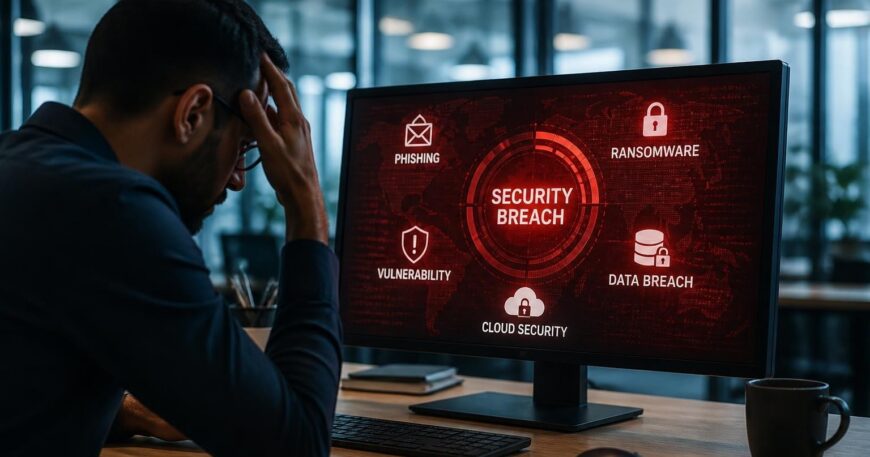
Ransomware continues to dominate as one of the most destructive threats. These attacks encrypt critical business data and demand payment for its release, often forcing companies to choose between paying criminals or losing access to essential files. The biggest cyber threats businesses face in 2026 include increasingly sophisticated ransomware-as-a-service models that make these attacks accessible to less technically skilled criminals.
Phishing attacks have become remarkably convincing through AI-powered personalization. Attackers now craft emails and messages that perfectly mimic legitimate communications from vendors, partners, or even internal team members. These social engineering tactics represent some of the most challenging information technology security issues because they target the human element rather than technical infrastructure.
AI-Powered Attack Strategies
Artificial intelligence has fundamentally changed how cybercriminals operate. Attackers leverage machine learning to:
- Analyze corporate communication patterns and create convincing impersonations
- Identify optimal timing for attacks based on employee behavior
- Automate the discovery of network vulnerabilities at unprecedented speed
- Generate thousands of variations of malicious code to evade detection
The sophistication of these AI-driven techniques means that traditional security measures often fall short. Businesses must adopt equally advanced defensive technologies to stay protected.

Critical Vulnerabilities in Business IT Infrastructure
Many information technology security issues stem from overlooked weaknesses within existing systems. These blind spots create opportunities for attackers to gain initial access before expanding their presence throughout the network.
Unpatched systems represent one of the most common yet preventable vulnerabilities. Software vendors regularly release security updates to address newly discovered flaws, but businesses often delay implementation due to concerns about disruption or compatibility. This creates windows of opportunity that attackers actively exploit. Understanding security blind spots that serve as prime entry points helps organizations prioritize their remediation efforts.
Misconfigured cloud services have emerged as a significant concern as businesses migrate more operations to cloud platforms. Default settings, overly permissive access controls, and inadequate encryption often leave sensitive data exposed. These configuration errors can occur during initial setup or when making subsequent changes without proper security review.
Network Security Gaps
| Vulnerability Type | Common Causes | Business Impact |
|---|---|---|
| Outdated Firewalls | Budget constraints, neglected maintenance | Unrestricted network access |
| Weak Authentication | Simple passwords, no multi-factor requirements | Account compromises |
| Unsecured Endpoints | Remote work devices, BYOD policies | Lateral network movement |
| Shadow IT | Unauthorized applications, unapproved services | Unmonitored data flows |
Legacy systems pose particular challenges because they may no longer receive security updates from vendors. Organizations running older operating systems or applications face information technology security issues that cannot be resolved through patching, requiring alternative mitigation strategies or system replacement.
Insider Threats and Human Error
Not all security incidents originate from external attackers. Information technology security issues frequently arise from internal sources, whether malicious or accidental.
Employee mistakes account for a substantial portion of data breaches and system compromises. Common scenarios include:
- Clicking on malicious links in convincing phishing emails
- Sharing credentials with unauthorized individuals
- Mishandling sensitive data by sending it to wrong recipients
- Falling victim to social engineering manipulation
- Improperly disposing of documents or storage devices containing confidential information
Malicious insiders represent a different category of threat. Disgruntled employees, contractors with excessive access, or individuals recruited by external threat actors can deliberately exfiltrate data, sabotage systems, or create backdoors for future access.
The top threats to information technology include both external attack vectors and these internal vulnerabilities that are often more difficult to detect and prevent.

Supply Chain and Third-Party Risks
Modern businesses operate within interconnected ecosystems of vendors, partners, and service providers. This interdependence creates information technology security issues that extend beyond direct control.
Vendor compromises can provide attackers with trusted pathways into target networks. When a software provider or service vendor experiences a breach, attackers may leverage that access to reach their customers. These supply chain attacks have become increasingly common and sophisticated.
Third-party applications and integrations introduce additional attack surface. Each connection point between systems represents a potential vulnerability if not properly secured. Organizations must evaluate the security posture of their vendors and implement controls that limit potential damage from compromised partners.
Managing Third-Party Security
- Conduct thorough vendor assessments before establishing relationships
- Require security certifications and compliance documentation
- Implement least-privilege access for vendor connections
- Monitor third-party activities within your environment
- Establish incident response protocols for vendor-related breaches
- Review and update agreements regularly to reflect current security standards
Cloud service dependencies multiply these concerns. Organizations using infrastructure-as-a-service, software-as-a-service, or platform-as-a-service offerings must understand their shared responsibility for security and ensure appropriate controls are in place.
Data Protection and Privacy Challenges
Information technology security issues increasingly intersect with regulatory compliance and privacy requirements. Businesses must protect customer data not only from a security perspective but also to meet legal obligations.
Data breaches carry severe consequences beyond immediate operational impact. Financial penalties under privacy regulations, legal liability, customer notification requirements, and reputational damage can dwarf the direct costs of the incident itself.
Encryption remains fundamental to data protection, yet many organizations fail to implement it comprehensively. Data should be encrypted both in transit and at rest, with proper key management procedures ensuring that encryption actually provides meaningful protection.
Backup and recovery capabilities determine how quickly businesses can resume operations after an incident. However, attackers increasingly target backup systems, understanding that eliminating recovery options increases the likelihood of ransom payment. Information technology security issues related to backup integrity require specialized attention and testing.
Essential Data Protection Controls
| Control Measure | Purpose | Implementation Priority |
|---|---|---|
| Encryption | Protect data confidentiality | Critical |
| Access Controls | Limit who can view/modify data | Critical |
| Data Classification | Identify sensitive information | High |
| Secure Backups | Enable recovery after incidents | Critical |
| Audit Logging | Track data access and changes | High |
| Data Loss Prevention | Prevent unauthorized exfiltration | Medium |
Mobile and Remote Work Security
The shift toward remote and hybrid work environments has introduced numerous information technology security issues that organizations must address. Personal devices, home networks, and public Wi-Fi connections create vulnerabilities that didn't exist when employees worked exclusively in controlled office environments.
Bring-your-own-device policies offer flexibility but complicate security management. Organizations must balance employee autonomy with the need to protect corporate data accessed from personal smartphones, tablets, and laptops.
Mobile device management solutions help enforce security policies on employee devices, enabling remote wiping, application controls, and configuration standards. However, implementation requires careful consideration of privacy concerns and employee acceptance.
Virtual private networks provide essential protection for remote connections, creating encrypted tunnels between employee devices and corporate networks. Yet VPN technology alone doesn't address all remote work security challenges, particularly when employees access cloud services directly.
Emerging Technology Vulnerabilities
As businesses adopt new technologies to improve efficiency and competitiveness, they simultaneously introduce fresh information technology security issues that may not yet have well-established protective measures.
Internet of Things devices proliferate in business environments, from smart thermostats and security cameras to industrial sensors and connected equipment. These devices often lack robust security features and receive infrequent updates, creating persistent vulnerabilities within the network.
Artificial intelligence and machine learning systems present unique security challenges. While these technologies enhance threat detection and response capabilities, they also create new attack surfaces. The reality that AI security is broken at runtime for most enterprises highlights the need for specialized approaches to securing AI workloads.
Container technologies and microservices architectures require security strategies different from traditional monolithic applications. The dynamic, distributed nature of these systems demands continuous monitoring and automated security controls that can keep pace with rapid deployment cycles.

Building a Comprehensive Security Strategy
Addressing information technology security issues requires integrated approaches that combine technology, processes, and people. No single solution provides complete protection against the diverse threat landscape.
Layered security implements multiple defensive measures so that if one control fails, others remain in place. This defense-in-depth approach might include:
- Perimeter firewalls to filter incoming traffic
- Intrusion detection systems to identify suspicious activity
- Endpoint protection on individual devices
- Email filtering to block phishing attempts
- Multi-factor authentication to prevent credential abuse
- Network segmentation to limit lateral movement
Regular security assessments identify weaknesses before attackers exploit them. Vulnerability scanning, penetration testing, and security audits provide objective evaluations of current defenses and highlight areas requiring improvement.
Security Awareness and Training
Technology alone cannot solve information technology security issues when human behavior remains a weak link. Comprehensive security awareness programs should include:
- Regular training sessions covering current threat types and recognition techniques
- Simulated phishing exercises to test and improve employee vigilance
- Clear security policies that define acceptable use and reporting procedures
- Incident reporting channels that encourage prompt notification of suspicious activity
- Role-specific training addressing the unique risks faced by different positions
Security culture develops when organizations consistently prioritize protection, reward good security practices, and respond to incidents with improvement rather than blame.
Managed Security Services for Small Businesses
Many small businesses lack the resources to maintain comprehensive in-house security capabilities. Information technology security issues require specialized expertise, continuous monitoring, and rapid response that may exceed internal capacity.
Professional managed IT services provide access to enterprise-grade security tools and experienced security professionals at a predictable cost. These partnerships allow small businesses to benefit from:
- 24/7 network monitoring that detects and responds to threats in real-time
- Proactive patch management ensuring systems remain current with security updates
- Advanced threat intelligence leveraging global visibility into emerging attack patterns
- Incident response capabilities that minimize damage when breaches occur
- Compliance support helping businesses meet regulatory requirements
Fixed-rate fee structures make security investments predictable and sustainable, allowing businesses to budget appropriately without worrying about unexpected costs from security incidents or emergency remediation work. This approach enables organizations to focus on their core business activities while maintaining confidence in their IT infrastructure protection.
Information technology security issues will continue evolving as both attack techniques and business technologies advance throughout 2026 and beyond. Small businesses in Lethbridge must balance these security demands with operational requirements and resource constraints. Delphi Systems Inc. helps local organizations navigate this complex landscape through comprehensive managed IT services that include robust cybersecurity, network monitoring, data backup and recovery, and ongoing support. With expert guidance and proactive protection, your business can maintain secure, efficient IT operations while focusing on growth and customer service.

