

Small businesses in Lethbridge and surrounding areas face increasing challenges in protecting their digital assets from cyber threats, data breaches, and unauthorized access. Information security and data protection have become critical components of business operations, requiring strategic planning and consistent implementation. Organizations that prioritize these practices not only safeguard their sensitive information but also build trust with clients, maintain regulatory compliance, and ensure business continuity. Understanding the fundamental principles and practical applications of security measures enables businesses to create resilient IT infrastructures that support growth while minimizing risk.
Understanding the Foundation of Information Security
Information security and data protection encompass multiple layers of defense designed to protect digital assets from threats both internal and external. The practice involves implementing technical controls, establishing policies and procedures, and fostering a culture of security awareness throughout an organization.
Core Principles of Security Frameworks
Three fundamental principles guide effective security strategies: confidentiality, integrity, and availability. Confidentiality ensures that sensitive information remains accessible only to authorized individuals. Integrity maintains the accuracy and completeness of data throughout its lifecycle. Availability guarantees that information and systems remain accessible to authorized users when needed.
These principles form the foundation of information security practices that organizations implement daily. Small businesses must balance these three elements while considering resource constraints and operational requirements.

| Security Principle | Business Impact | Implementation Example |
|---|---|---|
| Confidentiality | Protects client data and trade secrets | Encryption, access controls, NDAs |
| Integrity | Ensures data accuracy for decision-making | Version control, checksums, audit logs |
| Availability | Maintains business operations | Redundancy, backup systems, disaster recovery |
Risk Assessment and Management
Effective information security and data protection begin with comprehensive risk assessment. Organizations must identify valuable assets, recognize potential threats, evaluate vulnerabilities, and determine the likelihood and impact of security incidents.
Key steps in risk assessment include:
- Cataloging all data assets and classifying them by sensitivity
- Identifying threat sources including cybercriminals, insider threats, and natural disasters
- Evaluating existing security controls and identifying gaps
- Calculating risk levels based on likelihood and potential impact
- Prioritizing remediation efforts based on business criticality
Small businesses often underestimate the value of their data until a breach occurs. Customer lists, financial records, employee information, and proprietary business processes all represent valuable assets requiring protection.
Implementing Technical Security Controls
Technical controls form the backbone of any security strategy, providing automated protection mechanisms that defend against common threats. These controls work together to create multiple barriers between sensitive data and potential attackers.
Network Security Architecture
Network security serves as the first line of defense against external threats. Firewalls monitor and control incoming and outgoing network traffic based on predetermined security rules. Intrusion detection and prevention systems identify suspicious activities and block potential attacks before they compromise systems.
Proper network segmentation separates critical systems from general business operations, limiting the potential spread of security incidents. For instance, separating payment processing systems from employee workstations reduces the risk of credit card data exposure if an employee's computer becomes compromised.
The System and Communication Protection guidance provides comprehensive frameworks that organizations can adapt to their specific needs.
- Deploy enterprise-grade firewalls with regular rule reviews
- Implement virtual private networks (VPNs) for remote access
- Use network monitoring tools to detect anomalies
- Segment networks based on data sensitivity and user roles
- Enable intrusion prevention at network boundaries
Access Control and Authentication
Information security and data protection require strict control over who can access systems and data. Multi-factor authentication (MFA) adds critical security layers by requiring users to provide multiple verification methods before accessing sensitive resources.
Role-based access control (RBAC) ensures employees access only the information necessary for their job functions. This principle of least privilege minimizes potential damage from compromised accounts or insider threats.
Authentication best practices:
- Implement MFA for all remote access and administrative accounts
- Enforce strong password policies with complexity requirements
- Use password managers to generate and store unique credentials
- Regularly review and update access permissions
- Disable accounts immediately upon employee separation
Data Protection Strategies and Technologies
While information security focuses on protecting systems and networks, data protection specifically addresses safeguarding the information itself throughout its lifecycle. These strategies ensure data remains secure whether stored, transmitted, or processed.
Encryption Methods and Applications
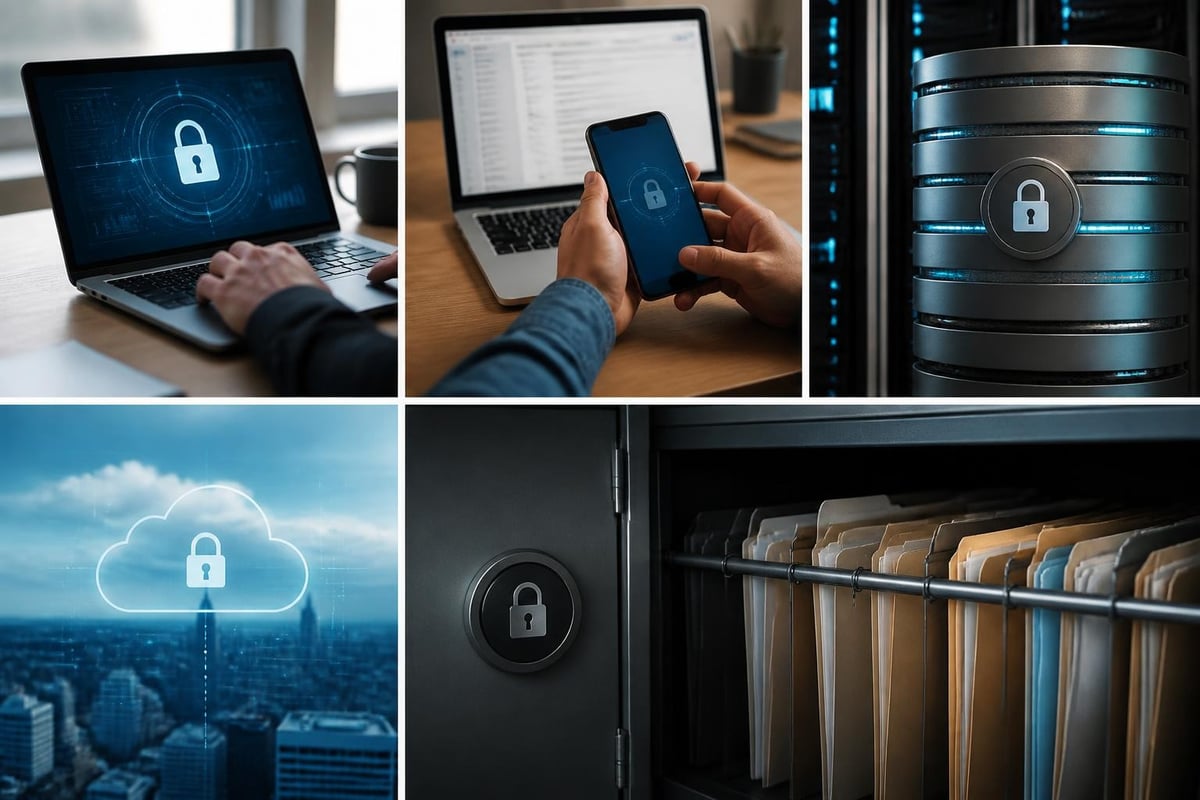
Encryption transforms readable data into coded format that requires specific keys to decode. Data at rest encryption protects stored information on servers, workstations, and backup media. Data in transit encryption secures information as it moves across networks.
Modern businesses should implement encryption at multiple points. Email encryption protects sensitive communications, database encryption secures customer records, and full-disk encryption safeguards laptops and mobile devices from theft.
| Encryption Type | Use Case | Protection Level |
|---|---|---|
| AES-256 | File and database encryption | Military-grade |
| TLS 1.3 | Web traffic and email | Industry standard |
| Full-disk encryption | Laptops and mobile devices | Protects against physical theft |
| VPN encryption | Remote access connections | Secures untrusted networks |
Backup and Recovery Solutions
Information security and data protection strategies remain incomplete without robust backup and recovery capabilities. Ransomware attacks have demonstrated that even well-protected systems can fall victim to sophisticated threats, making reliable backups essential for business continuity.
The 3-2-1 backup rule provides a practical framework: maintain three copies of data, store them on two different media types, and keep one copy offsite. Cloud-based backup solutions offer automated scheduling, version history, and geographic redundancy that traditional methods cannot match.
Regular backup testing verifies that recovery procedures work as expected. Many organizations discover backup failures only during disaster scenarios when restoration becomes critical.
Compliance Requirements and Standards
Regulatory compliance drives many information security and data protection initiatives. Organizations handling specific data types must adhere to industry regulations and legal requirements that dictate minimum security standards.
Common Regulatory Frameworks
Payment Card Industry Data Security Standard (PCI DSS) applies to any business processing credit card transactions. These requirements mandate encryption, access controls, network security, and regular security testing.
Personal Information Protection and Electronic Documents Act (PIPEDA) governs how Canadian businesses collect, use, and disclose personal information. Organizations must obtain consent, protect data with appropriate safeguards, and allow individuals to access their information.
Healthcare organizations must comply with additional privacy requirements when handling patient information. The CMS Acceptable Risk Safeguards outline mandatory controls for protecting sensitive health data.
- Conduct annual compliance audits
- Document all security policies and procedures
- Train employees on compliance requirements
- Maintain evidence of security controls
- Report breaches according to legal timelines
Documentation and Policy Development
Written policies transform information security and data protection from abstract concepts into actionable procedures. Comprehensive documentation provides employees with clear guidance and demonstrates due diligence to regulators and auditors.
Essential security policies include:
- Acceptable use policy defining appropriate technology use
- Incident response plan outlining breach notification procedures
- Data classification policy categorizing information by sensitivity
- Password policy establishing authentication requirements
- Remote work policy addressing home network security
Organizations can reference government security guidance when developing policies that align with industry best practices.
Employee Training and Security Awareness
Technology controls alone cannot ensure comprehensive protection. Human factors contribute to the majority of security incidents, making employee education a critical component of information security and data protection programs.
Building a Security-Conscious Culture
Regular training helps employees recognize phishing attempts, understand social engineering tactics, and follow security procedures correctly. Simulated phishing campaigns test employee awareness and identify individuals requiring additional training.
Security awareness should extend beyond annual training sessions. Monthly security tips, visible reminders about password hygiene, and recognition programs for employees who report suspicious activities reinforce positive behaviors.
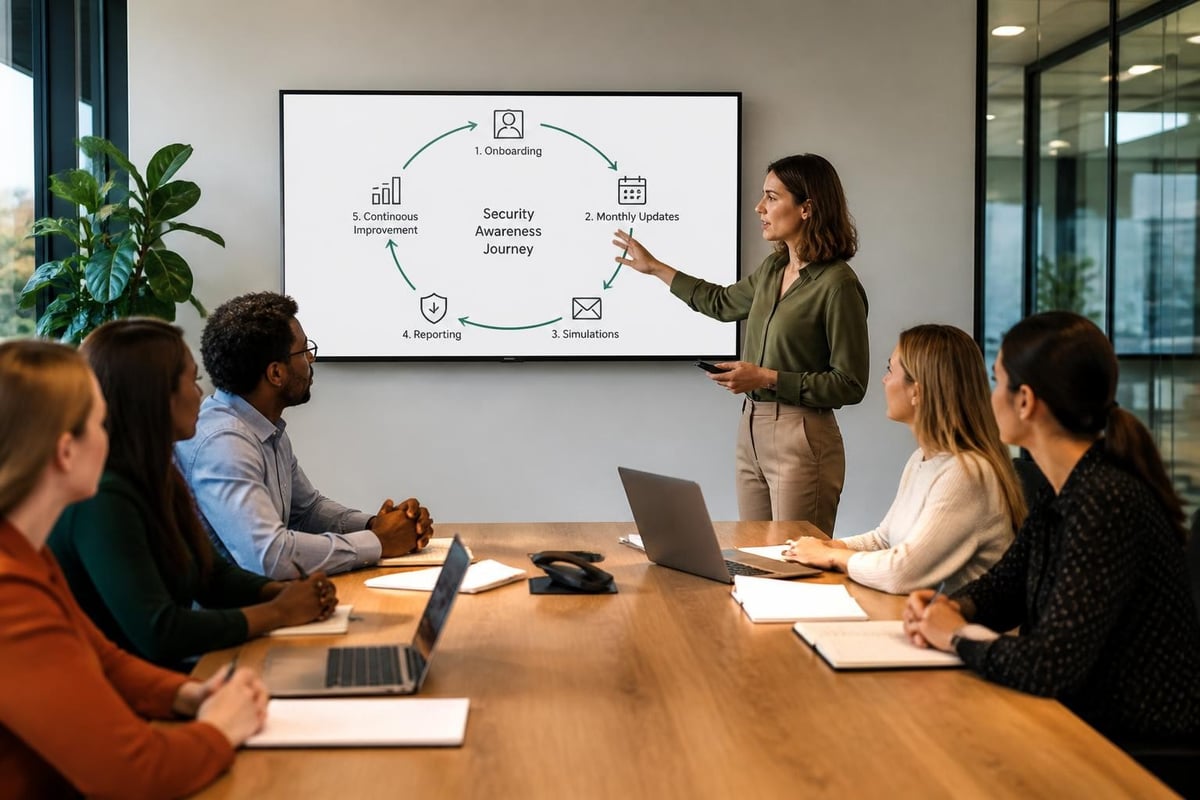
New employees should receive security training during onboarding, covering data handling procedures, password requirements, physical security protocols, and reporting mechanisms for suspected incidents. Making security part of company culture from day one establishes expectations and reduces risk.
Common Security Mistakes to Avoid
Even security-conscious employees make mistakes that compromise information security and data protection efforts. Understanding common pitfalls helps organizations implement targeted training and technical controls.
| Common Mistake | Risk Level | Mitigation Strategy |
|---|---|---|
| Using weak passwords | High | Enforce complexity, implement MFA |
| Clicking phishing links | Critical | Regular training, email filtering |
| Sharing credentials | High | Password managers, user education |
| Leaving devices unlocked | Medium | Auto-lock policies, awareness campaigns |
| Using unsecured public WiFi | High | VPN requirement, disable auto-connect |
Managed IT Services and Security Partnerships
Small businesses often lack the internal resources and expertise to implement comprehensive information security and data protection programs. Partnering with managed service providers offers access to enterprise-level security capabilities without the overhead of full-time security staff.
Benefits of Professional Security Management
Managed IT services provide continuous monitoring, threat detection, patch management, and security updates that keep systems protected against evolving threats. Security professionals stay current with emerging vulnerabilities and attack techniques, applying this knowledge to client environments.
Fixed-rate fee structures make security investments predictable, allowing businesses to budget effectively while ensuring comprehensive coverage. This approach eliminates the unpredictable costs associated with incident response and recovery after security breaches.
Managed security services typically include:
- 24/7 network monitoring and threat detection
- Regular security assessments and vulnerability scanning
- Patch management and software updates
- Firewall and antivirus management
- Security incident response and remediation
- Compliance reporting and documentation
Organizations interested in learning more about comprehensive IT support can explore services offered by Delphi Systems Inc., which specializes in maintaining secure IT infrastructures for small businesses.
Selecting the Right Security Partner
Evaluating potential managed service providers requires assessing their security expertise, service offerings, and compatibility with business needs. Organizations should verify certifications, review security incident response procedures, and understand service level agreements.
Questions to ask potential providers include:
- What security certifications do your technicians maintain?
- How do you handle security incidents and what are response times?
- What reporting and visibility will we have into security events?
- How do you ensure compliance with industry regulations?
- What is your approach to disaster recovery and business continuity?
The security reference library provides vendor-neutral resources that help organizations evaluate security approaches and technologies objectively.
Emerging Threats and Future Considerations
Information security and data protection continue evolving as attackers develop new techniques and technologies create additional attack surfaces. Staying informed about emerging threats enables proactive security posture adjustments.
Ransomware and Advanced Persistent Threats
Ransomware attacks have grown increasingly sophisticated, targeting backups and exfiltrating data before encryption. Attackers now threaten to publish stolen information even if victims pay ransoms, creating dual extortion scenarios.
Protection strategies include:
- Implementing application whitelisting to prevent unauthorized software execution
- Maintaining isolated backup copies inaccessible from production networks
- Deploying endpoint detection and response (EDR) solutions
- Conducting regular security awareness training focused on attack vectors
- Developing and testing incident response procedures
Cloud Security Considerations
Cloud computing offers significant advantages but introduces shared responsibility models where security obligations split between providers and customers. Organizations must understand which security controls they manage versus those the cloud provider handles.
Data residency requirements may dictate where information can be stored, affecting cloud provider selection. Encryption key management, access controls, and activity monitoring remain customer responsibilities regardless of deployment model.
Organizations can review security and privacy policies to understand comprehensive approaches to cloud security governance.
Measuring Security Effectiveness
Information security and data protection programs require ongoing measurement to verify effectiveness and identify improvement opportunities. Metrics provide objective evidence of security posture and help justify continued investment.
Key Performance Indicators
Mean time to detect (MTTD) measures how quickly security teams identify incidents. Shorter detection times limit attacker access and reduce potential damage. Mean time to respond (MTTR) tracks incident response efficiency from detection through containment.
Additional metrics include:
- Number of security incidents by category and severity
- Percentage of systems with current patches and updates
- Employee phishing test success rates
- Backup success rates and recovery time objectives
- Compliance audit findings and remediation timelines
Regular security assessments, penetration testing, and vulnerability scans provide quantitative data about security posture. These activities identify weaknesses before attackers exploit them, enabling proactive remediation.
Continuous Improvement Processes
Security programs should evolve based on threat landscape changes, business growth, and technology adoption. Quarterly security reviews assess control effectiveness, evaluate new risks, and adjust strategies accordingly.
Incident post-mortems provide valuable learning opportunities. Analyzing what occurred, how systems responded, and what improvements could prevent recurrence strengthens overall security posture. Documentation of lessons learned creates institutional knowledge that persists beyond individual employee tenure.
Protecting business information requires comprehensive strategies that address technology, processes, and people. Information security and data protection initiatives protect valuable assets, ensure regulatory compliance, and build customer trust in an increasingly digital business environment. Delphi Systems Inc. helps Lethbridge businesses implement robust security measures through managed IT services that include continuous monitoring, threat detection, and proactive maintenance, allowing organizations to focus on core business activities while maintaining secure, efficiently managed IT infrastructure.

