
Small businesses across Lethbridge and beyond are embracing cloud technology at unprecedented rates, drawn by promises of flexibility, scalability, and cost savings. However, this digital transformation brings significant challenges that organizations must address proactively. Understanding cloud computing security risks has become essential for business owners who want to protect their data, maintain customer trust, and ensure operational continuity. The landscape of threats continues to evolve rapidly, particularly as artificial intelligence tools and remote work arrangements create new vulnerabilities that attackers can exploit.
The Rising Threat Landscape in Cloud Environments
Cloud computing security risks have multiplied dramatically as organizations migrate critical business functions to remote infrastructure. Small businesses often assume that cloud service providers handle all security responsibilities, creating a dangerous gap in protection. This misunderstanding stems from confusion about the shared responsibility model, where providers secure the infrastructure while customers must protect their data and applications.
The most pressing threats include:
- Data breaches resulting from unauthorized access
- Misconfigured security settings exposing sensitive information
- Insider threats from current or former employees
- Account hijacking through credential theft
- Denial-of-service attacks disrupting operations
Recent research indicates that 80% of cloud breaches result from basic security errors, particularly misconfigurations and exposed credentials. These preventable mistakes cost businesses thousands in remediation expenses and lost productivity.
Data Breach Vulnerabilities
Data breaches remain the most financially damaging cloud computing security risks facing organizations today. When attackers gain access to cloud-stored information, they can extract customer records, financial data, and proprietary business intelligence.
The average cost of a data breach exceeded $4.5 million in 2026, with small businesses often struggling to recover from such incidents. Many organizations lack the resources to implement comprehensive monitoring systems that detect unusual access patterns or data exfiltration attempts.
Multi-factor authentication provides essential protection against unauthorized access, yet numerous businesses still rely solely on password-based security. This single point of failure creates opportunities for attackers who obtain credentials through phishing campaigns or password reuse across multiple platforms.

Configuration Mistakes and Access Control Failures
System misconfigurations represent the leading cause of cloud computing security risks according to security experts analyzing cloud breach patterns. When administrators incorrectly configure storage buckets, databases, or network settings, they inadvertently expose sensitive data to the public internet.
| Configuration Error | Potential Impact | Remediation Difficulty |
|---|---|---|
| Public storage buckets | Complete data exposure | Low |
| Overly permissive IAM policies | Unauthorized access to systems | Medium |
| Unencrypted data transmission | Intercepted communications | Low |
| Disabled logging | Undetected breaches | High |
| Default security settings | Multiple vulnerabilities | Medium |
These mistakes often occur during rapid deployment cycles when businesses prioritize speed over security. Development teams may create test environments with relaxed permissions, then forget to tighten controls before production deployment.
The Complexity of Identity Management
Access control becomes exponentially more complicated as organizations adopt multiple cloud platforms and software-as-a-service applications. Employees accumulate access permissions across various systems, creating what security professionals call "permission creep."
When staff members change roles or leave the company, organizations frequently fail to revoke outdated access rights. Former employees may retain the ability to access cloud resources months after termination, creating significant security vulnerabilities.
Effective identity management requires:
- Regular access reviews and permission audits
- Automated deprovisioning workflows
- Least-privilege access principles
- Centralized identity management platforms
- Strong authentication mechanisms
Emerging AI-Related Security Challenges
The rapid adoption of artificial intelligence tools has introduced new cloud computing security risks that many organizations have not adequately addressed. Recent research reveals AI is fueling an unprecedented surge in cloud security risks through excessive access permissions and misconfigurations.
Businesses integrating AI services into their operations often grant these tools broad access to data repositories without fully understanding the implications. Machine learning models require extensive data sets for training, potentially exposing sensitive information to third-party AI platforms.
Additionally, AI-powered attack tools enable cybercriminals to launch more sophisticated campaigns against cloud infrastructure. These automated systems can probe for vulnerabilities, craft convincing phishing messages, and adapt their tactics based on defensive responses.
Shadow IT and Unapproved Applications
Employees frequently adopt cloud services without IT department approval, creating shadow IT environments that bypass security controls. These unauthorized applications may lack proper encryption, compliance features, or integration with corporate security systems.
The convenience of consumer-grade cloud storage services tempts staff to upload work documents to personal accounts. This practice fragments organizational data across multiple platforms, making comprehensive security monitoring impossible.
Small businesses must establish clear policies regarding approved cloud services while providing legitimate tools that meet employee productivity needs. Restrictive policies without viable alternatives simply drive underground usage.

Compliance and Regulatory Considerations
Cloud computing security risks extend beyond technical vulnerabilities to encompass legal and regulatory compliance challenges. Organizations handling customer information must ensure their cloud deployments meet industry standards and government regulations.
Different jurisdictions impose varying requirements for data protection, storage location, and breach notification. Canadian businesses must comply with PIPEDA regulations, while those serving international customers face additional obligations under frameworks like GDPR.
Cloud service providers offer compliance certifications, but ultimate responsibility for regulatory adherence rests with the business. Understanding what cloud security encompasses helps organizations evaluate whether their providers meet necessary standards.
| Compliance Framework | Primary Focus | Key Requirements |
|---|---|---|
| PIPEDA | Personal information protection | Consent, security safeguards, breach notification |
| SOC 2 | Service organization controls | Security, availability, confidentiality |
| ISO 27001 | Information security management | Risk assessment, control implementation |
| PCI DSS | Payment card data | Encryption, access control, monitoring |
Data Sovereignty and Location Concerns
Many businesses remain unaware of where their cloud providers physically store data. Geographic location matters for both compliance and performance reasons, as some regulations require data to remain within specific territories.
Cross-border data transfers introduce additional cloud computing security risks related to varying legal protections and government access requirements. Organizations must understand their providers' data center locations and replication policies.
Backup Vulnerabilities and Recovery Challenges
Data loss represents one of the most devastating cloud computing security risks, yet backup strategies often receive insufficient attention. Organizations assume cloud providers automatically protect against all data loss scenarios, which is not accurate.
Ransomware attacks increasingly target cloud backup systems, recognizing that businesses rely on these copies for recovery. Attackers who compromise backups eliminate the victim's ability to restore operations without paying ransom demands.
Comprehensive backup protection requires:
- Immutable backup copies that cannot be modified or deleted
- Offline or air-gapped backup storage
- Regular restoration testing to verify backup integrity
- Version control to recover from gradual data corruption
- Geographic redundancy to protect against regional disasters
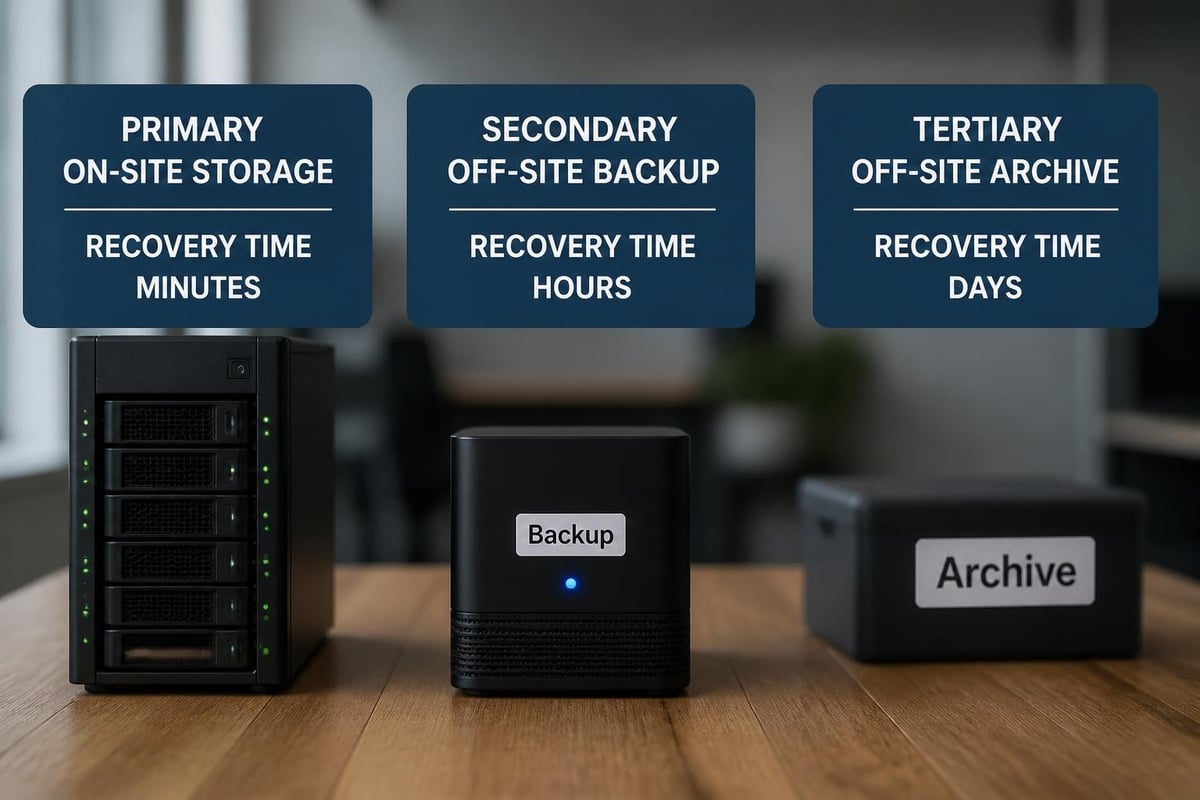
Businesses should implement the 3-2-1 backup rule: three copies of data, on two different media types, with one copy stored off-site. This approach provides resilience against various failure scenarios.
Recovery Time Objectives
Organizations must define acceptable downtime for different business functions. Cloud computing security risks include service disruptions that prevent access to critical applications and data.
Recovery time objectives (RTO) and recovery point objectives (RPO) determine backup frequency and restoration procedures. Mission-critical systems may require continuous replication, while less essential data can tolerate longer recovery windows.
Testing recovery procedures regularly ensures that backup systems function correctly when needed. Many businesses discover backup failures only during actual emergencies, when restoration proves impossible.
Third-Party Risks and Supply Chain Security
Modern cloud environments incorporate numerous third-party services, each introducing potential cloud computing security risks. Organizations connect customer relationship management platforms, accounting software, marketing tools, and productivity applications to their core infrastructure.
Every integration point creates an attack vector that adversaries may exploit. Lesser-known risks of cloud storage include vulnerabilities in connected applications that provide backdoor access to primary systems.
Vendor security assessments should evaluate:
- The provider's security certifications and audit reports
- Data encryption practices for storage and transmission
- Incident response capabilities and notification procedures
- Subprocessor relationships and fourth-party risks
- Contract terms regarding liability and data ownership
Supply chain attacks exploit trusted relationships between businesses and their service providers. Attackers compromise a vendor's systems to gain access to customer environments, leveraging the trust relationship to bypass security controls.
API Security Weaknesses
Application programming interfaces enable different cloud services to communicate and share data. However, poorly secured APIs create significant vulnerabilities that attackers exploit to access unauthorized information.
Organizations must implement strong authentication for API connections, monitor API traffic for suspicious patterns, and regularly review which applications have API access. Rate limiting prevents attackers from using APIs to extract large data volumes rapidly.
Network Security and Traffic Monitoring
Cloud computing security risks include network-level attacks that intercept data transmission or disrupt service availability. Distributed denial-of-service attacks overwhelm cloud resources, making applications unavailable to legitimate users.
Man-in-the-middle attacks intercept communications between users and cloud services, potentially capturing credentials or sensitive data. Encryption protocols protect against interception, but implementation mistakes can undermine these safeguards.
Network security best practices include:
- Virtual private network connections for remote access
- Network segmentation to isolate sensitive systems
- Intrusion detection and prevention systems
- Traffic encryption for data in transit
- Regular security group and firewall rule audits
Small businesses often lack visibility into their cloud network traffic, making it difficult to detect anomalous patterns that indicate security incidents. Comprehensive logging captures network activity for forensic analysis following security events.
Zero Trust Architecture
Traditional security models assume network perimeter defenses keep threats outside organizational boundaries. Cloud computing eliminates clear perimeters, requiring a zero trust approach that verifies every access request.
Zero trust principles include continuous authentication, least-privilege access, and micro-segmentation of resources. This architecture assumes breach scenarios and limits attacker movement within systems even after initial compromise.
Insider Threat Management
Not all cloud computing security risks originate from external attackers. Insider threats from employees, contractors, or business partners who abuse legitimate access privileges cause substantial damage.
Malicious insiders may steal intellectual property, sabotage systems, or sell customer data to competitors. More commonly, negligent insiders accidentally expose information through careless security practices.
| Insider Threat Type | Motivation | Detection Method |
|---|---|---|
| Malicious | Financial gain, revenge | Behavior analytics, access monitoring |
| Negligent | Carelessness, ignorance | Security awareness training, policy enforcement |
| Compromised | Account takeover | Anomaly detection, impossible travel alerts |
| Third-party | Vendor access abuse | Privileged access management, activity logging |
User behavior analytics systems establish baseline activity patterns and flag deviations that may indicate compromised accounts or malicious intent. Sudden large data downloads or access attempts outside normal business hours warrant investigation.
Staff Training and Security Awareness
Human error remains a primary contributor to cloud computing security risks despite technological safeguards. Employees who lack security awareness make mistakes that expose organizational data.
Phishing campaigns trick users into revealing credentials or downloading malware that compromises cloud access. Security awareness training helps staff recognize suspicious communications and follow proper protocols for handling sensitive information.
Effective training programs cover:
- Password management and multi-factor authentication
- Recognizing phishing and social engineering tactics
- Proper data classification and handling procedures
- Incident reporting requirements and channels
- Acceptable use policies for cloud services
Training should occur regularly rather than once during onboarding, as threat tactics evolve constantly. Simulated phishing exercises test whether employees apply training lessons in realistic scenarios.
Encryption and Data Protection Mechanisms
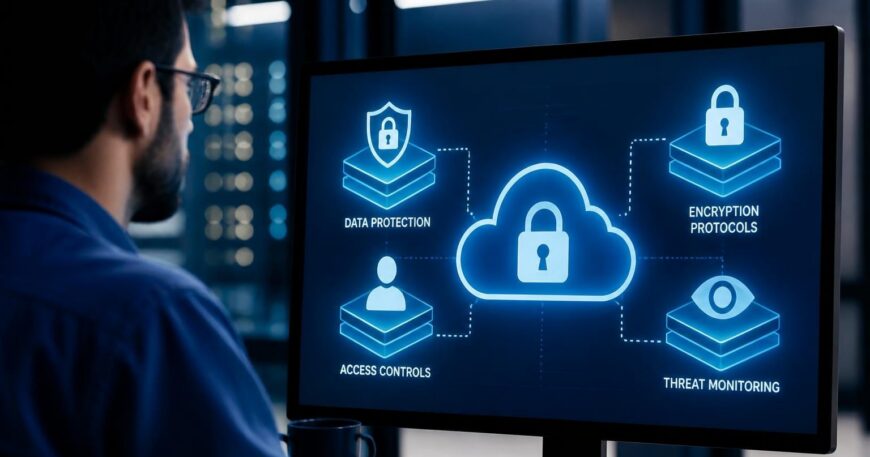
Encryption provides essential protection for data stored in cloud environments and transmitted across networks. However, cloud computing security risks include encryption implementation mistakes that undermine theoretical protections.
Organizations must encrypt data at rest within cloud storage and databases, preventing unauthorized access even if attackers bypass other security controls. Encryption in transit protects information moving between users and cloud services from interception.
Key management represents a critical challenge, as encryption effectiveness depends on protecting cryptographic keys. Businesses should use dedicated key management services rather than storing encryption keys alongside encrypted data.
Data Classification Strategies
Not all information requires identical protection levels. Data classification schemes categorize information based on sensitivity, applying appropriate security controls to each category.
Public information requires minimal protection, while confidential customer data demands strong encryption, access restrictions, and comprehensive audit logging. Regulatory compliance often mandates specific protections for particular data types.
Organizations waste resources applying maximum security to all data indiscriminately. Strategic classification focuses protection efforts where they provide greatest value.
Monitoring and Incident Response
Detecting cloud computing security risks requires continuous monitoring of system logs, user activity, and network traffic. Many breaches remain undetected for months, allowing attackers extended access to systems and data.
Security information and event management platforms aggregate logs from multiple sources, correlating events to identify potential security incidents. Automated alerting notifies administrators of suspicious activities requiring investigation.
Incident response plans define procedures for containing breaches, eradicating threats, and restoring normal operations. Organizations should document response procedures before incidents occur, ensuring coordinated action during crisis situations.
Effective incident response includes:
- Clear role assignments and communication channels
- Evidence preservation for forensic analysis
- Stakeholder notification procedures
- Legal and regulatory reporting obligations
- Post-incident review and improvement processes
Tabletop exercises test incident response plans without actual security events, identifying gaps in procedures or resource availability. These simulations help teams practice coordination and refine response strategies.
Cost Considerations and Security Investment
Addressing cloud computing security risks requires financial investment that small businesses must balance against limited budgets. However, security incidents typically cost far more than preventive measures.
Organizations should prioritize security spending based on risk assessment results, focusing resources on protecting most valuable assets and likely attack vectors. Managed security services provide access to expertise and technologies that would be prohibitively expensive to develop internally.
Managed IT services help small businesses implement comprehensive cloud security without maintaining specialized staff. Fixed-rate fee structures make security costs predictable and sustainable.
Understanding cloud computing security risks allows small businesses to protect their digital assets while leveraging cloud technology's benefits. From configuration management to employee training, comprehensive security requires attention to technical controls, policies, and human factors. Delphi Systems Inc. helps Lethbridge businesses navigate these challenges with managed IT services that maintain secure, efficiently operated cloud infrastructure, allowing you to focus on growing your business with confidence that your technology foundation remains protected.

