

Cloud adoption is surging across every industry as we approach 2025. Yet, with this growth comes a sharp rise in cyberattacks and data breaches, as seen in recent headlines. The stakes have never been higher for organizations managing sensitive information in the cloud.
This essential guide tackles the complexities of data protection in cloud computing. You will discover practical strategies and expert insights designed to keep your critical business data secure in today's evolving digital landscape.
Explore the latest threats, core principles, compliance mandates, and leading-edge tools. Ready to take action? Follow our step-by-step approach to ensure your cloud data remains safe and protected.
The Evolving Landscape of Cloud Data Protection
As organizations accelerate their shift to the cloud, the landscape of data protection in cloud computing is rapidly evolving. New technologies, shifting business models, and heightened risks mean that businesses must stay alert and adapt their strategies to safeguard critical information.

Key Trends and Drivers in 2025
Cloud adoption is reaching unprecedented levels, with 94% of enterprises now leveraging cloud services. This surge, coupled with hybrid and multi-cloud strategies, has made data protection in cloud computing more complex than ever. The rapid expansion of remote work has widened attack surfaces, exposing sensitive data to new risks.
Cyber threats are growing in sophistication, often targeting cloud environments specifically. Both attackers and defenders are increasingly using AI and automation, leading to a constant race between threat actors and security professionals. Recent high-profile cloud breaches have demonstrated the significant financial and reputational damage that can result from inadequate controls. For a deeper dive into the latest statistics and trends, see Cloud Security Statistics for 2025.
Emerging Threats and Vulnerabilities
The threat landscape for data protection in cloud computing is more dynamic than ever. Ransomware campaigns now target cloud storage and SaaS platforms directly, exploiting misconfigurations and weak security settings. Insider threats remain a leading cause of breaches, often due to accidental or intentional misuse of credentials.
Supply chain attacks have become more prevalent, leveraging vulnerabilities in third-party integrations. Unsecured APIs and the rise of shadow IT introduce new avenues for data exfiltration. Gartner predicts that by 2025, 99% of cloud security failures will be the customer’s responsibility, emphasizing the need for proactive management.
Cloud Service Models and Data Responsibility
Understanding the nuances of data protection in cloud computing requires clarity on cloud service models. IaaS, PaaS, and SaaS each present unique security considerations. The Shared Responsibility Model outlines which aspects of security are managed by the provider and which remain with the customer.
Confusion around these roles can lead to data loss or exposure. For example, assuming the provider handles all security controls can result in unprotected data or misconfigured access policies. Businesses must recognize their obligations and implement the right safeguards for each cloud service they use.
Regulatory and Compliance Pressures
Regulatory requirements are intensifying, making data protection in cloud computing a legal and operational necessity. Global frameworks like GDPR and CCPA continue to evolve, while new regional and sector-specific laws add layers of complexity. Industries such as healthcare and finance face additional mandates like HIPAA and PCI DSS.
Cloud compliance audits are becoming more frequent and rigorous. Non-compliance can result in substantial fines and lasting reputational harm. Organizations must stay abreast of regulatory changes and ensure their cloud environments meet all relevant standards.
The Business Case for Proactive Data Protection
Investing in data protection in cloud computing delivers measurable business value. According to IBM, the average cost of a data breach reached $4.45 million in 2023. Companies that prioritize security not only reduce risk but also build long-term trust with their customers.
A strong cloud security posture can set businesses apart from competitors, demonstrating commitment to safeguarding client data. Real-world case studies show that organizations with robust protection strategies experience faster recovery, higher customer retention, and enhanced reputation in the marketplace.
Core Principles of Data Protection in Cloud Computing
Understanding the core principles of data protection in cloud computing is essential for building a secure and resilient cloud environment. These principles serve as the foundation for protecting sensitive assets and ensuring business continuity.

Data Confidentiality, Integrity, and Availability (CIA Triad)
The CIA triad is the cornerstone of data protection in cloud computing. Confidentiality ensures that only authorized users can access sensitive information. Integrity safeguards data from unauthorized alterations, while availability guarantees timely access to information when needed.
Cloud environments introduce unique challenges to these pillars. For instance, data migrations may risk integrity if files are corrupted during transfer. Availability can be disrupted by outages or attacks, and confidentiality is threatened by misconfigured permissions.
| Principle | What It Protects | Cloud Challenge |
|---|---|---|
| Confidentiality | Data privacy | Shared resources, misconfigurations |
| Integrity | Data accuracy | Migration errors, sync issues |
| Availability | Data access | Outages, DDoS attacks |
Maintaining the CIA triad is critical for robust data protection in cloud computing.
Encryption and Key Management
Encryption is a fundamental defense for data protection in cloud computing, securing information both at rest and in transit. Effective key management prevents unauthorized decryption and helps limit exposure in the event of a breach.
Organizations must decide between client-side and server-side encryption, each with trade-offs. Best practices include regular key rotation, secure storage, and strict access controls. For example, a failure to rotate keys or properly segregate them has led to significant breaches in the past.
According to Cloud Data Security Statistics & Facts – 2024 Update, 80% of organizations recognize encryption as a top priority, yet many lack comprehensive key management strategies. Adopting rigorous encryption protocols is essential for data protection in cloud computing.
Identity and Access Management (IAM)
Strong IAM practices are vital for data protection in cloud computing. Role-based access control (RBAC) ensures users have only the permissions they need, reducing risk. Least privilege principles limit exposure if an account is compromised.
Multi-factor authentication (MFA) provides an additional security layer, especially important in multi-cloud settings where identity sprawl can increase risk. Managing identities across platforms requires centralized oversight and regular review.
Statistics show that 80% of cloud breaches are linked to weak IAM controls. By prioritizing IAM, organizations can address a core vulnerability in data protection in cloud computing.
Data Backup and Disaster Recovery
Reliable backup and disaster recovery strategies underpin data protection in cloud computing. Automated, regular backups shield organizations from accidental deletion, corruption, or ransomware attacks. Geo-redundancy and versioning add resilience, ensuring data can be restored even after regional failures.
Defining clear recovery time objectives (RTO) and recovery point objectives (RPO) aligns recovery plans with business needs. For instance, rapid recovery after a ransomware attack demonstrates the value of strong backup policies.
Without robust backup and disaster recovery, data protection in cloud computing remains incomplete, exposing businesses to significant operational and financial risk.
Monitoring, Auditing, and Incident Response
Continuous monitoring is essential for early detection of threats in data protection in cloud computing. Automated alerts can identify anomalous activities, while audit trails support compliance and forensic investigations.
Regular audits and penetration tests validate the effectiveness of controls. Incident response plans must be documented and tested, allowing teams to respond quickly to breaches. For example, organizations with mature incident response processes detect and contain incidents faster, reducing potential damage.
By integrating monitoring, auditing, and response, businesses build a resilient approach to data protection in cloud computing.
Regulatory Compliance and Cloud Data Protection
Navigating the complex web of regulatory compliance is a core challenge for data protection in cloud computing. As organizations adopt cloud solutions worldwide, understanding and addressing legal requirements is essential to avoid costly penalties and reputational harm.

Navigating Global and Industry-Specific Regulations
The landscape of data protection in cloud computing is shaped by a growing list of regulations. Key frameworks include GDPR for Europe, CCPA for California, HIPAA for healthcare, and PCI DSS for payment data. In 2025, new privacy laws are emerging in Asia and South America, increasing complexity for multinational businesses.
Cross-border data transfers add another layer of risk, as some countries restrict how data can move between jurisdictions. Fines for non-compliance are rising, with recent cases seeing millions in penalties for mishandling cloud-hosted personal information. Organizations must map all applicable regulations before moving sensitive data to the cloud.
Cloud Provider Certifications and Attestations
Verifying a provider's certifications is a fundamental step in data protection in cloud computing. Leading standards like SOC 2 and ISO 27001 demonstrate a provider's commitment to security controls and regular audits. These attestations help organizations show regulators they have chosen partners meeting industry benchmarks.
When evaluating providers, request up-to-date certificates and review audit summaries. Not all certifications cover every aspect of compliance, so ensure your unique data needs align with the provider's scope. Choosing certified partners reduces risk and supports ongoing compliance efforts.
Building a Compliance-Ready Cloud Environment
To achieve effective data protection in cloud computing, businesses should align cloud configurations with regulatory requirements. Start by mapping laws and standards to specific technical controls, such as encryption settings, access policies, and retention schedules.
Leverage compliance automation tools to monitor settings, generate audit trails, and flag policy violations. Maintain thorough documentation of all controls and regularly test for gaps. Automated compliance checks provide ongoing assurance and support during regulatory audits, making governance more efficient.
Data Residency and Sovereignty
Data residency is a crucial element of data protection in cloud computing, as laws may dictate where data must reside or be processed. Selecting regional data centers can help meet local requirements and avoid legal conflicts.
For multinational organizations, balancing global operations with local laws means working with providers that offer flexible data localization options. Planning for data sovereignty from the outset ensures compliance and builds trust with customers and regulators alike.
Essential Tools and Technologies for Cloud Data Protection
Choosing the right tools and technologies is critical for effective data protection in cloud computing. With threats evolving rapidly, organizations must leverage a robust mix of solutions to secure sensitive information, maintain compliance, and ensure business continuity. Let us explore the essential components that form the backbone of a modern cloud security strategy.
Encryption Solutions and Best Practices
Encryption is the cornerstone of data protection in cloud computing, ensuring confidentiality whether data is at rest or in transit. Modern organizations rely on advanced encryption tools such as AWS Key Management Service, Azure Key Vault, and Google Cloud KMS to secure cloud assets.
There are both open source options, like VeraCrypt and HashiCorp Vault, and commercial solutions, each offering different integration capabilities. Best practices include using end-to-end encryption, rotating encryption keys regularly, and separating key storage from encrypted data.
A successful case in financial services highlighted how a layered encryption approach significantly reduced exposure during a breach. Remember, without strong encryption, even minor vulnerabilities can lead to catastrophic data loss. Data protection in cloud computing depends on continuous evaluation and improvement of encryption strategies.
Identity and Access Management Platforms
Identity and Access Management (IAM) platforms are vital for enforcing who can access what data in cloud environments. Leading IAM solutions like Okta, Azure Active Directory, and Google Cloud Identity provide features such as Single Sign-On (SSO), Multi-Factor Authentication (MFA), and conditional access policies.
Implementing role-based access control (RBAC) and least privilege principles is essential for data protection in cloud computing. Integrating IAM across all cloud applications and services helps minimize insider threats and unauthorized data access.
A recent deployment in a global enterprise reduced risk by automating access reviews and tightening account provisioning. As organizations expand into multi-cloud, a centralized IAM strategy becomes indispensable for consistent security.
Data Loss Prevention (DLP) and Cloud Access Security Brokers (CASB)
Data Loss Prevention (DLP) tools and Cloud Access Security Brokers (CASB) are integral for monitoring, detecting, and blocking unauthorized data movement. DLP solutions scan for sensitive information, enforce policies, and prevent accidental or malicious leaks.
CASBs act as security policy enforcement points between users and cloud services, ensuring compliance across SaaS, IaaS, and PaaS. For effective data protection in cloud computing, organizations should deploy CASBs to monitor shadow IT and secure third-party integrations.
According to Gartner, 60 percent of organizations now rely on CASBs for cloud security. In remote work scenarios, these solutions have prevented significant data leaks by restricting risky data sharing and access from unmanaged devices.
Backup and Recovery Platforms
Reliable backup and recovery platforms are fundamental to data protection in cloud computing. Cloud-native solutions like AWS Backup, Azure Backup, and Google Backup offer automated scheduling, encryption, and rapid restore capabilities.
Third-party platforms provide additional features such as cross-cloud backup, versioning, and geo-redundant storage. Businesses minimize downtime and ensure continuity by aligning recovery time objectives (RTO) and recovery point objectives (RPO) with operational needs.
Recent Cloud Backup Stats You Should Know In 2025 show that organizations with robust backup strategies recover faster from incidents like data deletion or ransomware. Regular testing and documentation of backup processes are critical for resilience.
Security Monitoring and SIEM for Cloud
Security Information and Event Management (SIEM) tools designed for cloud are essential for real-time threat detection and incident response. Leading cloud SIEM solutions include Splunk Cloud, Microsoft Sentinel, and IBM QRadar.
These platforms aggregate logs from cloud resources, generate alerts for suspicious activity, and automate responses to threats. For comprehensive data protection in cloud computing, integrating SIEM with cloud infrastructure provides holistic visibility.
A timely example is early detection of compromised credentials, which allowed a company to contain an attack before data was exfiltrated. Continuous monitoring and regular audits keep cloud environments secure and compliant.
Delphi Systems Inc.: Managed Cloud Data Protection for Small Businesses
Delphi Systems Inc. specializes in managed IT and cloud security tailored for small businesses in Lethbridge. Their services include proactive monitoring, automated backups, and robust cybersecurity solutions that address the unique challenges of data protection in cloud computing.
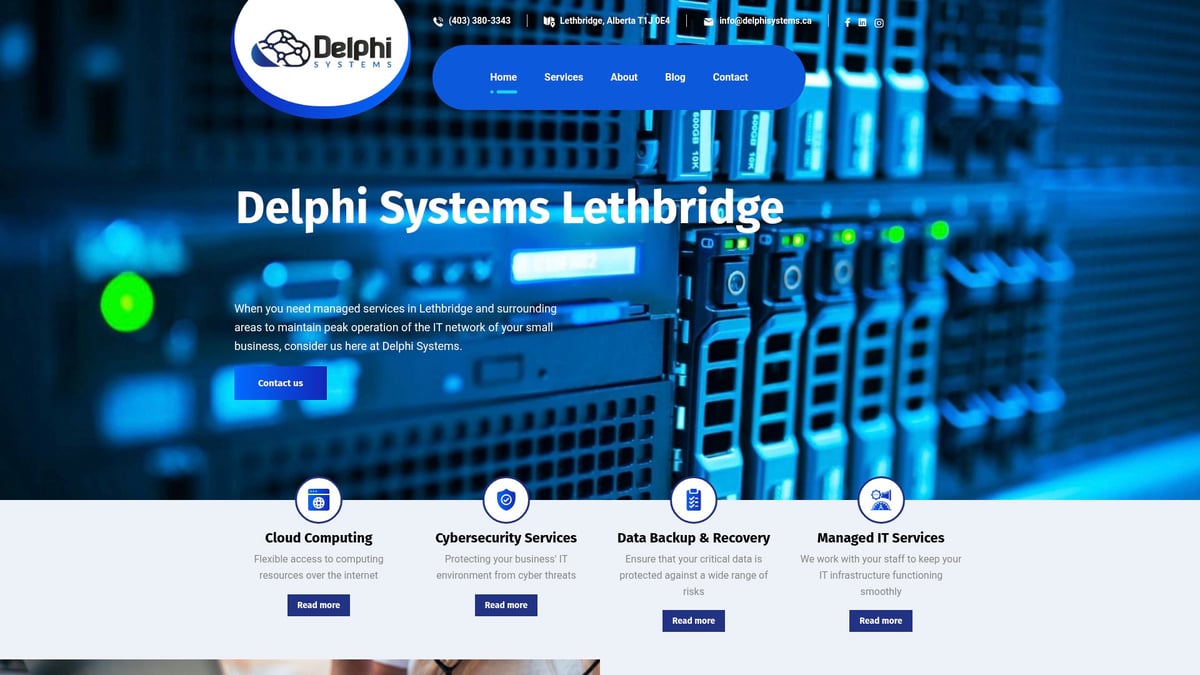
With flat-rate pricing, businesses gain predictable budgeting and peace of mind. Delphi Systems Inc. also acts as a strategic IT partner, guiding clients through compliance requirements, cloud migration, and risk management.
Client testimonials underscore real-world benefits, such as improved security posture and reduced downtime. Small businesses can focus on growth, knowing their cloud data is protected by local experts.
Step-by-Step Guide to Implementing Cloud Data Protection in 2025
Safeguarding sensitive business data in the cloud requires a structured, methodical approach. With cyber threats evolving rapidly, a comprehensive strategy for data protection in cloud computing is essential. This step-by-step guide walks you through the critical actions every organization should take to secure their cloud environments, reduce risk, and stay compliant.
Step 1: Assess Current Cloud Data Risks
Begin with a thorough inventory of all cloud services, data types, and access points across your organization. Identifying vulnerabilities such as misconfigured storage, weak IAM controls, and shadow IT is crucial. Automated assessment tools help map risks efficiently.
For example, a company recently discovered multiple unsecured data buckets during a comprehensive review. Many of these risks stemmed from overlooked permissions and third-party integrations. For deeper insights into emerging vulnerabilities and threat trends, consult the Cloud and Threat Report: 2025.
A proactive risk assessment is the foundation of effective data protection in cloud computing.
Step 2: Define Security and Compliance Requirements
Align your security goals with business objectives. Identify all regulations and industry standards that apply to your data, such as GDPR, HIPAA, or PCI DSS. Develop clear policies for data handling, retention, and access.
For instance, healthcare organizations must tailor their controls to meet HIPAA requirements. Documenting these requirements ensures everyone understands their responsibilities.
Clarity in compliance is essential for successful data protection in cloud computing.
Step 3: Choose the Right Cloud Providers and Tools
Evaluate cloud providers based on their security features, certifications, and service level agreements. Look for solutions that integrate smoothly with your existing IT infrastructure and support your compliance needs.
Consider multi-cloud management platforms for organizations operating across several providers. For example, some companies adopt a multi-cloud strategy to achieve high availability and regulatory compliance.
Selecting the right partners and technologies is a cornerstone of robust data protection in cloud computing.
Step 4: Implement Encryption, IAM, and DLP Controls
Deploy encryption for data at rest and in transit using industry-standard protocols. Set up IAM with least privilege and multi-factor authentication. Integrate Data Loss Prevention (DLP) and Cloud Access Security Broker (CASB) solutions to monitor and control data movement.
An effective example is blocking unauthorized file sharing through DLP policies. These layered controls reduce risk and limit data exposure.
Strong technical safeguards are vital for data protection in cloud computing.
Step 5: Automate Backups and Disaster Recovery
Establish automated, geo-redundant backup schedules to protect against data loss. Regularly test your recovery processes to ensure they meet business needs for Recovery Time Objective (RTO) and Recovery Point Objective (RPO).
For example, a small business restored operations within hours after a ransomware incident by relying on automated backups. Proper planning minimizes downtime and data loss.
Reliable backup strategies are key to data protection in cloud computing.
Step 6: Monitor, Audit, and Continuously Improve
Implement real-time monitoring and alerting to detect anomalous activities quickly. Conduct regular audits and penetration testing to identify gaps. Update security policies and controls based on evolving threats and business changes.
A company that reviewed its incident response plan quarterly significantly reduced its response times. Continuous improvement keeps defenses strong.
Ongoing vigilance is the final pillar of data protection in cloud computing.
Future Trends and Innovations in Cloud Data Protection
As we look ahead, the landscape of data protection in cloud computing is rapidly evolving. Businesses must stay informed about emerging technologies and strategies to stay ahead of threats and regulatory changes.
AI and Machine Learning in Cloud Security
Artificial intelligence and machine learning are transforming data protection in cloud computing. These technologies analyze massive volumes of cloud activity to detect threats in real time, reducing response times and improving accuracy.
Predictive analytics powered by AI can identify emerging risks before they escalate. For example, machine learning models may flag unusual access patterns, alerting security teams to potential breaches.
Many organizations now integrate AI-driven solutions to automate responses to incidents, further strengthening their cloud security posture. As attackers use AI to refine their methods, businesses must leverage advanced analytics to keep pace with evolving threats.
Zero Trust Architecture for the Cloud
Zero trust is reshaping data protection in cloud computing by requiring continuous verification of every user, device, and application. This approach limits lateral movement within networks, reducing the risk of unauthorized access.
Key elements include micro-segmentation, strict identity controls, and constant monitoring. Financial institutions, for instance, are adopting zero trust to protect sensitive customer data and comply with regulations.
While implementation can be complex, zero trust helps organizations build a proactive defense strategy. As cloud environments grow more interconnected, adopting zero trust principles becomes essential for robust protection.
Privacy-Enhancing Technologies (PETs)
Privacy-enhancing technologies are gaining traction in data protection in cloud computing. Techniques like homomorphic encryption and differential privacy allow organizations to process and share sensitive data without exposing it.
PETs are especially valuable in sectors such as healthcare, where secure analytics are vital. For example, healthcare providers use PETs to analyze patient data for research while maintaining strict privacy standards.
These technologies not only support compliance with evolving regulations but also build trust with customers. Organizations that invest in PETs demonstrate a strong commitment to data privacy and security.
Quantum-Resistant Encryption and the Next Frontier
Quantum computing poses a future challenge for data protection in cloud computing. Traditional encryption methods may become vulnerable as quantum algorithms advance.
Researchers are developing quantum-resistant encryption techniques to safeguard cloud data from these emerging threats. Some technology leaders are already piloting post-quantum cryptography in their cloud offerings.
Preparing for the quantum era is increasingly important for organizations managing sensitive information in the cloud. Staying informed about advancements in encryption helps future-proof cloud security strategies.
As you’ve seen throughout this guide, navigating the complexities of cloud data protection in 2025 requires not only up-to-date knowledge but also a proactive, strategic approach. Whether you’re concerned about evolving cyber threats, compliance pressures, or simply want peace of mind that your business data is secure, you don’t have to tackle these challenges alone. At Delphi Systems Inc. we help small businesses in Lethbridge focus on what matters most—while we manage the security, backups, and compliance for your IT environment. Ready to strengthen your cloud data protection strategy? Call us now and let’s secure your future together.

