


As we move into 2026, cyber threats are evolving faster than ever. Is your business prepared to keep up with these changes?
The average cost of a data breach has climbed to $4.22 million, making cyber security monitoring more critical than ever for organizations of all sizes. With attackers leveraging AI, automation, and targeting cloud assets, staying ahead demands a proactive and adaptive approach.
This guide will equip you with up-to-date strategies, tools, and best practices for effective cyber security monitoring. Explore key monitoring components, discover the latest tools and techniques, and learn actionable steps to secure your organization against emerging threats.
The stakes are high, but the benefits of early detection, compliance, and business continuity are within reach. Now is the time to assess and upgrade your monitoring approach for 2026.
The Foundations of Cyber Security Monitoring
Cyber security monitoring forms the backbone of any modern defense strategy. Without it, organizations risk missing early warning signs of attacks that could disrupt operations and damage reputation. By understanding the foundations, you can build a resilient and proactive approach to digital threats.
Defining Cyber Security Monitoring
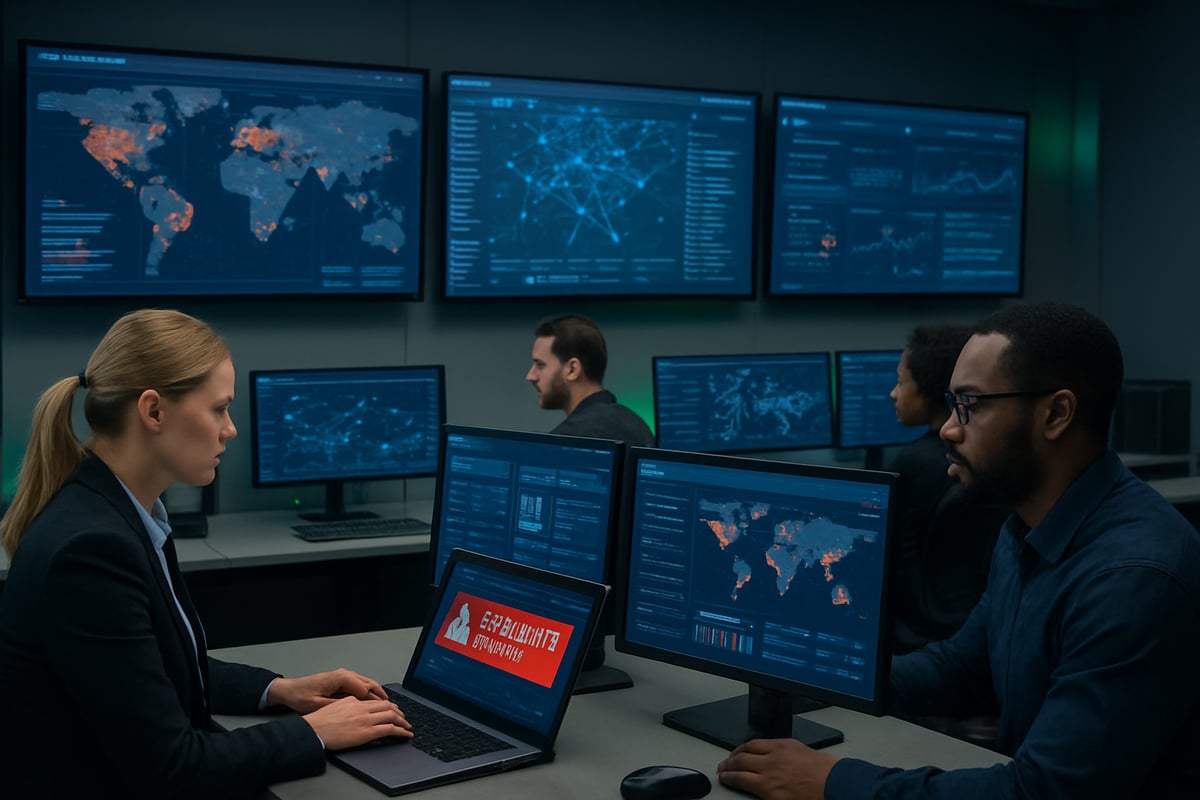
Cyber security monitoring is the continuous observation and analysis of your digital assets, networks, and endpoints. Its main goal is to identify threats early and respond before damage occurs. Unlike traditional security, which often reacts to incidents, cyber security monitoring is proactive and adapts in real time.
This approach is essential for organizations that rely on digital operations. For example, monitoring tools can spot malware spreading through a network before it infects more systems. In regulated industries, 24/7 cyber security monitoring has become standard, ensuring constant vigilance.
Even small and medium businesses now recognize the importance of cyber security monitoring to protect their critical data.
Why Cyber Security Monitoring is Crucial in 2026
In 2026, cyber threats are more sophisticated, often powered by artificial intelligence and automation. Regulations around data privacy and protection are stricter than ever. The financial stakes are rising, with the cybercrime cost projected at $9.5 trillion in 2024, highlighting the urgent need for robust cyber security monitoring.
A single breach can erode customer trust and disrupt business continuity. Compliance with standards like GDPR and CCPA is no longer optional. Real-world breaches show that organizations without effective cyber security monitoring face higher risks of financial loss and downtime.
Key Objectives and Outcomes
The primary goal of cyber security monitoring is early threat detection and rapid response. Organizations gain visibility across all assets, whether on-premises or in the cloud. Meeting compliance mandates and passing audits become more manageable.
By reducing financial and reputational risks, cyber security monitoring supports business resilience and growth. For example, early alerting can halt ransomware before it encrypts vital data. Improving your overall security posture is critical for maintaining trust and supporting long-term objectives.
Core Components Overview
Effective cyber security monitoring relies on several core components working together:
- Security Information and Event Management (SIEM)
- Intrusion Detection and Prevention Systems (IDS/IPS)
- Endpoint Detection and Response (EDR)
- Log management and analysis
- Network, endpoint, application, and cloud monitoring
- Threat intelligence integration
- Automation and orchestration tools
Each component plays a unique role in providing comprehensive cyber security monitoring across diverse digital environments.
Essential Terminology and Concepts
Understanding the language of cyber security monitoring is key for effective implementation. Key terms include:
- SIEM, IDS, IPS, EDR, NDR, SOC
- Metrics such as Mean Time to Detect (MTTD) and Mean Time to Respond (MTTR)
- Detection types: behavioral versus signature-based
- The incident response lifecycle
- Principles like zero trust and least privilege
- The role of machine learning in modern monitoring
For instance, anomaly-based alerts detect deviations from normal activity, while signature-based alerts identify known threats. Mastery of these concepts ensures your cyber security monitoring strategy remains effective and adaptive.
Core Components and Technologies of Cyber Security Monitoring
Understanding the core components and technologies behind cyber security monitoring is essential for building a resilient defense in 2026. Each element plays a unique role, and together they provide the visibility and responsiveness organizations need to stay ahead of sophisticated threats.
Security Information and Event Management (SIEM)
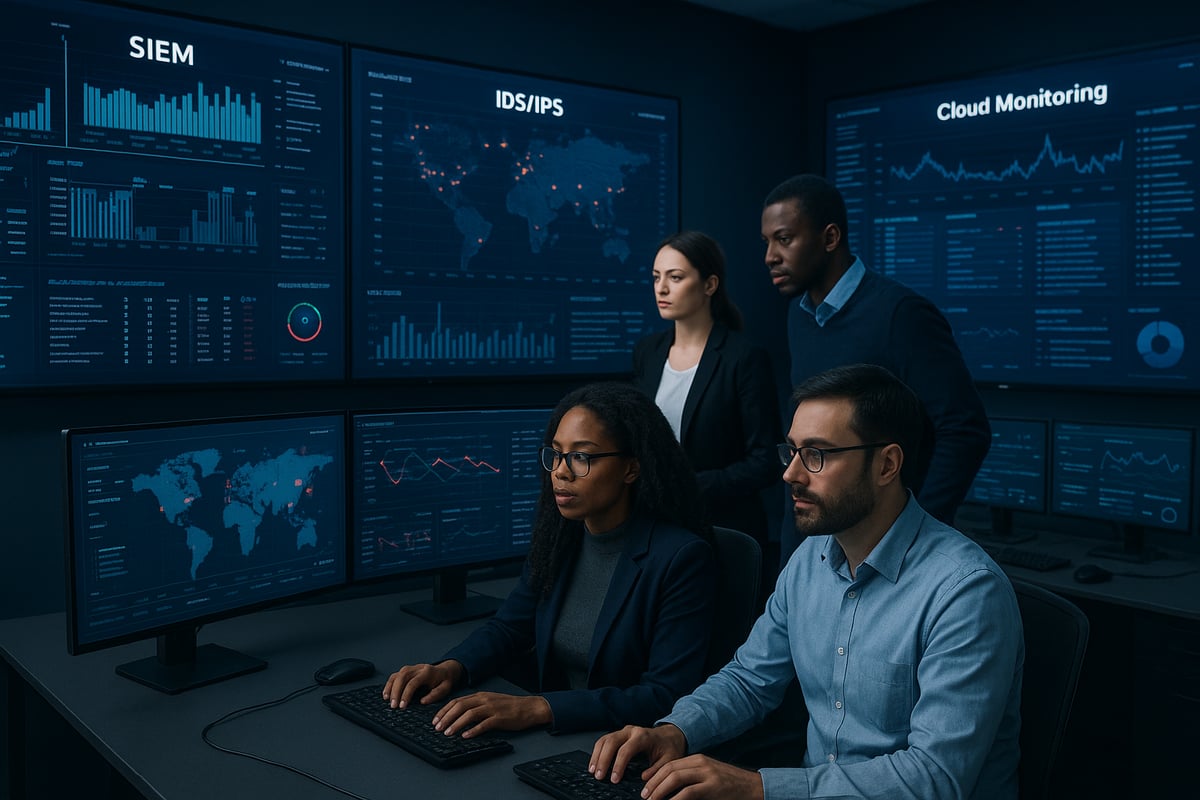
At the heart of cyber security monitoring is Security Information and Event Management (SIEM). SIEM platforms aggregate and analyze log data from across your network, endpoints, and cloud environments. They provide real-time alerts for suspicious activity and support historical investigations.
Key features include:
- Centralized log collection and correlation
- Real-time alerting and compliance reporting
- Integration with diverse data sources
- Historical analysis for forensic investigations
For example, SIEM can detect unauthorized access by correlating login anomalies across multiple systems. Leading platforms offer advanced analytics and machine learning to reduce incident response times. SIEM is critical for organizations seeking comprehensive cyber security monitoring.
Intrusion Detection and Prevention Systems (IDS/IPS)
Intrusion Detection and Prevention Systems (IDS/IPS) are vital components of cyber security monitoring. IDS tools continuously scan network traffic for suspicious patterns and generate alerts. IPS solutions go further by actively blocking or mitigating detected threats.
Deployment options:
- IDS at network perimeters for passive monitoring
- IPS behind firewalls to prevent attacks in real time
IDS/IPS use signature-based detection for known threats and anomaly-based techniques for unknown attacks. For instance, these systems can stop brute-force attempts at the network edge. Integration with other monitoring tools is essential, as false positives and negatives can occur. IDS/IPS enhance the layered approach of cyber security monitoring.
Endpoint Detection and Response (EDR)
Endpoint Detection and Response (EDR) extends cyber security monitoring to laptops, servers, and IoT devices. EDR solutions track file changes, process activity, and user behavior on endpoints, enabling rapid identification of malicious actions.
- Automated threat containment, such as quarantining ransomware
- Centralized management and visibility
- In-depth reporting for compliance and audits
Unlike traditional antivirus, EDR adapts to evolving threats and supports remote or hybrid workforces. For example, EDR can isolate a compromised laptop before ransomware spreads. With EDR, cyber security monitoring becomes more proactive and adaptive, improving overall resilience.
Log Management and Analysis
Effective cyber security monitoring relies on robust log management and analysis. By aggregating logs from devices, applications, and cloud services, organizations gain the visibility needed for forensic investigations and compliance audits.
Key aspects:
- Detecting patterns and anomalies over time
- Ensuring regulatory log retention requirements are met
- Supporting incident response with comprehensive data
For example, unusual login patterns might indicate lateral movement by attackers. SIEM platforms are often used for advanced log analysis. Proper log management strengthens the foundation of cyber security monitoring by enabling timely detection and response to incidents.
Network, Application, and Cloud Monitoring
Modern cyber security monitoring must cover networks, applications, and cloud platforms. Network Detection and Response (NDR) tools analyze traffic for threats, while application monitoring identifies vulnerabilities and misuse.
Cloud monitoring solutions provide visibility into AWS, Azure, and Google Cloud, addressing unique risks in hybrid and multi-cloud environments. For example, detecting data exfiltration from a SaaS platform requires unified monitoring across all environments.
Integrating on-premises and cloud data is crucial as organizations adapt to new threats. For more on the evolving risks driving these needs, see this expert analysis of the top cybersecurity risks for 2026. Unified dashboards help streamline cyber security monitoring across all assets.
Threat Intelligence and Automation
Threat intelligence and automation are transforming cyber security monitoring. By incorporating external threat feeds and Indicators of Compromise (IOCs), organizations can identify and block known threats quickly.
Key benefits:
- Automated response playbooks streamline incident handling
- Reduced analyst workload through orchestration
- Machine learning enables predictive threat detection
For example, integrating threat intelligence allows immediate blocking of IP addresses flagged as malicious. Automation tools orchestrate actions across SIEM, EDR, and IDS/IPS, making cyber security monitoring more efficient and adaptive to emerging threats. Continuous updates to threat databases are essential for staying ahead in 2026.
Implementing an Effective Cyber Security Monitoring Strategy
Establishing a robust cyber security monitoring strategy is essential for protecting your organization in 2026. The right approach blends risk assessment, clear objectives, integrated tools, and continuous improvement. Follow these six steps to ensure your monitoring program meets evolving threats and compliance needs.

Step 1: Conducting a Comprehensive Risk Assessment
Start with a thorough risk assessment to guide your cyber security monitoring efforts. Inventory all digital assets, including servers, endpoints, cloud services, and sensitive data flows. Identify critical systems and potential attack vectors, then evaluate current security controls for gaps.
Involve stakeholders from IT, compliance, and management to ensure a holistic view. Create a risk matrix to score and prioritize vulnerabilities. For example, mapping customer data flows can highlight where monitoring is most critical. This foundational step shapes the scope and focus of your cyber security monitoring strategy.
Step 2: Defining Clear Monitoring Objectives and Policies
Next, set measurable objectives tailored to your organization's needs. Common goals include reducing mean time to detect (MTTD) threats and achieving compliance with industry regulations. Define acceptable use and escalation policies for detected incidents.
Assign roles and responsibilities across your security operations center, IT team, and management. Document policies for audit readiness and staff training. For instance, establish clear steps for handling phishing attempts. Regularly review and update these objectives and policies to align with changing risks and business priorities in your cyber security monitoring framework.
Step 3: Selecting and Integrating Security Tools
Selecting the right tools is vital for effective cyber security monitoring. Evaluate solutions such as SIEM, IDS/IPS, EDR, and cloud monitoring platforms. Consider scalability, automation capabilities, compatibility with your infrastructure, and cost.
Integrate new tools with existing systems to ensure seamless data flow and centralized visibility. For example, choose a SIEM that can ingest logs from both on-premises and cloud sources. Conduct vendor comparisons and proof-of-concept tests before full deployment. Planning for scalability and interoperability helps future-proof your cyber security monitoring environment.
Step 4: Developing and Enforcing Security Policies
Robust monitoring depends on detailed security policies and enforcement. Develop procedures for incident detection, response, and reporting. Enforce access controls and least privilege principles to limit risk exposure.
Update policies regularly to reflect new threats and technologies. For remote access, specify monitoring requirements and response protocols. Build employee awareness through training and enforce policies with audit trails. Align your approach with best practices like Zero Trust and identity-first security for enhanced protection in your cyber security monitoring program.
Step 5: Staff Training and Awareness Programs
A strong cyber security monitoring strategy requires well-trained staff. Provide ongoing education on monitoring tools, threat detection, and incident response. Use simulated phishing and breach exercises to reinforce learning and build a security-first culture.
Tailor training for different roles, from SOC analysts to general employees. For example, run tabletop exercises for ransomware response. Measure the effectiveness of training and update materials to address emerging threats. Empowered staff are crucial to the success of your cyber security monitoring efforts.
Step 6: Continuous Review and Optimization
Continuous improvement is key to staying ahead of evolving cyber threats. Schedule regular audits and effectiveness assessments for your cyber security monitoring processes. Update monitoring rules, thresholds, and incident workflows based on analytics and recent incidents.
Leverage feedback from post-incident reviews and benchmark against industry standards. Embrace proactive concepts like Continuous Exposure Management (CEM) to identify and mitigate vulnerabilities on an ongoing basis. This approach ensures your cyber security monitoring remains resilient and adaptive in the face of new risks.
Advanced Techniques and Best Practices for 2026
As cyber threats become more advanced, organizations must evolve their cyber security monitoring programs. The following advanced techniques and best practices will help you stay ahead of attackers, reduce risk, and ensure compliance in 2026.
Signature-Based vs. Anomaly-Based Detection
Modern cyber security monitoring relies on both signature-based and anomaly-based detection methods. Signature-based detection recognizes known attack patterns quickly, making it effective against established threats. However, it cannot identify new or unknown attacks.
Anomaly-based detection, on the other hand, focuses on deviations from normal behavior. This approach can spot novel threats, including zero-day exploits, by flagging unusual activity. Combining both methods creates a layered defense that strengthens your cyber security monitoring.
| Detection Method | Strengths | Weaknesses |
|---|---|---|
| Signature-Based | Fast, accurate on known threats | Misses new/unknown attacks |
| Anomaly-Based | Detects novel threats | May generate false positives |
Reducing false positives and negatives requires careful tuning of detection rules and continuous learning. In a fast-changing threat landscape, using both approaches is essential for robust cyber security monitoring.
Machine Learning and AI in Security Monitoring
Artificial intelligence and machine learning are transforming cyber security monitoring. AI-driven analytics can process vast amounts of data, identifying subtle threats that humans might miss. Machine learning models learn from historical incidents, enabling predictive detection and faster responses.
For example, AI can detect insider threats by analyzing behavioral patterns across endpoints and networks. Automated triage and alert prioritization reduce analyst workload, allowing teams to focus on high-impact incidents.
Continuous learning from new data is vital. However, challenges remain, such as ensuring data quality and mitigating bias in AI models. Organizations that integrate AI into their cyber security monitoring will gain a significant edge in 2026.
Continuous and Automated Monitoring
Continuous, automated cyber security monitoring is now a necessity. 24/7 coverage ensures threats are detected at any time, across on-premises, cloud, and remote environments. Automated incident response workflows, often powered by Security Orchestration, Automation, and Response (SOAR) platforms, enable rapid containment of incidents.
For instance, compromised endpoints can be isolated automatically, limiting damage and reducing response time. Real-time alerting and remediation are integrated into business continuity plans, ensuring operations are not disrupted.
By automating routine tasks, organizations can minimize human error and focus on strategic improvements. Continuous cyber security monitoring supports resilience and adaptability in an evolving threat landscape.
Regular Audits, Assessments, and Compliance
Regular audits and assessments are crucial for effective cyber security monitoring. Scheduled reviews help validate the effectiveness of monitoring tools and processes. These assessments also ensure compliance with industry standards such as PCI DSS, HIPAA, and GDPR.
A thorough gap analysis identifies weaknesses in log retention, alert coverage, or incident response. Addressing these gaps proactively reduces risk and prepares organizations for external audits or certifications.
Continuous improvement cycles, supported by clear documentation and feedback from incident reviews, help organizations refine their cyber security monitoring over time. This proactive approach ensures ongoing protection and compliance.
Incident Response Planning and Playbooks
A well-defined incident response plan is a cornerstone of cyber security monitoring. Playbooks provide step-by-step guidance for responding to common incidents, such as ransomware or phishing attacks. Clear roles and communication protocols streamline incident management.
Testing and updating playbooks regularly ensures they remain relevant as threats evolve. Integrating playbooks with monitoring tools enables automated triggers, improving response speed and coordination.
Lessons learned from real-world incidents should inform future plans. A robust incident response strategy, supported by up-to-date playbooks, strengthens the impact of your cyber security monitoring program.
Addressing Challenges: Data Volume, False Positives, and Skills Gaps
Managing the growing volume of security data is a persistent challenge in cyber security monitoring. Filtering out irrelevant alerts and reducing false positives requires smarter analytics and fine-tuned rules. Regular tuning of SIEM systems can help minimize analyst fatigue.
The shortage of skilled cybersecurity professionals makes it difficult for many organizations to maintain effective monitoring. Leveraging managed security services and automation helps bridge this gap. Ongoing staff training and upskilling are also essential for keeping pace with new threats and technologies.
By addressing these challenges head-on, organizations can maximize the value of their cyber security monitoring investments and ensure long-term protection.
Emerging Trends and Future Directions in Cyber Security Monitoring
Staying ahead in cyber security monitoring means keeping a close eye on how technology and threats are evolving. As organizations prepare for 2026, understanding these emerging trends is vital for building resilient, future-ready defenses. The following sections outline key directions shaping the future of cyber security monitoring.
AI and Machine Learning Advancements
Artificial intelligence and machine learning are transforming cyber security monitoring. Next-generation AI tools now predict and identify threats by analyzing huge volumes of data in real time. These self-learning algorithms adapt to new attack vectors, improving detection rates and reducing false alarms.
For example, some AI-driven Security Operations Centers (SOCs) can detect and respond to threats much faster than traditional teams. Integrating these technologies with existing cyber security monitoring platforms enhances visibility and response capabilities.
However, adversarial AI and evasion techniques remain ongoing challenges. As AI matures, organizations must invest in staff training to keep up with new skills required for effective cyber security monitoring.
Zero-Trust Architecture and Microsegmentation
Zero-trust architecture marks a significant shift in cyber security monitoring. Rather than trusting devices or users simply because they are inside the network, zero-trust requires continuous verification for every access request.
Microsegmentation divides networks into smaller zones, limiting lateral movement if an attacker gains access. This approach strengthens cyber security monitoring by ensuring even internal traffic is scrutinized.
For instance, unauthorized access attempts inside the network are blocked automatically. Integrating zero-trust with identity and access management tools brings additional compliance and security benefits, making it a cornerstone of modern cyber security monitoring.
Threat Intelligence Sharing and Collaboration
Collaboration is increasingly important in cyber security monitoring. Real-time sharing of indicators of compromise (IOCs) and threat data across organizations helps everyone respond more quickly to emerging threats.
Industry and government platforms now enable organizations to pool resources, sharing lessons and intelligence. For example, when a new ransomware strain appears, collective defense can slow its spread and mitigate damage.
Privacy concerns and data sharing standards remain hurdles, but building a community defense approach strengthens cyber security monitoring for all participants.
Automated Incident Response and Orchestration (SOAR)
Automation is reshaping incident response in cyber security monitoring. Security Orchestration, Automation, and Response (SOAR) platforms use automated playbooks to handle routine incidents, freeing up analysts for complex cases.
For example, SOAR can auto-block malicious IP addresses across endpoints and firewalls within minutes. This reduces response times and ensures a more consistent defense.
Integrating SOAR with SIEM, EDR, and NDR tools increases efficiency. As attacks become more complex, organizations will rely on automation for scalable, adaptive cyber security monitoring.
Monitoring for Hybrid and Multi-Cloud Environments
With organizations adopting hybrid and multi-cloud strategies, unified cyber security monitoring is essential. Visibility across on-premises, cloud, and SaaS environments helps detect unauthorized access and compliance gaps.
Tools that aggregate logs and analyze activity across platforms are now standard. For example, monitoring cloud storage for suspicious behavior or access is critical for preventing data breaches.
Integration, scalability, and cost remain challenges, but future-proofing cyber security monitoring strategies ensures organizations stay resilient as their digital footprint grows.
Real-World Applications and Case Studies
Modern organizations face real challenges when it comes to cyber security monitoring. By studying recent breaches, sector-specific strategies, and real-life solutions, IT leaders can better understand what works and what fails in practice.
Lessons from Recent High-Profile Breaches
The last two years have seen several high-profile breaches where cyber security monitoring could have made a critical difference. Attackers exploited phishing emails, compromised supply chains, and stole credentials, often moving undetected for weeks. In one case, cloud monitoring gaps allowed attackers to exfiltrate sensitive data without triggering alerts.
Key lessons include:
- Gaps in cloud and SaaS monitoring can leave organizations exposed.
- Delayed detection leads to higher costs and more reputational damage.
- Effective cyber security monitoring reduces time to detect and contain breaches.
Recent statistics show that organizations with robust monitoring typically identify incidents much faster, limiting both financial and operational impact.
Industry-Specific Monitoring Strategies
Each industry faces unique risks that shape its cyber security monitoring approach. Healthcare must protect patient data and comply with HIPAA, while finance focuses on PCI DSS, fraud detection, and real-time transaction monitoring. Manufacturing prioritizes operational technology (OT) and industrial control system (ICS) security.
Examples of tailored strategies:
- Healthcare: Endpoint detection and response (EDR) in remote clinics.
- Finance: Real-time fraud analytics on digital transactions.
- Manufacturing: Network segmentation for OT protection.
Regulatory requirements and sector-specific threats demand custom monitoring plans for effective risk reduction.
Integrating Managed Security Services for SMBs
Small and medium-sized businesses often lack the internal resources for advanced cyber security monitoring. Outsourcing to managed security service providers (MSSPs) is increasingly popular due to cost savings, around-the-clock coverage, and access to expert staff.
Benefits of managed services include:
- 24/7 monitoring and rapid incident response.
- Access to advanced tools without large upfront investments.
- Filling skill gaps and addressing evolving threats.
When selecting a provider, SMBs should review service level agreements, response times, and integration capabilities to ensure their cyber security monitoring needs are met.
Managed Cyber Security Monitoring for Small Businesses: Delphi Systems Inc.
Delphi Systems Inc. specializes in managed IT and cyber security monitoring for SMBs in Lethbridge and surrounding areas. Their services cover network monitoring, endpoint protection, data backup, and recovery, all under a flat-rate pricing model.
Key advantages:
- Proactive threat detection and business continuity planning.
- Personalized support from local experts.
- Partnerships with top security vendors for the latest technologies.
Client testimonials highlight peace of mind and improved security posture. In one case, rapid cyber security monitoring by Delphi Systems prevented a ransomware attack from impacting a local healthcare clinic.
Measuring Success and Continuous Improvement
Success in cyber security monitoring is measured through key performance indicators such as mean time to detect (MTTD), mean time to respond (MTTR), and the number of incidents identified and mitigated.
Strategies for ongoing improvement:
- Regularly tune monitoring rules to reduce false positives.
- Review incidents to identify gaps and optimize processes.
- Benchmark against industry standards and best practices.
For example, organizations have reduced false positives by 40 percent through analytics optimization. Continuous feedback and adaptation ensure that cyber security monitoring remains effective as threats evolve.
As you look ahead to 2026 and consider the evolving landscape of cyber threats, it is clear that robust cyber security monitoring is no longer optional—it is essential for protecting your business, maintaining compliance, and ensuring business continuity. If you want to take the guesswork out of safeguarding your network and enjoy the peace of mind that comes with expert support, we are here to help. Let’s talk about how you can strengthen your defenses and keep your operations running smoothly.
Call us now

