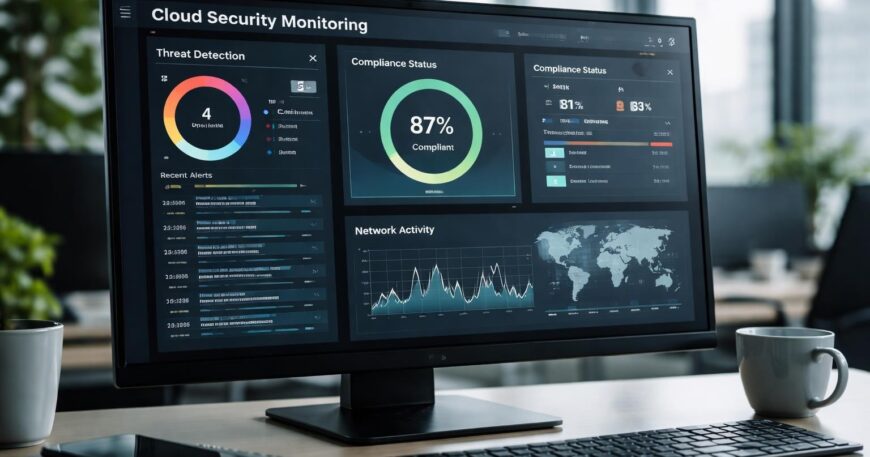
Small businesses increasingly rely on cloud infrastructure to store sensitive data, run critical applications, and enable remote work capabilities. This digital transformation brings remarkable efficiency gains but also introduces new security vulnerabilities that demand constant vigilance. Cloud security monitoring solutions provide the continuous oversight necessary to detect threats, ensure compliance, and maintain the integrity of your business operations across distributed cloud environments.
Understanding Cloud Security Monitoring Solutions
Cloud security monitoring solutions encompass a range of tools and practices designed to track, analyze, and respond to security events across cloud platforms. These systems continuously scan your cloud infrastructure for suspicious activities, unauthorized access attempts, configuration errors, and potential data breaches.
The fundamental difference between traditional network monitoring and cloud security monitoring lies in the dynamic nature of cloud environments. Resources scale up and down automatically, workloads shift between regions, and users access systems from anywhere in the world. Cloud security monitoring addresses these unique challenges through specialized tools that understand cloud-native architectures.
Key Components of Effective Monitoring
Modern cloud security monitoring solutions integrate several critical components:
- Log aggregation and analysis that collects data from all cloud services and applications
- Real-time threat detection using behavioral analytics and known attack signatures
- Compliance monitoring to ensure adherence to industry regulations and internal policies
- Automated incident response that triggers predefined actions when threats are detected
- Identity and access management tracking to monitor who accesses what resources and when

Common Threats Detected by Cloud Monitoring Systems
Cloud environments face distinct security challenges that require specialized detection capabilities. Understanding these threats helps businesses appreciate why comprehensive monitoring is essential rather than optional.
Unauthorized Access and Credential Theft
Attackers frequently target cloud credentials because they provide direct access to valuable data and computing resources. Monitoring solutions track login patterns, detect unusual access times or locations, and flag attempts to escalate privileges. When an employee's account suddenly accesses resources they've never used before or logs in from an unfamiliar country, the system immediately alerts security teams.
Misconfigured Cloud Resources
According to security research, misconfigurations remain one of the most common causes of cloud breaches. Storage buckets left publicly accessible, overly permissive security group rules, or disabled encryption settings create vulnerabilities that attackers actively seek. Detecting security vulnerabilities in cloud systems requires continuous configuration scanning that compares actual settings against security best practices.
Data Exfiltration Attempts
Monitoring solutions track data movement patterns to identify when unusually large volumes of information leave your cloud environment. Whether through compromised accounts or insider threats, these systems can detect and halt data theft before significant damage occurs.
| Threat Type | Detection Method | Response Time | Risk Level |
|---|---|---|---|
| Credential compromise | Behavioral analysis | Minutes | Critical |
| Misconfiguration | Policy scanning | Real-time | High |
| Data exfiltration | Traffic analysis | Minutes to hours | Critical |
| Malware deployment | Signature & behavior | Seconds to minutes | Critical |
| DDoS attacks | Traffic patterns | Seconds | High |
Selecting the Right Cloud Security Monitoring Solutions
The marketplace offers numerous cloud security monitoring solutions, each with different strengths and specializations. Small businesses must balance comprehensive protection with budget constraints and operational complexity.
Platform-Specific vs. Multi-Cloud Solutions
If your business operates entirely within a single cloud platform like AWS, Azure, or Google Cloud, native monitoring tools provide deep integration and often come at lower costs. These platform-specific solutions understand the unique architecture of their environment and offer streamlined configuration.
However, most businesses use multiple cloud services. Email might run on Microsoft 365, customer data on AWS, and collaboration tools on Google Workspace. Multi-cloud security monitoring solutions provide unified visibility across all these platforms, eliminating blind spots that emerge when managing separate monitoring systems.
Essential Features for Small Business Protection
When evaluating cloud security monitoring solutions, prioritize these capabilities:
- Automated threat detection that doesn't require constant human analysis
- Clear, actionable alerts that explain what happened and what to do next
- Integration with existing tools including firewalls, endpoint protection, and ticketing systems
- Scalability that grows with your business without requiring complete replacement
- Compliance reporting for regulations relevant to your industry
The best solutions for small businesses strike a balance between sophisticated protection and manageable complexity. You need enterprise-grade security without requiring a dedicated security operations center to operate it.

Implementation Best Practices for Maximum Protection
Deploying cloud security monitoring solutions effectively requires more than simply purchasing software. Strategic implementation determines whether your investment delivers genuine protection or creates alert fatigue that drowns out real threats.
Establishing Baseline Behavior
Security monitoring systems become most effective after learning what normal looks like for your organization. This baseline period typically spans two to four weeks during which the system observes typical user behavior, standard data transfer patterns, and regular access schedules.
During this learning phase, expect higher false positive rates as the system flags activities that seem unusual but are actually routine for your business. Document legitimate exceptions and tune your monitoring rules accordingly.
Configuring Alert Priorities
Not all security events demand immediate attention. Cloud monitoring tools should categorize alerts by severity, allowing your team to focus on critical threats first while scheduling time to investigate lower-priority items.
Establish clear escalation procedures:
- Critical alerts trigger immediate notifications to IT staff and management
- High-priority warnings generate tickets assigned within one hour
- Medium-priority notices route to daily review queues
- Low-priority events aggregate into weekly security reports
Integration with Incident Response Plans
Monitoring solutions detect threats, but your team must respond appropriately. Document specific procedures for common scenarios like compromised credentials, malware detection, or unusual data access patterns. Everyone should understand their role when alerts trigger.
Regular testing through simulated incidents ensures these procedures work as designed. Quarterly tabletop exercises where teams walk through response scenarios help identify gaps before real emergencies arise.
Advanced Monitoring Capabilities for Growing Businesses
As small businesses expand their cloud footprint, basic monitoring capabilities may no longer suffice. Advanced features provide deeper insights and more automated protection for increasingly complex environments.
Machine Learning-Driven Threat Detection
Traditional signature-based detection identifies known threats but misses novel attack methods. Machine learning algorithms analyze patterns across thousands of security events to identify anomalies that might indicate zero-day exploits or sophisticated targeted attacks. AI-augmented security operations combine cloud-native instrumentation with intelligent analysis to catch threats that rule-based systems miss.
These advanced systems recognize subtle patterns like gradual privilege escalation, where an attacker slowly gains access rights over weeks to avoid triggering sudden change alerts. They also identify coordinated attacks where multiple seemingly unrelated events actually represent stages of a larger breach attempt.
User and Entity Behavior Analytics
UEBA solutions go beyond monitoring what happens to analyze who does what and when. These systems build profiles for each user and device, learning typical behavior patterns. When deviations occur such as a usually 9-to-5 employee accessing sensitive files at 3 AM or a database server suddenly communicating with external IP addresses the system flags these anomalies for investigation.
This behavioral approach catches insider threats and compromised accounts that possess valid credentials and would otherwise appear legitimate to simpler monitoring tools.
Automated Threat Hunting
Rather than waiting for attacks to trigger alerts, proactive threat hunting searches for indicators of compromise that might have evaded detection. Automated hunting capabilities continuously query cloud environments for suspicious file hashes, known malicious IP addresses, unusual registry changes, or other threat indicators.
| Feature | Basic Monitoring | Advanced Monitoring |
|---|---|---|
| Threat detection method | Signature-based | ML & behavioral analysis |
| Alert accuracy | Moderate false positives | Reduced false positives |
| Response capability | Manual procedures | Automated remediation |
| Compliance reporting | Basic logs | Comprehensive audit trails |
| Coverage | Single platform | Multi-cloud visibility |
| Threat hunting | Reactive | Proactive & automated |
Compliance and Regulatory Considerations
Small businesses often face compliance requirements that mandate specific security monitoring capabilities. Understanding these obligations helps justify monitoring investments and ensures proper configuration.
Industry-Specific Requirements
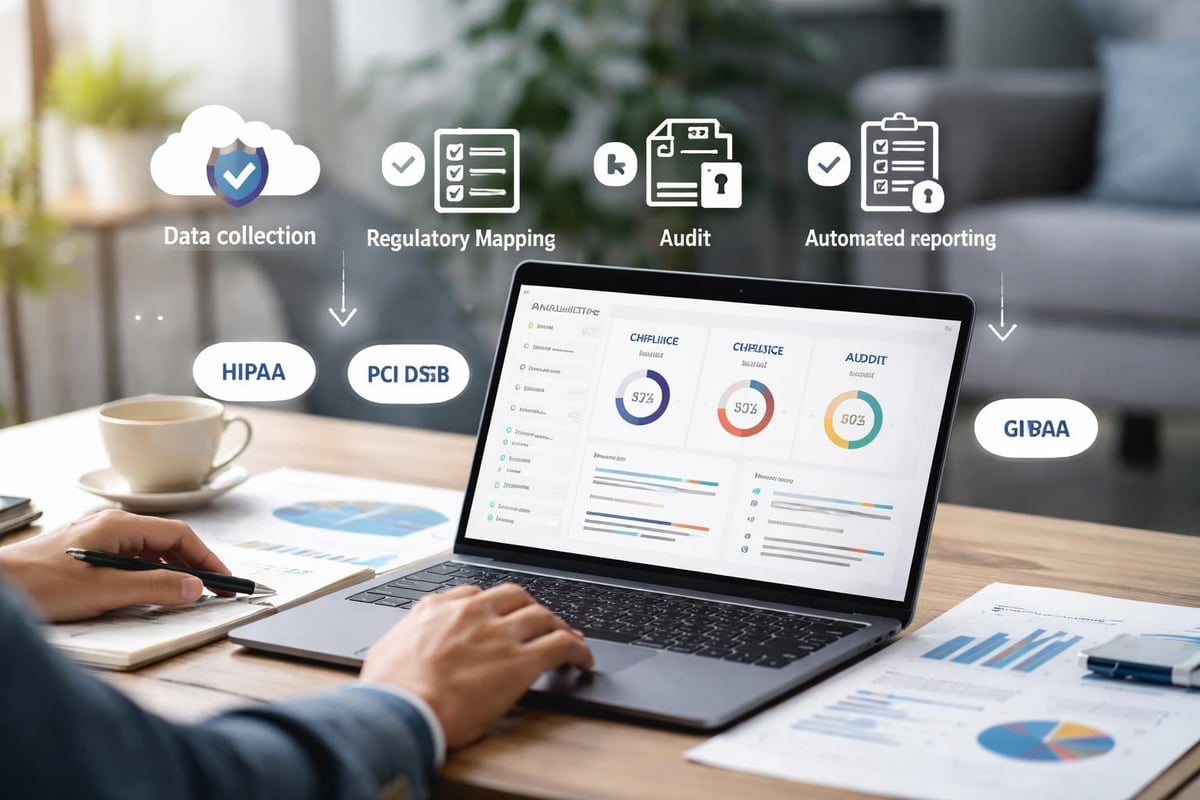
Healthcare businesses must comply with HIPAA regulations requiring audit logs of who accesses protected health information. Financial services firms face SOX requirements for financial data integrity. Retailers handling credit cards must meet PCI DSS standards for payment information protection.
Cloud security monitoring solutions designed for compliance automatically collect required data points, generate necessary reports, and maintain logs for mandated retention periods. This automation eliminates manual tracking that consumes staff time and introduces human error risks.
Data Sovereignty and Location Tracking
Regulations increasingly specify where data can be stored and processed. Canadian businesses handling personal information must understand PIPEDA requirements, while organizations serving European customers face GDPR obligations about data location and processing.
Monitoring solutions should track where data resides within your cloud infrastructure and alert when workloads or storage migrate to non-compliant regions. This visibility becomes critical as cloud platforms automatically shift resources for performance optimization without considering regulatory boundaries.
Cost Considerations and Return on Investment
Small businesses operate within tight budget constraints, making cost-effectiveness crucial when selecting cloud security monitoring solutions. However, calculating true costs requires looking beyond monthly subscription fees.
Direct and Indirect Costs
Obvious costs include licensing fees, which typically scale based on data volume monitored, number of users, or protected resources. Less obvious expenses include implementation time, staff training, ongoing management, and integration with existing systems.
Managed security services that include monitoring as part of comprehensive IT support often deliver better value than standalone tools requiring dedicated security expertise to operate effectively. The fixed-rate fee structure allows accurate budgeting while ensuring professional security oversight.
Measuring Security ROI
Quantifying the return on security investments challenges many businesses because you're preventing losses that never occur. Consider these factors:
- Avoided breach costs: Average small business data breaches cost between $120,000 and $1.24 million when factoring in downtime, notification requirements, legal fees, and reputation damage
- Compliance penalty avoidance: Regulatory fines for security failures can reach hundreds of thousands of dollars
- Operational efficiency: Automated monitoring reduces time staff spend on manual security checks
- Insurance premium reductions: Many cyber insurance policies offer lower rates for businesses with comprehensive monitoring
A monitoring solution costing $5,000 annually easily justifies itself by preventing a single breach or compliance violation.
Integration with Broader Security Strategies
Cloud security monitoring solutions deliver maximum value when integrated into comprehensive security programs rather than deployed as isolated tools. This holistic approach creates multiple defensive layers that protect businesses even when individual controls fail.
Coordination with Endpoint Protection
Your cloud monitoring should communicate with endpoint security tools protecting employee devices. When endpoint protection detects malware on a laptop, cloud monitoring can immediately check whether that device accessed cloud resources during the infection period, identify potentially compromised data, and trigger password resets for affected accounts.
Network Security Integration
Firewalls, intrusion detection systems, and network monitoring tools generate valuable security data. Integrating these feeds with cloud security monitoring solutions provides complete visibility across your entire IT infrastructure, both on-premises and cloud-based.
This unified approach reveals attack patterns that span multiple systems. An attacker might probe your network perimeter, compromise an endpoint, then use stolen credentials to access cloud data. Only integrated monitoring catches this multi-stage attack.
Backup and Disaster Recovery Alignment
Security monitoring should verify that backup processes complete successfully and alert when backup data shows signs of corruption or encryption by ransomware. Effective data backup and recovery strategies combined with robust monitoring ensure business continuity even when security incidents occur.
Testing recovery procedures regularly and monitoring these tests confirms your ability to restore operations after attacks. Many businesses discover backup failures only when trying to recover from disasters, a mistake comprehensive monitoring prevents.
Training Staff to Leverage Monitoring Capabilities
Technology alone cannot secure cloud environments. Your team must understand monitoring alerts, interpret security dashboards, and respond appropriately to threats. Investment in staff training multiplies the effectiveness of cloud security monitoring solutions.
Building Security Awareness
All employees should understand basic security concepts like phishing recognition, password hygiene, and the importance of reporting suspicious activities. Regular training sessions create security-conscious cultures where staff serve as additional sensors detecting threats monitoring tools might miss.
When employees understand that monitoring systems track access patterns, they're more likely to report when they notice unusual alerts or suspect their accounts may be compromised. This human element complements automated detection.
Technical Training for IT Staff
IT teams managing monitoring solutions need deeper technical knowledge covering:
- Alert interpretation to distinguish genuine threats from false positives
- Investigation procedures for following up on security events
- Tool configuration for tuning monitoring rules and integrations
- Reporting capabilities to generate insights for management
- Incident response coordination linking detection to remediation
Vendor-provided training, online courses, and certifications from organizations like the SANS Institute build expertise that maximizes your monitoring investment.
Future Trends in Cloud Security Monitoring
The cloud security landscape evolves continuously as attackers develop new techniques and cloud platforms introduce novel services. Understanding emerging trends helps businesses prepare for future monitoring needs.
Zero Trust Architecture Monitoring
Traditional security models assumed internal network traffic was trustworthy. Zero trust architectures verify every access request regardless of origin. Cloud security monitoring solutions increasingly incorporate zero trust principles, continuously validating user identities, device health, and access appropriateness rather than simply logging authenticated access.
This shift requires more sophisticated monitoring that analyzes context like access time, location, device security posture, and data sensitivity. Expect cloud security monitoring solutions to evolve toward continuous authorization rather than one-time authentication tracking.
Container and Serverless Security
As businesses adopt containers and serverless computing, monitoring must track security across these ephemeral, short-lived resources. Traditional host-based monitoring struggles with infrastructure that exists for seconds or minutes. Next-generation solutions monitor at application and runtime levels, tracking what code does rather than where it runs.
Regulatory Expansion
Governments worldwide are implementing stricter data protection and cybersecurity regulations. Businesses should expect compliance requirements to expand, making robust monitoring capabilities increasingly essential rather than optional. Solutions offering flexible reporting frameworks adapt more easily to evolving regulatory landscapes.
Protecting cloud infrastructure requires continuous vigilance that cloud security monitoring solutions provide through automated threat detection, compliance tracking, and incident response capabilities. Small businesses gain enterprise-level protection without requiring dedicated security teams when implementing appropriate monitoring tools and processes. If you're seeking comprehensive IT security management that includes advanced cloud monitoring integrated with broader network protection, Delphi Systems Inc. offers fixed-rate managed services designed specifically for small businesses in Lethbridge and surrounding areas, allowing you to focus on growing your business while experts maintain your IT security around the clock.

