Small businesses face unprecedented challenges in protecting their digital assets. Information security has evolved from a technical afterthought to a fundamental business requirement that directly impacts profitability, reputation, and operational continuity. As cyber threats become more sophisticated and regulations more stringent, understanding and implementing robust security measures is no longer optional for businesses of any size.
Understanding the Foundation of Information Security
Information security encompasses the practices, technologies, and policies designed to protect digital and physical data from unauthorized access, use, disclosure, disruption, modification, or destruction. At its core, this discipline focuses on maintaining three fundamental principles: confidentiality, integrity, and availability, commonly known as the CIA triad.
Confidentiality ensures that sensitive information remains accessible only to authorized individuals. This involves implementing access controls, encryption, and authentication mechanisms that prevent data breaches and unauthorized disclosure.
Integrity maintains the accuracy and completeness of data throughout its lifecycle. Organizations must ensure that information cannot be altered without detection, whether through malicious attacks or accidental modifications.
Availability guarantees that authorized users can access information and systems when needed. This principle addresses the importance of maintaining operational continuity despite hardware failures, natural disasters, or cyber attacks.
The Evolving Threat Landscape in 2026
The threat environment has transformed dramatically over the past several years. Cybercriminals now employ artificial intelligence and machine learning to create more convincing phishing campaigns and exploit vulnerabilities faster than ever before.
- Ransomware attacks continue to target small businesses, with attackers demanding payment in exchange for decrypting essential business data
- Supply chain compromises introduce vulnerabilities through trusted third-party vendors and software providers
- Social engineering tactics manipulate employees into divulging credentials or transferring funds
- Advanced persistent threats establish long-term access to networks for espionage or data theft
- IoT vulnerabilities create entry points through poorly secured connected devices

Essential Information Security Components for Small Businesses
Building a comprehensive security posture requires multiple layers of protection working in concert. Organizations must address several critical components to create an effective defense strategy.
Network Security Measures
Network security forms the perimeter defense against external threats. Implementing robust network controls prevents unauthorized access and monitors traffic for suspicious activity.
| Security Component | Purpose | Implementation Priority |
|---|---|---|
| Firewall Protection | Filters incoming/outgoing traffic | Critical |
| Intrusion Detection Systems | Monitors network for threats | High |
| VPN Solutions | Secures remote connections | High |
| Network Segmentation | Isolates sensitive systems | Medium |
| Wireless Security | Protects WiFi networks | Critical |
Firewalls serve as the first line of defense, examining data packets and blocking malicious traffic based on predetermined security rules. Modern next-generation firewalls incorporate deep packet inspection, application awareness, and threat intelligence to identify sophisticated attacks.
Virtual private networks (VPNs) encrypt communications between remote workers and company networks, ensuring that sensitive data remains protected even when transmitted over public internet connections. This becomes particularly crucial as hybrid work models continue to dominate business operations in 2026.
Data Protection and Encryption Strategies
Protecting data at rest and in transit requires implementing encryption technologies and access controls that prevent unauthorized viewing or modification.
Organizations should classify data based on sensitivity levels and apply appropriate protection measures. Customer financial information, employee records, and proprietary business data demand stronger safeguards than general marketing materials or public information.
Encryption technologies transform readable data into coded format that requires specific keys for decryption. Full-disk encryption protects devices if lost or stolen, while email encryption secures sensitive communications. Database encryption adds another layer of protection for stored information.
Access control systems ensure that employees can only access information necessary for their job functions. Role-based access control (RBAC) assigns permissions based on job responsibilities, while multi-factor authentication adds verification steps beyond simple passwords.
Endpoint Security and Device Management
Every device connecting to business networks represents a potential entry point for threats. Comprehensive endpoint security addresses computers, smartphones, tablets, and other connected devices.
- Deploy anti-malware solutions across all endpoints with real-time scanning and automatic updates
- Implement mobile device management to enforce security policies on smartphones and tablets
- Enable automatic security patches to close vulnerabilities in operating systems and applications
- Use application whitelisting to prevent unauthorized software installation
- Configure secure baseline settings for all devices before deployment
Modern endpoint detection and response (EDR) solutions provide advanced threat hunting capabilities, identifying suspicious behaviors that traditional antivirus software might miss. These tools analyze patterns across multiple endpoints to detect coordinated attacks.
Developing Robust Information Security Policies
Written policies establish the framework for security practices and create accountability across the organization. Effective policies balance security requirements with operational efficiency, ensuring compliance without hindering productivity.
Creating an Acceptable Use Policy
An acceptable use policy defines appropriate behavior for employees using company technology resources. This document should clearly outline permitted and prohibited activities, including personal use of company equipment, social media guidelines, and data handling procedures.
Key elements include specifications for password requirements, restrictions on downloading unauthorized software, guidelines for remote work scenarios, and consequences for policy violations. Regular acknowledgment of these policies ensures employees understand their responsibilities.
Incident Response Planning
Despite best efforts, security incidents will occur. A documented incident response plan enables organizations to react quickly and effectively, minimizing damage and recovery time.
The plan should designate an incident response team with clearly defined roles and responsibilities. It must outline procedures for identifying and containing incidents, preserving evidence for investigation, communicating with stakeholders, and restoring normal operations.

Testing the incident response plan through tabletop exercises and simulations reveals gaps before real emergencies occur. Annual reviews ensure the plan remains relevant as business operations and threat landscapes evolve.
Training and Awareness Programs
Technology solutions alone cannot prevent all security incidents. Human behavior represents both the greatest vulnerability and the strongest defense in information security strategies.
Building a Security-Conscious Culture
Creating a culture where security awareness permeates daily operations requires ongoing education and positive reinforcement. Employees should understand that information security protects not only the company but also their personal information and job security.
Regular training sessions should cover current threat trends, recognizing phishing attempts, secure password practices, and proper handling of sensitive information. Interactive training methods increase retention compared to passive video presentations.
Monthly security tips delivered through email newsletters keep awareness high between formal training sessions. Simulated phishing campaigns test employee vigilance and provide teaching moments when individuals click suspicious links.
Recognition programs that reward employees who report potential security incidents encourage proactive participation. This positive approach proves more effective than punitive measures for fostering genuine security commitment.
Compliance and Regulatory Considerations
Various regulations govern information security practices depending on industry and data types handled. Understanding applicable requirements helps organizations avoid penalties while implementing necessary protections.
Common Regulatory Frameworks
Small businesses in Canada must navigate several compliance requirements affecting data protection and privacy practices.
| Regulation | Scope | Key Requirements |
|---|---|---|
| PIPEDA | Personal information in commercial activities | Consent, safeguards, accountability |
| PCI DSS | Credit card processing | Secure networks, encryption, access controls |
| GDPR | EU citizen data | Data protection, breach notification, privacy rights |
| CASL | Electronic communications | Consent for marketing messages |
The Personal Information Protection and Electronic Documents Act (PIPEDA) establishes ground rules for how private sector organizations collect, use, and disclose personal information. Businesses must obtain meaningful consent, implement appropriate safeguards, and provide transparency about data practices.
Organizations processing credit card payments must comply with Payment Card Industry Data Security Standard (PCI DSS) requirements. These standards mandate secure network architecture, encryption of cardholder data, and regular security testing.
Cloud Security Considerations
Cloud computing offers tremendous benefits for small businesses, but introduces unique information security challenges requiring specialized approaches.
Securing Cloud Environments
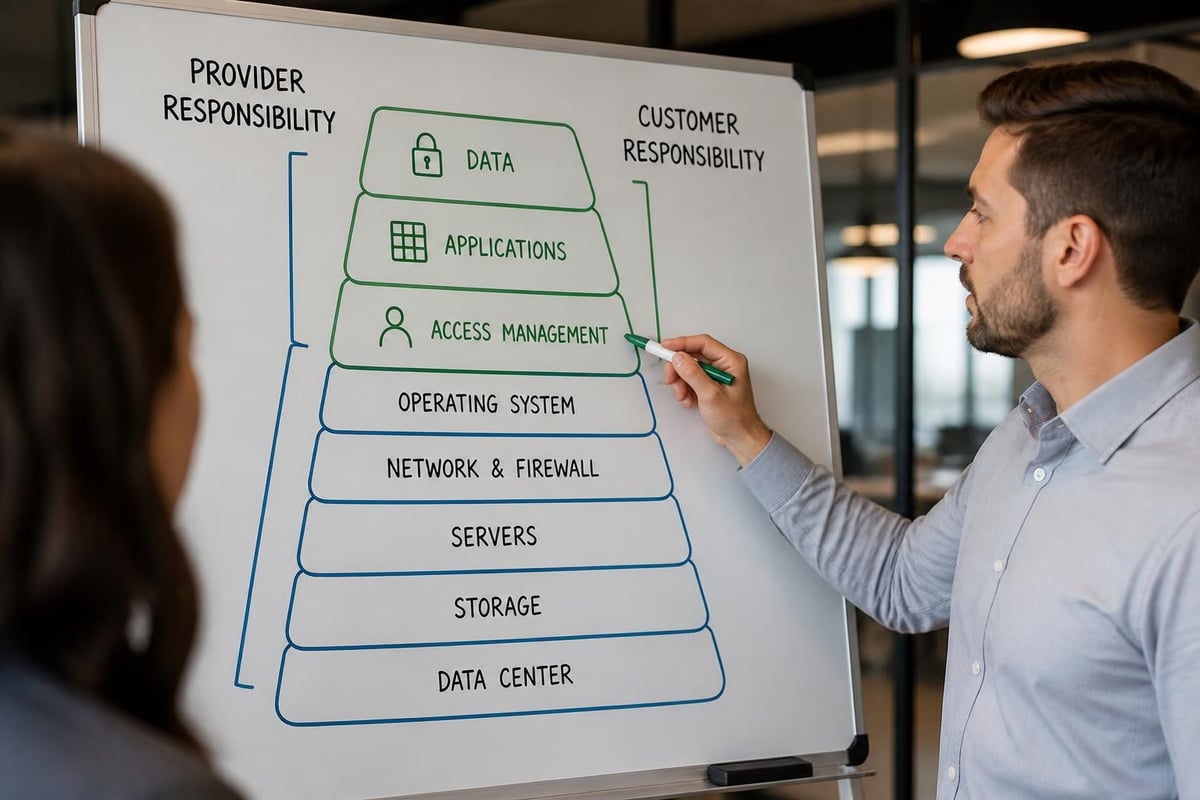
Understanding the shared responsibility model is crucial when using cloud services. Cloud providers secure the underlying infrastructure, while customers remain responsible for protecting their data, managing access, and configuring security settings correctly.
- Identity and access management controls who can access cloud resources through strong authentication and least-privilege principles
- Data encryption protects information stored in cloud databases and file systems
- Configuration management ensures cloud resources follow security best practices and compliance requirements
- Monitoring and logging tracks activities within cloud environments to detect suspicious behavior
- Backup and recovery maintains separate copies of cloud data to prevent loss from ransomware or accidental deletion
Selecting reputable cloud service providers with strong security certifications and transparent practices forms the foundation of cloud security. Providers should demonstrate compliance with relevant standards and offer robust tools for customers to implement their security policies.
Continuous Monitoring and Improvement
Information security requires ongoing attention rather than one-time implementation. Threat landscapes evolve constantly, requiring organizations to adapt their defensive strategies continuously.
Security Assessments and Audits
Regular vulnerability assessments identify weaknesses in systems before attackers exploit them. Automated scanning tools examine networks and applications for known vulnerabilities, misconfigurations, and missing security patches.
Penetration testing simulates real-world attacks to evaluate the effectiveness of security controls. Ethical hackers attempt to breach defenses using the same techniques as malicious actors, revealing gaps that require remediation.
Third-party security audits provide objective assessments of security postures and compliance with relevant standards. External auditors bring fresh perspectives and industry expertise that internal teams might lack.
Security metrics and reporting track key performance indicators such as time to detect incidents, patch deployment rates, and training completion percentages. These measurements demonstrate security program effectiveness and guide resource allocation decisions.
Adapting to Emerging Technologies
Artificial intelligence and machine learning now power both defensive and offensive security capabilities. Organizations must understand these technologies to leverage them effectively while defending against AI-powered attacks.
Quantum computing threatens to render current encryption methods obsolete within the next decade. Forward-thinking businesses should monitor developments in post-quantum cryptography and prepare migration strategies.
Zero-trust architecture assumes that threats exist both inside and outside network perimeters. This approach verifies every access request regardless of origin, providing stronger security for distributed workforces and cloud environments.
Budget Planning for Information Security
Allocating appropriate resources to information security represents an investment in business continuity rather than a cost center. The expense of preventing incidents pales in comparison to recovery costs from successful attacks.
Cost-Effective Security Strategies
Small businesses can implement robust security without enterprise-level budgets by prioritizing investments and leveraging managed services.
- Focus on high-impact controls that address the most likely and damaging threats first
- Utilize free and open-source tools for basic security functions where appropriate
- Consider managed security services that provide enterprise-grade protection at predictable monthly costs
- Implement security awareness training to reduce human-related incidents
- Automate security tasks to reduce labor costs and improve consistency
Delphi Systems Inc. offers fixed-rate managed IT services that include comprehensive security measures, allowing businesses to access expert security capabilities without maintaining in-house specialists. This approach provides predictable costs while ensuring professional security management.
Vendor and Third-Party Risk Management
Business relationships create interconnected security dependencies. Suppliers, contractors, and service providers with access to systems or data extend the attack surface beyond direct control.
Evaluating Vendor Security Practices
Due diligence processes should assess vendor information security practices before establishing relationships. Questionnaires covering security policies, incident history, compliance certifications, and data handling procedures reveal potential risks.
Contracts should include security requirements, data protection obligations, breach notification timelines, and audit rights. Service level agreements must specify security metrics and consequences for failures.
Ongoing vendor monitoring ensures continued compliance with security expectations. Annual reviews of security postures and periodic audits maintain awareness of changing risk profiles.
Physical Security Integration
Information security extends beyond digital protections to include physical safeguards preventing unauthorized access to facilities, equipment, and documents.
Physical access controls limit building entry to authorized personnel through badge systems, biometric readers, or security personnel. Server rooms and network closets require additional restrictions beyond general office access.
Environmental controls protect hardware from temperature extremes, humidity, fire, and water damage. Proper ventilation, fire suppression systems, and leak detection preserve equipment functionality.
Secure disposal procedures ensure that discarded equipment and documents cannot reveal sensitive information. Hard drive destruction, paper shredding, and certified disposal services prevent data recovery from discarded materials.
Protecting business information requires a comprehensive approach combining technology, policies, and human awareness to defend against evolving threats. Small businesses in Lethbridge and surrounding areas can benefit from professional guidance in implementing these essential security measures. Delphi Systems Inc. provides managed IT services including cybersecurity, network monitoring, and data backup solutions with fixed-rate pricing, allowing you to focus on core business activities while maintaining robust information security protections.

