


Small businesses face an escalating landscape of cyber threats in 2026, making the implementation of a comprehensive data security network more critical than ever. As organizations increasingly rely on digital infrastructure for daily operations, protecting sensitive information from unauthorized access, data breaches, and cyber attacks has become a fundamental business requirement rather than an optional investment. A well-designed data security network encompasses multiple layers of protection, from perimeter defenses to endpoint security, creating a resilient shield against evolving threats. Understanding how to build and maintain these protective systems empowers business owners to safeguard their most valuable digital assets while maintaining operational efficiency.
Understanding the Foundation of a Data Security Network
A data security network represents the integrated framework of technologies, policies, and procedures designed to protect digital information throughout its lifecycle. This comprehensive approach addresses threats at multiple points across your IT infrastructure, ensuring that data remains confidential, intact, and available when needed.
The architecture of a robust data security network includes several critical components working in concert. Firewalls serve as the first line of defense, filtering incoming and outgoing traffic based on predetermined security rules. Intrusion detection and prevention systems monitor network activity for suspicious patterns, automatically blocking potential threats before they can cause damage. Encryption protocols scramble data during transmission and storage, rendering it useless to unauthorized parties who might intercept it.
Modern implementations extend beyond traditional perimeter-based security models. Organizations must now protect data across cloud environments, remote work setups, and mobile devices. This shift has fundamentally changed how businesses approach network security, requiring more sophisticated strategies that accommodate distributed workforces and hybrid infrastructure.

Key Components That Strengthen Your Security Posture
Building an effective data security network requires implementing specific technologies and protocols that address different vulnerability points:
- Access control mechanisms that authenticate users and restrict permissions based on roles and responsibilities
- Network segmentation to isolate critical systems and limit lateral movement during potential breaches
- Endpoint protection covering all devices that connect to your network, including computers, smartphones, and tablets
- Data loss prevention (DLP) tools that monitor and control information transfer to prevent unauthorized sharing
- Security information and event management (SIEM) systems that aggregate and analyze security alerts across your infrastructure
Each component plays a distinct role in creating defense in depth. When properly configured and maintained, these elements create overlapping protective layers that significantly reduce the likelihood of successful attacks.
Implementing Zero Trust Architecture
The traditional "castle-and-moat" approach to network security has proven insufficient against modern threats. Zero Trust Architecture represents a paradigm shift in how organizations structure their data security network, operating on the principle that no user or device should be automatically trusted, regardless of location.
This methodology requires continuous verification of every access request. Users must authenticate their identity, devices must meet security compliance standards, and access permissions are granted on a least-privilege basis. The approach minimizes the potential damage from compromised credentials or insider threats.
Implementing Zero Trust involves several critical steps:
- Identify and classify all data assets to understand what requires protection and at what level
- Map data flows across your network to understand how information moves between systems and users
- Establish micro-perimeters around specific resources rather than relying solely on network-edge security
- Deploy multi-factor authentication (MFA) across all access points to verify user identities
- Implement continuous monitoring to detect anomalous behavior and respond quickly to potential threats
Organizations adopting Zero Trust Security Architecture report significant improvements in their ability to detect and respond to security incidents. This approach proves particularly valuable for small businesses with limited security teams, as automated policy enforcement reduces the manual oversight required.
Best Practices for Data Security Network Management
Maintaining a secure network environment requires ongoing attention and adherence to established industry standards. The following best practices form the foundation of effective data security network management for businesses of all sizes.
Authentication and Access Control
Strong authentication mechanisms serve as the cornerstone of network security. Multi-factor authentication should be mandatory for all users, requiring at least two forms of verification before granting access. This might include something the user knows (password), something they have (security token), or something they are (biometric data).
Role-based access control (RBAC) ensures that employees can only access the information necessary for their specific job functions. This principle of least privilege limits exposure if credentials become compromised. Regular audits of user permissions help identify and eliminate unnecessary access rights that accumulate over time.
Password policies must enforce complexity requirements and regular rotation schedules. However, security experts in 2026 increasingly recommend passphrase-based approaches combined with password managers rather than frequent mandatory changes that often lead to weaker, predictable passwords.
Network Infrastructure Security
Protecting the physical and virtual infrastructure that supports your data security network involves multiple considerations:
| Security Measure | Purpose | Implementation Priority |
|---|---|---|
| Network Segmentation | Isolates critical systems from general traffic | High |
| VLAN Configuration | Separates departments and functions | Medium |
| Wireless Security | Protects against unauthorized Wi-Fi access | High |
| Router Hardening | Secures network devices from exploitation | High |
| Regular Firmware Updates | Patches known vulnerabilities | Critical |
Router and switch configurations require particular attention. Default credentials must be changed immediately upon deployment, unnecessary services should be disabled, and administrative access should be restricted to authorized personnel only. Securing network infrastructure prevents attackers from gaining control of the devices that route and manage your data traffic.
Continuous Monitoring and Threat Detection
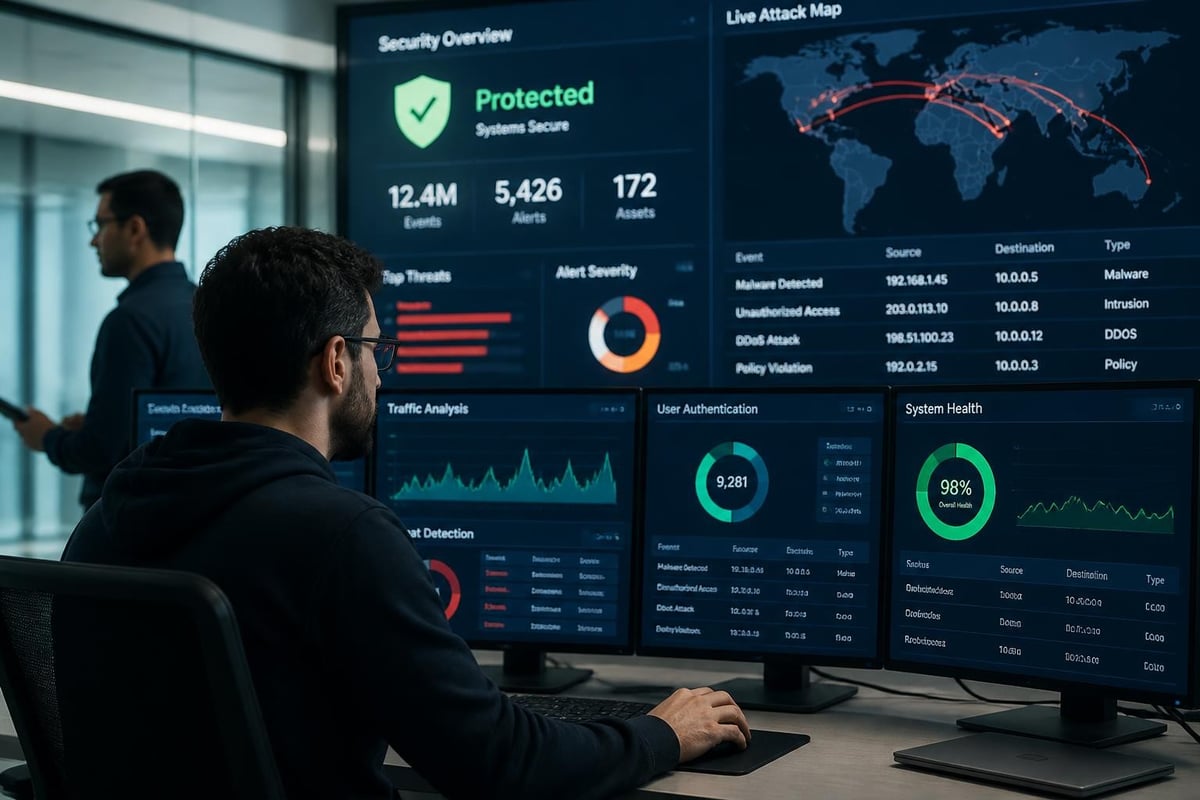
A data security network cannot function effectively without comprehensive monitoring capabilities. Real-time surveillance of network activity enables security teams to identify and respond to threats before they cause significant damage.
Modern monitoring solutions employ machine learning algorithms to establish baseline behavior patterns and flag anomalies that might indicate security incidents. These systems track metrics including:
- Login attempts and authentication failures
- Data transfer volumes and destinations
- Application usage patterns
- Network traffic flows and protocols
- System configuration changes
Automated alert systems notify administrators of suspicious activities, enabling rapid response. However, proper tuning is essential to minimize false positives that can lead to alert fatigue and missed genuine threats.
Data Encryption Strategies
Encryption transforms readable information into coded format, protecting data both in transit across networks and at rest in storage systems. A comprehensive data security network implements encryption at multiple layers to ensure information remains protected even if other security controls fail.
Transport Layer Security (TLS) protocols encrypt data moving between systems, preventing interception and eavesdropping. All web traffic, email communications, and file transfers should use current encryption standards. Organizations must regularly update their encryption protocols to address newly discovered vulnerabilities in older versions.
Disk-level encryption protects stored data on servers, computers, and mobile devices. If a device is lost or stolen, encryption ensures that unauthorized individuals cannot access the information it contains. This protection proves particularly valuable for businesses with remote workers or employees who travel with company devices.
Database encryption adds another protective layer for structured information repositories. Data security best practices recommend encrypting sensitive database fields or entire databases depending on the information's classification level.
Encryption Key Management
The security of encrypted data depends entirely on proper key management. Organizations must establish procedures for:
- Generating strong encryption keys using certified random number generators
- Storing keys separately from the data they protect, preferably in hardware security modules
- Rotating keys regularly according to compliance requirements and security policies
- Revoking and replacing keys when employees with access leave the organization
- Backing up keys securely to prevent data loss while maintaining protection
Poor key management undermines even the strongest encryption algorithms. Small businesses often benefit from managed security services that handle these complex technical requirements while ensuring compliance with industry standards.
Patch Management and Vulnerability Remediation
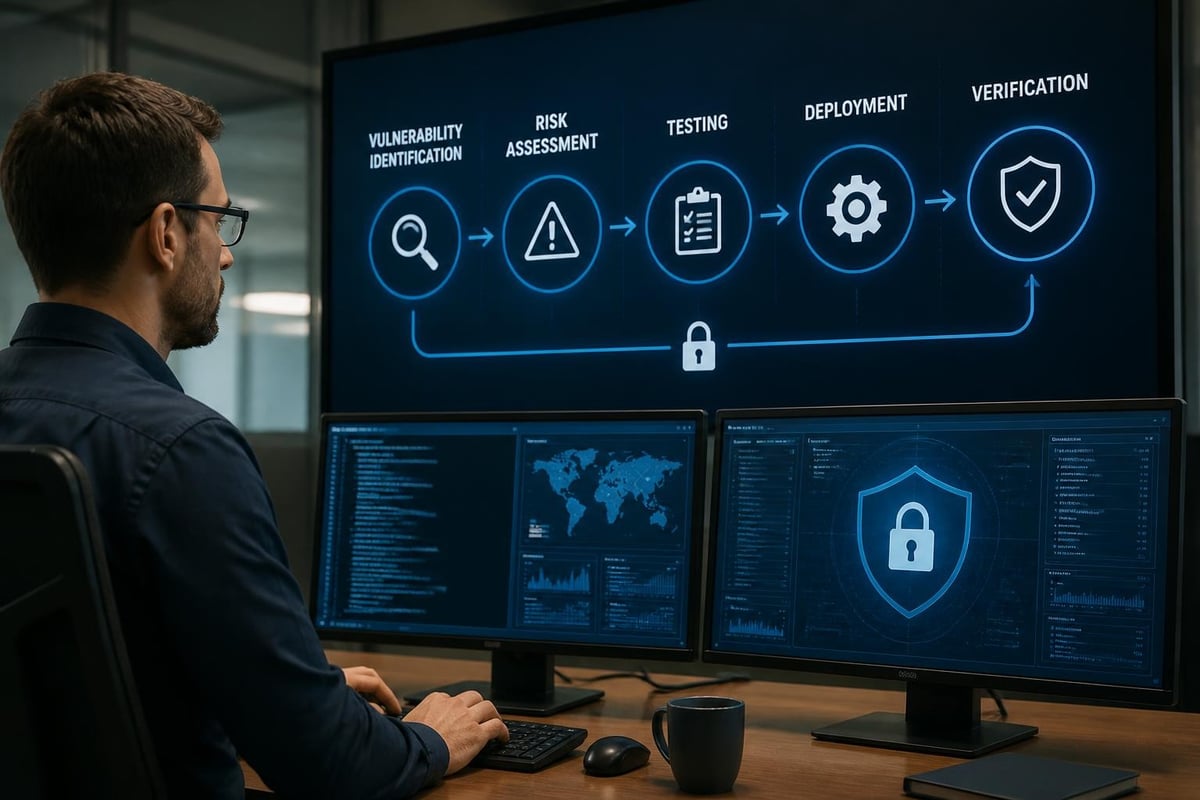
Software vulnerabilities represent one of the most common entry points for cyber attackers. Vendors regularly release patches to address discovered security flaws, making timely updates essential for maintaining a secure data security network.
An effective patch management program includes several key elements:
- Inventory all software and systems to understand what requires updates
- Subscribe to security advisories from vendors and security organizations
- Test patches in non-production environments before broad deployment
- Prioritize critical security updates for immediate implementation
- Document and track patch deployment to ensure comprehensive coverage
- Verify successful installation and monitor for any operational issues
Many successful breaches exploit vulnerabilities for which patches have been available for months or even years. Automated patch management tools help organizations stay current with updates while minimizing the administrative burden on IT staff.
Employee Training and Security Awareness
Technical controls alone cannot secure a data security network. Human error and social engineering attacks frequently bypass even sophisticated security systems, making employee education a critical component of comprehensive protection.
Security awareness programs should address multiple topics relevant to daily business operations:
- Phishing recognition to identify fraudulent emails and messages attempting to steal credentials
- Password hygiene including creation of strong passphrases and use of password managers
- Safe browsing practices to avoid malicious websites and downloads
- Physical security measures for protecting devices and preventing shoulder surfing
- Incident reporting procedures so employees know how to alert IT teams about potential security events
Training should occur during onboarding and continue through regular refresher sessions. Adapting to emerging threats requires that education programs evolve alongside the threat landscape, incorporating lessons learned from recent attacks affecting similar organizations.
Interactive training methods, including simulated phishing exercises, provide more effective learning than passive video watching or document reading. These practical experiences help employees recognize threats in real-world contexts and understand the consequences of security lapses.
Backup and Disaster Recovery Integration
A complete data security network includes robust backup and disaster recovery capabilities. While preventive controls aim to stop attacks, recovery mechanisms ensure business continuity when prevention fails.
The 3-2-1 backup rule remains fundamental in 2026: maintain at least three copies of critical data, store them on two different media types, and keep one copy offsite. Modern implementations often extend this to 3-2-1-1-0, adding an immutable backup copy and zero errors in backup verification.
| Backup Strategy | Recovery Time | Data Loss Risk | Cost Level |
|---|---|---|---|
| Real-time Replication | Minutes | Minimal | High |
| Hourly Snapshots | Hours | 1 hour | Medium |
| Daily Full Backups | 24 hours | 1 day | Low |
| Weekly Archives | Several days | 1 week | Low |
Testing recovery procedures proves as important as creating backups. Regular restoration drills verify that backups function correctly and that staff understand recovery processes. These tests also help establish realistic recovery time objectives (RTOs) and recovery point objectives (RPOs) that inform business continuity planning.
Ransomware attacks specifically target backup systems, recognizing that organizations with functioning backups are less likely to pay extortion demands. Air-gapped or immutable backups that attackers cannot modify or delete provide essential protection against this threat vector.
Cloud Security Considerations
Small businesses increasingly rely on cloud services for email, file storage, customer relationship management, and other critical functions. Protecting data in these environments requires extending your data security network beyond traditional on-premise boundaries.
Shared responsibility models define which security aspects cloud providers handle and which remain the customer's obligation. Generally, providers secure the underlying infrastructure while customers must protect their data, manage access controls, and configure services properly.
Network security best practices for hybrid and multicloud environments emphasize several key considerations:
- Identity and access management integration between on-premise and cloud systems
- Data classification and protection applied consistently regardless of storage location
- Encryption of data before uploading to cloud services for sensitive information
- Cloud security posture management tools that identify misconfigurations and compliance violations
- Network connectivity security through VPNs or dedicated connections for sensitive data transfer
Cloud access security brokers (CASBs) provide visibility and control over cloud service usage, enforcing security policies and detecting unauthorized data sharing or risky configurations. These tools prove particularly valuable for organizations using multiple cloud platforms or struggling to maintain visibility into employee cloud application usage.
Compliance and Regulatory Requirements
Industry regulations and data protection laws impose specific requirements on how organizations must protect information. A properly designed data security network addresses these compliance obligations while providing broader security benefits.
Different industries face varying regulatory frameworks. Healthcare organizations must comply with HIPAA requirements for protecting patient information. Financial institutions follow standards like PCI DSS for payment card data and SOX for financial reporting. Canadian businesses handling personal information must align with PIPEDA requirements, while those dealing with European customers face GDPR obligations.
Common compliance requirements include:
- Data encryption for information at rest and in transit
- Access logging and monitoring to track who accesses what information and when
- Incident response procedures for detecting, containing, and reporting security breaches
- Regular security assessments including vulnerability scans and penetration testing
- Employee background checks for positions with access to sensitive information
Documentation plays a crucial role in demonstrating compliance. Organizations must maintain records of security policies, configuration standards, training completion, security incidents, and remediation actions. Many small businesses find that partnering with managed service providers helps ensure both compliance and security without requiring extensive internal expertise.
Measuring Security Effectiveness
Quantifying the effectiveness of your data security network enables informed decision-making about security investments and helps identify areas requiring additional attention. Several metrics provide insight into security posture and program maturity.
Mean time to detect (MTTD) measures how quickly your systems identify security incidents. Shorter detection times limit the damage attackers can cause before security teams intervene. Mean time to respond (MTTR) tracks how long remediation takes after incident detection. Together, these metrics reveal how effectively your security operations function.
Vulnerability metrics include the number of critical vulnerabilities present in your environment and the average time required to patch them. Tracking these figures over time demonstrates whether your vulnerability management processes are improving or deteriorating.
User behavior metrics like password reset frequency, failed login attempts, and security training completion rates provide insight into the human element of your security program. Increases in certain metrics might indicate either improving security awareness or emerging threats requiring attention.
Regular security assessments, including penetration testing and security audits, provide point-in-time evaluations of your overall security posture. These assessments identify gaps in controls and validate that implemented security measures function as intended.
Protecting your business data requires a comprehensive approach combining technical controls, employee training, and ongoing vigilance. A properly implemented data security network creates multiple defensive layers that significantly reduce cyber risk while supporting business operations. For small businesses in Lethbridge and surrounding areas, partnering with experienced professionals provides access to enterprise-grade security capabilities without the overhead of building internal expertise. Delphi Systems Inc. delivers managed IT services that keep your network secure and operating at peak performance, allowing you to focus on growing your business while we handle the complexities of cybersecurity, monitoring, and compliance.

