

Small businesses face increasingly sophisticated cyber threats that demand specialized expertise and round-the-clock monitoring. A cyber security services provider delivers the professional protection that many organizations cannot develop internally, offering comprehensive defense strategies tailored to specific business needs. For companies in Lethbridge and similar communities, partnering with security specialists has become essential rather than optional as threat actors continuously evolve their attack methods.
Understanding the Role of a Cyber Security Services Provider
A cyber security services provider functions as an extension of your IT team, delivering specialized expertise in threat detection, response, and prevention. These providers deploy advanced security tools and maintain constant vigilance over your digital infrastructure, identifying vulnerabilities before attackers can exploit them.
The core responsibilities typically include:
- Continuous monitoring of networks and systems for suspicious activity
- Implementation and management of firewalls, antivirus, and intrusion detection systems
- Regular security assessments and vulnerability scanning
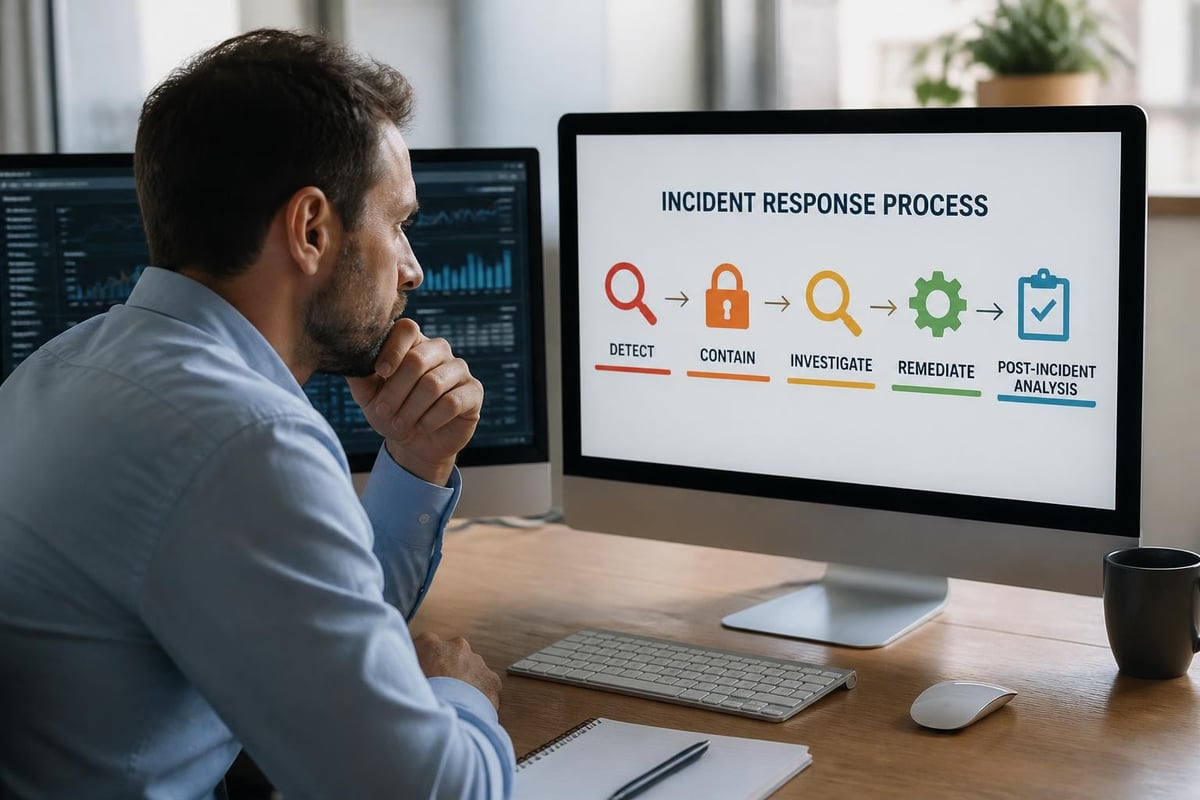
- Incident response and remediation when breaches occur
- Compliance management for industry regulations
Many organizations turn to Managed Security Service Providers (MSSPs) to access enterprise-grade security capabilities without building an expensive in-house security operations center. This approach provides small businesses with the same level of protection larger enterprises enjoy, but at a fraction of the cost.
Security Services vs. General IT Support
While general IT support maintains day-to-day technology operations, a dedicated cyber security services provider specializes exclusively in protecting against digital threats. This specialization matters because cybersecurity demands specific knowledge of attack vectors, threat intelligence, and defensive technologies that evolve daily.
The distinction becomes clear when examining response capabilities. General IT teams resolve technical issues and maintain infrastructure, whereas security specialists actively hunt for threats, analyze security events, and implement layered defense strategies designed to withstand targeted attacks.
Critical Services Every Provider Should Offer
Threat Monitoring and Detection
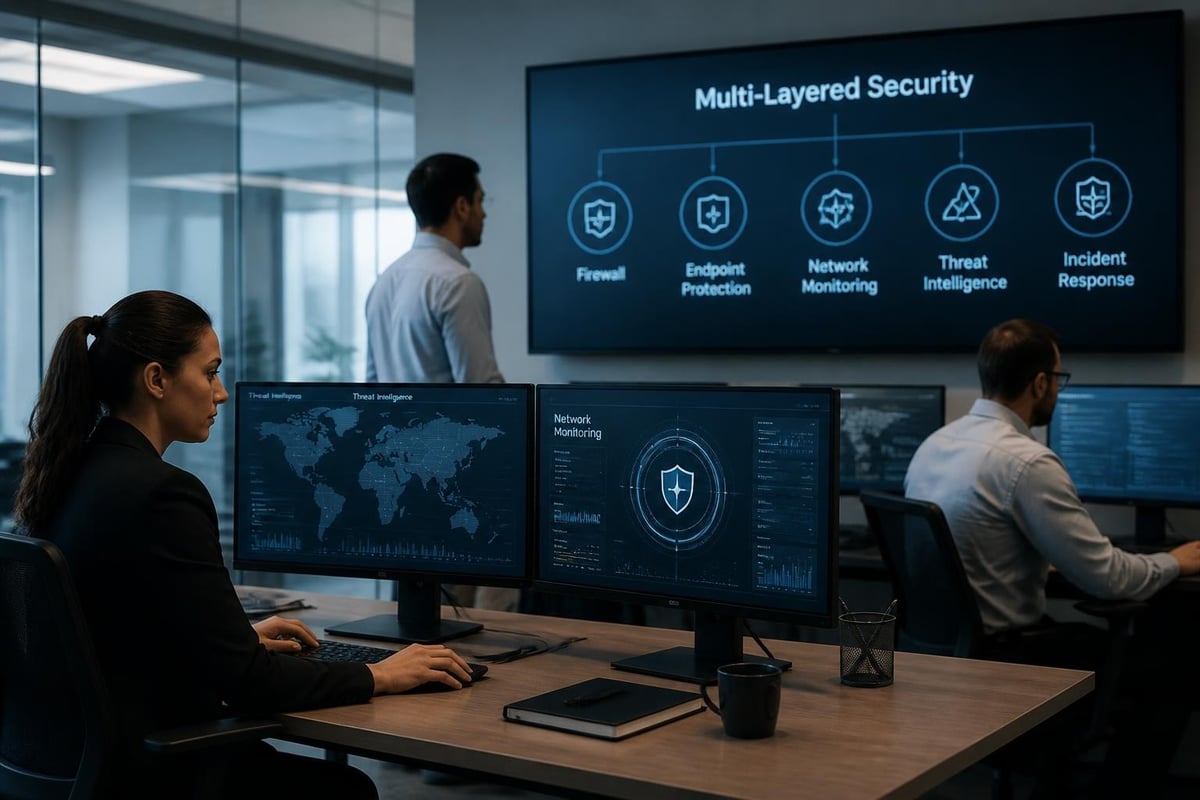
Real-time threat monitoring forms the foundation of effective cybersecurity. A quality cyber security services provider operates a Security Operations Center (SOC) that analyzes network traffic, system logs, and user behavior patterns 24/7. This continuous surveillance identifies anomalies that signal potential attacks, often catching threats before they cause damage.
Advanced providers employ Security Information and Event Management (SIEM) platforms that correlate data from multiple sources, creating a comprehensive view of your security posture. These systems use artificial intelligence and machine learning to distinguish genuine threats from false alarms, reducing alert fatigue while maintaining high detection rates.
Vulnerability Assessment and Penetration Testing
Regular vulnerability assessments identify weaknesses in your infrastructure before attackers discover them. Professional vulnerability assessment services follow structured methodologies that examine networks, applications, and configurations against known security flaws.
Penetration testing takes this further by simulating real-world attacks. Ethical hackers attempt to breach your defenses using the same techniques as malicious actors, revealing gaps that automated scans might miss. These tests provide actionable intelligence about your security weaknesses and validate the effectiveness of existing controls.
| Assessment Type | Frequency | Primary Focus | Business Impact |
|---|---|---|---|
| Vulnerability Scan | Monthly | Known security flaws | Identifies patch needs |
| Penetration Test | Quarterly | Real-world attack simulation | Validates defense effectiveness |
| Security Audit | Annually | Policy compliance | Ensures regulatory adherence |
| Risk Assessment | Semi-annually | Business continuity threats | Prioritizes security investments |
Endpoint Protection and Response
Every device connecting to your network represents a potential entry point for attackers. Comprehensive endpoint protection extends beyond traditional antivirus software to include behavioral analysis, application whitelisting, and automated threat response. Modern endpoint detection and response (EDR) solutions track activities across all devices, identifying sophisticated attacks that signature-based tools miss.
When incidents occur, EDR platforms enable rapid containment and remediation. Security teams can isolate infected devices, roll back malicious changes, and gather forensic evidence without waiting for manual intervention. This speed proves critical when facing ransomware attacks that spread through networks in minutes.
Evaluating Provider Capabilities and Expertise
Technical Qualifications and Certifications
Professional certifications indicate a cyber security services provider has invested in developing specialized expertise. Look for team members holding credentials like CISSP (Certified Information Systems Security Professional), CEH (Certified Ethical Hacker), or CISM (Certified Information Security Manager). These certifications require extensive knowledge and ongoing education to maintain.
Key certifications to prioritize:
- CISSP: Demonstrates comprehensive security knowledge across multiple domains
- CEH: Validates penetration testing and ethical hacking skills
- CompTIA Security+: Shows foundational security competency
- CISA: Proves audit and assessment capabilities
- GIAC: Indicates specialized technical expertise in specific security areas
Beyond individual credentials, assess whether the provider maintains organizational certifications like ISO 27001 or SOC 2 compliance. These standards require rigorous internal security practices, suggesting the provider applies the same discipline they recommend to clients.
Service Level Agreements and Response Times
Clear service level agreements (SLAs) define exactly what protection you receive and how quickly the provider responds to incidents. Review these carefully, paying attention to guaranteed response times for different severity levels. Critical incidents should receive immediate attention, while lower-priority issues might allow longer response windows.
Response time alone doesn't tell the complete story. Examine the provider's escalation procedures, communication protocols during incidents, and post-incident reporting processes. You need confidence that the provider will keep you informed throughout security events and help you understand both what happened and how to prevent recurrence.
Addressing Supply Chain and Third-Party Risks
Modern businesses rely on interconnected networks of vendors, partners, and service providers. This creates security challenges beyond your direct control, as supply chains represent the weakest link in cyber defenses. A comprehensive cyber security services provider helps you manage these third-party risks through continuous monitoring and assessment.
Effective vendor risk management starts with understanding which third parties access your systems and data. Security providers should help you inventory these relationships, assess their security postures, and implement appropriate controls. This includes requiring vendors to demonstrate their own security practices and monitoring their access to your resources.
Implementing Continuous Vendor Monitoring
Cyber vendor risk management best practices emphasize ongoing surveillance rather than one-time assessments. Security threats evolve constantly, and a vendor with strong defenses today might suffer a breach tomorrow that compromises your data. Continuous monitoring tracks vendor security ratings, breach notifications, and compliance status changes.
Your cyber security services provider should integrate vendor risk into your overall security program. This means establishing clear policies about third-party access, conducting regular security reviews, and maintaining the ability to quickly sever connections if a vendor becomes compromised. The goal is protecting your business without sacrificing the operational efficiency that vendor relationships provide.
Cost Structures and Value Considerations
Fixed-Rate vs. Consumption-Based Models
Pricing models significantly impact both budgeting and service utilization. Fixed-rate structures provide predictable monthly costs covering a defined scope of services. This approach works well for businesses seeking budget certainty and comprehensive protection without tracking individual security events or incidents.
Consumption-based models charge according to usage metrics like the number of devices monitored, security events processed, or incidents responded to. While potentially more economical for smaller deployments, these structures can create unexpected costs during security incidents when you need services most. Consumption-based subscription models are making advanced protection more accessible, but require careful analysis of your specific usage patterns.
| Pricing Model | Best For | Advantages | Considerations |
|---|---|---|---|
| Fixed Monthly Rate | Predictable IT budgets | Budget certainty, unlimited support | May pay for unused capacity |
| Per-Device Pricing | Growing businesses | Scales with company size | Costs increase with expansion |
| Tiered Service Levels | Varied security needs | Customizable protection | Complexity in choosing tiers |
| Hybrid Models | Complex environments | Flexibility and predictability | Requires careful contract review |
Calculating Return on Security Investment
Quantifying cybersecurity value challenges many business leaders, but the calculation becomes clearer when considering potential breach costs. The average small business data breach costs exceed $200,000 when accounting for downtime, recovery, legal fees, and reputation damage. A cyber security services provider costing $3,000-$8,000 monthly represents significant savings compared to a single successful attack.
Beyond direct breach prevention, effective security enables business opportunities. Clients increasingly demand proof of security practices before sharing sensitive data. Industry certifications and compliance frameworks often require documented security controls that providers help implement and maintain. These capabilities open markets that would otherwise remain inaccessible.
Compliance and Regulatory Support
Industry-Specific Requirements
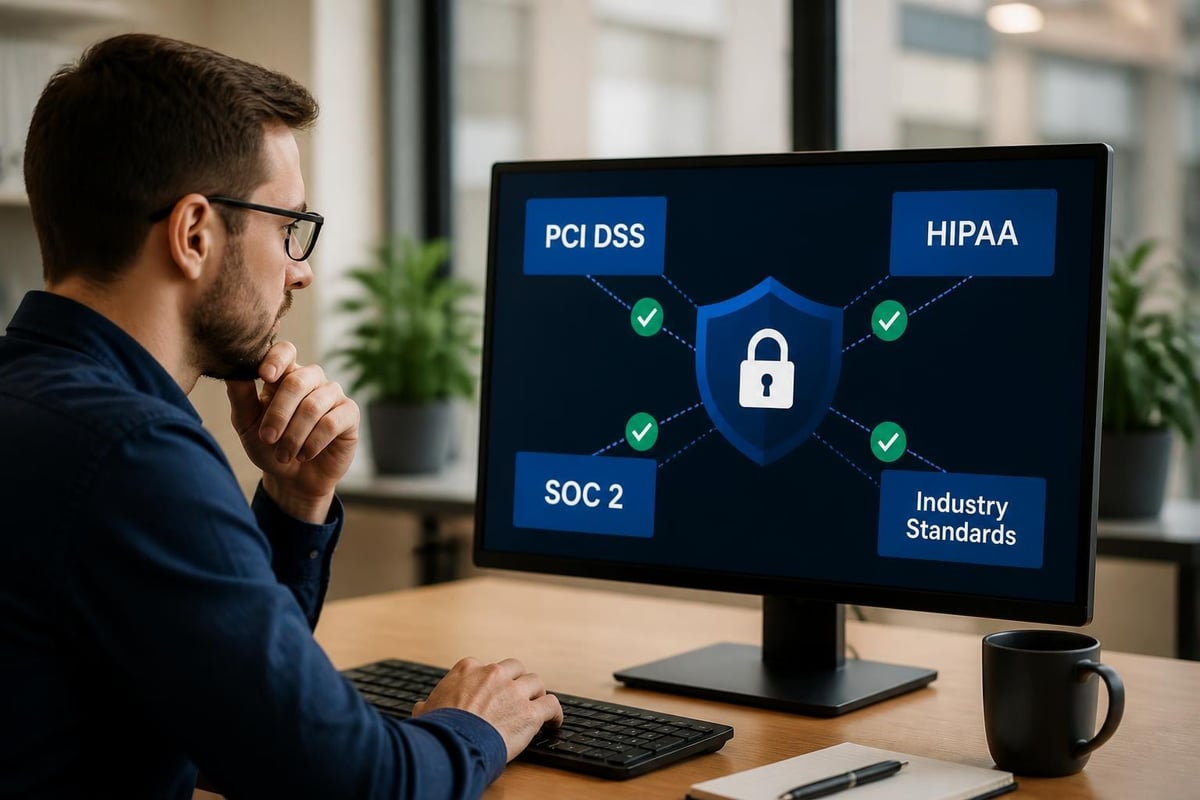
Different sectors face varying regulatory demands around data protection and cybersecurity. Healthcare organizations must comply with HIPAA, financial services follow PCI DSS requirements, and government contractors navigate CMMC standards. A qualified cyber security services provider understands these frameworks and implements the technical controls necessary for compliance.
Compliance extends beyond checking boxes. Regulations establish minimum security baselines, but effective protection often requires exceeding these standards. Your provider should explain which requirements apply to your business, implement appropriate safeguards, and maintain documentation proving compliance during audits.
Adapting to Evolving Standards
Security standards continuously evolve to address emerging threats. Recent updates to frameworks like Cyber Essentials introduce stricter rules around multi-factor authentication and patch management. A proactive cyber security services provider monitors these changes and adjusts your security posture before new requirements take effect.
This forward-looking approach prevents compliance gaps that could result in fines or certification loss. Rather than scrambling to meet new standards after announcement, you maintain continuous compliance through ongoing security improvements. The provider becomes your guide through the complex regulatory landscape, translating technical requirements into practical implementations.
Building an Effective Security Partnership
Communication and Transparency
Strong provider relationships rest on clear, regular communication. Your cyber security services provider should deliver monthly reports detailing threats detected, incidents responded to, and security posture improvements. These reports need to speak to business leaders, not just technical staff, explaining risks and achievements in operational terms.
Transparency matters especially during incidents. You deserve immediate notification when attacks occur, honest assessments of impact, and realistic timelines for resolution. Providers who delay bad news or minimize incident severity erode the trust essential for effective security partnerships. Look for firms that prioritize straightforward communication even when delivering difficult information.
Integration with Internal IT Teams
For businesses with existing IT staff, a cyber security services provider should complement rather than compete with internal resources. The best partnerships clearly define responsibilities, with the provider handling specialized security functions while internal teams manage daily operations. This collaboration leverages each group's strengths without creating confusion about ownership.
Regular coordination meetings help both teams stay aligned. Security providers share threat intelligence and recommended policy changes, while internal IT communicates upcoming projects and infrastructure changes. IT channel partners save the day by extending capabilities beyond what internal teams can deliver alone, creating a unified defense stronger than either group could achieve independently.
Choosing the Right Provider for Your Business
Assessing Organizational Needs
Effective provider selection starts with understanding your specific security requirements. Small businesses face different threats than enterprises, with attackers often targeting them precisely because they lack sophisticated defenses. Identify your most critical assets, likely threat vectors, and compliance obligations before evaluating providers.
Five best practices for choosing the right security provider emphasize aligning provider capabilities with business objectives. Don't pay for services you don't need, but ensure coverage for your actual risks. A thorough risk assessment reveals where your vulnerabilities lie and which security services provide the greatest protection value.
Evaluating Local vs. National Providers
Geographic proximity offers advantages for certain security services. Local providers understand regional business environments, maintain physical presence for on-site needs, and operate within familiar legal jurisdictions. For businesses in smaller communities like Lethbridge, partnering with nearby providers ensures responsive support without the complications of coordinating across multiple time zones.
National providers bring scale advantages, including larger security teams, broader threat intelligence networks, and potentially lower costs through economies of scale. The ideal choice depends on your specific needs-some businesses benefit from local relationships while others prioritize the resources only larger providers command.
Trial Periods and Performance Validation
Before committing to long-term contracts, request trial periods or phased implementations. This allows you to evaluate the provider's responsiveness, expertise, and cultural fit without major commitment. Pay attention to how they handle initial assessments, communicate findings, and propose solutions tailored to your environment.
Key evaluation criteria during trials:
- Response time: How quickly do they acknowledge and address issues?
- Communication quality: Do they explain technical matters clearly?
- Proactive recommendations: Do they identify improvements beyond immediate problems?
- Documentation: Are reports thorough and actionable?
- Cultural alignment: Do they understand your business priorities?
Monitor these factors carefully. The trial period reveals how the partnership will function under normal conditions, helping you make informed decisions before signing comprehensive service agreements.
Advanced Security Services for Growing Businesses
Security Awareness Training
Technology alone cannot prevent all attacks. Human error contributes to over 80% of security breaches, making employee education essential. A comprehensive cyber security services provider includes security awareness training that teaches staff to recognize phishing attempts, handle sensitive data properly, and report suspicious activities.
Effective training goes beyond annual presentations. Regular simulated phishing campaigns test employee vigilance and provide immediate learning opportunities. Microlearning modules deliver brief, focused lessons on specific topics throughout the year. This continuous reinforcement builds security-conscious cultures where employees become active defenders rather than weak links.
Managed Detection and Response
Managed Detection and Response (MDR) represents the evolution of traditional security monitoring. Rather than simply alerting you to potential threats, MDR services actively investigate suspicious activities, contain threats, and remediate compromises. This hands-on approach dramatically reduces the time between initial compromise and effective response.
MDR providers combine advanced technology with human expertise. Automated systems flag anomalies while skilled analysts investigate, separating genuine threats from benign activities. When attacks occur, the MDR team executes predefined playbooks that isolate affected systems, gather forensic evidence, and eliminate attacker presence-often before you're aware an incident occurred.
Backup and Disaster Recovery Integration
While traditionally separate from cybersecurity, backup and disaster recovery now integrate tightly with security services. Ransomware attacks specifically target backup systems, attempting to encrypt or delete recovery options before encrypting production data. A qualified cyber security services provider ensures your backups remain protected and recoverable even during sophisticated attacks.
Immutable backups that cannot be altered or deleted provide the ultimate insurance against ransomware. Combined with regular testing to verify restoration capabilities, these backups ensure business continuity even when primary systems become compromised. Your security provider should coordinate backup strategies with overall defense planning, creating cohesive protection across all dimensions.
Measuring Security Program Effectiveness
Key Performance Indicators
Effective security programs require measurement to demonstrate value and identify improvement opportunities. Track metrics like mean time to detect (MTTD) threats, mean time to respond (MTTR) to incidents, and the percentage of systems with current security patches. These indicators reveal whether your security posture improves over time.
| Metric | Target Range | Significance |
|---|---|---|
| Mean Time to Detect | Under 24 hours | Speed of threat identification |
| Mean Time to Respond | Under 1 hour for critical | Incident containment effectiveness |
| Patch Compliance Rate | Above 95% | Vulnerability management success |
| Security Training Completion | 100% annually | Employee awareness level |
| Failed Phishing Test Rate | Below 10% | Human firewall strength |
Your cyber security services provider should report these metrics regularly, explaining trends and recommending adjustments when performance lags expectations. Evidence-based measurement approaches quantify cyber risk in business terms, helping leadership understand security program effectiveness beyond technical details.
Continuous Improvement Processes
Security programs never reach completion. New threats emerge constantly, requiring ongoing adaptation and enhancement. Work with your provider to establish quarterly reviews that assess current protections against evolving threat landscapes, updating strategies as needed.
These reviews should examine recent incidents, near-misses, and industry trends affecting your sector. What attacks are competitors experiencing? Which vulnerabilities are attackers actively exploiting? How are regulatory requirements changing? Answering these questions guides strategic security investments toward areas providing maximum risk reduction.
Selecting the right cyber security services provider requires careful evaluation of technical capabilities, service offerings, and cultural alignment with your business objectives. The investment in professional security expertise pays dividends through prevented breaches, maintained compliance, and the peace of mind that comes from knowing your digital assets receive expert protection. Delphi Systems Inc. delivers comprehensive managed IT services including cybersecurity, network monitoring, and data backup for small businesses throughout Lethbridge and surrounding areas, combining local responsiveness with fixed-rate pricing that makes enterprise-grade protection accessible and predictable for growing organizations.

