

Small businesses across Lethbridge and beyond are rapidly adopting cloud technologies to streamline operations, reduce infrastructure costs, and enable remote work. However, this digital transformation introduces significant security challenges that require careful planning and implementation. Understanding cloud network security is no longer optional for organizations that want to protect sensitive data, maintain customer trust, and ensure business continuity in an increasingly complex threat landscape.
Understanding Cloud Network Security Fundamentals
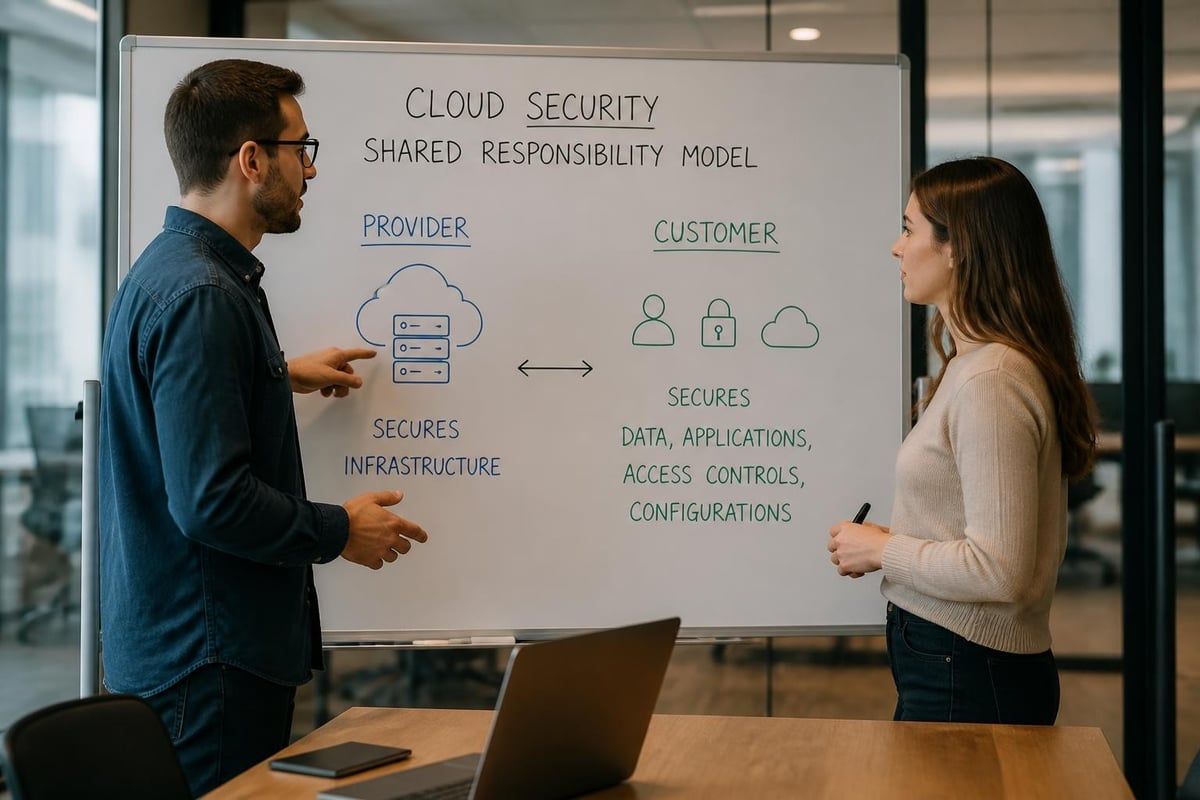
Cloud network security encompasses the policies, technologies, and controls designed to protect data, applications, and infrastructure in cloud computing environments. Unlike traditional on-premises networks where organizations maintain direct physical control, cloud environments require a shared responsibility model between providers and customers.
The foundation of effective cloud network security starts with recognizing that cloud infrastructure operates differently from legacy systems. Virtual networks, software-defined perimeters, and distributed resources create unique security considerations that demand specialized approaches. Small businesses must understand these differences to implement appropriate safeguards.
The Shared Responsibility Model
Security responsibilities in cloud environments split between the cloud service provider and the customer organization. Providers typically secure the underlying infrastructure, including physical servers, storage systems, and network hardware. Customers remain responsible for securing their data, applications, user access, and configurations.
This division creates potential gaps where organizations assume providers handle more than they actually do. Understanding what is cloud network security helps businesses clarify these boundaries and implement comprehensive protection strategies. Many security breaches occur precisely at these intersection points where responsibilities shift.
Common Threats Facing Cloud Networks
Cloud environments face distinct security challenges that differ from traditional network threats. Misconfigurations represent the leading cause of cloud security incidents, often resulting from human error during setup or management processes. These mistakes can expose sensitive data, create unauthorized access points, or disable critical security controls.
Primary cloud security threats include:
- Misconfigured storage buckets and databases
- Compromised credentials and weak authentication
- Insider threats from authorized users
- API vulnerabilities and exploitation
- Account hijacking through phishing
- Insufficient network segmentation
- Inadequate encryption practices
Research shows that 80% of cloud breaches stem from basic security mistakes, highlighting how foundational security practices remain critical. Small businesses cannot afford to overlook these fundamentals when building their cloud network security strategy.
Data Breach Prevention
Preventing unauthorized data access requires multiple defensive layers working together. Encryption serves as a critical component, protecting information both in transit and at rest. However, encryption alone cannot prevent breaches if access controls fail or credentials become compromised.
Identity and access management systems form another essential defense layer. These systems control who can access specific resources, what actions they can perform, and under what conditions access is granted. Implementing least privilege principles ensures users receive only the minimum permissions necessary for their roles.
Best Practices for Cloud Network Security
Implementing robust cloud network security requires systematic application of proven strategies. Organizations should start by conducting thorough security assessments to identify vulnerabilities, compliance gaps, and areas requiring immediate attention. These assessments provide roadmaps for security improvements.
Identity and Access Management
Strong authentication mechanisms prevent unauthorized access even when credentials become exposed. Multi-factor authentication adds critical security layers beyond simple passwords, requiring additional verification steps before granting access. Businesses should mandate MFA for all administrative accounts and sensitive systems.
Essential IAM practices:
- Enforce multi-factor authentication universally
- Implement role-based access controls
- Regularly audit user permissions
- Remove unused accounts promptly
- Monitor privileged account activity
The AWS cloud security best practices guide emphasizes identity protection as the foundation for all security measures. Without proper identity controls, other security investments provide limited protection against determined attackers.
Network Segmentation and Monitoring
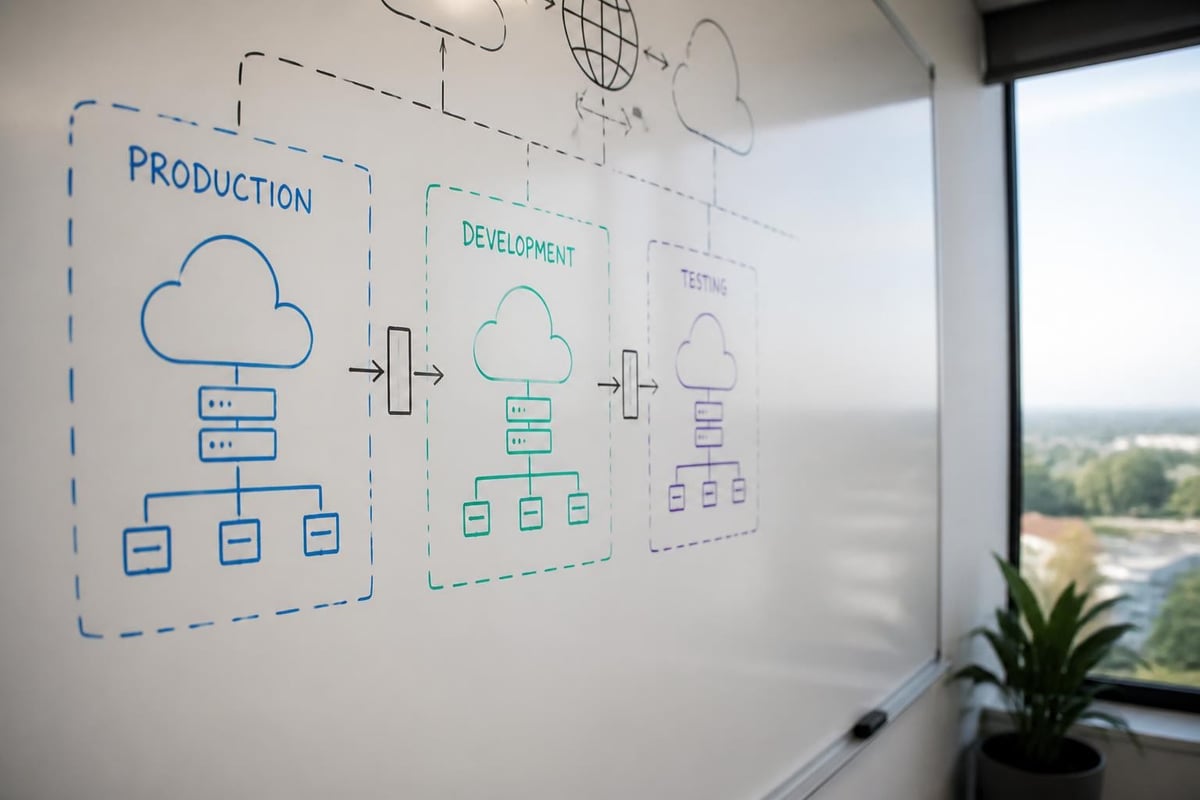
Dividing cloud networks into isolated segments limits potential damage from security incidents. If attackers breach one segment, proper segmentation prevents lateral movement to other network areas. This containment strategy reduces breach scope and protects critical assets.
| Security Layer | Purpose | Implementation |
|---|---|---|
| Virtual Private Cloud | Network isolation | Separate production and development |
| Security Groups | Access control | Define allowed traffic patterns |
| Network ACLs | Additional filtering | Control subnet-level traffic |
| VPN Gateways | Secure connectivity | Encrypted remote access |
Continuous monitoring detects anomalous activities that signal potential security incidents. Automated monitoring systems can identify unusual login patterns, unexpected data transfers, or suspicious API calls. Early detection enables rapid response before breaches escalate.
Encryption Strategies for Cloud Data
Encryption transforms readable data into encoded formats that require decryption keys to access. This protection ensures that even if unauthorized parties access storage systems, they cannot read the actual information without proper keys. Both data at rest and data in transit require encryption.
Cloud providers offer various encryption options, from provider-managed keys to customer-managed encryption keys. Organizations handling sensitive information should consider customer-managed keys for enhanced control over encryption processes. Key management practices significantly impact overall security effectiveness.
Encryption Implementation Levels
Different encryption approaches suit different security requirements and compliance needs. Transport layer encryption protects data moving between users and cloud services, preventing interception during transmission. Storage encryption protects data residing in databases, file systems, and backup archives.
Application-level encryption provides the strongest protection by encrypting data before it reaches cloud infrastructure. This approach ensures that cloud providers never access unencrypted information. However, it requires careful key management and may impact application performance.
Compliance and Regulatory Considerations
Small businesses must navigate complex regulatory landscapes requiring specific security controls. Healthcare organizations face HIPAA requirements, financial services must comply with PCI DSS, and companies handling customer data must address privacy regulations. Cloud network security implementations should align with applicable compliance frameworks.
Compliance demonstrates security commitment to customers and partners while avoiding costly penalties. Documentation, audit trails, and regular assessments prove ongoing compliance efforts. Many cloud providers offer compliance certifications that support customer regulatory requirements.
Building Compliance Programs
Successful compliance programs start with identifying applicable regulations based on industry, data types, and operational locations. Businesses should map security controls to specific regulatory requirements, documenting how each control satisfies compliance obligations. Regular internal audits verify control effectiveness.
Compliance program components:
- Comprehensive policy documentation
- Regular security awareness training
- Incident response procedures
- Data classification systems
- Access logging and monitoring
- Vendor security assessments
The comprehensive cloud security best practices outlined by security experts provide frameworks that address multiple compliance requirements simultaneously. Adopting these standards creates security baselines exceeding minimum regulatory thresholds.
Incident Detection and Response
Even with strong preventive measures, security incidents can occur. Rapid detection and effective response minimize damage, reduce recovery time, and prevent incident escalation. Organizations need clear incident response plans detailing specific actions for different scenario types.
Detection capabilities rely on comprehensive logging and monitoring systems that capture relevant security events. Security information and event management platforms aggregate logs from multiple sources, correlating events to identify potential incidents. Automated alerting notifies security teams of suspicious activities requiring investigation.
Response Procedures
When incidents occur, documented response procedures ensure consistent, effective actions. Response teams should know their roles, communication channels, and escalation paths before incidents happen. Regular tabletop exercises test response capabilities and identify improvement opportunities.
Detecting breaches and stopping them quickly requires both technical tools and well-trained personnel. Small businesses may lack dedicated security teams but can leverage managed service providers for expert monitoring and response capabilities.

Zero Trust Architecture
Traditional security models assumed internal network traffic was trustworthy while external traffic required scrutiny. Zero trust architecture eliminates this assumption, requiring verification for every access request regardless of origin. This approach better protects cloud environments where perimeter boundaries blur.
Implementing zero trust requires verifying user identity, assessing device security posture, and evaluating access context before granting resource access. Continuous verification replaces one-time authentication, ensuring ongoing security throughout user sessions.
Zero Trust Components
Effective zero trust implementations combine multiple security technologies working together. Identity verification forms the foundation, followed by device compliance checks and contextual access policies. Micro-segmentation limits access to specific resources based on verified need.
| Component | Function | Benefit |
|---|---|---|
| Identity Verification | Authenticates users | Prevents unauthorized access |
| Device Assessment | Checks security posture | Blocks compromised devices |
| Contextual Policies | Evaluates access context | Adapts to risk levels |
| Micro-segmentation | Limits resource access | Contains potential breaches |
Configuration Management
Misconfigurations cause the majority of cloud security incidents, making configuration management critical for cloud network security. Organizations should implement infrastructure as code practices, defining security configurations in version-controlled templates. This approach ensures consistency across environments and enables rapid deployment.
Automated configuration scanning tools identify deviations from security baselines, alerting teams to potential vulnerabilities. Regular scanning catches configuration drift before it creates security gaps. Policy-as-code frameworks enforce security requirements during resource provisioning.
Continuous Configuration Monitoring
Security configurations require ongoing validation as cloud environments change. Manual configuration reviews cannot keep pace with rapid cloud deployment cycles. Automated monitoring systems continuously assess configurations against security policies, flagging violations for remediation.
Small businesses benefit from managed IT services that provide expertise in cloud computing and cybersecurity, ensuring configurations remain secure as environments evolve. Professional monitoring catches configuration issues before they become security incidents.
Security Automation and Orchestration
Automation accelerates security operations while reducing human error. Automated security controls can respond to threats faster than manual processes, blocking attacks before they cause damage. Orchestration coordinates multiple security tools, creating integrated defense systems.
Security automation handles repetitive tasks like patch management, vulnerability scanning, and compliance checking. This automation frees security teams to focus on strategic initiatives requiring human judgment. Automated responses to common threats ensure consistent, rapid protection.
Implementing Security Automation
Start automation initiatives with well-defined, repetitive security tasks. Patch deployment, security group updates, and compliance reporting represent good automation candidates. Gradually expand automation as processes mature and confidence grows.
Integration between security tools enables sophisticated automated responses. When monitoring systems detect suspicious activity, automated workflows can isolate affected resources, collect forensic data, and notify response teams. These orchestrated responses contain threats while preserving evidence.
Cloud Security Training and Awareness
Human factors significantly influence cloud network security effectiveness. Employees who understand security principles make better decisions about data handling, access management, and threat recognition. Regular security awareness training reduces risk from social engineering and unintentional errors.
Training programs should cover cloud-specific security topics including data classification, secure configuration practices, and incident reporting procedures. Role-based training ensures employees receive information relevant to their responsibilities and access levels.
Building Security Culture
Security awareness extends beyond formal training to organizational culture. Leadership commitment to security sets expectations throughout organizations. Recognizing employees who demonstrate security awareness reinforces positive behaviors.
Culture-building strategies:
- Leadership security messaging
- Security champions in each department
- Gamified security training
- Regular security communications
- Incident lessons learned sharing
Vendor Security Assessment
Cloud services often integrate with third-party applications and services. Each integration represents a potential security risk requiring careful evaluation. Vendor security assessments verify that partner organizations maintain adequate security controls protecting shared data.
Assessment processes should review vendor security certifications, incident response capabilities, and data handling practices. Contractual agreements should specify security requirements, breach notification timelines, and audit rights. Regular reassessments ensure vendors maintain security standards over time.
Third-Party Risk Management
Managing third-party security risks requires ongoing vigilance as vendor landscapes change. Organizations should maintain inventories of all cloud service integrations, rating each based on data sensitivity and business criticality. High-risk vendors warrant more frequent assessments and stricter controls.
The complexity of modern cloud environments makes comprehensive security approaches essential for small businesses lacking internal security expertise. Managed IT services provide access to security professionals who understand vendor risk management and can implement appropriate controls.
Future-Proofing Cloud Security
Cloud technology continues evolving rapidly, introducing new capabilities and security challenges. Organizations must adapt security strategies to address emerging threats while leveraging new defensive technologies. Staying informed about security trends helps businesses anticipate and prepare for future requirements.
Artificial intelligence and machine learning increasingly support security operations, enhancing threat detection and response capabilities. These technologies analyze vast data volumes, identifying patterns humans might miss. However, they also introduce new considerations around model security and adversarial attacks.
Quantum computing represents a long-term security challenge that could compromise current encryption methods. Organizations should monitor post-quantum cryptography developments and plan migration strategies as standards mature. Forward-thinking security planning positions businesses for technological transitions.
Protecting cloud infrastructure requires comprehensive strategies combining technology, processes, and expertise to address evolving threats and compliance requirements. Small businesses implementing robust cloud network security practices position themselves for sustainable growth while protecting valuable data assets and customer trust. Delphi Systems Inc. helps Lethbridge-area businesses navigate cloud security complexities through managed IT services that monitor networks, implement best practices, and respond to threats, allowing you to focus on core business activities with confidence that your cloud infrastructure remains secure and compliant.

