


Data breaches cost small businesses an average of $2.98 million in 2026, yet many owners still believe they're too small to be targeted. This misconception leaves countless organizations vulnerable to cybercriminals who specifically prey on businesses with limited security resources. Small business data protection has evolved from a technical afterthought into a business-critical priority that directly impacts customer trust, regulatory compliance, and long-term viability. Understanding and implementing comprehensive protection strategies isn't optional anymore, it's essential for survival in today's digital landscape.
Understanding the Small Business Data Protection Landscape
The threat environment facing small businesses has fundamentally changed over the past few years. Cybercriminals recognize that smaller organizations often lack dedicated security teams and sophisticated defenses, making them attractive targets. Ransomware attacks, phishing schemes, and insider threats have become increasingly sophisticated, while regulatory requirements continue to expand.
Small business data protection encompasses far more than installing antivirus software. It requires a holistic approach that addresses technical controls, employee behavior, policy development, and ongoing monitoring. The challenge lies in balancing security needs with limited budgets and resources, a reality that most small business owners face daily.
Why Small Businesses Are Primary Targets
Attackers view small businesses as the path of least resistance. While large corporations invest millions in cybersecurity infrastructure, smaller organizations often rely on basic protections that can be easily circumpted. Additionally, small businesses frequently serve as vendors or partners to larger companies, making them potential entry points into more lucrative networks.
The financial impact extends beyond immediate losses. Companies face:
- Revenue loss during system downtime
- Recovery and remediation costs
- Legal fees and potential fines
- Damage to brand reputation
- Customer attrition due to lost trust
- Increased insurance premiums
According to comprehensive data protection compliance frameworks, 60% of small businesses that experience a major cyber incident close their doors within six months.
Essential Components of Small Business Data Protection
Building a robust data protection framework requires addressing multiple layers of security simultaneously. Each component plays a specific role in creating a defense-in-depth strategy that protects information assets from various threat vectors.
Data Discovery and Classification
Before protecting data, you must know what data you have and where it resides. Many small businesses store sensitive information across multiple locations: employee laptops, cloud services, mobile devices, email servers, and backup systems. This distributed data landscape creates blind spots that attackers exploit.
Conduct a comprehensive data inventory that identifies:
- Customer personally identifiable information (PII)
- Financial records and payment card data
- Employee records and payroll information
- Intellectual property and trade secrets
- Vendor and partner information
- Health records if applicable
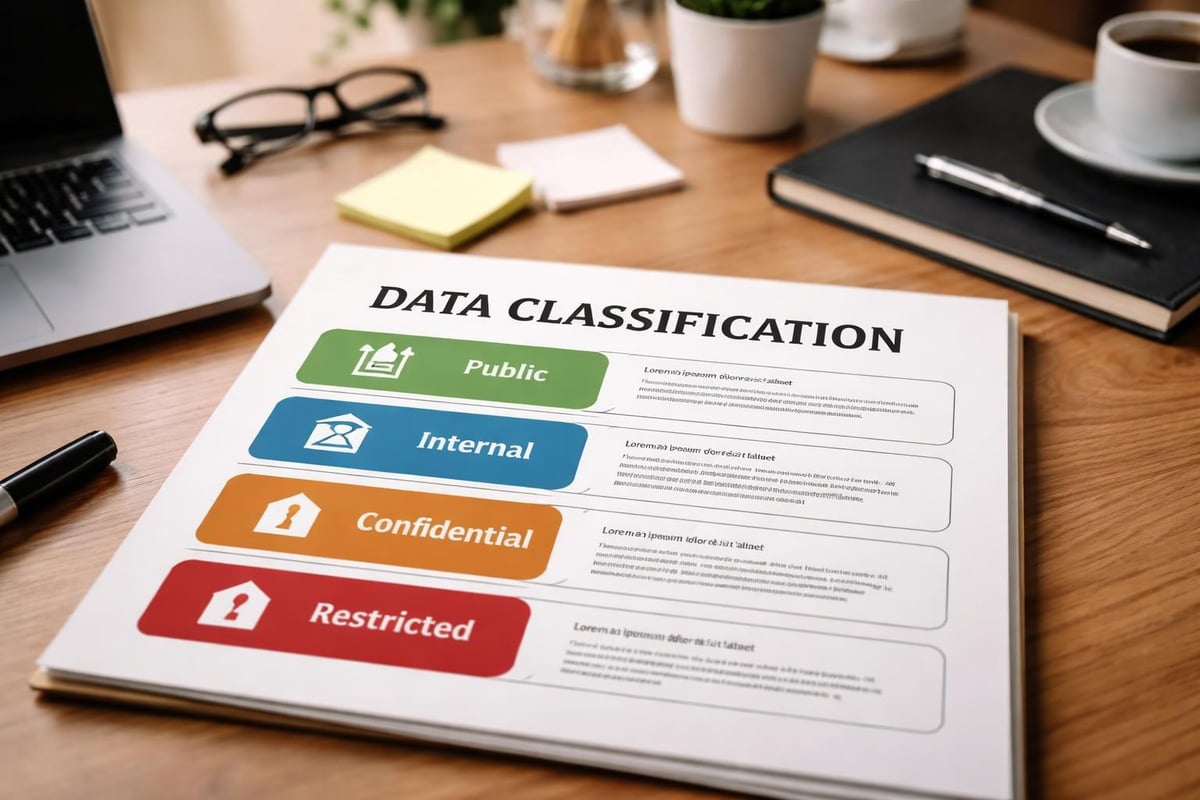
Once inventoried, classify data based on sensitivity and regulatory requirements. This classification drives decisions about encryption, access controls, retention periods, and disposal methods. Not all data requires the same level of protection, and proper classification helps allocate security resources efficiently.
Access Control and Authentication
Limiting who can access specific data represents one of the most effective small business data protection measures. The principle of least privilege ensures employees can only access information necessary for their job functions, reducing both intentional and accidental data exposure.
| Access Control Method | Implementation | Business Impact |
|---|---|---|
| Multi-Factor Authentication | Requires two or more verification factors | Reduces unauthorized access by 99.9% |
| Role-Based Access | Permissions tied to job functions | Simplifies management and reduces errors |
| Regular Access Reviews | Quarterly audits of user permissions | Identifies and removes unnecessary access |
| Strong Password Policies | Minimum 12 characters, complexity requirements | Prevents brute force attacks |
Modern authentication should extend beyond simple passwords. Multi-factor authentication (MFA) adds critical layers that prevent unauthorized access even when credentials are compromised. For small businesses in Lethbridge and surrounding areas, implementing MFA across all critical systems should be a baseline requirement.
Network Security and Monitoring
Your network infrastructure serves as both the highway for business operations and a potential attack vector. Securing this infrastructure requires multiple defensive layers working in concert. Firewalls provide the first line of defense, controlling traffic flow between your internal network and the internet.
However, implementing cybersecurity best practices extends well beyond perimeter defenses. Network segmentation isolates sensitive systems from general business networks, containing potential breaches. Intrusion detection systems monitor traffic patterns for suspicious activity, alerting administrators to potential threats before they cause damage.
Key network security elements include:
- Next-generation firewalls with deep packet inspection
- Virtual private networks (VPNs) for remote access
- Network segmentation to isolate critical systems
- Regular vulnerability scanning and patching
- Wireless network encryption and access controls
- Traffic monitoring and log analysis
Continuous monitoring transforms network security from reactive to proactive. Real-time visibility into network activity enables rapid threat detection and response, minimizing the window of opportunity for attackers.
Data Backup and Recovery Strategies
Even with robust preventive measures, no security system is completely impenetrable. Comprehensive backup and recovery capabilities ensure business continuity when preventive controls fail. The 3-2-1 backup rule remains the gold standard: maintain three copies of data, on two different media types, with one copy stored offsite.
Designing Effective Backup Systems
Modern backup strategies must account for ransomware specifically designed to encrypt backup files. Air-gapped backups, physically or logically separated from production networks, provide insurance against sophisticated attacks. Cloud-based backup solutions offer geographic redundancy and automated scheduling, removing the burden of manual backup management.
Critical backup considerations:
- Recovery Time Objective (RTO): How quickly you need systems restored
- Recovery Point Objective (RPO): How much data loss is acceptable
- Testing frequency: Regular restoration drills verify backup integrity
- Retention periods: Legal and operational requirements for data preservation
- Encryption: Protecting backed-up data from unauthorized access
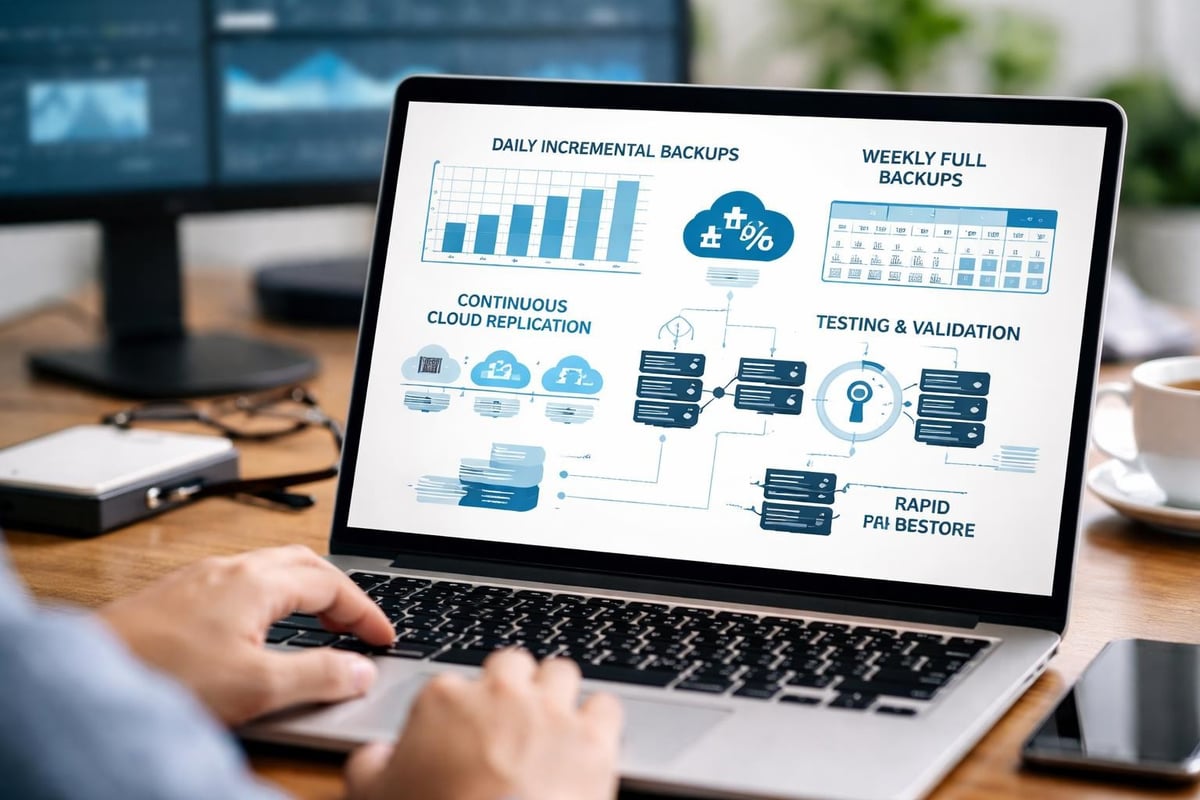
Small business data protection plans must balance backup frequency with storage costs and performance impact. Daily incremental backups combined with weekly full backups typically provide adequate protection for most organizations while managing resource consumption.
Testing Recovery Procedures
Untested backups are worthless backups. Schedule quarterly recovery tests that simulate real disaster scenarios, from individual file restoration to complete system rebuilds. Document each test, noting restoration times, issues encountered, and improvements needed. This documentation becomes invaluable during actual emergencies when stress levels are high and quick decisions are critical.
Employee Training and Security Culture
Technology alone cannot protect your business. Employees represent both the strongest defense and the weakest link in small business data protection. A single click on a malicious email attachment can bypass millions of dollars in security infrastructure. Building a security-conscious culture requires ongoing education, clear policies, and consistent enforcement.
Developing Comprehensive Training Programs
Effective security training goes beyond annual compliance videos. It requires regular, engaging sessions that address current threats and reinforce safe practices. Phishing simulations test employee awareness while providing teachable moments. When employees fail these tests, use the opportunity for individual coaching rather than punishment.
Training topics should cover:
- Recognizing phishing and social engineering attempts
- Password management and MFA usage
- Safe internet browsing and download practices
- Physical security (device locking, visitor management)
- Reporting suspicious activity
- Remote work security protocols
- Acceptable use policies for company resources
According to research on data security essentials for small businesses, organizations with monthly security awareness training experience 70% fewer successful phishing attacks compared to those with annual training only.
Creating Enforceable Security Policies
Written policies establish clear expectations and provide framework for consistent security decisions. Policies should address data handling, acceptable use, incident response, and consequences for violations. However, policies only work when enforced consistently across all organizational levels, from entry-level employees to senior management.
Review and update policies annually to address emerging threats and changing business needs. Require employees to acknowledge policy reviews, creating accountability and legal protection for the organization.
Regulatory Compliance and Legal Requirements
Small businesses must navigate an increasingly complex regulatory landscape governing data protection. Requirements vary based on industry, geographic location, and the types of data processed. Non-compliance carries significant financial and reputational consequences, making understanding obligations essential.
Common Compliance Frameworks
Different regulations impose varying requirements, but most share common principles around data minimization, consent, security controls, and breach notification. Understanding which regulations apply to your business represents the first step toward compliance.
| Regulation | Scope | Key Requirements |
|---|---|---|
| GDPR | European customer data | Consent, data subject rights, breach notification |
| PIPEDA | Canadian personal information | Consent, accountability, safeguards |
| CCPA/CPRA | California residents | Disclosure, opt-out rights, data deletion |
| HIPAA | Healthcare information | Privacy, security, breach notification |
| PCI DSS | Payment card data | Network security, access controls, monitoring |
For businesses operating in Lethbridge, Canadian privacy laws including PIPEDA establish baseline requirements for collecting, using, and disclosing personal information. Provincial legislation may impose additional obligations depending on business activities and data types.
Implementing Compliance Controls
Compliance isn't achieved through documentation alone. It requires implementing technical and organizational controls that demonstrate ongoing commitment to data protection. Regular risk assessments identify gaps between current practices and regulatory requirements, guiding remediation efforts.

Work with legal counsel to understand specific obligations and ensure policies align with applicable regulations. Consider engaging compliance specialists who can provide objective assessments and remediation guidance. The investment in compliance expertise often costs far less than regulatory fines or breach remediation.
Incident Response Planning
Despite best efforts, security incidents will occur. How your organization responds determines whether an incident becomes a minor disruption or a business-ending catastrophe. Incident response planning establishes clear procedures, assigns responsibilities, and enables rapid, coordinated action when threats materialize.
Building an Incident Response Team
Even small organizations need designated incident response roles. The team should include representatives from IT, management, legal, communications, and relevant business units. External partners, including managed service providers, legal counsel, and cyber insurance carriers, should be identified in advance with contact information readily accessible.
Essential incident response phases include:
- Preparation: Develop plans, train teams, establish tools
- Detection and Analysis: Identify and assess potential incidents
- Containment: Limit damage and prevent spread
- Eradication: Remove threat from environment
- Recovery: Restore systems and normal operations
- Post-Incident Review: Learn and improve processes
Document response procedures in playbooks that provide step-by-step guidance for common scenarios like ransomware, data breaches, or denial-of-service attacks. These playbooks reduce decision-making burden during high-stress situations and ensure consistent, appropriate responses.
Communication and Notification Protocols
Timely, transparent communication during security incidents maintains stakeholder trust and meets legal obligations. Notification requirements vary based on incident type, data involved, and applicable regulations. Some jurisdictions require breach notification within 72 hours, leaving little time for deliberation.
Prepare communication templates in advance for different stakeholder groups: customers, employees, regulators, media, and business partners. Templates ensure consistent messaging while allowing customization for specific incident details. Designate authorized spokespersons who can communicate effectively under pressure.
Vendor and Third-Party Risk Management
Small businesses increasingly rely on third-party vendors for critical services: cloud hosting, payment processing, customer relationship management, and email. Each vendor relationship introduces potential vulnerabilities, as attackers target the weakest link in the supply chain. Effective small business data protection extends beyond organizational boundaries to encompass vendor ecosystems.
Conducting Vendor Risk Assessments
Before engaging vendors who will access sensitive data or critical systems, evaluate their security practices. Request security questionnaires, compliance certifications, and audit reports. Review contracts to ensure they include appropriate security requirements, liability provisions, and right-to-audit clauses.
Key vendor assessment criteria:
- Data encryption practices (in transit and at rest)
- Access control and authentication mechanisms
- Backup and disaster recovery capabilities
- Incident response procedures
- Compliance certifications relevant to your industry
- Subcontractor management practices
- Insurance coverage for data breaches
The essential principles that small businesses need to know about data protection emphasize accountability for third-party data processing. You remain liable for vendor actions, making due diligence critical.
Ongoing Vendor Monitoring
Initial assessments provide point-in-time visibility, but vendor security postures change. Schedule annual reassessments for critical vendors and monitor for security incidents affecting vendor organizations. Establish procedures for rapid vendor termination if security standards deteriorate or breaches occur.
Cloud Security Considerations
Cloud services offer small businesses enterprise-grade infrastructure without capital investment, but they also introduce unique security considerations. Understanding the shared responsibility model, where cloud providers secure infrastructure while customers secure data and applications, proves essential for effective protection.
Implementing Cloud Security Controls
Cloud security begins with proper configuration. Default settings often prioritize ease of use over security, leaving data exposed. Enable encryption for data at rest and in transit, implement strong authentication including MFA, and configure access controls that limit permissions to necessary users.
Regular configuration reviews identify security drift as systems evolve and new features are added. Cloud security posture management tools automate this monitoring, alerting administrators to misconfigurations before attackers exploit them. For businesses working with managed IT service providers, ensure cloud security monitoring is included in service agreements.
Critical cloud security practices:
- Enable multi-factor authentication for all accounts
- Encrypt sensitive data before uploading to cloud storage
- Implement least-privilege access controls
- Monitor cloud service logs for suspicious activity
- Regularly review and remove unnecessary permissions
- Understand geographic data storage locations for compliance
- Maintain offline backups independent of cloud providers
Physical Security Integration
Digital security measures prove ineffective if physical security is neglected. Stolen laptops, unauthorized access to server rooms, and discarded documents containing sensitive information create data exposure risks that bypass technical controls. Integrating physical and digital security creates comprehensive small business data protection.
Securing Physical Assets
Implement access controls that restrict entry to areas containing sensitive data or systems. Badge readers, biometric scanners, or keypad locks provide better security than traditional keys while creating audit trails of facility access. Security cameras in strategic locations deter unauthorized access and provide evidence for investigations.
Physical security elements include:
- Locked server rooms with restricted access
- Security cameras monitoring sensitive areas
- Visitor management and escort procedures
- Clean desk policies requiring locked storage
- Secure document disposal (cross-cut shredding)
- Device encryption for mobile equipment
- Cable locks for desktop computers in accessible areas
Train employees on physical security protocols, emphasizing the importance of challenging unknown individuals and securing workspaces when absent. Regular physical security audits identify vulnerabilities before they're exploited.
Mobile Device Management
Smartphones and tablets have become essential business tools, but they also represent significant security challenges. Lost or stolen devices can expose corporate data, while unsecured personal devices accessing business systems create vulnerabilities. Mobile device management (MDM) solutions provide centralized control over device security regardless of ownership.
Implementing BYOD Policies
Bring-your-own-device policies offer cost savings and employee satisfaction but require clear security requirements. MDM platforms enable remote data wiping, enforce password policies, and separate business data from personal information. Establish acceptable use policies that define permitted activities and consequences for violations.
Consider comprehensive safeguards for small business data that specifically address mobile security, including requirements for device encryption, automatic screen locking, and approved application lists. Regular compliance checks ensure devices meet security standards before accessing business resources.
Cyber Insurance and Risk Transfer
Cyber insurance has evolved from niche coverage into essential risk management for small businesses. Policies typically cover breach response costs, business interruption, regulatory fines, and legal expenses. However, coverage varies significantly between providers, and exclusions can limit protection for common scenarios.
Evaluating Cyber Insurance Options
Review policy terms carefully, understanding what's covered, coverage limits, deductibles, and exclusions. Many insurers now require minimum security controls before issuing policies, using applications to assess security postures. Demonstrating strong small business data protection practices can reduce premiums while improving coverage terms.
Key coverage areas to evaluate:
- First-party costs (forensics, notification, credit monitoring)
- Third-party liability (legal defense, settlements)
- Business interruption and extra expenses
- Cyber extortion and ransomware payments
- Regulatory fines and penalties
- Reputation management and public relations
Maintain detailed documentation of security controls and practices, as insurers often request evidence during claims processes. Partner with insurance brokers who specialize in cyber coverage and can negotiate favorable terms based on your security investments.
Continuous Improvement and Adaptation
The threat landscape evolves constantly, with attackers developing new techniques and exploiting emerging vulnerabilities. Static security programs quickly become obsolete. Effective small business data protection requires commitment to continuous improvement through monitoring, testing, and adaptation.
Establishing Security Metrics
Define key performance indicators that measure security program effectiveness. Track metrics like time to detect incidents, patch deployment speed, employee training completion rates, and security assessment scores. Regular reporting to management demonstrates security program value and justifies continued investment.
Conduct annual security assessments that evaluate controls against industry frameworks like NIST Cybersecurity Framework or CIS Controls. These assessments identify gaps, prioritize remediation efforts, and demonstrate security maturity to stakeholders. Third-party assessments provide objective validation and credibility.
Continuous improvement activities:
- Quarterly vulnerability assessments and penetration testing
- Monthly security awareness training and phishing simulations
- Weekly threat intelligence reviews
- Daily security log monitoring and analysis
- Annual disaster recovery and incident response drills
- Ongoing policy and procedure updates
Protecting small business data requires comprehensive strategies that address technical controls, employee behavior, vendor relationships, and regulatory compliance simultaneously. The investment in robust data protection pays dividends through reduced breach risk, maintained customer trust, and regulatory compliance. Delphi Systems Inc. provides Lethbridge businesses with complete managed IT services that include cybersecurity, data backup and recovery, and network monitoring, ensuring your data protection strategy operates at peak effectiveness. With fixed-rate pricing and expertise across all aspects of small business data protection, Delphi Systems Inc. enables you to focus on growing your business while maintaining the security infrastructure essential for long-term success.

