


Modern small businesses face an unprecedented challenge in protecting their digital assets from increasingly sophisticated cyber threats. Data network security has evolved from a simple firewall installation to a comprehensive approach that encompasses every aspect of your IT infrastructure. The stakes have never been higher, with cybercriminals targeting businesses of all sizes, and a single breach potentially costing thousands of dollars in lost revenue, damaged reputation, and regulatory penalties. Understanding the fundamentals of protecting your network infrastructure is no longer optional but a critical business imperative.
Understanding Data Network Security Fundamentals
Data network security encompasses the policies, practices, and technologies designed to protect your organization's network infrastructure and the information flowing through it. This multifaceted discipline addresses threats at every layer, from physical access controls to sophisticated encryption protocols.
The foundation of effective network protection lies in understanding the three core principles: confidentiality, integrity, and availability. Confidentiality ensures that sensitive information remains accessible only to authorized individuals. Integrity guarantees that data remains accurate and unaltered during transmission or storage. Availability ensures that authorized users can access information and resources when needed.
Key Components of Network Protection
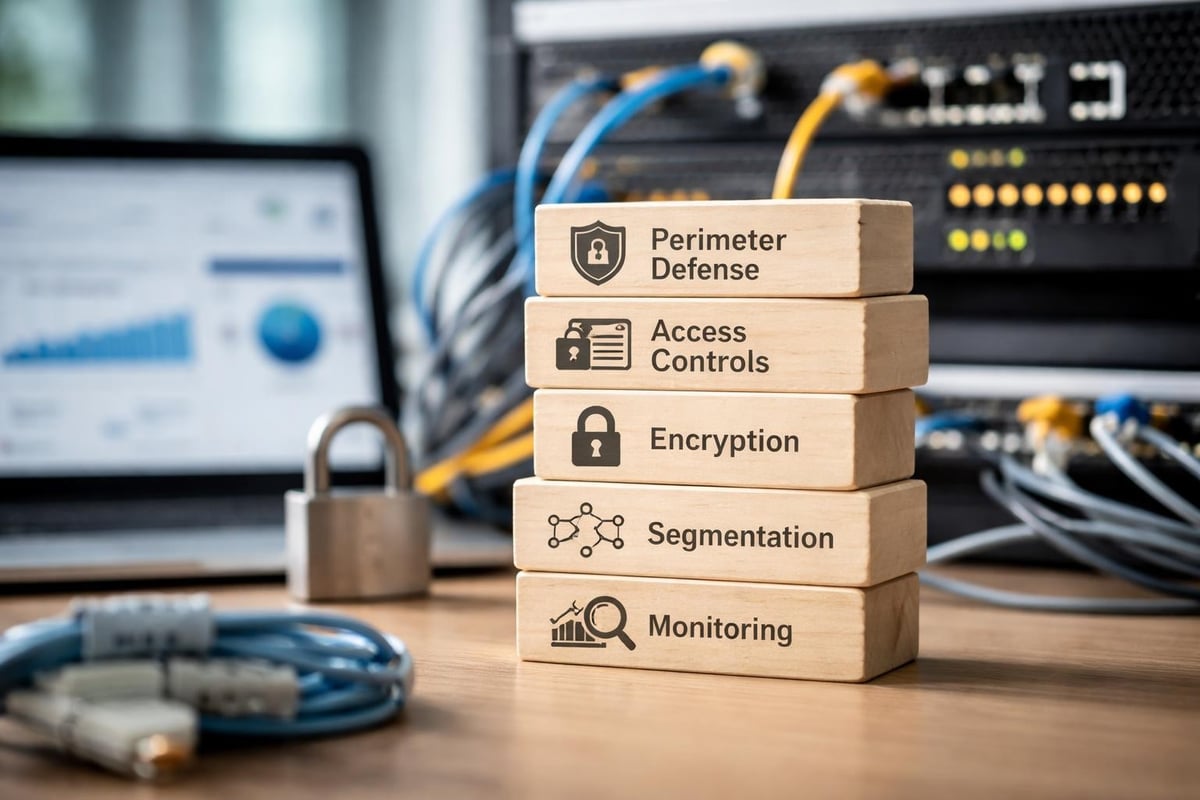
A robust security framework incorporates multiple defensive layers working in concert:
- Perimeter security controls including firewalls and intrusion detection systems
- Access management systems that verify user identities and permissions
- Encryption technologies protecting data both in transit and at rest
- Network segmentation isolating critical systems from general traffic
- Continuous monitoring tools detecting anomalies and potential breaches
Small businesses in Lethbridge and surrounding areas often struggle with implementing these components due to limited IT resources. The complexity of modern threats requires specialized expertise that many organizations cannot maintain in-house.
Common Threats Targeting Business Networks
Understanding the threat landscape helps organizations prioritize their defensive strategies. Cybercriminals employ increasingly sophisticated tactics to compromise business networks and steal valuable data.
Malware and ransomware represent two of the most damaging threats facing organizations today. Ransomware attacks have increased by 150% since 2024, with small businesses being particularly vulnerable due to perceived weaker defenses. These attacks encrypt critical data and demand payment for restoration, often crippling operations for days or weeks.
Phishing attacks continue to be remarkably effective, exploiting human psychology rather than technical vulnerabilities. Employees receive seemingly legitimate emails containing malicious links or attachments that, when opened, grant attackers network access.
Emerging Security Challenges
| Threat Type | Impact Level | Primary Target | Prevention Difficulty |
|---|---|---|---|
| Advanced Persistent Threats | Critical | Financial data, intellectual property | High |
| Zero-Day Exploits | Severe | Unpatched systems | Very High |
| Insider Threats | Moderate to Severe | Sensitive business data | Moderate |
| Distributed Denial of Service | Moderate | Network availability | Moderate |
Man-in-the-middle attacks intercept communications between two parties, allowing attackers to steal credentials, financial information, or other sensitive data. These attacks frequently target unsecured wireless networks or exploit vulnerabilities in communication protocols.
The rise of Internet of Things (IoT) devices in business environments has created new attack vectors. Printers, security cameras, and smart thermostats often lack robust security features, providing entry points for network infiltration.
Implementing Essential Security Controls
Effective data network security requires a systematic approach to implementing protective measures across your entire infrastructure. Organizations must balance security requirements with operational efficiency and user experience.
Access Control and Authentication
Implementing robust access controls forms the cornerstone of network protection. Controlling access to sensitive systems and data prevents unauthorized individuals from viewing or modifying critical information.
Multi-factor authentication (MFA) adds an essential security layer beyond traditional passwords. Users must provide two or more verification factors, typically combining something they know (password), something they have (mobile device), and something they are (biometric data). Organizations implementing MFA reduce the risk of credential-based attacks by over 99%.
Role-based access control (RBAC) ensures that employees can only access information necessary for their job functions. This principle of least privilege minimizes potential damage from compromised accounts or insider threats.
- Conduct a comprehensive review of all user accounts and permissions
- Remove unnecessary administrative privileges from standard user accounts
- Implement automated access reviews on a quarterly basis
- Establish clear procedures for granting and revoking access rights
- Monitor access logs for unusual patterns or unauthorized attempts
Network Segmentation Strategies
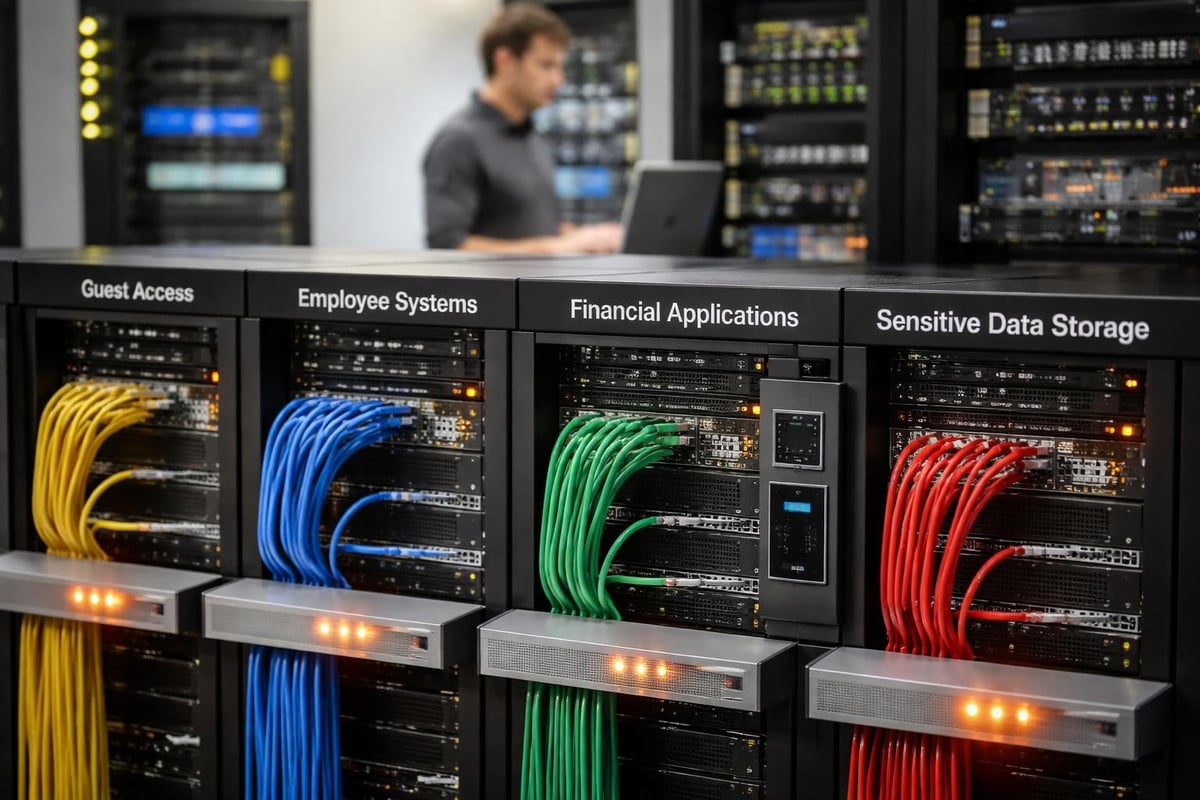
Dividing your network into distinct segments limits the potential spread of security breaches. If attackers compromise one segment, proper segmentation prevents them from easily accessing other areas containing sensitive data.
Guest networks should be completely isolated from internal business systems. Visitors requiring internet access should never connect to the same network housing critical business applications and data. Similarly, data classification practices help determine which information requires the highest levels of protection.
Encryption and Data Protection Measures
Protecting data through encryption ensures that even if unauthorized parties intercept or access information, they cannot read or use it without proper decryption keys. Modern data network security demands encryption at multiple levels.
Transport Layer Security (TLS) protects data moving across networks, whether internally between systems or externally to cloud services and partners. Organizations should enforce TLS 1.3 or higher, discontinuing support for older, vulnerable protocols.
At-rest encryption protects stored data on servers, workstations, and mobile devices. Full disk encryption prevents data theft if hardware is lost or stolen, a particularly important consideration for laptop computers and portable storage devices.
Implementing Comprehensive Encryption
Modern businesses must address encryption across multiple contexts:
- Email communications containing sensitive business information
- Database systems storing customer records and financial data
- Backup archives protecting critical business information
- Cloud storage platforms housing documents and files
- Mobile device communications and stored data
The encryption implementation strategy should consider performance impacts, key management complexity, and regulatory compliance requirements. Many small businesses benefit from managed services that handle encryption deployment and ongoing maintenance.
Virtual Private Networks (VPNs) create encrypted tunnels for remote access, protecting data as it traverses public internet connections. Employees working from home or traveling must connect through VPN services before accessing internal business systems.
Security Monitoring and Incident Response
Proactive monitoring detects potential security incidents before they escalate into major breaches. Data network security effectiveness depends on visibility into network traffic, system logs, and user activities.
Security Information and Event Management (SIEM) platforms aggregate data from multiple sources, identifying patterns that might indicate malicious activity. These systems alert administrators to suspicious login attempts, unusual data transfers, or known attack signatures.
Building an Effective Monitoring Strategy
Continuous monitoring addresses multiple security dimensions:
- Network traffic analysis identifying unusual patterns or unauthorized connections
- Log aggregation and analysis tracking system events and user activities
- Vulnerability scanning discovering potential security weaknesses
- Compliance monitoring ensuring adherence to regulatory requirements
- Performance monitoring detecting degradation that might indicate attacks
Small businesses often lack resources for 24/7 security monitoring. Managed IT service providers fill this gap, offering round-the-clock surveillance and rapid incident response capabilities that would be prohibitively expensive to maintain internally.
| Monitoring Component | Frequency | Critical Alerts | Response Time Target |
|---|---|---|---|
| Network Traffic | Real-time | Unauthorized access attempts | Immediate |
| System Logs | Continuous | Privilege escalation | Within 15 minutes |
| Vulnerability Scans | Weekly | Critical vulnerabilities | Within 24 hours |
| Security Updates | Daily | Zero-day exploits | Within 4 hours |
Incident response planning ensures your organization can react quickly and effectively when security events occur. Plans should outline specific roles, communication protocols, containment procedures, and recovery steps. Regular tabletop exercises help teams practice their response to various scenarios.
Best Practices for Ongoing Security Maintenance
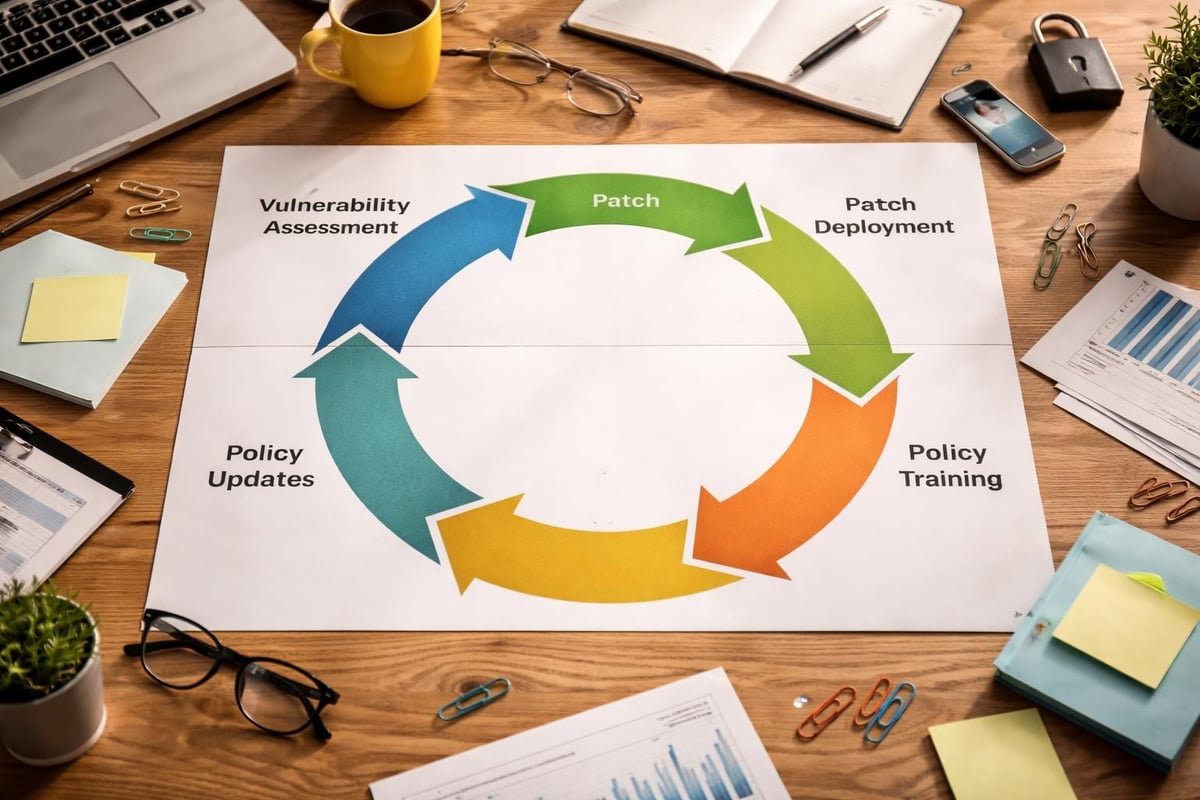
Data network security is not a one-time implementation but an ongoing process requiring constant attention and updates. Cyber threats evolve continuously, demanding that defensive measures adapt accordingly.
Regular security training for employees addresses the human element in network protection. Many successful attacks exploit user mistakes rather than technical vulnerabilities. Training should cover password hygiene, phishing recognition, social engineering tactics, and proper data handling procedures.
Patch Management and System Updates
Keeping systems current with security patches closes known vulnerabilities that attackers actively exploit. The 2025 global ransomware surge primarily targeted organizations running outdated software with publicly disclosed weaknesses.
Establish a systematic patching schedule:
- Critical security updates: Deploy within 24-48 hours of release
- Important updates: Install within one week
- Standard updates: Apply during regular maintenance windows
- Feature updates: Test thoroughly before deployment
Automated patch management tools streamline this process, ensuring systems remain protected without requiring constant manual intervention. However, critical systems should undergo testing in isolated environments before patches are deployed to production.
Compliance and Regulatory Considerations
Many industries face specific regulatory requirements governing data protection and network security. Understanding applicable regulations helps organizations avoid costly penalties while improving overall security posture.
Payment Card Industry Data Security Standard (PCI DSS) applies to any business processing credit card transactions. Compliance requires specific security controls, including network segmentation, encryption, access restrictions, and regular security testing.
Health Insurance Portability and Accountability Act (HIPAA) governs healthcare providers and associated businesses handling protected health information. Technical safeguards include access controls, audit controls, integrity controls, and transmission security.
Developing Compliant Security Programs
Organizations must document their security policies, procedures, and controls to demonstrate compliance. Following established data security best practices helps meet regulatory requirements while improving protection against threats.
Regular compliance audits verify that security measures remain effective and aligned with current regulations. Third-party assessments provide objective evaluations of your security posture, identifying gaps that internal reviews might miss.
Canadian businesses must also consider privacy legislation such as the Personal Information Protection and Electronic Documents Act (PIPEDA), which governs how private sector organizations collect, use, and disclose personal information. Data network security measures must support compliance with notification requirements, consent management, and breach reporting obligations.
Cloud Security Integration
As businesses increasingly adopt cloud computing services, data network security must extend beyond traditional on-premises infrastructure. Cloud environments introduce unique challenges and opportunities for protecting business information.
Shared responsibility models define which security controls the cloud provider manages versus those remaining the customer's responsibility. Understanding this division prevents dangerous security gaps where each party assumes the other is handling specific protections.
Infrastructure as a Service (IaaS) platforms like AWS and Azure handle physical security, network infrastructure, and hypervisor protection. Organizations retain responsibility for operating system security, application configuration, access management, and data encryption.
Cloud-Specific Security Measures
Protecting cloud-based systems requires additional considerations:
- Configuration management preventing exposure through misconfigured services
- Identity and access management across multiple cloud platforms
- Data encryption for information stored in cloud environments
- API security protecting programmatic access to cloud resources
- Shadow IT discovery identifying unauthorized cloud service usage
Many small businesses benefit from comprehensive security strategies that address both on-premises and cloud environments through unified policies and controls. Managed service providers with cloud expertise help organizations navigate the complexities of hybrid infrastructure security.
Physical Security Integration
While digital threats receive significant attention, physical security remains a critical component of comprehensive data network security. Unauthorized physical access to network equipment or servers can completely bypass digital protections.
Server rooms and network equipment closets require restricted access controls. Electronic locks with audit logging track who enters secured areas and when. Environmental controls protect equipment from temperature extremes, humidity, and other physical threats.
Clean desk policies prevent sensitive information exposure when employees leave workstations unattended. Automatic screen locks activate after brief periods of inactivity, and paper documents containing confidential information should be secured in locked storage.
Portable devices including laptops, tablets, and smartphones present particular physical security challenges. These devices often contain sensitive business data and maintain network access credentials. Organizations should enforce:
- Full disk encryption on all portable devices
- Remote wipe capabilities for lost or stolen equipment
- GPS tracking enabling device location
- Strong authentication requirements for device access
- Clear policies regarding device transportation and storage
Backup and Disaster Recovery
Even the most robust data network security cannot prevent all incidents. Comprehensive backup strategies ensure business continuity when security events occur, whether through cyberattacks, hardware failures, or natural disasters.
The 3-2-1 backup rule provides essential redundancy: maintain three copies of important data, stored on two different media types, with one copy stored offsite. This approach protects against various failure scenarios while enabling rapid recovery.
Backup Security Considerations
| Backup Element | Security Requirement | Testing Frequency | Retention Period |
|---|---|---|---|
| Production Data | Encrypted, access-controlled | Weekly restoration tests | 90 days minimum |
| System Configurations | Version-controlled, documented | Monthly verification | 12 months |
| Email Archives | Encrypted, tamper-proof | Quarterly sampling | 7 years (regulatory) |
| Database Snapshots | Encrypted, isolated network | Weekly restoration | 30 days minimum |
Backup systems must be isolated from production networks to prevent ransomware attacks from encrypting backup data along with primary systems. Immutable backups that cannot be modified or deleted provide additional protection against sophisticated attacks.
Regular restoration testing verifies that backups actually work when needed. Many organizations discover backup failures only during actual disaster recovery attempts, by which time it's too late to correct problems.
Vendor and Third-Party Risk Management
Modern businesses rely on numerous vendors and service providers, each potentially introducing security risks to your network infrastructure. Managing third-party access and data sharing requires careful oversight and contractual protections.
Due diligence assessments should evaluate vendor security practices before establishing business relationships. Organizations should review vendors' security certifications, incident history, insurance coverage, and compliance with relevant standards.
Vendor access to your network should follow the same least privilege principles applied to internal users. Create dedicated vendor accounts with limited permissions and defined access periods. Disable vendor access immediately upon contract termination or when no longer required.
Supply chain attacks target less-secured vendors to gain access to ultimate target organizations. The 2024 software supply chain compromises demonstrated how attackers infiltrate trusted software updates, automatically distributing malware to thousands of organizations. Monitoring vendor security posture throughout the relationship helps identify emerging risks.
Building a Security-Aware Culture
Technology alone cannot ensure comprehensive data network security. Organizational culture significantly impacts security effectiveness, with employee behaviors either strengthening or undermining technical protections.
Security awareness training should extend beyond annual compliance sessions. Regular, brief training modules addressing current threats maintain awareness without overwhelming employees. Simulated phishing campaigns test employee vigilance while providing immediate feedback and additional training for those who fall for simulated attacks.
Leadership commitment to security priorities sets the tone for the entire organization. When executives visibly prioritize security, allocate appropriate resources, and follow security policies themselves, employees understand that protection is genuinely important rather than merely procedural.
Encouraging Secure Behaviors
Organizations can promote security-conscious culture through several approaches:
- Recognize and reward employees who report potential security incidents
- Make security procedures as convenient as possible to encourage compliance
- Provide clear guidance on handling common scenarios
- Create safe reporting channels for mistakes or potential compromises
- Include security responsibilities in job descriptions and performance reviews
Small businesses in Lethbridge benefit from partnering with experienced IT service providers who understand both technical requirements and the practical challenges of implementing security in resource-constrained environments.
Protecting your business network requires comprehensive strategies addressing technology, processes, and people. From implementing robust access controls and encryption to maintaining vigilant monitoring and fostering security-aware culture, every element contributes to your overall defensive posture. Small businesses facing these complex challenges don't have to navigate them alone. Delphi Systems Inc. provides comprehensive managed IT services specifically designed for Lethbridge area businesses, delivering enterprise-grade security protection through expert monitoring, proactive maintenance, and strategic guidance, all within a predictable fixed-rate structure that lets you focus on growing your business while we ensure your network remains secure and operational.

