

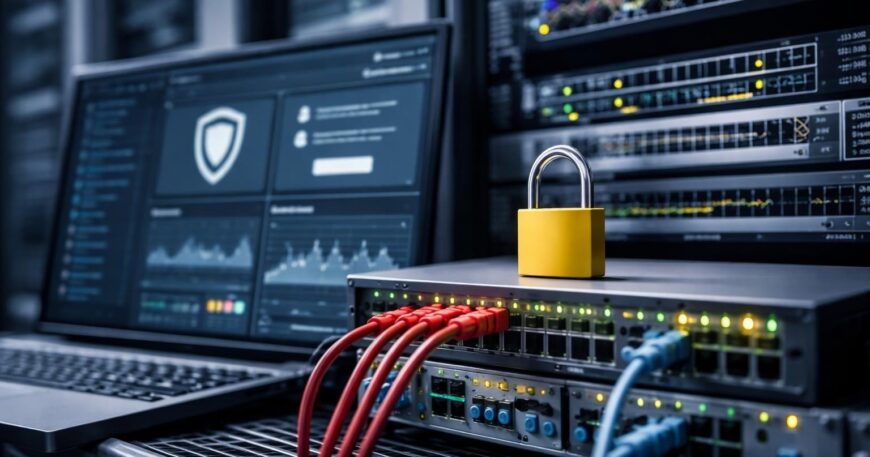
Network security has become a critical priority for small businesses across Lethbridge and beyond. With cyber threats evolving constantly and attackers targeting organizations of all sizes, the need to secure your network infrastructure has never been more urgent. Business owners face increasing pressure to protect sensitive customer data, maintain operational continuity, and comply with regulatory requirements. Understanding how to implement effective network security measures can mean the difference between business resilience and costly data breaches that damage reputation and finances.
Understanding Network Security Fundamentals
Network security encompasses all activities, tools, and policies designed to protect the integrity, confidentiality, and accessibility of computer networks and data. When you secure your network, you create multiple layers of defense that work together to prevent unauthorized access, detect suspicious activity, and respond to potential threats before they cause damage.
The foundation of network security rests on three core principles: confidentiality ensures only authorized individuals access sensitive information, integrity guarantees data remains unaltered during transmission or storage, and availability keeps network resources accessible to legitimate users when needed. These principles guide every security decision from firewall configuration to user access policies.

Key Components of Network Protection
A comprehensive approach to secure your network involves several interconnected components that address different vulnerability points. Each element plays a specific role in your overall security posture.
Essential network security components include:
- Firewalls that monitor and control incoming and outgoing network traffic based on predetermined security rules
- Intrusion detection and prevention systems (IDS/IPS) that identify and block malicious activities
- Virtual private networks (VPN) that encrypt data transmitted across public networks
- Access control systems that authenticate users and limit privileges based on roles
- Network segmentation that divides networks into isolated zones to contain potential breaches
- Encryption protocols that protect data both in transit and at rest
The CISA best practices for network security emphasize implementing two-factor authentication, blocking malicious code, and limiting privileged user access as fundamental protective measures. These recommendations form the baseline for any security strategy.
Implementing Firewall and Perimeter Defense
Firewalls serve as the first line of defense in network security, acting as gatekeepers that examine every packet of data attempting to enter or leave your network. Modern firewalls go beyond simple packet filtering to include sophisticated features like application awareness, deep packet inspection, and threat intelligence integration.
When deploying firewalls to secure your network, position them strategically at network boundaries where your internal infrastructure connects to external networks. This creates a controlled checkpoint where security policies can be uniformly enforced. Next-generation firewalls combine traditional firewall capabilities with advanced features like intrusion prevention, application control, and malware detection.
Firewall Configuration Best Practices
| Configuration Element | Recommended Setting | Security Benefit |
|---|---|---|
| Default Policy | Deny all, allow specific | Minimizes attack surface |
| Rule Review Frequency | Quarterly | Removes obsolete permissions |
| Logging Level | Comprehensive with alerts | Enables threat detection |
| Update Schedule | Automatic with testing | Patches known vulnerabilities |
Regular firewall audits ensure rules remain relevant and effective. Remove outdated permissions, document all exceptions, and test configuration changes in isolated environments before production deployment. This disciplined approach prevents security gaps from developing over time.
Physical security measures also contribute to perimeter defense. Restrict physical access to network equipment rooms, implement badge systems for sensitive areas, and maintain visitor logs. Network hardware represents valuable attack vectors when physically accessible to unauthorized individuals.
Strengthening Access Controls and Authentication
Access control determines who can view or use resources within your network environment. Implementing robust authentication mechanisms ensures only verified users gain entry to systems containing sensitive business information. To effectively secure your network, establish a principle of least privilege where users receive only the minimum access required for their job functions.
Multi-factor authentication (MFA) adds critical protection by requiring users to verify identity through multiple independent credentials. Combining something users know (passwords), something they have (security tokens or smartphone apps), and something they are (biometric data) significantly reduces unauthorized access risks even when passwords become compromised.
Creating Effective Access Policies
Role-based access control (RBAC) simplifies permission management by assigning access rights based on job responsibilities rather than individual users. When employees change positions or leave the organization, you can quickly adjust or revoke access by modifying role assignments. This systematic approach reduces administrative overhead while improving security consistency.
Strong password policies remain essential despite advances in authentication technology. Require complex passwords with minimum length requirements, mandate regular password changes, and prohibit password reuse. Consider implementing enterprise password managers that generate and securely store unique credentials for each application.
Key authentication strengthening measures:
- Enable multi-factor authentication for all remote access points
- Implement single sign-on (SSO) to reduce password fatigue while maintaining security
- Monitor failed login attempts and automatically lock accounts after threshold breaches
- Require password resets for dormant accounts before reactivation
- Conduct regular access reviews to identify and remove unnecessary permissions
The Carnegie Mellon network security guidelines emphasize network segmentation and access authentication as baseline controls for protecting institutional data, principles equally applicable to small business environments.
Securing Wireless Networks
Wireless networks present unique security challenges because radio signals extend beyond physical building boundaries, potentially exposing network traffic to eavesdropping and unauthorized access. Small businesses must pay particular attention to wireless security as employees increasingly rely on mobile devices and flexible workspace arrangements.
To secure your network's wireless infrastructure, start by changing default administrator credentials on all wireless access points. Manufacturers often ship devices with well-known default passwords that attackers can easily exploit. Use strong, unique passwords for each access point and document them securely.
Wireless Encryption and Segmentation
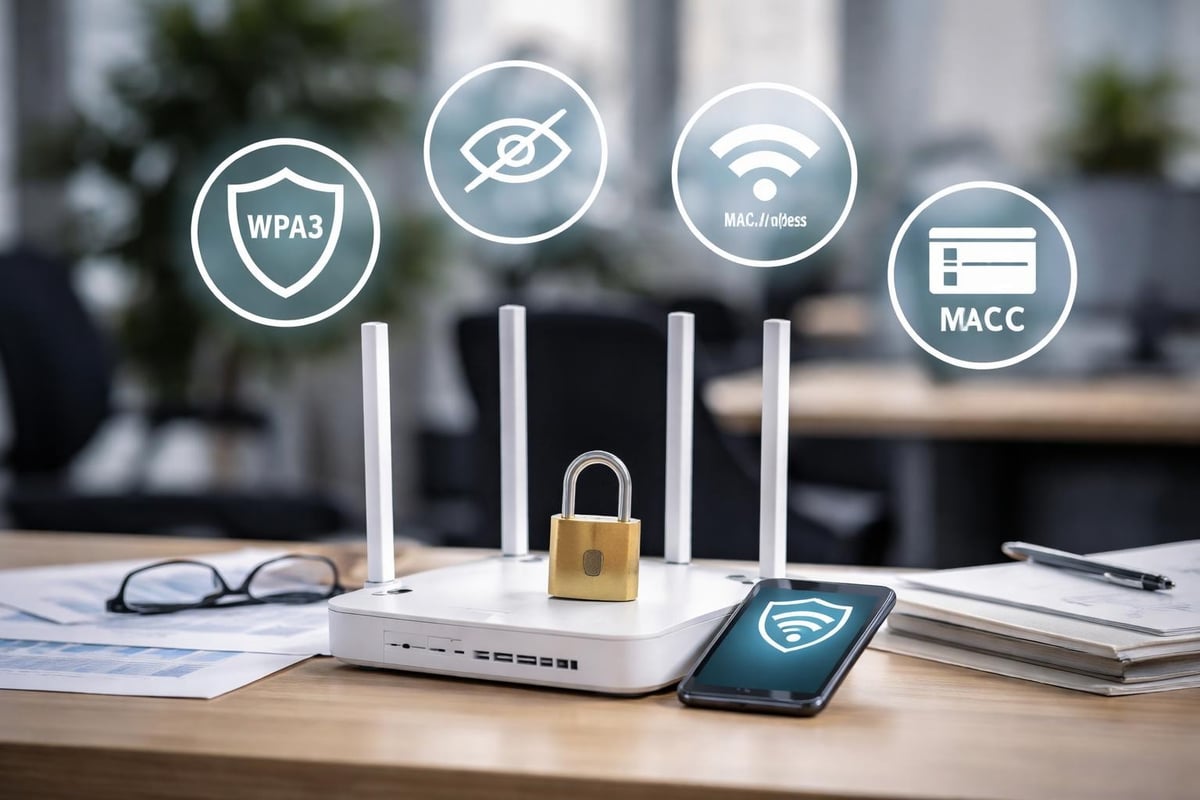
Deploy WPA3 encryption on all wireless networks whenever possible, or WPA2 as a minimum standard for legacy device compatibility. Avoid WEP encryption entirely as it contains known vulnerabilities that render it ineffective against modern attack tools. Strong encryption ensures that even if attackers intercept wireless transmissions, they cannot decipher the data contents.
The NIST guidelines for securing wireless LANs provide comprehensive recommendations covering design, implementation, and ongoing maintenance to enhance wireless network security across enterprise environments.
Separate guest wireless networks from primary business networks through VLAN segmentation. This isolation prevents visitors or contractors from accessing internal resources while still providing internet connectivity. Configure guest networks with appropriate bandwidth limitations and content filtering to prevent abuse.
Wireless security implementation checklist:
- Disable SSID broadcasting for internal networks to reduce visibility
- Enable MAC address filtering as an additional authentication layer
- Position access points to minimize signal leakage beyond premises
- Conduct regular wireless security audits to identify rogue access points
- Update firmware on wireless infrastructure quarterly
Monitoring and Maintaining Network Security
Continuous monitoring transforms network security from a static configuration into a dynamic defense system that adapts to emerging threats. When you secure your network effectively, you establish processes that detect anomalies, investigate suspicious activity, and respond to incidents before they escalate into serious breaches.
Network monitoring tools provide visibility into traffic patterns, bandwidth utilization, device connections, and security events. Modern solutions employ artificial intelligence and machine learning to establish baseline behavior patterns and alert administrators when deviations occur that might indicate compromise or attack.
Building a Security Monitoring Framework
| Monitoring Component | Purpose | Update Frequency |
|---|---|---|
| Log aggregation | Centralize security event data | Real-time |
| Intrusion detection | Identify attack signatures | Continuous |
| Vulnerability scanning | Discover system weaknesses | Weekly |
| Performance metrics | Detect resource abuse | Hourly |
| Compliance reporting | Document security posture | Monthly |
Implement Security Information and Event Management (SIEM) systems that correlate data from multiple sources to identify coordinated attacks. These platforms analyze firewall logs, authentication events, antivirus alerts, and application logs simultaneously to detect patterns that individual systems might miss.
Regular vulnerability assessments identify potential security gaps before attackers exploit them. Schedule automated scans that test for known vulnerabilities, misconfigurations, and weak passwords. Prioritize remediation based on vulnerability severity and asset criticality to maximize security improvement with available resources.
Patch management represents a critical yet often overlooked component of network security maintenance. Software vendors regularly release updates that address security vulnerabilities discovered after initial product release. Establish systematic processes to evaluate, test, and deploy patches across all network devices and systems within defined timeframes.
For additional insights on maintaining robust IT infrastructure, visit the Delphi Systems blog for expert guidance tailored to small business environments.
Network Segmentation Strategies
Network segmentation divides your infrastructure into distinct zones based on security requirements, functionality, or departmental boundaries. This architectural approach limits the potential damage from security breaches by containing threats within specific network segments rather than allowing lateral movement across the entire infrastructure.
When you secure your network through segmentation, you create natural boundaries that force attackers to overcome additional security controls as they attempt to access different resources. Even if one segment becomes compromised, properly configured firewalls and access controls prevent automatic access to other segments.

Implementing Effective Segmentation
Create separate network segments for distinct functions such as employee workstations, servers and databases, guest access, and Internet of Things (IoT) devices. Each segment should have tailored security policies reflecting the specific risks and requirements of systems within that zone.
Network segmentation considerations:
- Isolate payment processing systems to maintain PCI DSS compliance
- Separate development and testing environments from production systems
- Place public-facing web servers in demilitarized zones (DMZ)
- Restrict administrative access to dedicated management VLANs
- Segment by department when data sensitivity varies significantly
Configure inter-segment communication rules that explicitly permit only necessary traffic flows. Default-deny policies between segments ensure that unanticipated or unauthorized communication attempts fail automatically. Document all cross-segment rules with business justifications and review them regularly.
Virtual LANs (VLANs) provide logical segmentation within physical network infrastructure, offering flexibility without requiring separate hardware for each segment. Properly configured VLANs deliver security benefits comparable to physical separation while maintaining cost efficiency suitable for small business budgets.
Employee Training and Security Awareness
Technical controls provide essential protection, but human behavior often determines whether security measures succeed or fail. Employees represent both the greatest vulnerability and the strongest defense in network security when properly trained and engaged.
To comprehensively secure your network, invest in regular security awareness training that educates employees about current threats, safe computing practices, and their role in protecting business assets. Training should be engaging, relevant, and updated frequently to address evolving attack techniques.
Creating a Security-Conscious Culture
Phishing attacks represent one of the most common initial compromise vectors, exploiting human psychology rather than technical vulnerabilities. Conduct simulated phishing campaigns that test employee awareness and provide immediate feedback when individuals click suspicious links or provide credentials to fake sites.
Essential security training topics:
- Recognizing phishing emails and social engineering attempts
- Creating and managing strong passwords securely
- Identifying and reporting suspicious network activity
- Safe handling of sensitive customer and business data
- Secure remote work practices and VPN usage
- Proper procedures for software installation and updates
Make security awareness an ongoing conversation rather than an annual event. Share brief security tips through internal communications, recognize employees who demonstrate good security practices, and create easy reporting channels for potential security concerns. When employees feel empowered to participate in security efforts, they become active defenders rather than passive targets.
Establish clear acceptable use policies that define appropriate and inappropriate network activities. Cover topics like personal device usage, social media access, software installation, and data handling. Ensure all employees acknowledge understanding these policies and face consistent consequences for violations.
Data Backup and Disaster Recovery
Even with robust preventive measures, no network security strategy can guarantee absolute protection against all threats. Comprehensive backup and disaster recovery planning ensures business continuity when security incidents occur, whether from cyberattacks, hardware failures, or natural disasters.
Regular automated backups preserve critical business data and system configurations, enabling rapid restoration after incidents. When you secure your network holistically, you plan not only to prevent breaches but also to recover quickly when prevention fails.
Backup Strategy Development
| Backup Element | Recommended Approach | Rationale |
|---|---|---|
| Frequency | Daily incremental, weekly full | Balances protection and resource use |
| Retention | 30 days onsite, 90 days offsite | Supports multiple recovery points |
| Testing | Monthly restoration tests | Verifies backup integrity |
| Encryption | AES-256 for all backups | Protects archived data |
| Storage Location | Onsite and offsite/cloud | Guards against localized disasters |
Implement the 3-2-1 backup rule: maintain three copies of data, store copies on two different media types, and keep one copy offsite. This approach protects against various failure scenarios from ransomware encryption to building fires.
Test backup restoration procedures regularly under realistic conditions. Discovering backup failures during actual disasters creates devastating delays. Monthly restoration tests verify backup integrity while providing staff practice with recovery procedures.
Document detailed disaster recovery plans that specify recovery time objectives (RTO) and recovery point objectives (RPO) for critical systems. These metrics define acceptable downtime and data loss tolerances, guiding resource allocation decisions and technology investments. Ensure all IT staff understand their roles during recovery operations and maintain updated contact lists for emergency situations.
Vendor and Third-Party Risk Management
Modern business operations increasingly depend on external vendors, cloud services, and third-party applications that connect to internal networks. Each external connection represents a potential security vulnerability that requires careful evaluation and ongoing monitoring.
Organizations must extend security requirements beyond their direct control to encompass the entire ecosystem of partners and service providers. When you secure your network comprehensively, you assess and manage risks introduced by every external entity with network access or data handling responsibilities.
Evaluating Third-Party Security
Before granting network access to vendors or implementing third-party solutions, conduct thorough security assessments. Review vendor security certifications, request documentation of security controls, and verify compliance with relevant industry standards. Consider factors like data encryption practices, access control mechanisms, and incident response capabilities.
Vendor security evaluation criteria:
- SOC 2 Type II or equivalent security audit certifications
- Data encryption standards for transmission and storage
- Multi-factor authentication requirements for administrative access
- Incident notification timelines and procedures
- Business continuity and disaster recovery capabilities
- Compliance with industry regulations applicable to your business
Establish contractual security requirements that define minimum acceptable standards for vendor security practices. Include provisions for security audits, breach notification timelines, and liability allocation in case of security incidents. Regularly review vendor compliance with contractual obligations.
Limit vendor network access to specific systems and functions required for service delivery. Avoid granting broad network permissions that enable vendors to access unrelated resources. Use dedicated VPN connections with conditional access policies that restrict vendor access to defined timeframes and locations when possible.
Monitor vendor access patterns and review activity logs regularly to detect anomalous behavior. Unusual access times, unexpected data transfers, or attempts to access unauthorized resources may indicate compromised vendor credentials or malicious insider activity.
Compliance and Regulatory Considerations
Various industries face specific regulatory requirements governing network security practices and data protection measures. Understanding applicable compliance obligations ensures your security investments address legal requirements while protecting business interests.
Organizations handling payment card information must comply with Payment Card Industry Data Security Standard (PCI DSS) requirements. Healthcare providers managing protected health information fall under Health Insurance Portability and Accountability Act (HIPAA) security rules. Even businesses without specific industry regulations must consider privacy legislation governing customer data handling.
Aligning Security with Compliance
Compliance frameworks often provide structured approaches to network security that benefit organizations regardless of legal obligations. Standards like NIST Cybersecurity Framework offer comprehensive guidance for identifying, protecting, detecting, responding to, and recovering from security threats.
Document all security policies, procedures, and technical controls comprehensively. Compliance audits require evidence demonstrating that stated security measures are actually implemented and functioning effectively. Maintain logs, configuration records, training certificates, and audit reports organized and readily accessible.
Regular compliance assessments identify gaps between current practices and regulatory requirements. Address deficiencies promptly and document remediation efforts. Consider engaging external auditors who provide objective evaluations and industry perspective on security program effectiveness.
Compliance requirements evolve as threats change and regulations update. Stay informed about regulatory developments affecting your industry and adjust security practices accordingly. Subscribe to industry security bulletins, participate in professional associations, and engage with managed service providers who monitor compliance landscape changes.
Physical Security Integration
Network security extends beyond digital controls to encompass physical protection of infrastructure components. Attackers with physical access to network devices can bypass sophisticated software protections, making physical security an essential element of comprehensive network protection.
When you secure your network effectively, you consider how physical access controls complement technical measures. Servers, network switches, wireless access points, and other critical infrastructure require protection from unauthorized physical access, theft, and environmental hazards.
Protecting Physical Infrastructure
Locate network equipment in dedicated server rooms or locked telecommunications closets with restricted access. Implement keycard or biometric access controls that log entry and exit events. Limit physical access to authorized IT personnel and maintain visitor logs when contractors or vendors require equipment room entry.
Environmental controls protect network hardware from damage due to temperature extremes, humidity, power fluctuations, or water intrusion. Install temperature monitoring systems with alerts for abnormal conditions, deploy uninterruptible power supplies (UPS) for critical equipment, and ensure adequate cooling capacity for heat-generating devices.
Physical security measures:
- Locked server racks with tamper-evident seals
- Video surveillance of equipment areas with recording retention
- Cable management that prevents unauthorized network connections
- Secure disposal procedures for retired equipment containing data
- Backup power systems for maintaining operations during outages
Consider port security features that disable unused network switch ports, preventing unauthorized devices from connecting to available jacks throughout facilities. MAC address filtering provides additional authentication for connected devices, though determined attackers can spoof MAC addresses with appropriate tools.
Secure backup media and other portable storage devices in fireproof safes or off-site secure storage facilities. Physical theft of backup tapes or external drives containing unencrypted data can result in serious breaches despite excellent network security.
Mobile Device Security
Smartphones, tablets, and laptops connecting to business networks introduce unique security challenges. These portable devices often contain sensitive business data while operating in uncontrolled environments vulnerable to theft, loss, or compromise.
Implementing mobile device management (MDM) solutions enables centralized control over security policies for devices accessing network resources. MDM platforms enforce encryption requirements, manage application installations, and provide remote wipe capabilities for lost or stolen devices.
Establishing Mobile Security Policies
Define clear policies governing mobile device usage for business purposes. Specify whether employees can use personal devices for work (BYOD), security requirements for company-owned devices, and procedures for reporting lost or stolen equipment. Address acceptable applications, data storage limitations, and prohibited activities.
Require devices to use full-disk encryption protecting data stored locally. Enable remote location tracking and wipe capabilities that allow IT administrators to erase business data from devices that cannot be recovered. These features prevent data exposure when devices fall into unauthorized hands.
Container applications separate business data from personal information on employee-owned devices. Approved applications and work documents remain within secured containers subject to corporate policies while personal apps and data remain private. This approach balances security requirements with employee privacy concerns.
Regular device security updates address discovered vulnerabilities in mobile operating systems and applications. Configure devices to automatically download and install security patches, or implement policies requiring users to update devices within specified timeframes after patch release.
Protecting your business network requires a comprehensive approach combining technical controls, employee awareness, and ongoing vigilance against evolving threats. By implementing layered security measures from firewalls and encryption to access controls and monitoring, small businesses can significantly reduce their vulnerability to cyberattacks and data breaches. Delphi Systems Inc. provides complete managed IT services that secure your network infrastructure while allowing you to focus on core business activities, with expert support, proactive monitoring, and fixed-rate pricing that makes enterprise-level security accessible to Lethbridge small businesses.

