



Modern businesses operate in a digital ecosystem where connectivity and data flow determine success or failure. Every email sent, transaction processed, and file shared depends on the underlying framework that makes communication possible. Network infrastructure represents the essential foundation that supports all digital operations, from basic internet connectivity to complex cloud-based applications. For small businesses in Lethbridge and across North America, understanding this critical technology has become more than just an IT concern – it's a business imperative that directly impacts productivity, security, and competitive advantage.
Understanding the Core Components of Business Networks
Network infrastructure encompasses all the hardware, software, and protocols that enable devices to communicate and share resources within an organization. The physical components include routers, switches, cables, wireless access points, and servers that create the pathways for data transmission. These elements work together seamlessly to ensure employees can access applications, communicate with clients, and retrieve information when needed.
Hardware Elements That Drive Connectivity
The foundation begins with routers, which direct traffic between different networks and manage the flow of data packets to their intended destinations. Switches connect multiple devices within a local area network, creating dedicated communication channels that prevent data collisions and maximize efficiency. Modern businesses also rely on wireless access points that extend network coverage throughout office spaces, warehouses, and remote locations.
Key hardware components include:
- Enterprise-grade routers with advanced security features
- Managed switches that offer traffic prioritization and monitoring
- Redundant power supplies to prevent single points of failure
- Network-attached storage (NAS) devices for centralized data access
- Firewalls that protect against unauthorized access and cyber threats
The quality and configuration of these components directly influence network performance. Outdated equipment can create bottlenecks that slow down business operations, while properly designed systems enable seamless scaling as organizations grow.

Network Topology and Design Considerations
The way network components are arranged and interconnected significantly impacts reliability and performance. Network topology refers to the logical and physical layout of devices and connections within the infrastructure. Common topologies include star, mesh, and hybrid configurations, each offering distinct advantages for different business environments.
Star topology remains popular for small business networks because all devices connect to a central switch or hub. This design simplifies troubleshooting and minimizes disruption when individual connections fail. Mesh topology, where devices have multiple interconnected paths, provides superior redundancy and is increasingly common in critical business environments where downtime is unacceptable.
Scalability and Future-Proofing Strategies
Planning network infrastructure requires anticipating future needs rather than simply addressing current requirements. Businesses that experience growth often find their networks struggling to support additional users, devices, and applications. Implementing scalable solutions from the start prevents costly overhauls and service disruptions.
| Design Factor | Short-Term Impact | Long-Term Benefit |
|---|---|---|
| Bandwidth capacity | Supports current applications | Accommodates future data-intensive services |
| Modular architecture | Easier initial deployment | Simplifies expansion and upgrades |
| Cable management | Organized installation | Reduces maintenance complexity |
| Documentation | Clear system understanding | Faster troubleshooting and modifications |
Virtualization technologies allow businesses to create flexible network infrastructure that adapts to changing demands. Software-defined networking (SDN) separates the control plane from the data plane, enabling centralized management and automated configuration changes across distributed environments.
Security Architecture Within Network Systems
Network infrastructure security has evolved from perimeter defense to comprehensive protection at every layer. The traditional castle-and-moat approach, where a firewall protects everything behind it, no longer suffices in an era of cloud computing, remote work, and sophisticated cyber threats. Modern security architecture implements defense-in-depth strategies that create multiple barriers against unauthorized access.
Zero-trust security models assume that threats can originate from anywhere, including inside the network perimeter. This approach requires continuous verification of user identity and device health before granting access to resources. Network segmentation divides infrastructure into isolated zones, limiting the potential damage if attackers compromise one section.
Essential security layers include:
- Network access control (NAC) that authenticates devices before connection
- Intrusion detection and prevention systems (IDS/IPS) monitoring for suspicious activity
- Encrypted communication channels protecting data in transit
- Regular security patches and firmware updates addressing known vulnerabilities
- Multi-factor authentication strengthening user verification processes
The importance of maintaining accurate network data through a Network Source of Truth becomes critical when managing security across complex environments. Having a reliable inventory of all network components, configurations, and connections enables rapid response to security incidents and ensures policies are consistently enforced.
DNS Infrastructure and Name Resolution
The Domain Name System (DNS) serves as the internet's phone book, translating human-readable domain names into IP addresses that computers use to identify each other. While often overlooked, DNS infrastructure plays a vital role in network performance, security, and reliability. Businesses depend on fast, accurate name resolution for accessing websites, cloud services, and internal applications.
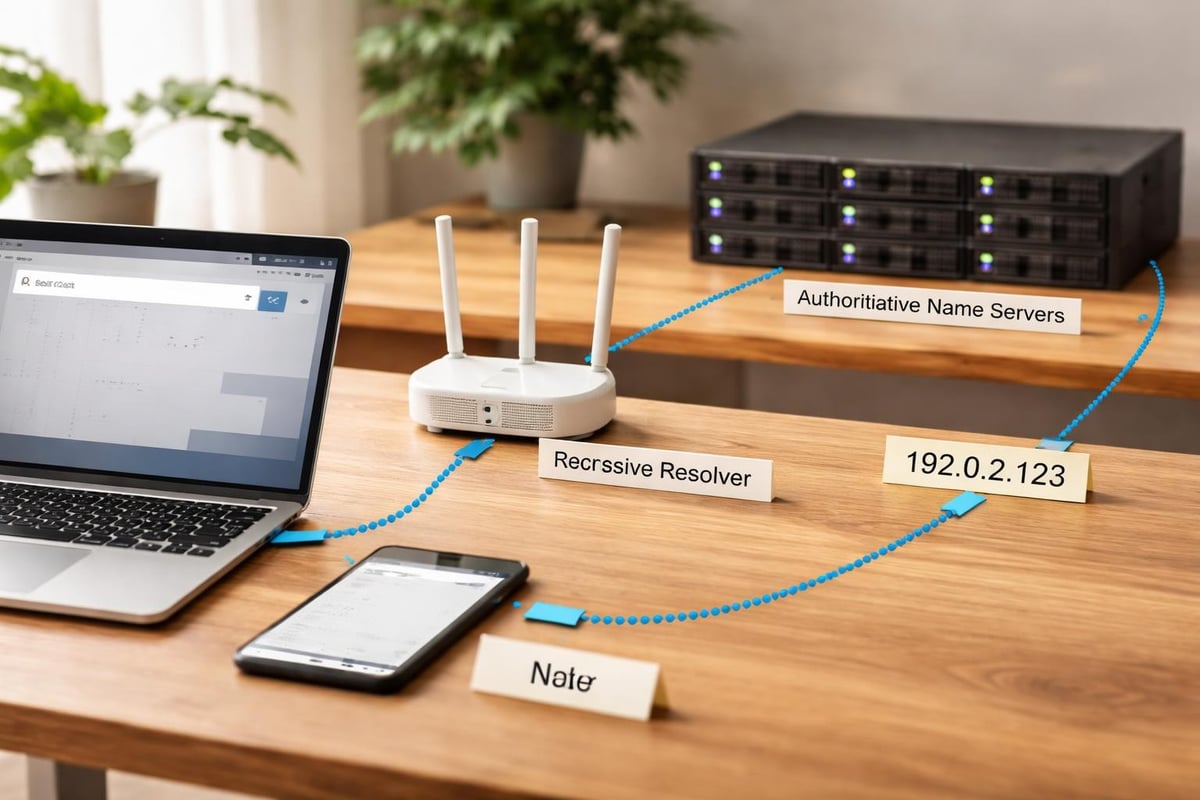
Authoritative DNS servers store definitive records for specific domains and respond to queries from recursive resolvers. Organizations must carefully consider guidelines for establishing resilient DNS infrastructure to ensure availability even during attacks or system failures. Separating internal and external authoritative name servers provides additional security by preventing external queries from accessing internal network information.
Managing DNS for Business Continuity
DNS failures can render an entire network infrastructure effectively useless, even when all other components function properly. If users cannot resolve domain names, they cannot access cloud applications, email servers, or external resources. Implementing redundant DNS configurations with multiple authoritative servers across geographically diverse locations protects against single points of failure.
The growing centralization in DNS infrastructure raises concerns about resilience and control. While major providers offer robust services, businesses should evaluate whether relying entirely on third-party DNS aligns with their risk tolerance and compliance requirements. Hybrid approaches combining internal and external DNS services often provide the best balance of performance and control.
Cloud Integration and Hybrid Network Models
The shift toward cloud computing has fundamentally transformed how businesses design and manage network infrastructure. Rather than housing all resources on-premises, organizations now distribute workloads across local data centers, private clouds, and public cloud platforms like AWS, Google Cloud, and Azure. This hybrid model requires network architectures that seamlessly connect disparate environments while maintaining security and performance standards.
Cloud integration introduces new considerations for network design. Bandwidth requirements increase as more data moves between on-premises systems and cloud services. Latency becomes critical for applications that require real-time interaction between local and remote components. Network infrastructure must also support secure connections through virtual private networks (VPNs) or dedicated circuits that protect sensitive data traversing public internet connections.
Cloud integration requirements:
- Sufficient internet bandwidth for peak usage periods
- Quality of Service (QoS) policies prioritizing critical applications
- Redundant connections preventing cloud service disruptions
- Identity and access management spanning multiple platforms
- Monitoring tools providing visibility across hybrid environments
Organizations working with managed IT service providers can leverage expertise in designing secure and resilient network infrastructure that accommodates both current cloud implementations and future migrations. Professional management ensures proper configuration of routing, security policies, and failover mechanisms across complex hybrid environments.
Network Monitoring and Performance Management
Visibility into network infrastructure performance has become essential for maintaining business operations. Modern monitoring solutions continuously track metrics such as bandwidth utilization, packet loss, latency, and device health. This real-time data enables proactive identification of issues before they impact users and provides insights for capacity planning and optimization.
Key Performance Indicators for Network Health
Network administrators track multiple metrics to assess infrastructure performance and identify potential problems. Bandwidth utilization reveals whether links are approaching capacity and need upgrades. Packet loss and retransmission rates indicate connection quality issues that degrade application performance. Response times for critical services help ensure user experience meets business requirements.
| Metric | Healthy Range | Warning Threshold | Critical Threshold |
|---|---|---|---|
| Bandwidth utilization | 0-70% | 70-85% | >85% |
| Packet loss | 0-0.1% | 0.1-1% | >1% |
| Network latency | <50ms | 50-100ms | >100ms |
| Device CPU usage | 0-60% | 60-80% | >80% |
Automated alerting systems notify IT teams when metrics exceed acceptable thresholds, enabling rapid response to developing issues. Historical data analysis reveals trends that inform infrastructure planning and help justify investments in network improvements.

Wireless Network Considerations for Modern Workplaces
Wireless connectivity has evolved from a convenience to a necessity as businesses support mobile devices, remote collaboration, and flexible workspaces. Designing robust wireless network infrastructure requires careful planning to ensure adequate coverage, capacity, and security throughout business facilities. The proliferation of smartphones, tablets, and IoT devices has dramatically increased the demands placed on wireless networks.
Access point placement significantly impacts wireless performance. Physical obstacles like walls, metal structures, and interference from other electronic devices can degrade signals and create coverage gaps. Professional site surveys identify optimal locations for access points and help determine the number of devices needed to support expected user density.
Wireless design best practices:
- Conduct RF site surveys before deployment
- Implement enterprise-grade access points with management capabilities
- Use separate SSIDs for guest and corporate networks
- Enable WPA3 encryption for maximum security
- Monitor channel utilization to minimize interference
Guest network isolation protects corporate network infrastructure by segregating visitor traffic from internal resources. This separation prevents unauthorized access to sensitive systems while still providing internet connectivity for clients and vendors visiting business locations.
Cabling Infrastructure and Physical Layer Standards
While wireless networks receive significant attention, physical cabling remains the backbone of reliable network infrastructure. Structured cabling systems using Category 6A or fiber optic cables provide the bandwidth and reliability needed for modern business applications. Proper installation following industry standards ensures optimal performance and simplifies future upgrades or modifications.
Cable management practices impact both functionality and maintainability. Organized cable runs with clear labeling reduce troubleshooting time and minimize service disruption during repairs or expansions. Color-coding different cable types and maintaining detailed documentation of all connections creates a manageable infrastructure that IT teams can efficiently support.
The choice between copper and fiber optic cabling depends on distance requirements, bandwidth needs, and budget constraints. Fiber optics offer superior performance over longer distances and provide immunity to electromagnetic interference, making them ideal for backbone connections and high-density environments. Copper cabling remains cost-effective for shorter runs and desktop connections where gigabit speeds suffice.
Backup and Redundancy in Critical Systems
Business continuity depends on network infrastructure that continues functioning despite component failures or unexpected events. Redundancy at every layer prevents single points of failure from disrupting operations. Dual internet connections from different providers ensure connectivity even if one circuit fails. Redundant core switches automatically redirect traffic when primary paths become unavailable.
Power protection systems guard against electrical issues that could damage equipment or cause outages. Uninterruptible power supplies (UPS) provide battery backup during brief power losses, while generators support extended outages. Proper grounding and surge protection prevent voltage spikes from destroying sensitive network components.
Understanding best practices for authoritative DNS configuration helps ensure name resolution services remain available during infrastructure failures. Distributing DNS servers across multiple locations and providers creates resilience against regional outages or targeted attacks.
Network Documentation and Change Management
Comprehensive documentation serves as the roadmap for understanding and managing network infrastructure. Detailed records of device configurations, IP address assignments, cable runs, and network diagrams enable efficient troubleshooting and prevent configuration errors. As networks grow in complexity, maintaining accurate documentation becomes increasingly critical for operational success.
Change management processes ensure that infrastructure modifications are properly planned, tested, and documented before implementation. Uncontrolled changes frequently introduce problems that could have been avoided through systematic review and testing. Formal change management reduces the risk of outages caused by conflicting configurations or unintended consequences of seemingly minor adjustments.
Documentation requirements include:
- Network topology diagrams showing logical and physical layouts
- Device configuration backups stored securely off-site
- IP address management databases tracking assignments
- Cable plant records identifying all physical connections
- Standard operating procedures for common tasks
Version control systems help track documentation changes over time, making it possible to understand how network infrastructure evolved and revert to previous configurations if problems arise.
Compliance and Regulatory Considerations
Many industries face regulatory requirements that impact network infrastructure design and operation. Healthcare organizations must comply with HIPAA regulations protecting patient data, while financial institutions follow standards like PCI DSS for payment card security. Understanding applicable compliance frameworks ensures network infrastructure implements necessary controls and audit capabilities.
The Trusted Internet Connections reference architecture provides guidance for government agencies and contractors on securing network connections and DNS services. While primarily focused on federal systems, these principles offer valuable insights for any organization prioritizing security and reliability.
Data residency requirements may mandate that certain information remains within specific geographic boundaries, influencing decisions about cloud providers and data center locations. Network infrastructure must support compliance by enabling proper data segregation, access controls, and audit logging that demonstrate regulatory adherence.
The Role of Automation in Infrastructure Management
Network automation has transitioned from luxury to necessity as infrastructure complexity exceeds human capacity for manual management. Automation tools handle routine configuration tasks, enforce consistent security policies, and respond to common issues without human intervention. This capability not only reduces operational costs but also improves reliability by eliminating human errors that frequently cause outages.
Infrastructure as code (IaC) treats network configurations as software, enabling version control, testing, and rapid deployment of standardized setups. When network infrastructure changes can be defined in code and automatically applied, businesses gain agility and consistency that manual processes cannot match. Automated backup and recovery procedures ensure quick restoration of services following failures or security incidents.
Modern managed IT services incorporate automation to deliver superior network infrastructure support at predictable costs. By automating monitoring, patch management, and routine maintenance, service providers free internal IT teams to focus on strategic initiatives that drive business value rather than fighting daily operational fires.
Network infrastructure forms the digital foundation that modern businesses depend on for every aspect of operations, from customer communications to financial transactions. The complexity of designing, securing, and maintaining robust networks continues to increase as organizations adopt cloud services, support remote workers, and face evolving cyber threats. For small businesses in Lethbridge seeking reliable network performance without the overhead of full-time infrastructure specialists, partnering with experienced professionals makes strategic sense. Delphi Systems Inc. offers comprehensive managed IT services that keep your network infrastructure operating at peak efficiency with predictable fixed-rate pricing, allowing you to focus on growing your business while we handle the technical complexities.

