


Modern businesses face an increasingly complex threat landscape where protecting digital assets has become as critical as securing physical premises. Security services information security encompasses the comprehensive frameworks, technologies, and practices that organizations deploy to protect their information systems from unauthorized access, disruption, and data breaches. For small businesses in particular, understanding how these security services integrate with information security protocols can mean the difference between operational continuity and catastrophic data loss. As cyber threats evolve in sophistication and frequency, implementing robust security services information security measures has transitioned from optional best practice to essential business requirement.
Understanding the Security Services Information Security Framework
Security services information security represents a multi-layered approach to protecting business data and IT infrastructure through specialized managed services. This framework combines preventive, detective, and responsive capabilities to create comprehensive protection against modern cyber threats.
The foundation of effective security services information security rests on several critical components that work together to safeguard business operations. Risk assessment and vulnerability management form the first line of defense, identifying potential weaknesses before attackers can exploit them. Access control mechanisms ensure that only authorized personnel can reach sensitive systems and data. Network monitoring and threat detection provide real-time visibility into suspicious activities across your IT infrastructure.
Small businesses often lack the internal resources to maintain these security layers effectively. This reality makes partnering with specialized providers who understand security services information security frameworks essential for maintaining competitive operations while protecting critical assets.
Key Components of Information Security Services
Organizations implementing security services information security must understand the distinct elements that comprise comprehensive protection. Each component addresses specific threat vectors while contributing to overall system resilience.
Essential security service elements include:
- Firewall management and intrusion prevention systems that filter incoming and outgoing network traffic
- Endpoint protection covering workstations, mobile devices, and servers
- Email security gateways that block phishing attempts and malicious attachments
- Data encryption for information at rest and in transit
- Regular security patches and updates to eliminate known vulnerabilities
- Security information and event management (SIEM) for centralized logging and analysis
The Cybersecurity and Infrastructure Security Agency (CISA) provides best practices that emphasize implementing two-factor authentication and network segmentation as fundamental security measures. These recommendations align perfectly with security services information security principles that prioritize defense in depth.
The Role of Managed IT Services in Security
Managed IT service providers deliver security services information security capabilities that many small businesses cannot economically maintain in-house. These providers offer continuous monitoring, rapid incident response, and proactive threat hunting that keeps pace with evolving attack methodologies.
Professional security services encompass several critical functions. 24/7 network monitoring detects anomalous behavior patterns that might indicate compromise. Vulnerability scanning and penetration testing identify weaknesses before malicious actors discover them. Security policy development and enforcement ensures consistent application of protective measures across the organization.
For Lethbridge area businesses, working with regional experts who understand local regulatory requirements and industry-specific threats provides significant advantages. Local providers can deliver personalized attention and rapid on-site response when critical situations demand immediate action.
Implementing Cybersecurity Best Practices
Security services information security effectiveness depends heavily on consistent application of proven cybersecurity practices. These foundational measures create the baseline protection upon which more advanced security layers build.
Organizations should prioritize several critical practices when developing their security posture. Employee security awareness training addresses the human element, which remains the weakest link in most security chains. Regular training sessions help staff recognize phishing attempts, social engineering tactics, and suspicious activities that could indicate compromise.
According to TechTarget’s cybersecurity best practices, continuous vulnerability scanning and securing the software supply chain represent essential measures for mitigating organizational risk. These practices integrate seamlessly with comprehensive security services information security programs.
Data Protection and Backup Strategies
No security services information security framework is complete without robust data protection and recovery capabilities. Even the most sophisticated defenses cannot guarantee 100% protection against determined attackers or catastrophic system failures.
| Backup Strategy | Recovery Time | Data Loss Risk | Best Use Case |
|---|---|---|---|
| Local backups | Minutes to hours | Low to moderate | Quick recovery for recent data |
| Cloud backups | Hours to days | Very low | Geographic redundancy |
| Hybrid approach | Minutes to hours | Minimal | Comprehensive protection |
| Continuous replication | Near-instantaneous | Negligible | Mission-critical systems |
Effective backup strategies incorporate multiple elements:
- Regular automated backups scheduled during off-peak hours to minimize performance impact
- Geographic redundancy storing copies in multiple physical locations
- Encryption of backup data protecting information even if backup media is compromised
- Regular recovery testing ensuring backups actually work when needed
- Version retention policies maintaining historical copies for ransomware recovery
The 3-2-1 backup rule remains a cornerstone of security services information security: maintain three copies of data, on two different media types, with one copy stored off-site. This approach provides resilience against hardware failures, natural disasters, and targeted attacks.

Access Control and Identity Management
Managing who can access what resources forms a critical pillar of security services information security. Modern access control goes far beyond simple username and password combinations to incorporate sophisticated identity verification and authorization mechanisms.
Multi-factor authentication (MFA) should be mandatory for all access to business systems. As highlighted in Caltech’s security recommendations, enabling multi-factor authentication and keeping software up to date are fundamental practices for protecting against cyber threats. MFA typically combines something the user knows (password), something they have (mobile device or security token), and sometimes something they are (biometric verification).
Role-based access control (RBAC) ensures employees can only access systems and data necessary for their job functions. This principle of least privilege minimizes potential damage from compromised accounts or insider threats. Regular access reviews identify and remove permissions that are no longer needed as employee roles change.
Network Security and Monitoring
Security services information security relies heavily on comprehensive network visibility and real-time threat detection. Modern network environments present complex attack surfaces that require continuous monitoring to identify suspicious activities before they escalate into full breaches.
Professional network monitoring encompasses several critical capabilities. Traffic analysis identifies unusual patterns that might indicate data exfiltration or lateral movement by attackers. Behavioral analysis establishes baselines for normal user and system activities, flagging deviations that warrant investigation. Threat intelligence integration compares network activity against known malicious indicators from global threat databases.
Small businesses often underestimate the value of professional network monitoring until after experiencing a security incident. By then, the costs of remediation, downtime, and potential data breach notifications far exceed the investment in preventive security services information security measures.
Firewall and Perimeter Security
Network perimeter security forms the first defensive barrier against external threats. Next-generation firewalls (NGFWs) provide sophisticated capabilities beyond traditional packet filtering to include application awareness, intrusion prevention, and deep packet inspection.
Modern firewall configurations should include:
- Application-layer filtering controlling which specific applications can traverse the network boundary
- Geo-blocking capabilities restricting connections from high-risk geographic regions
- URL filtering preventing access to known malicious websites
- SSL/TLS inspection examining encrypted traffic for hidden threats
- Virtual private network (VPN) integration securing remote access connections
The Security Industry Association develops standards to promote interoperability within the security industry, covering areas such as perimeter security that directly impact how organizations implement network defenses. These standards help ensure security services information security implementations follow industry best practices.
Intrusion Detection and Response
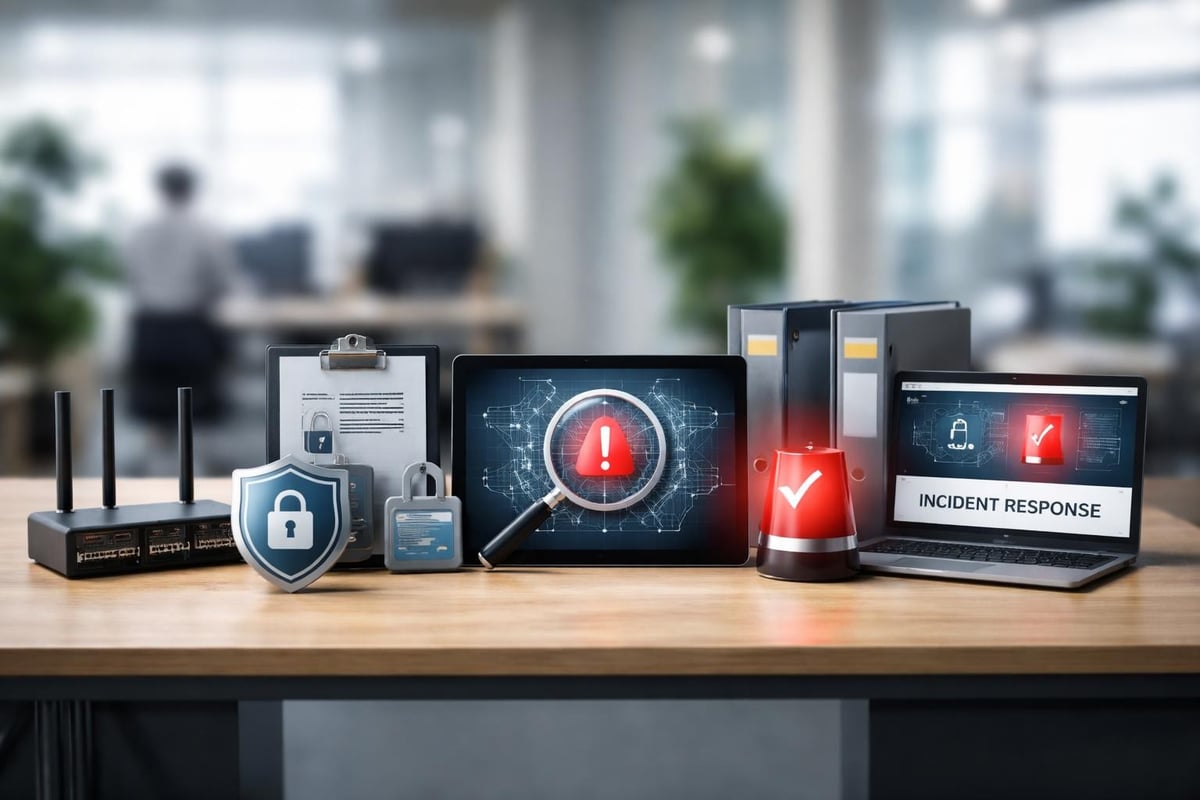
Detecting security incidents quickly dramatically reduces their potential impact. Security services information security programs must include robust intrusion detection systems (IDS) and intrusion prevention systems (IPS) that identify and respond to threats in real-time.
Modern detection systems employ multiple techniques to identify potential compromises. Signature-based detection compares network traffic and system activities against known attack patterns. Anomaly-based detection uses machine learning to identify behaviors that deviate from established baselines. Heuristic analysis identifies suspicious activities that might represent novel attack methodologies.
When incidents are detected, rapid response becomes critical. Documented incident response procedures ensure consistent, effective actions that minimize damage and accelerate recovery. Response plans should outline specific steps for containment, eradication, recovery, and post-incident analysis.
Compliance and Regulatory Considerations
Security services information security frameworks must address relevant compliance requirements that govern how organizations handle sensitive information. Different industries face varying regulatory obligations, but fundamental principles of data protection remain consistent across sectors.
Small businesses often handle personally identifiable information (PII), payment card data, or health information that triggers specific compliance obligations. Understanding these requirements and implementing appropriate controls prevents costly violations and reputational damage.
| Regulation | Primary Focus | Key Requirements | Penalties for Non-Compliance |
|---|---|---|---|
| PIPEDA | Personal information | Consent, safeguards, accountability | Up to $100,000 per violation |
| PCI DSS | Payment card data | Encryption, access control, monitoring | Fines, loss of processing privileges |
| PHIPA | Health information | Privacy, security, breach notification | Fines up to $500,000 |
Documentation and Audit Trails
Comprehensive documentation forms an essential component of security services information security compliance. Organizations must maintain detailed records of security policies, procedures, system configurations, and access logs that demonstrate due diligence in protecting sensitive information.
Critical documentation elements include:
- Security policies and procedures outlining organizational security standards
- System inventories cataloging all hardware, software, and data assets
- Risk assessments identifying threats, vulnerabilities, and mitigation strategies
- Change management logs tracking all modifications to security configurations
- Incident reports documenting security events and response actions
- Access logs recording who accessed what resources and when
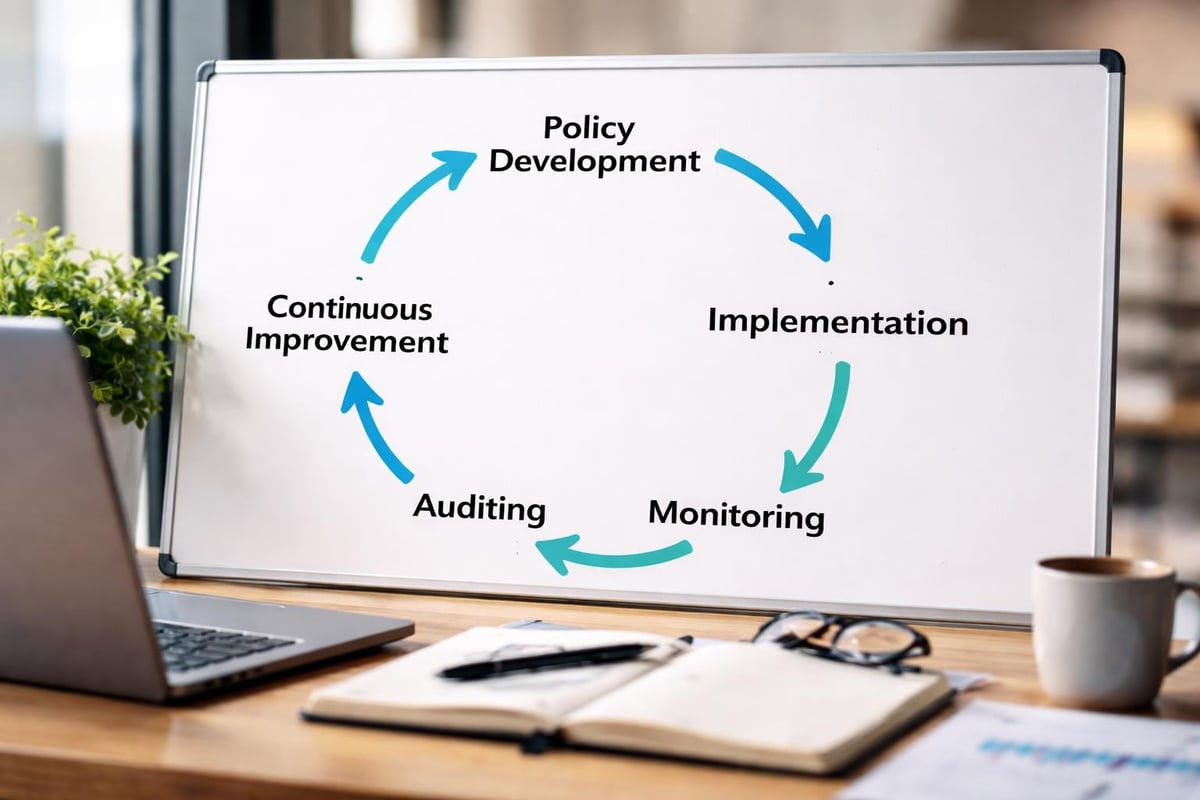
Regular security audits verify that documented policies align with actual practices. These audits identify gaps between intended and implemented security controls, providing opportunities for continuous improvement of security services information security measures.
Security Awareness and Training
Technology alone cannot deliver effective security services information security without knowledgeable users who understand their role in protecting organizational assets. Human error remains a leading cause of security incidents, making comprehensive security awareness training essential.
Effective training programs address multiple threat vectors and user responsibilities. Phishing awareness teaches employees to recognize suspicious emails, fraudulent websites, and social engineering attempts. As noted by Harvard’s information security best practices, vigilance against phishing attacks and clicking wisely are fundamental to safeguarding information.
Password hygiene education emphasizes creating strong, unique passwords and avoiding password reuse across multiple systems. Physical security awareness reminds staff about securing devices, locking screens when away, and protecting sensitive documents. Incident reporting procedures ensure employees know how to quickly escalate suspicious activities to IT security teams.
Training should occur regularly, not just during employee onboarding. Quarterly refreshers, simulated phishing exercises, and timely alerts about emerging threats keep security awareness top-of-mind throughout the organization.
Building a Security-Conscious Culture
Long-term security services information security success requires embedding security consciousness into organizational culture. When security becomes part of how everyone thinks about their daily activities, protective measures become natural rather than burdensome.
Leadership commitment demonstrates that security represents a business priority, not merely an IT concern. Executives who model good security practices, discuss security in business planning, and allocate appropriate resources signal that protecting information assets matters to organizational success.
Recognition programs that celebrate employees who identify and report security threats encourage vigilant behavior. Regular communications about security topics, recent incidents in the news, and organizational security successes maintain awareness without creating alarm fatigue.
Emerging Threats and Adaptive Security
The threat landscape continues evolving rapidly as attackers develop new techniques and exploit emerging technologies. Security services information security must adapt continuously to address these changing risks while maintaining protection against established attack vectors.
Ransomware remains among the most significant threats facing small businesses, with attackers encrypting critical data and demanding payment for restoration. Modern ransomware variants often exfiltrate data before encryption, threatening to publicly release sensitive information if ransoms aren't paid. This double-extortion tactic makes even organizations with good backups vulnerable to reputational damage.
Supply chain attacks compromise trusted vendors or software providers to gain access to downstream organizations. These sophisticated attacks exploit the trust relationships between businesses and their suppliers, making them particularly difficult to detect and prevent.
Zero-day exploits target previously unknown vulnerabilities in software before patches become available. While less common than attacks exploiting known vulnerabilities, zero-day threats represent serious risks that require layered defenses and behavioral monitoring to detect.
Proactive Threat Hunting
Advanced security services information security programs incorporate proactive threat hunting that searches for indicators of compromise before automated systems trigger alerts. This proactive approach assumes that determined attackers might already be present in the network, focusing on finding evidence of their activities.
Threat hunters analyze system logs, network traffic patterns, and user behaviors looking for subtle anomalies that might indicate compromise. This work requires specialized expertise and significant time investment, making it an area where managed security service providers deliver substantial value.
Regular threat hunting exercises uncover sophisticated attacks that evade automated defenses, providing opportunities to contain incidents before significant damage occurs. These activities also generate valuable insights that improve overall security posture by identifying defensive gaps and optimization opportunities.
Cost-Effective Security for Small Businesses
Small businesses face unique challenges in implementing comprehensive security services information security. Limited budgets, small IT teams, and competing priorities can make investing in robust security seem overwhelming or unaffordable.
However, the cost of inadequate security far exceeds the investment in proper protections. Data breaches average hundreds of thousands of dollars in direct costs, not including lost productivity, reputational damage, and potential legal liabilities. For many small businesses, a significant security incident could threaten organizational survival.
Strategic approaches to cost-effective security include:
- Prioritizing critical assets to focus security investments where they matter most
- Leveraging managed services to access enterprise-grade security expertise at predictable costs
- Implementing security-by-design principles when deploying new systems
- Utilizing cloud-based security tools that eliminate infrastructure overhead
- Maintaining cyber insurance to transfer some financial risk
Fixed-rate managed IT services provide predictable monthly costs while delivering comprehensive security services information security capabilities. This model allows small businesses to budget effectively while accessing expertise and technologies that would be prohibitively expensive to maintain in-house.
Measuring Security ROI
Quantifying the return on investment for security services information security requires looking beyond prevented incidents to broader business impacts. Security investments enable business capabilities, support compliance obligations, and protect organizational reputation.
Key metrics for evaluating security value include:
- Reduced incident frequency and severity compared to industry benchmarks
- Decreased downtime from security events disrupting operations
- Compliance achievement avoiding penalties and enabling business opportunities
- Improved customer confidence supporting sales and retention
- Lower insurance premiums reflecting stronger security posture
Organizations should track these metrics over time to demonstrate security program effectiveness and justify continued investment. Regular reporting to business leadership helps maintain security visibility and support.
Protecting your business through comprehensive security services information security requires specialized expertise, continuous monitoring, and proactive threat management that most small businesses struggle to maintain internally. By partnering with experienced managed IT service providers who understand both technology and business needs, organizations can implement robust security while focusing resources on core business activities. Delphi Systems Inc. delivers exactly this combination for Lethbridge area businesses, providing comprehensive cybersecurity, network monitoring, and IT support with transparent fixed-rate pricing that makes enterprise-grade security accessible and affordable for small businesses ready to protect their digital assets.

