
The cybersecurity landscape has transformed dramatically in recent years, with threats becoming more sophisticated and attack surfaces expanding exponentially. For small businesses in Lethbridge and across Canada, understanding cyber security latest technology is no longer optional but essential for survival. Organizations face an unprecedented challenge: protecting their digital assets while maintaining operational efficiency and staying within budget constraints. The technologies emerging in 2026 represent a fundamental shift in how businesses approach security, moving from reactive defense to proactive, intelligent protection systems that anticipate and neutralize threats before they cause damage.
AI-Powered Threat Detection and Response
Artificial intelligence has revolutionized how organizations identify and respond to cyber threats. The cyber security latest technology in this domain leverages machine learning algorithms that analyze patterns across millions of data points, identifying anomalies that human analysts might miss. Modern AI systems learn continuously, adapting to new attack vectors and evolving their defense mechanisms in real-time.
Agentic AI Systems Transform Security Operations
The emergence of agentic AI in cybersecurity marks a significant milestone in autonomous threat management. These systems operate independently, making decisions based on predefined goals and environmental factors. Unlike traditional rule-based systems, agentic AI can:
- Reason through complex attack scenarios
- Learn from previous incidents and adapt strategies
- Execute penetration testing without human intervention
- Prioritize vulnerabilities based on business impact
- Coordinate responses across multiple security tools
Small businesses particularly benefit from this cyber security latest technology because it effectively multiplies the capabilities of limited IT teams. An agentic AI system can monitor networks 24/7, investigate suspicious activities, and implement countermeasures faster than any human team.

Machine Learning for Behavioral Analysis
Behavioral analytics powered by machine learning represents another critical component of cyber security latest technology. These systems establish baselines for normal user and system behavior, then flag deviations that could indicate compromise. For instance, if an employee account suddenly accesses sensitive files at 3 AM from an unusual location, the system triggers immediate investigation protocols.
| AI Technology | Primary Function | Business Benefit |
|---|---|---|
| Agentic AI | Autonomous threat hunting | 24/7 protection without staffing costs |
| Behavioral Analytics | User activity monitoring | Early detection of insider threats |
| Predictive Modeling | Threat forecasting | Proactive vulnerability patching |
| Natural Language Processing | Phishing detection | Email security enhancement |
Zero Trust Architecture Evolution
Zero trust has evolved from a buzzword to a practical framework that underpins modern cyber security latest technology implementations. The fundamental principle remains constant: never trust, always verify. However, the technologies enabling zero trust have become significantly more sophisticated and accessible to organizations of all sizes.
Identity-Centric Security Models
Identity has become the weakest link in SaaS platforms, making robust identity management essential. Modern zero trust frameworks implement continuous authentication, verifying user identity and device health throughout sessions rather than just at login.
Key components include:
- Context-aware access policies that consider location, device posture, and risk scores
- Microsegmentation that limits lateral movement within networks
- Just-in-time access granting permissions only when needed for specific tasks
- Privileged access management securing administrative credentials
- Device trust verification ensuring endpoint compliance before granting access
The cyber security latest technology in this space integrates seamlessly with existing infrastructure, making implementation feasible for small businesses without requiring complete infrastructure overhauls.
Quantum-Enhanced Zero Trust
Research into quantum neural network-enhanced zero trust frameworks demonstrates the next evolution of this security model. While quantum computing applications remain primarily in research phases, the principles inform current development of adaptive policy enforcement systems that can handle the complexity of modern hybrid work environments.
Advanced Authentication Technologies
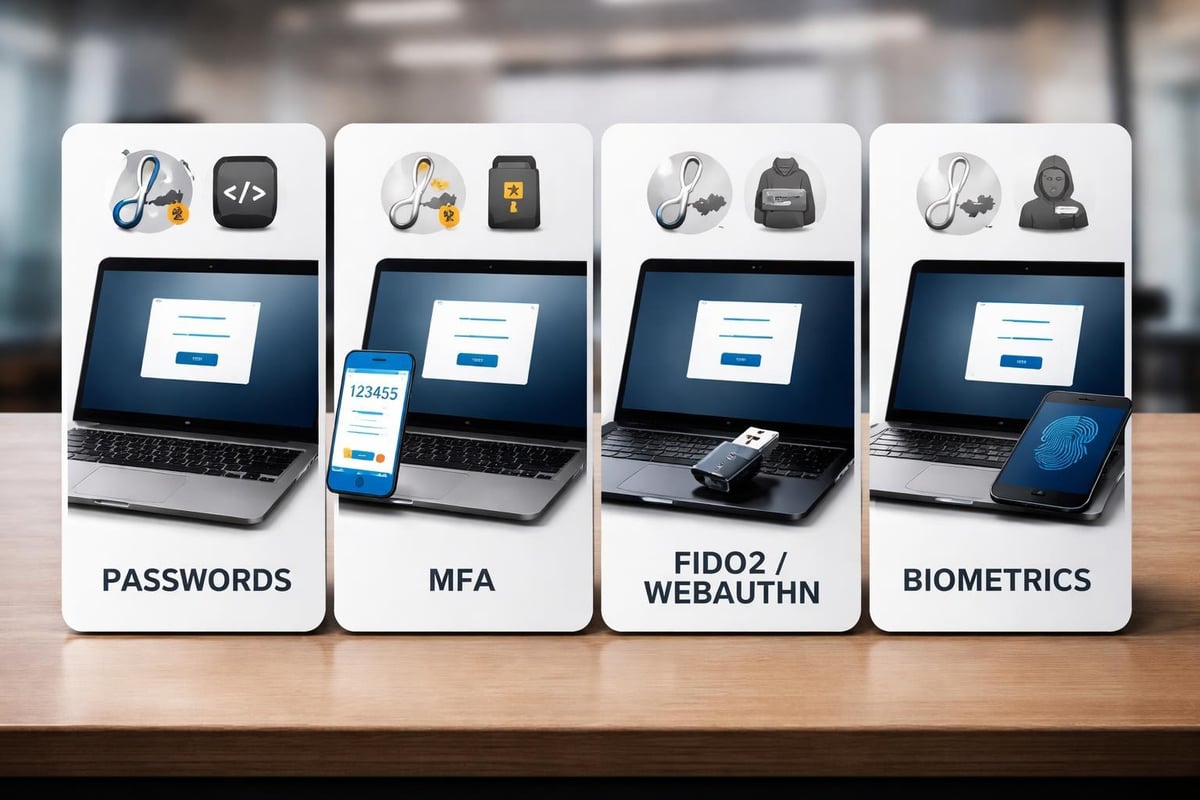
Traditional password-based authentication has proven insufficient against modern threats. The cyber security latest technology in authentication moves far beyond simple multi-factor authentication to implement truly phishing-resistant mechanisms.
Moving Beyond Traditional MFA
Authentication in 2026 requires moving beyond foundational MFA to address sophisticated attacks. Cybercriminals have developed techniques to bypass SMS codes, push notification approvals, and even some authenticator apps.
Phishing-resistant technologies include:
- FIDO2 security keys using cryptographic authentication
- WebAuthn protocols eliminating shared secrets
- Biometric verification combining something you are with something you have
- Certificate-based authentication for machine-to-machine communication
- Behavioral biometrics analyzing typing patterns and mouse movements
For small businesses, these technologies integrate with existing systems through standard protocols, making deployment straightforward. Employees simply register their authenticators once, then enjoy seamless access while maintaining high security standards.
Extended Detection and Response (XDR)
XDR platforms represent critical cyber security latest technology that consolidates security tools into unified systems. Rather than managing separate solutions for endpoint protection, network security, email filtering, and cloud security, XDR integrates these functions into comprehensive platforms.
Unified Security Visibility
XDR provides security teams with holistic views of their environments. When attacks occur, they rarely confine themselves to single vectors. An intrusion might begin with a phishing email, progress to endpoint compromise, then move laterally across the network before exfiltrating data through cloud applications.
Traditional security tools operating in silos might detect individual components but fail to recognize the broader attack campaign. XDR correlates events across all security layers, identifying sophisticated attacks that evade single-point solutions.
| XDR Capability | Traditional Approach | XDR Advantage |
|---|---|---|
| Alert correlation | Manual investigation across tools | Automated cross-platform analysis |
| Incident response | Tool-specific actions | Coordinated multi-layer response |
| Threat hunting | Limited to individual data sources | Comprehensive telemetry access |
| Investigation speed | Hours to days | Minutes to hours |
Automation and Orchestration
Modern XDR platforms incorporate security orchestration, automation, and response (SOAR) capabilities. This cyber security latest technology enables automatic responses to common threats, freeing security teams to focus on complex investigations. For small businesses with limited security personnel, this automation proves invaluable.
Cloud-Native Security Solutions
As businesses migrate operations to cloud platforms, cyber security latest technology has evolved to protect cloud-native architectures. Traditional perimeter-based security models fail in cloud environments where resources exist outside organizational boundaries.
Cloud Security Posture Management
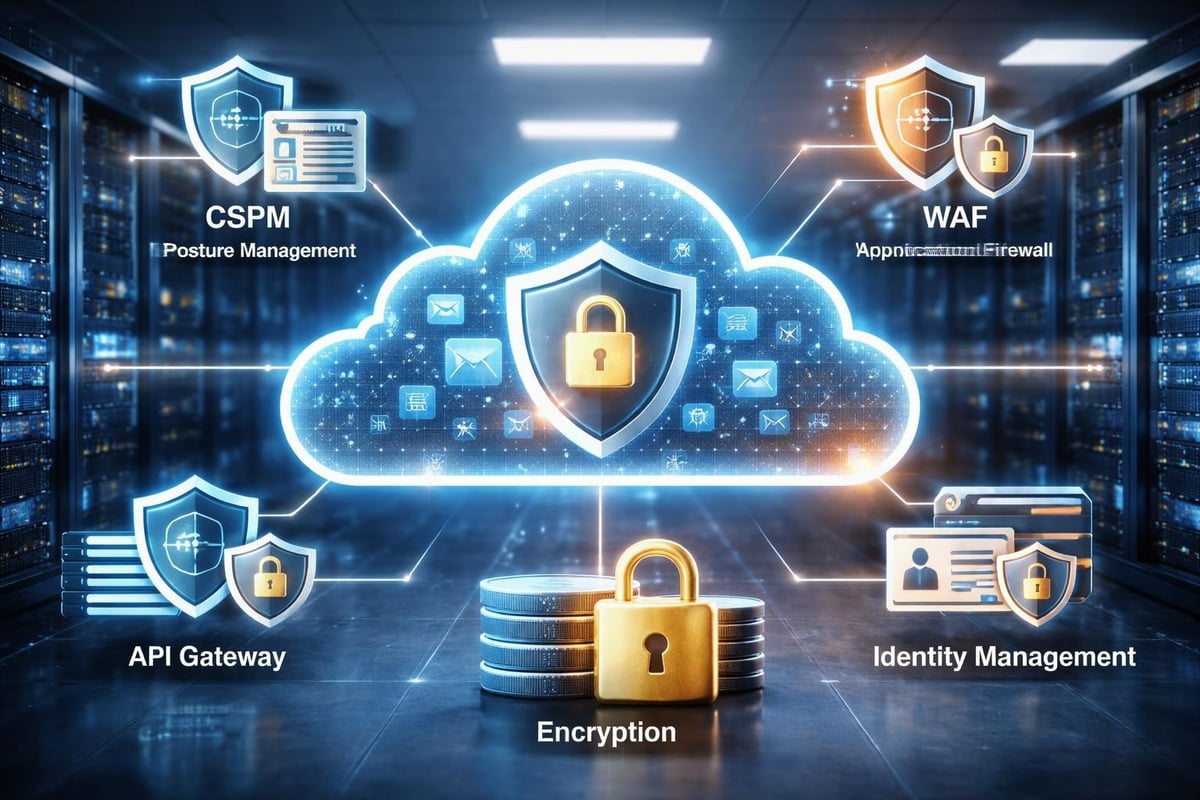
Cloud Security Posture Management (CSPM) tools continuously assess cloud configurations against security best practices and compliance requirements. These systems identify misconfigurations that could expose data or create vulnerabilities.
Common issues detected include:
- Publicly accessible storage buckets containing sensitive data
- Overly permissive identity and access management policies
- Unencrypted data stores
- Missing network segmentation
- Disabled logging and monitoring
CSPM represents essential cyber security latest technology for any organization using cloud services, regardless of size. Delphi Systems Inc. integrates cloud security assessments into managed service offerings, ensuring client environments maintain proper security posture.
Web Application and API Protection
With businesses relying increasingly on web applications and APIs, protecting these assets has become critical. Managed Web Application and API Protection services combine multiple security functions into comprehensive solutions.
Protection layers include:
- Web application firewalls blocking common attacks
- API gateway security enforcing authentication and rate limiting
- DDoS mitigation preventing service disruption
- Bot management distinguishing legitimate from malicious automated traffic
- Data loss prevention monitoring sensitive information flows
Quantum-Resistant Cryptography
While large-scale quantum computers capable of breaking current encryption remain theoretical, organizations are implementing cyber security latest technology to prepare for this eventuality. Post-quantum cryptography employs mathematical approaches resistant to both classical and quantum computing attacks.
Preparing for the Quantum Threat
The cryptographic algorithms protecting today's data transmissions, stored information, and digital signatures will eventually become vulnerable to quantum computers. Forward-thinking organizations are beginning transitions to quantum-resistant alternatives now, recognizing that encrypted data captured today could be decrypted years later when quantum capabilities mature.
Implementation strategies include:
- Conducting cryptographic inventories identifying current algorithm usage
- Prioritizing long-lived sensitive data for migration
- Testing quantum-resistant algorithms in non-production environments
- Implementing crypto-agility allowing algorithm updates without system redesigns
- Monitoring standards development from organizations like NIST
For small businesses, the immediate focus remains on implementing current best practices while staying informed about quantum-resistant transitions. Managed service providers can guide these preparations, ensuring organizations remain protected as technology evolves.
IoT and Edge Security
The proliferation of Internet of Things devices creates massive attack surfaces requiring specialized cyber security latest technology. From security cameras to environmental sensors, these devices often lack robust security features, making them attractive targets for attackers.
Securing Connected Devices
Generative AI for cyber threat-hunting in IoT networks demonstrates how advanced technologies address IoT security challenges. These systems analyze network traffic patterns, identifying compromised devices exhibiting malicious behavior.
IoT security measures include:
- Network segmentation isolating IoT devices from critical systems
- Default credential elimination requiring unique device passwords
- Firmware update management ensuring devices receive security patches
- Traffic monitoring detecting unusual communication patterns
- Device lifecycle management tracking and decommissioning outdated hardware
Small businesses deploying smart building systems, point-of-sale devices, or industrial equipment must implement these protections. The cyber security latest technology in this domain has become accessible through managed security service providers who handle the complexity of securing diverse device ecosystems.
Security Service Evolution
The delivery model for cyber security latest technology has shifted significantly, with managed security service providers (MSSPs) playing increasingly vital roles. These organizations provide access to enterprise-grade security tools and expertise that would otherwise remain financially out of reach for small businesses.
Comprehensive Managed Security
Modern MSSPs deliver complete security programs encompassing technology deployment, continuous monitoring, threat intelligence, incident response, and compliance management. This approach addresses the critical shortage of cybersecurity professionals by centralizing expertise across multiple client organizations.
MSSP services typically include:
- 24/7 security operations center monitoring
- Threat detection and response
- Vulnerability management and patching
- Security awareness training
- Compliance reporting and audit support
- Disaster recovery and business continuity planning
For Lethbridge businesses, partnering with local managed service providers combines the advantages of advanced cyber security latest technology with personalized service and understanding of regional business environments.
Integration and Interoperability
Perhaps the most important trend in cyber security latest technology is the emphasis on integration. Rather than deploying dozens of point solutions that operate independently, modern security architectures emphasize interoperability through standard protocols and APIs.
Building Cohesive Security Ecosystems
Security tools that share threat intelligence and coordinate responses provide dramatically better protection than isolated systems. Modern platforms utilize standards like STIX/TAXII for threat intelligence sharing and SOAR for orchestration.
| Integration Benefit | Impact on Security | Business Value |
|---|---|---|
| Reduced alert fatigue | Fewer false positives | More efficient security teams |
| Faster incident response | Coordinated containment | Minimized damage and downtime |
| Comprehensive visibility | Complete attack chain detection | Better risk understanding |
| Simplified management | Unified interfaces | Lower operational complexity |
This integrated approach to cyber security latest technology enables small businesses to achieve enterprise-level protection without enterprise-level complexity or staffing requirements.
Practical Implementation for Small Businesses
Understanding cyber security latest technology is valuable, but implementation determines actual security outcomes. Small businesses face unique challenges: limited budgets, small IT teams, and competing priorities. However, the technologies discussed here have become increasingly accessible.
Prioritization Framework
Not every organization needs every technology immediately. A risk-based approach identifies the most critical protections:
- Assess current security posture identifying existing gaps and vulnerabilities
- Evaluate threat landscape understanding attacks targeting your industry
- Determine regulatory requirements ensuring compliance obligations are met
- Prioritize based on risk addressing highest-impact vulnerabilities first
- Implement incrementally building security programs systematically
Leveraging Managed Services
For most small businesses, partnering with experienced managed service providers represents the most effective path to implementing cyber security latest technology. These providers maintain expertise across emerging technologies, handle complex deployment and management tasks, and scale services as business needs evolve.
The fixed-rate fee structures offered by quality managed service providers make budgeting straightforward while ensuring access to comprehensive security capabilities that would cost significantly more to build internally.
The cyber security latest technology landscape in 2026 offers unprecedented capabilities for protecting businesses against evolving threats, from AI-powered defense systems to quantum-resistant encryption and zero trust architectures. For small businesses in Lethbridge and surrounding areas, accessing these advanced protections doesn't require massive in-house IT departments or unlimited budgets. Delphi Systems Inc. delivers enterprise-grade cybersecurity through managed services, combining cutting-edge technology with local expertise and personalized support, allowing you to focus on growing your business while maintaining robust security posture.

