
Cyber threats are escalating, and network challenges are becoming more complex as we move toward 2026. Businesses of all sizes are feeling the pressure.
With digital transformation and the rise of remote work, the attack surface for organizations has grown dramatically. Every device and connection can become a target.
Today, network and security solutions are no longer optional. They are essential for protecting your data, reputation, and business continuity.
This guide offers a clear roadmap to the latest network and security solutions, practical strategies, and actionable steps to keep your organization protected in 2026.
You will find insights on emerging threats, key technologies, best practices, solution selection, implementation steps, and the trends shaping the future of network and security.
The 2026 Threat Landscape: What’s New and What’s Evolved
The cyber threat landscape is rapidly changing. As organizations embrace digital transformation, the risks to business operations, data, and reputation are growing. Understanding the latest threats is critical for selecting effective network and security solutions in 2026.

Rise of AI-Driven Cyberattacks
Cybercriminals are increasingly using artificial intelligence to automate and enhance their attacks. In 2025, there was a 35% surge in AI-powered cyberattacks, according to the AI-driven cyberattacks statistics 2025. These attacks include highly convincing phishing messages, deepfake audio targeting executives, and sophisticated malware that adapts to evade detection.
AI enables attackers to quickly scan for vulnerabilities and launch large-scale campaigns. This evolution makes traditional defenses less effective. Organizations must integrate advanced network and security solutions to detect and block these threats before damage occurs.
Expanding Attack Surfaces in Hybrid and Remote Work
The shift to hybrid work, BYOD policies, and IoT device adoption has expanded the attack surface for businesses. Remote endpoints now pose significant risks, especially when home networks lack enterprise-grade protection.
Recent breaches highlight the dangers of unsecured devices connecting to corporate resources. In 2025, remote endpoints were involved in 60% of security incidents. To mitigate these risks, organizations should deploy network and security solutions that provide visibility and control across all user environments.
Ransomware Evolution and New Extortion Tactics
Ransomware attacks have grown more complex. Threat actors now use double or triple extortion, stealing data before encrypting systems and threatening to leak sensitive information unless paid. Supply chain attacks have also increased, targeting vendors and partners to reach multiple victims at once.
Industries like healthcare and finance have been hit hard by these tactics. In 2025, global ransomware payments exceeded $1.5 billion. Modern network and security solutions must include rapid detection, backup, and response capabilities to counter these evolving threats.
Advanced Persistent Threats (APTs) Targeting SMBs
Historically, APTs focused on large enterprises. However, cybercriminals now target small and medium-sized businesses, often through supply chain vulnerabilities. Attackers exploit trusted relationships to gain access, stealing data or disrupting operations.
Small businesses may lack the resources for robust defenses, making them attractive targets. It is essential for SMBs to adopt scalable network and security solutions that offer enterprise-level protection and threat intelligence.
Regulatory Changes and Compliance Pressures
The compliance landscape is shifting, with updates to regulations like GDPR and CCPA, as well as new industry-specific mandates. Organizations face increased pressure to maintain data privacy and prove compliance.
Non-compliance can lead to hefty fines and reputational damage. Automated compliance tools and documentation are now integral to modern network and security solutions, helping businesses stay ahead of regulatory changes and audits.
Insider Threats and Human Factor
Insider threats remain a persistent challenge. Social engineering attacks have become more effective as remote work increases employee stress and turnover. Attackers use tactics like phishing and credential theft, sometimes recruiting insiders to help breach systems.
Malicious insiders and accidental mistakes can both lead to costly incidents. Continuous employee training and monitoring are vital components of any comprehensive network and security solutions strategy.
Key Insights and Perspectives
The 2026 landscape demands adaptive, layered security strategies. Organizations must prioritize continuous threat intelligence and employee education to anticipate and respond to emerging risks.
Investing in robust network and security solutions is no longer optional. It is the foundation for protecting data, maintaining customer trust, and ensuring business continuity in an unpredictable digital world.
Essential Network and Security Technologies for 2026
Staying ahead of cyber threats requires organizations to adopt the most advanced network and security solutions. As attack methods grow more sophisticated, leveraging modern architectures and tools is crucial for robust protection.
Zero Trust Architecture
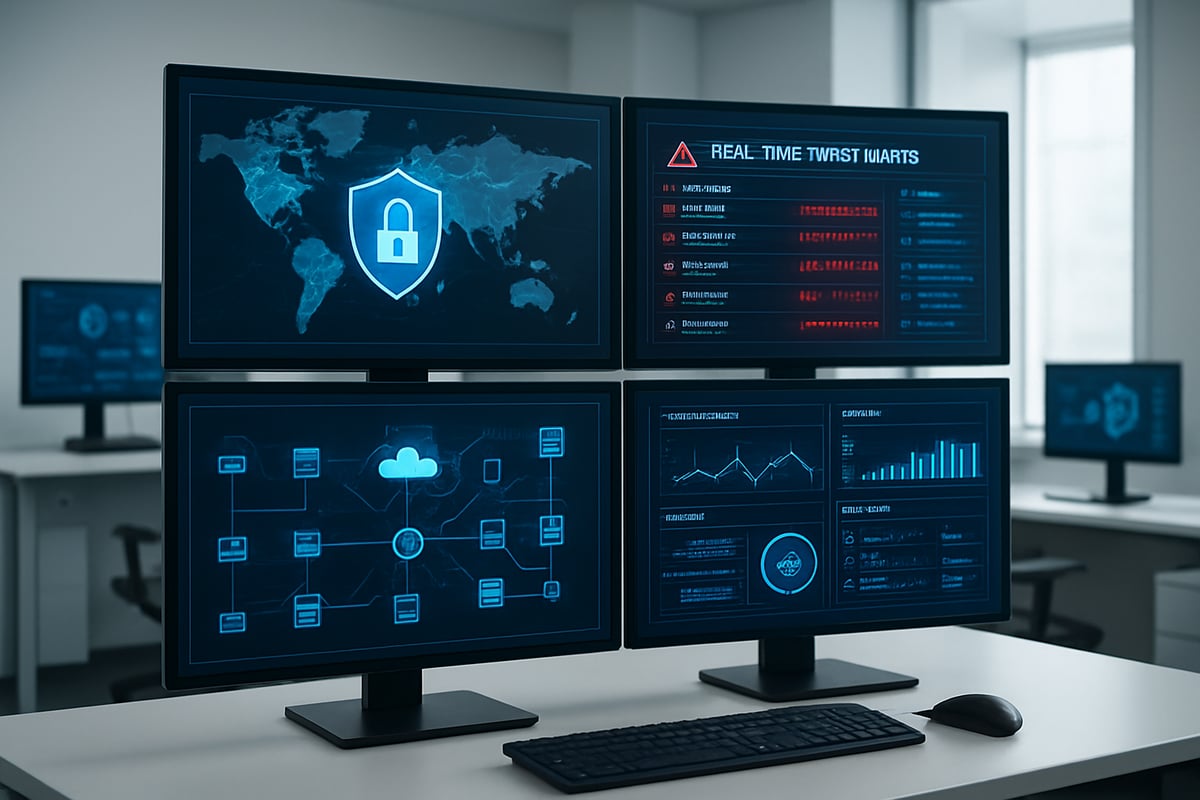
Zero Trust Architecture is a leading approach in network and security solutions. Its core principle is simple: never trust, always verify. Every user, device, and application must continuously authenticate, regardless of location.
Organizations adopting Zero Trust reduce lateral movement, making it difficult for attackers to pivot inside the network. For example, the financial sector has seen dramatic risk reduction by limiting access strictly to verified users and devices. A typical Zero Trust flow can be described as:
if user_authenticated and device_verified and least_privilege_access:
    grant_access()
else:
    deny_access()
Zero Trust aligns perfectly with a world where remote and hybrid work are standard, ensuring every connection is scrutinized.
Secure Access Service Edge (SASE)
SASE is transforming network and security solutions by merging networking and security in the cloud. This model delivers secure connectivity for users everywhere, with consistent policy enforcement and high scalability.
SASE platforms offer integrated services like secure web gateways, cloud firewalls, and zero trust network access. Adoption is accelerating—businesses see faster deployment and improved protection for remote and branch users. Case studies highlight SASE’s effectiveness in reducing complexity and centralizing security management.
Extended Detection and Response (XDR)
XDR unifies threat detection across endpoints, networks, and cloud environments. This technology streamlines how organizations respond to incidents, providing a holistic view of threats.
Firms leveraging XDR experience a notable drop in mean time to detect and respond. Automated correlation of alerts across systems eliminates silos, making network and security solutions more agile. XDR is rapidly becoming a foundational component for modern security operations.
Next-Gen Firewalls and Intrusion Prevention Systems (IPS)
Next-Gen Firewalls and IPS are pillars of network and security solutions. These tools offer deep packet inspection, application awareness, and automated threat blocking.
Modern firewalls now integrate AI analytics to identify and stop advanced threats in real time. For a deeper dive into advanced firewall capabilities, review the Firewall and Advanced Protection page. Organizations benefit from layered protection at the network edge, minimizing risk from both known and unknown attacks.
Endpoint Detection and Response (EDR) and Managed Detection and Response (MDR)
EDR and MDR are essential elements of network and security solutions, but they serve different needs. EDR gives organizations direct control over endpoint monitoring and remediation. MDR, on the other hand, outsources this to specialists for 24/7 coverage.
| Feature | EDR | MDR |
|---|---|---|
| Control | Internal | External (Managed) |
| Coverage | Business hours | 24/7 |
| Expertise | In-house | Security experts |
Businesses often choose MDR for continuous monitoring and rapid incident response without increasing internal workload.
Cloud Security Solutions
Cloud adoption introduces new risks, making cloud-focused network and security solutions indispensable. Key components include Cloud Access Security Brokers (CASB), cloud workload protection, and identity management.
Misconfigured cloud resources remain a top breach cause. Robust cloud security tools enforce access controls, monitor activities, and protect sensitive data. As businesses shift more operations to the cloud, these solutions are vital for preventing data loss and unauthorized access.
Network Segmentation and Microsegmentation
Network segmentation divides the network into segments, limiting the spread of threats. Microsegmentation takes this further by isolating workloads down to the application level.
In healthcare, microsegmentation is used to protect patient data and restrict lateral movement. These strategies are essential for network and security solutions that need to minimize the impact of breaches and contain threats quickly.
Encryption and Data Loss Prevention (DLP)
Encryption and DLP tools are fundamental to safeguarding sensitive information within network and security solutions. Modern encryption protocols protect data both at rest and in transit, while DLP solutions prevent accidental or malicious leaks.
For remote teams, DLP helps ensure confidential information does not leave the organization unintentionally. As regulations tighten, encryption and DLP offer peace of mind and compliance support.
Best Practices for Building a Resilient Network Security Strategy
Building a robust defense is no longer a luxury but a necessity for every organization. As threats evolve, your approach to network and security solutions must be proactive, layered, and adaptable. Let us explore the essential steps and best practices for creating a truly resilient security posture.

Risk Assessment and Asset Inventory
Start by identifying every asset on your network. Conduct regular audits to map devices, applications, and data flows. Use automated tools for continuous discovery, ensuring nothing slips through the cracks. Understanding your attack surface is fundamental to effective network and security solutions.
Prioritize assets by criticality. Focus protection efforts where a breach would have the highest impact. This clarity guides resource allocation and informs your next steps.
Multi-Layered Defense (Defense in Depth)
No single solution can block every threat. Layered security combines firewalls, endpoint detection, multi-factor authentication, and more. This approach increases the chances of stopping attacks at multiple stages.
For example, when layered defenses are in place, a phishing email may be blocked by email filtering, and if not, endpoint monitoring can catch malicious activity. Learn more about IT Security Solutions Overview to see how a comprehensive approach strengthens your defenses.
Employee Training and Security Awareness
Employees are both your greatest asset and a potential vulnerability. Regular security awareness training is vital. Simulate phishing attacks and provide feedback to build a security-first mindset.
Studies show organizations that invest in ongoing training for network and security solutions experience significantly fewer successful attacks. Make education a continuous process, not a one-time event.
Incident Response Planning and Testing
Preparation is key to resilience. Develop and update incident response playbooks for common threats like ransomware or data breaches. Assign clear roles and responsibilities to ensure swift action.
Test your plans with tabletop exercises. These drills reveal gaps and help teams react confidently when a real event occurs. Effective incident response is a cornerstone of strong network and security solutions.
Patch Management and Vulnerability Scanning
Unpatched systems are prime targets for attackers. Automate patch management whenever possible. Regularly scan your environment for vulnerabilities and prioritize fixes based on risk.
A single missed update can expose your organization to severe threats. Integrate patching into your broader network and security solutions strategy to minimize risk.
Continuous Monitoring and Threat Intelligence
Threats never sleep, and neither should your defenses. Implement 24/7 monitoring using SIEM and SOAR platforms to detect suspicious activity in real time. Integrate threat intelligence feeds to stay ahead of emerging risks.
Continuous monitoring is a critical component of modern network and security solutions, enabling early detection and rapid response to incidents.
Third-Party and Supply Chain Risk Management
Vendors and partners can introduce vulnerabilities into your environment. Assess the security posture of all third parties before granting access. Regularly review and update contracts to include security requirements.
Monitor third-party activity and ensure that your network and security solutions extend to supply chain risk. A breach in a partner’s system can quickly become your problem.
Regulatory Compliance and Documentation
Stay current with evolving privacy laws and industry regulations. Document your policies, controls, and incident response procedures. Use automated compliance tools to simplify reporting.
Aligning your network and security solutions with compliance requirements not only avoids fines but also builds trust with clients and partners.
Step-by-Step Guide: Implementing Network and Security Solutions in 2026
Implementing network and security solutions in 2026 requires a structured, methodical approach. Each step builds on the previous, ensuring your organization’s digital defenses remain robust and adaptive. Below, we break down the essential stages to help you safeguard your business and stay compliant with evolving threats and regulations.
Step 1: Assess Current Network and Security Posture
Begin by performing a comprehensive audit of your current network and security solutions. Identify all assets, systems, and endpoints connected to your environment. Use automated tools to carry out vulnerability scans and asset discovery.
Document your findings, focusing on gaps in existing controls or outdated software. Conduct a risk assessment using recognized frameworks like NIST or CIS. This process helps prioritize your remediation efforts and lays a solid foundation for the next steps.
Regularly updating this inventory is crucial, especially as new devices and cloud systems are added. A clear understanding of your environment ensures your network and security solutions address real-world risks.
Step 2: Define Security Objectives and Budget
Set clear, measurable security objectives aligned with your business goals and compliance requirements. Determine which assets are most critical to your operations and which regulations apply to your industry.
Develop a realistic budget for your network and security solutions, factoring in technology acquisition, ongoing maintenance, and staff training. Consider both immediate needs and long-term scalability.
Engage stakeholders from IT, finance, and leadership in this process to ensure buy-in. Prioritizing investments in high-risk areas ensures the most effective deployment of resources.
Step 3: Select the Right Technologies and Partners
Evaluate technology vendors and service providers based on their expertise, support, and ability to address your specific needs. Consider solutions that integrate easily with your current infrastructure and offer robust support for remote and cloud environments.
When assessing advanced frameworks, such as Zero Trust, review real-world examples like the Zero Trust Architecture implementation case study to understand practical benefits and challenges. Look for partners who can deliver end-to-end network and security solutions, including monitoring and rapid response.
Prioritize scalability and adaptability, ensuring your chosen technologies can grow with your business and adapt to future threats.
Step 4: Develop an Implementation Roadmap
Create a detailed roadmap outlining the deployment of your network and security solutions. Define clear milestones, assign responsibilities, and allocate resources for each phase.
Plan for phased rollouts, starting with pilot programs in critical areas. This minimizes disruption and allows for adjustments based on feedback and performance.
Include timelines for integrating new tools, updating policies, and conducting necessary training. A well-structured roadmap keeps your project on track and aligns your team with strategic objectives.
Step 5: Deploy Solutions and Integrate with Existing Infrastructure
Start deploying your selected network and security solutions according to your roadmap. Ensure seamless integration with legacy systems and current workflows to avoid operational bottlenecks.
Conduct pilot testing in controlled environments before full-scale rollout. Monitor for compatibility issues and address them promptly.
Document all changes and configurations for future reference. Effective deployment not only strengthens defenses but also streamlines management and support processes across your organization.
Step 6: Train Employees and Update Policies
Educate your staff on new security protocols and the importance of compliance. Develop targeted training programs that address specific risks, such as phishing and remote work vulnerabilities.
Update your security policies to reflect the new network and security solutions. Communicate these changes clearly and make resources easily accessible.
Regular training and policy updates foster a security-first culture, reducing the likelihood of human error and insider threats.
Step 7: Monitor, Test, and Improve Continuously
Set up continuous monitoring using advanced analytics and threat intelligence to detect anomalies and respond to incidents swiftly. Schedule regular penetration tests and vulnerability assessments to identify emerging risks.
Review your network and security solutions quarterly, incorporating lessons learned from incidents and industry developments. Engage in red team exercises to test your defenses and refine your response strategies.
Continuous improvement ensures your organization remains resilient and agile, ready to address new challenges as the cyber landscape evolves.
Choosing the Right Managed Security Partner
Selecting the right managed security partner is vital for organizations aiming to strengthen their network and security solutions. As cyber threats intensify, small and midsized businesses often face unique challenges in managing security due to limited resources and expertise.
Importance of Managed Security for SMBs
Many SMBs struggle to support the growing demands of robust network and security solutions internally. With evolving threats and strict compliance rules, managing security can overwhelm lean IT teams. Outsourcing to a managed security provider brings specialized skills and around-the-clock monitoring that would be costly to maintain in-house.
Choosing a partner allows businesses to focus on their core activities while experts handle the complexities of cybersecurity. This approach is especially valuable as attacks and regulations become more sophisticated.
What to Look for in a Managed Security Provider
When evaluating managed security partners, SMBs should prioritize providers with proven expertise in network and security solutions. Look for comprehensive offerings that include 24/7 threat monitoring, rapid incident response, and regulatory support.
| Criteria | Why It Matters |
|---|---|
| Expertise | Ensures up-to-date protection |
| 24/7 Monitoring | Detects threats any time |
| Incident Response | Minimizes damage from attacks |
| Regulatory Support | Helps meet compliance requirements |
| Transparent Pricing | Prevents unexpected costs |
A reliable provider should also offer transparent, fixed-rate packages, making budgeting simpler for growing businesses.
Local vs. National Providers
Both local and national managed security providers offer distinct advantages. Local partners may better understand regional compliance needs and business environments, providing more personalized service. National providers often have larger teams and broader resources.
For SMBs, working with a local expert can mean faster response times and support tailored to the unique risks of the area. However, larger providers may bring advanced technology and scalability.
Delphi Systems Inc.: Managed IT and Security Solutions for Small Businesses
Delphi Systems Inc. is a trusted managed service provider serving Lethbridge and nearby regions. Their network and security solutions include proactive maintenance, advanced cybersecurity, cloud services, data backup, and comprehensive IT support.
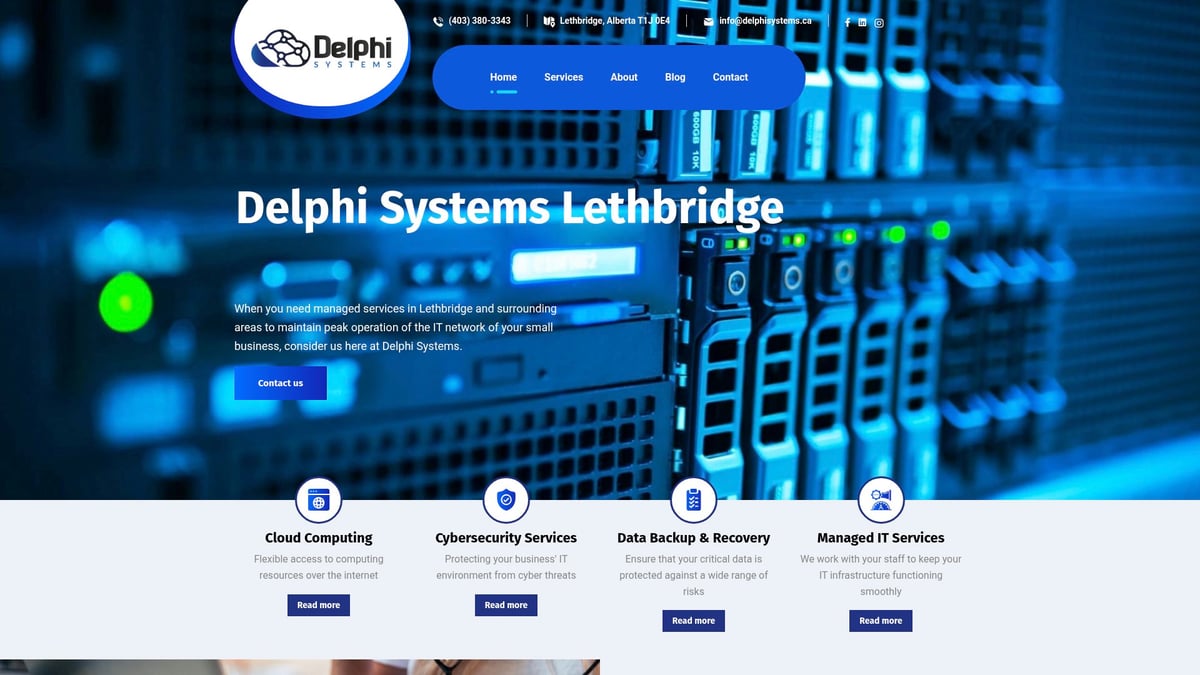
Clients benefit from predictable pricing, dedicated experts, and a focus on business continuity. Testimonials frequently highlight Delphi Systems' proactive approach and the peace of mind that comes from knowing their network and security solutions are always protected.
Evaluating Service Agreements and SLAs
Before committing, review service agreements and SLAs carefully. Focus on key elements:
- Guaranteed response times
- Scope of coverage
- Clear escalation procedures
Transparent SLAs ensure expectations are met and issues are resolved efficiently. Well-defined agreements help avoid misunderstandings and support long-term business resilience.
Ensuring Strategic Alignment and Partnership
The best managed security providers act as strategic partners, not just vendors. Look for those offering vCIO services, assisting with IT planning and the development of a long-term security roadmap.
A true partner will align their network and security solutions with your business goals, providing ongoing guidance as your needs evolve. This strategic approach fosters trust and positions your organization for future growth.
Future Trends in Network and Security Solutions
As organizations look beyond 2026, the landscape for network and security solutions is rapidly advancing. Staying ahead requires awareness of emerging technologies, evolving threats, and new strategies for resilience. Let us explore the key trends shaping the future of network and security solutions.
AI and Automation in Cybersecurity
AI-driven analytics and automation are transforming how network and security solutions detect, analyze, and respond to threats. With AI, organizations can identify zero-day attacks and malicious patterns faster than ever before. Automated response systems now mitigate incidents in real time, reducing reliance on manual intervention.
Recent AI in cybersecurity statistics 2025 show a significant increase in AI adoption, with organizations reporting better threat detection rates and lower response times. As attackers use AI to evolve their methods, investing in adaptive network and security solutions becomes vital.
Quantum Computing and Cryptography
Quantum computing is set to disrupt traditional encryption, challenging the security of existing protocols. To future-proof network and security solutions, organizations must prepare for post-quantum cryptography standards. This transition will require updating algorithms and integrating quantum-resistant methods to safeguard sensitive data.
Forward-thinking organizations are already piloting post-quantum cryptography projects. Staying proactive will protect data integrity and maintain compliance as quantum technology matures.
The Rise of Cyber Insurance
Cyber insurance is becoming a critical part of risk management for network and security solutions. More businesses are adopting policies to mitigate the financial impact of breaches and ransomware. Insurers increasingly require organizations to implement specific security controls, such as multi-factor authentication and incident response plans, before issuing coverage.
By aligning network and security solutions with insurer requirements, businesses can enhance protection while ensuring eligibility for coverage.
Privacy-Enhancing Technologies (PETs)
Privacy-enhancing technologies are gaining traction as organizations seek to comply with evolving privacy regulations. PETs support data minimization and secure sharing, making them essential for sectors like healthcare and finance.
Integrating PETs into network and security solutions helps organizations reduce risk, demonstrate compliance, and build trust with clients and partners.
Edge Computing and IoT Security
The proliferation of edge devices and IoT introduces new security challenges. Distributed networks and smart devices expand the attack surface, making robust network and security solutions indispensable.
Incidents in manufacturing and utilities highlight the need for stronger endpoint security and continuous monitoring. Organizations must deploy solutions that protect data at the edge and ensure real-time threat detection.
Regulatory Evolution and Global Standards
Privacy laws and security standards are evolving globally. Organizations must keep pace with updates to GDPR, CCPA, and new cross-border data protection regulations. Harmonization efforts are underway to simplify compliance for multinational businesses.
Network and security solutions must adapt to shifting requirements, supporting automated compliance reporting and documentation to avoid fines and reputational damage.
The Human Element: Evolving Security Culture
Technology alone cannot secure an organization. Fostering a security-first culture is essential for effective network and security solutions. Leadership engagement, employee training, and clear policies empower teams to recognize and respond to threats.
Organizations with strong security cultures experience fewer incidents and recover faster when breaches occur.
Preparing for the Unknown
The threat landscape is unpredictable, and new risks will always emerge. Building resilience into network and security solutions means adopting adaptive frameworks, scenario planning, and continuous improvement.
By preparing for the unknown, organizations can respond to future challenges with confidence and agility.
As we look ahead to 2026, it’s clear that protecting your business from evolving cyber threats isn’t just a recommendation—it’s a necessity. We’ve explored the latest security technologies, best practices, and practical steps to help you build a resilient IT foundation. If you’re feeling uncertain about your current network or want expert guidance tailored for your needs, you don’t have to face these challenges alone. Let’s make sure your business stays secure, productive, and ready for the future. Have questions or want to get started? Call us now and let’s talk about how Delphi Systems can help you stay protected.

