

The pace of digital transformation is quickening, and companies that delay risk falling behind. By 2026, managed cloud IT services will be the backbone of business survival and competitive growth.
This comprehensive guide is designed for business leaders and IT decision-makers seeking clarity on managed cloud IT services. You will discover the latest trends, evolving cloud models, key service offerings, security advancements, provider selection strategies, migration best practices, and a forward-looking perspective.
Explore how managed cloud IT services can deliver agility, enhanced security, and cost savings. Use this guide to make confident, informed choices for your organization’s cloud journey.
The Evolution of Managed Cloud IT Services
The landscape of managed cloud it services has transformed rapidly over the past decade. Businesses now face a pivotal moment, where adopting modern IT strategies is not just beneficial but essential for survival. Understanding this evolution is crucial for leaders who aim to leverage technology for long-term growth.

The Shift from Traditional IT to Managed Cloud
Traditional on-premises IT models required heavy upfront investments and constant in-house management. In contrast, managed cloud it services offer scalable, subscription-based solutions that free organizations from hardware limitations.
Key drivers behind this shift include the widespread demand for remote work, the need for rapid scalability, and the goal of reducing capital expenditure. For example, small businesses can now access enterprise-grade infrastructure without major upfront costs.
According to Gartner, by 2026, 85% of enterprises will pursue a cloud-first strategy. This shift enables companies to focus on their core mission while their managed cloud it services provider handles the technical complexities.
Key Trends Shaping 2026
Several trends are redefining managed cloud it services in 2026. Hybrid and multi-cloud environments are now the norm, giving organizations flexibility and resilience. Automation and AI-driven management streamline operations, allowing IT teams to focus on strategic tasks rather than routine maintenance.
Edge computing is being integrated to process real-time data closer to its source, improving performance. Sustainability is also a top priority, with providers offering greener IT solutions. For instance, AI is used for predictive maintenance, reducing downtime and energy consumption within managed cloud it services.
Market Growth and Adoption Rates
The global market for managed cloud it services is expanding at an unprecedented rate. By 2026, it is projected to exceed $120 billion, with industries like healthcare, finance, and manufacturing leading adoption. Small and medium-sized businesses are significant drivers of this growth, seeking reliable and cost-effective solutions.
Over 70% of SMBs are expected to use managed cloud it services by 2026. For a deeper dive into these statistics and market dynamics, see the Cloud Managed Services Market Growth Projections.
Benefits Over Self-Managed Cloud
Organizations choosing managed cloud it services over self-managed solutions gain several advantages. These include:
- 24/7 monitoring and proactive maintenance
- Access to expert resources and industry best practices
- Enhanced security and streamlined compliance management
- Predictable costs via subscription pricing
For example, disaster recovery becomes seamless, with rapid remediation and minimized downtime, ensuring business continuity. By leveraging managed cloud it services, businesses can innovate faster and respond to market changes with agility.
Common Challenges and Solutions
Adopting managed cloud it services is not without hurdles. Common challenges include integrating legacy systems, managing complex data migrations, avoiding vendor lock-in, and meeting evolving security and compliance demands.
Managed providers address these obstacles with tailored migration planning, regulatory expertise, and flexible architectures. They offer ongoing guidance, helping organizations navigate the complexities of cloud adoption and maximize the value of their managed cloud it services.
Core Components of Managed Cloud IT Services in 2026
As organizations accelerate their digital transformation, understanding the core components of managed cloud it services becomes essential. Each component plays a unique role in building secure, scalable, and resilient IT environments for the future.

Cloud Hosting Models: Public, Private, Hybrid, Multi-Cloud
The foundation of managed cloud it services lies in the choice of hosting model. Public clouds offer unmatched scalability and cost efficiency, making them ideal for rapidly growing companies. Private clouds provide dedicated resources that enhance security and compliance for industries like healthcare and finance. Hybrid and multi-cloud models blend these benefits, allowing organizations to balance flexibility, regulatory requirements, and performance.
A quick comparison:
| Model | Key Benefit | Typical Use Case |
|---|---|---|
| Public | Scalability | Startups, web apps |
| Private | Security | Finance, healthcare |
| Hybrid | Flexibility | Sensitive + public workloads |
| Multi-Cloud | Redundancy | Global enterprises |
By 2026, 60% of organizations are expected to adopt hybrid or multi-cloud strategies, making this a cornerstone of managed cloud it services.
Disaster Recovery and Business Continuity
Disaster recovery is a critical offering within managed cloud it services. DRaaS (Disaster Recovery as a Service) ensures that businesses can recover data and resume operations quickly after an outage or cyber attack. Features like automated backups, instant failover, and geo-redundancy are now standard.
For instance, platforms such as Azure, Veeam, or VMware offer robust disaster recovery solutions. With managed cloud it services, 90% of users identify disaster recovery as a top benefit, citing reduced downtime and increased operational resilience.
Data Center Services and Colocation
Modern data centers are integral to managed cloud it services. These facilities provide geographic dispersion, high redundancy, and compliance support. Colocation services allow businesses to place their own equipment in secure, professionally managed environments, ensuring low latency and regulatory adherence.
Financial organizations, for example, use colocation to support latency-sensitive trading applications. By leveraging managed cloud it services, companies gain access to world-class infrastructure while maintaining control over critical assets.
Security, Compliance, and Data Protection
Security is at the heart of managed cloud it services. Providers utilize multi-layered defenses, including firewalls, encryption, and intrusion detection systems. Compliance with regulations such as GDPR, HIPAA, and PCI DSS is streamlined through automated reporting and regular audits.
A healthcare provider, for example, can rely on managed cloud it services to maintain HIPAA compliance and protect patient data. This approach reduces risk and ensures organizations meet evolving regulatory standards.
Advanced Monitoring, Automation, and Support
The future of managed cloud it services is defined by AI-powered monitoring, automation, and proactive support. Automated patching, scaling, and incident response minimize human error and speed up issue resolution. Self-healing systems and predictive analytics reduce downtime and improve efficiency.
To explore more about how automation is transforming the landscape, see AI-Driven Automation in Managed IT Services. With 24/7 helpdesk support and intelligent monitoring, managed cloud it services empower organizations to innovate with confidence.
How to Choose the Right Managed Cloud IT Service Provider
Selecting the right managed cloud IT services provider is a pivotal decision for any organization seeking agility, security, and long-term value in the cloud era. With the market for managed cloud IT services expanding rapidly, a thoughtful approach is essential to ensure your provider aligns with your business goals and industry requirements.
Assessing Your Business Needs and Readiness
Before engaging with managed cloud IT services providers, conduct a thorough assessment of your IT landscape. Start by inventorying all current assets, applications, and workloads. Identify your business objectives, such as scalability, enhanced security, or cost optimization. Evaluate how cloud migration might impact your existing operations and consider any compliance or data sovereignty requirements.
For example, a manufacturing firm might map legacy production systems to cloud-ready platforms, ensuring critical operations remain uninterrupted. This initial assessment will clarify which managed cloud IT services best fit your unique needs and readiness level.
Key Evaluation Criteria for Providers
When comparing managed cloud IT services providers, focus on their industry expertise, technology partnerships, and proven track record. Look for providers with experience in your sector and familiarity with relevant regulations. Assess the breadth of their service offerings, from cloud hosting to advanced security.
Review Service Level Agreements (SLAs) for uptime guarantees and response times. Transparency in pricing and scope of services is crucial to avoid hidden costs. Understanding current cloud infrastructure spending trends can also help you benchmark providers’ capabilities and market positions, ensuring your chosen partner is robust and future-ready.
Questions to Ask Potential Providers
Engage potential managed cloud IT services partners with targeted questions to assess their fit. Consider asking:
- How do you manage data migration and onboarding?
- What security protocols and certifications do you maintain?
- How is support structured, including response and escalation times?
- Can you provide customer references and documented case studies?
For example, request detailed documentation of compliance audits to verify their capabilities. These questions will help you identify providers who align with your operational needs and risk tolerance.
The Importance of Local Expertise and Support
Choosing a managed cloud IT services provider with local presence offers distinct advantages. Providers familiar with your region can navigate local regulatory environments and deliver faster, more personalized support. Hands-on assistance during migration and ongoing management can minimize disruptions.
For instance, a small business in Alberta benefits from a provider who understands provincial data privacy laws and can respond quickly to technical issues. Local expertise ensures your managed cloud IT services are tailored to your business environment.
Delphi Systems Inc.: Local Managed Cloud IT Expertise
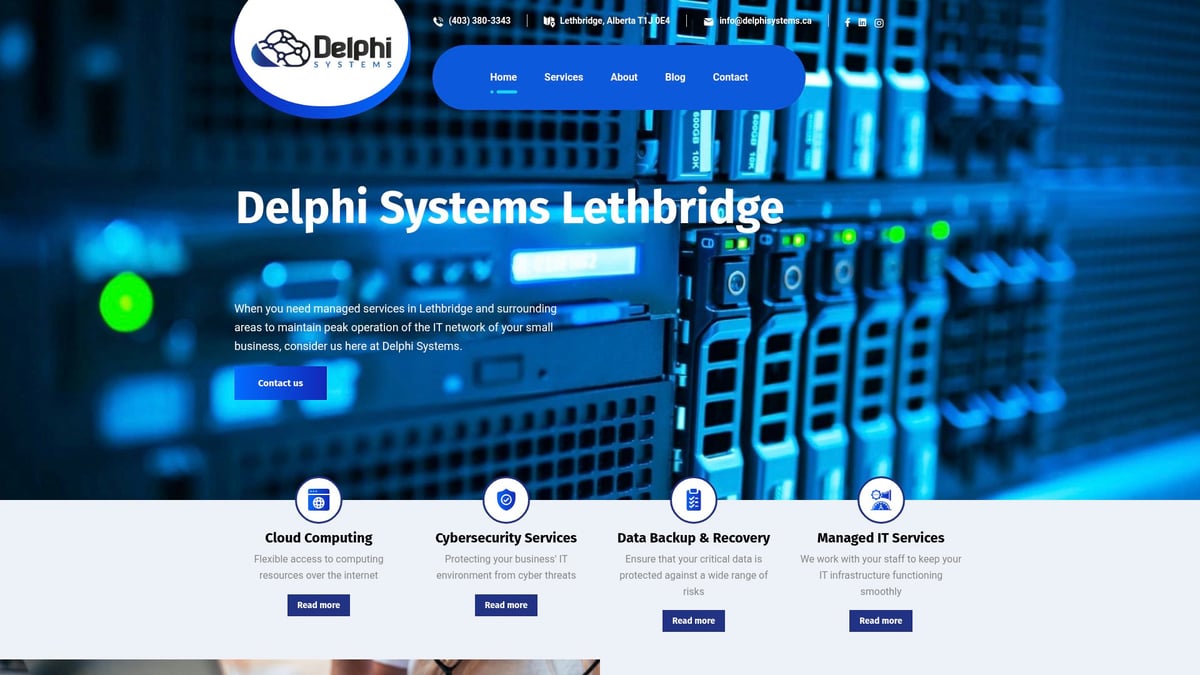
Delphi Systems Inc. specializes in managed cloud IT services for small businesses in Lethbridge and surrounding areas. They offer cloud hosting, cybersecurity, data backup, and proactive support. With fixed-rate pricing and deep local knowledge, Delphi Systems Inc. delivers secure, scalable IT environments designed for SMB growth.
Implementing Managed Cloud IT Services: Step-by-Step Guide
Embarking on the journey to managed cloud IT services requires a structured, step-by-step approach. A clear roadmap helps organizations avoid common pitfalls, accelerate time to value, and ensure every business need is met. Below is a comprehensive guide designed to streamline the implementation process and maximize the benefits of managed cloud IT services.

Step 1: Strategic Planning and Assessment
The first phase of implementing managed cloud IT services is strategic planning and assessment. Begin by defining your business objectives for cloud adoption. Are you seeking greater scalability, improved security, or cost reduction?
Inventory all current IT assets, workloads, and applications. Assess which systems are cloud-ready and identify any legacy infrastructure that may require special handling. Engage stakeholders from IT, operations, and compliance to ensure alignment.
Evaluate compliance requirements and potential risks. Develop a realistic budget and timeline for the transition. By taking a holistic approach, you set a strong foundation for successful managed cloud IT services deployment.
Step 2: Provider Selection and Contract Negotiation
Choosing the right partner for managed cloud IT services is critical. Start by shortlisting providers with proven expertise in your industry and a robust portfolio of services.
Carefully review service level agreements (SLAs), support terms, and pricing models. Compare the providers' track records for uptime, security, and customer satisfaction. Negotiate the contract to clarify roles, responsibilities, and exit clauses.
Ensure disaster recovery, compliance support, and 24/7 monitoring are included. By approaching provider selection methodically, you reduce risks and ensure your managed cloud IT services deliver long-term value.
Step 3: Cloud Architecture Design and Customization
With your provider in place, move to designing the cloud architecture tailored to your organization's needs. Decide between public, private, hybrid, or multi-cloud models based on your security, compliance, and scalability requirements.
Work closely with your provider to plan for redundancy, disaster recovery, and seamless integration with existing systems. Customize solutions for industry-specific needs, such as integrating electronic health records for healthcare firms.
A well-architected environment ensures your managed cloud IT services are resilient, secure, and optimized for your business goals.
Step 4: Data Migration and Integration
Data migration is often the most complex part of adopting managed cloud IT services. Start with a detailed migration roadmap and timeline.
Cleanse, map, and validate your data to prevent issues during transfer. Use phased or staged migrations to minimize downtime and maintain business continuity. Leverage automation tools and your provider's expertise for smooth integration.
Ensure that all data is accounted for and test thoroughly before going live. Effective migration and integration are essential for realizing the full benefits of managed cloud IT services.
Step 5: Security Implementation and Compliance Alignment
Robust security and compliance are non-negotiable in managed cloud IT services. Deploy multi-layered security controls, including firewalls, encryption, and strict access management.
Align your environment with relevant industry standards such as GDPR, HIPAA, or PCI DSS. Regularly conduct vulnerability assessments and penetration tests. To address evolving regulatory demands, consider providers that offer compliance-focused solutions, such as the AWS European Sovereign Cloud Launch, which enhances data privacy and operational autonomy for organizations within the EU.
Automated compliance reporting and continuous monitoring further strengthen your managed cloud IT services security posture.
Step 6: Training, Change Management, and Go-Live
The final step in implementing managed cloud IT services is preparing your team and organization for the transition. Deliver comprehensive training so staff can confidently use new systems and follow security protocols.
Develop a change management plan to communicate the benefits and address concerns. Roll out the new environment in phases, providing helpdesk support to ensure a smooth transition.
Monitor performance closely during the initial launch and gather feedback for continuous improvement. Well-executed training and change management are crucial for long-term success with managed cloud IT services.
Security and Compliance in the Cloud: 2026 Landscape
As digital ecosystems evolve, security and compliance sit at the core of managed cloud it services. The 2026 landscape brings new risks and demands proactive strategies for all organizations. Let’s explore the latest challenges, solutions, and compliance imperatives shaping the future of cloud security.
Emerging Threats and Security Challenges
Cyber threats have grown more sophisticated in the era of managed cloud it services. Ransomware, supply chain attacks, and insider risks are top concerns for IT leaders. Cloud misconfigurations, often caused by human error, can expose sensitive data to breaches.
Key challenges include:
- Ransomware targeting cloud backups
- Phishing attacks exploiting remote work tools
- Misconfigured storage buckets leading to data leaks
In 2026, organizations must address these evolving threats through layered defenses and rapid detection capabilities. Regular risk assessments and security awareness training are crucial for reducing exposure.
Managed Security Solutions and Best Practices
Managed cloud it services now offer comprehensive security solutions to combat emerging risks. Providers implement continuous monitoring, zero trust frameworks, and AI-powered threat detection to protect cloud environments.
Best practices include:
- Continuous threat monitoring and automated responses
- Strong identity management and multi-factor authentication
- Endpoint protection for all connected devices
With managed cloud it services, organizations benefit from expert guidance and up-to-date security protocols. Automated incident response helps minimize breach impacts and supports business continuity.
Ensuring Compliance Across Industries
Compliance requirements are more complex than ever in managed cloud it services. Industries such as healthcare, finance, and retail must adhere to strict regulations like GDPR, HIPAA, and PCI DSS.
Strategies for compliance:
- Automated tools for compliance monitoring and reporting
- Regular audits to verify controls
- Documentation to support regulatory inquiries
Managed cloud it services simplify compliance by offering built-in controls and reporting features. This allows businesses to focus on growth while meeting industry standards.
The Role of Third-Party Audits and Certifications
Third-party audits and certifications validate the security posture of managed cloud it services providers. Standards such as SOC 2 and ISO 27001 demonstrate a commitment to transparency and rigorous controls.
Key certifications:
- SOC 2 for data security and privacy
- ISO 27001 for information security management
- Industry-specific certifications for regulated sectors
Annual audits by independent assessors build trust and assure clients that managed cloud it services meet the highest standards. Choosing certified providers is a best practice for risk reduction.
Future Outlook: What’s Next for Managed Cloud IT Services
The next few years will bring rapid evolution in managed cloud it services. Business leaders must stay ahead of emerging trends to ensure their organizations remain agile, secure, and competitive.
AI and Automation Transforming Cloud Management
AI and automation are reshaping the landscape of managed cloud it services. Predictive analytics now enable organizations to optimize resources, reduce costs, and anticipate infrastructure needs before issues arise.
A major benefit is the rise of self-healing infrastructure. Automated remediation tools can spot anomalies and resolve incidents quickly, often before users notice a problem. This reduces downtime and boosts reliability.
| Benefit | Description |
|---|---|
| Predictive Analytics | Proactively optimizes performance |
| Automated Remediation | Reduces downtime and manual intervention |
| Cost Optimization | Dynamically adjusts resources for savings |
AI-driven management also streamlines compliance and reporting, making it easier to meet industry regulations.
Edge Computing and IoT Integration
Edge computing is becoming a vital part of managed cloud it services. As more organizations deploy Internet of Things (IoT) devices, processing data closer to the source is essential for real-time analytics and low-latency applications.
Manufacturers, for example, are leveraging edge data centers to analyze sensor data instantly, improving quality control and operational efficiency. Managed service providers now offer integrated solutions that secure, monitor, and manage IoT endpoints alongside cloud resources.
This integration allows businesses to unlock new value from data, driving innovation and supporting digital transformation initiatives.
Sustainability and Green Cloud Initiatives
Sustainability is taking center stage in managed cloud it services. Providers are investing in energy-efficient data centers, carbon-neutral operations, and green IT certifications.
Common green cloud initiatives include:
- Using renewable energy sources to power facilities
- Implementing advanced cooling systems to reduce electricity use
- Offering carbon footprint tracking and reporting tools
These efforts not only help the environment but also support organizations’ own ESG (Environmental, Social, and Governance) goals. Choosing a provider committed to sustainability can enhance brand reputation and meet stakeholder expectations.
The Expanding Role of Managed Services Providers
Managed services providers are expanding their offerings beyond traditional IT support. In 2026, many deliver end-to-end solutions, from cloud infrastructure to endpoint management and digital transformation consulting.
This broader role means businesses can rely on a single partner for strategic guidance, technical expertise, and ongoing innovation. Providers help automate business processes, improve security, and ensure alignment with industry standards.
By working closely with clients, managed services providers foster agility and create tailored solutions for unique business challenges.
Preparing Your Business for the Next Wave
Staying competitive in the future means continuously developing cloud skills and adapting to new service models. Organizations should promote ongoing learning, embrace emerging technologies, and remain open to change.
Focusing on agility and innovation will help businesses take full advantage of what managed cloud it services offer in the years ahead.
As you look ahead to 2026, it’s clear that managed cloud IT services are no longer optional—they’re essential for thriving in a rapidly evolving digital landscape. By leveraging trusted local expertise and fixed-rate support, you can protect your business, boost productivity, and stay focused on what matters most. If you’re ready to explore how a tailored approach to managed cloud can help your organization stay secure and agile, let’s start the conversation. We’re here to answer your questions and guide you every step of the way—just Call us now.

