
As cyber threats rapidly advance and business environments become more interconnected, the need for robust security managed solutions has never been more urgent. The volume and complexity of cyberattacks are climbing, putting every organization at risk—from small startups to global enterprises.
Companies now face growing pressure to secure sensitive data, meet ever-evolving regulatory requirements, and ensure uninterrupted operations. Navigating these challenges demands a strategic approach and up-to-date knowledge.
This guide offers actionable insights and a clear roadmap for mastering security managed practices in 2026. You will discover essential concepts, industry trends, must-have managed security services, effective implementation strategies, and forward-looking predictions.
Prepare to strengthen your security posture and stay ahead of emerging threats in the year ahead.
The Foundations of Managed Security in 2026
Understanding the foundations of security managed is crucial for any organization navigating the modern threat landscape. As cyber risks multiply and regulations tighten, companies need a holistic approach that ensures resilience, compliance, and business continuity. This section unpacks what security managed means in 2026, its critical components, historical evolution, key terminology, and the business drivers fueling its adoption.
Defining Managed Security: Scope and Importance
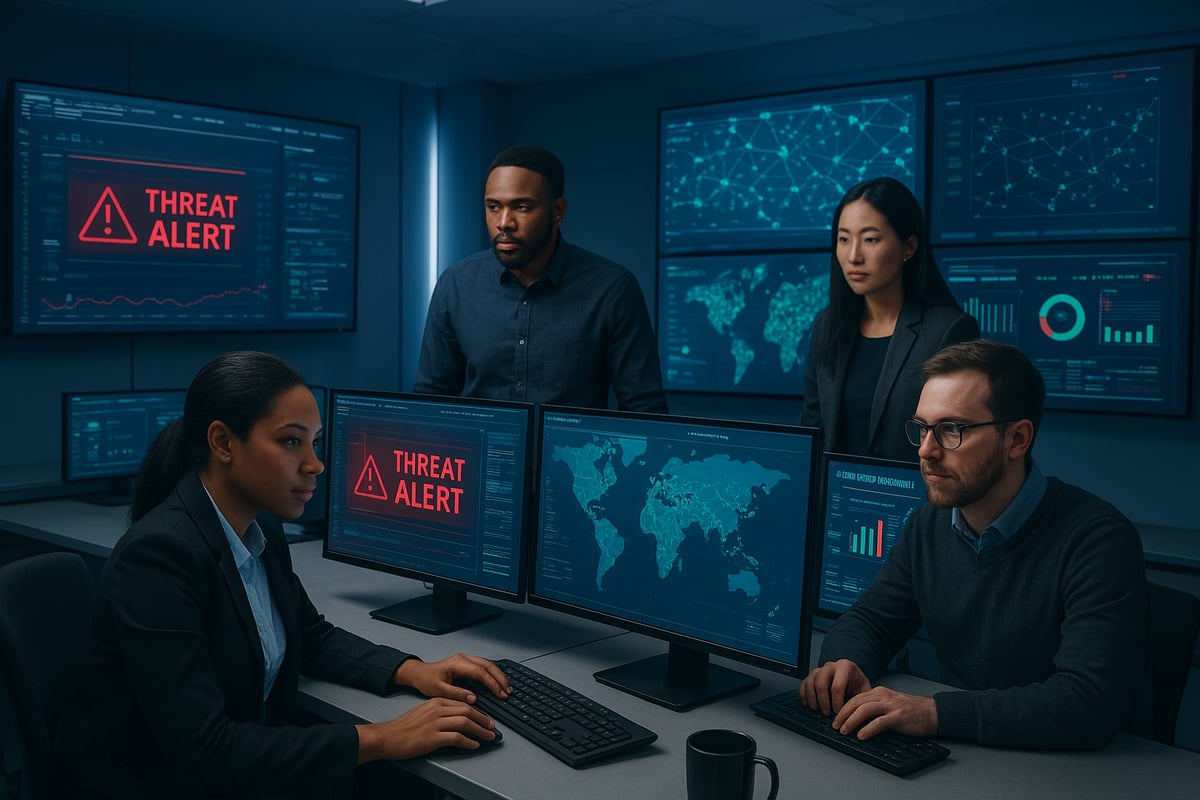
Security managed solutions today encompass far more than traditional firewalls or antivirus software. They involve a comprehensive suite of services, from threat monitoring to incident response, all delivered by managed security service providers (MSSPs). This shift has been driven by the increasing sophistication of cyberattacks and the need for 24/7 vigilance.
Organizations of every size, from startups to global enterprises, now rely on MSSPs to safeguard sensitive data, maintain regulatory compliance, and ensure operational uptime. Recent statistics show that 82% of IT professionals plan to partner with MSSPs, reflecting the growing reliance on external expertise. For small businesses, security managed means affordable access to enterprise-grade protection, while large firms benefit from scalable, always-on security operations.
Core Components of a Managed Security Framework
A robust security managed framework is built on several core components:
- Continuous monitoring of networks and endpoints
- Advanced threat detection and real-time alerting
- Rapid incident response and containment
- Ongoing compliance management and reporting
Integration of firewalls, intrusion detection systems, and endpoint protection is now standard. Automation and artificial intelligence streamline patch management and enable regular security assessments. Security audits and comprehensive reporting help organizations maintain a layered, adaptive defense, ensuring that vulnerabilities are addressed before they escalate.
Evolution of Managed Security Services: Past to Present
The journey of security managed services began in the 1990s, when ISPs started managing customer firewalls. Over time, the industry has evolved dramatically, fueled by cloud computing, AI, and automation. This evolution has led to industry consolidation and the rise of specialized providers offering tailored solutions.
Today, there are more than 35,000 MSSPs worldwide. According to the Managed Security Services Market Size and Share report, the market continues to grow rapidly as organizations seek to outsource complex security needs. Case studies reveal how service offerings have expanded from basic monitoring to advanced threat hunting, incident response, and compliance support.
Key Industry Terms and Concepts
To master security managed, it’s important to understand industry terminology:
- Asset: Any valuable resource, such as data, applications, or devices.
- Incident: A confirmed security event, like unauthorized access or malware infection.
- Alert: A notification of potential suspicious activity.
- Vulnerability: A weakness in systems or processes that could be exploited.
- Risk: The likelihood and impact of a threat exploiting a vulnerability.
Proactive security managed focuses on preventing incidents before they occur, while reactive management addresses threats after detection. Compliance terms relate to specific standards and regulations, such as GDPR or PCI DSS. For example, a vulnerability scan may identify weaknesses, prompting an incident response and compliance report.
The Business Case for Managed Security
Adopting a security managed approach delivers tangible business benefits. Common drivers include cost savings, access to specialized expertise, and scalability for growing organizations. Many companies face resource constraints and IT skills shortages, making it challenging to build an in-house team.
Despite these challenges, 74% of organizations still manage security in-house, but this trend is shifting. Security managed services alleviate internal pressures, enabling teams to focus on core business functions. Companies report improved uptime, lower breach costs, and increased confidence in their ability to withstand evolving cyber threats.
Key Managed Security Services and Their Impact
Understanding the landscape of security managed services is crucial for organizations seeking resilience in 2026. Below, we break down the most impactful managed security offerings, illustrating their real-world value for businesses of all sizes.

On-Site Consulting and Security Assessments
On-site consulting is a foundational element of security managed strategies. Experienced consultants conduct risk analyses, identify vulnerabilities, and perform penetration testing tailored to the business.
Typical assessments uncover compliance gaps, outdated protocols, or weak access controls. The results enable organizations to prioritize remediation and align their security managed approach with industry standards.
Both SMBs and enterprises benefit from these assessments. For smaller companies, consulting demystifies complex threats. For larger firms, it ensures their layered defenses remain robust as threats evolve. This service delivers a clear roadmap for ongoing risk reduction.
Perimeter and Network Management
Perimeter security forms the first line of defense in any security managed solution. Managed services for firewalls, VPNs, and network segmentation ensure that only authorized users access sensitive systems.
Providers handle device monitoring, firmware updates, and real-time threat blocking. As hybrid and cloud models proliferate, managed perimeter solutions adapt to protect assets across environments.
Statistics show a measurable reduction in breaches when perimeter management is in place. Real-world examples include organizations preventing lateral movement during attacks by segmenting networks and applying strict access rules as part of their security managed operations.
Security Monitoring and Threat Detection
Continuous monitoring is at the heart of every effective security managed framework. Advanced technologies such as SIEM platforms, Security Operations Centers (SOCs), and AI-driven anomaly detection enable real-time threat identification.
Automation accelerates initial triage and response, minimizing dwell time and damage. Industry benchmarks highlight rapid incident containment as a marker of mature security managed operations.
For a deeper understanding of how Managed Detection and Response (MDR) fits into this landscape, see the Managed Detection and Response Overview. Rapid detection, combined with expert analysis, ensures threats are neutralized before they escalate.
Penetration Testing and Vulnerability Management
Penetration testing is a proactive component of security managed services, simulating real-world attacks to uncover weaknesses. Regular vulnerability scanning and patch management further reduce risk by addressing software flaws before they can be exploited.
Regulated industries, such as healthcare and finance, often require periodic testing to meet compliance obligations. Data shows significant reductions in attack surfaces after implementing robust vulnerability management.
Through ongoing assessments and remediation, organizations ensure their security managed posture evolves with the threat landscape, maintaining resilience and compliance.
Compliance Monitoring and Reporting
With growing regulatory demands, compliance monitoring is a vital part of security managed services. MSSPs help organizations meet standards like GDPR, HIPAA, and PCI DSS through automated reporting and audit readiness.
Continuous monitoring uncovers gaps that could lead to fines or breaches. Automated tools streamline documentation, making it easier to demonstrate compliance during audits.
Case studies show that a focus on compliance within a security managed framework improves both risk posture and business reputation. Proactive reporting keeps organizations ahead of regulatory changes and enforcement trends.
Product Resale and Integration Services
A comprehensive security managed solution often includes sourcing and integrating security products from multiple vendors. MSSPs evaluate, deploy, and manage tools such as firewalls, endpoint protection, and cloud security suites.
Unified management platforms simplify oversight, allowing organizations to control diverse assets from a single dashboard. Successful integrations lead to fewer blind spots and more efficient operations.
Lifecycle management, including vendor partnerships, ensures technology stays current and aligned with business goals. This integrated approach is key to maximizing the impact of security managed investments.
Trends Shaping Security Management in 2026
The landscape of security managed services is rapidly changing as businesses face more sophisticated threats and evolving technology. Staying ahead requires understanding the trends that will define 2026. Let us explore the key forces shaping the future of security managed solutions.

The Rise of AI, Automation, and Machine Learning
AI and automation are revolutionizing security managed practices. By leveraging machine learning, organizations can detect threats faster and reduce human error. Automation handles routine security tasks, such as patching and alert triage, freeing up experts for strategic work.
Key benefits include:
- Faster incident detection and response
- Reduced false positives through smarter analytics
- Automated threat hunting and remediation
According to the Managed Security Services Market Forecast 2026–2035, AI-driven solutions will be a major driver of growth in the security managed sector. This trend ensures organizations remain resilient against increasingly complex cyberattacks.
Cloud Security and Hybrid Environments
The shift to cloud and hybrid IT setups is transforming how security managed services are delivered. Protecting assets across cloud platforms and on-premise systems introduces new complexities.
Key challenges include:
- Securing multi-cloud environments
- Ensuring visibility and control over distributed assets
- Managing identity and access in dynamic infrastructures
Security managed providers now offer specialized tools like Cloud Access Security Brokers (CASB) and Cloud Native Application Protection Platforms (CNAPP). These solutions empower businesses to monitor, manage, and secure data wherever it resides, making cloud security a top priority for 2026.
Zero Trust and Identity-Centric Security
Zero Trust models are becoming foundational in security managed strategies. The principle—never trust, always verify—ensures every user and device must prove their legitimacy before accessing resources.
Modern security managed implementations include:
- Zero Trust Network Access (ZTNA)
- Adaptive multi-factor authentication
- Continuous authentication and monitoring
With remote work and mobile access increasing, adopting identity-centric controls is essential. Security managed providers help organizations deploy Zero Trust frameworks, significantly reducing insider and external risks.
Regulatory Landscape and Evolving Compliance Demands
Regulatory pressures are shaping the direction of security managed services. New rules and standards, such as updates to GDPR and industry-specific requirements, are raising the bar for compliance.
Key implications:
- Increased demand for automated compliance monitoring
- Real-time reporting and audit readiness
- Sector-specific controls for healthcare, finance, and more
Security managed partners assist organizations in navigating this complex landscape, ensuring continuous compliance and minimizing the risk of fines. As regulations evolve, staying proactive is crucial for business continuity.
The Expanding Threat Landscape: New Risks and Attack Vectors
The threat landscape for security managed solutions is expanding quickly. Ransomware, supply chain attacks, and IoT vulnerabilities are now mainstream concerns.
Emerging risks include:
- Attacks exploiting interconnected devices
- Sophisticated phishing and social engineering
- Targeted assaults on critical infrastructure
Security managed providers must adapt strategies, using real-time intelligence and advanced detection to counter these threats. Proactive monitoring and flexible defenses will be vital as attackers innovate and new risks emerge.
Choosing and Implementing a Managed Security Solution
Selecting and implementing a security managed solution requires a structured approach. Organizations need to evaluate their current posture, choose the right partners, and ensure seamless integration with existing operations. This section provides a step-by-step guide to help you navigate the complexities of security managed adoption and maximize value.
Assessing Organizational Needs and Readiness
Before investing in a security managed solution, organizations must assess their existing security posture. Start by asking:
- What are our most critical assets and data?
- Where do current vulnerabilities exist?
- What compliance requirements must we meet?
- Who are the key stakeholders responsible for cybersecurity?
Engage cross-functional teams to ensure a thorough review. Use frameworks such as NIST Cybersecurity Framework or ISO 27001 for structured assessments. These tools help uncover gaps and clarify your risk appetite. A comprehensive assessment often leads to a more successful security managed partnership by aligning business objectives with technical needs.
Evaluating Managed Security Providers (MSSPs)
Choosing the right MSSP is essential for effective security managed services. Evaluate providers based on:
| Criteria | Why It Matters |
|---|---|
| Experience | Proven track record |
| Certifications | Industry compliance |
| Service Scope | Full range of offerings |
| SLAs | Guaranteed response times |
| Industry Expertise | Knowledge of your sector |
| Local vs. Global | Proximity and tailored support |
It's vital to consider how increased industry investment is shaping provider capabilities. According to Global Cybersecurity Spending Projections for 2025, spending is set to reach $213 billion, fueling innovation and competition among MSSPs. Review case studies and request references to validate provider performance in security managed environments.
Delphi Systems Inc.: Local Managed Security Expertise
Delphi Systems Inc. stands out as a trusted security managed service provider in Lethbridge and the surrounding area. Their proactive approach benefits small businesses through comprehensive network monitoring, cloud security, data backup, and IT support.
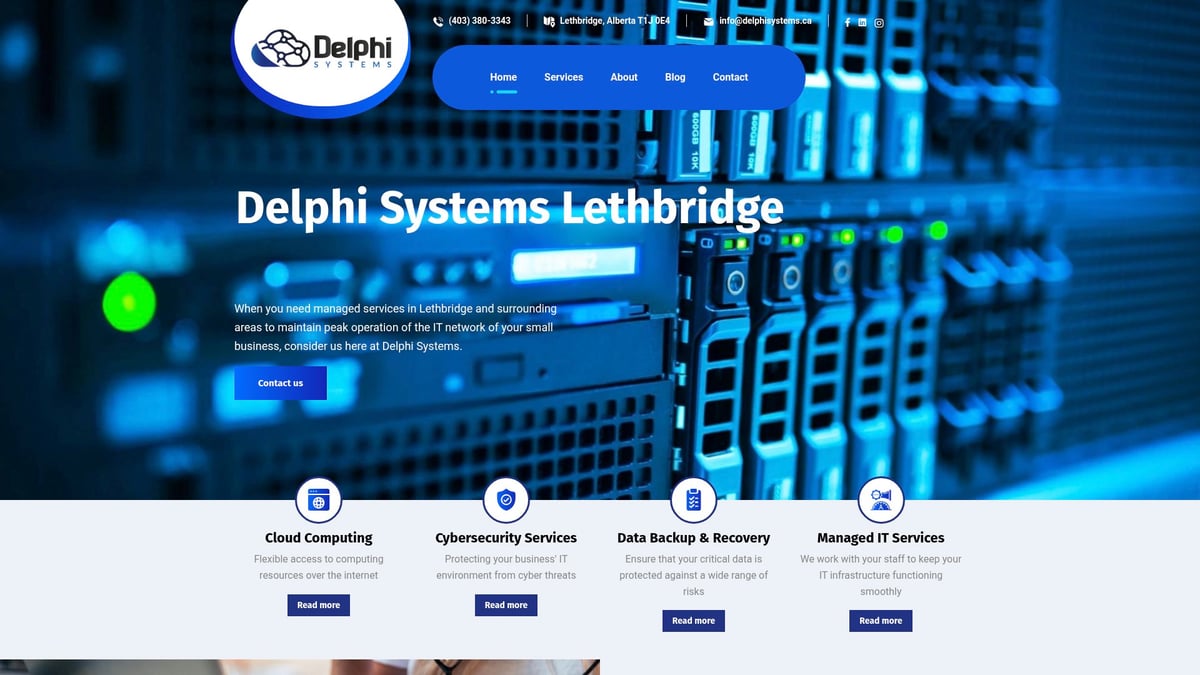
Clients appreciate Delphi Systems Inc. for predictable pricing, strong vendor partnerships, and personalized support. Local businesses report improved security managed outcomes and greater peace of mind, thanks to tailored solutions and responsive service. Testimonials highlight the value of having a dedicated partner who understands unique regional challenges.
Implementation Steps: From Planning to Go-Live
A successful security managed deployment follows a clear, phased approach:
- Assessment: Identify needs and set objectives.
- Planning: Develop a roadmap and allocate resources.
- Provider Selection: Choose the right MSSP.
- Onboarding: Define roles, responsibilities, and processes.
- Deployment: Roll out solutions in phases to minimize disruption.
Maintain open communication and thorough documentation at each stage. Many organizations benefit from phased rollouts, which help maintain business continuity. A typical implementation timeline ranges from a few weeks for small businesses to several months for larger enterprises. Clear milestones ensure that security managed solutions deliver results on schedule.
Integrating Managed Security with Existing IT Operations
Integrating security managed services with in-house operations requires careful planning. Define clear roles and responsibilities between internal teams and the MSSP. Utilize unified dashboards and reporting tools to provide visibility and foster collaboration.
Hybrid management models are increasingly popular, allowing organizations to retain some control while leveraging MSSP expertise. Change management and staff training are critical to ensure smooth adoption. By fostering a culture of partnership, security managed solutions become a seamless extension of IT operations rather than a disruptive change.
Measuring Success: KPIs and Continuous Improvement
To evaluate the effectiveness of a security managed solution, track key performance indicators (KPIs) such as:
- Incident response time
- System uptime
- Compliance rates
- Number of detected and resolved threats
Regular review meetings with your MSSP help identify areas for ongoing optimization. A cycle of continuous improvement ensures that security managed practices evolve alongside emerging threats. Organizations often see measurable gains in ROI, reduced breach costs, and a stronger security posture by embracing a data-driven approach.
The Future of Security Managed Services: Predictions and Strategic Insights
As organizations prepare for a rapidly changing threat landscape, the future of security managed services demands strategic foresight and agility. Keeping pace with innovation and risk, businesses must understand how managed security will evolve, which trends to watch, and how to position themselves for long-term resilience.
The Evolution of MSSPs: From Vendors to Strategic Partners
Managed security service providers (MSSPs) are shifting from simple vendors to strategic partners. In the past, MSSPs primarily responded to incidents and handled basic monitoring. Now, they play a proactive role in shaping business security managed strategies.
Organizations look to MSSPs for guidance on digital transformation, risk management, and compliance. This partnership approach means MSSPs are involved in strategic planning, not just operational support.
Recent market data shows that MSSPs are increasingly driving innovation, helping clients achieve higher resilience and business alignment. Expect MSSPs to offer more consultative and value-added services as security managed priorities evolve.
The Impact of Emerging Technologies: Quantum, IoT, and Beyond
The adoption of quantum computing and the explosion of IoT devices are redefining the security managed landscape. Quantum technology presents both opportunities and risks, especially regarding encryption standards.
IoT proliferation creates new attack surfaces, requiring specialized managed security solutions. MSSPs are investing in tools that secure IoT endpoints and anticipate quantum-related threats.
Industry forecasts suggest rapid growth in managed services for next-generation technologies. Organizations need to stay informed about these advancements to ensure their security managed framework remains robust.
The Human Factor: Skills, Staffing, and Security Culture
Human expertise remains crucial in the security managed ecosystem. With ongoing IT skills shortages, organizations increasingly rely on MSSPs for both technical support and staff training.
MSSPs are helping clients build a strong security culture, offering regular awareness sessions and best practice guides. This collaboration reduces the risk of human error, which remains a leading cause of breaches.
By partnering with MSSPs, businesses gain access to highly skilled professionals and continuous education, strengthening their overall security managed posture.
Customization, Flexibility, and Industry-Specific Solutions
Demand for tailored security managed solutions is rising. Different industries, such as healthcare and finance, face unique regulatory and risk challenges. MSSPs are responding by developing modular, scalable offerings that address specific compliance requirements.
Vertical specialization allows MSSPs to deliver more relevant services and faster deployment. Organizations benefit from solutions that fit their operational needs, rather than generic packages.
This trend toward customization and flexibility ensures that security managed frameworks can adapt as business models and threats continue to evolve.
Economic and Geopolitical Influences on Managed Security
Global economic shifts and geopolitical events have a direct impact on security managed priorities. Budget constraints can affect investment in new technologies, while geopolitical tensions may increase the risk of supply chain attacks.
MSSPs help organizations navigate these uncertainties by offering risk assessments and adaptive security strategies. Data shows that companies with managed security partners are better equipped to respond to sudden market or regulatory changes.
Supply chain security and vendor management have become central components of the security managed approach in this unpredictable environment.
Roadmap for Organizations: Preparing for 2026 and Beyond
To stay ahead, organizations should regularly reassess their security managed strategies. This includes proactive risk reviews, updating incident response plans, and investing in employee training.
A future-proof roadmap involves partnering with MSSPs, embracing new technologies, and maintaining flexibility. Key steps include:
- Setting measurable security managed KPIs
- Conducting quarterly security audits
- Fostering a culture of continuous improvement
By following these steps, businesses can ensure their security managed framework is ready for whatever the future brings.
As you look ahead to the fast-changing landscape of security management in 2026, it’s clear that having the right partner makes all the difference. We’ve explored the essentials—why proactive protection, compliance, and expert support are crucial for small businesses working to stay resilient and productive. If you’re ready to take the next step or have questions about tailoring a managed IT solution for your organization, let’s connect. Your business deserves peace of mind and personalized guidance from a team that understands your needs and the local landscape.
Call us now
and start building a more secure future today.

