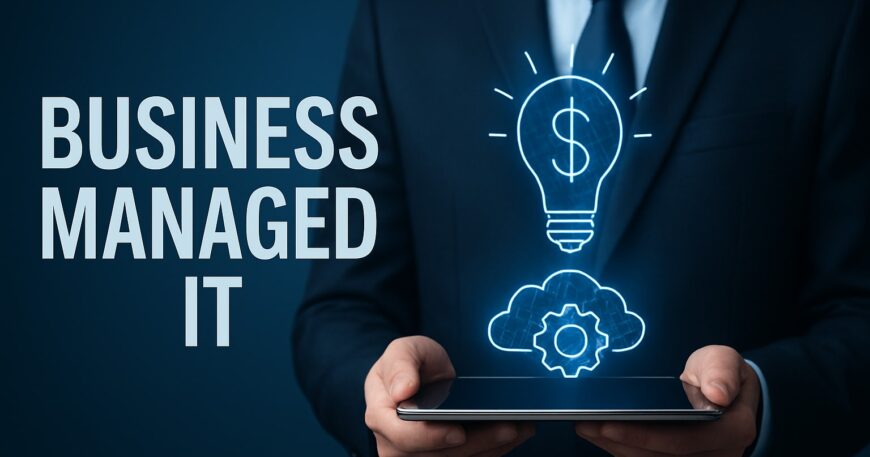
In 2026, digital technology drives every aspect of business, yet the challenge of managing complex IT environments has never been greater. Failing to stay ahead can mean missed opportunities, increased risks, and lost revenue. This essential guide to business managed IT breaks down the strategies, best practices, and trends shaping IT leadership today. Discover how organizations are boosting productivity, cutting costs, and strengthening security by embracing managed IT solutions. Ready to unlock innovation, ensure business continuity, and gain a competitive edge? Follow this step-by-step roadmap to position your business for IT excellence in the year ahead.
Understanding Business Managed IT: Definitions and Core Concepts
In 2026, business managed IT is transforming how organizations approach technology management. Unlike traditional IT models, where central IT teams controlled all technology decisions, business managed IT empowers individual business units to choose and manage their own tech solutions. This shift has moved organizations away from the risks of shadow IT, where employees used unapproved apps, toward a more structured and strategic approach. According to the latest KPMG/Harvey Nash CIO survey, nearly two-thirds of organizations now allow business units to select their own technology. Managed service providers (MSPs) play a crucial role, offering expert support and robust service level agreements (SLAs) to ensure reliability and performance.

What Is Business Managed IT?
Business managed IT refers to a model where business units take the lead in selecting and managing their technology, supported by IT and external partners. This model contrasts with centralized IT departments, which traditionally controlled all tech decisions. The move away from shadow IT—where employees used unsanctioned tools—has led to more secure and agile technology adoption. Today, business managed IT leverages MSPs and formal SLAs to maintain oversight and minimize risk. As a result, organizations gain flexibility and faster access to innovative solutions, while IT ensures compliance and security.
Key Drivers Behind the Rise of Managed IT
Several factors are fueling the growth of business managed IT. The rise of no-code and low-code platforms empowers non-technical staff to create applications. Cloud-native products offer scalable, on-demand resources. Businesses seek faster innovation and improved agility to stay competitive. There is also a growing need for specialized expertise, which is costly to maintain in-house. Proactive monitoring and automation, delivered by MSPs, allow organizations to anticipate problems and optimize performance without expanding internal teams.
Benefits of Business Managed IT
Business managed IT brings measurable benefits to organizations. It increases productivity by automating routine tasks and accelerates product development cycles. Customer experiences improve thanks to faster response times and tailored solutions. Predictable costs are achieved through subscription models, reducing the risk of unexpected expenses. By supporting dynamic investment and modular IT environments, business managed IT enables companies to adapt quickly to market changes and scale technology as their needs evolve.
- Boosts productivity and accelerates development
- Enhances customer experience
- Provides cost predictability
- Reduces operational risk
Common Challenges and Risks
Despite its advantages, business managed IT introduces new challenges. The expanded technology landscape increases the risk of cyberthreats and exposes organizations to a broader attack surface. Compliance and governance become more complex as different units adopt various tools. Software sprawl and maintenance gaps may occur if oversight is lacking. Visibility and accountability can suffer, making it critical to partner with MSPs that prioritize security. For more on this, see Managed Service Providers’ evolving role in cybersecurity.
- Increased cyberthreat exposure
- Complex compliance requirements
- Risk of software sprawl
- Loss of visibility and accountability
The Business Value of Managed IT in 2026
In 2026, business managed it is a catalyst for measurable business value. Organizations are leveraging managed IT to boost productivity, reduce costs, strengthen security, and support long-term growth. Let us explore how business managed it delivers tangible benefits across every dimension of modern business.

Driving Productivity and Innovation
Business managed it directly drives productivity gains and accelerates innovation. By integrating managed IT services, businesses break down silos between IT and operational teams, fostering seamless collaboration. This leads to faster product launches, improved customer service, and streamlined workflows.
CFOs are prioritizing investments in AI and technology to fuel productivity in 2026, as highlighted in CFOs target increased AI investment in 2026. With business managed it, organizations deploy tools that empower teams to innovate quickly and adapt to changing market demands. The result is a workplace where creativity and efficiency are no longer at odds.
Cost Savings and Financial Predictability
One of the most compelling advantages of business managed it is cost control. Managed IT models offer flat-rate pricing, eliminating the surprise expenses common with ad-hoc IT fixes. Businesses can budget confidently, knowing exactly what their IT spend will be each month.
A comparison of traditional versus managed IT highlights the long-term savings:
| Model | Cost Structure | Staffing Needs | Predictability |
|---|---|---|---|
| Traditional IT | Variable, ad hoc | Full in-house team | Low |
| Business Managed IT | Flat-rate, fixed | MSP partnership | High |
By partnering with managed service providers, organizations reduce the need for large in-house IT departments while gaining access to specialized expertise. This approach ensures business managed it delivers both immediate and sustained financial value.
Strengthening Security and Compliance
Security is at the core of business managed it. Proactive monitoring, rapid incident response, and regular vulnerability assessments help businesses stay ahead of evolving threats. Managed IT providers integrate advanced cybersecurity tools, such as AI-driven threat detection and endpoint protection, to safeguard sensitive data.
Compliance is another critical area. With business managed it, organizations benefit from expert guidance on regulations like GDPR, HIPAA, and CMMC. This reduces the risk of costly breaches and penalties while building trust with customers and partners. A robust managed IT framework ensures security and compliance remain priorities as business needs evolve.
Enabling Business Continuity and Resilience
Business managed it is essential for continuity and resilience. Managed IT providers design and implement disaster recovery plans, ensuring rapid data restoration when incidents occur. Automated backups and proactive maintenance minimize downtime, keeping operations running smoothly.
Industry research shows that organizations with managed backup and recovery experience less than half the downtime compared to those without such solutions. This resilience is crucial for maintaining customer trust and meeting service commitments. With business managed it, companies can navigate disruptions with confidence and agility.
Supporting Digital Transformation and Future Growth
Digital transformation is no longer optional in 2026. Business managed it serves as the foundation for scalable, future-ready operations. Managed IT enables organizations to adopt new technologies, expand into new markets, and respond rapidly to emerging opportunities.
Modular IT investments and flexible service models allow businesses to align technology with evolving objectives. Business managed it supports growth by removing barriers to innovation and ensuring that IT infrastructure can scale as demands increase. This adaptability positions businesses for long-term success in a dynamic digital landscape.
Core Components of a Successful Managed IT Strategy
A robust business managed IT strategy is built on several essential pillars. Each component works together to create a secure, efficient, and adaptable IT environment that supports every business goal. Let us break down the core elements that define effective business managed IT in 2026.

Proactive Network Monitoring and Management
Proactive network monitoring is the heartbeat of business managed IT. Real-time oversight enables teams to detect and resolve issues before they escalate. Automated systems handle updates, patch management, and performance optimization, reducing manual intervention.
For example, zero-touch deployment allows new devices and applications to be configured with minimal effort, ensuring consistent security and compliance. Automation tools streamline repetitive tasks, freeing IT staff to focus on higher-value initiatives.
- Real-time alerts for network anomalies
- Automated performance tuning
- Centralized dashboard for visibility
By maintaining a proactive approach, business managed IT reduces downtime and keeps operations running smoothly.
Comprehensive Cybersecurity Solutions
Cybersecurity is integral to business managed IT. Multi-layered defenses, such as firewalls, antivirus, intrusion detection, and endpoint security, protect assets from evolving threats. Regular vulnerability assessments and threat simulations identify weak points before attackers can exploit them.
Employee training is also critical. Awareness programs ensure staff recognize phishing attempts and follow best practices. This holistic approach minimizes risk and builds a resilient security culture.
- Multi-factor authentication for access control
- Simulated phishing exercises for employee readiness
- Continuous threat intelligence updates
With comprehensive protection, business managed IT safeguards data and reputation.
Cloud Computing and Infrastructure Optimization
Cloud computing is a cornerstone of business managed IT, offering scalability and flexibility. Organizations use hybrid and multi-cloud strategies to balance performance, cost, and redundancy. This enables quick deployment of new services and seamless expansion.
Infrastructure optimization focuses on using resources efficiently. Automated provisioning and decommissioning ensure that businesses only pay for what they use. Cloud-native applications further enhance agility and speed.
| Benefit | Explanation |
|---|---|
| Scalability | Instantly adjust resources |
| Cost efficiency | Pay only for what is needed |
| Rapid deployment | Launch services in minutes |
Optimizing the cloud environment empowers business managed IT to support innovation and growth.
Data Backup and Disaster Recovery
Reliable data protection is a non-negotiable aspect of business managed IT. Automated, scheduled backups minimize the risk of data loss, while offsite storage adds another layer of safety. Disaster recovery planning ensures businesses can restore operations quickly after an incident.
Protocols for business continuity are vital. Regular testing of backup and recovery processes guarantees readiness. By minimizing data loss and downtime, companies maintain customer trust and regulatory compliance.
- Scheduled backups to secure locations
- Disaster recovery drills and readiness checks
- Rapid restoration procedures
These practices form the backbone of resilient business managed IT operations.
IT Helpdesk and User Support
Responsive helpdesk services are essential for business managed IT success. 24/7 support ensures that issues are addressed promptly, keeping productivity high. Ticket prioritization systems help manage workloads efficiently, directing urgent requests to the right experts.
Helpdesk metrics, such as average response and resolution times, provide insight into service quality. Continuous feedback loops between users and IT teams drive ongoing improvement.
- Round-the-clock support availability
- Self-service portals for common issues
- Performance analytics for service optimization
Effective user support is a hallmark of reliable business managed IT.
IT Asset and Vendor Management
Comprehensive asset and vendor management is the final pillar of business managed IT. Lifecycle tracking of hardware and software assets ensures optimal utilization and timely replacements. Strategic vendor partnerships enable access to the latest technologies and favorable contract terms.
Regular health reporting gives decision-makers clear insights into the IT environment. This transparency supports dynamic investment and modular IT strategies, as highlighted in IBM’s business and technology trends for 2026.
- Asset inventory and lifecycle tracking
- Vendor performance evaluations
- Contract negotiation and compliance monitoring
With these practices, business managed IT delivers sustained value and adaptability.
Step-by-Step: Implementing Managed IT for Your Business in 2026
Embarking on the journey to implement business managed IT requires a clear roadmap and strategic precision. By following a structured approach, organizations can unlock operational efficiency, security, and innovation. Let us break down each step for a seamless transition to business managed IT.

Assessing Your Current IT Landscape
The first step in adopting business managed IT is a thorough assessment of your existing technology environment. Begin with a comprehensive inventory of network infrastructure, hardware, software, and security protocols.
Collaborate with business units to identify recurring pain points, bottlenecks, and inefficiencies. Use surveys, interviews, and system audits to gather input from key stakeholders. This inclusive approach ensures you capture both technical and business perspectives.
Document gaps in security, compliance, and performance. By understanding your current landscape, you lay a strong foundation for a tailored business managed IT solution.
Defining Business Goals and IT Requirements
With a clear picture of your IT environment, align your business managed IT strategy to broader organizational objectives. Meet with executive leaders to clarify goals such as growth targets, compliance mandates, and innovation priorities.
Prioritize IT requirements by focusing on areas like security, scalability, support, and cost management. Establish measurable KPIs for system uptime, user satisfaction, and risk reduction. This alignment ensures your business managed IT investments drive tangible business value.
Create a requirements matrix that maps business goals to IT capabilities. This tool keeps all stakeholders focused and accountable throughout the implementation process.
Selecting the Right Managed IT Provider
Choosing a trusted partner is critical for business managed IT success. Evaluate managed service providers based on technical expertise, industry experience, and service offerings. For small and midsize businesses, local expertise and personalized service are often decisive factors.
Review service level agreements, response times, and support models to ensure they fit your needs. As the global tech consulting market is projected to surpass $400bn in 2026, demand for qualified partners is rising, making due diligence even more important.
Develop a comparison table of top providers, rating them by reliability, cost, and strategic fit. This data-driven approach supports confident decision-making.
Planning the Transition and Onboarding
A successful transition to business managed IT starts with a detailed migration plan. Map out each phase of the implementation, from data transfer to user training. Assign responsibilities and set clear timelines to minimize disruption.
Communicate openly with staff about upcoming changes, offering training and resources to reduce resistance. Conduct pre-migration testing to ensure data integrity and business continuity.
Work closely with your provider to establish support channels and escalation procedures. Proper onboarding sets the stage for a smooth, effective rollout of business managed IT services.
Ongoing Management, Optimization, and Review
After launch, the focus shifts to continuous improvement. Schedule regular performance reviews and network health assessments to ensure your business managed IT environment remains optimized.
Update security protocols and IT processes in response to evolving threats and business needs. Foster a collaborative relationship between internal teams and your managed service provider.
Track key metrics such as system uptime, incident response times, and user feedback. Use these insights to refine your strategy and maximize the long-term value of business managed IT.
Trends and Innovations Shaping Business Managed IT in 2026
The world of business managed it is evolving quickly. Organizations are adopting new technologies to stay ahead, boost resilience, and drive growth. In 2026, understanding the latest trends is crucial for building a future-ready IT strategy.
AI and Automation in IT Management
Artificial intelligence is transforming business managed it by enabling smarter, faster decision-making. AI-driven monitoring tools can detect anomalies and resolve issues before they impact operations.
Automation streamlines routine tasks, such as software updates and threat response. This reduces manual workloads and improves efficiency. Predictive analytics help IT teams anticipate problems and plan resources effectively.
For example, AI-powered phishing and ransomware defense systems now identify and neutralize threats in real time. By leveraging these innovations, companies enhance security and maintain business continuity.
The Evolution of Cloud and Hybrid Environments
Cloud computing continues to shape business managed it strategies. In 2026, multi-cloud and hybrid environments are the norm, offering greater flexibility and scalability.
Edge computing is gaining traction, allowing data processing closer to the source. This reduces latency and supports real-time applications. Organizations benefit from faster deployment, improved cost management, and seamless integration across platforms.
Cloud-native applications also play a key role in driving business agility. As cloud technologies mature, companies can adapt quickly to market changes and customer needs.
Zero Trust Security and Advanced Compliance
Zero trust security frameworks are now essential in business managed it. These frameworks require verification for every user and device, reducing the risk of unauthorized access.
Advanced compliance tools help organizations meet complex regulatory requirements. Automated audits and continuous monitoring ensure data protection and transparency.
Recent industry trends show that up to 80 percent of revenue growth depends on digital offerings and secure operations. Adopting zero trust and robust compliance practices is vital for long-term success.
User Empowerment: Low-Code/No-Code and Self-Service IT
Empowering business units is a hallmark of modern business managed it. Low-code and no-code platforms enable employees to build solutions without deep technical skills.
Self-service IT portals give users more control over their workflows. Robotic process automation streamlines repetitive tasks, freeing up time for innovation.
IT teams focus on governance and support, ensuring that creativity does not compromise security or compliance. This balance unlocks faster innovation and better alignment with business goals.
Co-Managed IT Models and Flexible Partnerships
Many organizations now blend internal expertise with managed service providers in co-managed IT models. This approach enhances business managed it by sharing responsibility and fostering knowledge transfer.
Flexible partnerships allow companies to customize service packages. Internal teams can focus on strategic initiatives, while MSPs handle day-to-day operations.
Co-management offers scalability and resilience. As needs change, businesses can adjust their IT support without major disruptions.
Dynamic Investment and Modular IT Solutions
The shift to dynamic investment is redefining business managed it. Companies are moving away from large, infrequent upgrades toward smaller, ongoing investments.
Modular IT architectures allow rapid adaptation to new technologies. Businesses can scale up or down as needed, aligning IT spending with current priorities.
According to recent KPMG reports, dynamic investment strategies help organizations stay agile and competitive. Modular solutions ensure that IT remains a driving force for growth and innovation.
Measuring Success: KPIs and Best Practices for Managed IT ROI
Evaluating the impact of business managed IT is essential for achieving sustained value and maximizing return on investment. By tracking the right performance indicators and following best practices, organizations can ensure their IT strategy remains effective and aligned with business goals.
Essential KPIs for Managed IT Performance
Measuring the success of business managed IT starts with clear, actionable KPIs. These metrics provide a snapshot of IT health and help identify areas for improvement.
| KPI | Description |
|---|---|
| Uptime | Percentage of system/service availability |
| MTTD/MTTR | Mean time to detect/respond to incidents |
| User Satisfaction | End-user feedback and helpdesk ratings |
| Resolution Rate | Percentage of tickets resolved on first contact |
Tracking these KPIs ensures that business managed IT delivers reliable service and supports daily operations effectively.
Calculating Cost Savings and Productivity Gains
To justify investments in business managed IT, organizations must quantify financial and operational benefits. Begin by comparing IT expenses before and after engaging a managed service provider.
- Monitor reductions in ad-hoc spending and emergency repairs.
- Measure decreased downtime and labor costs.
- Track improvements in workflow efficiency and staff productivity.
By analyzing these data points, leaders can demonstrate how business managed IT contributes to cost control and workforce optimization.
Ensuring Compliance and Security Outcomes
Maintaining compliance and robust security is critical for any business managed IT strategy. Regular audits and metric tracking help mitigate risks and support regulatory requirements.
- Review audit results for adherence to GDPR, HIPAA, or industry standards.
- Count the number of security incidents and successful threat mitigations.
- Monitor employee participation in cybersecurity training and phishing tests.
These measures confirm that business managed IT not only protects data but also supports a culture of vigilance and accountability.
Continuous Improvement and Strategic Alignment
Ongoing success with business managed IT depends on continuous improvement and alignment with company objectives. Regularly review IT outcomes against business priorities.
- Schedule feedback sessions with stakeholders and end users.
- Adjust KPIs as business needs evolve.
- Integrate feedback into process updates and technology upgrades.
This approach ensures business managed IT remains agile, responsive, and a driver of long-term value.
If you’re ready to take the next step toward a secure, efficient, and future-ready IT environment, let’s make it happen together. As we’ve explored, managed IT isn’t just about reducing headaches—it’s about empowering your business to innovate, stay resilient, and focus on what matters most in 2026. With Delphi Systems Inc. by your side, you can confidently navigate the complexities of technology while we handle the ongoing support, security, and optimization your business deserves. If you want to discuss how managed IT can drive your success, Call us now.

