

In 2026, businesses confront a digital landscape where cloud computing and network security are vital for survival. Cyber threats are growing more advanced each year, making protection and agility essential.
This guide delivers a clear roadmap for leaders aiming to master cloud computing and network security strategies. You will uncover the newest trends, learn how to spot emerging risks, and discover proven best practices for adopting cloud solutions safely.
We will also cover compliance, governance, and practical steps to future-proof your IT environment. Ready to secure your operations and stay ahead of threats? Let’s begin.
The Evolution of Cloud Computing in 2026
The landscape of cloud computing and network security is undergoing rapid transformation in 2026. Organizations are rethinking their IT strategies to keep pace with innovation and evolving security demands. As businesses seek to gain a competitive edge, understanding these changes is essential for building future-ready systems.

Key Trends Shaping Cloud Adoption
In 2026, several key trends are redefining cloud computing and network security. Enterprises increasingly embrace hybrid and multi-cloud strategies, allowing them to balance flexibility and redundancy. According to Gartner, 70% of enterprises are expected to operate in multi-cloud environments by 2026.
Edge computing is gaining momentum as companies deploy Internet of Things (IoT) devices and require real-time analytics closer to data sources. This approach reduces latency and enhances responsiveness, crucial for industries like manufacturing and healthcare.
AI-driven cloud services are transforming operations, automating complex workflows, and optimizing resource allocation. As businesses transition to serverless architectures, they benefit from faster deployment cycles and lower operational overhead.
Cloud-native applications are becoming the norm, enabling organizations to scale quickly and adapt to changing market demands. For a deeper look at these emerging directions, explore the “Top 10 Cloud Trends You Can’t Afford To Ignore In 2026”.
Case Study:
A mid-sized retail business adopted a hybrid cloud model to improve cost efficiency and resilience. By integrating public and private clouds, the company reduced infrastructure expenses and ensured uninterrupted service during outages, demonstrating the value of strategic cloud computing and network security planning.
Benefits and Challenges of Modern Cloud Environments
Modern cloud computing and network security offer impressive benefits but also present new challenges. Scalability and cost-efficiency are top advantages, enabling businesses to adjust resources as needed and pay only for what they use. Enhanced collaboration tools facilitate remote work and global teamwork.
However, integrating multiple cloud platforms introduces complexity. Security and compliance requirements are unique to cloud environments, necessitating careful management of sensitive data. Vendor lock-in is another risk, making it vital to develop strategies for flexibility and migration.
Below is a quick comparison:
| Benefits | Challenges |
|---|---|
| Scalability and agility | Integration complexity |
| Cost savings | Security and compliance concerns |
| Enhanced collaboration | Vendor lock-in risks |
| Business continuity | Migration pitfalls |
Migration Example:
A leading financial firm faced unexpected downtime during cloud migration due to overlooked integration issues. By conducting a thorough assessment and involving cloud computing and network security experts, the company learned valuable lessons and now manages transitions with minimal disruption.
Organizations can overcome these hurdles by investing in robust cloud computing and network security frameworks, focusing on flexibility, and prioritizing compliance.
Emerging Network Security Threats and Trends
The rapid evolution of cloud computing and network security in 2026 has transformed the digital threat landscape for organizations of all sizes. As businesses increasingly rely on cloud platforms for operations, attackers have shifted their tactics, making it vital for leaders to stay informed and proactive. Understanding the latest threats and the technologies designed to combat them is essential for protecting sensitive data and maintaining business continuity.

The 2026 Threat Landscape
By 2026, attackers are leveraging advanced tools and strategies to target cloud computing and network security on a global scale. Ransomware remains a top concern, with sophisticated variants now designed to infiltrate cloud infrastructure and disrupt business operations.
AI-driven phishing and social engineering have become increasingly convincing. Attackers use generative AI to craft highly personalized messages that bypass traditional filters, making user awareness and advanced detection critical. According to security experts, the next wave of cyber threats will be even more dangerous as AI will supercharge cyber weapons within two years, raising the stakes for organizations relying on cloud computing and network security.
Supply chain attacks are also on the rise, exploiting vulnerabilities in third-party cloud services to gain unauthorized access to sensitive environments. Zero-day exploits, especially in rapidly updated cloud platforms, present ongoing challenges, as patch cycles often lag behind attackers' discovery of new weaknesses.
Insider threats have grown with the shift to remote and hybrid workforces. Employees, contractors, or partners with legitimate access can inadvertently or intentionally compromise cloud computing and network security. Misconfigurations remain a leading cause of incidents, with 60 percent of cloud security breaches attributed to improper setup, as reported by IBM Security in 2025.
Recent high-profile breaches have demonstrated the devastating impact of these threats. Organizations face not only financial losses but also reputational damage and regulatory scrutiny, underscoring the need for a comprehensive approach to cloud computing and network security.
Security Technologies and Approaches
To defend against emerging threats, organizations are adopting advanced security architectures and practices tailored to cloud computing and network security. Zero Trust is now widely considered the baseline, requiring continuous verification of users and devices before granting access to resources.
AI-driven threat detection and automated response systems are essential for identifying and neutralizing attacks in real time. These tools analyze vast amounts of network and cloud activity, quickly spotting signs of compromise that might otherwise go unnoticed.
Secure Access Service Edge (SASE) solutions are gaining traction, especially for distributed teams. SASE unifies networking and security functions, enabling secure, flexible access to cloud resources regardless of location. Continuous monitoring and behavioral analytics provide deeper visibility into user actions, helping organizations detect anomalies and respond swiftly.
Encryption technologies are also advancing, with stronger standards for both data at rest and in transit. Automated encryption and effective key management are now mandatory to safeguard information across multi-cloud environments.
Adopting these technologies and approaches empowers organizations to build robust cloud computing and network security defenses. By staying informed and embracing innovation, businesses can navigate the complex threat landscape of 2026 with confidence.
Best Practices for Secure Cloud Adoption
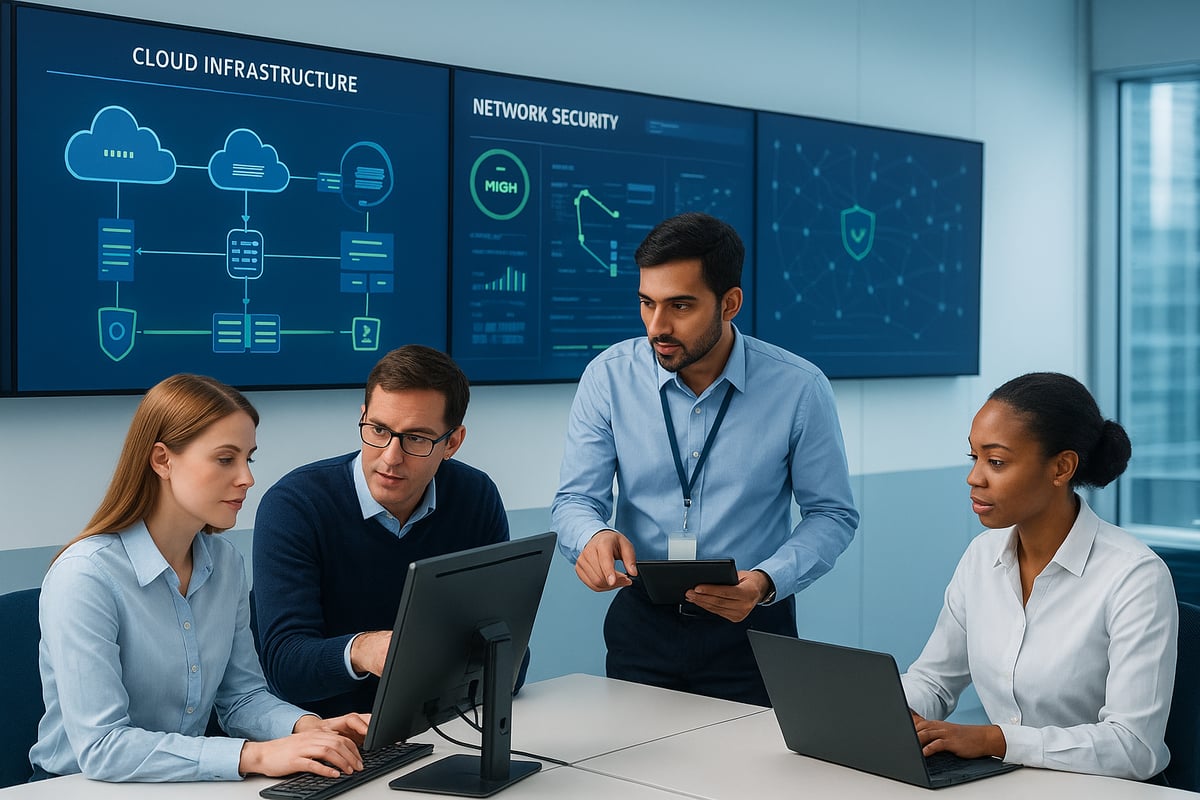
Adopting secure practices is essential for any business navigating cloud computing and network security in 2026. With evolving threats and complex environments, following a structured approach helps organizations minimize risk and maximize value.
Step 1: Assessing Cloud Readiness
Begin your journey by evaluating your organization’s preparedness for cloud computing and network security challenges. Conduct a thorough security and compliance gap analysis to identify vulnerabilities and regulatory gaps. Review where sensitive data resides, and map out compliance requirements such as GDPR, HIPAA, or industry-specific mandates.
Use the following checklist to guide your assessment:
- Inventory all critical data assets and classify their sensitivity.
- Evaluate existing IT infrastructure for compatibility with cloud platforms.
- Identify current security controls and any potential weaknesses.
- Assess staff readiness and training needs for cloud operations.
- Document regulatory obligations and upcoming changes.
By systematically applying this checklist, you lay a solid foundation for cloud computing and network security. This step ensures you address both technical and regulatory needs before migration.
Step 2: Selecting the Right Cloud Model
Choosing the optimal cloud deployment model is critical for balancing agility, control, and compliance. The four main models are public, private, hybrid, and multi-cloud. Each offers unique advantages and drawbacks.
| Cloud Model | Cost | Security | Control | Scalability |
|---|---|---|---|---|
| Public | Low | Moderate | Low | High |
| Private | High | High | High | Moderate |
| Hybrid | Moderate | High | Moderate | High |
| Multi-cloud | Variable | High | High | High |
Factors influencing your choice include workload sensitivity, compliance needs, and growth projections. For example, healthcare organizations often prefer private or hybrid models for patient data, while financial firms may leverage multi-cloud for redundancy.
Stay informed about emerging trends by reviewing Cloud Computing and AI Trends in 2026, which outlines how evolving technologies impact cloud computing and network security strategies.
Step 3: Implementing Strong Access Controls
Robust access management is a cornerstone of cloud computing and network security. Start by enforcing role-based access control (RBAC) and the principle of least privilege. Limit user permissions to only what is necessary for their roles.
Adopt multi-factor authentication (MFA) for all users to reduce the risk of credential compromise. Effective identity management tools can help track and audit user activity across cloud resources. Regularly review access logs and permissions to spot anomalies early.
According to the Verizon DBIR 2025, 80 percent of breaches involve compromised credentials. Prioritizing strong access controls helps safeguard your cloud computing and network security posture.
Step 4: Ensuring Data Protection and Backup
Protecting data is fundamental to cloud computing and network security. Implement advanced encryption for data at rest and in transit, using secure key management practices. Automated backup solutions are essential for disaster recovery and business continuity.
Test recovery plans frequently to ensure they work as intended. Consider different data loss scenarios, such as accidental deletion, ransomware, or hardware failure. Prepare and rehearse response strategies so your team can act confidently if issues arise.
These measures reduce downtime and protect business operations from unexpected disruptions.
Step 5: Continuous Monitoring and Incident Response
Maintaining vigilance through real-time monitoring is vital in cloud computing and network security. Utilize cloud security posture management (CSPM) tools to detect misconfigurations and threats as they emerge.
Develop a comprehensive incident response plan, and run regular simulations to validate its effectiveness. Foster collaboration between IT, security, and compliance teams for rapid response and knowledge sharing.
Continuous improvement and adaptation are key to staying ahead of the threat landscape and ensuring long-term security for your cloud environment.
Compliance, Governance, and Regulatory Considerations
In 2026, compliance is a cornerstone of any successful cloud computing and network security strategy. Businesses must keep pace with shifting regulations and emerging risks. Ensuring compliance helps organizations avoid costly penalties, maintain customer trust, and strengthen their reputation in an increasingly digital world.

Navigating Global and Industry-Specific Regulations
Global data privacy laws are evolving rapidly, impacting how companies use cloud computing and network security tools. Regulations like GDPR and CCPA set strict guidelines for data handling, while new 2026 rules are expanding their scope further. Organizations across sectors face additional requirements, such as HIPAA for healthcare and PCI DSS for finance.
Compliance in cloud computing and network security is not just about ticking boxes. It means understanding the shared responsibility model, where both the cloud provider and the customer must ensure data is protected. Contractual obligations can be complex, especially as cloud service costs are expected to rise, requiring companies to carefully evaluate their agreements. For more on this trend, see how the “OVH boss predicts major cloud price rises are coming”.
Failing to comply with regulations can result in severe penalties, financial losses, and damaged business operations. Organizations must regularly review their compliance posture to stay ahead of new mandates. A table summarizing common regulations:
| Regulation | Sector | Key Focus |
|---|---|---|
| GDPR | All | Data privacy |
| CCPA | All | Consumer rights |
| HIPAA | Healthcare | Patient data |
| PCI DSS | Finance | Payment security |
Building a Governance Framework
Strong governance is essential for effective cloud computing and network security. Organizations should establish clear policies for data access, retention, and usage. These policies provide a foundation for consistent, secure operations.
Regular compliance audits are necessary to identify gaps and ensure ongoing adherence to regulations. Reporting mechanisms help track changes and demonstrate accountability. Training employees on security and compliance best practices is vital, as human error remains a significant risk.
Automating policy enforcement can streamline governance, reduce manual errors, and improve documentation. Tools that monitor cloud computing and network security posture provide real-time insights. Consider the following checklist for robust governance:
- Define access control policies
- Schedule regular audits and reviews
- Document data retention and deletion processes
- Train staff on compliance essentials
- Automate reporting and enforcement
A proactive governance framework empowers organizations to respond quickly to regulatory changes. By prioritizing cloud computing and network security at every level, businesses can safeguard data, maintain compliance, and build lasting resilience.
Future-Proofing Your Cloud and Network Security Strategy
As the digital landscape evolves, future-proofing your cloud computing and network security approach is no longer optional. Organizations must anticipate change, adapt quickly, and stay vigilant to protect their assets and maintain trust. Let us explore the essential steps and strategies to ensure your IT environment stands strong in the face of tomorrow’s challenges.
Anticipating Technological Advancements
The pace of innovation in cloud computing and network security is accelerating. Quantum computing is on the horizon, posing both unprecedented opportunities and new risks. Organizations should begin evaluating quantum-resistant encryption methods to safeguard data against future threats.
Artificial intelligence and machine learning are becoming critical allies. These technologies enable proactive defense, allowing real-time threat detection and automated responses to incidents. Integrating AI into your cloud computing and network security stack will help identify anomalies that traditional tools might miss.
DevSecOps practices are also evolving. Embedding security throughout the development lifecycle ensures vulnerabilities are addressed early, reducing the attack surface. By staying informed about advancements and adopting forward-thinking tools, your organization will be better positioned to withstand emerging threats.
| Technology | Current Use | Future-Proof Approach |
|---|---|---|
| Encryption | AES, RSA | Quantum-resistant |
| Threat Detection | Signature-based | AI-driven analytics |
| Development Pipeline | Separate security | Integrated DevSecOps |
Continual learning and early adoption are the cornerstones of resilient cloud computing and network security.
Building Resilience and Agility
To thrive in 2026, your cloud computing and network security strategy must prioritize resilience and agility. Design your systems for rapid recovery and seamless failover to minimize downtime during incidents. Regularly update, patch, and test your cloud and network assets to close vulnerabilities before attackers exploit them.
Employee training is crucial. Equip your workforce with up-to-date knowledge on security best practices and threat awareness. Security is a shared responsibility, and well-informed employees are your first line of defense.
Consider implementing these best practices:
- Schedule frequent security assessments and penetration testing.
- Maintain an updated inventory of all cloud assets.
- Automate patch management for faster response times.
- Develop clear business continuity and disaster recovery plans.
A resilient approach to cloud computing and network security ensures that your organization can respond to disruptions with confidence and speed.
Partnering with Managed IT Service Providers
For many organizations, partnering with a trusted managed IT service provider is a strategic move. These experts offer specialized cloud computing and network security solutions tailored to your business needs. Outsourcing allows small and mid-sized enterprises to access enterprise-grade protection without the overhead of building in-house teams.
When selecting a provider, evaluate their experience, service offerings, and client support model. Look for partners who provide proactive monitoring, incident response, compliance assistance, and regular reporting.
Managed services streamline compliance and reduce the risk of misconfigurations or overlooked vulnerabilities. By leveraging external expertise, your business can focus on core initiatives while maintaining a robust cloud computing and network security posture.
As we’ve explored, navigating cloud computing and network security in 2026 requires more than just keeping up with trends—it’s about ensuring your business is resilient, secure, and ready for whatever comes next. If you want to focus on your core activities while knowing your IT infrastructure is in expert hands, you don’t have to manage it all alone. Let’s talk about how Delphi Systems Inc. can help you achieve peace of mind with proactive monitoring, reliable data protection, and personalized support tailored to small businesses in Lethbridge. Ready to chat about your needs? Call us now

